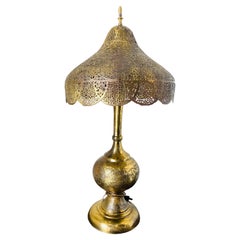
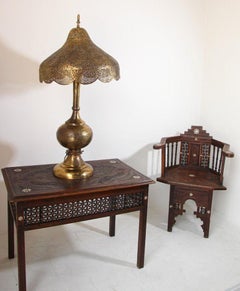
Antique Moorish Brass Table Lamp with Arabic Script
Located in Moreno Valley, CA
Antique fine Middle Eastern Moorish revival brass table lamp with Arabic calligraphy writing.
Category
Antique 19th Century Egyptian Moorish Table Lamps
Materials
Brass
Antique Moorish Brass Table Lamp with Arabic Script
Located in Moreno Valley, CA
Antique fine Middle Eastern Moorish revival brass table lamp with Arabic calligraphy writing.
Brass

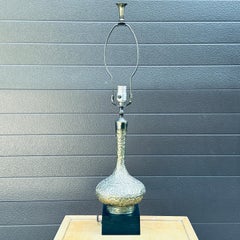
Mid-Century Elegant Moorish Style Brass Decorative Table Lamp
Located in West Chester, PA
Elegant tall Moorish brass table lamp. Intricately designed in Moorish Arabesque styles on a brass onion form with long neck atop a square black base.
Metal
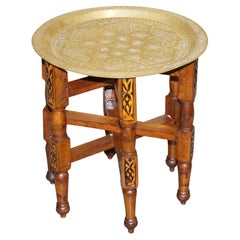
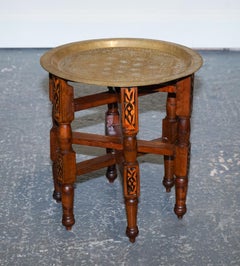
Vintage Moorish Moroccan Brass Folding Tray Table
Located in Pulborough, GB
We are delighted to offer for sale this Lovely Moorish Moroccan Brass Table. The Moorish Moroccan brass folding tray table is a beautifully crafted piece of furniture that feature...
Brass
$1,920Sale Price|20% Off
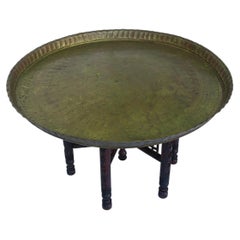
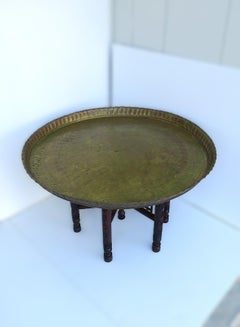
Moroccan Moorish Brass Cocktail Tray Table
Located in New York, NY
A large, round Moroccan brass cocktail/coffee tray table, in the Moorish design style, circa mid-20th century, Morocco.
Brass
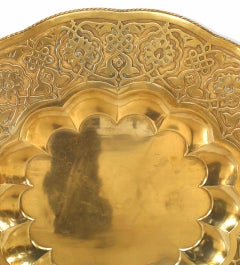
$1,450
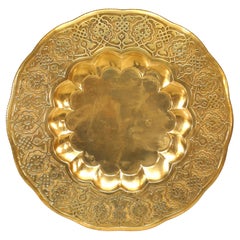
Moorish Round Brass Tray
Located in Queens, NY
Moorish (19/20th Century) round brass tray with rope design edge.
Brass
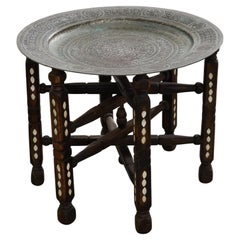
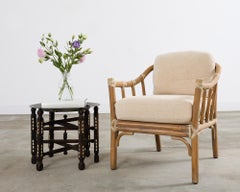
Moorish Moroccan Style Folding Brass Tray Drink Table
Located in Rio Vista, CA
Handsome middle eastern Moroccan style brass top drinks table or tray table featuring a weathered patina on the etched top. The six leg base has a hexagonal shape with mother-of-pear...
Brass
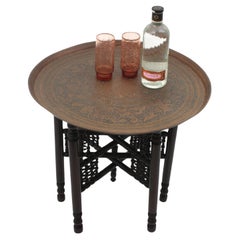
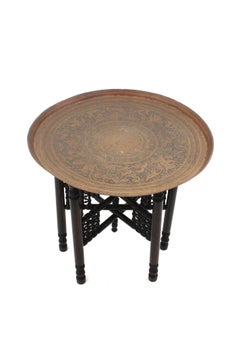
Large Moorish Arabic Brass Folding Tray Table, Spain 1940s
Located in Barcelona, ES
Moorish Style Spanish brass repousse tray table on folding wooden turned stand, Spain, 1940s-1950s.
Brass
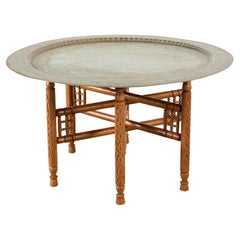
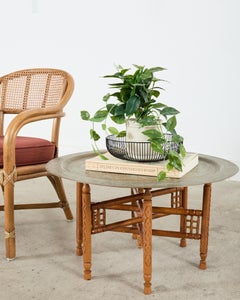
Moorish Moroccan Style Folding Wood Brass Tray Drinks Table
Located in Rio Vista, CA
Beautifully patinated large Moroccan brass tray drink table featuring a carved wood folding base.
Brass
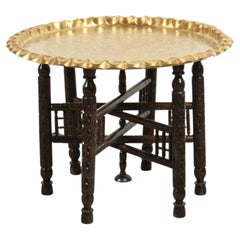
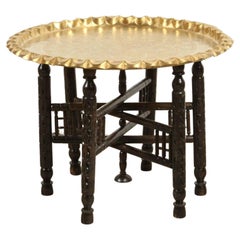
Vintage Moroccan Etched Brass Tray Table, Moorish Style, 1940
Located in Moreno Valley, CA
Vintage occasional Moroccan etched brass round tray table. This is a wonderful antique all hand tooled in exquisite foliate designs with a deep, hammer folded pie crust edges. Remova...
Brass
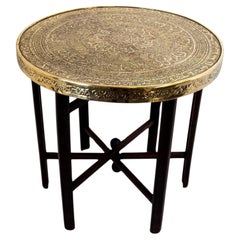
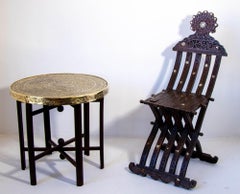
Moorish Islamic Brass Tray Table, Handcrafted in Spain, 1920s Design
Located in Moreno Valley, CA
Moorish Islamic Brass tray Side Table Spain circa 1920s.
Brass
$3,080Sale Price / set|20% Off
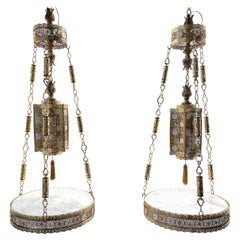
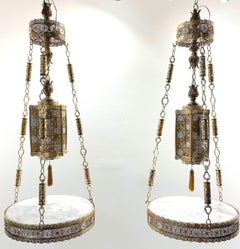
Pair of Exotic Moorish Hanging Brass & Crystal Lantern & Marble Side Tables
Located in West Palm Beach, FL
Pair of Exotic Moorish Hanging Brass & Crystal Lantern & Marble Side Tables Italy, Circa 1960s A pair of Exotic Moorish Hanging Brass & Crystal Lanterns with Marble Side Tables, or...
Crystal, Carrara Marble, Brass
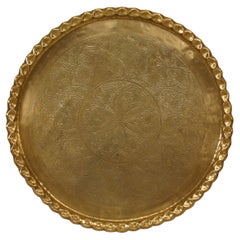
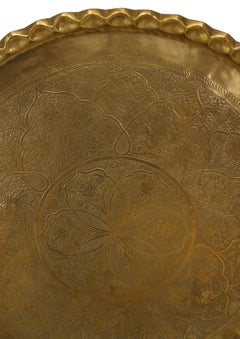
Moorish Brass Tray Table, Hand-Crafted with Scalloped Edge, Circa 1890
Located in Queens, NY
Moorish (19/20th Century) round brass tray with scalloped edge.
Brass
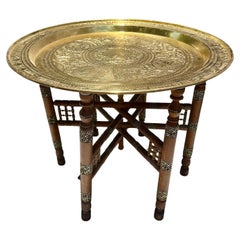
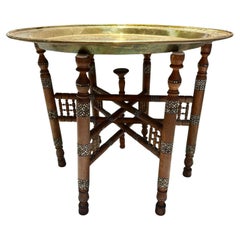
Moorish Inlaid Six-Legged Folding Side Table and Brass Tray Top.
Located in Vero Beach, FL
Moorish Inlaid Six-Legged Folding Side Table and Brass Tray Top.
Brass
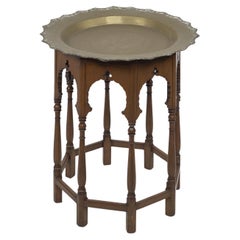
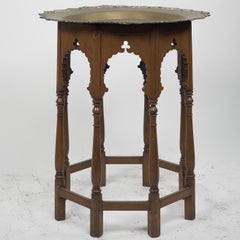
A Moorish-style side table with a heavy brass removable dish-shaped table top
By Liberty & Co.
Located in London, GB
Liberty & Co style. A Moorish-style side table with a heavy brass removable dish-shaped table top, richly engraved with floral decoration to the wavy edge and a bird of paradise to ...
Walnut
$2,095Sale Price|20% Off
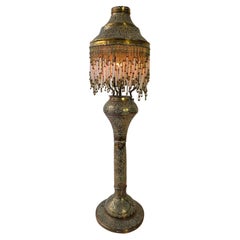
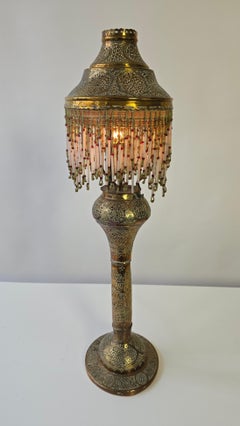
Moorish brass Damascus table lamp with Arabic decorations
Located in Antwerp, BE
Enchanting Oriental Splendor: Antique Middle Eastern Moorish Revival Brass Table Lamp Very fine antique Middle Eastern Syrian Moorish revival lamp.
Brass
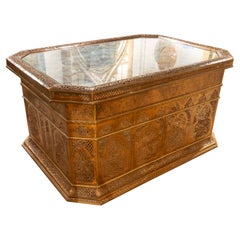
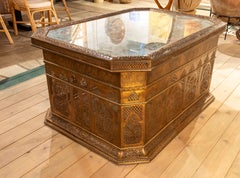
1980s Brass Coffee Table with Openwork Decoration in Moorish Style with Glass
Located in Marbella, ES
1980s Brass Coffee Table with Openwork Decoration in Moorish Style with Glass
Brass
$4,600 / set
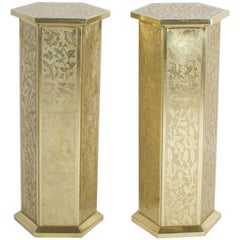
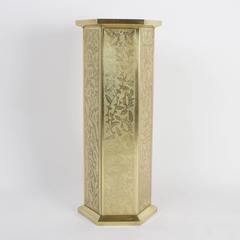
Anglo Indian or Moorish Pair of Brass Pedestals
Located in Palm Beach, FL
Spirited pair of brass pedestals or stands with lively hand-hammered floral patterns on all six panels. Hand polished and lacquered for easy care.
Brass
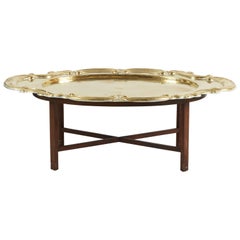
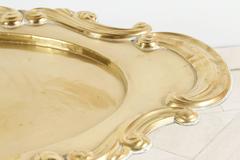
Hollywood Regency Vintage Oval Brass Tray Moorish Table
Located in Moreno Valley, CA
Vintage large Hollywood Regency oval brass tray table on wooden stand. Great unusual Moorish style brass coffee table.
Brass
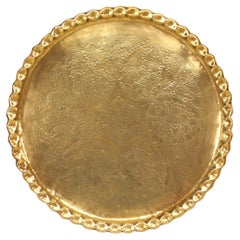
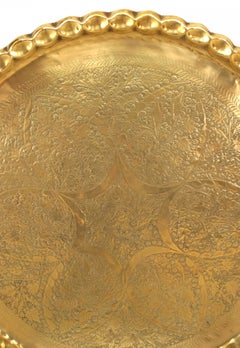
Moorish Round Brass Tray, Hand-Crafted, Scalloped Edge, Circa 1890
Located in Queens, NY
Moorish (19/20th Century) round brass tray with scalloped edge.
Brass
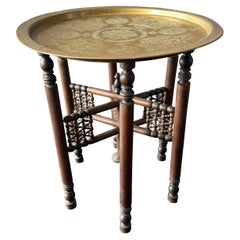
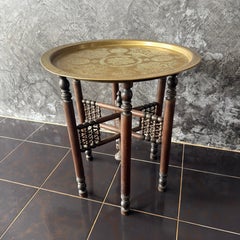
$1,190Sale Price|20% Off
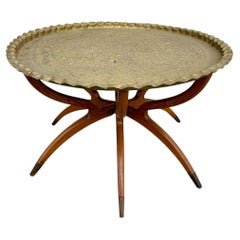
Moorish Moroccan Brass Side Table
Located in Chonburi, TH
This Moroccan Moorish brass tray table is a fine example of traditional craftsmanship and timeless design.
Brass
$1,638Sale Price|35% Off
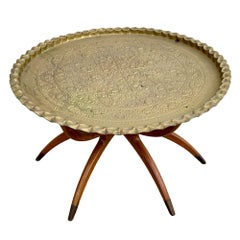
Mid-century Moroccan Moorish Tray Coffee Table
Located in Van Nuys, CA
Original hand-hammered brass Moroccan tray with a 6-leg folding Mide-century arched mahogany base, a seamless blend of the bohemian and high modern. The set can be used as a table or...
Brass
Rare Antique Liberty & Co. Table Middle Eastern Moorish Moroccan Damascene
By Liberty & Co.
Located in Reading, Berkshire
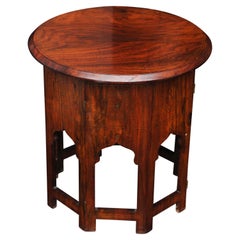
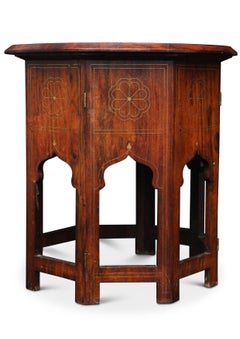
Rare Antique Liberty & Co. Drinks Side Table Middle Eastern Moorish Early 20th century hardwood circular tea table decorated with brass floral decorations from the middle east a...
Brass
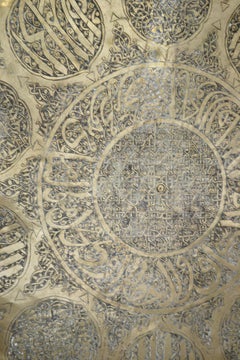
Moroccan Moorish Copper Tray Table with Hand-Carved Folding Base
Located in SOTTEVILLE-LÈS-ROUEN, FR
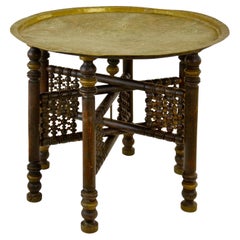
An exceptional Moorish Moroccan folding tray table, featuring a beautifully hand-hammered round copper top resting on an intricately hand-carved wooden base. The removable tray is r...
Brass
$525Sale Price|30% Off
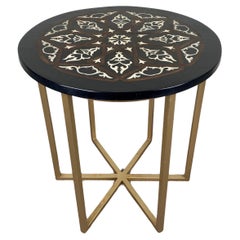
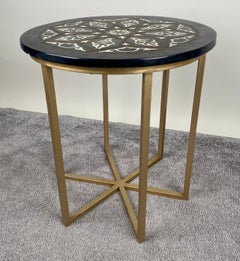
Boho Chic Moorish Design Round Side / End Table with Black Resin Top & Brass
Located in Plainview, NY
A beautiful Boho Chic round side or end table. The handmade table features a round black top made of resin and embellished with geometrical motifs reminiscent of the timeless mooris...
Brass
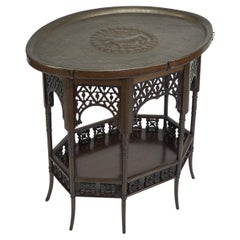
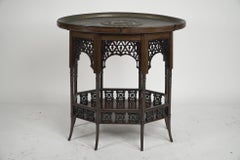
Liberty and Co. A rare and unusual Moorish oval eight leg side table
By Liberty & Co.
Located in London, GB
Liberty and Co. A rare and unusual Moorish oval eight leg side table with a brass removable top embossed with a medieval lioness holding a sword while her cub feeds from her.
Brass

$2,800Sale Price / set|20% Off
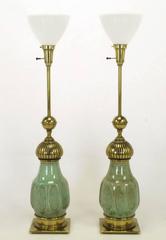
Pair of Stiffel Crackle Glaze Ceramic and Brass Moorish Style Table Lamps
By Stiffel
Located in Chicago, IL
Excellent pair of brass and ceramic bodied Moorish style table lamps by Stiffel.
Brass
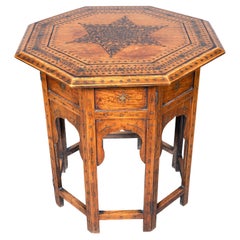
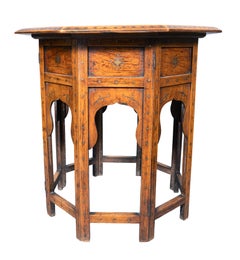
Moroccan Brass Inlaid Low Table
Located in Essex, MA
Octagonal top with brass central star inlay. Conforming base with stretcher.
Brass
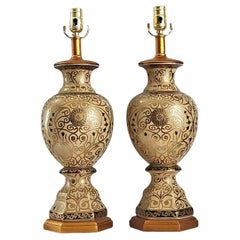
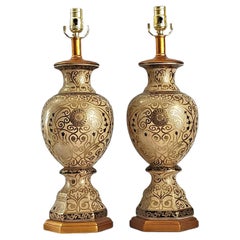
Vintage Hand Painted Ceramic Moorish Table Lamps Restored - A Pair
By Restoration Hardware, Bombay Furniture Co., Ralph Lauren, Christopher Spitzmiller, Uttermost
Located in Miami, FL
Vintage pair of hand painted gold and beige/light pink colored ceramic baluster lamps, circa Late 20th Century. These gorgeous Moorish style table lamps have been completely restored...
Brass
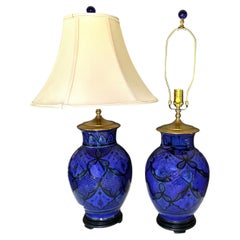
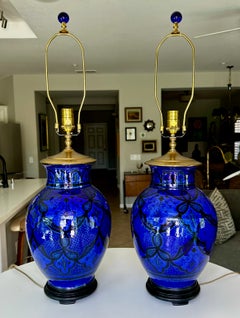
Pair of Vintage Mid-Century Moorish Safi Hand-Painted Cobalt Ceramic Table Lamps
Located in Palm Springs, CA
The upper collars are solid brass caps and brass lamp necks and sockets. The bold combination of intense royal blue, dark linework, and brass makes these a smart choice for global ec...
Brass
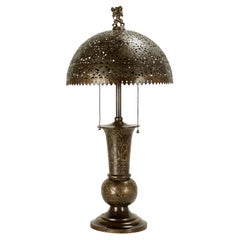
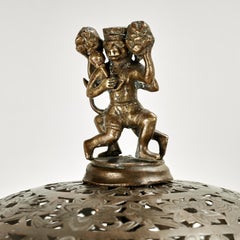
Antique Moroccan Pierced Brass Table Lamp
Located in Palm Beach, FL
Enchanting antique Moroccan table lamp featuring a dancing monkey finial on a pierced brass shade with floral and animal designs on a brass base with Moorish form and etched floral m...
Brass
$1,819Sale Price|20% Off
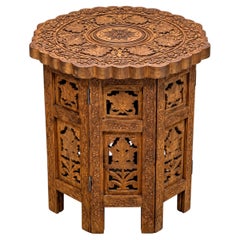
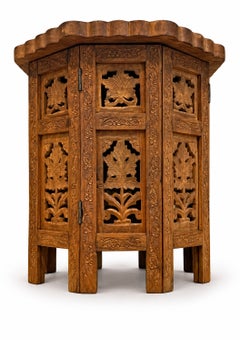
Antique Middle Eastern Octagonal Carved Table With Brass Inlay
Located in Reading, Berkshire
A striking antique carved wooden side table, featuring an exceptionally detailed octagonal form and a beautifully weathered, hand-crafted appearance. The substantial scalloped top is...
Brass
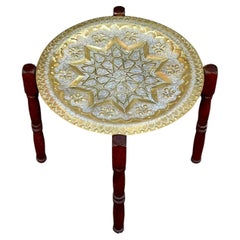

Vintage Moroccan Round Engraved Brass Tray top Table, 1970s
Located in Esbjerg, DK
A stylish yet practical 1960s or 1970s Moroccan - Moorish style tray top table originally intended for serving tea and/or tobacco.
Brass
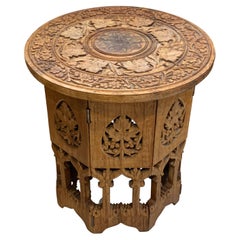
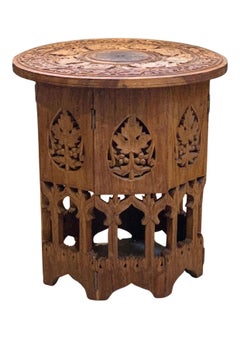
Antique Middle Eastern Circular Carved Side Table With Brass Inlay
Located in Reading, Berkshire
A striking antique carved wooden side table, featuring an circular top with an exceptionally detailed octagonal form base. Beautifully weathered, hand-crafted appearance. The substan...
Brass
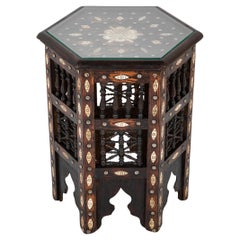
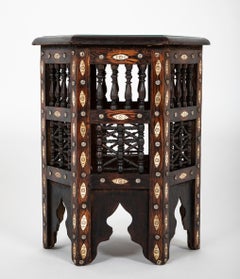
Moroccan Inlaid Hexagonal Side Table with Brass Nail Heads
Located in Stamford, CT
Moroccan six sided glass topped side table with incised bone inlay and nail heads, and signature decorative turned wood spindles throughout. Rich and warm patina, a very handsome sid...
Brass
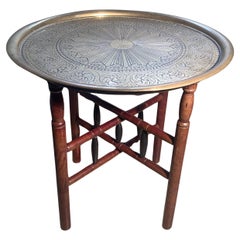
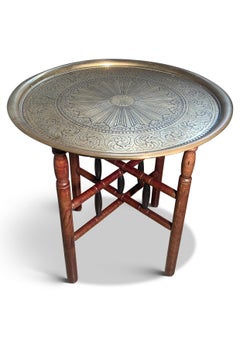
Handcrafted Folding Tea Table with Brass Tray, Liberty of London
By Liberty of London
Located in Reading, Berkshire
A Traditional Liberty of London Style Hand Crafted Middle Eastern Folding Tea Table With Removable Brass Circular Tray, Decorated With A Etched Intricate Repeating Pattern. The wood...
Brass
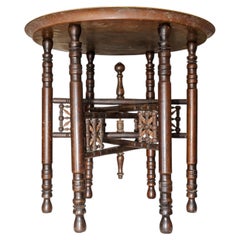
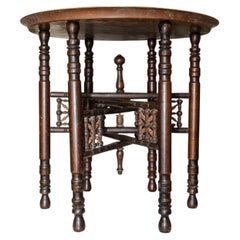
Handcrafted Liberty of London Folding Tea Table with Brass Tray, 1900s
By Liberty of London
Located in Reading, Berkshire
A Traditional Liberty of London Hand Crafted Middle Eastern Folding Tea Table With Removable Brass Circular Tray, Decorated With A Etched Intricate Repeating Pattern. The wooden bas...
Brass
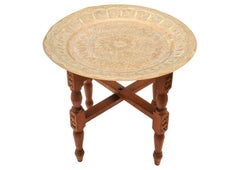
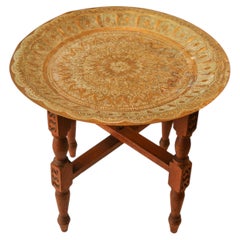
Handcrafted Antique Middle Eastern Folding Table With Removable Brass Tray 1900s
By Liberty of London
Located in Reading, Berkshire
A Traditional Liberty of London Style Hand Crafted Middle Eastern Folding Tea Table With Removable Brass Circular Tray, Decorated With A Etched Intricate Repeating Pattern. The wood...
Brass
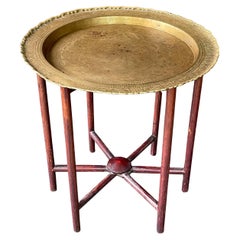
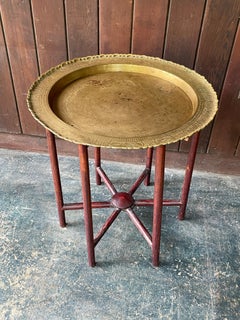
1930s Casablanca Brass Folding Tray Tea Table, Moroccan 6 Leg
Located in Hyattsville, MD
Early 1930s Moroccan Brass Folding Tray Tea Table, wonderful craftsmanship and quality. One of the oldest and Moroccan Tray tables we have come across. Very nice quality and heavy w...
Brass
$1,346Sale Price|25% Off
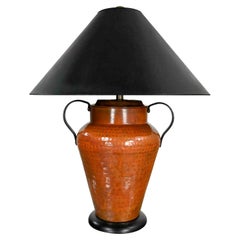
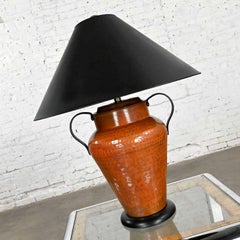
Moorish Style Frederick Cooper Hammered Copper Urn Shaped Double Handled Lamp
By Frederick Cooper
Located in Topeka, KS
It almost gives off a bronze hue…It’s just GORGEOUS!! This table lamp is Moorish style, but it leans a bit Traditional as well.
Brass, Copper, Iron
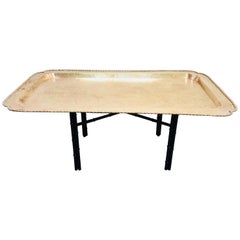
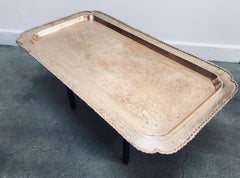
1960s Boho Chic Rectangular Brass Tray Coffee Table
Located in Moreno Valley, CA
Hollywood Regency style, Mid-Century brass tray table with etched rectangular brass tray. Sit on a metal faux bamboo base in black color. Made in Hong Kong with Chinese design and sc...
Brass
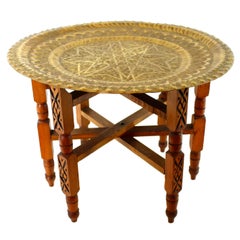
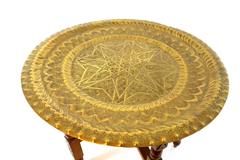
Moroccan Folding Tray Table in Brass and wood
Located in Barcelona, ES
Large Traditional Moroccan Folding Tray Table, Brass, Wood, Morocco, 1940s-1950s. This moorish brass tray table features a round brass tray with hand-hammered decorative details stan...
Brass
$560Sale Price / set|30% Off
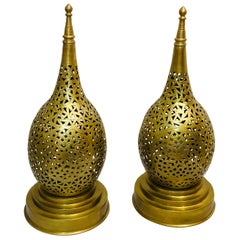
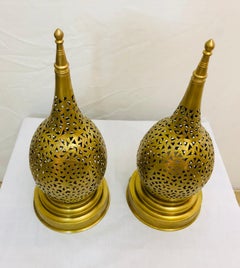
Tear Shaped Gold Brass Moroccan Table Lamps, a Pair
Located in Plainview, NY
The intricate filigree design work of this handcrafted brass tear-shaped lamp will elevate the ambiance of any room. Featuring a wonderfully unique design aesthetic, these pair of ta...
Brass
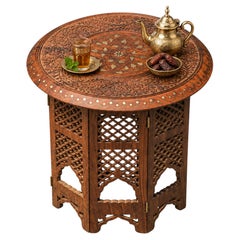
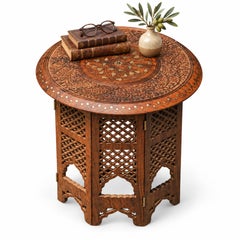
Antique Moroccan Occasional Table with Carved Wood & Brass Inlay
Located in Reading, Berkshire
A highly decorative early 20th century Middle Eastern / Moroccan occasional table, richly carved throughout and embellished with repetitive brass inlay.
Brass
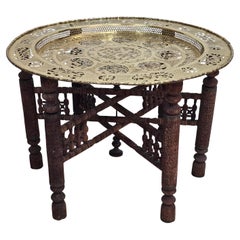
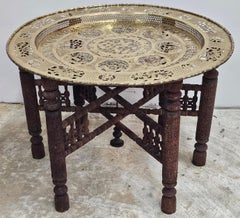
South East Asian Folding Wood Pierced Brass Tray Cocktail Table
Located in Germantown, MD
An early 20th South East Asian Folding carved Wood and Pierced Brass Tray Cocktail Table with 8 distinctive figural brass piercing scenes around a calligraphic center tray. Top tray...
Brass
$782Sale Price / set|49% Off
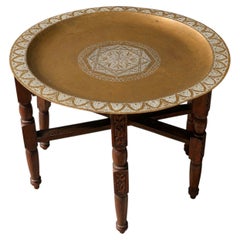
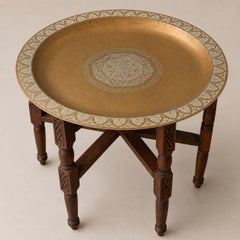
Indo Persian Hand-crafted Brass And Hardwood Occasional Tea Table
By Liberty of London
Located in Reading, Berkshire
Indo Persian Hand-crafted Brass And Hardwood Occasional Tea Table with a Highly Ornamental Decorative Tray Can Be Lifted Off The Frame, And Used Separately.
Brass
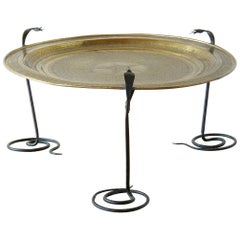
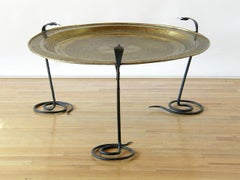
Wrought Iron Serpents Table with Hand Tooled Star Pattern on Brass Top
Located in Chicago, IL
This unique table has handwrought iron serpents for legs. Their coiled tails form their bases, then their heads rise up above the surface of the table. Their necks flare like Egyptia...
Wrought Iron, Brass
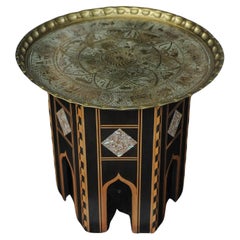
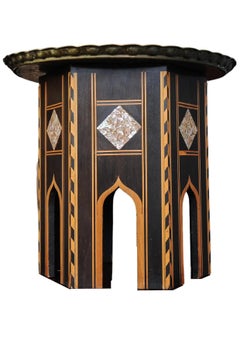
A Middle Eastern Ebonised Tea Table With Removable Brass Decorative Tray
Located in Reading, Berkshire
A Middle Eastern Antique Ebonised Tea Table With Removable Brass Decorative Pie Crust Edged Tray Top And Beautiful Inlay Full Height 51cm Base Width 41cm Brass Tray Diameter 58cm
Brass
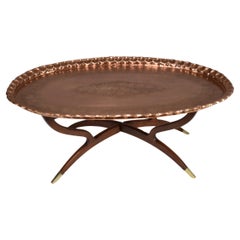
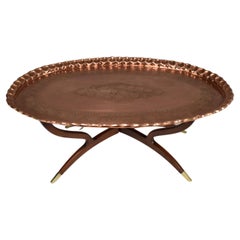
Hand-Etched Brass Moroccan Tray Table on Collapsible Base, c. 1960s
Located in Paris, FR
A fantastic 20th mid-century vintage Moorish oval-shaped coffee table composed of a removable meticulously sculpted and hand-engraved copper tabletop and a sculpted foldable wooden b...
Copper
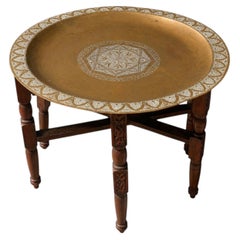
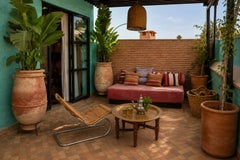
Hand-Crafted 19th Century Hardwood Tea Table Decorated With Etched Brass Tray
Located in Reading, Berkshire
19th Century Brass And Hardwood Tea Table Decorated With Decorative Engraving from the Middle East. Tray Can Be Lifted Off The Frame, And Used Separately. With Repetitive Geometric...
Brass
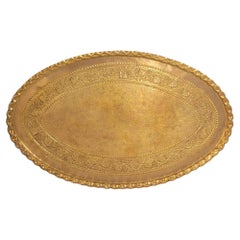
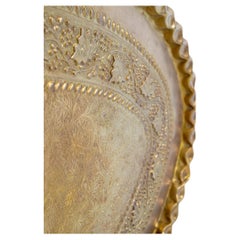
Massive Mid-Century Moroccan Brass Tray, Handcrafted, Oval, Circa 1950
Located in Moreno Valley, CA
Large Massive Mid-Century Brass Moroccan Oval Brass Tray. Hand tooled etched very large Moroccan polished brass tray. This oval brass tray is the largest we've ever seen, measuring 5...
Brass
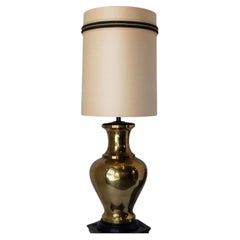
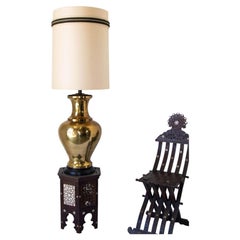
Polished Brass Large Scale Hollywood Regency Moroccan Urn Table Lamp 1950's
By Frederick Cooper
Located in Moreno Valley, CA
Mid-Century Modern Polished Brass Large Scale Moorish Brass Urn Table Lamp 1950's.
Brass
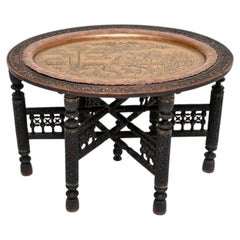
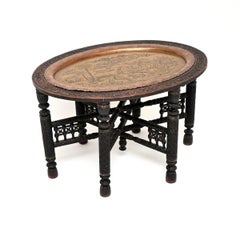
Antique Indian Tray Top Coffee Table
Located in London, GB
A beautiful and very impressive antique Persian tray top coffee table. This was made in India, and dates from around the 1880-1900 period. The quality is outstanding and this is muc...
Brass

$2,400 / set
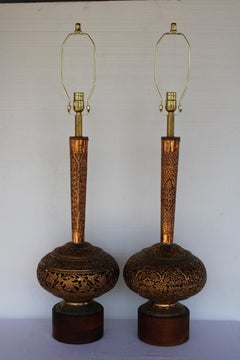
Pair Tall Indo Persian Copper Table Lamps
Located in Palm Springs, CA
Tall repoussé copper table lamps with solid teak wood bases. Intricate fretwork on the lower portions creates interesting light play. These are from the estate of the original owner ...
Brass, Copper
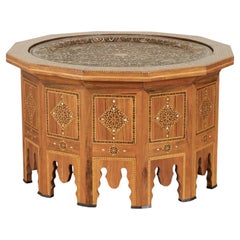
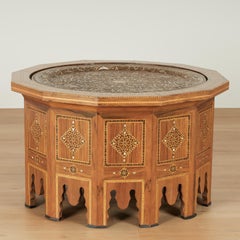
Antique Moroccan Inlaid Table with Tray Top
Located in Palm Beach, FL
Impressive antique Moroccan table crafted in mahogany featuring a removable silvered brass tray hand hammered in symbolic and floral designs, a base with twelve sides having inlaid a...
Brass
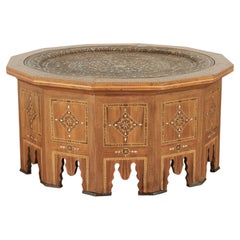
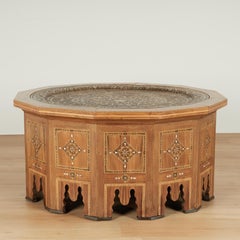
Antique Moroccan Inlaid Table with Tray Top
Located in Palm Beach, FL
Impressive antique Moroccan table crafted in mahogany featuring a removable silvered brass tray hand hammered in symbolic and floral designs, a base with twelve sides having inlaid a...
Brass
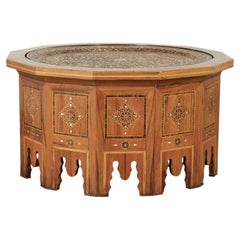
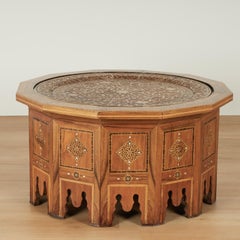
Antique Moroccan Inlaid Table with Tray Top
Located in Palm Beach, FL
Impressive antique Moroccan table crafted in mahogany featuring a removable silvered brass tray hand hammered in symbolic and floral designs, a base with twelve sides having inlaid a...
Brass
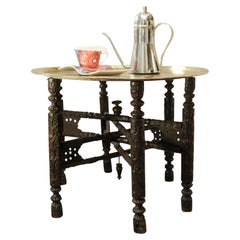
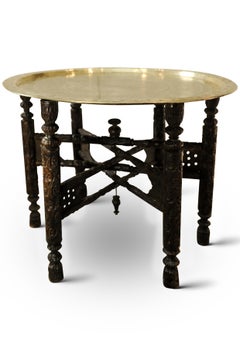
A Liberty of London Style Eastern Decorative Tea Table With Removable Tray
Located in Reading, Berkshire
A Traditional Liberty of London Style Hand Crafted Middle Eastern Folding Tea Table With Removable Brass Circular Tray, Decorated With A Etched Repeating Pattern To Base.
Brass
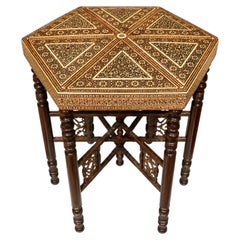
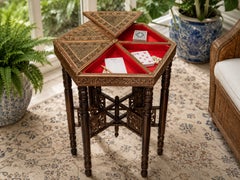
Eastern Khatam Box, Hand-Crafted Inlaid Wood, Geometric Design, 1800s
Located in Reading, Berkshire
An exceptionally decorative 19th-century Eastern Khatam work table and compartmented box, finely hand-crafted with elaborate geometric inlay throughout. The hexagonal top is divided...
Brass
$1,450 / set
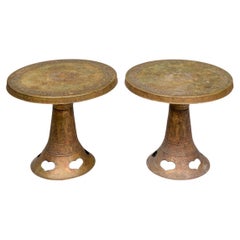
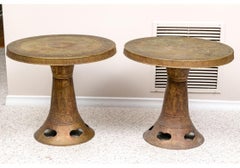
Pair Of Mid Century Eastern Brass Side Tables
Located in Bridgeport, CT
Round tops with raised foliate center and outer bands. Raised on trumpet shaped supports with heart shaped cut outs and decorated with low relief bands with leaves and palmettes. D...
Brass
$950Sale Price|29% Off
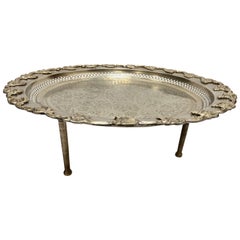
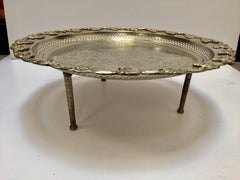
Moroccan Polished Round Footed Silvered Tray Table
Located in Moreno Valley, CA
Moorish tray table handcrafted by Master artisans in Fez, hand-hammered using simple tools.
Metal, Brass
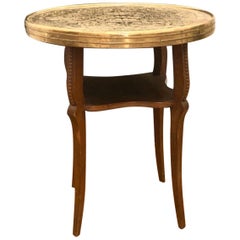
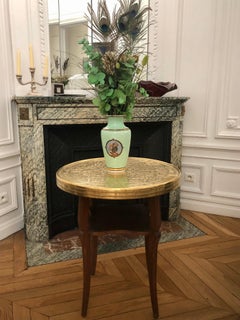
Moroccan Orientalist Moorish Round Polished Brass Side, circa 1920
Located in Paris, France
The English table from the 1920s in a golden brass is chiseled and hammered by hand with calligraphy cartridges, stars, leaves and beautiful elements will bring a sophisticated touch...
Brass
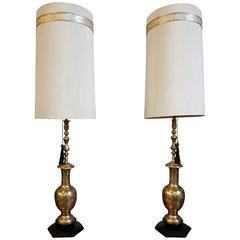
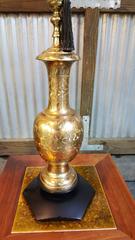
Large-Scale Moroccan Style Brass Table Lamps
Located in Fulton, CA
Grand-Scale pair of Moorish brass lamps. Sockets and wiring done in USA, circa. 1960s. Original wooden bases, intricate hand chased detail, vintage tassel and original shades. Lamps ...
Brass
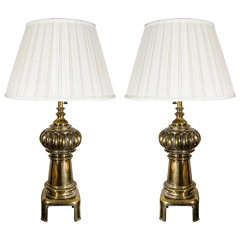
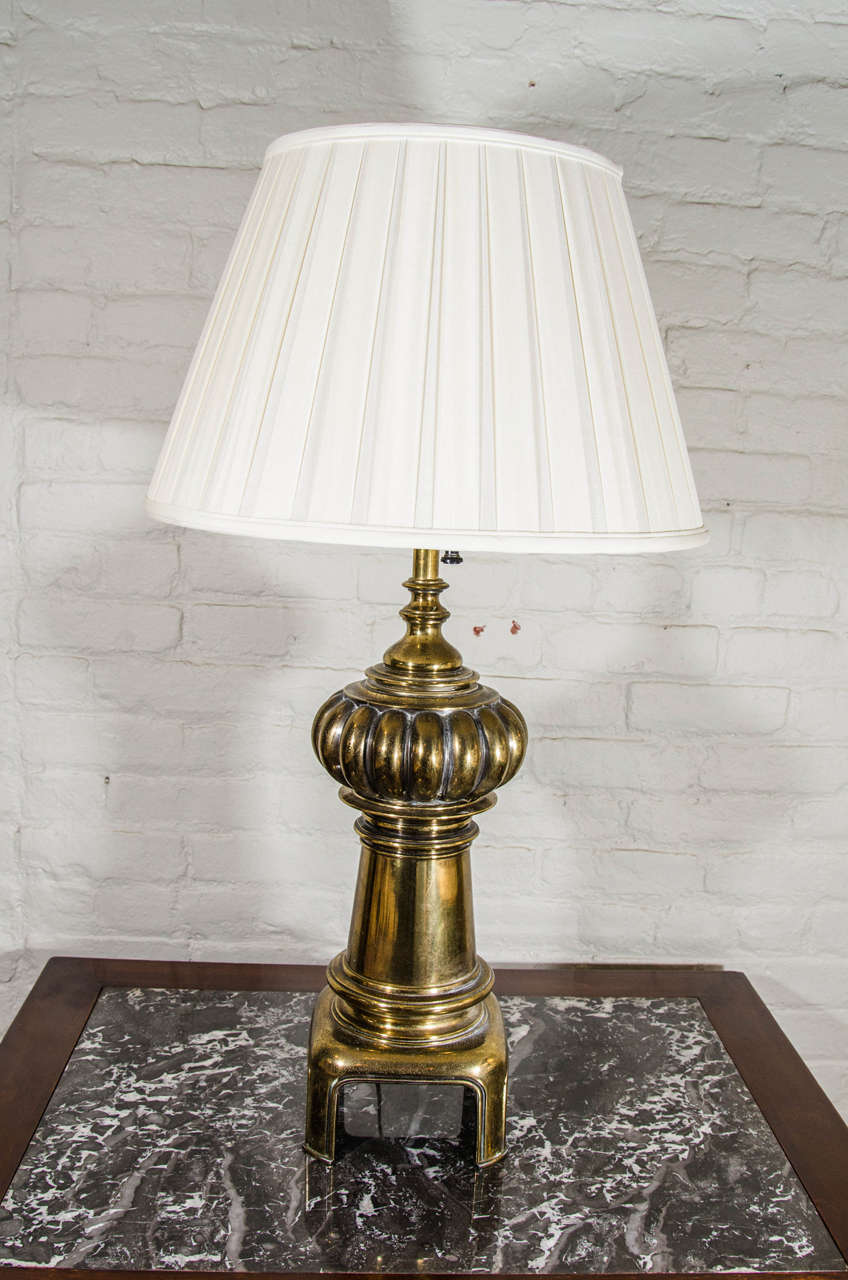
Pair of Moroccan Inspired Brass Lamps
Located in Long Island City, NY
The form of the lamp bases shaped like an Arabian tower on a platform base
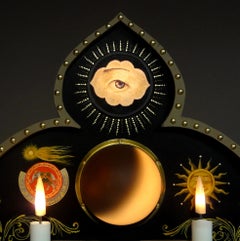
/ Art Donovan / "Most Excellent Rumi Redux" Table Light Sculpture
By Art Donovan
Located in Southampton, NY
The crown, carved maple, is entirely hand painted in gouache with gold leaf and translucent dyes: The glowing “All Seeing Eye” (also referred to as a "Lover's Eye) is illuminated fr...
Brass
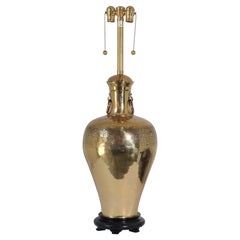
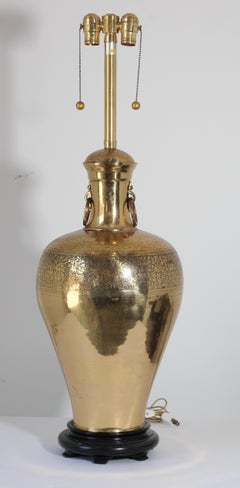
Anglo Indian Moorish Brass Table Lamp by Frederick Cooper
By Rajhastani
Located in Moreno Valley, CA
by Frederick Cooper large Anglo Indian Moorish brass table lamp, finely embossed with chased floral designs, sits on a black ebonized lacquered base.
Brass
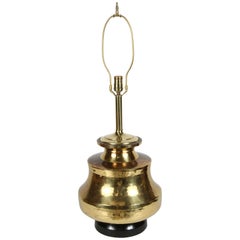
Polished Vintage Moroccan Moorish Brass Table Lamp
Located in Moreno Valley, CA
Very nice polished Moroccan brass vintage midcentury table lamp, hand-hammered brass on a black lacquered wooden base.
Brass
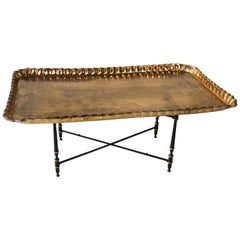
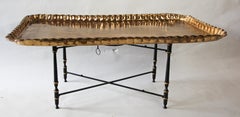
Moorish Rectangular Brass Tray Coffee Table
Located in Moreno Valley, CA
Moorish rectangular brass tray coffee table on folding base.
Metal, Brass
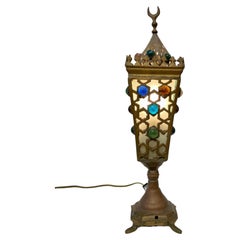
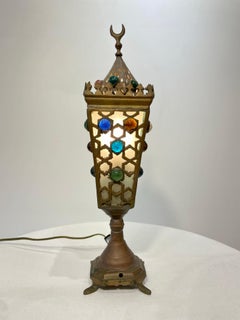
Brass Cabochon Moorish Table Lamp
Located in West Hollywood, CA
Brass and opaque glass Moorish style small table lamp with covered glass cabochon details.
Brass
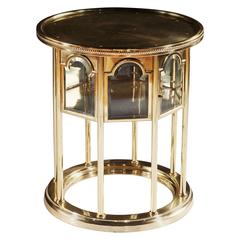
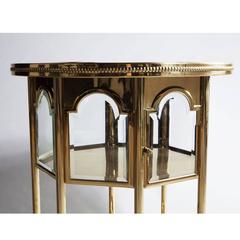
Brass Centre Table in the Moorish Taste
Located in London, by appointment only
A brass Moorish style circular centre table with a reeded edge to the top above glazed section with doors, the whole supported on columns, above a ring plinth.
Brass
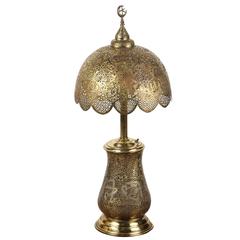
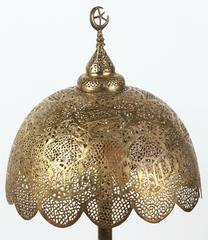
Moorish Revival Brass Syrian Table Lamp
By Brasscrafter Co. 1
Located in Moreno Valley, CA
Middle Eastern Syrian Moorish Revival with Arabic calligraphy. Moorish Revival Syrian brass table lamp with pierced filigree brass stand and shade and surmounted by the moon and sta...
Brass
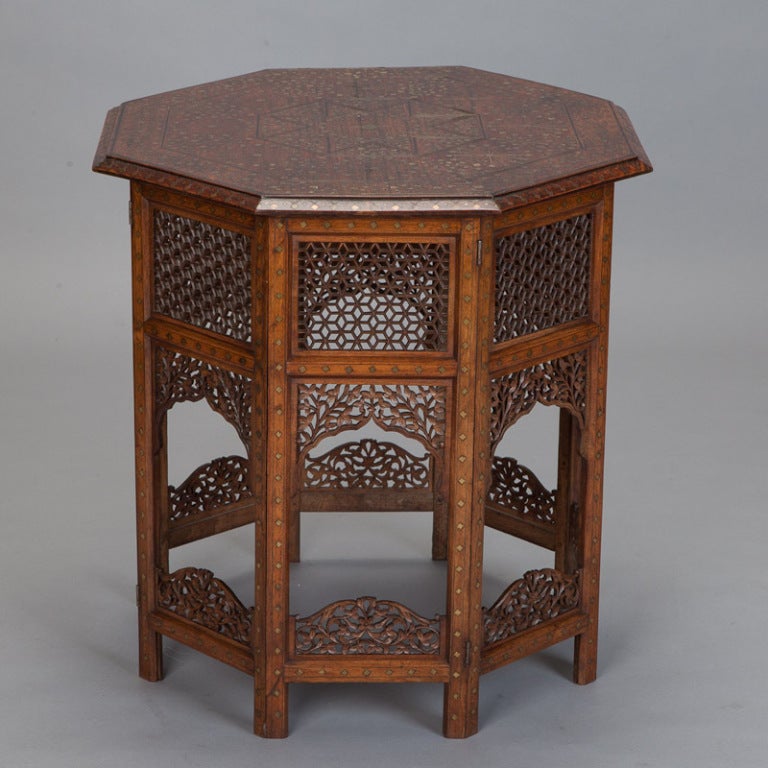
Moorish Table With Extensive Brass Inlay
Located in Troy, MI
Eight sided Moorish table with elaborate carving and brass inlay
Brass
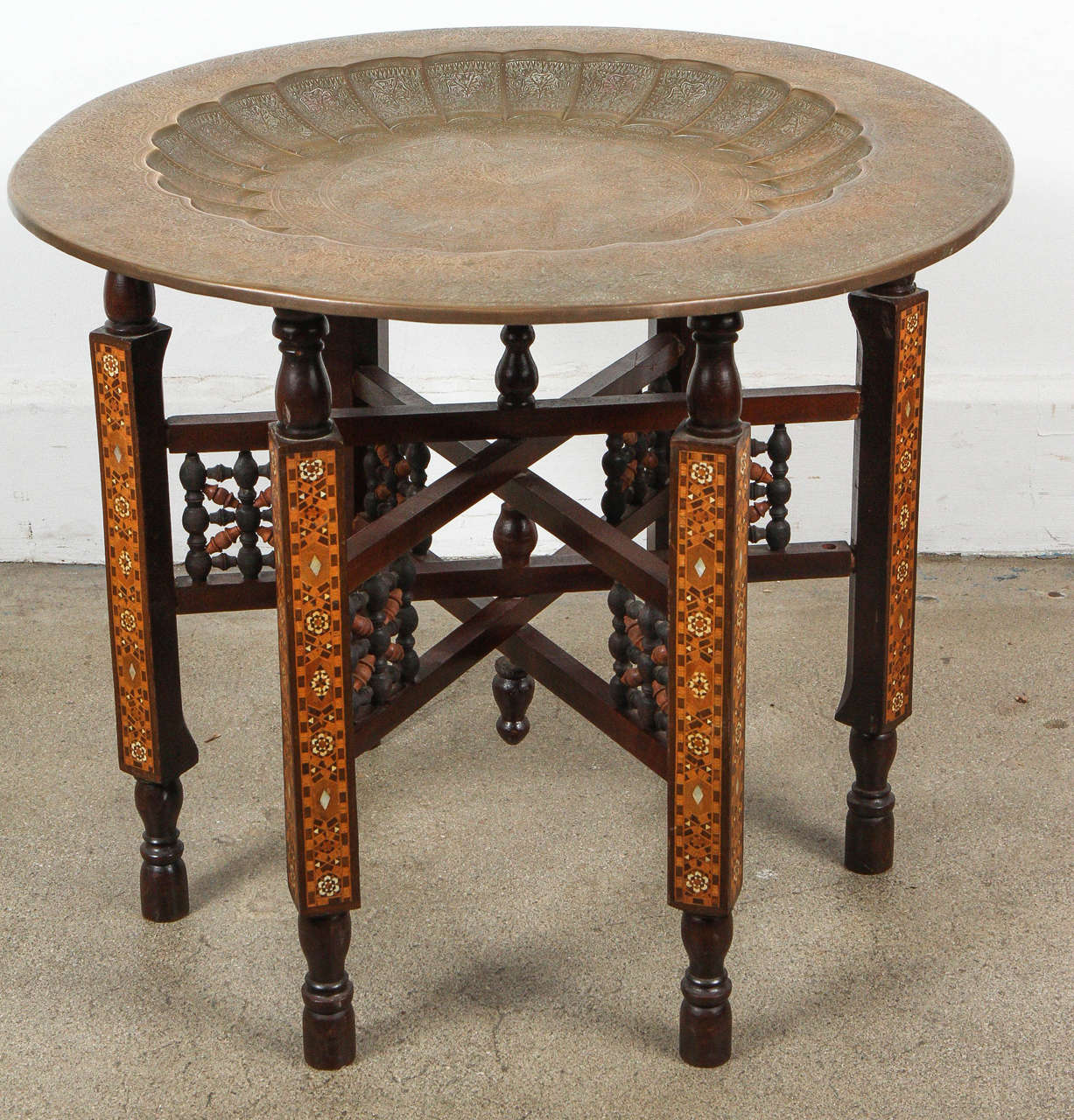
Moorish Brass Tray Table on Inlaid Folding Stand
Located in Moreno Valley, CA
Antique Anglo-Indian brass tray on folding stand inlaid with mother-of-pearl. Amazing fine hand chiseled brass tray table, very fine intricate work on brass, sit on an antique Middl...
Brass
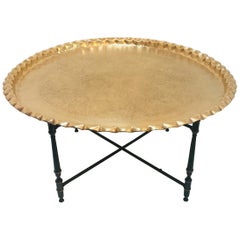
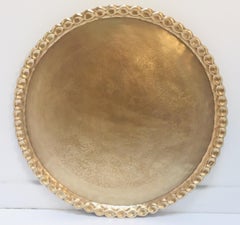
Large Moorish Polished Brass Tray Table on Folding Stand
Located in Moreno Valley, CA
Very hard to find 40 inches diameter large metal hand-hammered brass tray coffee table. Middle Eastern, Moorish style polished brass tray table on folding stand.
Brass
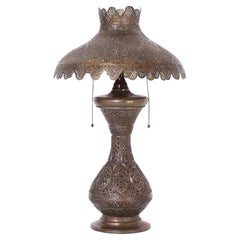
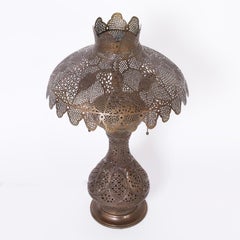
Moroccan or Moorish Pierced Brass Table Lamp
Located in Palm Beach, FL
As if from the set of Casa Blanca, an alluring antique Moroccan table lamp and original matching shade hand crafted in pierced brass now having a lush bronze like patina.
Brass
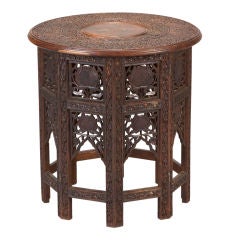
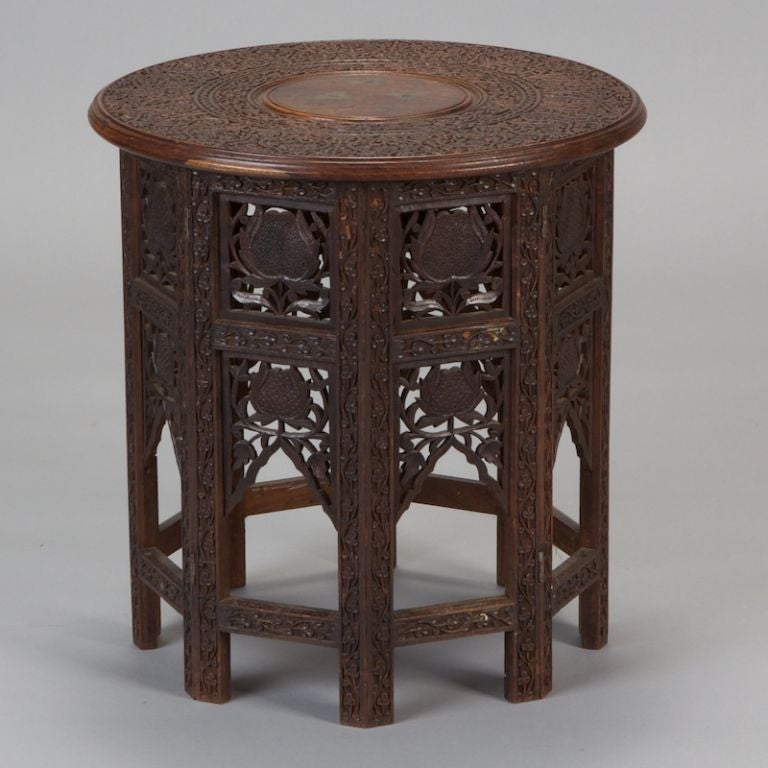
Large Moorish Style Table with Brass Inlay
Located in Troy, MI
Circa 1920s Moorish style table with round top embellished with center decorative brass inlay.
Brass
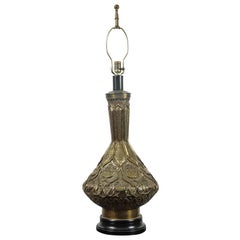
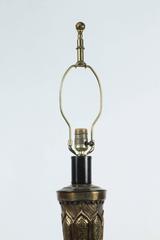
Moorish Indo Persian Brass Table Lamp
Located in Moreno Valley, CA
Large Indo Persian brass table lamp, finely embossed with Moroccan repousse floral designs, sits on a black ebonized lacquered base.
Brass
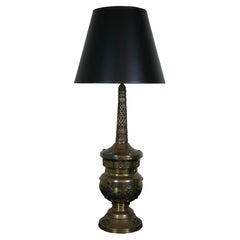
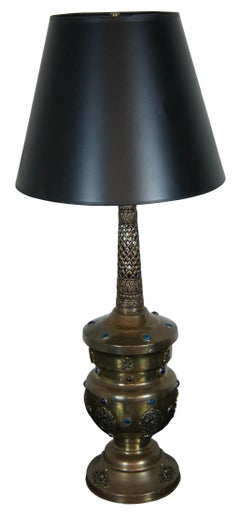
Vintage Moroccan Moorish Pierced Reticulated Jeweled Brass Table Lamp
Located in Dayton, OH
Vintage Moroccan / Moorish pierced brass table lamp decorated with floral motifs and multi-colored gemstones.
Multi-gemstone, Brass
Sold
H 21.26 in Dm 22.05 in
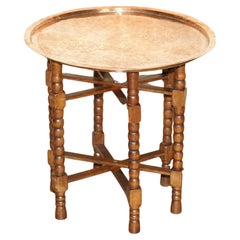
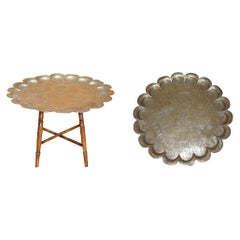
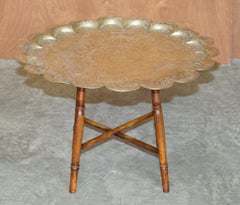
Moorish Moroccan Liberty's London Brass Folding Tray Table Engraved Temple Top
By Liberty of London
Located in West Sussex, Pulborough
We are delighted to offer for sale this very decorative Moroccan Moorish Liberty’s of London retailed antique folding tray table with etched brass top depicting a temple.
Brass
Sold
H 19.3 in Dm 27.96 in
Antique Moorish Moroccan Liberty's London Brass Folding Tray Table Engraved Top
By Liberty of London
Located in West Sussex, Pulborough
We are delighted to offer for sale this very decorative Moroccan Moorish Liberty’s of London retailed antique folding tray table with etched brass polished top A good looking well...
Brass
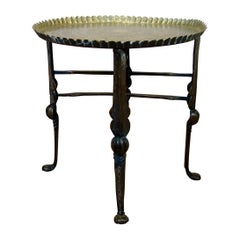

18th Century Small Moorish Brass Tray Top Folding Table
Located in Basingstoke, Hampshire
A small Moorish brass tray top table. Decorated with foliate scrolls, figures in panels and script.
Brass
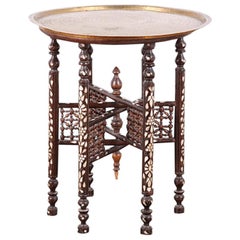

Syrian or Moorish Inlaid Mother of Pearl Six Legged Brass Top Side Table
Located in Vancouver, British Columbia
An ornate Syrian side table, the folding six-legged base with minute spindle-turned details and mother of pearl inlay, the brass tray top with ornate geometric engraving.
Brass


Pair of Fancifully Carved Moorish Tables with Brass Tops
Located in Danville, CA
Dramatic pair of Octagonal Rosewood Side Tables with relief carved paneled supports. The tops are clad in heavy brass.
Brass
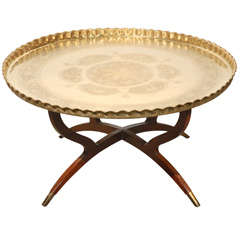
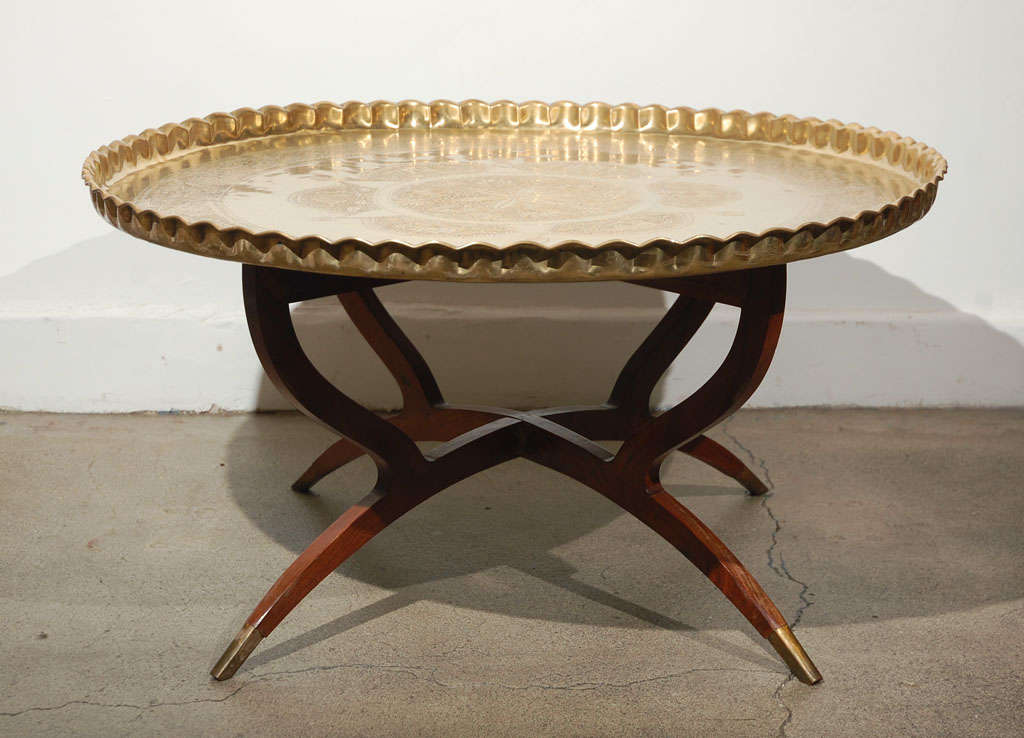
Middle Eastern, Moorish Brass Tray Table 36" Diameter
Located in Moreno Valley, CA
Middle Eastern, Moorish style polished brass tray table with mahogany folding stand.

Sold
H 24 in Dm 22 in
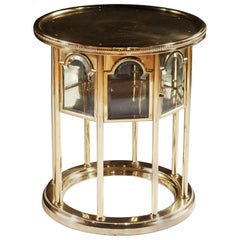
Mid Century Modern Polished Brass Occasional Table - Viennese Moorish Side Table
Located in London, by appointment only
Nicholas Wells Antiques is delighted to offer this stunning Mid Century Modern polished brass circular occasional table or Side table. The design relates strongly to the mid century ...
Brass
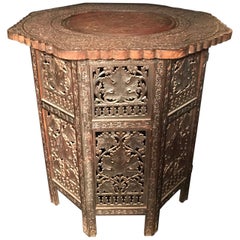
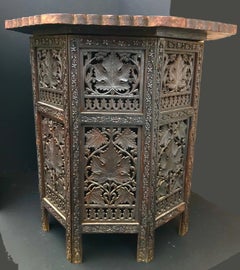
Hardwood Carved Moorish Style Octagon Side Table Tabouret
Located in Vero Beach, FL
This octagon hardwood Tabouret is intricately carved with grape vine leaves. The top is highly decorated with a carved design and the center is inlaid with brass ornaments. The top i...
Brass
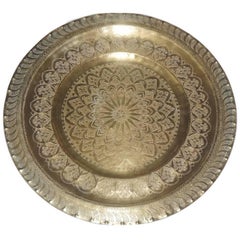

Vintage Moorish Midcentury Tray
Located in Stamford, CT
A stunning vintage midcentury Moroccan brass tray cocktail table. Decorative details on tray and wood table legs / base. Elegant design offers plenty of room to place items. Table ca...
Brass
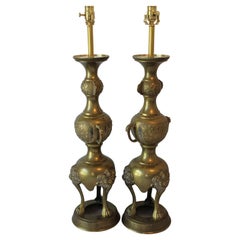

Pair of Moroccan Moorish Brass Lamps
Located in Palm Springs, CA
Pair of Moroccan Moorish brass lamps. Lamps measure 30.5" high from base to the bottom of socket and 8.5" diameter. Lamps have been professionally rewired with high quality brass har...
Brass
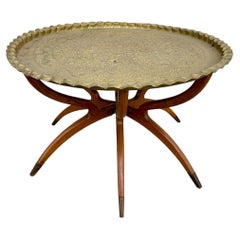
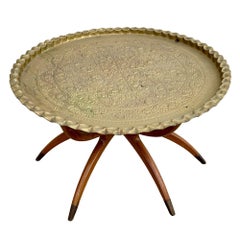
Mid-century Moroccan Moorish Tray Coffee Table
Located in Van Nuys, CA
Original hand-hammered brass Moroccan tray with a 6-leg folding Mide-century arched mahogany base, a seamless blend of the bohemian and high modern. The set can be used as a table or...
Brass
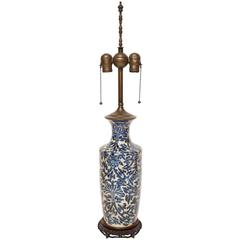
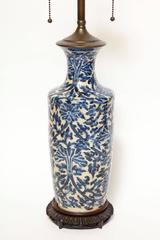
Moorish Blue and White Painted Table Lamp
Located in New York, NY
A blue and white Moorish style table lamp, in a blue and white trefoil motif, on circular gadrooned base with four feet, the double cluster fitting surmounted by a turned stem with f...
Brass, Bronze
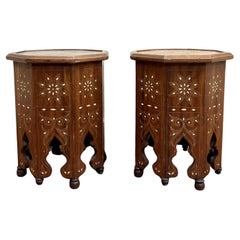

Pair of Moorish Inlaid Tables
Located in Southampton, GB
Pair of Octagonal Moorish Side Tables. With brass and bone inlay, all resting on bun feet.
Oak
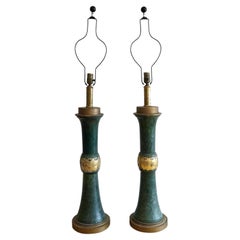
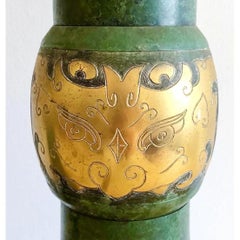
Vintage Patinated Green Brass Moorish Lamps After Pepe Mendoza, a Pair
By Pepe Mendoza
Located in West Palm Beach, FL
Fabulous pair of vintage MCM table lamps. Done in the manner or Pepe Mendoza. Beautiful patinated green brass body with brass hardware. Acquired from a Palm Beach estate.
Brass, Bronze


1970s Moorish Tray Top Coffee Table
Located in Tarrytown, NY
1970s Moorish coffee table. Brass and glass tray lifts out of the wood base.
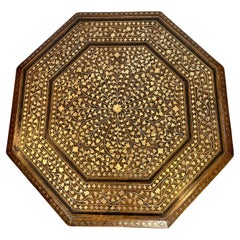
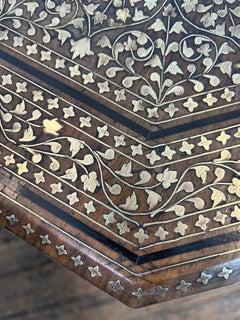
Antique Indian Hoshiarpur Brass inlaid Table
Located in Sherborne, GB
Hoshiarpur hexagonal table circa 1890 profusely inlayed with brass foliage and barbers pole decoration to the legs, the table is in very good condition with no missing inlays and a p...
Brass
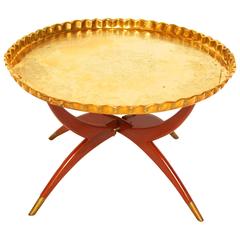
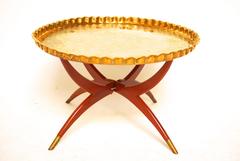
Middle Eastern Brass Tray Table
Located in Rio Vista, CA
Vintage Middle Eastern engraved brass tray table with mahogany folding Stand and brass feet.
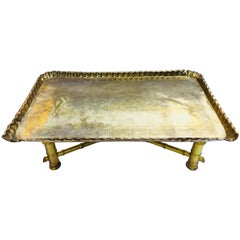
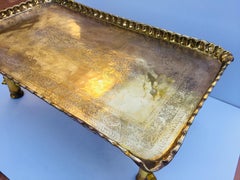
Rectangular Moroccan Brass Tray Coffee Table
Located in Moreno Valley, CA
Moroccan rectangular brass tray coffee table. Large rectangular hand etched, hammered and embossed, chiseled brass tray table on gilded wooden base in faux bamboo design.
Metal, Brass
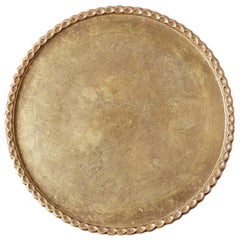
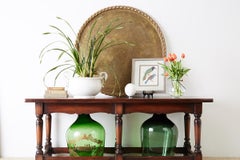
Large Moroccan Brass Tray Table Tops
Located in Rio Vista, CA
Matching pair of large Moroccan brass tray table tops featuring a thick pie crust scalloped edge. Intricately decorated with Persian style vine and foliate designs. Excellent for wal...
Brass
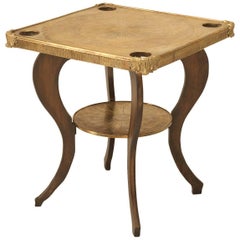
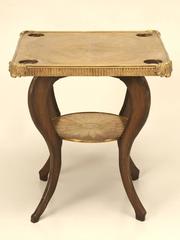
French Game Table with Brass Top
Located in Highwood, IL
The Moorish style of this game table is similar to what was used in the Hôtel du Palais in Biarritz.
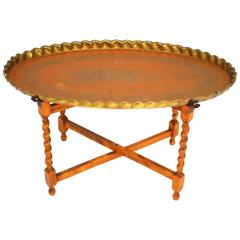
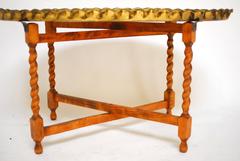
Oval Moroccan Brass Tray Table
Located in Rio Vista, CA
Oval Moroccan Turkish style brass tea tray table with a folding wood base featuring barley twist supports. It has faded patina on the top side and the bottom is shiny. It also has a ...
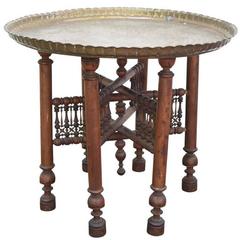
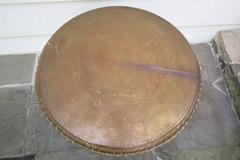
Antique Middle Eastern Brass Tray Table
Located in Bridgeport, CT
Middle Eastern antique table with a chiseled brass tray table with intricate folding base. Measures: Closed base is 20′′ W x 6′′ D x 21′′ H; Tray is 2′′ H.
Brass
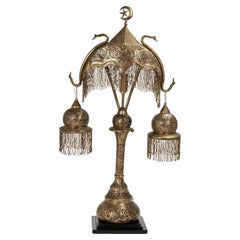
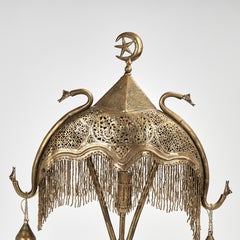
Antique Moroccan Brass Table Lamp
Located in Palm Beach, FL
Enchanting antique Moroccan table lamp crafted in perforated brass featuring a crescent moon shade with tassels and two serpents holding hanging shades on a moorish style base with a...
Brass
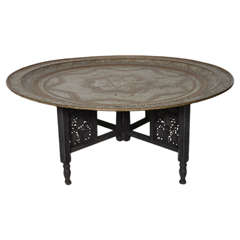
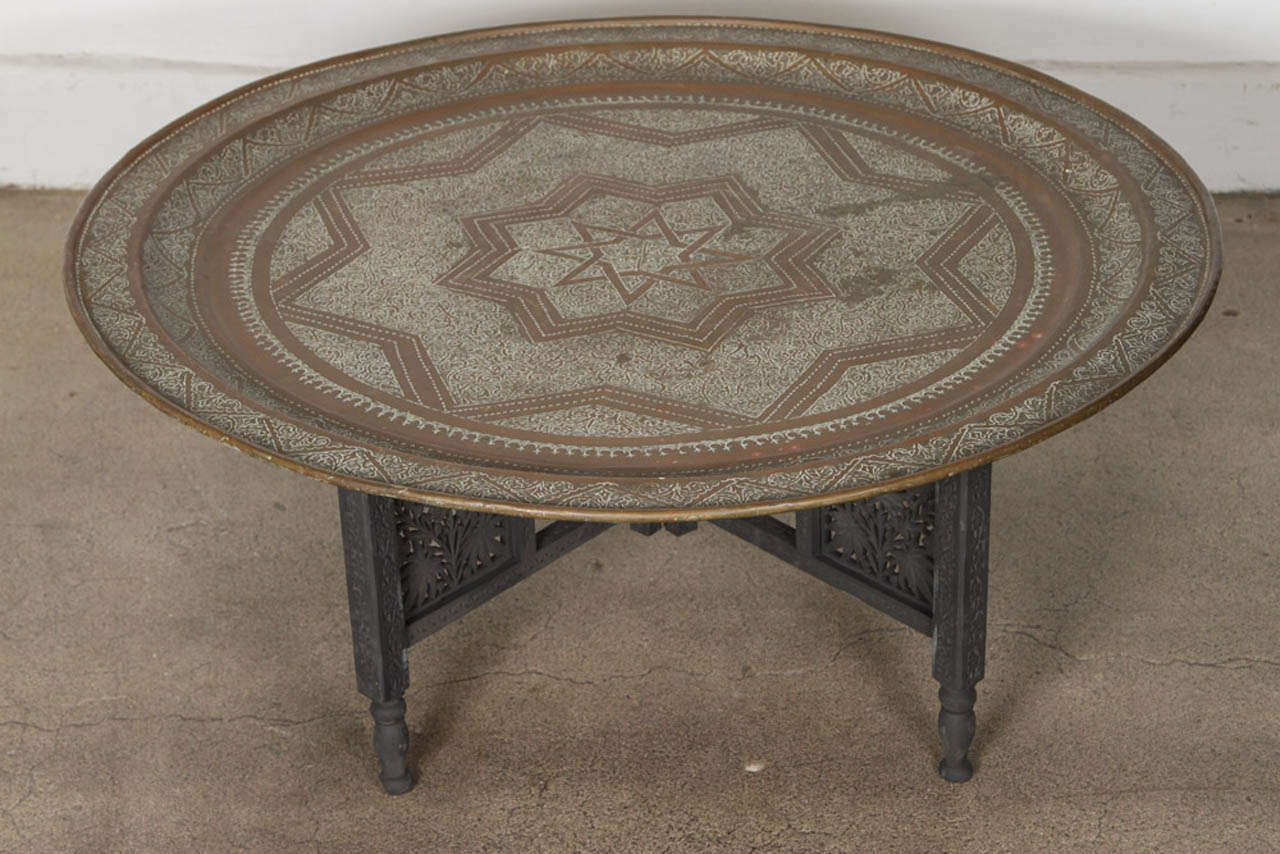
Moroccan Round Brass Tray Coffee Table
Located in Moreno Valley, CA
Antique Moroccan brass tray table with very nice patina, sit on a black folding stand nicely hand-carved. The brass tray is hand- engraved and embossed. This large 39" round brass ...
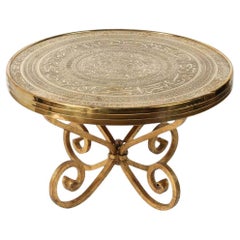
Middle Eastern Vintage Brass Tray Table on Gilt Iron Stand
Located in Moreno Valley, CA
Middle Eastern Moorish Vintage brass repousse tray table with gilt iron stand.
Brass, Iron
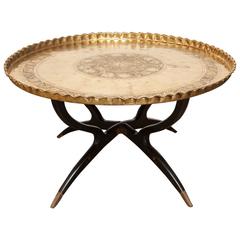
Mid-Century Moroccan Folding Brass Tray Table
Located in Rio Vista, CA
Splendid middle eastern brass tray table supported by a folding spider style base finished in black lacquer with brass feet. Features intricately etched foliate designs on the polish...
Brass
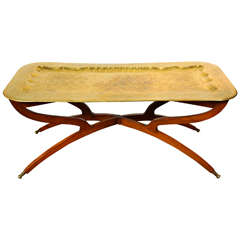
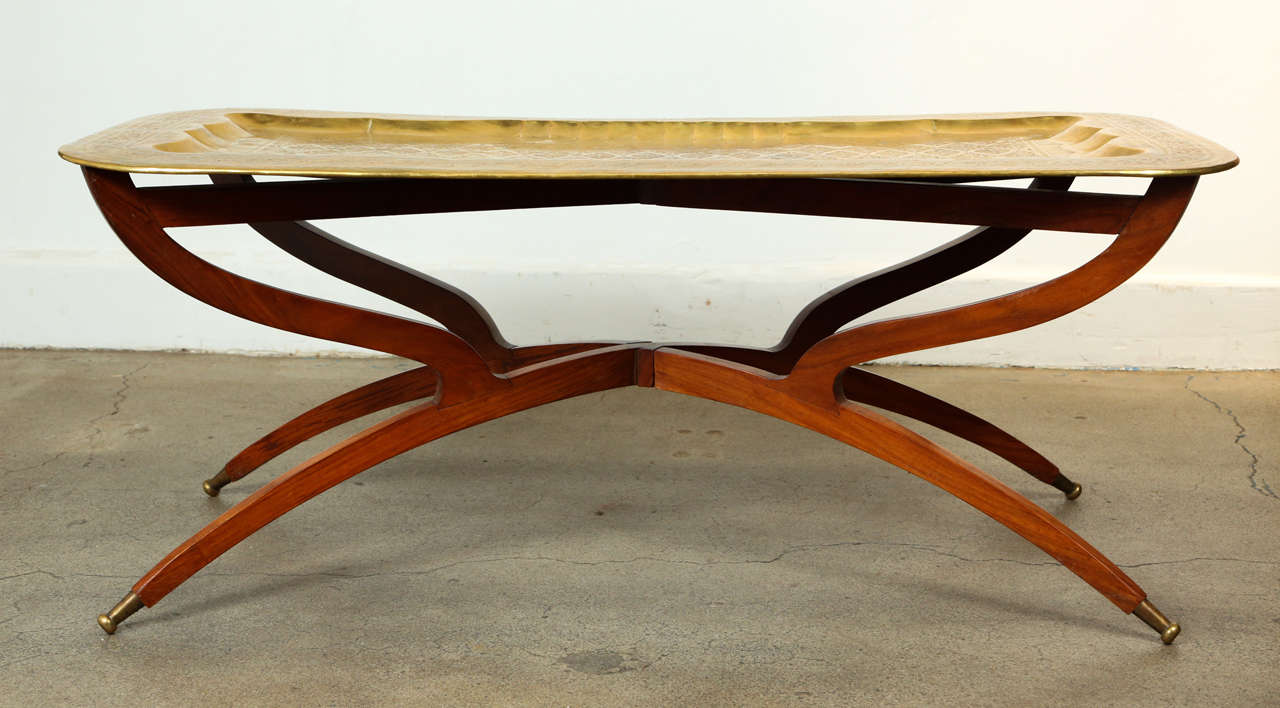
Moroccan Rectangular Brass Tray Coffee Table
Located in Moreno Valley, CA
Moroccan style Midcentury rectangular brass tray coffee table. Great looking large rectangular hand etched, hammered and embossed, chiseled brass tray table on collapsing wooden b...
Brass

Turkish Round Brass Charger Side Table
Located in Astoria, NY
Turkish round brass tray or charger side table featuring a central figural medallion. The charger rests on a folding bamboo-form six legged frame. In great vintage condition with age...
Metal
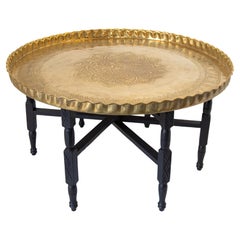
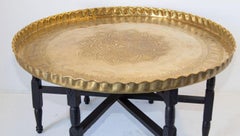
Moroccan Round Brass Tray Table on Folding Stand
By Berber Tribes of Morocco
Located in Moreno Valley, CA
Middle Eastern, Moorish style polished brass tray table with a wood folding stand.
Brass
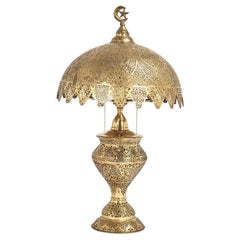
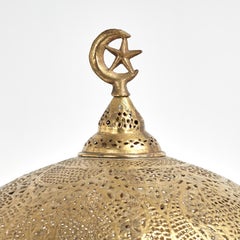
Antique Moroccan Brass Table Lamp
Located in Palm Beach, FL
Enchanting antique Moroccan Orientalist table lamp crafted in brass having a crescent moon and star finial for spiritual guidance over a shade and base perforated with symbolic designs.
Brass
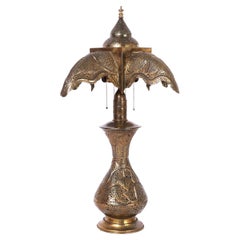
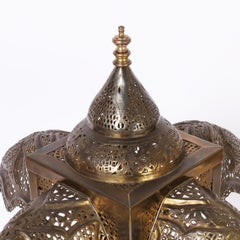
Antique Moroccan Brass Table Lamp
Located in Palm Beach, FL
Enchanting large antique Moroccan table lamp handcrafted in perforated brass with a dome and four part shade over a base with classic hourglass form.
Brass
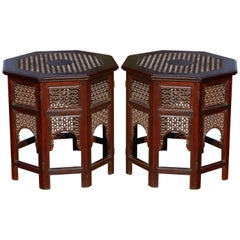
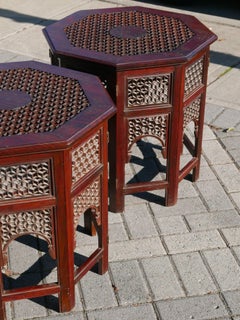
Pair of Moroccan Sheesham Wood and Brass Fretwork Tables
Located in Kilmarnock, VA
Stunning pair Moroccan sheesham wood and brass carved fretwork tables. One of the best versions of these tables i've ever seen.
Brass
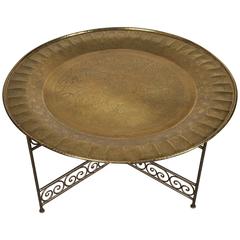
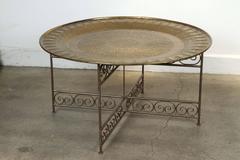
Moroccan Round Brass Tray Table on Iron Base
Located in Moreno Valley, CA
Moroccan round brass tray table on iron folding base. Nice handcrafted polished brass tray, hand-hammered with Moroccan traditional designs. Handmade in Fez by Master artisans. Gr...
Brass
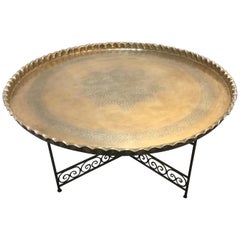
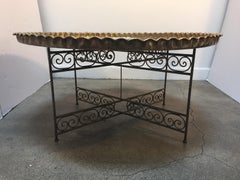
Large Moroccan Round Brass Tray Table on Iron Folding Stand
Located in Moreno Valley, CA
Very hard to find 45 inches diameter large metal hand-hammered brass tray coffee table. Middle Eastern, Moorish style polished brass tray table.
Brass
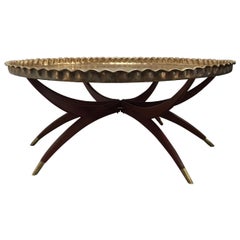
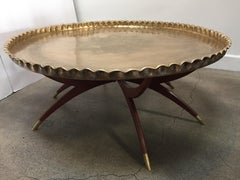
Large Midcentury Round Brass Tray Table on Folding Stand
Located in Moreno Valley, CA
Very hard to find 45 inches diameter large metal hand-hammered brass tray coffee table. Middle Eastern, Moorish style polished brass tray table with a midcentury mahogany folding sta...
Brass
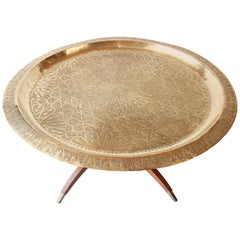
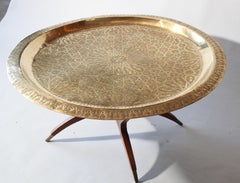
Large Moroccan Round Brass Tray Table on Folding Stand
Located in Moreno Valley, CA
Large metal hand-hammered brass tray coffee table. Middle Eastern, Moorish style polished brass tray table with a midcentury mahogany folding Stand.
Brass
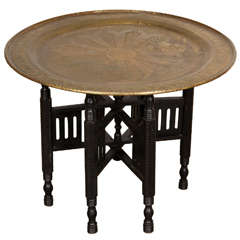
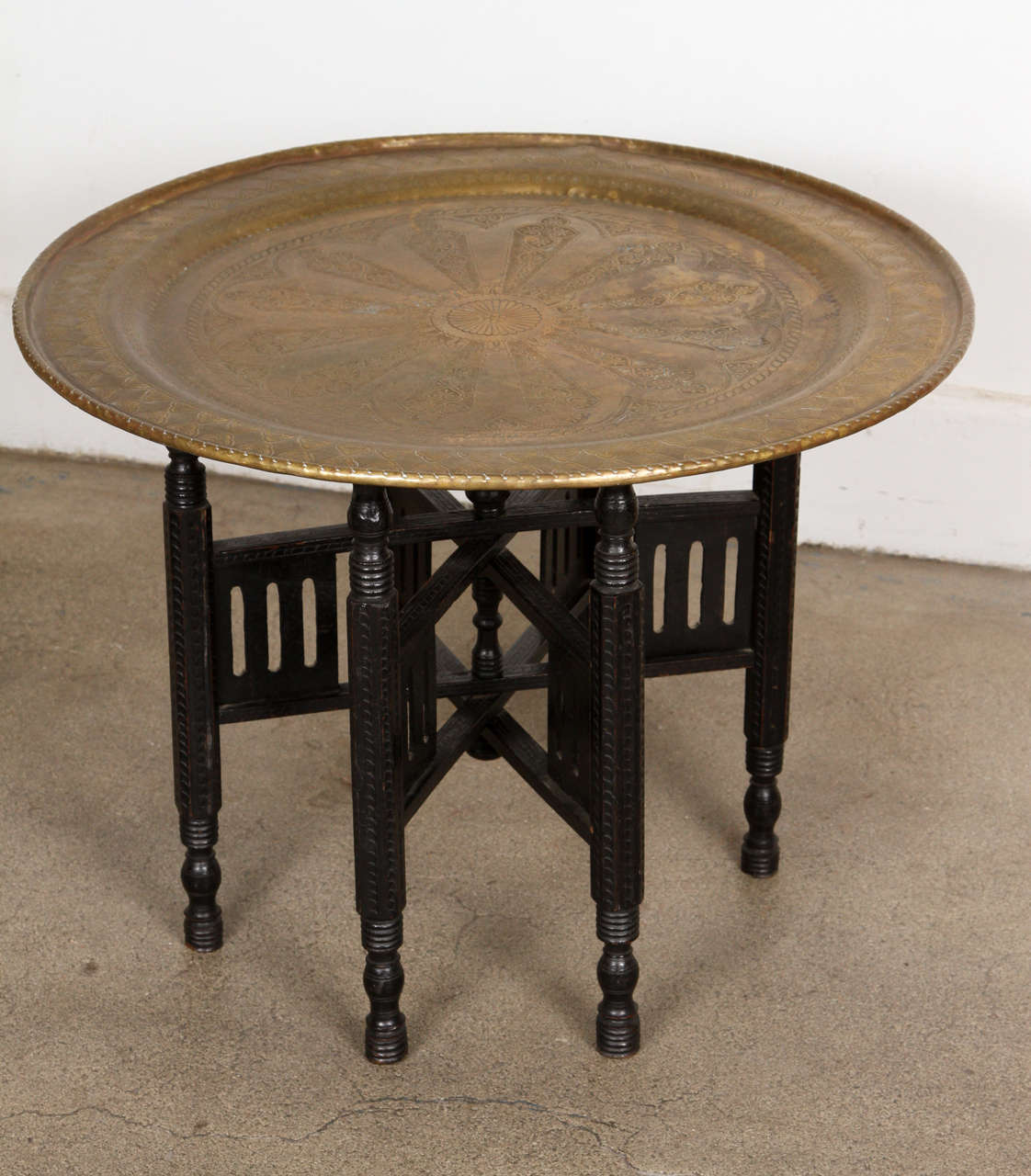
Middle Eastern Persian Brass Tray Table With Folding Wooden Base
By Mamluke
Located in Moreno Valley, CA
Middle Eastern chiseled engraved and hammered brass tray, Islamic style Mamluke with a black wooden folding base. Nice patina on the tray, delicately adorned with geometric and flor...
Brass
Polished Moroccan Brass Tray Side Table on Spider-Leg 1950
Located in Moreno Valley, CA
Moorish style hand-hammered brass tray table, Middle Eastern, Moorish style polished brass tray table with a midcentury spider folding stand.
Brass
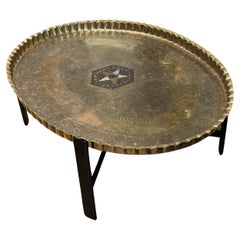
Moroccan Hand Texted Brass Coffee Table, Circa 1930
Located in West Hollywood, CA
Moorish hand- engraved repoussé brass coffee table fitted with newly made iron base, Circa 1930 Sourced from Morrocco by Martyn Lawrence Bullard
Brass, Iron
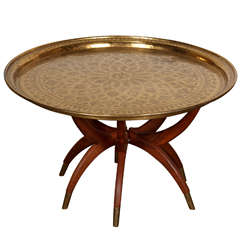
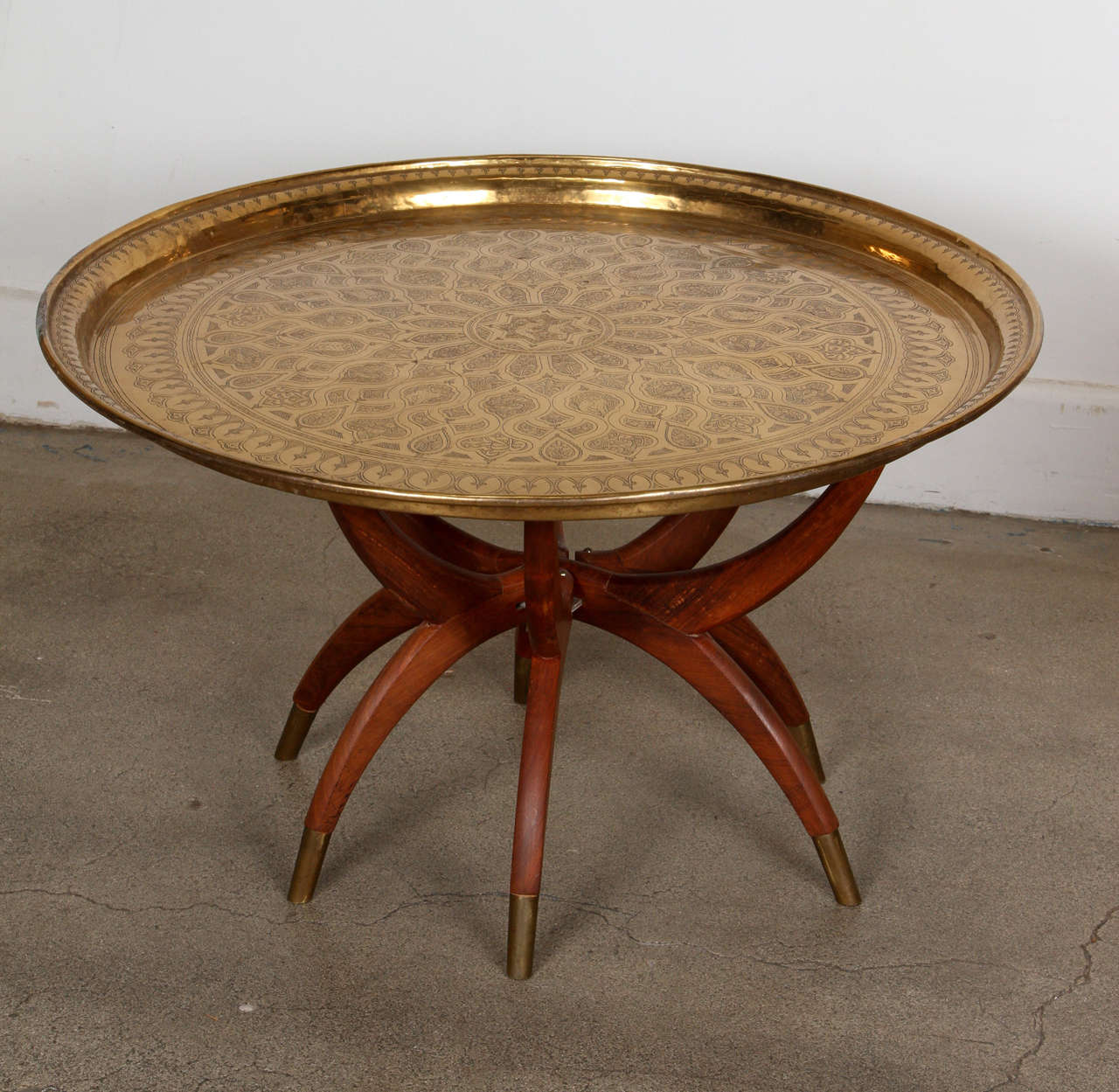
Large 32" D. Mid-Century Polished Brass Tray Table with Spider Legs
By Gio Ponti
Located in Moreno Valley, CA
Elegant Mid-Century polished brass tray on 6 spider legs. The circular brass tray is finely chiseled with geometric, flower designs and animals figures with calligraphy Arabic writi...
Brass
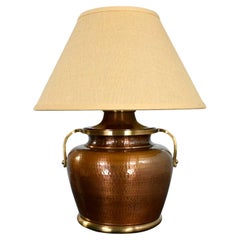
Sold
H 27 in W 22.5 in D 22.5 in
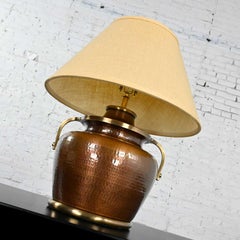
Moorish Frederick Cooper Style Hammered Copper Bulbus Urn Shape 2 Handled Lamp
By Frederick Cooper
Located in Topeka, KS
STUNNING!! This table lamp is Moorish style, but it leans a bit Traditional as well.
Brass, Copper, Iron
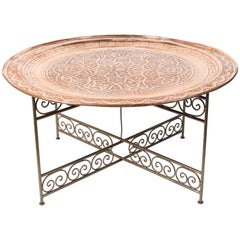
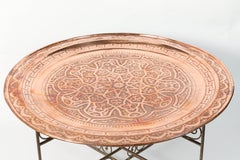
Moroccan Round Metal Brass Tray Table on Iron Folding Base
Located in Moreno Valley, CA
Moroccan Moorish large round copper tray table on iron folding base.
Brass, Copper, Iron
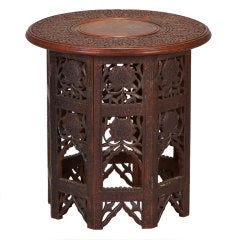
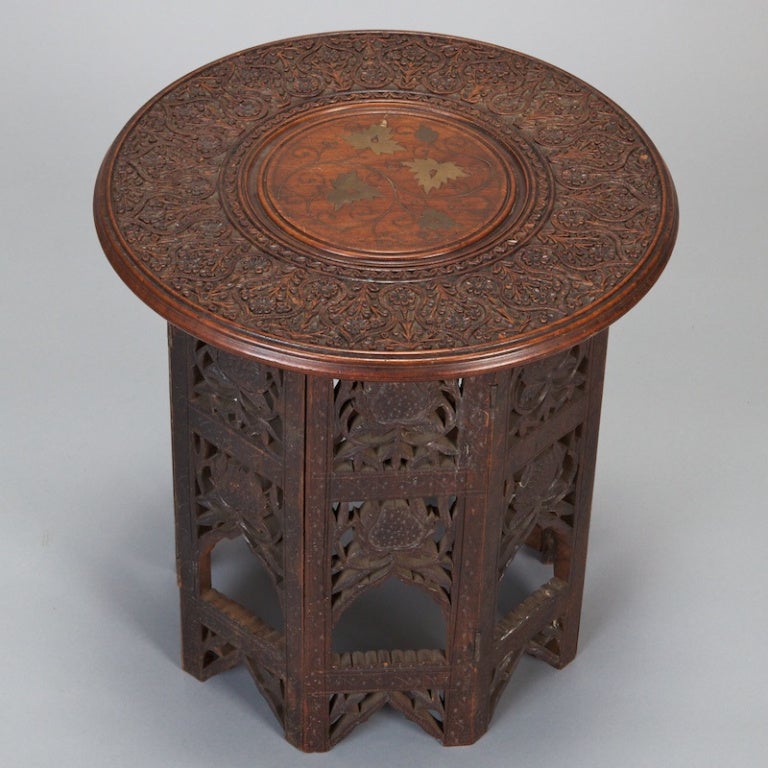
Small Carved Wood Moorish Table With Brass Inlay
Located in Troy, MI
Small Moorish style table has eight sided base with intricate, open work carved details, round top with carving and brass inlay.
Brass
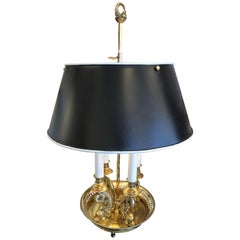
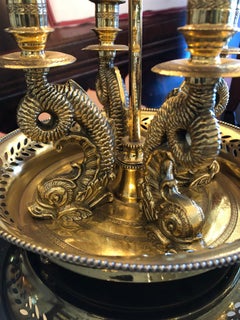
Beautiful Antique Cast Brass Bouillotte Lamp with Tole Shade
Located in Hopewell, NJ
A gorgeous cast brass bouillotte style table lamp having ornate serpents that hold up four candle arms with original black tole shade.
Brass
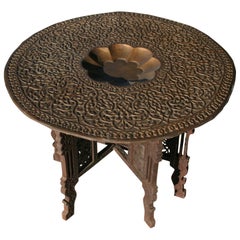
$720Sale Price|77% Off
H 24 in Dm 30.5 in
Mughal Empire Antique Brass Tray Table with Wooden Folding Stand
Located in Douglas Manor, NY
3-480 Mughal Empire antique brass tray with later date carved wooden folding stand. Brass top is decorated with repousse foliate and floral motif. Tray is removable and can be hung...
Brass
$1,500 / item
H 30.5 in Dm 15 in
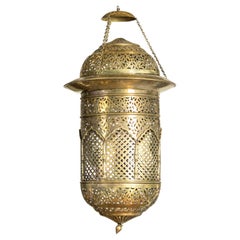
Indian Pierced Brass Hanging Decorative Lantern with Moorish Arch Motifs
Located in Yonkers, NY
This vintage Indian brass lantern is a richly decorative hanging piece, distinguished by its finely pierced metalwork and elegant architectural form. Crafted in warm-toned brass, the...
Brass
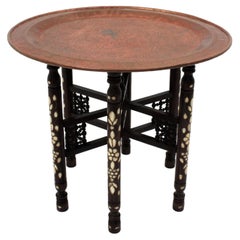
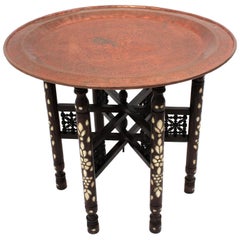
Moroccan Moorish Copper Tray Table with Wooden Folding Base
Located in Barcelona, ES
Large Moroccan antique copper tray table with wooden Syrian folding base. The removable round copper top has a hand-hammered decoration with Moorish Islamic designs. It stands on a w...
Copper
$350
H 17 in W 26.5 in D 19.5 in
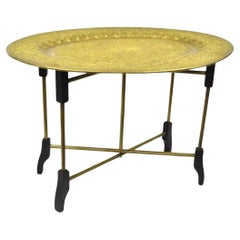
Vintage Moroccan Brass Bird Embossed Oval Tray Folding Small Coffee Table
Located in Philadelphia, PA
Vintage Mid Century Moroccan Brass Bird Embossed Oval Tray Folding Small Coffee Table. Item features an ornately embossed brass tray with birds and vine detailing, brass and wood x-f...
Brass
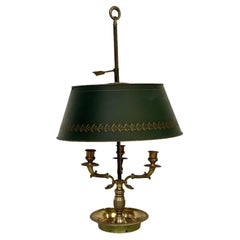
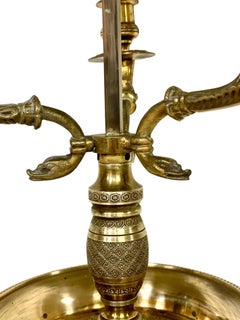
19th Century Empire Gilt Bronze Bouillotte Table Lamp
Located in LA CIOTAT, FR
A very stylish 19th century Empire style 'Bouillotte' table lamp in gilt bronze, lit by three curvaceous 'swans head' arms and topped with a green lacquered metal (tole) shade adorne...
Bronze
$1,146
H 16.93 in Dm 22.64 in
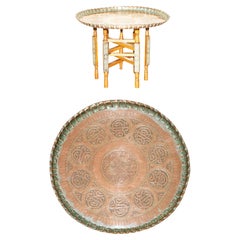
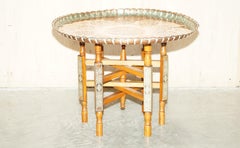
Collectable circa 1920 Persian Moroccan Brass Topped Folding Occasional Table
Located in West Sussex, Pulborough
We are delighted to offer for sale this circa very rare 1920 Antique Persian Moroccan engraved brass top folding table. A very good looking and well-made table, the top is beautif...
Brass
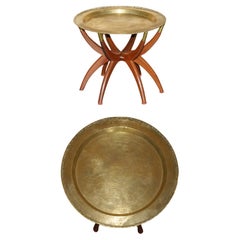
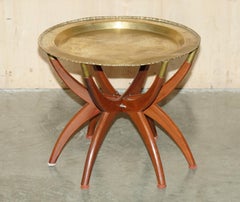
MID CENTURY MODERN MOROCCAN BRASS TRAY TABLE WITH TEAK FOLDING BASe
Located in West Sussex, Pulborough
Royal House Antiques Royal House Antiques is delighted to offer for sale this ornately hand carved Moroccan brass tray table with teak folding base retailed through Liberty's in the...
Brass
$559Sale Price|52% Off
H 36 in W 9 in D 9 in
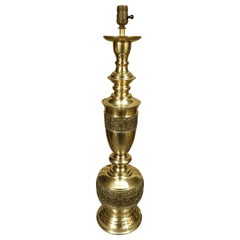
Vintage Monumental James Mont Brass Table Lamp Etching and Eastern Influences
By James Mont
Located in Lomita, CA
The beautiful brass patina makes this James Mont mid-century lamp a standout. If a lamp can be exciting, this is it. It is encircled with etching and Asian motif symbols around the o...
Brass
$600Sale Price|20% Off
H 22.5 in W 13 in D 13 in
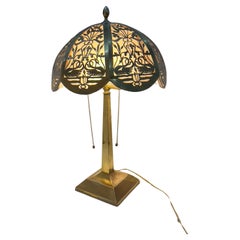
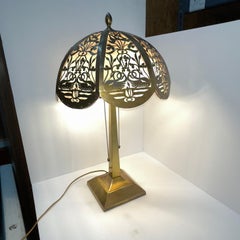
Circa 1920s Antique Brass Lamp With Reticulated Brass Lampshade
Located in Cordova, SC
For your consideration is a fantastic brass table lamp with reticulated brass shade. I don’t know about you but, I love pierced metal, ceramic, porcelain- anything pierced that has l...
Brass
$6,500
H 70 in W 21 in D 21 in
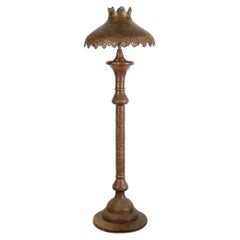
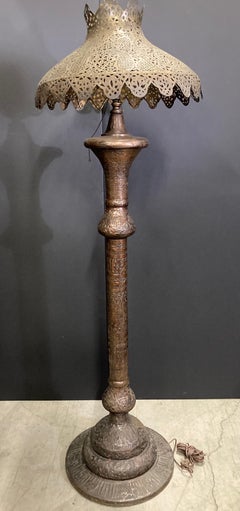
Antique Middle Eastern Handcrafted Moorish Islamic Brass Floor Lamp 19th Century
Located in Moreno Valley, CA
19th century Middle Eastern Islamic Moorish pierced brass and copper floor lamp. Beautiful Middle Eastern Islamic Syrian, Persian style brass floor lamp is handcrafted with Moorish c...
Brass, Bronze, Copper
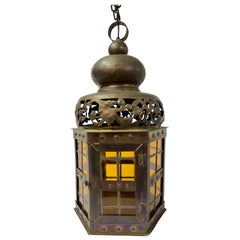
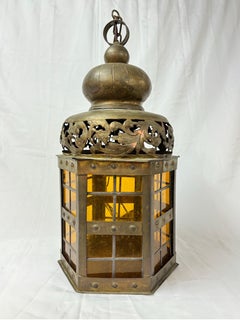
Pierced Moroccan Brass Lantern Style Chandelier
Located in Redding, CT
Pierced Moroccan Brass Lantern Style Chandelier. Golden yellow leaded glass windows adorn this beauty. Pierced decorations surround the bulbous top. Stamped designs decorate the exte...
Brass
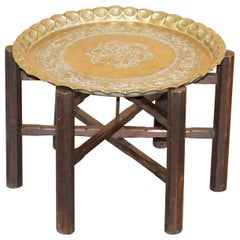
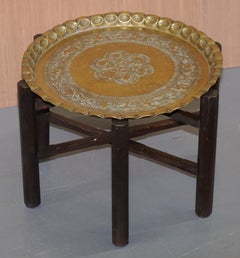
$1,345
H 17.13 in Dm 24.41 in
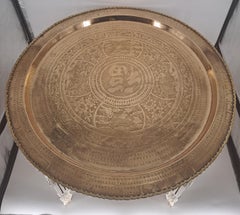
Very Rare circa 1920-1940 Persian Moroccan Brass Topped Folding Occasional Table
Located in West Sussex, Pulborough
We are delighted to offer for sale this circa very rare 1920-1940 antique Persian Moroccan engraved brass top folding table A very good looking and well made table, the top is bea...
Brass

$725
H 21 in W 34.5 in D 34.5 in
Vintage Indian Incised Brass Tray on Anglo-Indian Wood-carved Folding Stand
Located in San Francisco, CA
Vintage Indian Incised Brass Tray on Anglo-Indian Wood-carved Folding Stand
Brass
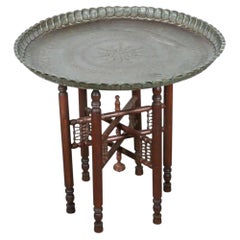
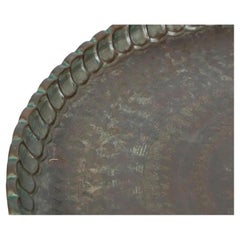
Turkish Tin Copper Tray Table on Wooden Folding Stand
Located in Moreno Valley, CA
Turkish tin copper tray table on wooden folding stand Turkish Persian Mameluke style tinned copper tray table. Very nice unusual Asian dark bronzed color tray on folding wooden s...
Metal, Copper
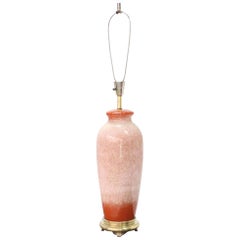
Brass Base Glassed Pottery Art Table Lamp
Located in Rockaway, NJ
Mid-Century modern glassed pottery table lamp.
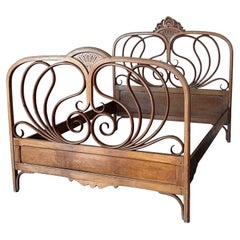
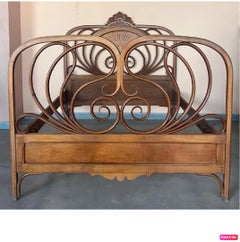
Austrian Bentwood Queen Sized Bed by Jacob & Josef Kohn, 1900
Located in Miami, FL
Designed by J & J Kohn, this mahogany stained bentwood bed features curved head and footboards swelling with decorative scroll form tendrils. J & J Kohn, No. 876, 1900 Catalog. He...
Bentwood
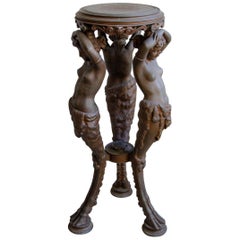
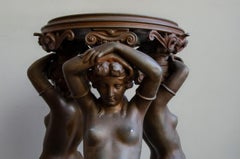
Neoclassical Gueridon
Located in Buenos Aires, Argentina
Neoclassical Gueridon foundry in zinc Origin France circa 1900 perfect condition.
Zinc
$4,028Sale Price|26% Off
H 3.15 in W 20.87 in D 20.87 in
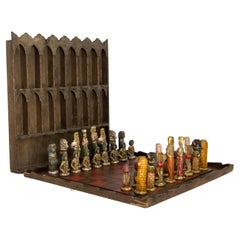
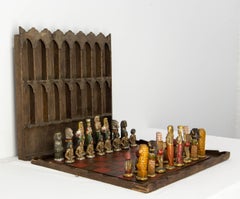
French Chess Theme of Ancient Egypt Plaster & Wood Restored, circa 1920
Located in Labrit, Landes
French chess game in the thematic of Ancient Egypt. The chess pieces are in painted and waxed plaster, the board is in wood and the is also a display shelf. Each piece is charaterful...
Plaster, Wood
$27,470Sale Price / set|65% Off
H 86.62 in W 63 in D 0.79 in
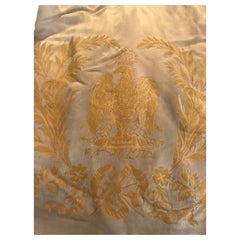
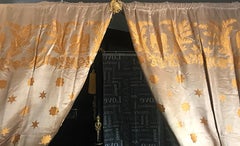
Napoleon Empire 1809 Historic Palais Beauharnais Curtains Paris France 1809
By Josephine de Beauharnais
Located in La xara, VC
Dear collector, please find this unique and exceptional piece of French History .Napoleon Bonaparte private pair of curtain from the most exclusive Palais in France from Beauharnais....
Textile
$5,250
H 19 in W 17.5 in D 17.5 in
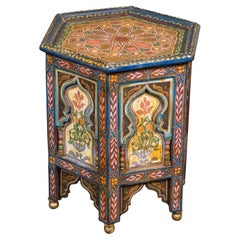
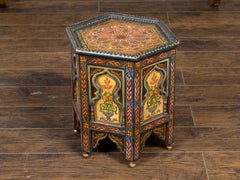
Moroccan Moorish Style 1920s Table with Hexagonal Top and Polychrome Décor
Located in Atlanta, GA
A Moroccan Moorish style drinks table from the early 20th century, with painted geometric motifs, hexagonal top, polychrome décor and carved flaming motifs. Created in Morocco during...
Wood
$9,750
H 40 in W 32 in D 2 in
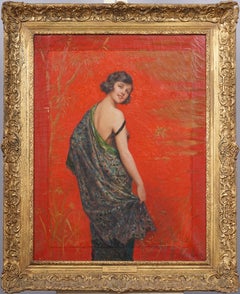
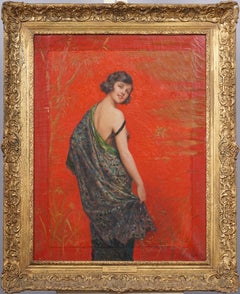
Stunning Art Deco Young Woman Portrait Framed Signed Rare Original Oil Painting
Located in Buffalo, NY
Exquisite antique portrait painting of a young fashionable woman. Framed. Oil on canvas. Signed. Image size, 31H by 24L.
Canvas, Oil
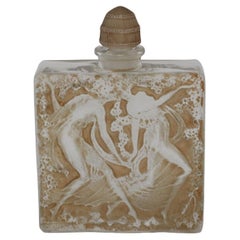
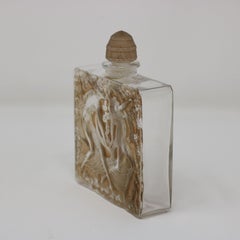
Rene Lalique Glass L'elegance Perfume Bottle
By René Lalique
Located in Chelmsford, Essex
Rene Lalique clear and frosted glass L'elegance perfume bottle. This pattern features two dancing female figures amongst flowers. Sepia stained relief details. Moulded, 'R. LALIQUE' ...
Glass
$368,000Sale Price|20% Off
H 104 in W 45 in D 6 in
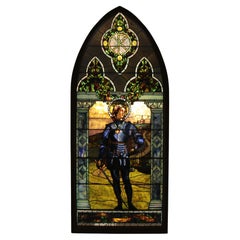
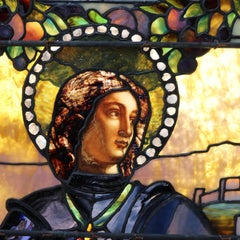
104" Historic Tiffany Window "Crusader", a Warrior Knight, after Mantegna c1890
By Tiffany Studios
Located in Big Flats, NY
Magnificent historic Tiffany Studios framed window, "Crusader", a Warrior Knight, after the 1460 work by Italian Renaissance painter Andrea Mantegna (1431-1506). Incorporating a harm...
Stained Glass

$8,345Sale Price|20% Off
H 30 in W 52 in D 1 in
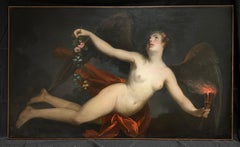
Huge 18th Century French Rococo Old Master Oil Allegorical Nude Winged Lady
Located in Cirencester, Gloucestershire
The Allegorical Winged Nude Lady, adorned with the attributes of Spring French School, 18th century (Rococo period) oil painting on canvas, unframed canvas: 30 x 52 inches provenance...
Oil, Canvas
$3,900
H 6.5 in W 5 in D 5 in
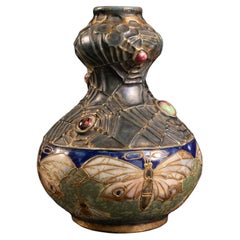
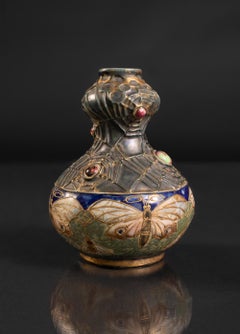
Art Nouveau Gres Bijou Butterfly & Spiderweb Gourd-Shaped Vase by RStK Amphora
By Reissner Stellmacher & Kessel
Located in Palm Beach, FL
Note: We highly recommend shipping through 1stDibs for its cost effectiveness, full insurance coverage, and reliable handling. While standard parcel services are an option, the defau...
Earthenware, Glass
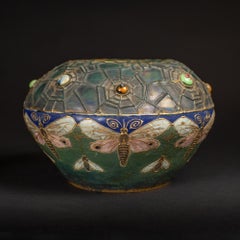
$7,400
H 5.75 in W 9 in D 9 in
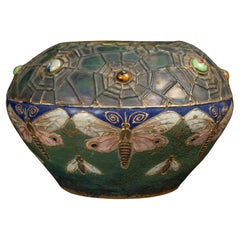
Art Nouveau Gres Bijou Butterfly & Spiderweb Bowl-Shaped Vase by RStK Amphora
By Reissner Stellmacher & Kessel
Located in Palm Beach, FL
Note: We highly recommend shipping through 1stDibs for its cost effectiveness, full insurance coverage, and reliable handling. While standard parcel services are an option, the defau...
Earthenware, Glass
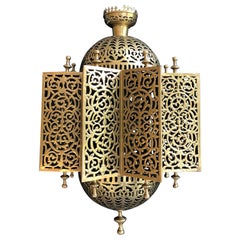
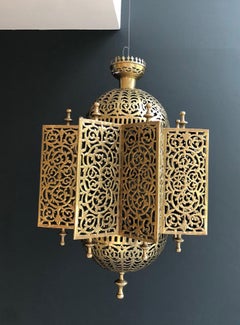
Exceptional Oriental Brass Lantern
Located in Marcq-en-Barœul, Hauts-de-France
This Exceptional and rare oriental lantern is all made of brass. This is a very beautiful Oriental work, very fine. End of 19th Century
Brass
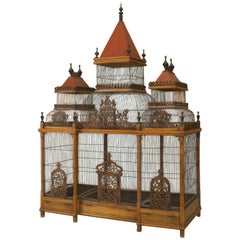
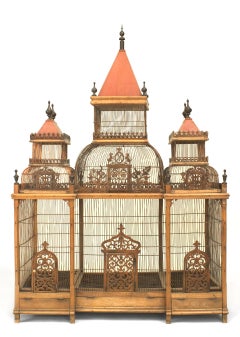
French Victorian Walnut Bird cage
Located in Queens, NY
French Victorian style (19/20th Cent) walnut large birdcage with 3 red dome tops having ebonized finials and trimmed with filigree tracery carving. Some decorations broken/missing
Walnut, Wood
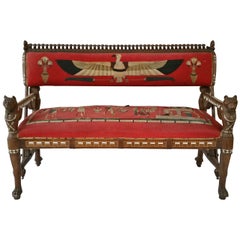
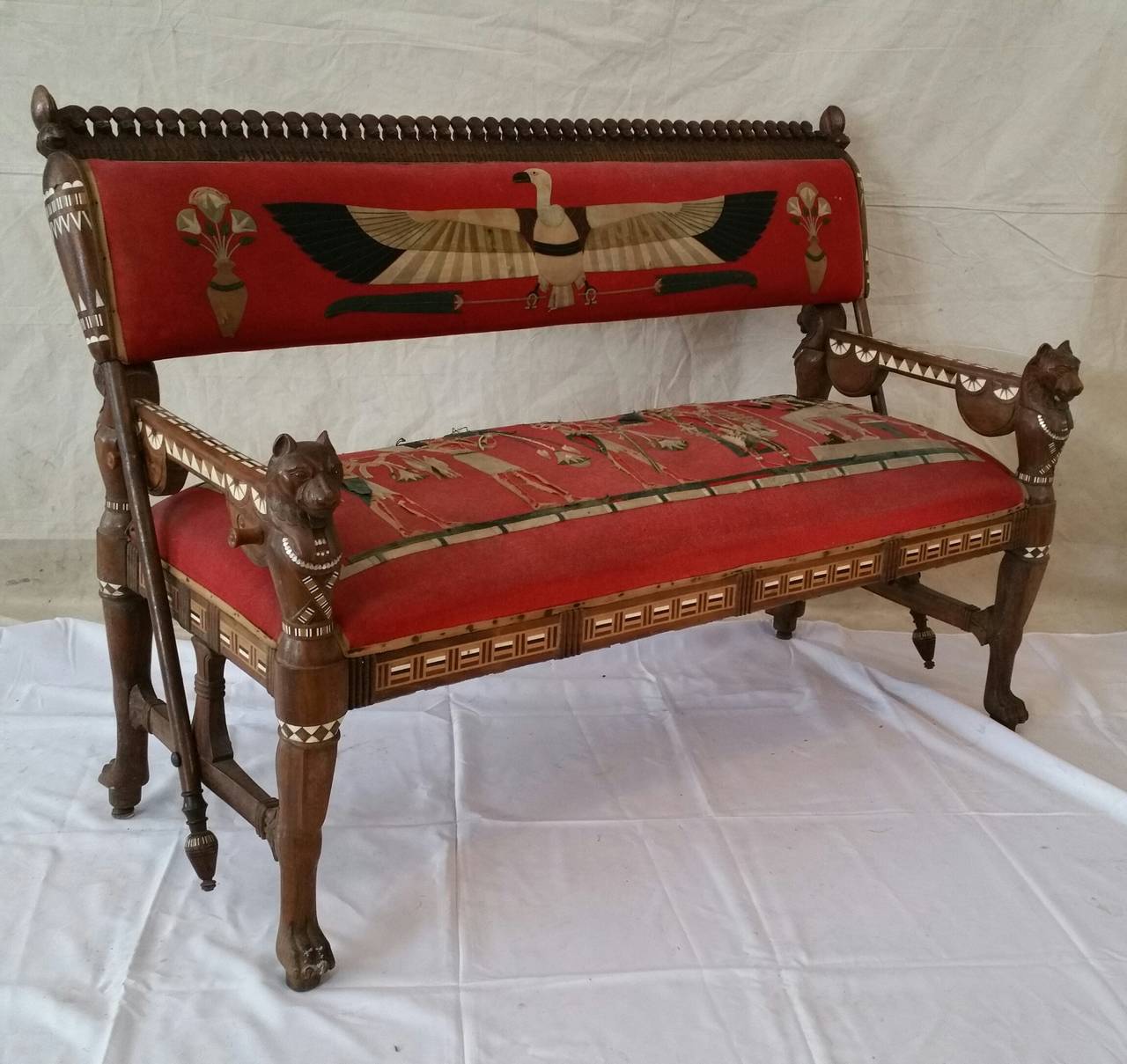
Rare Egyptian Revival Carved and Inlaid Rosewood Loveseat
Located in Buffalo, NY
Egyptian Revival loveseat composed of hardwood inlaid with bone,ebony, Upholstered in a very rare felt hand stitched applique fabric in Egyptian motif,,original,The loveseat features...
Fabric, Bone, Hardwood, Ebony
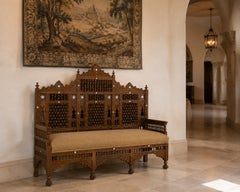
$5,850
H 55 in W 65 in D 22 in
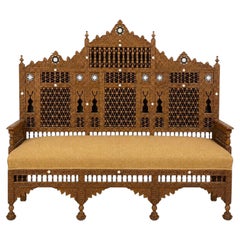
Early 20th Century Middle Eastern Carved Walnut Mashrabiya Settee, 1920s–1930s
Located in Moreno Valley, CA
An exceptional early 20th-century Middle Eastern settee, attributed to Egypt or the Levant—possibly present-day Lebanon or Syria—and dating to approximately the 1920s–1930s. A preci...
Walnut
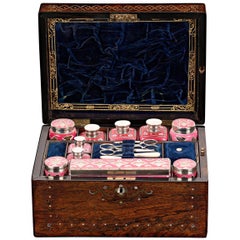
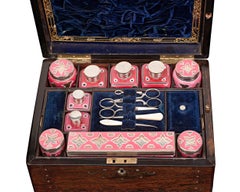
Victorian Nécessaire de Voyage
Located in New Orleans, LA
A work of extraordinary craftsmanship, this exquisite English vanity case is as much an item of luxury as it is of necessity. Known as a nécessaire de voyage, the case features a lux...
Velvet, Glass, Wood
After the Muslim conquest of the Iberian Peninsula in the eighth century, Islamic Spain became a cultural mix of influences that shaped both private homes and religious spaces. Moorish design was the name given to this style, which evolved through the 15th century with vibrant tile work, horseshoe arches and lavish ornamentation, most visible at sites such as Granada’s Alhambra and the Mosque-Cathedral of Córdoba. Moorish furniture was often similarly ornate, and featured pieces inlaid with wood, ivory and bone.
When European designers began studying Moorish art and architecture in the early 19th century, it led to a Moorish Revival. Appropriating the style’s decorative flourishes and architectural elements, it promoted a romantic view of Islamic design. Travelers could bring home a memento of what they witnessed in the Middle East, a trend that aligned with a fad for themed interiors. Men’s smoking rooms arranged with ottomans, divans and settees and inlaid tables were especially popular, as were cafés where coffee was served amid bead curtains and colorful floor mats. (Handwoven rugs are a centerpiece of Moorish interiors.) Octagonal rooms with domed ceilings were created for wealthy homes, frequently with furnishings like pipe stands, filigree plasterwork and arched doorways. The horseshoe arch is an iconic attribute of Moorish architecture that, in addition to Spain, can be found in Sicily, Morocco and elsewhere.
Several late 19th to early 20th-century movements featured Moorish touches. The American and English Aesthetic Movement, for example, borrowed liberally from global decorating styles, as seen in furniture designed by Lockwood de Forest, a New York-born artist who mixed Eastern and Western forms. The visual vocabulary of Art Nouveau also references the elegant use of geometry in Moorish design, with Milanese Art Nouveau furniture designer Carlo Bugatti drawing inspiration from the style. The Arts and Crafts movement, which prized expressive yet simple design, incorporated Moorish influences; hand-painted furniture and tile work created by William De Morgan, a British designer and potter who made furnishings for the likes of Morris & Co., were informed by techniques from Moorish Spain.
Find a collection of Moorish lighting, decorative objects, folk art and more furniture on 1stDibs.