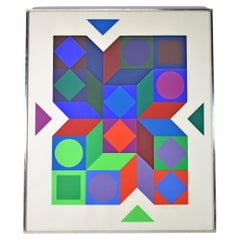
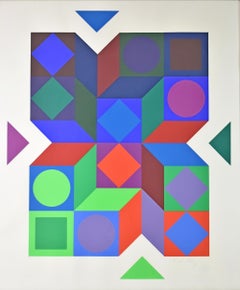
Victor Vasarely "Tridim" 1968 Lithograph, Signed, 56/300
By Victor Vasarely
Located in Toledo, OH
"Tridim". Victor Vasarely’s complex paintings and sculptures helped define the ethos of the Op art
Category
Vintage 1960s Prints
Materials
Paper
Victor Vasarely "Tridim" 1968 Lithograph, Signed, 56/300
By Victor Vasarely
Located in Toledo, OH
"Tridim". Victor Vasarely’s complex paintings and sculptures helped define the ethos of the Op art
Paper
$1,440Sale Price|20% Off
H 21.5 in W 17 in D 1.5 in
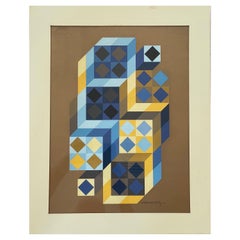
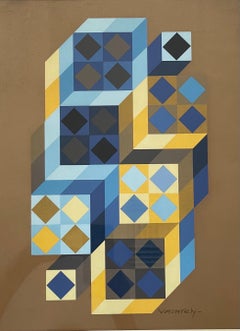
Signed Limited Edition Op Art Serigraph "Tridim-Gordes" by Victor Vasarely
By Victor Vasarely
Located in San Diego, CA
Signed limited edition Op Art serigraph entitled "Tridim-Gordes" by Hungarian artist Victor
Paper
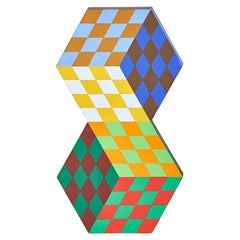
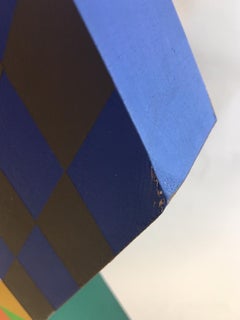
Victor Vasarely Tridim-Rv Sculpture
By Victor Vasarely
Located in West Palm Beach, FL
Hand painted acrylic over wood multiple 16/50.
Wood

$2,052 / item
H 40 in W 30 in D 0.03 in
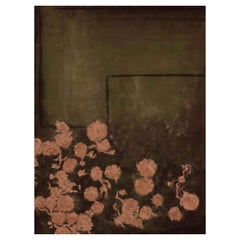
"Vigne Fleurie" Signed Limited Edition Art Print by Christiane Lemieux - 30"x40"
Located in New York, NY
"Vigne Fleurie" is an exquisite limited edition fine art print that offers a modernist interpretation of a flowering vine set against a lush green colorfield. Each print is a view of...
Paper
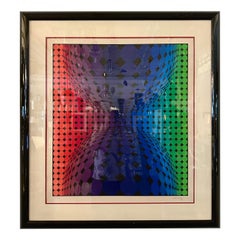
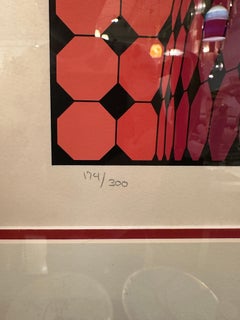
SIGNED and Numbered Victor Vasarely Framed "Raura" VAS 630 Op Art
By Victor Vasarely
Located in North Miami, FL
This vintage framed Victor Vasarely serigraphy Raura VAS 630. Authentic hand signed and numbered in pencil by Vasarely. Image size 30 x 26.5 inches. This has been professionally v...
Acrylic, Paper
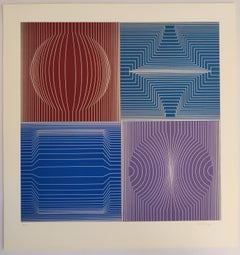
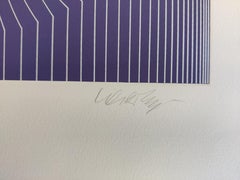
Victor Vasarely -- Tokyo
By Victor Vasarely
Located in BRUCE, ACT
Victor Vasarely Tokyo, 1982 Hand signed lower right Edition: 99/250 in pencil Image size: 65 x 65 cm Sheet size: 79.5 x 75.8 cm
Lithograph
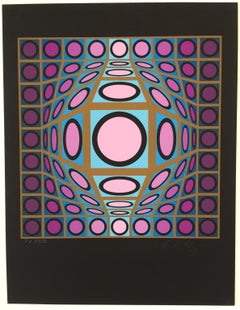
Composition Microcosmos IV
By Victor Vasarely
Located in Miami, FL
TECHNICAL INFORMATION: Victor Vasarely Composition Microcosmos IV 1980 Screenprint 13 x 10 in. Edition of 50 Pencil signed and numbered Accompanied with COA by Gregg Shienbaum Fin...
Screen
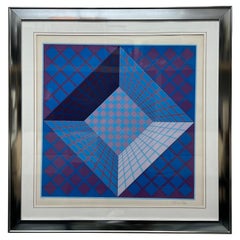
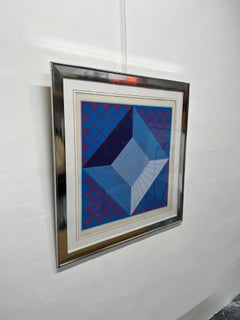
$3,600Sale Price|20% Off
H 35.25 in W 34.75 in D 1.25 in
Victor Vasarely Limited Edition Op Art Lithograph, Signed and Numbered
By Victor Vasarely
Located in Miami, FL
Victor Vasarely (French-Hungarian 1908 - 1997) lithograph on paper, optical art illusion with cubes. The work is signed and numbered in pencil and maintains original aluminum frame. ...
Aluminum
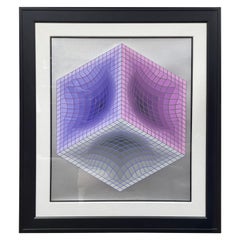
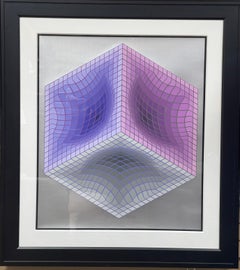
$4,400Sale Price|20% Off
H 44.75 in W 40 in D 2 in
Signed Limited Edition Op Art Serigraph "Tridos" by Victor Vasarely
By Victor Vasarely
Located in San Diego, CA
Signed limited edition Op Art serigraph entitled "Tridos" by Hungarian artist Victor Vasarely, circa 1987. The piece is on Arches paper, hand signed in pencil by the artist (lower ri...
Paper
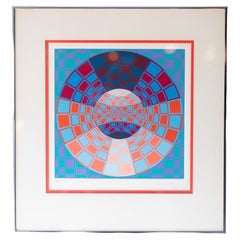
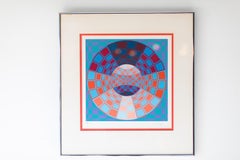
Victor Vasarely Lithograph
By Victor Vasarely
Located in Oak Harbor, OH
Artist: Victor Vasarely Medium: Lithograph Movement/Style: Modern Signed and Numbered : 133/250 Condition: This Victor Vasaerly lithograph is in very good vintage condit...
Paper
Widely considered the grandfather of Op art, the French-Hungarian painter Victor Vasarely (1906–97) created eye-popping geometric abstractions that play with the viewer’s perception of depth, perspective and motion. A classic example is the 1937 Zebra, which consists of undulating black and white stripes that suggest the form of the titular animal through optical trickery. The work is often credited as the earliest Op art painting.
Such illusions were more than pleasing tricks for Vasarely, who insisted that “pure form and pure color can signify the world.” He wanted to “democratize” art by producing works in large editions at reasonable prices that were understandable across national and cultural boundaries. In the 1960s, he developed an alphabet plastique, or fine art alphabet, consisting of elementary visual building blocks that could be used in endless combinations to create original compositions. By employing this universal visual vocabulary and stripping away topical references, he sought to create what he called a “Planetary Folklore.”
Embodying Vasarely’s singular belief that art should serve a social function, accessible to all, these innovations may perhaps be his greatest contribution to 20th-century art.
Find a collection of Victor Vasarely prints, paintings, sculptures and other art on 1stDibs.