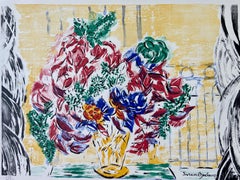
(after) Marcel Duchamp Prints and Multiples

to
1
1
Overall Width
to
Overall Height
to
1
1,321
1,039
945
897
1
1
1
1
1
1
1
1
1
1
Artist: (after) Marcel Duchamp
Related Items
The Golden Gate
The Golden Gate

The Golden Gate

By Adolf Arthur Dehn

Located in Fairlawn, OH

The Golden Gate Lithograph on wove paper watermarked GC, 1940 Signed in pencil by the artist (see photo) Publisher: Associated American Artists Edition: 189, unnumbered The image depicts The Golden Gate Bridge which connects San Francisco and Marin County, California References And Exhibitions: Illustrated: Adams, The Sensuous Life of Adolf Dehn, Fig. 13.17, page 324 Reference: L & O 325 AAA Index 391 Adolf Dehn, American Watercolorist and Printmaker, 1895-1968 Adolf Dehn was an artist who achieved extraordinary artistic heights, but in a very particular artistic sphere—not so much in oil painting as in watercolor and lithography. Long recognized as a master by serious print collectors, he is gradually gaining recognition as a notable and influential figure in the overall history of American art. In the 19th century, with the invention of the rotary press, which made possible enormous print runs, and the development of the popular, mass-market magazines, newspaper and magazine illustration developed into an artistic realm of its own, often surprisingly divorced from the world of museums and art exhibitions, and today remains surprisingly overlooked by most art historians. Dehn in many regards was an outgrowth of this world, although in an unusual way, since as a young man he produced most of his illustrative work not for popular magazines, such as The Saturday Evening Post, but rather for radical journals, such as The Masses or The Liberator, or artistic “little magazines” such as The Dial. This background established the foundation of his outlook, and led later to his unique and distinctive contribution to American graphic art. If there’s a distinctive quality to his work, it was his skill in introducing unusual tonal and textural effects into his work, particularly in printmaking but also in watercolor. Jackson Pollock seems to have been one of many notable artists who were influenced by his techniques. Early Years, 1895-1922 For an artist largely remembered for scenes of Vienna and Paris, Adolf Dehn’s background was a surprising one. Born in Waterville, Minnesota, on November 22, 1895, Dehn was the descendent of farmers who had emigrated from Germany and homesteaded in the region, initially in a one-room log cabin with a dirt floor. Adolf’s father, Arthur Clark Dehn, was a hunter and trapper who took pride that he had no boss but himself, and who had little use for art. Indeed, during Adolf’s boyhood the walls of his bedroom and the space under his bed were filled with the pelts of mink, muskrats and skunks that his father had killed, skinned and stretched on drying boards. It was Adolf’s mother, Emilie Haas Dehn, a faithful member of the German Lutheran Evangelical Church, who encouraged his interest in art, which became apparent early in childhood. Both parents were ardent socialists, and supporters of Eugene Debs. In many ways Dehn’s later artistic achievement was clearly a reaction against the grinding rural poverty of his childhood. After graduating from high school in 1914 at the age of 19—an age not unusual in farming communities at the time, where school attendance was often irregular—Dehn attended the Minneapolis School of Art from 1914 to 1917, whose character followed strongly reflected that of its director, Munich-trained Robert Kohler, an artistic conservative but a social radical. There Dehn joined a group of students who went on to nationally significant careers, including Wanda Gag (later author of best-selling children’s books); John Flanagan (a sculptor notable for his use of direct carving) Harry Gottlieb (a notable social realist and member of the Woodstock Art Colony), Elizabeth Olds (a printmaker and administrator for the WPA), Arnold Blanch (landscape, still-life and figure painter, and member of the Woodstock group), Lucille Lunquist, later Lucille Blanch (also a gifted painter and founder of the Woodstock art colony), and Johan Egilrud (who stayed in Minneapolis and became a journalist and poet). Adolf became particularly close to Wanda Gag (1893-1946), with whom he established an intense but platonic relationship. Two years older than he, Gag was the daughter of a Bohemian artist and decorator, Anton Gag, who had died in 1908. After her husband died, Wanda’s mother, Lizzi Gag, became a helpless invalid, so Wanda was entrusted with the task of raising and financially supporting her six younger siblings. This endowed her with toughness and an independent streak, but nonetheless, when she met Dehn, Wanda was Victorian and conventional in her artistic taste and social values. Dehn was more socially radical, and introduced her to radical ideas about politics and free love, as well as to socialist publications such as The Masses and The Appeal to Reason. Never very interested in oil painting, in Minneapolis Dehn focused on caricature and illustration--often of a humorous or politically radical character. In 1917 both Dehn and Wanda won scholarships to attend the Art Students League, and consequently, in the fall of that year both moved to New York. Dehn’s art education, however, ended in the summer of 1918, shortly after the United States entered World War I, when he was drafted to serve in the U. S. Army. Unwilling to fight, he applied for status as a conscientious objector, but was first imprisoned, then segregated in semi-imprisonment with other Pacifists, until the war ended. The abuse he suffered at this time may well explain his later withdrawal from taking political stands or making art of an overtly political nature. After his release from the army, Dehn returned to New York where he fell under the spell of the radical cartoonist Boardman Robinson and produced his first lithographs. He also finally consummated his sexual relationship with Wanda Gag. The Years in Europe: 1922-1929 In September of 1921, however, he abruptly departed for Europe, arriving in Paris and then moving on to Vienna. There in the winter of 1922 he fell in love with a Russian dancer, Mura Zipperovitch, ending his seven-year relationship with Wanda Gag. He and Mura were married in 1926. It was also in Vienna that he produced his first notable artistic work. Influenced by European artists such as Jules Pascin and Georg Grosz, Dehn began producing drawings of people in cafes, streets, and parks, which while mostly executed in his studio, were based on spontaneous life studies and have an expressive, sometimes almost childishly wandering quality of line. The mixture of sophistication and naiveté in these drawings was new to American audiences, as was the raciness of their subject matter, which often featured pleasure-seekers, prostitutes or scenes of sexual dalliance, presented with a strong element of caricature. Some of these drawings contain an element of social criticism, reminiscent of that found in the work of George Grosz, although Dehn’s work tended to focus on humorous commentary rather than savagely attacking his subjects or making a partisan political statement. Many Americans, including some who had originally been supporters of Dehn such as Boardman Robinson, were shocked by these European drawings, although George Grocz (who became a friend of the artist in this period) admired them, and recognized that Dehn could also bring a new vision to America subject matter. As he told Dehn: “You will do things in America which haven’t been done, which need to be done, which only you can do—as far at least as I know America.” A key factor in Dehn’s artistic evolution at this time was his association with Scofield Thayer...

Category

1940s American Realist (after) Marcel Duchamp Prints and Multiples

Materials

Lithograph
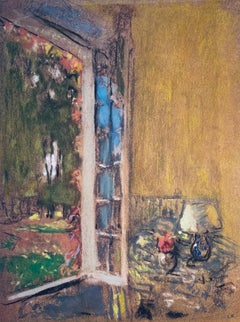
Untitled - Lithograph by Maurizio Biagi - Late 1900

Untitled - Lithograph by Maurizio Biagi - Late 1900

Located in Roma, IT

Untitled is a beautiful colored lithograph on Fabriano watermarked paper, realized at the end of XX century by the Italian artist, Maurizio Biagi. Hand-signed, dated and numbered in...

Category

Late 20th Century Contemporary (after) Marcel Duchamp Prints and Multiples

Materials

Lithograph
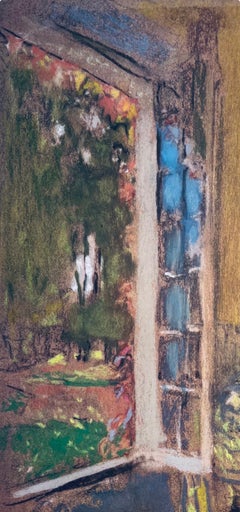
Lübeck - German Expressionism Lithograph

Lübeck - German Expressionism Lithograph

Located in London, GB

This original lithograph is hand signed in pencil b artist "Ulrich Hubner" at the lower left cotner. It is also signed and dated in the plate. The work is hand numbered in pencil No...

Category

1910s Expressionist (after) Marcel Duchamp Prints and Multiples

Materials

Lithograph
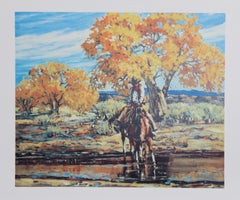
Original American Airlines San Francisco vintage travel poster  Golden Gate

Original American Airlines San Francisco vintage travel poster Golden Gate

By Dong Kingman

Located in Spokane, WA

Original American Airlines San Francisco vintage travel poster. Artist: Dong Kingman, 1970s linen-backed authentic travel poster, ready to frame. Grade A- condition. Size 20...

Category

1970s American Impressionist (after) Marcel Duchamp Prints and Multiples

Materials

Lithograph
Countryside - Lithograph by Lucio Rofrano - 1990s

Countryside - Lithograph by Lucio Rofrano - 1990s

By Lucio Rofrano

Located in Roma, IT

Lithograph realized by Lucio Rofrano in 1990s. Edition of 150, numbered and hand signed. Excellent condition.

Category

1990s Contemporary (after) Marcel Duchamp Prints and Multiples

Materials

Lithograph
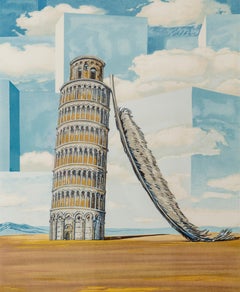
French Sailboats, Modern Lithograph by Peter Edwards

French Sailboats, Modern Lithograph by Peter Edwards

Located in Long Island City, NY

French Sailboats by Peter Edwards, British (1934–2017) Date: circa 1975 Lithograph, Signed and Numbered in Pencil Edition of 11/275 Image Size: 15.5 x 21 inches Frame Size: 24 x 30 i...

Category

Mid-20th Century Modern (after) Marcel Duchamp Prints and Multiples

Materials

Lithograph
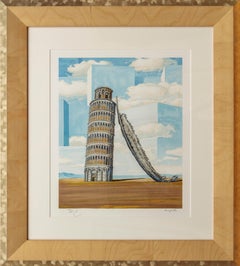
Provincetown - The Harbor, Impressionist Lithograph by Marcel Salinas

Provincetown - The Harbor, Impressionist Lithograph by Marcel Salinas

By Laurent Marcel Salinas

Located in Long Island City, NY

Laurent Marcel Salinas, Egyptian/French (1913 - 2010) - Provincetown - The Harbor, Year: circa 1980, Medium: Lithograph, signed and numbered in pencil, Edition: AP, Image Size: 1...

Category

1980s Impressionist (after) Marcel Duchamp Prints and Multiples

Materials

Lithograph
Marcel Duchamp, Monte Carlo Bond, from XXe siecle, 1939

Marcel Duchamp, Monte Carlo Bond, from XXe siecle, 1939

By Marcel Duchamp

Located in Southampton, NY

This exquisite lithograph by Marcel Duchamp (1887–1968), titled Bond de Monte-Carlo (Monte Carlo Bond), from the album XXe siecle, Chroniques du jour, 13 rue Valette (5e), Directeur ...

Category

1930s Dada (after) Marcel Duchamp Prints and Multiples

Materials

Lithograph
Abstract Expressionist Poster (Hand signed and inscribed by Helen Frankenthaler)

Abstract Expressionist Poster (Hand signed and inscribed by Helen Frankenthaler)

By Helen Frankenthaler

Located in New York, NY

Helen Frankenthaler (after) Frankenthaler (autographedand inscribed), 1988 Offset lithograph poster (hand signed and inscribed to renowned collectors) Hand signed and warmly inscribed in ink on the front Frame included: Museum frame with UV plexiglass included Inscribed "to Paul and Joan, love Helen Frankenthaler" (Paul and Joan Gluck were major art collectors) Measurements: Framed 42 inches vertical by 34 inches by 1.75 inches Print 34.5 inches vertical by 27 inches Helen Frankenthaler, A Brief Biography Helen Frankenthaler (1928-2011), whose career spanned six decades, has long been recognized as one of the great American artists of the twentieth century. She was eminent among the second generation of postwar American abstract painters and is widely credited for playing a pivotal role in the transition from Abstract Expressionism to Color Field painting. Through her invention of the soak-stain technique, she expanded the possibilities of abstract painting, while at times referencing figuration and landscape in unique ways. She produced a body of work whose impact on contemporary art has been profound and continues to grow. Frankenthaler was born on December 12, 1928, and raised in New York City. She attended the Dalton School, where she received her earliest art instruction from Rufino Tamayo. In 1949 she graduated from Bennington College, Vermont, where she was a student of Paul Feeley. She later studied briefly with Hans Hofmann Frankenthaler’s professional exhibition career began in 1950, when Adolph Gottlieb selected her painting Beach (1950) for inclusion in the exhibition titled Fifteen Unknowns: Selected by Artists of the Kootz Gallery. Her first solo exhibition was presented in 1951, at New York’s Tibor de Nagy Gallery, and that year she was also included in the landmark exhibition 9th St. Exhibition of Paintings and Sculpture. In 1952 Frankenthaler created Mountains and Sea, a breakthrough painting of American abstraction for which she poured thinned paint directly onto raw, unprimed canvas laid on the studio floor, working from all sides to create floating fields of translucent color. Mountains and Sea was immediately influential for the artists who formed the Color Field school of painting, notable among them Morris Louis and Kenneth Noland. As early as 1959, Frankenthaler began to be a regular presence in major international exhibitions. She won first prize at the Premiere Biennale de Paris that year, and in 1966 she represented the United States in the 33rd Venice Biennale, alongside Ellsworth Kelly, Roy Lichtenstein, and Jules Olitski. She had her first major museum exhibition in 1960, at New York’s Jewish Museum, and her second, in 1969, at the Whitney Museum of American Art, followed by an international tour. Frankenthaler experimented tirelessly throughout her long career. In addition to producing unique paintings on canvas and paper, she worked in a wide range of media, including ceramics, sculpture, tapestry, and especially printmaking. Hers was a significant voice in the mid-century “print renaissance” among American abstract painters, and she is particularly renowned for her woodcuts. She continued working productively through the opening years of this century. Frankenthaler’s distinguished, prolific career has been the subject of numerous monographic museum exhibitions. The Jewish Museum and Whitney Museum shows were succeeded by a major retrospective initiated by the Modern Art Museum of Fort Worth that traveled to The Museum of Modern Art, New York, the Los Angeles County Museum of Art, and the Detroit Institute of Arts, MI (1989); and those devoted to works on paper and prints organized by the National Gallery of Art, Washington, D.C. (1993), among others. Select recent important exhibitions have included Painted on 21st Street: Helen Frankenthaler from 1950 to 1959 (Gagosian, NY, 2013); Making Painting: Helen Frankenthaler and JMW Turner (Turner Contemporary, Margate, UK, 2014); Giving Up One’s Mark: Helen Frankenthaler in the 1960s and 1970s (Albright-Knox Art Gallery, Buffalo, NY, 2014–15); Pretty Raw: After and Around Helen Frankenthaler (Rose Art Museum, Brandeis University, Waltham, MA, 2015); As in Nature: Helen Frankenthaler, Paintings and No Rules: Helen Frankenthaler Woodcuts...

Category

1980s Abstract (after) Marcel Duchamp Prints and Multiples

Materials

Offset, Lithograph

Original Fabre Line - Marseilles Mediterranean New York vintage travel poster

Original Fabre Line - Marseilles Mediterranean New York vintage travel poster

Located in Spokane, WA

Original Fabre Line “Marseilles — Mediterranean — New York” Poster by J. Tonelli, linen-backed, Grade A- Capture the golden age of ocean travel with this original vintage poster de...

Category

1950s American Modern (after) Marcel Duchamp Prints and Multiples

Materials

Lithograph
Germany by SAS, Scandinavian Airlines System original vintage travel poster

Germany by SAS, Scandinavian Airlines System original vintage travel poster

By Otto Nielsen 1

Located in Spokane, WA

Original vintage travel poster: Germany by SAS (Scandinavian Airline System). Artist: Otto Nielsen. Size: 25 x 39.5" Archival linen backed original vintage travel poster; ex...

Category

1960s American Realist (after) Marcel Duchamp Prints and Multiples

Materials

Lithograph
Previously Available Items
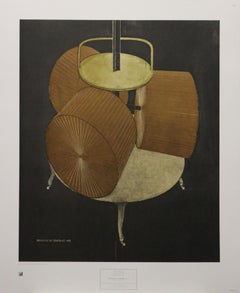
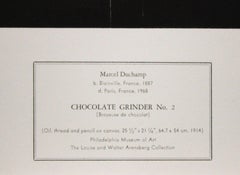
Chocolate Grinder No. 2-Poster, 1972 New York Graphic Society

Chocolate Grinder No. 2-Poster, 1972 New York Graphic Society

By (after) Marcel Duchamp

Located in Chesterfield, MI

1972 New York Graphic Society Ltd. Printed in U.S.A. The poster measures 29 x 24 inches and is unframed. The piece is in Very Good Condition.

Category

1970s (after) Marcel Duchamp Prints and Multiples

Materials

Lithograph
(after) Marcel Duchamp prints and multiples for sale on 1stDibs.

Find a wide variety of authentic (after) Marcel Duchamp prints and multiples available for sale on 1stDibs. You can also browse by medium to find art by (after) Marcel Duchamp in lithograph, offset print and more. Much of the original work by this artist or collective was created during the 21st century and contemporary and is mostly associated with the Surrealist style. Not every interior allows for large (after) Marcel Duchamp prints and multiples, so small editions measuring 12 inches across are available. (after) Marcel Duchamp prints and multiples prices can differ depending upon medium, time period and other attributes. On 1stDibs, the price for these items starts at $50 and tops out at $1,500, while the average work can sell for $775.
Questions About (after) Marcel Duchamp Prints and Multiples
  • 1stDibs ExpertOctober 15, 2024
    The answer to whether Marcel Duchamp was a Surrealist artist is complicated. During his lifetime, the French artist resisted being labeled as a member of any art movement. Despite this, he is often associated with both the Dadaist and Surrealist movements. A provocative artist, Duchamp challenged conventional thought about artistic creation through subversive actions such as dubbing a urinal "art" and naming it Fountain. His influence was crucial to the development of Surrealism, Dada and Pop art. On 1stDibs, explore a range of Marcel Duchamp art.
  • 1stDibs ExpertJanuary 19, 2025
    Marcel Duchamp's famous sculpture of Dadaism is widely considered to be Fountain. Its name was a playful subversion that shocked viewers when it was exhibited in 1917. The reason for the surprise? Duchamp's so-called “fountain” was actually a urinal. Although the original piece was either lost or destroyed, several museums have authorized reproductions of the work in their collections. Among them are the Philadelphia Museum of Art in Philadelphia, Pennsylvania; the San Francisco Museum of Modern Art in San Francisco, California; the Tate Modern in London, UK, and the Moderna Museet in Stockholm, Sweden. Explore an assortment of Marcel Duchamp art on 1stDibs.
  • 1stDibs ExpertMarch 22, 2022
    Marcel Breuer was an architect and furniture designer who made a major impact on modern design by introducing new materials and emphasizing the importance of form matching function. He was born in Pécs, Hungary, in 1902, and was a part of the Bauhaus school. You’ll find a collection of Marcel Breuer furniture on 1stDibs.
  • 1stDibs ExpertMarch 22, 2022
    The Dutch art movement De Stijl inspired Marcel Breuer's early work. Artists in the movement like Piet Mondrian created art that adhered to the principles of geometry. This idea resonated with Breuer and informed his designs. Shop a selection of Marcel Breuer furniture on 1stDibs.
  • 1stDibs ExpertMarch 22, 2022
    Marcel Breuer was born in Pécs, Hungary, on May 21, 1902. He attended the Bauhaus design school in Weimar, Germany, and eventually became a part of the faculty. After the Nazis shut the school down, Breuer moved to the U.S. He died in New York City on July 1, 1981. On 1stDibs, find a variety of Marcel Breuer furniture.
  • 1stDibs ExpertMarch 22, 2022
    To pronounce Marcel Breuer, say "mar-SELL BROO-ur." The artist's first and last name both originate from the Hungarian language. Breuer was born in Pécs, Hungary, on May 21, 1902. You can shop a variety of Marcel Breuer furniture on 1stDibs.
  • 1stDibs ExpertMarch 22, 2022
    Marcel Breuer is known for his work as an architect and furniture designer during the 20th century. During his life, he created many famous chairs that remain popular today, including the Wassily lounge chair, the Cesca chair and the D40 cantilever chair. You’ll find a range of Marcel Breuer furniture on 1stDibs.
  • 1stDibs ExpertApril 12, 2024
    Marcel Breuer is famous for being one of 20th-century modernism’s most influential innovators. His most well-known furniture pieces were crafted of tubular steel, including the Wassily chair and the caned Cesca chair. Breuer also made several notable designs in molded plywood, including a chaise longue and nesting table for the British firm Isokon and a student furniture suite commissioned in 1938 for a dormitory at Bryn Mawr College. Breuer’s designs are elegant and adaptable examples of modernism, useful and appropriate in any environment. On 1stDibs, shop a collection of Marcel Breuer furniture.
  • 1stDibs ExpertMarch 22, 2022
    Over the course of his life, Marcel Breuer designed many things. Furniture was one of his main focuses, and he created many influential pieces, including the Wassily lounge chair, the Cesca chair and the Laccio side table. Shop a collection of Marcel Breuer furniture on 1stDibs.
  • 1stDibs ExpertMarch 22, 2022
    Yes, Marcel Breuer taught at the Bauhaus design school in Weimar, Germany. He arrived at the institution in 1920 as a student. By 1925, his duties expanded to include teaching classes of his own and running the school's furniture shop. On 1stDibs, find a selection of Marcel Breuer furniture.
  • 1stDibs ExpertOctober 15, 2024
    No, Jacques Marcel was not a real designer. He was a fictional character mentioned on the television show I Love Lucy in the 1956 episode “Lucy Gets a Paris Gown.” In the show, Lucy wants to purchase an expensive gown from a Parisian fashion designer, but Ricky attempts to trick her by sewing a Jacques Marcel label into a dress made of a flour sack. Today, the faux Marcel-designed frock is displayed at the Lucille Ball & Desi Arnaz Museum in Jamestown, New York. Although his dress wasn't made of burlap, Hubert de Givenchy did unveil a dress nicknamed the Sack dress in the 1950s. It featured a straight cut and was fashioned out of soft materials, giving it a fluid, draped appearance. On 1stDibs, explore a wide range of vintage dresses.
  • 1stDibs ExpertApril 22, 2024
    Marcel Breuer designed several chairs. One of his best-known pieces is the Wassily lounge chair made of tubular steel and leather straps. Breuer named the chair after the artist Wassily Kandinsky. Among the designer's other notable chairs are the Cesca chair, the B35 lounge chair and the S 35. On 1stDibs, find a diverse assortment of Marcel Breuer chairs.
  • 1stDibs ExpertMarch 22, 2022
    Today, Marcel Breuer chairs are made in the factory locations of the furniture manufacturer Knoll, Inc. It operates production facilities in Italy and Canada, as well as in Pennsylvania and Michigan in the U.S. Find a collection of Marcel Breuer furniture on 1stDibs.
  • 1stDibs ExpertMarch 22, 2022
    Marcel Breuer created the Cesca chair while splitting his time between Paris and Germany. He made the chair in 1928, shortly after he left the Bauhaus school, but you can clearly see the influence of the institution's design principles in the clean, simple lines of the piece. Find a range of Marcel Breuer Cesca chairs on 1stDibs.
  • 1stDibs ExpertMarch 22, 2022
    Most Marcel Breuer chair legs are made out of bent tubular steel. The designer introduced this radical new material to modern furniture design with his Wassily Model B3 lounge chair. On 1stDibs, you can shop a collection of Marcel Breuer chairs.
  • 1stDibs ExpertMarch 22, 2022
    Marcel Breuer became an apprentice and student at the Bauhaus school in 1920. He made a big impression on the school's founder, Walter Gropius, and later became the head of the institution's furniture workshop. Find a selection of Marcel Breuer furniture on 1stDibs.
  • 1stDibs ExpertMarch 22, 2022
    Marcel Breuer was associated with the Bauhaus school in Weimar, Germany. After attending classes as a student, Breuer became the head of the school's furniture shop. While working there, he created the Wassily lounge chair, introducing the use of tubular steel frames to modern furniture design. Find a variety of Marcel Breuer chairs on 1stDibs.
  • 1stDibs ExpertMarch 22, 2022
    Marcel Breuer chose a bicycle tube frame to create his Wassily lounge chair because he was impressed by the strength and weight properties of the steel. The chair was a landmark in furniture design and opened the doors to the use of tubular steel frames in many chairs, tables and sofas produced during the modern period. You’ll find a selection of Marcel Breuer furniture on 1stDibs.
  • 1stDibs ExpertMarch 22, 2022
    There are a number of ways that you can tell an original Marcel Breuer chair. One trick is to examine the frame. If you see end caps, you're likely looking at a replica. Authentic Breuer chairs featured polished, welded ends. Some chairs also feature stickers that identify the model name located under their seats. On 1stDibs, find a collection of expertly vetted Marcel Breuer chairs.
  • 1stDibs ExpertMarch 22, 2022
    To identify Marcel Breuer bar stools, start by examining the frame. Genuine models will usually feature smooth, welded ends. Most reproductions have end caps instead. You can also look for a sticker that bears the model name on the underside of the seat. On 1stDibs, find a range of expertly vetted Marcel Breuer bar stools.