Barovier&Toso Art

Italian

Partnerships come and go within the community of glass-making artisans on the Venetian island of Murano, where business relationships seem as complex as the shifting alliances in the notoriously acrimonious Italian parliament. Formed in 1942 by members of families with centuries of experience in the craft, Barovier&Toso has proven to be one of the most enduring and prosperous Italian glass manufactories of recent decades. Under the nearly 50-year artistic directorship of cofounder Ercole Barovier (1889–1974), the company created buoyant traditional pieces such as chandeliers, sconces and other lighting fixtures, and it pioneered an array of innovative modernist glass designs with bold colors, patterns and surfaces.

The Barovier dynasty began in 1295, when Jacobello Barovier, mentioned in historical documents as a master glassblower, began pinching, cutting, blowing and twisting a molten mixture of sand and minerals into incandescent works of art. It remained entirely family-owned until the mid-20th century, when it merged with another glassworks to become Barovier&Toso.

To appeal to gentler, more conservative tastes, Barovier&Toso produced a range of lilting, sinuous lighting pieces that are often described as embodying “Liberty Style” — the Italian term for Art Nouveau, taken from the name of famed London department store Liberty & Co., which promoted 19th-century organic textile designs and Arts and Crafts-style furniture in the manner of William Morris. The hallmarks of the style in Barovier&Toso works are elements of glass in the shape of thick leaves, fronds and flower petals, deployed along with other naturalistic ornament in sconces, pendants and chandeliers.

Ercole Barovier began his personal aesthetic transition toward modernism in the 1930s with his Primavera series of vases and animal sculptures — idiosyncratic milky-white and clear glass filled with tiny bubbles and hairline interior fissures that he produced for Artisti Barovier, a firm headed by his father and uncle. Later, with Barovier&Toso, he would explore such novel styles as the mosaic-like Pezzato glass; fluid Spiral patterns; the pebbly textured Barbarico line and the complex, layered and highly colored abstractions of the Oriente series of vases and bowls.

Traditional or modern, Barovier&Toso — still under family control — has produced one of the finest and most diverse catalogues of Murano glass in the last 100 years.

Find antique Barovier&Toso chandeliers, serveware, decorative objects and more on 1stDibs.

to
1
Overall Width
to
Overall Height
to
1
1
1
1
1
1
309
11,814
2,887
2,541
1,619
1
Artist: Barovier&Toso
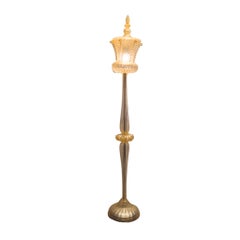
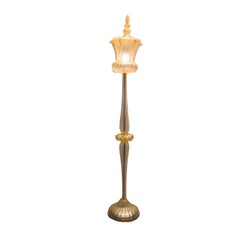
Midcentury Barovier & Toso Floor lamp, Murano glass and gold dust

Midcentury Barovier & Toso Floor lamp, Murano glass and gold dust

By Barovier&Toso

Located in Valladolid, ES

One of a Kind mid-century Murano glass floor lamp, designed by Barovier & Toso. For discerning collectors of unique, singular and hard-to-find pieces on the Italian Murano glass art market, this very rare and elegant Venetian torch...

Category

1970s Baroque Barovier&Toso Art

Materials

White Gold Leaf

Related Items
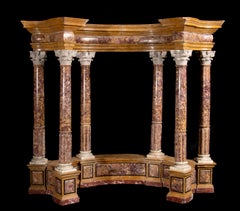
Architectural Model in Polychrome Marble of a 18th-Century Baroque-Style Shrine

Architectural Model in Polychrome Marble of a 18th-Century Baroque-Style Shrine

By Andrea Fantoni

Located in Roma, Lazio

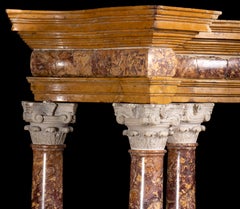
An exceptional model of a small, ornamental semicircular temple from the 18th century, carved from polychrome marbles—Broccatello from Spain, Siena Yellow, Statuary White, and Langue...

Category

18th Century Baroque Barovier&Toso Art

Materials

Marble

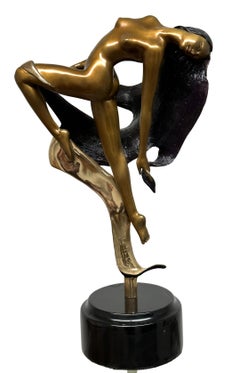
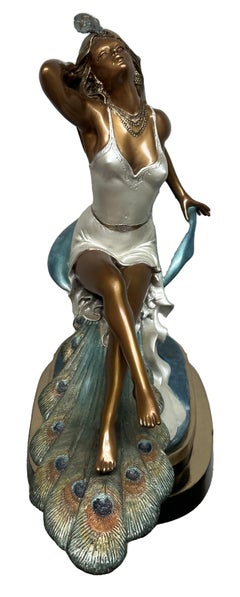
Evolution Painted Bronze Sculpture

Angelo Basso 1Evolution Painted Bronze Sculpture, 1990

$3,600Sale Price|20% Off

H 17 in W 18 in D 7 in

Evolution Painted Bronze Sculpture

By Angelo Basso 1

Located in Rochester Hills, MI

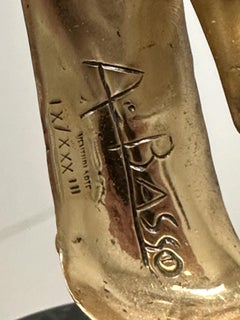
Angelo Basso (Italy, 1943 – 2011) Evolution Signed and marked IX / XXXIII Beauty & Mythology Collection Sculpture 23″ inches tall (Base 5″ Siren 18″) Box size 20″ x 17″ x 27″ ...

Category

1980s Baroque Barovier&Toso Art

Materials

Bronze

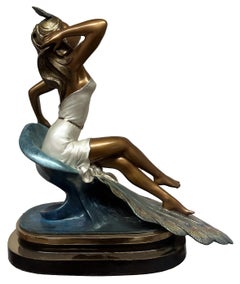
Gabriella Bronze Sculpture

Angelo Basso 1Gabriella Bronze Sculpture, 1990

$8,400Sale Price|20% Off

H 17 in W 18 in D 7 in

Gabriella Bronze Sculpture

By Angelo Basso 1

Located in Rochester Hills, MI

Angelo Basso (Italy, 1943 – 2011) Gabriella  Dimensions 17.0" W x 18.0" H x 7.0" D This sculpture was cast in the Dyansen Studios Foundry in 1991 under...

Category

1980s Baroque Barovier&Toso Art

Materials

Bronze

St. John St. Catherine Pair of sculptures 17th Century Wood Gold Italian school

St. John St. Catherine Pair of sculptures 17th Century Wood Gold Italian school

Located in Riva del Garda, IT

Aniello Stellato (documented in Naples, 1593–1648) Pair of busts of St. John the Evangelist and St. Catherine of Alexandria Carved, gilded, and polychrome wood / glass eyes M...

Category

17th Century Baroque Barovier&Toso Art

Materials

Gold

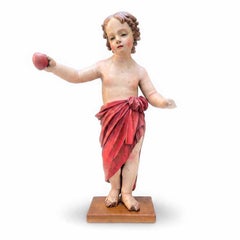
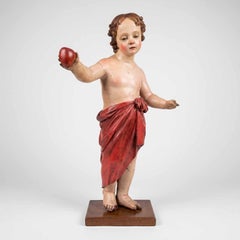
Baby Jesus with a Heart: 17th-Century Italian Baroque Lacquered Wood Sculpture

Baby Jesus with a Heart: 17th-Century Italian Baroque Lacquered Wood Sculpture

Located in Milano, IT

An Italian devotional sculpture from the 1600s depicting the Infant Jesus with a Heart, carved from wood and lacquered in polychrome. The child is depicted standing, with his weight ...

Category

Mid-17th Century Baroque Barovier&Toso Art

Materials

Wood, Paint, Tempera

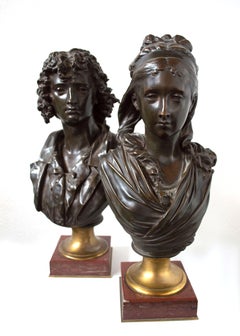
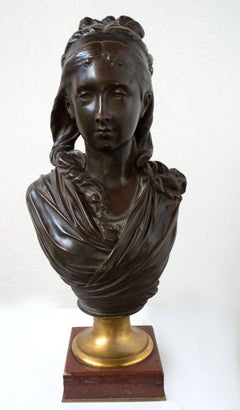
Pair of 19th Century Busts by Albert Ernest Carrier-Belleuse

Pair of 19th Century Busts by Albert Ernest Carrier-Belleuse

By Albert-Ernest Carrier-Belleuse

Located in Santa Fe, NM

Signed: A. Carrier-Belluese Two large bronze matching busts of an unknown male and female 22 x 10 x 11" male 23 x 10 x 9" female Both show signs of wear with their age but are in fa...

Category

19th Century Baroque Barovier&Toso Art

Materials

Marble, Bronze

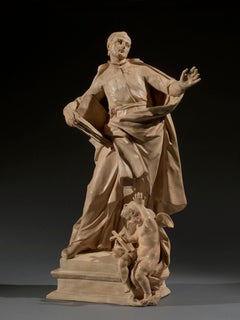
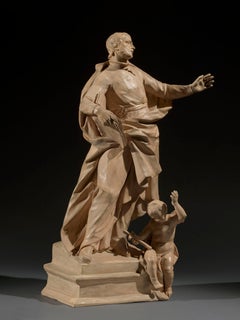
Roman 18th century terracotta model for the sculpture of San Camillo de Lellis

Roman 18th century terracotta model for the sculpture of San Camillo de Lellis

Located in London, GB

This remarkably fluid terracotta bozetto was made in preparation for Pietro Pacilli’s most important public commission, a large-scale marble statue of San Camillo de Lellis for the nave of St Peter’s Basilica in Rome. Expressively modelled, this terracotta sculpture is a rare and significant work made by a major Roman sculptor at a transformative moment of European sculpture. Pacilli began his working life on the great Baroque decorative projects initiated in the seventeenth century, but he found success as a restorer of ancient sculpture working to finish antiquities for a tourist market, becoming an important figure in the emergence of an archaeologically minded Neoclassicism. Pacilli trained Vincenzo Pacetti and provided important decorative work for the Museo Pio-Clementino, at the same time he is recorded restoring some of the most celebrated antiquities excavated and exported during the period. Pacilli was born into a family of Roman craftsmen, his father Carlo was a wood carver, and Pacilli is recorded working with him on the Corsini Chapel in San Giovanni Laternao as early as 1735. In 1738 his terracotta model of Joseph and Potiphar’s Wife won the first prize in the second class of the sculpture concorso at the Accademia di San Luca, this is particularly notable as Bartolomeo Cavaceppi came third. He worked as a carver and stuccoist completing works for the churches of San Marco and SS. Trinita dei Domeniciani Spagnoli. Pacilli operated as a sculptor and restorer of antiquities from his studio at the top of the Spanish Steps, close to Santa Trinita dei Monti, where he is listed as a potential vendor to the Museo Pio-Clementino in 1770. In 1763 Pacilli completed a silver figure of San Venanzio for the treasury of San Venanzio. He is recorded as Pacetti’s first master and it was evidently through Pacilli that he began to acquire his facility as a restorer of ancient sculpture. Pacilli, at his studio ‘poco prima dell’Arco della Regina alla Trinita dei Monti,’ exercised, what the nineteenth-century scholar, Adolf Michaelis called ‘rejuvenating arts’ on several important pieces of classical sculpture, including in 1760 the group of a Satyr with a Flute for the natural brother of George III, General Wallmoden, Hanovarian minister at Vienna. In 1765, Dallaway and Michaelis record that Pacilli was responsible for the restorations, including the addition of a new head, to the Barberini Venus which he had acquired from Gavin Hamilton. The Venus was then sold to Thomas Jenkins, who in turn passed it on to William Weddell at Newby Hall. In 1767 Pacilli exported a series of ancient busts ‘al naturale’ including portraits of Antinous, Julius Ceaser and Marus Aurelius, also a statue of a Muse and a Venus. As early as 1756 Pacilli seems to have been operating as an antiquarian, helping to disperse the collection of the Villa Borrioni. Pacilli supplied sculpture to notable British collectors, including Charles Townley, who on his first trip to Italy purchased the Palazzo Giustiniani statue of Hecate from Pacilli. Pacilli was involved with the Museo Pio Clementino from its conception, supplying busts of Julius Ceaser and a Roman Woman as well as completing stucco putti surmounting the arms of Pope Bendedict XIV to signal the entrance to the new Museo Critiano. In 1750 Il Diario Ordinario del Chracas announced that Pacilli had begun work on a sculpture of San Camillo de Lellis for St Peter’s. Camillo de Lellis founded his congregation, the Camillians, with their distinctive red felt crosses stitched on black habits in 1591. Having served as a soldier in the Venetian army, Camillo de Lellis became a novitiate of the Capuchin friars, he moved to Rome and established a religious community for the purpose of caring for the sick. In 1586 Pope Sixtus V formerly recognised the Camillians and assigned them to the Church of Santa Maria Maddalena in Rome. Camillo de Lellis died in 1614 and was entombed at Santa Maria Maddalena, he was canonised by Benedict XIV on June 26, 1746. It was an occasion that prompted the Camillians to make a number of significant artistic commissions, including two canvases by Pierre Subleyras showing episodes from San Camillo’s life which they presented to Benedict XIV. In 1750 Pacilli was commissioned to fill one of the large niches on the north wall of the nave with a sculpture of San Camillo. The present terracotta bozetto presumably had two important functions, to enable Pacilli to work out his ideas for the finished sculpture and at the same time to show his design to the various commissioning bodies. In this case it would have been Cardinal Alessandro Albani and Monsignor Giovan Francesco Olivieri, the ‘economo’ or treasurer of the fabric of St Peter’s. Previously unrecorded, this terracotta relates to a smaller, less finished model which has recently been identified as being Pacilli’s first idea for his statue of San Camillo. Preserved in Palazzo Venezia, in Rome, the terracotta shows San Camillo with his left hand clutching his vestments to his breast; the pose and action more deliberate and contained than the finished sculpture. In producing the present terracotta Pacilli has expanded and energised the figure. San Camillo is shown with his left hand extended, his head turned to the right, apparently in an attempt to look east down the nave of St Peter’s. The model shows Pacilli experimenting with San Camillo’s costume; prominently on his breast is the red cross of his order, whilst a sense of animation is injected into the figure through the billowing cloak which is pulled across the saint’s projecting right leg. The power of the restrained, axial contrapposto of bent right leg and outstretched left arm, is diminished in the final sculpture where a baroque fussiness is introduced to the drapery. What Pacilli’s terracotta demonstrates, is that he conceived the figure of San Camillo very much in line with the immediate tradition of depicting single figures in St Peter’s; the rhetorical gesture of dynamic saint, arm outstretched, book in hand, head pointed upwards was perhaps borrowed from Camillo Rusconi’s 1733 sculpture of St. Ignatius...

Category

18th Century Baroque Barovier&Toso Art
Materials

Terracotta

Italian sculptor - 17th-18th century bronze Triton playing a conch shell

Italian sculptor - 17th-18th century bronze Triton playing a conch shell, c.1700

$3,428Sale Price|25% Off

H 20.08 in W 8.67 in D 8.67 in

Italian sculptor - 17th-18th century bronze Triton playing a conch shell

Located in Varmo, IT

Italian sculptor (17th-18th century) - Triton playing a conch shell. 22 x 22 x h 51 cm. Full-length figure in patinated bronze on a rocaille carved and gilded wood base. The trito...

Category

Late 17th Century Baroque Barovier&Toso Art
Materials

Bronze

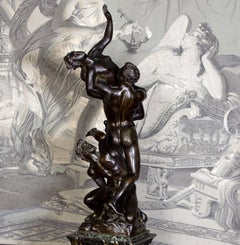
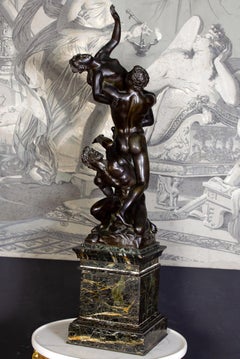
The Rape of Sabine Iconic Bronze Sculpture 1930

The Rape of Sabine Iconic Bronze Sculpture 1930

Located in Rome, IT

Fine Group of Sculptures in Bronze after Jean de Boulogne (Giambologna) The torturously twisting Rape of the Sabine Women is one of the finest and most technically difficult sculpt...

Category

1920s Mannerist Barovier&Toso Art
Materials

Bronze

Barovier&toso art for sale on 1stDibs.

Find a wide variety of authentic Barovier&Toso art available for sale on 1stDibs.