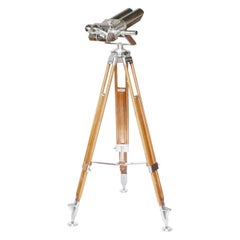
Carl Zeiss Folk Art

to
1
1
1
1
1
1
1
1
1
1
1
1
2
358
128
100
82
Creator: Carl Zeiss
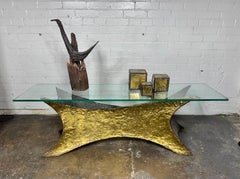
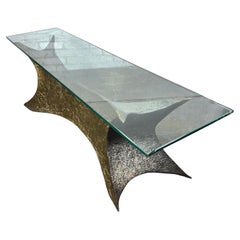
Carl Zollo (R.I.T.) Brutalist Melt Weld Cocktail Table / Sculpture

Carl Zollo (R.I.T.) Brutalist Melt Weld Cocktail Table / Sculpture

By Carl Zeiss

Located in Buffalo, NY

Offered is a wonderful metal art sculpture / coffee / cocktail table by well known Rochester NY sculpture Carl Zollo (1928-2009).Born November 10, 1928, Carl Zollo was a native Roche...

Category

1960s American Brutalist Vintage Carl Zeiss Folk Art

Materials

Steel

Related Items
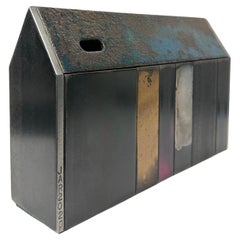
Jim Rose Barn House Structure, Welded Steel Sculpture Made with Salvaged Steel

Jim Rose Barn House Structure, Welded Steel Sculpture Made with Salvaged Steel

By Jim Rose

Located in Chicago, IL

Structure No. 222 occupies a quietly pivotal place within Jim Rose’s legacy, embodying his ability to extract meaning from the margins of his own making process. Created from found s...

Category

2010s American Folk Art Carl Zeiss Folk Art

Materials

Steel

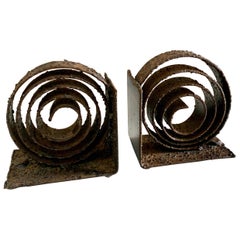
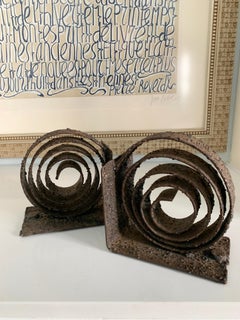
Wrought Iron Brutalist Bookends with Spiral Design

Wrought Iron Brutalist Bookends with Spiral Design

$470 / set

H 6.75 in W 6.25 in D 4 in

Wrought Iron Brutalist Bookends with Spiral Design

Located in Los Angeles, CA

Heavy and sculpturally interesting pieces indeed are our pair of spiral wrought iron Brutalist bookends - if you are a fan of midcentury pieces,...

Category

20th Century Mid-Century Modern Carl Zeiss Folk Art

Materials

Wrought Iron

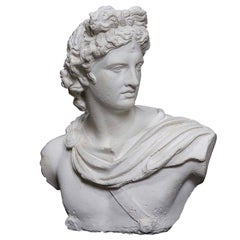
Apollo Belvedere Sculpture

Apollo Belvedere Sculpture

$1,705

H 20.08 in W 17.72 in D 11.03 in

Apollo Belvedere Sculpture

By Raffaello Romanelli

Located in Milan, IT

This magnificent bust of Apollo, the Greek god of art, medicine, and music is directly inspired by the Classic marble statues in the Roman tradit...

Category

2010s Italian Carl Zeiss Folk Art

Materials

Plaster

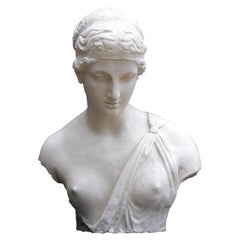
Hebe's Bust Sculpture

Hebe's Bust Sculpture

$1,475 / item

H 19.69 in W 14.57 in D 9.45 in

Hebe's Bust Sculpture

By Raffaello Romanelli

Located in Milan, IT

This exceptional piece meticulously reproduces Danish sculptor Bertel Thorvaldsen's oeuvre realized in 1806 and preserved at the Thorvaldsen Museum ...

Category

2010s Italian Carl Zeiss Folk Art

Materials

Other

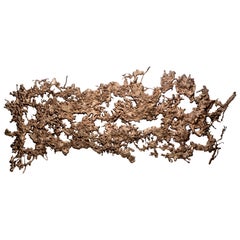
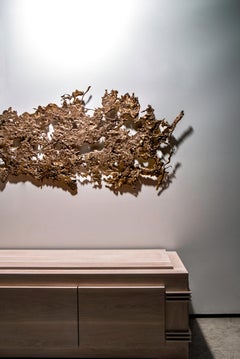
Molten Bronze Casted Sculpture "Andromeda Bronze Sculpture"

Molten Bronze Casted Sculpture "Andromeda Bronze Sculpture"

By Anton Maka

Located in Shelby Twp, MI

This sculpture is made of bronze that has been casted to create a modern piece of art that will fit in a modern space. This piece emphasizes the raw look of molten bronze. This is...

Category

21st Century and Contemporary American Organic Modern Carl Zeiss Folk Art

Materials

Bronze

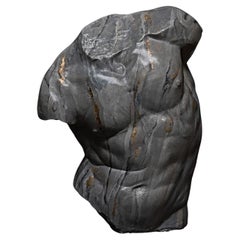
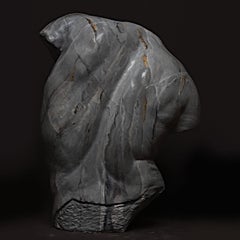
Gaddi Bust Sculpture

Gaddi Bust Sculpture

$2,900 / item

H 16.54 in W 14.18 in D 7.88 in

Gaddi Bust Sculpture

By Raffaello Romanelli

Located in Milan, IT

This is a plaster bust reproducing the Torso Gaddi, the famous fragmentary sculpture displayed in the Uffizi Museums in Florence, which inspired many great artists of the Renaissance, including Michelangelo. The piece, handcrafted by the skilled artists of Galleria Romanelli...

Category

2010s Italian Carl Zeiss Folk Art

Materials

Marble

Sitting Woman Sculpture

Sitting Woman Sculpture

$1,170 / item

H 17.72 in W 9.06 in D 10.24 in

Sitting Woman Sculpture

By Raffaello Romanelli

Located in Milan, IT

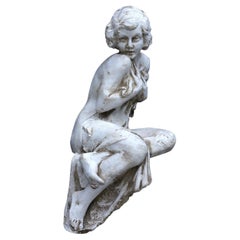
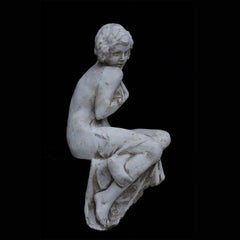
This extraordinary sculpture merges art and design in a unique showcase of craftsmanship that will stunningly elevate the aesthetic of any interior. Handmade of gypsum by Romanelli's...

Category

2010s Italian Carl Zeiss Folk Art

Materials

Other

Wounded Boxer Sculpture

Wounded Boxer Sculpture

$2,730 / item

H 16.15 in W 11.42 in D 9.45 in

Wounded Boxer Sculpture

By Raffaello Romanelli

Located in Milan, IT

This sculpture by Raffaello Romanelli is a modern rendition of Romano Romanelli's piece of the same name originally made in 1929-31. Made in plaster, the piece maintains the accurate...

Category

2010s Italian Carl Zeiss Folk Art

Materials

Plaster

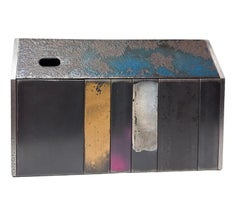
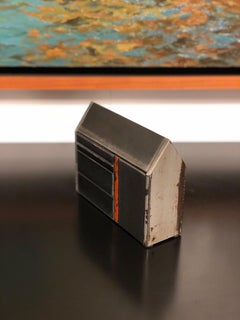
Jim Rose Barn House Structure, Welded Steel Object Made with Salvaged Steel

Jim Rose Barn House Structure, Welded Steel Object Made with Salvaged Steel

By Jim Rose

Located in Chicago, IL

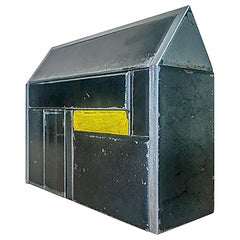
Structure #168 encapsulates Jim Rose’s ability to distill his larger furniture and quilt-cabinet practice into a compact, sculptural form, reinforcing a key aspect of his legacy: the seamless movement between utility, abstraction, and architectural metaphor. Made from found steel with natural rust patina and traces of original paint, the piece emerges directly from the byproducts of his quilt cabinet process—scraps that Rose treated not as waste, but as material charged with possibility. The pitched roof and block-like mass evoke a small building or shelter, a recurring motif in Rose’s Structure series. Here, that architectural reference is pared down to essentials, with crisp seams and planar surfaces defining the form. The small yellow painted rectangle—retained from the steel’s previous life—functions like a visual punctuation, echoing the found-color compositions of his quilt cabinets while asserting the autonomy of the sculpture. As with his larger works, Rose did not apply this color; its presence speaks to his respect for the material’s history and his role as an editor rather than a decorator. In the context of his legacy, Structure #168 demonstrates how Rose expanded his vocabulary beyond furniture into a more intimate, contemplative scale. These sculptures reveal his sensitivity to proportion, surface, and narrative embedded in industrial remnants. They underscore a defining principle of his work: that meaning and beauty can emerge from the margins of making, where process, reuse, and restraint converge into a quietly powerful form. Jim Rose Structure #168 found steel with natural rust patina and paint 6h x 4.50w x 2.50d in 15.24h x 11.43w x 6.35d cm Bio Jim Rose (1966–2023) was an American furniture maker, artist, and metalworker whose work occupied a singular position between studio craft, sculpture, and functional design. Born in Beech Grove, Indiana, Rose trained as a sculptor, earning his BFA from the School of the Art Institute of Chicago in 1988 after a brief period of study at Bard College. This sculptural foundation shaped his approach to furniture, in which proportion, structure, and surface were treated with the same rigor as utility, and everyday objects were understood as vehicles for aesthetic and ethical values. Working primarily in steel—often reclaimed or salvaged—Rose challenged conventional expectations of furniture materials. Through brushing, waxing, and patination, he developed surfaces that softened steel’s industrial associations, imparting warmth, depth, and a sense of age. His work drew on diverse historical and cultural sources, including Shaker furniture, Asian cabinetry, and the quilts of Gee’s Bend, yet these influences were never literal. Instead, Rose translated their underlying principles—clarity, restraint, repetition, and balance—into a contemporary language grounded in material honesty. Based for much of his career in Wisconsin, Rose was closely associated with the John Michael Kohler Arts Center, including participation in its Arts/Industry residency program. His furniture and objects were widely exhibited in galleries and design fairs across the United States and featured in publications such as American Craft and Architectural Digest. His work entered both private and institutional collections during his lifetime, reflecting a sustained engagement with collectors, curators, and designers. Rose’s furniture is distinguished by its emphasis on durability, adaptability, and use. Cabinets, chairs, benches, and tables were engineered for longevity and daily life, incorporating practical features such as steel drawer glides, modular construction, and discreet accommodations for modern technology. This functional intelligence was inseparable from his broader philosophy: furniture, for Rose, was a form of quiet service, meant to support human activity while carrying forward the history embedded in its materials. Jim Rose’s work is held in the permanent collections of major institutions including the Smithsonian American Art Museum, the Museum of Arts and Design in New York, the Milwaukee Art Museum, the Carnegie Museum of Art, and the John Michael Kohler Arts Center. Following his death in 2023, his legacy endures through a body of work that demonstrates how contemporary furniture can be both materially rigorous and deeply humane—objects shaped by patience, integrity, and an enduring respect for use. Education: 1989 B.F.A., Sculpture, The School of the Art Institute of Chicago, IL 1988 Student at Large, Welding Technology, Triton College, Chicago, IL 1985 Undergraduate Photography Bard College, Annandale-on-Hudson, New York Awards: 2008 Wisconsin Arts Board Fellowship Award, Madison, WI 2005 Elizabeth R. Raphael Founder’s Prize, Society for Contemporary Craft, Pittsburgh, PA 2003 Grant Recipient for Shaker Interpretations in Cast Iron, PA Arts Assoc / WI Arts Board 2003 Arts/Industry Residency Program for Visual Artists, John Michael Kohler Arts Center, Sheboygan, Wisconsin Solo Exhibitions: 2023 CODA Final Show, Gallery VICTOR, Chicago, IL 2017 New Work, Tory Folliard Gallery, Milwaukee, WI 2012 Simply Steel, Leigh Yawkey Woodson Art Museum, Wausau, WI 2007 Variation, Ann Nathan Gallery, Chicago, IL 2003 New Work, Ann Nathan Gallery, Chicago, IL 2001 Shaker in Steel / New Work, Ann Nathan Gallery, Chicago, IL 2000 Shaker in Steel / New Work, Ann Nathan Gallery, Chicago, IL 1999 Hands and Heart to Steel III, Ann Nathan Gallery, Chicago, IL National Exhibitions: 2023 Intersect Palm Springs, Gallery VICTOR, Palm Springs Convention Center, CA 2017 - 2018 SOFA Chicago – Gallery Victor Armendariz 1995 - 2016 SOFA Chicago, New York, Palm Beach - Ann Nathan Gallery 2011 - 2002 Art Chicago - Ann Nathan Gallery Group Exhibitions: 2022 Wunderkammer: Victor's Cabinet of Curiosities – 5th Anniversary Special Exhibit, Gallery VICTOR, Chicago, IL 2017 Coming Attractions: Inaugural Exhibition, Gallery Victor Armendariz, Chicago, IL 2017 Living with Art: The Newman Collection, 108 Contemporary, Tulsa, Oklahoma 2016 Form Follows Function: The Intersection of Art and Craft, The Hardy Gallery...

Category

2010s American Folk Art Carl Zeiss Folk Art
Materials

Steel

Bronze Sculpture Austrian Carl Kauba Rodeo Cowboy Marble, circa 1900

Bronze Sculpture Austrian Carl Kauba Rodeo Cowboy Marble, circa 1900

By Carl Kauba

Located in Hamilton, Ontario

Early 20th century bronze on Marble slab sculpture of a bronco rodeo cowboy on horse by Austrian artist Carl Kauba. Weighing a heavy 18 pounds with a solid marble base, Kauba has amazing intricate detail from the reins to the cowboys face and horses hoofs. Carl Kauba (1865-1922) Carl Kauba was born August 13, 1865 in Vienna, Austria. The son of a shoemaker, Kauba chose to follow his calling into the world of art. Collectors now rank him in a class with Remington and Russell as one of the great portrayers of American Western. His subjects were typically Native American Indians, Cavalrymen, Cowboys, and Roughriders. In addition to his American bronzes, Kauba produced a lifetime’s worth of Austrian statuary. His work became fully appreciated on both sides of the Atlantic. Carl studied at the Academy of Fine Arts in Vienna under professor Laufenberg. Later he would study at the academies under Carl Waschmann and Stefan Schwartz. Next, he went to Paris in 1886 to further study before he set off for the U.S. Kauba’s fascination with the West was fired by the stories of the German writer, Carl May, whose tales of Western adventure were well known throughout Europe. Most authorities feel that he was about twenty-five years old when he traveled widely throughout the American West. He then returned to Austria with voluminous notes, sketches, and several models of Western sculpture...

Category

Early 20th Century Austrian Carl Zeiss Folk Art

Materials

Marble, Bronze

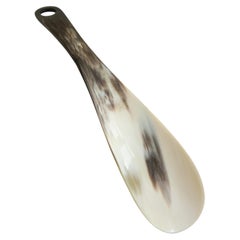
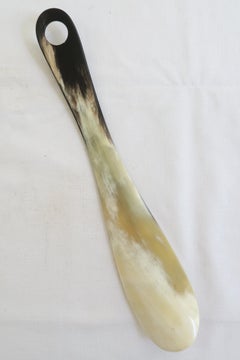
Carl Auböck Mid-Century Shoehorn Made from Horn

Carl Auböck Mid-Century Shoehorn Made from Horn

$441

H 11.89 in W 2.17 in D 0.16 in

Carl Auböck Mid-Century Shoehorn Made from Horn

By Werkstätte Carl Auböck

Located in Vienna, AT

For sale is a beautiful Mid-Century Modern shoehorn. It was manufactured in Vienna in the renowned Austrian workshops of Bauhaus-influenced designer Carl Auböck. This horn shoehorn w...

Category

Mid-20th Century Austrian Mid-Century Modern Carl Zeiss Folk Art

Materials

Horn

Previously Available Items
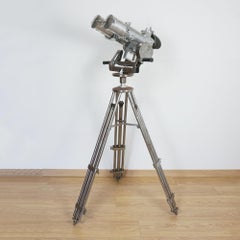
WWII 10x80 Carl Zeiss Kriegsmarine Naval Binoculars

WWII 10x80 Carl Zeiss Kriegsmarine Naval Binoculars

Sold

H 39.38 in W 20.87 in D 11.82 in

WWII 10x80 Carl Zeiss Kriegsmarine Naval Binoculars

By Carl Zeiss

Located in Forest Row, East Sussex

A pair of 10x80 WWII Kriegsmarine anti-aircraft binoculars designed by Emil Busch Optical Industries of Rathenow. WW11 naval binoculars with eyepieces set at 45 degrees. Set on a chr...

Category

Early 20th Century German Carl Zeiss Folk Art

Materials

Metal

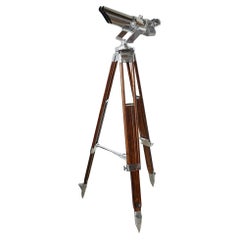
10x80 WW11 Naval/Marine Binoculars Designed by Emil Busch for Zeiss

10x80 WW11 Naval/Marine Binoculars Designed by Emil Busch for Zeiss

By Carl Zeiss

Located in Forest Row, East Sussex

A pair of 10x80 observation binoculars designed by Emil Busch Optical Industries of Rathenow. WW11 naval binoculars with eyepieces set at 45 degrees. Set on a later extending wood an...

Category

Early 20th Century German Carl Zeiss Folk Art

Materials

Steel

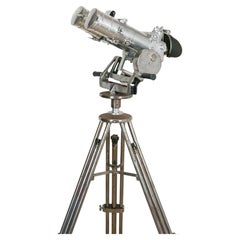
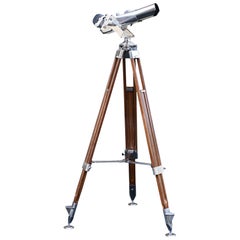
Carl Zeiss 12 x 60 German Observation Binoculars, Second World War

Carl Zeiss 12 x 60 German Observation Binoculars, Second World War

By Carl Zeiss

Located in Colorado Springs, CO

This is an exceptional 20th century WWII German 12x60 observation binocular, presented on an adjustable wooden tripod. The binoculars were manufactured by the company Carl Zeiss. Carl Zeiss is a German manufacturer of optical systems, founded in Jena, Germany in 1846 by optician Carl Zeiss. These binoculars were used for long-watch land and sky observation by German forces between 1939 and 1945. The binoculars were ruggedly constructed to withstand the rigors of field service. They were used for various tasks, including daylight observation of enemy troop movements, directing fire from artillery toward advancing enemy troops and armor, directing fire at enemy aircraft, and night observation. The angle of the binoculars allowed the observer to sustain watch for long periods of time. The angle also permitted a necessary versatility, as the watchman was able to perform both higher aerial observation and observation of enemy troops on the same visual plane as the watchman. The wartime code for this binocular, “blc”, is engraved on the side of the binocular. “blc” is the secret manufacturing code assigned to Zeiss by the German Army Ordnance Department. The use of the “blc” code instead of the company’s normal logo on the side was a precautionary one, to ensure the secrecy of factory production should the binocular fall into enemy hands. World War II binoculars are true military weapons, designed for defense and reconnaissance. They were never designed for civilian use, and were constructed without cost in mind, as the reliability of the optics far outweighed the monetary cost. The eyepieces can be adjusted for focus and the distance between your eyes with a turn of a knob, as can the shade settings for the lenses. This particular binocular also possesses sun filters. It was a known military tactic to fly in line with the sunlight and filters helped to cut the glare of the sun to increase plane and bomber tracking. This stunning antique...

Category

20th Century German Carl Zeiss Folk Art

Materials

Metal

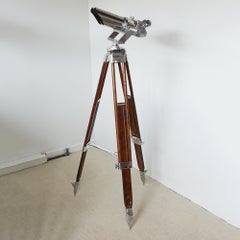
Emil Busch 10x80 WW11 Naval/Marine Binoculars

Emil Busch 10x80 WW11 Naval/Marine Binoculars

By Carl Zeiss

Located in Forest Row, East Sussex

A pair of 10x80 observation binoculars designed by Emil Busch Optical Industries of Rathenow. WW11 naval binoculars with eyepieces set at 45 degrees. Set on a later extending wood an...

Category

Mid-20th Century German Carl Zeiss Folk Art

Materials

Chrome

Carl Zeiss folk art for sale on 1stDibs.

Carl Zeiss folk art are available for sale on 1stDibs.

Questions About Carl Zeiss Folk Art

  • 1stDibs ExpertMarch 13, 2024
    The difference between Carl Zeiss and Zeiss comes down to corporate structure. Carl Zeiss AG is the overall name of the German manufacturer. Zeiss is the brand name for products produced by Carl Zeiss AG. Find a variety of Zeiss eyewear, binoculars and other pieces from some of the world's top sellers on 1stDibs.
  • 1stDibs ExpertFebruary 1, 2024
    Yes, Carl Zeiss binoculars are generally thought of as good in terms of their quality. The German maker is one of the leading manufacturers of binoculars in the world. The company uses only fine-quality materials like all-metal bodies and high-end glass in its products, and strict quality controls guide the manufacturing process to ensure that its binoculars are flawless. On 1stDibs, shop a selection of Carl Zeiss binoculars.