Carlos Merida

to
5
5
5
5
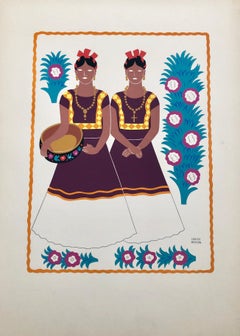
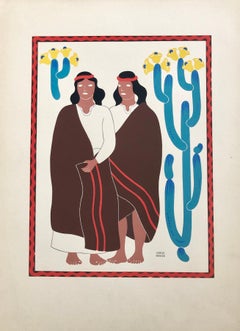
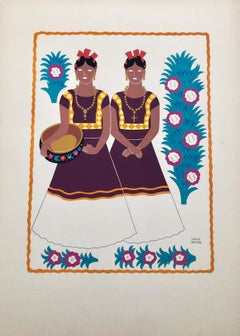
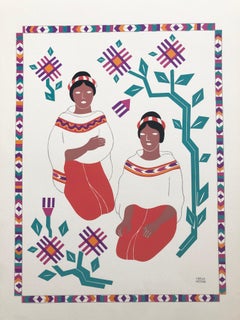
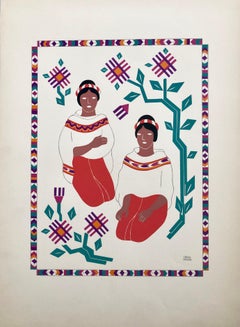
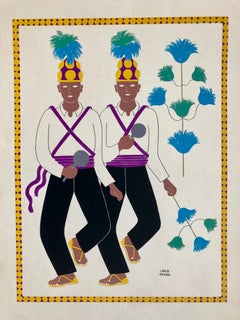
1945 Mexican Modernist Silkscreen Serigraph Print Regional Folk Art Dress Mexico
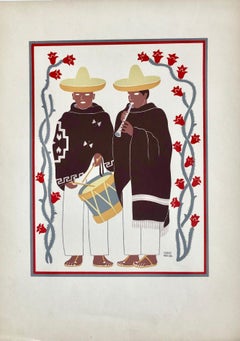
1945 Mexican Modernist Silkscreen Serigraph Print Regional Folk Art Dress Mexico
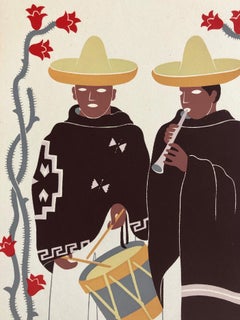
By Carlos Merida 1

Located in Surfside, FL

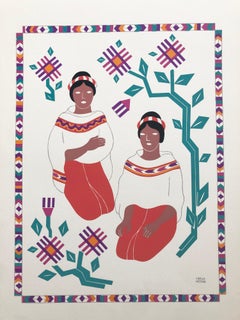
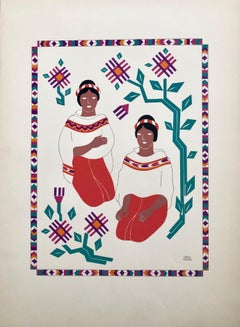
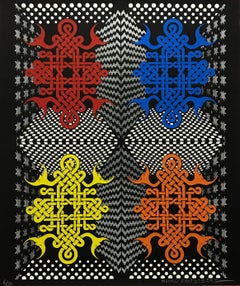
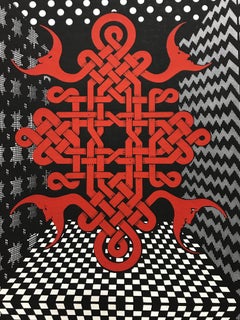
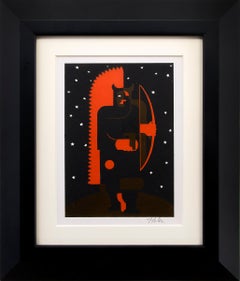
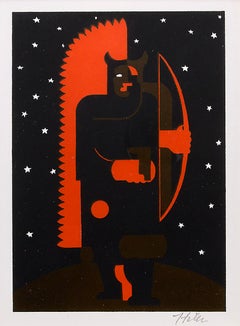
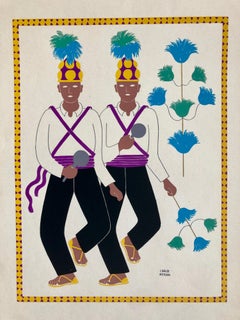
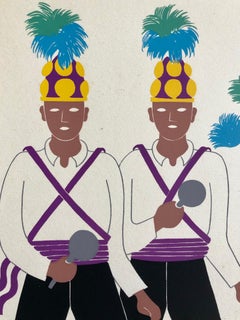
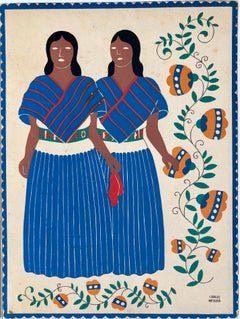
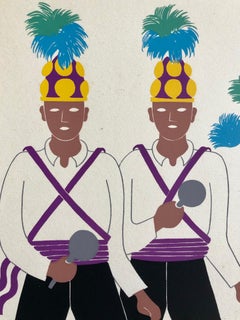
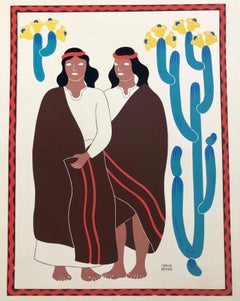
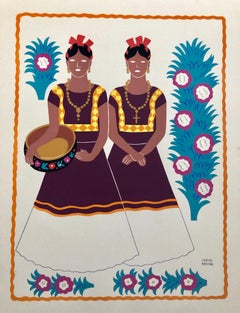
This listing is for the one Silkscreen serigraph piece listed here. Mexico City, 1945. First edition. plate signed, limited edition of 1000, these serigraph plates depict various types of traditional and folk art indigenous clothing...
Category

1940s Folk Art Carlos Merida

Materials

Screen

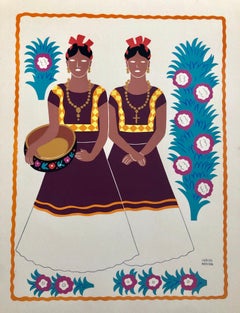
1945 Mexican Modernist Silkscreen Serigraph Print Regional Folk Art Dress Mexico

1945 Mexican Modernist Silkscreen Serigraph Print Regional Folk Art Dress Mexico

By Carlos Merida 1

Located in Surfside, FL

This listing is for the one Silkscreen serigraph piece listed here. Mexico City, 1945. First edition. plate signed, limited edition of 1000, these serigraph plates depict various types of traditional and folk art indigenous clothing...

Category

1940s Folk Art Carlos Merida

Materials

Screen

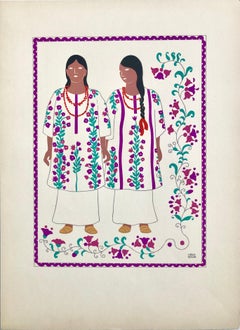
1945 Mexican Modernist Silkscreen Serigraph  Print Regional Dress Carlos Merida

1945 Mexican Modernist Silkscreen Serigraph Print Regional Dress Carlos Merida

By Carlos Merida 1

Located in Surfside, FL

This listing is for the one Silkscreen serigraph piece listed here. Mexico City, 1945. First edition. plate signed, limited edition of 1000, these serigraph plates depict various types of traditional and folk art indigenous clothing...

Category

1940s Folk Art Carlos Merida

Materials

Screen

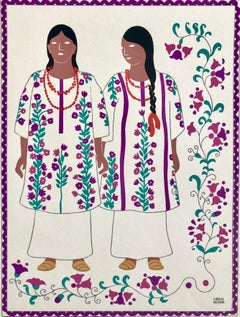
1945 Mexican Modernist Silkscreen Serigraph Print Regional Folk Art Dress Mexico

1945 Mexican Modernist Silkscreen Serigraph Print Regional Folk Art Dress Mexico

By Carlos Merida 1

Located in Surfside, FL

This listing is for the one Silkscreen serigraph piece listed here. Mexico City, 1945. First edition. plate signed, limited edition of 1000, these serigraph plates depict various types of traditional and folk art indigenous clothing...

Category

1940s Folk Art Carlos Merida

Materials

Screen

1945 Mexican Modernist Silkscreen Serigraph Print Regional Folk Art Dress Mexico

1945 Mexican Modernist Silkscreen Serigraph Print Regional Folk Art Dress Mexico

By Carlos Merida 1

Located in Surfside, FL

This listing is for the one Silkscreen serigraph piece listed here. Mexico City, 1945. First edition. plate signed, limited edition of 1000, these serigraph plates depict various types of traditional and folk art indigenous clothing...

Category

1940s Folk Art Carlos Merida

Materials

Screen

Related Items
Tea for two – Tod

Harry BunceTea for two – Tod, 2017

$203

H 16.15 in W 19.3 in D 0.04 in

Tea for two – Tod

By Harry Bunce

Located in Deddington, GB

Tea for two – Tod by Harry Bunce [2017] limited_edition Screen Print Edition number 146 Image size: H:25 cm x W:31 cm Complete Size of Unframed Work: H:41 cm x W:49 cm x D:0.3cm Sol...

Category

2010s Contemporary Carlos Merida

Materials

Paper, Screen

Shower Profile (White) Silkscreen on Canvas with Diamond Dust, Signed Edition

Shower Profile (White) Silkscreen on Canvas with Diamond Dust, Signed Edition

By Carole Feuerman

Located in Aventura, FL

Silkscreen on canvas with diamond dust. Hand signed, dated, and numbered on verso by the artist. Edition of 25. Canvas is stretched. Artwork is in excellent condition. Certificate ...

Category

21st Century and Contemporary Realist Carlos Merida

Materials

Canvas, Screen

Marilyn For Ever Screenprint, Signed Edition of 95, 2021, Framed

Marilyn For Ever Screenprint, Signed Edition of 95, 2021, Framed

By Mr. Brainwash

Located in London, GB

Mr. Brainwash Marilyn For Ever, 2021 screenprint on hand torn archival art paper 30 x 22 inches - paper size 37 x 29 inches - framed size edition of 95 signed and numbered. Mr. Brain...

Category

2010s Contemporary Carlos Merida

Materials

Screen

Grevy's Zebra FS II.300, Screen Print, Pop Art, Signed, Edition 61/150, 1983

Grevy's Zebra FS II.300, Screen Print, Pop Art, Signed, Edition 61/150, 1983

By Andy Warhol

Located in Aventura, FL

Grevy's Zebra, from Endangered Species. Screen print in colors on Lennox Museum Board. Hand signed and numbered by Andy Warhol. Edition 61/150 (there were also 30 AP's, 5 PP's, 5 EP's, 3 HC's, 10 numbered in Roman numerals, 1 BAT, and 30 TP's). Printed By Rupert Jansen Smith, Ny. Published By Ronald Feldman Fine Art Inc., NY. Artwork is in excellent condition. All reasonable offers will be considered. From the Endangered Species portfolio, which premiered in 1983. Warhol was commissioned by environmentalists and gallerists Ronald and Frayda Feldman to depict 10 endangered animals, bringing attention to their fragility. The US federal government had passed the Endangered Species Act (ESA) in 1973, making clear criteria for assigning the status of “endangered” to animals that had seen massive attrition of their populations. This designation has been adopted internationally and Warhol’s Endangered...

Category

1980s Pop Art Carlos Merida

Materials

Paper, Screen

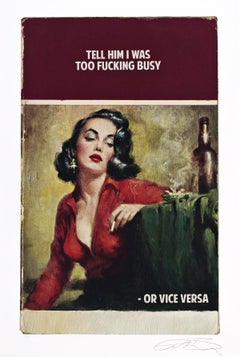
Tell Him I Was Too Fucking Busy--Or Vice Versa

Tell Him I Was Too Fucking Busy--Or Vice Versa

By The Connor Brothers

Located in New York, NY

A very good impression of this color giclée print with screen-printed varnish on white wove paper. Signed, dated in pencil lower right. Numbered 23/50 in pencil, lower left.

Category

2010s Contemporary Carlos Merida

Materials

Varnish, Color, Giclée, Screen

Love FS II.311 Screen Print on Rives BFK Paper, Signed, Edition 12/100, 1983

Love FS II.311 Screen Print on Rives BFK Paper, Signed, Edition 12/100, 1983

By Andy Warhol

Located in Aventura, FL

Screen print on Rives BFK paper. From the Love Portfolio. Hand signed and numbered lower front by Andy Warhol. Numbered 12/100 (there were also 10 AP's, 2 PP's, 5 EP's and 7 HC's). ...

Category

1980s Pop Art Carlos Merida

Materials

Board, Screen

Portfolio of Wolf Sausage, King Brand, Dog Leg Study and Undiscovered Genius

Portfolio of Wolf Sausage, King Brand, Dog Leg Study and Undiscovered Genius

By Jean-Michel Basquiat

Located in Aventura, FL

Conceived in 1982-1983 and printed in 2019. Screenprint in colors. Each stamped and signed on verso by Lisane Basquiat and Jeanine Heriveaux, the artist’s sisters and administrators ...

Category

2010s Street Art Carlos Merida

Materials

Screen

Geronimo FS II.384 Screen Print on Lenox Board, Pop Art, Signed, 1986, Framed

Geronimo FS II.384 Screen Print on Lenox Board, Pop Art, Signed, 1986, Framed

By Andy Warhol

Located in Aventura, FL

Screen print on Lenox museum board. From the Cowboys And Indians Portfolio. Hand signed and numbered lower front by Andy Warhol. Numbered 131/250 (there were also 50 AP's, 15 PP's, 15 HC's and 10 numbered in Roman numerals). Published by Gaultney, Klineman Art, Inc., New York. Printed by Rupert Jasen Smith, New York. The artwork is in excellent condition. All reasonable offers will be considered. In Cowboys and Indians, Warhol interspersed recognizable portraits of well-known American heroes with less familiar Native American images and motifs. It demonstrates his ironic commentary on America’s collective mythologizing of the historic West. Rather than portraying Native Americans within their historical landscape, Warhol chose to portray a romanticized version of the American West. The West that he chose to represent is familiar to everyone and can be seen in novels, films, and television series. Warhol’s Cowboys and Indians suite...

Category

1980s Pop Art Carlos Merida

Materials

Board, Screen

The Boundaries Of Our Realities Are Set By The Limits Of Our Imagination

The Boundaries Of Our Realities Are Set By The Limits Of Our Imagination

By The Connor Brothers

Located in New York, NY

A pristine color screenprint, acrylic and oil paint and varnish over giclée on paper. Signed and dated in white ink by the Connor Brothers. Dimensions with the frame are 32 x 22 inches.

Category

2010s Modern Carlos Merida

Materials

Paper, Varnish, Oil, Acrylic, Color, Giclée, Screen

Secret Admirer
Secret Admirer

Mr. BrainwashSecret Admirer, 2013

$4,890

H 25.6 in W 25.6 in

Secret Admirer

By Mr. Brainwash

Located in London, GB

Mr. Brainwash Secret Admirer (Red), 2013 4-color screenprint on hand-torn archival art paper 22 1/2 × 22 1/2 in 57.2 × 57.2 cm Edition of 70 Hand-signed by the artist on the fromt,...

Category

2010s Street Art Carlos Merida

Materials

Archival Paper, Screen

Put On Some Lipstick, Pour Yourself a Drink and Pull Yourself Together

Put On Some Lipstick, Pour Yourself a Drink and Pull Yourself Together

By Pure Evil

Located in London, GB

Pure Evil Elizabeth Taylor - Put on some lipstick, 2021 Screenprint in colours 50 x 35 cm 60 x 45 cm - Framed Edition of 100 + 1 AP signed and numbered by the artist

Category

2010s Carlos Merida

Materials

Screen

Pine Barrens Tree Frog FS II.294, Screen Print, Pop Art, Signed, Edition 114/150

Pine Barrens Tree Frog FS II.294, Screen Print, Pop Art, Signed, Edition 114/150

By Andy Warhol

Located in Aventura, FL

Pine Barren's Tree Frog, from Endangered Species. Screen print in colors on Lennox Museum Board. Hand signed and numbered by Andy Warhol. Edition 114/150 (there were also 30 AP's, 5 PP's, 5 EP's, 3 HC's, 10 numbered in Roman numerals, 1 BAT, and 30 TP's). Printed By Rupert Jansen Smith, Ny. Published By Ronald Feldman Fine Art Inc., NY. Artwork is in excellent condition. All reasonable offers will be considered. From the Endangered Species portfolio, which premiered in 1983. Warhol was commissioned by environmentalists and gallerists Ronald and Frayda Feldman to depict 10 endangered animals, bringing attention to their fragility. The US federal government had passed the Endangered Species Act (ESA) in 1973, making clear criteria for assigning the status of “endangered” to animals that had seen massive attrition of their populations. This designation has been adopted internationally and Warhol’s Endangered...

Category

1980s Pop Art Carlos Merida

Materials

Paper, Screen

Previously Available Items
1945 Mexican Modernist Silkscreen Serigraph Print Regional Folk Art Dress Mexico

1945 Mexican Modernist Silkscreen Serigraph Print Regional Folk Art Dress Mexico

By Carlos Merida 1

Located in Surfside, FL

This listing is for the one Silkscreen serigraph piece listed here. Mexico City, 1945. First edition. plate signed, limited edition of 1000, these serigraph plates depict various types of traditional and folk art indigenous clothing...

Category

1940s Folk Art Carlos Merida

Materials

Screen

1945 Mexican Modernist Silkscreen Serigraph Print Regional Folk Art Dress Mexico

1945 Mexican Modernist Silkscreen Serigraph Print Regional Folk Art Dress Mexico

By Carlos Merida 1

Located in Surfside, FL

This listing is for the one Silkscreen serigraph piece listed here. Mexico City, 1945. First edition. plate signed, limited edition of 1000, these serigraph plates depict various types of traditional and folk art indigenous clothing...

Category

1940s Folk Art Carlos Merida

Materials

Screen

1945 Mexican Modernist Silkscreen Serigraph Print Regional Folk Art Dress Mexico

1945 Mexican Modernist Silkscreen Serigraph Print Regional Folk Art Dress Mexico

By Carlos Merida 1

Located in Surfside, FL

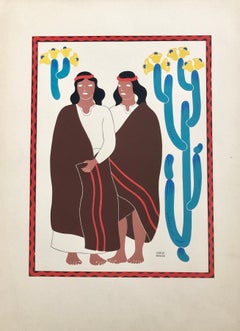
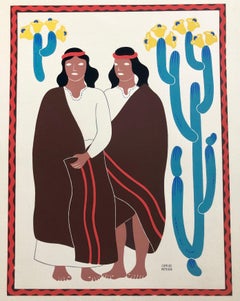
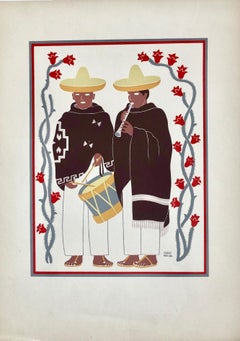
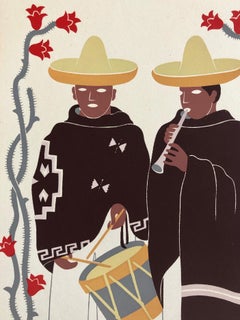
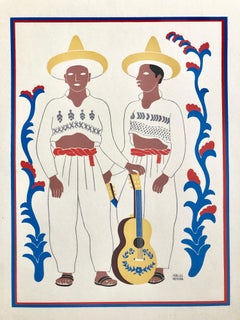
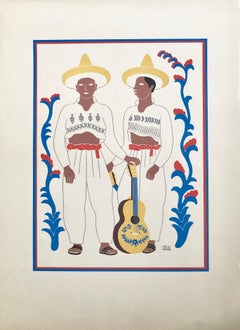
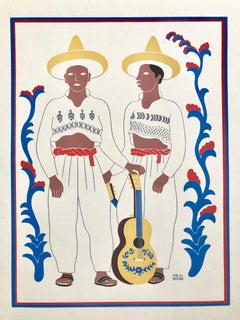
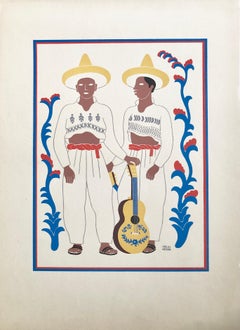
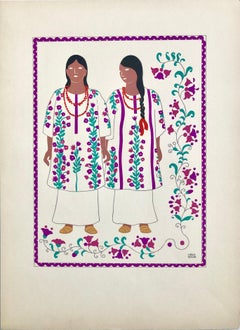
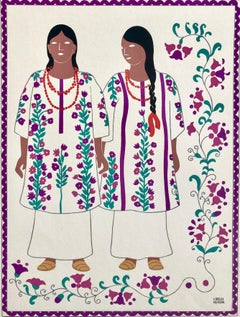
This listing is for the one Silkscreen serigraph piece listed here. Mexico City, 1945. First edition. plate signed, limited edition of 1000, these serigraph plates depict various types of traditional and folk art indigenous clothing and costume styles from around Mexico. The illustrations depict the cultures of many different states in Mexico, including Oaxaca, Chiapas, Jalisco and Veracruz. Carlos Mérida (December 2, 1891 – December 21, 1985) was a Guatemalan artist who was one of the first to fuse European modern painting to Latin American themes, especially those related to Guatemala and Mexico. He was part of the Mexican muralism movement in subject matter but less so in style, favoring a non-figurative and later geometric style rather than a figurative, narrative style. Mérida is best known for canvas and mural work, the latter including elements such as glass and ceramic mosaic on major constructions in the 1950s and 1960s. One of his major works, on the Benito Juarez housing complex, was completely destroyed with the 1985 Mexico City earthquake, but a monument to it exists at another complex in the south of the city. Carlos Mérida was born Carlos Santiago Ortega in Guatemala City to Serapio Santiago Mérida and Guadalupe Ortega Barnoya. He later changed his name what is known by as he thought it was more sonorous. His brothers and children also took the Mérida name later on. He was of mixed Spanish/Maya-Quiché heritage which he promoted during his life. As a young child, Mérida had both music and art lessons, and his first passion was music, which led to piano lessons. He studied at a trade school called the Instituto de Artes y Oficios, then the Instituto de Ciencias y Letras. Here he began to have a reputation for the avant garde. Merída’s first trip to the United States was in 1917, where he met writer Juan José Tablada. Mérida made several trips to Europe over his lifetime to both study art and work as an artist and diplomat. His early trips in the 1920s and 1930s put him in touch with both avant garde movements in Europe as well as noted Latin American artists, especially those from Mexico. His last trip was in 1950s. In 1963, he donated canvases, graphic pieces and mural sketches to the Universidad Nacional Autónoma de Mexico. Merida was one of a number of artists such as Diego Rivera and Gerardo Murillo who became committed to promoting the handcrafts and folk art of Mexico and Central America, with a particular interest in those of Guatemala, often featuring Mayan textiles or elements in their decoration in his artwork. He died in Mexico City at the age of 94 on December 21, 1985. As there was little opportunity for artists in Guatemala, in 1910, Mérida traveled to Paris with a friend named Carlos Valenti on a German cargo ship. From then until 1914, he lived and worked in Paris and traveled much of Europe. This put him in touch with European avant garde artists such as Van Dagen, Amedeo Modigliani, Pablo Picasso and Piet Mondrian as well as Latin American artists studying in Europe such as Diego Rivera, Jorge Enciso, Ángel Zárraga and Dr. Atl. He exhibited his work in venues such as the Independent Salon and the Giroux Gallery in Paris. Mérida has forty five exhibitions in the United States and eighteen in Mexico from 1928 to 1948. These included an exhibition with Rufino Tamayo at the Art Center of New York (1930), the John Becker and Valentine galleries in New York (1930), the Club de Escritores de México and the Galería Posada in Mexico City (1931), the Stendhal Gallery and the Stanley Rose...

Category

1940s Folk Art Carlos Merida

Materials

Screen

1945 Mexican Modernist Silkscreen Serigraph Print Regional Folk Art Dress Mexico

1945 Mexican Modernist Silkscreen Serigraph Print Regional Folk Art Dress Mexico

By Carlos Merida 1

Located in Surfside, FL

This listing is for the one Silkscreen serigraph piece listed here. Mexico City, 1945. First edition. plate signed, limited edition of 1000, these serigraph plates depict various types of traditional and folk art indigenous clothing and costume styles from around Mexico. The illustrations depict the cultures of many different states in Mexico, including Oaxaca, Chiapas, Jalisco and Veracruz. Carlos Mérida (December 2, 1891 – December 21, 1985) was a Guatemalan artist who was one of the first to fuse European modern painting to Latin American themes, especially those related to Guatemala and Mexico. He was part of the Mexican muralism movement in subject matter but less so in style, favoring a non-figurative and later geometric style rather than a figurative, narrative style. Mérida is best known for canvas and mural work, the latter including elements such as glass and ceramic mosaic on major constructions in the 1950s and 1960s. One of his major works, on the Benito Juarez housing complex, was completely destroyed with the 1985 Mexico City earthquake, but a monument to it exists at another complex in the south of the city. Carlos Mérida was born Carlos Santiago Ortega in Guatemala City to Serapio Santiago Mérida and Guadalupe Ortega Barnoya. He later changed his name what is known by as he thought it was more sonorous. His brothers and children also took the Mérida name later on. He was of mixed Spanish/Maya-Quiché heritage which he promoted during his life. As a young child, Mérida had both music and art lessons, and his first passion was music, which led to piano lessons. He studied at a trade school called the Instituto de Artes y Oficios, then the Instituto de Ciencias y Letras. Here he began to have a reputation for the avant garde. Merída’s first trip to the United States was in 1917, where he met writer Juan José Tablada. Mérida made several trips to Europe over his lifetime to both study art and work as an artist and diplomat. His early trips in the 1920s and 1930s put him in touch with both avant garde movements in Europe as well as noted Latin American artists, especially those from Mexico. His last trip was in 1950s. In 1963, he donated canvases, graphic pieces and mural sketches to the Universidad Nacional Autónoma de Mexico. Merida was one of a number of artists such as Diego Rivera and Gerardo Murillo who became committed to promoting the handcrafts and folk art of Mexico and Central America, with a particular interest in those of Guatemala, often featuring Mayan textiles or elements in their decoration in his artwork. He died in Mexico City at the age of 94 on December 21, 1985. As there was little opportunity for artists in Guatemala, in 1910, Mérida traveled to Paris with a friend named Carlos Valenti on a German cargo ship. From then until 1914, he lived and worked in Paris and traveled much of Europe. This put him in touch with European avant garde artists such as Van Dagen, Amedeo Modigliani, Pablo Picasso and Piet Mondrian as well as Latin American artists studying in Europe such as Diego Rivera, Jorge Enciso, Ángel Zárraga and Dr. Atl. He exhibited his work in venues such as the Independent Salon and the Giroux Gallery in Paris. Mérida has forty five exhibitions in the United States and eighteen in Mexico from 1928 to 1948. These included an exhibition with Rufino Tamayo at the Art Center of New York (1930), the John Becker and Valentine galleries in New York (1930), the Club de Escritores de México and the Galería Posada in Mexico City (1931), the Stendhal Gallery and the Stanley Rose...

Category

1940s Folk Art Carlos Merida

Materials

Screen

1945 Mexican Modernist Silkscreen Serigraph Print Regional Folk Art Dress Mexico

1945 Mexican Modernist Silkscreen Serigraph Print Regional Folk Art Dress Mexico

By Carlos Merida 1

Located in Surfside, FL

This listing is for the one Silkscreen serigraph piece listed here. Mexico City, 1945. First edition. plate signed, limited edition of 1000, these serigraph plates depict various types of traditional and folk art indigenous clothing and costume styles from around Mexico. The illustrations depict the cultures of many different states in Mexico, including Oaxaca, Chiapas, Jalisco and Veracruz. Carlos Mérida (December 2, 1891 – December 21, 1985) was a Guatemalan artist who was one of the first to fuse European modern painting to Latin American themes, especially those related to Guatemala and Mexico. He was part of the Mexican muralism movement in subject matter but less so in style, favoring a non-figurative and later geometric style rather than a figurative, narrative style. Mérida is best known for canvas and mural work, the latter including elements such as glass and ceramic mosaic on major constructions in the 1950s and 1960s. One of his major works, on the Benito Juarez housing complex, was completely destroyed with the 1985 Mexico City earthquake, but a monument to it exists at another complex in the south of the city. Carlos Mérida was born Carlos Santiago Ortega in Guatemala City to Serapio Santiago Mérida and Guadalupe Ortega Barnoya. He later changed his name what is known by as he thought it was more sonorous. His brothers and children also took the Mérida name later on. He was of mixed Spanish/Maya-Quiché heritage which he promoted during his life. As a young child, Mérida had both music and art lessons, and his first passion was music, which led to piano lessons. He studied at a trade school called the Instituto de Artes y Oficios, then the Instituto de Ciencias y Letras. Here he began to have a reputation for the avant garde. Merída’s first trip to the United States was in 1917, where he met writer Juan José Tablada. Mérida made several trips to Europe over his lifetime to both study art and work as an artist and diplomat. His early trips in the 1920s and 1930s put him in touch with both avant garde movements in Europe as well as noted Latin American artists, especially those from Mexico. His last trip was in 1950s. In 1963, he donated canvases, graphic pieces and mural sketches to the Universidad Nacional Autónoma de Mexico. Merida was one of a number of artists such as Diego Rivera and Gerardo Murillo who became committed to promoting the handcrafts and folk art of Mexico and Central America, with a particular interest in those of Guatemala, often featuring Mayan textiles or elements in their decoration in his artwork. He died in Mexico City at the age of 94 on December 21, 1985. As there was little opportunity for artists in Guatemala, in 1910, Mérida traveled to Paris with a friend named Carlos Valenti on a German cargo ship. From then until 1914, he lived and worked in Paris and traveled much of Europe. This put him in touch with European avant garde artists such as Van Dagen, Amedeo Modigliani, Pablo Picasso and Piet Mondrian as well as Latin American artists studying in Europe such as Diego Rivera, Jorge Enciso, Ángel Zárraga and Dr. Atl. He exhibited his work in venues such as the Independent Salon and the Giroux Gallery in Paris. Mérida has forty five exhibitions in the United States and eighteen in Mexico from 1928 to 1948. These included an exhibition with Rufino Tamayo at the Art Center of New York (1930), the John Becker and Valentine galleries in New York (1930), the Club de Escritores de México and the Galería Posada in Mexico City (1931), the Stendhal Gallery and the Stanley Rose...

Category

1940s Folk Art Carlos Merida

Materials

Screen

1945 Mexican Modernist Silkscreen Serigraph Print Regional Folk Art Dress Mexico

1945 Mexican Modernist Silkscreen Serigraph Print Regional Folk Art Dress Mexico

By Carlos Merida 1

Located in Surfside, FL

This listing is for the one Silkscreen serigraph piece listed here. Mexico City, 1945. First edition. plate signed, limited edition of 1000, these serigraph plates depict various types of traditional and folk art indigenous clothing and costume styles from around Mexico. The illustrations depict the cultures of many different states in Mexico, including Oaxaca, Chiapas, Jalisco and Veracruz. Carlos Mérida (December 2, 1891 – December 21, 1985) was a Guatemalan artist who was one of the first to fuse European modern painting to Latin American themes, especially those related to Guatemala and Mexico. He was part of the Mexican muralism movement in subject matter but less so in style, favoring a non-figurative and later geometric style rather than a figurative, narrative style. Mérida is best known for canvas and mural work, the latter including elements such as glass and ceramic mosaic on major constructions in the 1950s and 1960s. One of his major works, on the Benito Juarez housing complex, was completely destroyed with the 1985 Mexico City earthquake, but a monument to it exists at another complex in the south of the city. Carlos Mérida was born Carlos Santiago Ortega in Guatemala City to Serapio Santiago Mérida and Guadalupe Ortega Barnoya. He later changed his name what is known by as he thought it was more sonorous. His brothers and children also took the Mérida name later on. He was of mixed Spanish/Maya-Quiché heritage which he promoted during his life. As a young child, Mérida had both music and art lessons, and his first passion was music, which led to piano lessons. He studied at a trade school called the Instituto de Artes y Oficios, then the Instituto de Ciencias y Letras. Here he began to have a reputation for the avant garde. Merída’s first trip to the United States was in 1917, where he met writer Juan José Tablada. Mérida made several trips to Europe over his lifetime to both study art and work as an artist and diplomat. His early trips in the 1920s and 1930s put him in touch with both avant garde movements in Europe as well as noted Latin American artists, especially those from Mexico. His last trip was in 1950s. In 1963, he donated canvases, graphic pieces and mural sketches to the Universidad Nacional Autónoma de Mexico. Merida was one of a number of artists such as Diego Rivera and Gerardo Murillo who became committed to promoting the handcrafts and folk art of Mexico and Central America, with a particular interest in those of Guatemala, often featuring Mayan textiles or elements in their decoration in his artwork. He died in Mexico City at the age of 94 on December 21, 1985. As there was little opportunity for artists in Guatemala, in 1910, Mérida traveled to Paris with a friend named Carlos Valenti on a German cargo ship. From then until 1914, he lived and worked in Paris and traveled much of Europe. This put him in touch with European avant garde artists such as Van Dagen, Amedeo Modigliani, Pablo Picasso and Piet Mondrian as well as Latin American artists studying in Europe such as Diego Rivera, Jorge Enciso, Ángel Zárraga and Dr. Atl. He exhibited his work in venues such as the Independent Salon and the Giroux Gallery in Paris. Mérida has forty five exhibitions in the United States and eighteen in Mexico from 1928 to 1948. These included an exhibition with Rufino Tamayo at the Art Center of New York (1930), the John Becker and Valentine galleries in New York (1930), the Club de Escritores de México and the Galería Posada in Mexico City (1931), the Stendhal Gallery and the Stanley Rose...

Category

1940s Folk Art Carlos Merida

Materials

Screen

1945 Mexican Modernist Silkscreen Serigraph Print Regional Folk Art Dress Mexico

1945 Mexican Modernist Silkscreen Serigraph Print Regional Folk Art Dress Mexico

By Carlos Merida 1

Located in Surfside, FL

This listing is for the one Silkscreen serigraph piece listed here. Mexico City, 1945. First edition. plate signed, limited edition of 1000, these serigraph plates depict various types of traditional and folk art indigenous clothing and costume styles from around Mexico. The illustrations depict the cultures of many different states in Mexico, including Oaxaca, Chiapas, Jalisco and Veracruz. Carlos Mérida (December 2, 1891 – December 21, 1985) was a Guatemalan artist who was one of the first to fuse European modern painting to Latin American themes, especially those related to Guatemala and Mexico. He was part of the Mexican muralism movement in subject matter but less so in style, favoring a non-figurative and later geometric style rather than a figurative, narrative style. Mérida is best known for canvas and mural work, the latter including elements such as glass and ceramic mosaic on major constructions in the 1950s and 1960s. One of his major works, on the Benito Juarez housing complex, was completely destroyed with the 1985 Mexico City earthquake, but a monument to it exists at another complex in the south of the city. Carlos Mérida was born Carlos Santiago Ortega in Guatemala City to Serapio Santiago Mérida and Guadalupe Ortega Barnoya. He later changed his name what is known by as he thought it was more sonorous. His brothers and children also took the Mérida name later on. He was of mixed Spanish/Maya-Quiché heritage which he promoted during his life. As a young child, Mérida had both music and art lessons, and his first passion was music, which led to piano lessons. He studied at a trade school called the Instituto de Artes y Oficios, then the Instituto de Ciencias y Letras. Here he began to have a reputation for the avant garde. Merída’s first trip to the United States was in 1917, where he met writer Juan José Tablada. Mérida made several trips to Europe over his lifetime to both study art and work as an artist and diplomat. His early trips in the 1920s and 1930s put him in touch with both avant garde movements in Europe as well as noted Latin American artists, especially those from Mexico. His last trip was in 1950s. In 1963, he donated canvases, graphic pieces and mural sketches to the Universidad Nacional Autónoma de Mexico. Merida was one of a number of artists such as Diego Rivera and Gerardo Murillo who became committed to promoting the handcrafts and folk art of Mexico and Central America, with a particular interest in those of Guatemala, often featuring Mayan textiles or elements in their decoration in his artwork. He died in Mexico City at the age of 94 on December 21, 1985. As there was little opportunity for artists in Guatemala, in 1910, Mérida traveled to Paris with a friend named Carlos Valenti on a German cargo ship. From then until 1914, he lived and worked in Paris and traveled much of Europe. This put him in touch with European avant garde artists such as Van Dagen, Amedeo Modigliani, Pablo Picasso and Piet Mondrian as well as Latin American artists studying in Europe such as Diego Rivera, Jorge Enciso, Ángel Zárraga and Dr. Atl. He exhibited his work in venues such as the Independent Salon and the Giroux Gallery in Paris. Mérida has forty five exhibitions in the United States and eighteen in Mexico from 1928 to 1948. These included an exhibition with Rufino Tamayo at the Art Center of New York (1930), the John Becker and Valentine galleries in New York (1930), the Club de Escritores de México and the Galería Posada in Mexico City (1931), the Stendhal Gallery and the Stanley Rose...

Category

1940s Folk Art Carlos Merida

Materials

Screen

1945 Mexican Modernist Silkscreen Serigraph Print Regional Folk Art Dress Mexico

1945 Mexican Modernist Silkscreen Serigraph Print Regional Folk Art Dress Mexico

By Carlos Merida 1

Located in Surfside, FL

This listing is for the one Silkscreen serigraph piece listed here. Mexico City, 1945. First edition. plate signed, limited edition of 1000, these serigraph plates depict various types of traditional and folk art indigenous clothing and costume styles from around Mexico. The illustrations depict the cultures of many different states in Mexico, including Oaxaca, Chiapas, Jalisco and Veracruz. Carlos Mérida (December 2, 1891 – December 21, 1985) was a Guatemalan artist who was one of the first to fuse European modern painting to Latin American themes, especially those related to Guatemala and Mexico. He was part of the Mexican muralism movement in subject matter but less so in style, favoring a non-figurative and later geometric style rather than a figurative, narrative style. Mérida is best known for canvas and mural work, the latter including elements such as glass and ceramic mosaic on major constructions in the 1950s and 1960s. One of his major works, on the Benito Juarez housing complex, was completely destroyed with the 1985 Mexico City earthquake, but a monument to it exists at another complex in the south of the city. Carlos Mérida was born Carlos Santiago Ortega in Guatemala City to Serapio Santiago Mérida and Guadalupe Ortega Barnoya. He later changed his name what is known by as he thought it was more sonorous. His brothers and children also took the Mérida name later on. He was of mixed Spanish/Maya-Quiché heritage which he promoted during his life. As a young child, Mérida had both music and art lessons, and his first passion was music, which led to piano lessons. He studied at a trade school called the Instituto de Artes y Oficios, then the Instituto de Ciencias y Letras. Here he began to have a reputation for the avant garde. Merída’s first trip to the United States was in 1917, where he met writer Juan José Tablada. Mérida made several trips to Europe over his lifetime to both study art and work as an artist and diplomat. His early trips in the 1920s and 1930s put him in touch with both avant garde movements in Europe as well as noted Latin American artists, especially those from Mexico. His last trip was in 1950s. In 1963, he donated canvases, graphic pieces and mural sketches to the Universidad Nacional Autónoma de Mexico. Merida was one of a number of artists such as Diego Rivera and Gerardo Murillo who became committed to promoting the handcrafts and folk art of Mexico and Central America, with a particular interest in those of Guatemala, often featuring Mayan textiles or elements in their decoration in his artwork. He died in Mexico City at the age of 94 on December 21, 1985. As there was little opportunity for artists in Guatemala, in 1910, Mérida traveled to Paris with a friend named Carlos Valenti on a German cargo ship. From then until 1914, he lived and worked in Paris and traveled much of Europe. This put him in touch with European avant garde artists such as Van Dagen, Amedeo Modigliani, Pablo Picasso and Piet Mondrian as well as Latin American artists studying in Europe such as Diego Rivera, Jorge Enciso, Ángel Zárraga and Dr. Atl. He exhibited his work in venues such as the Independent Salon and the Giroux Gallery in Paris. Mérida has forty five exhibitions in the United States and eighteen in Mexico from 1928 to 1948. These included an exhibition with Rufino Tamayo at the Art Center of New York (1930), the John Becker and Valentine galleries in New York (1930), the Club de Escritores de México and the Galería Posada in Mexico City (1931), the Stendhal Gallery and the Stanley Rose...

Category

1940s Folk Art Carlos Merida

Materials

Screen

1945 Mexican Modernist Silkscreen Serigraph Print Regional Folk Art Dress Mexico

1945 Mexican Modernist Silkscreen Serigraph Print Regional Folk Art Dress Mexico

By Carlos Merida 1

Located in Surfside, FL

This listing is for the one Silkscreen serigraph piece listed here. Mexico City, 1945. First edition. plate signed, limited edition of 1000, these serigraph plates depict various types of traditional and folk art indigenous clothing and costume styles from around Mexico. The illustrations depict the cultures of many different states in Mexico, including Oaxaca, Chiapas, Jalisco and Veracruz. Carlos Mérida (December 2, 1891 – December 21, 1985) was a Guatemalan artist who was one of the first to fuse European modern painting to Latin American themes, especially those related to Guatemala and Mexico. He was part of the Mexican muralism movement in subject matter but less so in style, favoring a non-figurative and later geometric style rather than a figurative, narrative style. Mérida is best known for canvas and mural work, the latter including elements such as glass and ceramic mosaic on major constructions in the 1950s and 1960s. One of his major works, on the Benito Juarez housing complex, was completely destroyed with the 1985 Mexico City earthquake, but a monument to it exists at another complex in the south of the city. Carlos Mérida was born Carlos Santiago Ortega in Guatemala City to Serapio Santiago Mérida and Guadalupe Ortega Barnoya. He later changed his name what is known by as he thought it was more sonorous. His brothers and children also took the Mérida name later on. He was of mixed Spanish/Maya-Quiché heritage which he promoted during his life. As a young child, Mérida had both music and art lessons, and his first passion was music, which led to piano lessons. He studied at a trade school called the Instituto de Artes y Oficios, then the Instituto de Ciencias y Letras. Here he began to have a reputation for the avant garde. Merída’s first trip to the United States was in 1917, where he met writer Juan José Tablada. Mérida made several trips to Europe over his lifetime to both study art and work as an artist and diplomat. His early trips in the 1920s and 1930s put him in touch with both avant garde movements in Europe as well as noted Latin American artists, especially those from Mexico. His last trip was in 1950s. In 1963, he donated canvases, graphic pieces and mural sketches to the Universidad Nacional Autónoma de Mexico. Merida was one of a number of artists such as Diego Rivera and Gerardo Murillo who became committed to promoting the handcrafts and folk art of Mexico and Central America, with a particular interest in those of Guatemala, often featuring Mayan textiles or elements in their decoration in his artwork. He died in Mexico City at the age of 94 on December 21, 1985. As there was little opportunity for artists in Guatemala, in 1910, Mérida traveled to Paris with a friend named Carlos Valenti on a German cargo ship. From then until 1914, he lived and worked in Paris and traveled much of Europe. This put him in touch with European avant garde artists such as Van Dagen, Amedeo Modigliani, Pablo Picasso and Piet Mondrian as well as Latin American artists studying in Europe such as Diego Rivera, Jorge Enciso, Ángel Zárraga and Dr. Atl. He exhibited his work in venues such as the Independent Salon and the Giroux Gallery in Paris. Mérida has forty five exhibitions in the United States and eighteen in Mexico from 1928 to 1948. These included an exhibition with Rufino Tamayo at the Art Center of New York (1930), the John Becker and Valentine galleries in New York (1930), the Club de Escritores de México and the Galería Posada in Mexico City (1931), the Stendhal Gallery and the Stanley Rose...

Category

1940s Folk Art Carlos Merida

Materials

Screen

1945 Mexican Modernist Silkscreen Serigraph  Print Regional Dress Carlos Merida

1945 Mexican Modernist Silkscreen Serigraph Print Regional Dress Carlos Merida

By Carlos Merida 1

Located in Surfside, FL

This listing is for the one Silkscreen serigraph piece listed here. Mexico City, 1945. First edition. plate signed, limited edition of 1000, these serigraph plates depict various types of traditional and folk art indigenous clothing and costume styles from around Mexico. The illustrations depict the cultures of many different states in Mexico, including Oaxaca, Chiapas, Jalisco and Veracruz. Carlos Mérida (December 2, 1891 – December 21, 1985) was a Guatemalan artist who was one of the first to fuse European modern painting to Latin American themes, especially those related to Guatemala and Mexico. He was part of the Mexican muralism movement in subject matter but less so in style, favoring a non-figurative and later geometric style rather than a figurative, narrative style. Mérida is best known for canvas and mural work, the latter including elements such as glass and ceramic mosaic on major constructions in the 1950s and 1960s. One of his major works, on the Benito Juarez housing complex, was completely destroyed with the 1985 Mexico City earthquake, but a monument to it exists at another complex in the south of the city. Carlos Mérida was born Carlos Santiago Ortega in Guatemala City to Serapio Santiago Mérida and Guadalupe Ortega Barnoya. He later changed his name what is known by as he thought it was more sonorous. His brothers and children also took the Mérida name later on. He was of mixed Spanish/Maya-Quiché heritage which he promoted during his life. As a young child, Mérida had both music and art lessons, and his first passion was music, which led to piano lessons. He studied at a trade school called the Instituto de Artes y Oficios, then the Instituto de Ciencias y Letras. Here he began to have a reputation for the avant garde. Merída’s first trip to the United States was in 1917, where he met writer Juan José Tablada. Mérida made several trips to Europe over his lifetime to both study art and work as an artist and diplomat. His early trips in the 1920s and 1930s put him in touch with both avant garde movements in Europe as well as noted Latin American artists, especially those from Mexico. His last trip was in 1950s. In 1963, he donated canvases, graphic pieces and mural sketches to the Universidad Nacional Autónoma de Mexico. Merida was one of a number of artists such as Diego Rivera and Gerardo Murillo who became committed to promoting the handcrafts and folk art of Mexico and Central America, with a particular interest in those of Guatemala, often featuring Mayan textiles or elements in their decoration in his artwork. He died in Mexico City at the age of 94 on December 21, 1985. As there was little opportunity for artists in Guatemala, in 1910, Mérida traveled to Paris with a friend named Carlos Valenti on a German cargo ship. From then until 1914, he lived and worked in Paris and traveled much of Europe. This put him in touch with European avant garde artists such as Van Dagen, Amedeo Modigliani, Pablo Picasso and Piet Mondrian as well as Latin American artists studying in Europe such as Diego Rivera, Jorge Enciso, Ángel Zárraga and Dr. Atl. He exhibited his work in venues such as the Independent Salon and the Giroux Gallery in Paris. Mérida has forty five exhibitions in the United States and eighteen in Mexico from 1928 to 1948. These included an exhibition with Rufino Tamayo at the Art Center of New York (1930), the John Becker and Valentine galleries in New York (1930), the Club de Escritores de México and the Galería Posada in Mexico City (1931), the Stendhal Gallery and the Stanley Rose...

Category

1940s Folk Art Carlos Merida

Materials

Screen

Carlos Merida art for sale on 1stDibs.

Find a wide variety of authentic Carlos Merida art available for sale on 1stDibs. You can also browse by medium to find art by Carlos Merida in screen print and more. Not every interior allows for large Carlos Merida art, so small editions measuring 13 inches across are available. Customers who are interested in this artist might also find the work of Günther Kieser, Gustavo Montoya, and Igor Galanin. Carlos Merida art prices can differ depending upon medium, time period and other attributes. On 1stDibs, the price for these items starts at $950 and tops out at $950, while the average work can sell for $950.

Artists Similar to Carlos Merida