Cecil Charles Windsor Aldin Art

to
6
6
6
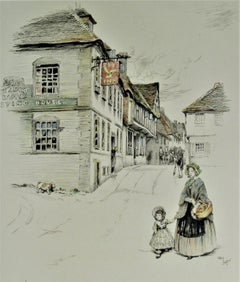
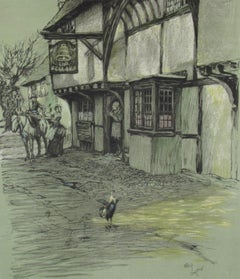
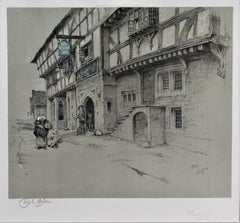
George Inn, Norton St. Philip

George Inn, Norton St. Philip

By Cecil Charles Windsor Aldin 1

Located in San Francisco, CA

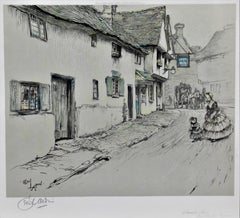
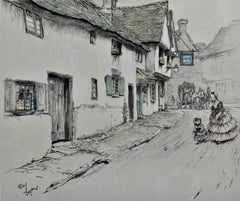
This artwork titled "George Inn, Norton St. Philipr" is a chromolithograph by noted British artist Cecil Charles Windsor Aldin, 1870-1935. It is hand signed at the lower left corner by the artist. With the blindstamp of the Fine Art Trade Gulid, published and printed by Eyre and Spottiswoode ltd, London. The image size is 12.75 x 15 inches, sheet size is 15 x 16.25 inches. it is in excellent condition. About the artist: Cecil Charles Windsor Aldin RBA (28 April 1870 - 6 January 1935) was a British artist and illustrator best known for his paintings and sketches of animals, sports, and rural life. Born in Slough, he was educated at Eastbourne College and Solihull Grammar School. He studied anatomy at South Kensington and animal painting under William Frank Calderon. He lived at The Abbots, Sulhamstead Abbots from 1913 to 1914 and was church warden of St Mary's church. Early influences included Randolph Caldecott and John Leech. His drawings first made their way into print in The Building News of 12 September 1890, and began to appear throughout many popular journals and magazines; his work was published in The Graphic in 1891. His illustrations include two of the original 1894 magazine publications of stories from Rudyard Kipling's The Second Jungle Book, the 1910 edition of Charles Dickens' The Pickwick Papers and The Bunch Book (1932, about Bunch, a Sealyham Terrier) by James Douglas...

Category

Mid-20th Century Realist Cecil Charles Windsor Aldin Art

Materials

Lithograph

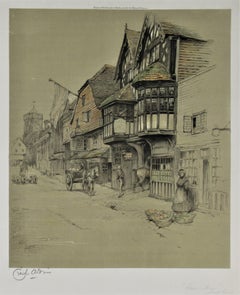
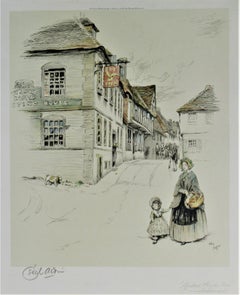
Spread Eagle Inn, Midhurst

Spread Eagle Inn, Midhurst

By Cecil Charles Windsor Aldin 1

Located in San Francisco, CA

This artwork titled "Spread Eagle Inn, Midhurst" is a chromolithograph by noted British artist Cecil Charles Windsor Aldin, 1870-1935. It is hand signed a...

Category

Mid-20th Century Realist Cecil Charles Windsor Aldin Art

Materials

Lithograph

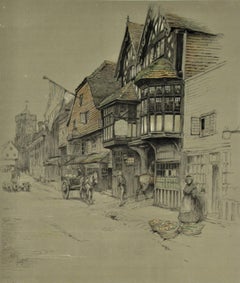
George Inn, Salisbury

George Inn, Salisbury

By Cecil Charles Windsor Aldin 1

Located in San Francisco, CA

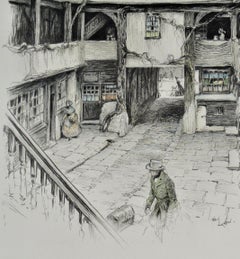
This artwork titled "George Inn, Salisbury" is a chromolithograph by noted British artist Cecil Charles Windsor Aldin, 1870-1935. It is hand signed at the lower left corner by the artist. With the blindstamp of the Fine Art Trade Gulid, published and printed by Eyre and Spottiswoode ltd, London. The image size is 15 x 13 inches, sheet size is 17.5 x 14.25 inches. it is in excellent condition. About the artist: Cecil Charles Windsor Aldin RBA (28 April 1870 - 6 January 1935) was a British artist and illustrator best known for his paintings and sketches of animals, sports, and rural life. Born in Slough, he was educated at Eastbourne College and Solihull Grammar School. He studied anatomy at South Kensington and animal painting under William Frank Calderon. He lived at The Abbots, Sulhamstead Abbots from 1913 to 1914 and was church warden of St Mary's church. Early influences included Randolph Caldecott and John Leech. His drawings first made their way into print in The Building News of 12 September 1890, and began to appear throughout many popular journals and magazines; his work was published in The Graphic in 1891. His illustrations include two of the original 1894 magazine publications of stories from Rudyard Kipling's The Second Jungle Book, the 1910 edition of Charles Dickens' The Pickwick Papers and The Bunch Book (1932, about Bunch, a Sealyham Terrier) by James Douglas. He also published a short series of fully illustrated books in 1923, Old Manor Houses and Old Inns. His village scenes and rural buildings were executed in chalk, pencil and wash sketching was used for country scenes. Aldin was an enthusiastic sportsman and a Master of Fox Hounds and many of his pictures illustrated hunting. An early work on a tiger in a zoo was studied from life, but found to be a copyright of the ideas in a photograph by Gambier Bolton. A popular book by Aldin was Sleeping Partners, a sequence of pastel drawings of his dogs on a couch. It included his Irish Wolfhound Micky and his favorite model, Cracker, a Bull Terrier with a dark patch over one eye. He also did some work for Cadburys advertising. Born 28 April 1870. He was educated at Eastbourne College then Solihull Grammar School. Cecil Aldin's father was a keen amateur artist so Cecil started drawing at a very young age. He studied art at the studio of Albert Moore and then the National Art Training School which later became The Royal College of Art. After this he spent a summer with the fine animal painter and teacher, Frank Calderon. In 1892 he bombarded the illustrated periodicals with his illustrations and thereby started a long association with The Illustrated London News. He was commissioned by The Pall Mall Budget in 1894 to illustrate "The Jungle Book" by Rudyard Kipling. At the invitation of the fine genre painter, Walter Dendy Sadler...

Category

Mid-20th Century Realist Cecil Charles Windsor Aldin Art

Materials

Lithograph

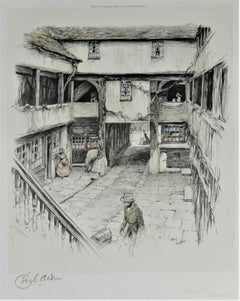
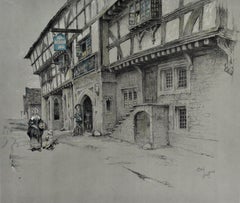
New Inn, Gloucester
New Inn, Gloucester

New Inn, Gloucester

By Cecil Charles Windsor Aldin 1

Located in San Francisco, CA

This artwork titled "New Inn, Gloucester" is a chromolithograph by noted British artist Cecil Charles Windsor Aldin, 1870-1935. It is hand signed at the lower left corner by the artist. With the blindstamp of the Fine Art Trade Gulid, published and printed by Eyre and Spottiswoode ltd, London. The image size is 15 x 13 inches, sheet size is 17.5 x 14.25 inches. it is in excellent condition. About the artist: Cecil Charles Windsor Aldin RBA (28 April 1870 - 6 January 1935) was a British artist and illustrator best known for his paintings and sketches of animals, sports, and rural life. Born in Slough, he was educated at Eastbourne College and Solihull Grammar School. He studied anatomy at South Kensington and animal painting under William Frank Calderon. He lived at The Abbots, Sulhamstead Abbots from 1913 to 1914 and was church warden of St Mary's church. Early influences included Randolph Caldecott and John Leech. His drawings first made their way into print in The Building News of 12 September 1890, and began to appear throughout many popular journals and magazines; his work was published in The Graphic in 1891. His illustrations include two of the original 1894 magazine publications of stories from Rudyard Kipling's The Second Jungle Book, the 1910 edition of Charles Dickens' The Pickwick Papers and The Bunch Book (1932, about Bunch, a Sealyham Terrier) by James Douglas...

Category

Mid-20th Century Realist Cecil Charles Windsor Aldin Art

Materials

Lithograph

George Inn, Dorchester

George Inn, Dorchester

By Cecil Charles Windsor Aldin 1

Located in San Francisco, CA

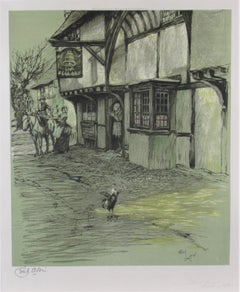
This artwork titled "George Inn, Dorchester" is a chromolithograph by noted British artist Cecil Charles Windsor Aldin, 1870-1935. It is hand signed at the lower left corner by the artist. With the blindstamp of the Fine Art Trade Gulid, published and printed by Eyre and Spottiswoode ltd, London. The image size is 12.75 x 15.25 inches, sheet size is 15 x 16.25 inches. it is in excellent condition. About the artist: Cecil Charles Windsor Aldin RBA (28 April 1870 - 6 January 1935) was a British artist and illustrator best known for his paintings and sketches of animals, sports, and rural life. Born in Slough, he was educated at Eastbourne College and Solihull Grammar School. He studied anatomy at South Kensington and animal painting under William Frank Calderon. He lived at The Abbots, Sulhamstead Abbots from 1913 to 1914 and was church warden of St Mary's church. Early influences included Randolph Caldecott and John Leech. His drawings first made their way into print in The Building News of 12 September 1890, and began to appear throughout many popular journals and magazines; his work was published in The Graphic in 1891. His illustrations include two of the original 1894 magazine publications of stories from Rudyard Kipling's The Second Jungle Book, the 1910 edition of Charles Dickens' The Pickwick Papers and The Bunch Book (1932, about Bunch, a Sealyham Terrier) by James Douglas. He also published a short series of fully illustrated books in 1923, Old Manor Houses and Old Inns. His village scenes and rural buildings were executed in chalk, pencil and wash sketching was used for country scenes. Aldin was an enthusiastic sportsman and a Master of Fox Hounds and many of his pictures illustrated hunting. An early work on a tiger in a zoo was studied from life, but found to be a copyright of the ideas in a photograph by Gambier Bolton. A popular book by Aldin was Sleeping Partners, a sequence of pastel drawings of his dogs on a couch. It included his Irish Wolfhound Micky and his favorite model, Cracker, a Bull Terrier with a dark patch over one eye. He also did some work for Cadburys advertising. Born 28 April 1870. He was educated at Eastbourne College then Solihull Grammar School. Cecil Aldin's father was a keen amateur artist so Cecil started drawing at a very young age. He studied art at the studio of Albert Moore and then the National Art Training School which later became The Royal College of Art. After this he spent a summer with the fine animal painter and teacher, Frank Calderon. In 1892 he bombarded the illustrated periodicals with his illustrations and thereby started a long association with The Illustrated London News. He was commissioned by The Pall Mall Budget in 1894 to illustrate "The Jungle Book" by Rudyard Kipling. At the invitation of the fine genre painter, Walter Dendy...

Category

Mid-20th Century Realist Cecil Charles Windsor Aldin Art

Materials

Lithograph

Bell Inn, Waltham St Lawrence

Bell Inn, Waltham St Lawrence

By Cecil Charles Windsor Aldin 1

Located in San Francisco, CA

This artwork titled "Bell Inn, Waltham St Lawrence" is a chromolithograph by noted British artist Cecil Charles Windsor Aldin, 1870-1935. It is hand signed at the lower left corner by the artist. With the blindstamp of the Fine Art Trade Gulid, published and printed by Eyre and Spottiswoode ltd, London. The image size is 15 x 13 inches, sheet size is 17.5 x 14.25 inches. it is in excellent condition. About the artist: Cecil Charles Windsor Aldin RBA (28 April 1870 - 6 January 1935) was a British artist and illustrator best known for his paintings and sketches of animals, sports, and rural life. Born in Slough, he was educated at Eastbourne College and Solihull Grammar School. He studied anatomy at South Kensington and animal painting under William Frank Calderon. He lived at The Abbots, Sulhamstead Abbots from 1913 to 1914 and was church warden of St Mary's church. Early influences included Randolph Caldecott and John Leech. His drawings first made their way into print in The Building News of 12 September 1890, and began to appear throughout many popular journals and magazines; his work was published in The Graphic in 1891. His illustrations include two of the original 1894 magazine publications of stories from Rudyard Kipling's The Second Jungle Book, the 1910 edition of Charles Dickens' The Pickwick Papers and The Bunch Book (1932, about Bunch, a Sealyham Terrier) by James Douglas. He also published a short series of fully illustrated books in 1923, Old Manor Houses and Old Inns. His village scenes and rural buildings were executed in chalk, pencil and wash sketching was used for country scenes. Aldin was an enthusiastic sportsman and a Master of Fox Hounds and many of his pictures illustrated hunting. An early work on a tiger in a zoo was studied from life, but found to be a copyright of the ideas in a photograph by Gambier Bolton. A popular book by Aldin was Sleeping Partners, a sequence of pastel drawings of his dogs on a couch. It included his Irish Wolfhound Micky and his favorite model, Cracker, a Bull Terrier with a dark patch over one eye. He also did some work for Cadburys advertising. Born 28 April 1870. He was educated at Eastbourne College then Solihull Grammar School. Cecil Aldin's father was a keen amateur artist so Cecil started drawing at a very young age. He studied art at the studio of Albert Moore and then the National Art Training School which later became The Royal College of Art. After this he spent a summer with the fine animal painter and teacher, Frank Calderon. In 1892 he bombarded the illustrated periodicals with his illustrations and thereby started a long association with The Illustrated London News. He was commissioned by The Pall Mall Budget in 1894 to illustrate "The Jungle Book" by Rudyard Kipling. At the invitation of the fine genre painter, Walter Dendy Sadler...

Category

Mid-20th Century Realist Cecil Charles Windsor Aldin Art

Materials

Lithograph

Related Items
Floater

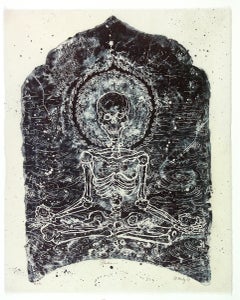
Don Ed HardyFloater, 2007

$2,200

H 27.75 in Dm 22.25 in

Floater

By Don Ed Hardy

Located in Lyons, CO

Color lithograph, Edition 20. Don Ed Hardy’s lithographs, created in the spring of 2007, continue the “look” of his Ghost Writer painting series which has been developed over the past five years. They are evocative of ancient Chinese stone rubbings, or x-rays. Both prints refer to earlier images from Japanese art history. Floater, a meditating skeleton poised above surging waves, was done from memory after a 19th century Japanese painting...

Category

Early 2000s Contemporary Cecil Charles Windsor Aldin Art

Materials

Lithograph

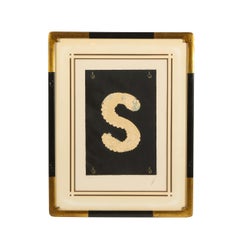
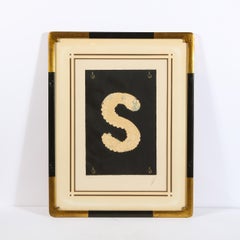
Letter "S" from Alphabet Suite (Signed Erté)

Letter "S" from Alphabet Suite (Signed Erté)

By Erté

Located in New York, NY

From the celebrated Alphabet Suite, this stunning Art Deco lithograph/serigraph was designed by the Russian-born French artist and designer known by the pseudonym Erté, and produced ...

Category

1970s Art Deco Cecil Charles Windsor Aldin Art

Materials

Lithograph

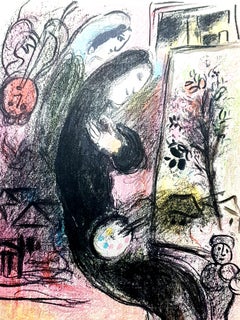
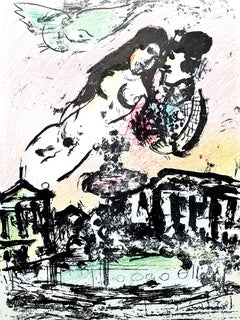
Marc Chagall - Inspiration - Original Lithograph from "Chagall Lithographe" v. 2

Marc Chagall - Inspiration - Original Lithograph from "Chagall Lithographe" v. 2

By Marc Chagall

Located in Collonge Bellerive, Geneve, CH

Marc Chagall Original Lithograph from Chagall Lithographe 1957-1962. VOLUME II. 1963 Dimensions: 32 x 24 cm From the unsigned edition of 10000 copies without margins Reference: Mourlot 398 Condition : Excellent Marc Chagall (born in 1887) Marc Chagall was born in Belarus in 1887 and developed an early interest in art. After studying painting, in 1907 he left Russia for Paris, where he lived in an artist colony on the city’s outskirts. Fusing his own personal, dreamlike imagery with hints of the fauvism and cubism popular in France at the time, Chagall created his most lasting work—including I and the Village (1911)—some of which would be featured in the Salon des Indépendants exhibitions. After returning to Vitebsk for a visit in 1914, the outbreak of WWI trapped Chagall in Russia. He returned to France in 1923 but was forced to flee the country and Nazi persecution during WWII. Finding asylum in the U.S., Chagall became involved in set and costume design before returning to France in 1948. In his later years, he experimented with new art forms and was commissioned to produce numerous large-scale works. Chagall died in St.-Paul-de-Vence in 1985. The Village Marc Chagall was born in a small Hassidic community on the outskirts of Vitebsk, Belarus, on July 7, 1887. His father was a fishmonger, and his mother ran a small sundries shop in the village. As a child, Chagall attended the Jewish elementary school, where he studied Hebrew and the Bible, before later attending the Russian public school. He began to learn the fundamentals of drawing during this time, but perhaps more importantly, he absorbed the world around him, storing away the imagery and themes that would feature largely in most of his later work. At age 19 Chagall enrolled at a private, all-Jewish art school and began his formal education in painting, studying briefly with portrait artist Yehuda Pen. However, he left the school after several months, moving to St. Petersburg in 1907 to study at the Imperial Society for the Protection of Fine Arts. The following year, he enrolled at the Svanseva School, studying with set designer Léon Bakst, whose work had been featured in Sergei Diaghilev's Ballets Russes. This early experience would prove important to Chagall’s later career as well. Despite this formal instruction, and the widespread popularity of realism in Russia at the time, Chagall was already establishing his own personal style, which featured a more dreamlike unreality and the people, places and imagery that were close to his heart. Some examples from this period are his Window Vitebsk (1908) and My Fianceé with Black Gloves (1909), which pictured Bella Rosenfeld, to whom he had recently become engaged. The Beehive Despite his romance with Bella, in 1911 an allowance from Russian parliament member and art patron Maxim Binaver enabled Chagall to move to Paris, France. After settling briefly in the Montparnasse neighborhood, Chagall moved further afield to an artist colony known as La Ruche (“The Beehive”), where he began to work side by side with abstract painters such as Amedeo Modigliani and Fernand Léger as well as the avant-garde poet Guillaume Apollinaire. At their urging, and under the influence of the wildly popular fauvism and cubism, Chagall lightened his palette and pushed his style ever further from reality. I and the Village (1911) and Homage to Apollinaire (1912) are among his early Parisian works, widely considered to be his most successful and representative period. Though his work stood stylistically apart from his cubist contemporaries, from 1912 to 1914 Chagall exhibited several paintings at the annual Salon des Indépendants exhibition, where works by the likes of Juan Gris, Marcel Duchamp and Robert Delaunay were causing a stir in the Paris art world. Chagall’s popularity began to spread beyond La Ruche, and in May 1914 he traveled to Berlin to help organize his first solo exhibition, at Der Sturm Gallery. Chagall remained in the city until the highly acclaimed show opened that June. He then returned to Vitebsk, unaware of the fateful events to come. War, Peace and Revolution In August 1914 the outbreak of World War I precluded Chagall’s plans to return to Paris. The conflict did little to stem the flow of his creative output, however, instead merely giving him direct access to the childhood scenes so essential to his work, as seen in paintings such as Jew in Green (1914) and Over Vitebsk (1914). His paintings from this period also occasionally featured images of the war’s impact on the region, as with Wounded Soldier (1914) and Marching (1915). But despite the hardships of life during wartime, this would also prove to be a joyful period for Chagall. In July 1915 he married Bella, and she gave birth to a daughter, Ida, the following year. Their appearance in works such as Birthday (1915), Bella and Ida by the Window (1917) and several of his “Lovers” paintings give a glimpse of the island of domestic bliss that was Chagall’s amidst the chaos. To avoid military service and stay with his new family, Chagall took a position as a clerk in the Ministry of War Economy in St. Petersburg. While there he began work on his autobiography and also immersed himself in the local art scene, befriending novelist Boris Pasternak, among others. He also exhibited his work in the city and soon gained considerable recognition. That notoriety would prove important in the aftermath of the 1917 Russian Revolution when he was appointed as the Commissar of Fine Arts in Vitebsk. In his new post, Chagall undertook various projects in the region, including the 1919 founding of the Academy of the Arts. Despite these endeavors, differences among his colleagues eventually disillusioned Chagall. In 1920 he relinquished his position and moved his family to Moscow, the post-revolution capital of Russia. In Moscow, Chagall was soon commissioned to create sets and costumes for various productions at the Moscow State Yiddish Theater...

Category

1960s Surrealist Cecil Charles Windsor Aldin Art
Materials

Lithograph

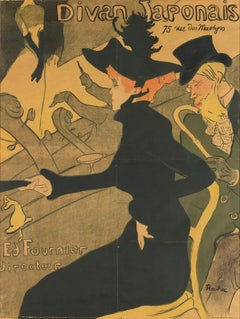
Divan Japonais

Divan Japonais

By Henri de Toulouse-Lautrec

Located in New York, NY

Color lithograph. Printed by Ancourt, Paris. The Divan Japonais was a small café-concert at 75 rue des Martyrs, Paris, where Yvette Guilbert began her career. This is Toulouse-Lautr...

Category

1890s Art Nouveau Cecil Charles Windsor Aldin Art

Materials

Color, Lithograph

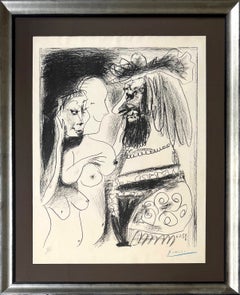
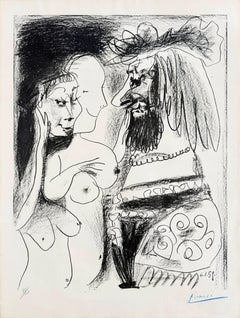
Le Vieux Roi Lithograph by Picasso, Modern Style, Signed, 1959 Edition

Le Vieux Roi Lithograph by Picasso, Modern Style, Signed, 1959 Edition

By Pablo Picasso

Located in OPOLE, PL

Pablo Picasso (1881-1973) - Le vieux Roi (Old King) Lithograph from 1959. The edition of 35/200 on Arches paper, signed in blue crayon. Dimensions of work: 64.5 x 49.5 cm. Hand s...

Category

1950s Modern Cecil Charles Windsor Aldin Art

Materials

Lithograph

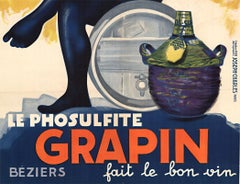
Grapin fait le bon vin original French vintage poster

Grapin fait le bon vin original French vintage poster

By Leon Dupin

Located in Spokane, WA

Original vintage 1933 poster: Graphin. The silhouette of the man is sitting on a casket of wine with a big bottle of wine resting on the ground in front ...

Category

1930s Art Deco Cecil Charles Windsor Aldin Art

Materials

Lithograph

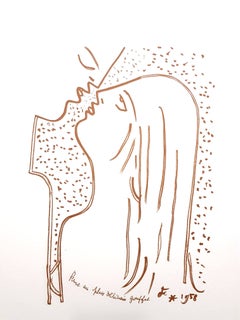
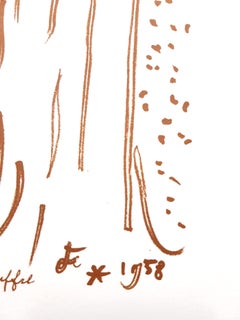
Jean Cocteau - The Kiss - Original Lithograph

Jean Cocteau - The Kiss - Original Lithograph

By Jean Cocteau

Located in Collonge Bellerive, Geneve, CH

Original Lithograph by Jean Cocteau Title: The Kiss Signed in the plate Dimensions: 32 x 25.5 cm Edition: 200 1959 Publisher: Bibliophiles Du Palais Unnumbered as issued

Category

1950s Modern Cecil Charles Windsor Aldin Art

Materials

Lithograph

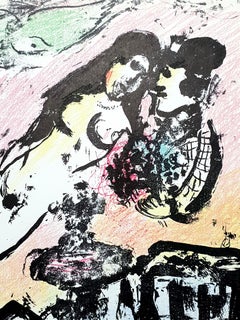
Marc Chagall - Original Lithograph

Marc ChagallMarc Chagall - Original Lithograph, 1963

$1,470

H 9.45 in W 12.6 in D 0.04 in

Marc Chagall - Original Lithograph

By Marc Chagall

Located in Collonge Bellerive, Geneve, CH

Marc Chagall Original Lithograph 1963 Dimensions: 32 x 24 cm Reference: Chagall Lithographe 1957-1962. VOLUME II. Condition : Excellent Marc Chagall (born in 1887) Marc Chagall was born in Belarus in 1887 and developed an early interest in art. After studying painting, in 1907 he left Russia for Paris, where he lived in an artist colony on the city’s outskirts. Fusing his own personal, dreamlike imagery with hints of the fauvism and cubism popular in France at the time, Chagall created his most lasting work—including I and the Village (1911)—some of which would be featured in the Salon des Indépendants exhibitions. After returning to Vitebsk for a visit in 1914, the outbreak of WWI trapped Chagall in Russia. He returned to France in 1923 but was forced to flee the country and Nazi persecution during WWII. Finding asylum in the U.S., Chagall became involved in set and costume design before returning to France in 1948. In his later years, he experimented with new art forms and was commissioned to produce numerous large-scale works. Chagall died in St.-Paul-de-Vence in 1985. The Village Marc Chagall was born in a small Hassidic community on the outskirts of Vitebsk, Belarus, on July 7, 1887. His father was a fishmonger, and his mother ran a small sundries shop in the village. As a child, Chagall attended the Jewish elementary school, where he studied Hebrew and the Bible, before later attending the Russian public school. He began to learn the fundamentals of drawing during this time, but perhaps more importantly, he absorbed the world around him, storing away the imagery and themes that would feature largely in most of his later work. At age 19 Chagall enrolled at a private, all-Jewish art school and began his formal education in painting, studying briefly with portrait artist Yehuda Pen. However, he left the school after several months, moving to St. Petersburg in 1907 to study at the Imperial Society for the Protection of Fine Arts. The following year, he enrolled at the Svanseva School, studying with set designer Léon Bakst, whose work had been featured in Sergei Diaghilev's Ballets Russes. This early experience would prove important to Chagall’s later career as well. Despite this formal instruction, and the widespread popularity of realism in Russia at the time, Chagall was already establishing his own personal style, which featured a more dreamlike unreality and the people, places and imagery that were close to his heart. Some examples from this period are his Window Vitebsk (1908) and My Fianceé with Black Gloves (1909), which pictured Bella Rosenfeld, to whom he had recently become engaged. The Beehive Despite his romance with Bella, in 1911 an allowance from Russian parliament member and art patron Maxim Binaver enabled Chagall to move to Paris, France. After settling briefly in the Montparnasse neighborhood, Chagall moved further afield to an artist colony known as La Ruche (“The Beehive”), where he began to work side by side with abstract painters such as Amedeo Modigliani and Fernand Léger as well as the avant-garde poet Guillaume Apollinaire. At their urging, and under the influence of the wildly popular fauvism and cubism, Chagall lightened his palette and pushed his style ever further from reality. I and the Village (1911) and Homage to Apollinaire (1912) are among his early Parisian works, widely considered to be his most successful and representative period. Though his work stood stylistically apart from his cubist contemporaries, from 1912 to 1914 Chagall exhibited several paintings at the annual Salon des Indépendants exhibition, where works by the likes of Juan Gris, Marcel Duchamp and Robert Delaunay were causing a stir in the Paris art world. Chagall’s popularity began to spread beyond La Ruche, and in May 1914 he traveled to Berlin to help organize his first solo exhibition, at Der Sturm Gallery. Chagall remained in the city until the highly acclaimed show opened that June. He then returned to Vitebsk, unaware of the fateful events to come. War, Peace and Revolution In August 1914 the outbreak of World War I precluded Chagall’s plans to return to Paris. The conflict did little to stem the flow of his creative output, however, instead merely giving him direct access to the childhood scenes so essential to his work, as seen in paintings such as Jew in Green (1914) and Over Vitebsk (1914). His paintings from this period also occasionally featured images of the war’s impact on the region, as with Wounded Soldier (1914) and Marching (1915). But despite the hardships of life during wartime, this would also prove to be a joyful period for Chagall. In July 1915 he married Bella, and she gave birth to a daughter, Ida, the following year. Their appearance in works such as Birthday (1915), Bella and Ida by the Window (1917) and several of his “Lovers” paintings give a glimpse of the island of domestic bliss that was Chagall’s amidst the chaos. To avoid military service and stay with his new family, Chagall took a position as a clerk in the Ministry of War Economy in St. Petersburg. While there he began work on his autobiography and also immersed himself in the local art scene, befriending novelist Boris Pasternak, among others. He also exhibited his work in the city and soon gained considerable recognition. That notoriety would prove important in the aftermath of the 1917 Russian Revolution when he was appointed as the Commissar of Fine Arts in Vitebsk. In his new post, Chagall undertook various projects in the region, including the 1919 founding of the Academy of the Arts. Despite these endeavors, differences among his colleagues eventually disillusioned Chagall. In 1920 he relinquished his position and moved his family to Moscow, the post-revolution capital of Russia. In Moscow, Chagall was soon commissioned to create sets and costumes for various productions at the Moscow State Yiddish Theater...

Category

1960s Surrealist Cecil Charles Windsor Aldin Art
Materials

Lithograph

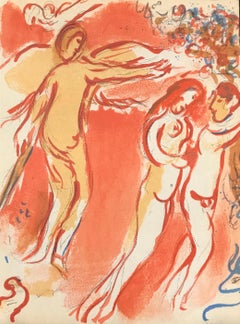
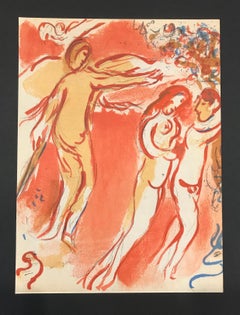
Marc Chagall Lithograph, Unsigned, 1960, Adam and Eve are Banished from Paradise

Marc Chagall Lithograph, Unsigned, 1960, Adam and Eve are Banished from Paradise

By Marc Chagall

Located in Washington, DC

Artist: Marc Chagall Title: Adam and Eve are Banished from Paradise Portfolio: Drawings for the Bible Medium: Lithograph Year: 1960 Edition: Unnumbered Sheet Size: 14 3/8" x 10 1/4" ...

Category

1960s Cecil Charles Windsor Aldin Art

Materials

Lithograph

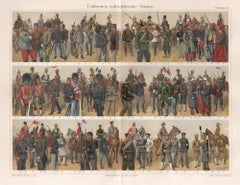
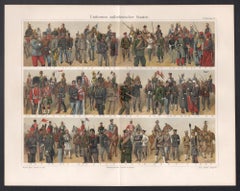
Military Uniforms, German antique army soldier chromolithograph print.

Military Uniforms, German antique army soldier chromolithograph print.

Located in Melbourne, Victoria

'Uniformen ausserdeutscher Staaten' (Uniforms of non-German states) German chromolithograph, circa 1910. Central vertical fold as issued. 245mm by 305mm (sheet)

Category

Early 20th Century Naturalistic Cecil Charles Windsor Aldin Art

Materials

Lithograph

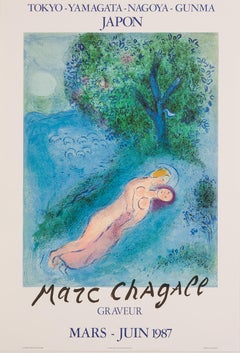
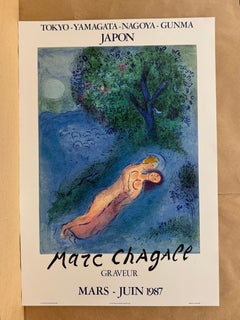
La Lecon de Philetas, Les Amoureux Devant l'Arbre Exhibition Poster

La Lecon de Philetas, Les Amoureux Devant l'Arbre Exhibition Poster

By (after) Marc Chagall

Located in New York, NY

This original 1987 exhibition poster was created for an exhibition of works by Marc Chagall which travelled Japan (Tokyo, Yamagata, Nagoya and Gunma). It was printed in Paris by the ...

Category

Late 20th Century Modern Cecil Charles Windsor Aldin Art

Materials

Lithograph

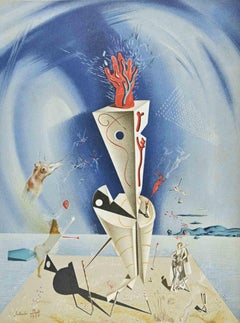
Appareil et Main - Lithograph after Salvador Dalì - 1974

Appareil et Main - Lithograph after Salvador Dalì - 1974

By Salvador Dalí­

Located in Roma, IT

Appareil et Main  is an artwork realized after a painting by the Surrealist Catalan artist Salvador Dalí  (Figueres, 1904-1989). This is a color lithograph on wove paper, properly e...

Category

1970s Surrealist Cecil Charles Windsor Aldin Art
Materials

Lithograph

Cecil Charles Windsor Aldin art for sale on 1stDibs.

Find a wide variety of authentic Cecil Charles Windsor Aldin art available for sale on 1stDibs. You can also browse by medium to find art by Cecil Charles Windsor Aldin in lithograph and more. Not every interior allows for large Cecil Charles Windsor Aldin art, so small editions measuring 15 inches across are available. Cecil Charles Windsor Aldin art prices can differ depending upon medium, time period and other attributes. On 1stDibs, the price for these items starts at $700 and tops out at $800, while the average work can sell for $700.