Cecil Lang Casebier Art

to
1
Overall Width
to
Overall Height
to
1
1
1
1
1
1
1
11,691
2,885
2,492
1,605
1
1
1
Artist: Cecil Lang Casebier
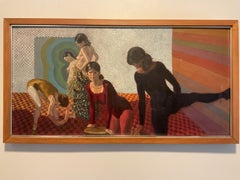
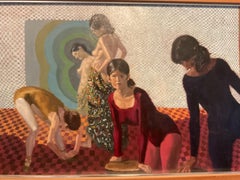
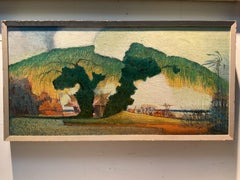
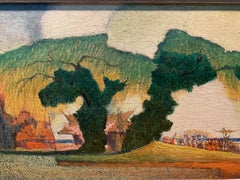
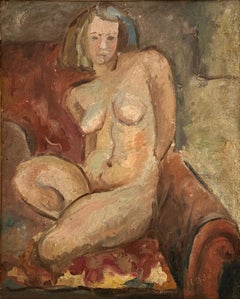
"THE STUDIO" TEXAS MID CENTURY MODERN CECIL CASEBIER 48 X 36 MCM

"THE STUDIO" TEXAS MID CENTURY MODERN CECIL CASEBIER 48 X 36 MCM

By Cecil Lang Casebier

Located in San Antonio, TX

Cecil Casebier (1922 - 1996) San Antonio Artist Image Size: 48 x 36 Medium: Oil on Canvas Dated 1987 "The Studio" Biography Cecil Casebier (1922 - 1996) Cecil Casebier was a Texas ...

Category

1980s Modern Cecil Lang Casebier Art

Materials

Oil

Related Items
Mid Century Modern Dancers Oil Painting; Listed Artist Albert Michini, ca 1970’s

Mid Century Modern Dancers Oil Painting; Listed Artist Albert Michini, ca 1970’s

Located in Baltimore, MD

If you have an association with dance, yoga or working out, this unusual modernist painting might be an interesting addition to your space. Artist Albert Michini used several models ...

Category

1970s American Modern Cecil Lang Casebier Art

Materials

Oil

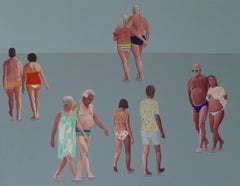
The Touch - Large Format Oil Painting, Modern Figurative Beach Landscape

The Touch - Large Format Oil Painting, Modern Figurative Beach Landscape

By Julita Malinowska

Located in Hallein, AT

Artodyssey "Julita Malinowska's paintings belong to those, which once seen - are never forgotten. The open spaces, sometimes cool and bright, at other times heavily saturated with co...

Category

2010s Modern Cecil Lang Casebier Art

Materials

Canvas, Oil

Stylish Hawaiian Luau Oil Painting by Listed artist Mario Larrinaga (1895-1979)

Stylish Hawaiian Luau Oil Painting by Listed artist Mario Larrinaga (1895-1979)

Located in Baltimore, MD

Mario Larrinaga was born in Baja California in 1895 and moved with his brother to Los Angeles in 1909. He had no formal training in art, but had natural talent that was noticed by local movie studios. He was hired by Universal Studios as a designer, art director and creator of background scenes. He produced some of the background effects for King Kong in 1933. After a career in set design and illustration he focused on painting for pleasure in California, Mexico and Hawaii. He belonged to local art clubs and exhibited his works often. This stylized modernist work was likely created around 1960. It is oil on wood panel and of a horizontal format, 18” x 36”. It portrays a procession of seemingly Hawaiian natives...

Category

Mid-20th Century American Modern Cecil Lang Casebier Art

Materials

Oil

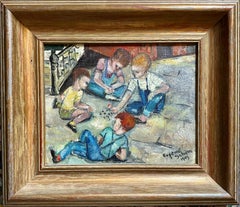
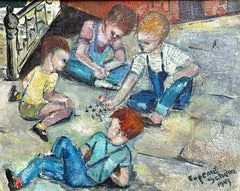
Untitled oil painting of children playing by Eugenie Schein

Untitled oil painting of children playing by Eugenie Schein

Located in Hudson, NY

Eugenie Schein was both a dancer and an artist. Her artwork subjects revolved primarily around dancers and dancing, though she also captured everyday scenes in New York. Both Midto...

Category

1940s Modern Cecil Lang Casebier Art

Materials

Canvas, Oil

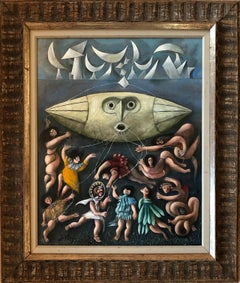
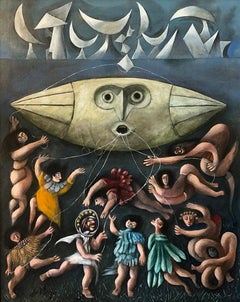
Lords of the Sky oil painting by Julio De Diego

Lords of the Sky oil painting by Julio De Diego

By Julio de Diego

Located in Hudson, NY

Lords of the Sky (c.1950) Oil on canvas, 30" x 24" 40" x 34" x 2" framed Provenance: The Artist, his daughter About this artist: Julio De Diego crafted a formidable persona within ...

Category

Mid-20th Century Modern Cecil Lang Casebier Art

Materials

Canvas, Oil

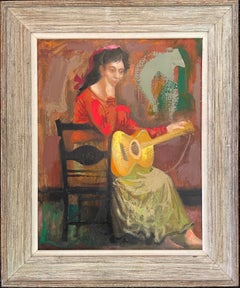
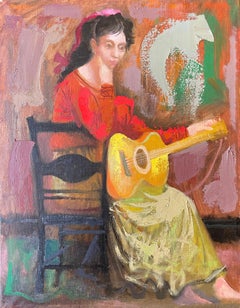
Folk Singer oil painting by Byron Browne

Folk Singer oil painting by Byron Browne

By Byron Browne

Located in Hudson, NY

Lovely oil painting by Byron Browne. Measures 18" x 14" and framed 24" x 20" x 1 3/4". Signed "Byron Browne" lower left. Inscribed on canvas verso: Byron Browne / 1958 / – Folk Singer– / 18 x 14 / N.Y.C. About this artists: Through an oeuvre displaying the re-envisioning of figural subjects and the formation of an abstract expressionist style, Byron Browne stands out among the American abstractionists of his generation. Born in Yonkers, New York, in 1907, the artist was a bright talent at the National Academy of Design in his teens. From 1924 to 1928 Browne studied at the Academy under notable artists Robert Aitkin, Charles Courtney Curran, Charles Hawthorne, Alice Murphy...

Category

1950s Modern Cecil Lang Casebier Art

Materials

Canvas, Oil

Modernist Portrait of a Woman by Philadelphia Artists Julius Bloch

Modernist Portrait of a Woman by Philadelphia Artists Julius Bloch

Located in Philadelphia, PA

Julius Thiengen Bloch (American, born Germany, 1888-1966) Portrait of a Woman Oil on canvas, 32 x 25 1/4 inches Framed: 38 x 31 inches (approx.) Signed at lower right: "Julius Bloch"...

Category

Mid-20th Century Modern Cecil Lang Casebier Art

Materials

Canvas, Oil

St. Atomic oil and tempera painting by Julio de Diego

St. Atomic oil and tempera painting by Julio de Diego

By Julio de Diego

Located in Hudson, NY

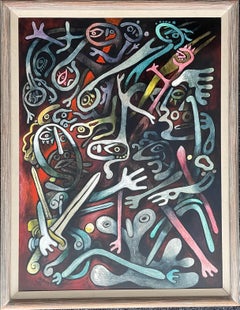
Julio De Diego’s Atomic Series paintings made an extraordinary statement regarding the shock and fear that accompanied the dawn of the nuclear age. In the artist’s own words, “Scientists were working secretly to develop formidable powers taken from the mysterious depths of the earth - with the power to make the earth useless! Then, the EXPLOSION! . . . we entered the Atomic Age, and from there the neo-Atomic war begins. Explosions fell everywhere and man kept on fighting, discovering he could fight without flesh.” To execute these works, De Diego developed a technique of using tempera underpainting before applying layer upon layer of pigmented oil glazes. The result is paintings with surfaces which were described as “bonelike” in quality. The forms seem to float freely, creating a three-dimensional visual effect. In the 1954 book The Modern Renaissance in American Art, author Ralph Pearson summarizes the series as “a fantastic interpretation of a weighty theme. Perhaps it is well to let fantasy and irony appear to lighten the devastating impact. By inverse action, they may in fact increase its weight.” Exhibited 1950 University of Illinois at Urbana "Contemporary American Painting" 1964 Marion Koogler McNay Art Institute, San Antonio, Texas This work retains its original frame which measures 54" x 36" x 2". About this artist: Julio De Diego crafted a formidable persona within the artistic developments and political struggles of his time. The artist characterized his own work as “lyrical,” explaining, “through the years, the surrealists, the social-conscious painters and the others tried to adopt me, but I went my own way, good, bad or indifferent.” [1] His independence manifested early in life when de Diego left his parent’s home in Madrid, Spain, in adolescence following his father’s attempts to curtail his artistic aspirations. At the age of fifteen he held his first exhibition, set up within a gambling casino. He managed to acquire an apprenticeship in a studio producing scenery for Madrid’s operas, but moved from behind the curtains to the stage, trying his hand at acting and performing as an extra in the Ballet Russes’ Petrouchka with Nijinsky. He spent several years in the Spanish army, including a six-month stretch in the Rif War of 1920 in Northern Africa. His artistic career pushed ahead as he set off for Paris and became familiar with modernism’s forays into abstraction, surrealism, and cubism. The artist arrived in the U.S. in 1924 and settled in Chicago two years later. He established himself with a commission for the decoration of two chapels in St. Gregory’s Church. He also worked in fashion illustration, designed magazine covers and developed a popular laundry bag for the Hotel Sherman. De Diego began exhibiting through the Art Institute of Chicago in 1929, and participated in the annual Chicago Artists Exhibitions, Annual American Exhibitions, and International Water Color Exhibitions. He held a solo exhibition at the Art Institute of Chicago in the summer of 1935. Though the artist’s career was advancing, his family life had deteriorated. In 1932 his first marriage dissolved, and the couple’s young daughter Kiriki was sent to live with friend Paul Hoffman. De Diego continued to develop his artistic vocabulary with a growing interest in Mexican art. He traveled throughout the country acquainting himself with the works of muralists such as Carlos Merida, and also began a collection of small native artifacts...

Category

1940s American Modern Cecil Lang Casebier Art

Materials

Masonite, Oil, Tempera
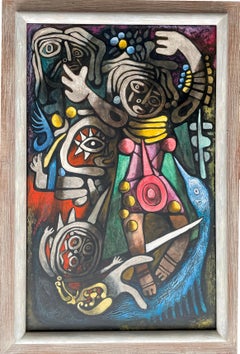
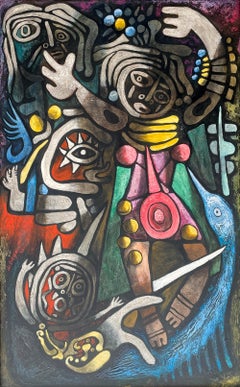
Ceremonial Dancers oil and tempera painting by Julio De Diego

Ceremonial Dancers oil and tempera painting by Julio De Diego

By Julio de Diego

Located in Hudson, NY

Artwork measures 48" x 30" and framed 56 ¼" x 38 ¼" x 3" Provenance: John Heller Gallery, NYC, circa 1975 (label verso) The artist's daughter Corbino Galleries, Sarasota, FL (1990)...

Category

1940s Modern Cecil Lang Casebier Art

Materials

Masonite, Oil, Tempera
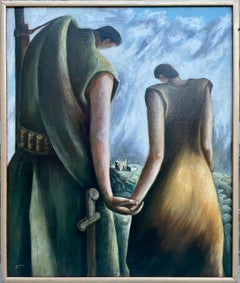
Homage to the Spanish Republic 1938 oil painting by Julio De Diego

Homage to the Spanish Republic 1938 oil painting by Julio De Diego

By Julio de Diego

Located in Hudson, NY

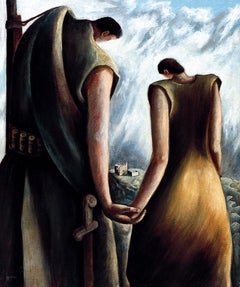
An early work by Julio De Diego embodies the deep love he had for his homeland of Spain, combined with his strong emotions against war. The peacefulness of the couple holding hands l...

Category

1930s Modern Cecil Lang Casebier Art

Materials

Masonite, Oil

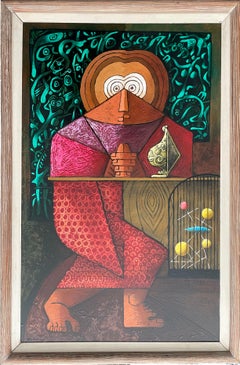
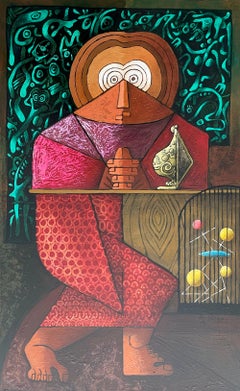
The Magician oil and tempera painting by Julio de Diego

The Magician oil and tempera painting by Julio de Diego

By Julio de Diego

Located in Hudson, NY

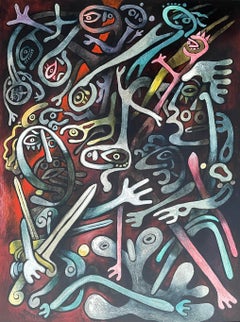
Julio De Diego’s Atomic Series paintings made an extraordinary statement regarding the shock and fear that accompanied the dawn of the nuclear age. In the artist’s own words, “Scientists were working secretly to develop formidable powers taken from the mysterious depths of the earth - with the power to make the earth useless! Then, the EXPLOSION! . . . we entered the Atomic Age, and from there the neo-Atomic war begins. Explosions fell everywhere and man kept on fighting, discovering he could fight without flesh.” To execute these works, De Diego developed a technique of using tempera underpainting before applying layer upon layer of pigmented oil glazes. The result is paintings with surfaces which were described as “bonelike” in quality. The forms seem to float freely, creating a three-dimensional visual effect. In the 1954 book The Modern Renaissance in American Art, author Ralph Pearson summarizes the series as “a fantastic interpretation of a weighty theme. Perhaps it is well to let fantasy and irony appear to lighten the devastating impact. By inverse action, they may in fact increase its weight.” Exhibited 1964 Marion Koogler McNay Art Institute, San Antonio, Texas This work retains its original frame which measures 54" x 42" x 2" About this artist: Julio De Diego crafted a formidable persona within the artistic developments and political struggles of his time. The artist characterized his own work as “lyrical,” explaining, “through the years, the surrealists, the social-conscious painters and the others tried to adopt me, but I went my own way, good, bad or indifferent.” [1] His independence manifested early in life when de Diego left his parent’s home in Madrid, Spain, in adolescence following his father’s attempts to curtail his artistic aspirations. At the age of fifteen he held his first exhibition, set up within a gambling casino. He managed to acquire an apprenticeship in a studio producing scenery for Madrid’s operas, but moved from behind the curtains to the stage, trying his hand at acting and performing as an extra in the Ballet Russes’ Petrouchka with Nijinsky. He spent several years in the Spanish army, including a six-month stretch in the Rif War of 1920 in Northern Africa. His artistic career pushed ahead as he set off for Paris and became familiar with modernism’s forays into abstraction, surrealism, and cubism. The artist arrived in the U.S. in 1924 and settled in Chicago two years later. He established himself with a commission for the decoration of two chapels in St. Gregory’s Church. He also worked in fashion illustration, designed magazine covers and developed a popular laundry bag for the Hotel Sherman. De Diego began exhibiting through the Art Institute of Chicago in 1929, and participated in the annual Chicago Artists Exhibitions, Annual American Exhibitions, and International Water Color Exhibitions. He held a solo exhibition at the Art Institute of Chicago in the summer of 1935. Though the artist’s career was advancing, his family life had deteriorated. In 1932 his first marriage dissolved, and the couple’s young daughter Kiriki was sent to live with friend Paul Hoffman. De Diego continued to develop his artistic vocabulary with a growing interest in Mexican art. He traveled throughout the country acquainting himself with the works of muralists such as Carlos Merida, and also began a collection of small native artifacts...

Category

1940s American Modern Cecil Lang Casebier Art

Materials

Masonite, Oil, Tempera
The Artist's Wife oil painting by Hans Burkhardt

The Artist's Wife oil painting by Hans Burkhardt

By Hans Burkhardt

Located in Hudson, NY

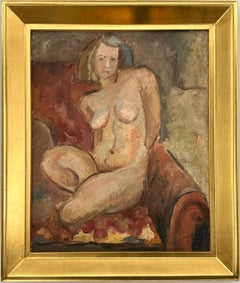
Hans Burkhardt The Artist's Wife (1930) Oil on canvas, 20" x 16" 24" x 20 ½" x 1 ½" framed Dated 1930 lower right recto. Annotated "To Elsa HB Louise Burkhardt 1930. HB" verso. ...

Category

1930s American Modern Cecil Lang Casebier Art

Materials

Canvas, Oil

Previously Available Items
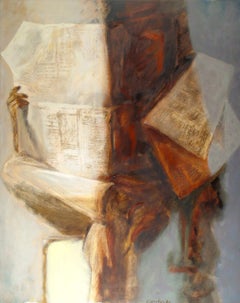
Man Reading

Man Reading

By Cecil Lang Casebier

Located in Dallas, TX

Signed "CL Casebier '61" at lower right The overall dimensions including the frame are 61 3/8 x 49 3/8 inches

Category

1960s American Modern Cecil Lang Casebier Art

Materials

Canvas, Oil

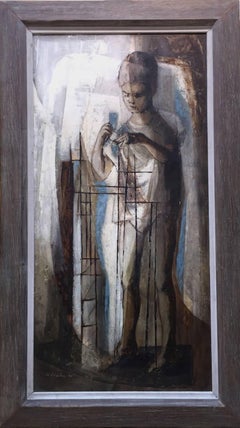
"Contruction Number 2"  Texas Mid Century painting. 1955

"Contruction Number 2" Texas Mid Century painting. 1955

By Cecil Lang Casebier

Located in San Antonio, TX

Cecil Casebier (1922 - 1996) San Antonio, Texas Artist Image Size: 49 x 24 Frame Size: 56 x 32 Medium: Oil or Acrylic 1955 Mid Century Modern Title: "Construction Number 2" Biography Cecil Casebier (1922 - 1996) Cecil Casebier was a Texas artist born March 22, 1922 in Fort Stockton, and died April 19, 1996 in San Antonio. He was known for portrait and still-life paintings and murals, mosaics, and stain-glass designs including 18 stained glass windows for St. Luke's Episcopal Church in San Antonio, Texas. He graduated from the University of Southern California, and did graduate work at the University of Texas. He served as Faculty Chairman of the Art Center, San Antonio, Texas. Of his work, Casebier said: "I am searching naively for truth; for a personal aesthetic truth, for the truth of beauty, enigmatic as it may be." EXHIBITIONS Texas Annual; Tri-State, Amarillo, Texas; California Watercolor Society; Alabama Watercolor Society; Philbrook Art Center, Tulsa, Okla.; Springfield, Mass. Watercolor Society; Texas Watercolor Society; Butler Art Institute, Youngstown, Ohio; Corcoran Biennial, Washington, D. C.; Miami, Florida; Butler Art Institute, Youngstown, Ohio; Whitney...

Category

1950s Modern Cecil Lang Casebier Art

Materials

Oil

Cecil Lang Casebier art for sale on 1stDibs.

Find a wide variety of authentic Cecil Lang Casebier art available for sale on 1stDibs. Customers who are interested in this artist might also find the work of Paul Fusco, Maggie Evans, and Elizabeth Murray.

Artists Similar to Cecil Lang Casebier