Charles Winter Art

American, 1869-1942

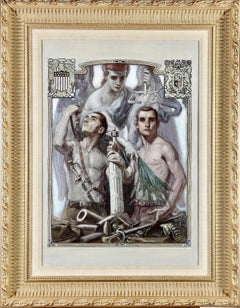
Charles Winter was an American illustrator, landscape and marine painter, who used bright colors and impressionist style in his work. He studied at the Cincinnati Art Academy and in Paris. Winter painted at Gloucester, Massachusetts and St. Louis and exhibited at the Paris Salon and the Art Institute of Chicago. Winter was married to Alice Beach Winter, also a successful artist.

to
1
1
Overall Width
to
Overall Height
to
2
2
2
2
2
1
1
2

Use search to find more

2
12,000
2,898
2,541
1,647

Use search to find more

Artist: Charles Winter
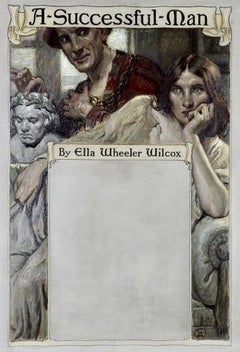
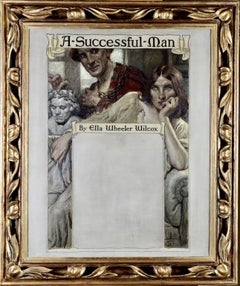
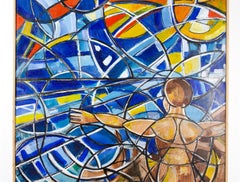
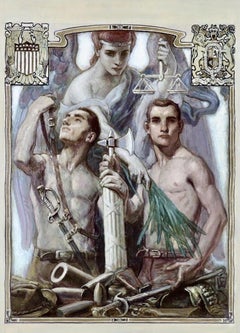
"A Successful Man" by Ella Wheeler Wilcox, 1919

"A Successful Man" by Ella Wheeler Wilcox, 1919

By Charles Allen Winter

Located in Fort Washington, PA

Medium: Oil on Canvas Signature: Signed Lower Right "A Successful Man," by Ella Wheeler Wilcox, from book Poems of Optimism (1919).

Category

1910s Charles Winter Art

Materials

Canvas, Oil

Related Items
Oil Painting / Photorealism / Figurative Art / Human Figure /Museum

Oil Painting / Photorealism / Figurative Art / Human Figure /Museum

By Bruce Adams

Located in Buffalo, NY

Bruce Adams was a painter, art educator, and writer. Born in Buffalo, N.Y., in 1952, he received a B.S. in 1976 and an M.A. in 1983 from Buffalo State College. Adams’s work is includ...

Category

1990s Contemporary Charles Winter Art

Materials

Canvas, Oil

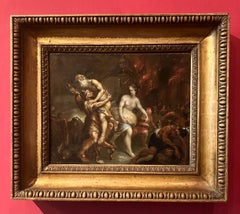
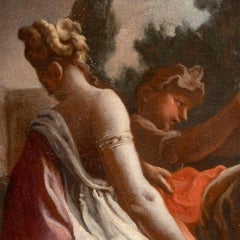
Aeneas Fleeing the Burning of Troy, 17th Century Flemish Oil on Canvas Painting

Aeneas Fleeing the Burning of Troy, 17th Century Flemish Oil on Canvas Painting

Located in Firenze, IT

This oil painting on canvas, created by an artist from the 17th Century Flemish School, depicts one of the most significant scenes from Greco-Roman mythology: Aeneas saving his famil...

Category

17th Century Dutch School Charles Winter Art

Materials

Canvas, Oil

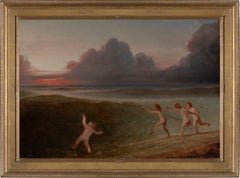
The Wave
The Wave

George RomneyThe Wave, c.1793

$190,623

H 43.31 in W 58.27 in D 3.55 in

The Wave

By George Romney

Located in London, GB

Oil on canvas 33 x 48 ½ inches; 840 x 1235 mm Painted c. 1793 Collections: George Romney; By descent to Elizabeth Romney (1832-1893), the artist’s granddaughter; Romney sale, Chris...

Category

1790s Old Masters Charles Winter Art

Materials

Canvas, Oil

Portrait of young man - The artist's son

Portrait of young man - The artist's son

Located in BELEYMAS, FR

Auguste-Joseph Delécluse (Roubaix 1855 - Paris 1928) Portrait of the artist's son, Eugène Delécluse Oil on canvas H. 98 cm; W. 116 cm Signed lower right 1903 Exhibition: 1903, Salon...

Category

Early 1900s French School Charles Winter Art

Materials

Canvas, Oil

«Sh*t Happens» Figurative Oil Painting by Samantha Van Heest

«Sh*t Happens» Figurative Oil Painting by Samantha Van Heest

By Samantha Van Heest

Located in Oslo, NO

Shit happens sometimes. In this piece, the artist wanted to create an unsettling and claustrophobic space where people feel most private and vulnerable. Inspired by artist Tala Madani, she created a cartoon figure to act as the voyeur, a bright and unwelcome disturbance that cannot be ignored. Samantha Van Heest...

Category

2010s Contemporary Charles Winter Art

Materials

Canvas, Oil

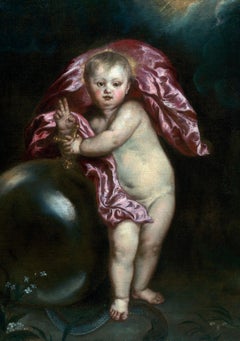
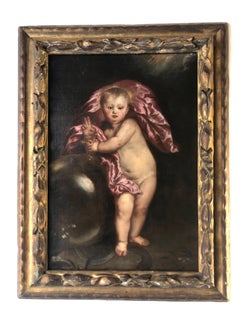
Christ as Salvator Mundi, Circle Van Dyck, Flemish Old Master, Christ Child

Christ as Salvator Mundi, Circle Van Dyck, Flemish Old Master, Christ Child

By Anthony van Dyck

Located in Greven, DE

The Christ Child as Redeemer of the World Oil on Canvas, 69.3 x 49.7 cm Provenance Private Collection, Belgium The present painting is known in different versions. One of them is ...

Category

17th Century Baroque Charles Winter Art

Materials

Canvas, Oil

17th-18th Century By Carlo Preda Solomon Sacrificing to the Idols Oil on Canvas

17th-18th Century By Carlo Preda Solomon Sacrificing to the Idols Oil on Canvas

Located in Milano, Lombardia

Carlo Preda (Milan, Italy, 1651-1729) Title: Solomon Sacrificing to the Idols Medium: Oil on canvas Dimensions: without frame 73 x 98 cm Painting without frame and not signed Expert...

Category

Late 17th Century Old Masters Charles Winter Art

Materials

Canvas, Oil

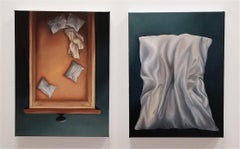
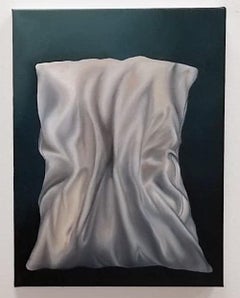
«Pull Shapes (Duet)» Oil on Canvas, Diptych by Samantha Van Heest

«Pull Shapes (Duet)» Oil on Canvas, Diptych by Samantha Van Heest

By Samantha Van Heest

Located in Oslo, NO

Pull Shapes (Duet) is a diptych that subtly explores surrealism, focusing in on the intimacy of the bedroom space. Pillows are this central point of comfort in our day to day, and the artist wanted to play with scale, mystery, and the night table drawer. Samantha Van Heest...

Category

2010s Contemporary Charles Winter Art

Materials

Canvas, Oil

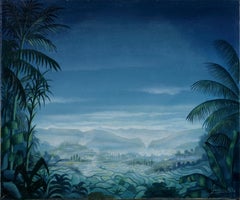
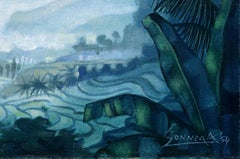
Sawah Landscape
Sawah Landscape

Auke SonnegaSawah Landscape, 1954

$21,069

H 19.89 in W 23.82 in D 1.97 in

Sawah Landscape

Located in Amsterdam, NL

A sawah landscape, Sumatra Signed and dated 'Sonnega '54' (lower right), and annotated 'Voor Jan de Bas 1-1-1970 / R de Bas' (on the reverse) oil on canvas, 50,5x60,5 cm Provenance: - Collection Pieter de Bas (1909-1979) Mr de Bas was head of the MULO school and acting head of the HBS school in Medan. Thence by descent to the present owner. Exhibited: - Hotel de Boer, Medan 1954, where acquired by the first owner. The light I observed everywhere was of a special quality, fluorescent blue, shone from nowhere but radiated from every point, oddly with great depth and intensity. The light in an entirely different dimension came from nowhere and went nowhere shimmering with the glow of a bright blue jewel. The most important thing I discovered was of being omnipresent and able to understand everything at the same time, yes I could fathom creation completely. Auke Sonnega, born March 9, 1910 in Leeuwarden, known as the painter, primarily of young Balinese men and women. Originally raised in the reformed denomination, the parents of Auke apparently practised theosophy and their children, including Auke were taught these principles. The talent for drawing revealed itself at an early stage which in 1926 lead to a 4-year study of textile design at the Academy for Art and Craft in Amsterdam. He completed the academy in 1930 and worked in a carpet factory in Twente until 1934 and then followed in his sister Aafje’s footsteps leaving the Netherlands to go to the Dutch East Indies where in 1935 he started working as a graphic designer with an advertising bureau in Batavia. He was able to travel through Java and Bali on the motorbike that he brought with him from Europe, and was paid for his travelogue, enhanced with his own photo’s which appeared in several Dutch newspapers and magazines. In the 1930’s two Europeans, Walter Spies and Rudolf Bonnet...

Category

Mid-20th Century Expressionist Charles Winter Art

Materials

Canvas, Oil

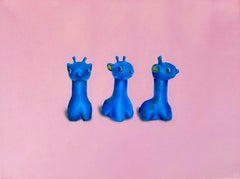
«My brother gave them a name» Still Life Oil Painting by Samantha Van Heest

«My brother gave them a name» Still Life Oil Painting by Samantha Van Heest

By Samantha Van Heest

Located in Oslo, NO

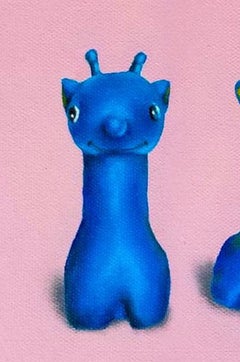
This painting was inspired by the artists very first toy, a small blue giraffe, given to her as a day-old baby. It is something that has been around her whole life, and even though it is inanimate, there is a feeling of personification through the years of wear. Her brother as a baby would call giraffes “fa,” which is always a sweet memory she associate with this toy. Samantha Van Heest...

Category

2010s Contemporary Charles Winter Art

Materials

Canvas, Oil

«Ta meg i mot» Figurative Oil Painting, toppless woman with blue boxing gloves

«Ta meg i mot» Figurative Oil Painting, toppless woman with blue boxing gloves

Located in Oslo, NO

«Ta meg i mot» oil on canvas by Anastína Eyjólfsdóttir. A toppless woman equipped with blue boxing gloves poses by the shore. Behind her, the sky and small strip of sea create a bl...

Category

2010s Contemporary Charles Winter Art

Materials

Canvas, Oil

«Young Peer» Contemporary Figurative Oil Painting on Canvas by Matteo Merla 2010

«Young Peer» Contemporary Figurative Oil Painting on Canvas by Matteo Merla 2010

By Matteo Merla

Located in Oslo, NO

In our society where everything runs so fast, stopping to consume a painting forces us to stop and reflect on an idea or a problem and consequently helps us develop a capacity for se...

Category

2010s Contemporary Charles Winter Art

Materials

Canvas, Oil

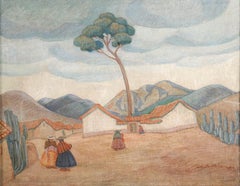
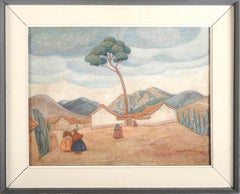
Andean landscape in Cusco, Peru - "Paisaje Andino"

Andean landscape in Cusco, Peru - "Paisaje Andino"

Located in BELEYMAS, FR

Camilo BLAS (born José Alfonso Sánchez Urteaga) (Cajamarca 1903 – Lima 1985) Andean Landscape – "Paisaje Andino" Oil on canvas H. 47.5 cm; W. 62 cm Signed lower right and dated 1926 Exhibition: Lima, Casino Español, *Exposición de Camilo Blas*, July 1927. Bibliography: - *Variedades*, Lima, July 9, 1927, in the article "La exposición de Camilo Blas," under the heading "Arte Nacional"; reproduced under the title *Paisaje*. - *El Comercio*, Lima, July 24, 2020, in the article "Camilo Blas, 35 years after his death: an assessment of his contribution to Peruvian arts"; reproduced under the title *Paisaje Andino*. A major figure in 20th-century Peruvian *Indigenist* painting, Camilo Blas created a body of work deeply committed to depicting the daily life, landscapes, and people of Peru. The pseudonym Camilo Blas conceals the identity of José Alfonso Sánchez Urteaga, a native of Cajamarca in the northern Peruvian Andes. A painter, draftsman, printmaker, and educator, he belonged to the generation that, during the early decades of the century, helped give rise to a modern Peruvian style of painting rooted in the observation of the country as it truly was. Hailing from a region particularly rich in artistic traditions, Camilo Blas showed an early aptitude for drawing. His maternal uncle, the painter Mario Urteaga, played a pivotal role in his early development, introducing him to the observation of landscapes and rural life. This close connection to peasant life and the traditions of Cajamarca formed one of the foundations of his artistic vision. Before dedicating himself fully to art, Blas began studying law at the University of Trujillo, but his calling as a painter soon asserted itself. In 1922, he moved to Lima and enrolled in the Escuela Nacional de Bellas Artes (National School of Fine Arts), which had been founded a few years earlier. He initially studied under Daniel Hernández before meeting José Sabogal, a central figure in the Peruvian *indigenismo* art movement. This meeting proved decisive. Sabogal recognized a unique sensitivity to Peruvian reality in the young Blas and became his mentor, fellow traveler, and one of his key supporters. Blas thus became part of the *indigenista* movement, which sought to forge a national artistic expression by highlighting the cultures, landscapes, and indigenous and *mestizo* populations of Peru. However, Camilo Blas’s *indigenismo* was not merely an ideological agenda. His originality lay in how he transformed observations of reality into paintings that were vibrant, sensitive, and often humorous. Markets, festivals, processions, street scenes, agricultural work, musicians, artisans, peasants, and city dwellers all became protagonists in a vast visual chronicle of Peru. His gaze encompassed the Andes, the coast, and tropical regions alike, reflecting a desire to traverse and depict the country in all its diversity. His work is distinguished by precise, expressive draftsmanship combined with a luminous, refined palette. Moving beyond strictly documentary representation, Blas infused his compositions with a poetic—and sometimes satirical—dimension. His figures are captured within their environments, amidst the gestures, customs, and communal scenes that lend his paintings a narrative quality. This focus on the daily lives of the people earned him a nickname bestowed by José Sabogal: "the Pancho Fierro of the Sierra"—a reference to the famous 19th-century graphic chronicler of Lima society. Blas’s time in Cusco (1924–1926) marked another significant stage in his career. He traveled with Sabogal and worked in Bolivia before returning to Cusco, where he lived for several years. There, he created paintings, drawings, and prints depicting local life. These experiences informed a body of work that combined easel painting, drawing, watercolor, and printmaking, with a diversity of techniques mirroring the variety of his subjects. His work *La Trilla* (1928) exemplifies this period and is now part of the collection at the Museum of Modern Art in New York. In 1933, he became a professor at the Escuela Nacional de Bellas Artes in Lima. He taught drawing and painting there for many years before eventually becoming the school's director. Through his teaching, he helped pass on an artistic philosophy rooted in the direct observation of the local landscape and the quest for a Peruvian artistic identity. His influence was thus exerted as much through his own creative output as through his role in training several generations of artists. In 1946, he received the Ignacio Merino National Painting Prize, one of Peru’s most prestigious artistic honors. His work continued to evolve around the same fundamental themes: Andean landscapes, scenes of everyday life, religious festivals, trades, portraits, and glimpses of daily existence. This steadfastness regarding his subject matter never implied stagnation; over the decades, Blas refined his pictorial language and evolved his approach to light, color, and composition. Camilo Blas thus holds a unique place in the history of modern Peruvian art. While his name remains closely linked to the *Indigenismo* movement of José Sabogal, his work transcends the confines of any single school or manifesto. Above all, it serves as a vast, evocative record of 20th-century Peru. In his paintings and drawings, the Indigenous and *mestizo* populations are not merely motifs; they become the heart of a pictorial world where landscape, labor, celebration, and community life all converge to form a shared identity. Through the delicacy of his draftsmanship, the richness of his palette, and the deeply human quality of his subjects, Camilo Blas helped elevate everyday Peruvian life into a worthy subject for painting. He died in Lima in 1985, leaving behind a prolific and multidisciplinary body of work that holds a pivotal place in the history of modern Peruvian painting...

Category

1920s Other Art Style Charles Winter Art
Materials

Oil, Canvas

Charles Winter art for sale on 1stDibs.

Find a wide variety of authentic Charles Winter art available for sale on 1stDibs. You can also browse by medium to find art by Charles Winter in canvas, fabric, oil paint and more. Not every interior allows for large Charles Winter art, so small editions measuring 17 inches across are available. Customers who are interested in this artist might also find the work of Howard Chandler Christy, Jan Frans Deboever, and Leslie Thrasher. Charles Winter art prices can differ depending upon medium, time period and other attributes. On 1stDibs, the price for these items starts at $9,500 and tops out at $29,000, while the average work can sell for $19,250.

Artists Similar to Charles Winter