Charles Richards Art

1906-1992

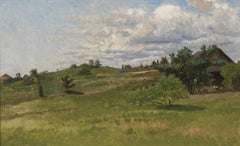
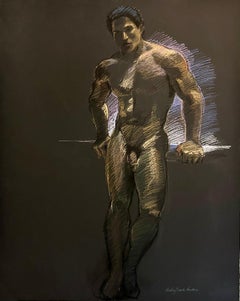
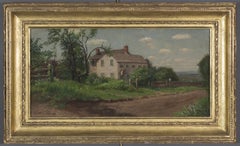
Charles Richards was born in 1906 in Rome, Mississippi. He started his career at the age of 15 as a copy boy for the Memphis Press. In 1927, he arrived in New Orleans and took a reporting job on the New Orleans Item. Over the following decades, he reported for newspapers throughout the South and East in cities such as New Orleans, Houston, Memphis and New York. As was common practice during the first half of the 20th century, Richards illustrated his own newspaper stories with imaginative drawings and portraits. Richards turned to fine art full-time in 1945, producing diverse works of landscapes, figures, portraiture and sculpture. New Orleans became his home base, although he continued to travel widely. His works are found in various traditional media including oil, pastel and Conte. Numerous collections hold works by Richards including the Historic New Orleans Collection and the Ogden Collection. Richards died in Gulfport, Mississippi in 1992. He was an iconic artist whose talent is lesser-known only because not as many of his paintings come up for sale as do those of more prolific painters such as George Dureau, Robert Gordy and Ida Kohlmeyer.

to
1
1
2
Overall Width
to
Overall Height
to
1
2
1
3
2
1
1
1
1
1
1
1
2
2
1
1
1
3
10,164
2,784
1,380
1,375
3
2
1
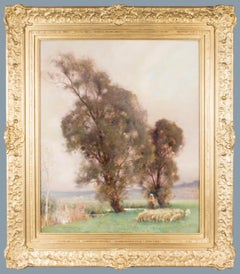
Artist: Charles Richards
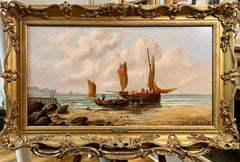
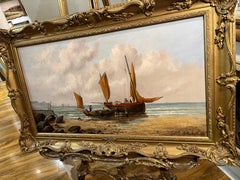
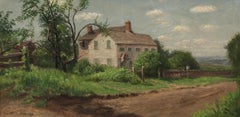
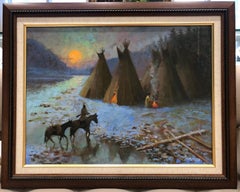
OLD MASTER LARGE OIL PAINTING High Quality 19th CENTURY Catch Gold Gilt Frame
By Charles Richards
Located in Ferndown, GB
OLD MASTER OIL PAINTING High Quality 19th CENTURY The Catch GGF Description OLD MASTER LARGE OIL PAINTING 19th Century NEW COLLECTION Of RARE PIECES OF ENGLISH HISTORY “Very Goo...
Category

Late 19th Century Realist Charles Richards Art

Materials

Oil

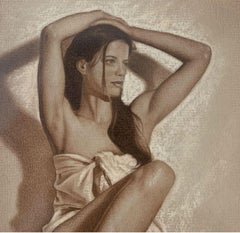
"Sunday Painter" - New Orleans Framed Impressionist Nude Painting
By Charles Richards
Located in New Orleans, LA
Charles Richards was an iconic New Orleans artist whose talent is lesser known only because not as many of his paintings come up for sale as do those of more prolific painters such as George Dureau, Robert Gordy...
Category

Late 20th Century Impressionist Charles Richards Art

Materials

Oil

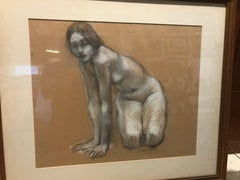
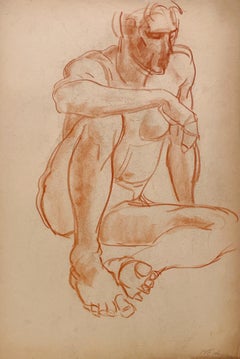
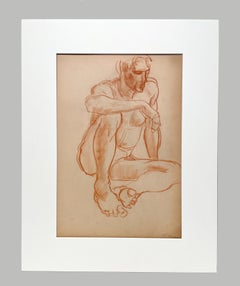
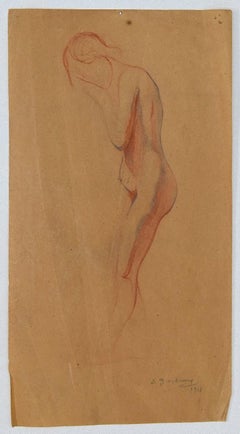
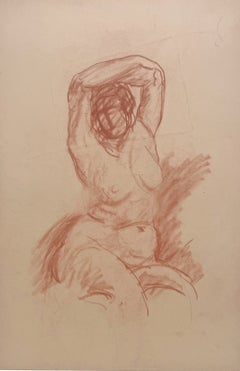
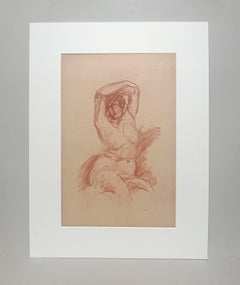
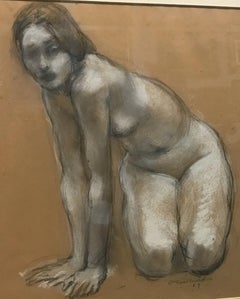
Charles Richards (New Orleans) "Crouching Woman"
By Charles Richards
Located in New Orleans, LA
A truly lovely nude by noted 20th-century New Orleans artist and extraordinary draftsman Charles Richards, whose work does not come up for sale often enough here in New Orleans. Sorr...
Category

Mid-20th Century Charles Richards Art

Materials

Pastel, Graphite

Related Items
Winter Gulls Original Landscape Oil Painting by 20th Century British Artist
By Walter Robin Jennings
Located in Preston, GB
Winter Gulls Original Landscape Oil Painting by 20th Century British Artist, Walter Robin Jennings. W R Jennings has exhibited in London, Paris & New York...
Category

Late 20th Century Realist Charles Richards Art

Materials

Canvas, Cotton Canvas, Oil

MB 053 (Figurative Charcoal Drawing of a Muscular Male Nude on Arches Paper)
By Mark Beard
Located in Hudson, NY
Figurative male nude drawing made of graphite, charcoal, and conte crayon on Arches paper 30 x 20 inches, unframed This unique life study drawing of a standing male nude was made...
Category

2010s Modern Charles Richards Art

Materials

Charcoal, Crayon, Graphite

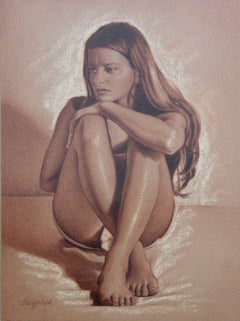
A girl II - XXI century, Contemporary Realistic Figurative Mixed Media Drawing
By Andrzej Szypluk
Located in Warsaw, PL
Contemporary realistic figurative mixed media drawing PROVENANCE Exhibited at Katarzyna Napiorkowska Gallery. The Gallery is a primary representative for this artist. The Gallery o...
Category

Early 2000s Realist Charles Richards Art

Materials

Chalk, Pastel, Pencil, Cardboard

Tender words - XX Century, Mixed Media Figurative Painting, Nude, Couple
By Katarzyna Wazyk
Located in Warsaw, PL
Gabryela Wasowicz is a Polish painter born in 1947. She studied at the Academy of Fine Arts of Warsaw and then at the Gerrit Rietveld Akademie in Amsterdam. Once she graduated in 197...
Category

1980s Contemporary Charles Richards Art

Materials

Paper, Pastel, Watercolor, Gouache

Female Bather (Nude Women)
Located in Wilton Manors, FL
Ann Brockman (1895–1943) was an American artist who achieved success as a figurative painter following a successful career as an illustrator. Born in California, she spent her childhood in the American Far West and, upon marrying the artist William C. McNulty, relocated to Manhattan at the age of 18 in 1914. She took classes at the Art Students League where her teachers included two realist artists of the Ashcan School, George Luks and John Sloan. Her career as an illustrator began in 1919 with cover art for four issues of a fiction monthly called Live Stories. She continued providing cover art and illustrations for popular magazines and books until 1930 when she transitioned from illustrator to professional artist. From that year until her death in 1943, she took part regularly in group and solo exhibitions, receiving a growing amount of critical recognition and praise. In 1939 she told an interviewer that making money as an illustrator was so easy that it "almost spoiled [her] chances of ever being an artist."[1] In reviewing a solo exhibition of her work in 1939, the artist and critic A.Z Kruse wrote: "She paints and composes with a thorough understanding of form and without the slightest hesitancy about anatomical structure. Add to this a magnificent sense of proportion, and impeccable feeling for color and an unmistakable knowledge of what it takes to balance the elements of good pictorial composition and you have a typical Ann Brockman canvas."[2] Early life and training Brockman was born in Northern California in 1895 and spent much of her youth in nearby Oregon, Washington, and Utah.[1][3] She met the artist William C. McNulty in Seattle where he was employed as an editorial cartoonist. They married in March 1914 and promptly moved to Manhattan where he worked as a freelance illustrator.[4][5] At the time of their marriage, Brockman was 18 years old.[6] Over the next few years, her career generally followed that path that her husband had previously taken. His art training had been at the Art Students League beginning in 1908; she began her training there after moving to New York in 1914.[1] After an early career as an editorial cartoonist, he freelanced as a magazine and book illustrator beginning in 1914; she began her career as a magazine and book illustrator in 1919.[7] He embarked on a teaching career in the early 1930s and not long after, she began giving art instruction.[8][9] While they both adhered to the realist tradition in art, their usual subjects were different. His prominently depicted urban cityscapes in the social realist whereas hers generally focused on rural landscapes. He was best known for his etchings and she for her oils and watercolors.[8][10] Brockman returned to the Art Students League in 1926 to take individual instruction for a month at a time from George Luks and John Sloan.[1] Despite their help, one critic said McNulty's "sympathetic encouragement and guidance" was more important to her development as a professional artist.[11] Career in art In the course of her career as illustrator, Brockman would sometimes paint portraits of celebrities before drawing them, as for example in 1923 when she painted the French actress Andrée Lafayette who had traveled to New York to play title role in a film called Trilby.[12] She would also sometimes accept commissions to make portrait paintings and in 1929 painted two Scottish terriers on one such commission.[13] During this time, she also produced landscapes. In 1924 she displayed a New England village street scene painting in the Second Annual Exhibition of Paintings, Watercolors, and Drawings in the J. Wanamaker Gallery of Modern Decorative Art.[14] Available sources show no further exhibitions until in 1930 a critic for the Boston Globe described one of her portraits as "well done" in a review of a Rockport Art Association exhibition held that summer.[15] Between 1931 and her death in 1943, Brockman participated in over thirty group exhibitions and five solos.[note 1] Her paintings appeared in shows of the artists' associations to which she belonged, including the Rockport Art Association, Salons of America, Society of Independent Artists, and National Association of Women Painters and Sculptors.[17][19]Between 1932 and 1935, her paintings appeared frequently in New York's Macbeth Gallery.[20][23][25][27] She won an award for a painting she showed at the Art Institute of Chicago in 1940.[41] In 1942, the Whitney Museum bought one of the paintings she showed in its Biennial of that year.[10] Critical praise for her work steadily increased during the decade that ended with her untimely death in 1943. In 1932, her painting called "The Camera Man" was called "a clever piece of illustration."[21] Three years later, a painting called "Small Town" gave a critic "the impression of freshness, honesty, and skill".[29] In 1938, a critic described her "Folly Cove" as "masterful" and said "Pigeon Hill Picnic" was "sustained by excellence of execution".[48] At that time, Howard Devree of the New York Times saw "evidence of gathering powers" in her work and wrote "she imparts a dramatic feeling to landscape. She even manages this time to do trees touched by Autumn tints without calendar effect, which is no small praise."[51] Three years later, a Times critic reported Brockman had "set herself a new high" in the watercolors she presented,[52] and another critic said the gallery where she was showing had not "for some time" shown "so outstanding a solo exhibitor as Ann Brockman."[2] Shortly before her death, a critic for Art News maintained that she was "one of America's most talented women painters".[46] After she had died, a critic said Brockman's paintings "displayed real power", adding that she was "highly rated among the nation's professional artists" and was known to give "aid and encouragement, always with a smile," both artists and to her students.[10] in reviewing the memorial exhibition at the Kraushaar Galleries held in 1945, reviewers wrote about the strength and vibrancy of her personality, the quality of her painting ("every bit as good, possibly better than people had thought"),[53] called her "one of the best of our twentieth century women painters", and credited "her sense of the vividness of life" as a contributor to "the unusual breadth that is so characteristic of her work.[11] One noted that her work was "widely recognized throughout the country" and could be found in the collections of prominent museums, including the Metropolitan Museum of Art, the Whitney Museum of American Art, and the Art Institute of Chicago.[54] Writing in the Times, Devree wrote, "even those who had followed the steady growth of this artist for more than a decade, each successive show being at once an evidence of new achievement and an augury of still better work to come, may well be surprised at the combined impact of the selected paintings in the present showing,"[55] and writing in the Brooklyn Daily Eagle, A.Z Kruse said she had made "extraorginary accomplishments", painted with "inordinate distinction" showing a "lyrical majesty," and possessed "a keen esthetic sense which did not deviate from truth."[54] Artistic style (1) Ann Brockman, undated drawing, black chalk on paper, 18 x 22 inches (2) Ann Brockman, High School Picnic, about 1935, oil on canvas, 34 1/4 x 44 1/4 inches (3) Ann Brockman, untitled landscape, about 1943, watercolor and pencil on paper, 15 1/4 x 22 1/2 inches (4) Ann Brockman, North Coast, undated watercolor, 21 1/2 x 30 inches (5) Ann Brockman, On the Beach, 1942, watercolor on paper, 16 1/2 x 20 inches (6) Ann Brockman, Lot's Wife, 1942, oil on canvas, 46 x 35 inches (7) Ann Brockman, New York Harbor, 1934, watercolor on paper, 13 1/2 x 19 1/4 inches (8) Ann Brockman, Youth, 1942, oil on board, 13 1/2 x 11 1/2 inches Brockman was a figurative painter whose main subjects were rural landscapes and small-town and coastal scenes. She worked in oils and watercolors, becoming better known for the latter late in her career. Most of her paintings were relatively small. Although she made figure pieces infrequently, the nudes and circus and Biblical scenes she painted were seen to be among her best works. In 1938, Howard Devree wrote: "Her gray-day marines and coast scenes are familiar to gallery goers and are favorites with her fellow artists. Her figure pieces have attained a sculptural quality without losing warmth or taking on stiffness. One spirited circus incident of equestriennes about to enter the big tent compares not unfavorably with many of the similar pictures by a long line of painters who have been fascinated by the theme. She imparts a dramatic feeling to landscape. She even manages this time to do trees touched by Autumn tints without calendar effect, which is no small praise."[51] Similarly, a critic for Art Digest wrote that year: "Fluently and virilely painted, [her] canvases suggest a close affinity between nature and humans. The artist takes her subjects out in the open where they may picnic or bathe with space and air about them. A fast tempo is felt in the compositions of restless horses and nimble entertainers busily alert for the coming performance. Miss Brockman is also interested in portraying frightened groups of people, hurrying to safety or standing half-clad in the lowering storm light."[56] Her palette ranged from vivid colors in bright sunlight to somber ones in the overcast skies of stormy weather. Of the former, one critic spoke of the rich colors and "sun-drenched rocks" of her coastal scenes and another of her "summery landscapes of coves and picnics."[11][50] Of the latter, Howard Devree said she "painted so many moody Maine coast vignettes of lowering skies and uneasy seas that artists have been heard to refer to an effect as 'an Ann Brockman day'".[57] Brockman's handling of Biblical subjects can be seen in the oil called "Lot's Wife", shown above, Image No. 6. Her watercolor called "On the Beach" and her oil portrait called "Youth" may both indicate the "sculptural quality" that Devree said was typical of her figure pieces (Image No. 8, above). An example of Brockman's bright palette in a typical summer theme is the oil painting called "High School Picnic" shown above, Image No. 2. Next to it is a painting, an untitled landscape of about 1943 whose medium, watercolor on paper, shows off the sunny palette she often used (Image No. 3). Among the darkest of her works was an untitled 1942 drawing she made in black chalk (shown above, Image No. 1). In a book called Drawings by American Artists (1947), the artist and art editor Norman Kent noted that this study influenced her painting through its use of "forms" that were "elastic" and suggested "color". He said its "massing of dark and light" created "a definite mood" that was "impressionistic" and had "the strength of a man's work".[58] Brockman's undated watercolor called "North Coast" (shown above, Image No. 4) is an example of the paintings to which Kent referred. Illustrator (9) Ann Brockman, cover, March 12, 1917, Every Week magazine (10) Illustration of an article, "The Taking of a Salient" by Henry Russell...
Category

1930s American Impressionist Charles Richards Art

Materials

Oil

Female Bather (Nude Women)
$1,200 Sale Price
20% Off
H 13.5 in W 9 in D 0.75 in
Nude
Located in San Francisco, CA
This artwork "Nude" c.1970 is an oil painting on canvas board by noted Mexican artist Luis Ricardo Amendolla Gasparo, 1928-2000. It is signed at the lower right corner by the artist....
Category

Late 20th Century Impressionist Charles Richards Art

Materials

Oil

Nude
Nude
$900
H 11.65 in W 13.5 in D 2 in
English 20th century portrait of an English Frigate in full sail at sea in oils.
Located in Woodbury, CT
English 20th century portrait of an English Frigate in full sail at sea in oils. A very well painted oil on canvas with great detail of a ship cutting through the sea at I'm sure great speed. The piece is an oil on canvas with I think gouache added to the waves to make them a brighter white. The piece is signed Mason and with some investigation, we are attributing this painting to the talented English painter Barry Mason...
Category

1980s Realist Charles Richards Art

Materials

Canvas, Oil

Nude
By Jan De Ruth
Located in San Francisco, CA
This artwork "Nude" is an oil painting on canvas by noted Czech/American artist Jan De Ruth, 1922-1991. It is signed at the lower right corner by the artist. The canvas size is 16 x 13 inches, framed size is 24 x 21 inches. Framed in the original wooden gold and black antique style frame, with fabric liner and gold bevel. It is in excellent condition. About the artist: Born Karlsbad, Czechoslovakia Studied: Rotter Art School, Prague; Ruskin Art School, Oxford University, England; ASL New York; New School, NY; also with Frederic Taubes. Exhibited: 38 National Juried Exhibitions, 14 Museum Solo Shows and 51 Gallery Solo Exhibitions. Author: Portrait Painting, 1964; Painting the Nude, 1968. De Ruth, a native of Czechoslovakia and an American citizen, spent the years of World War II being shunted through five different concentration camps, including the infamous Auschwitz. He made four escape attempts and finally made good on his fifth try. De Ruth constantly sought materials with which to draw, but "The only things we had were the few pieces of cloth we wore," he recalls. By chance, he was transferred to Germany as part of a labor detail and managed to sneak a pencil away from the camp supervisor. "I became a perfect thief during those years," he says. De Ruth drew a mother and child on a scrap of paper he scrounged from the factory where he worked and filled it in with shadings of coffee in various strengths-his finger was his brush. He exchanged the sketch for a piece of bread from a camp guard, and in effect, sold his first painting. In March of 1945, after being transferred to his native Czechoslovakia, he made his successful escape "knowing every step of the way." After the war, De Ruth became the commissar in a small Czech town and remained in the post for one year, just long enough to forge some documents that allowed him to flee to England. He took up residence in London and enrolled at the Ruskin Art School in Oxford University. He arrived in the USA in 1948. There are times in the life of a painter when his dedication to his art is overshadowed by the immediate requirements of self-preservation. This was one of those times! From '48 to 1955 he supported himself by working at night, earning his way painting designs on neckties and bathroom cups...
Category

Late 20th Century American Impressionist Charles Richards Art

Materials

Oil

Nude
Nude
$2,300
H 24 in W 21 in D 2 in
Painting of Mountain Cottages by River in Ireland by 20th Century Irish Artist
By Robert B Higgins
Located in Preston, GB
Painting of Mountain Cottages by River in Ireland by 20th Century Irish Artist Art measures 20 x 16 inches Frame measures 24 x 20 inches This captivating oil painting portrays a ...
Category

20th Century Realist Charles Richards Art

Materials

Oil, Board

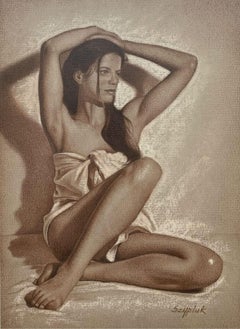
Nude. Contemporary Realistic Figurative Mixed Media Drawing Polish artist
By Andrzej Szypluk
Located in Warsaw, PL
Contemporary realistic figurative mixed media drawing on cardboard by Polish artist Andrzej Szypluk. Monochromatic drawing of a female in nude. PROVE...
Category

Early 2000s Realist Charles Richards Art

Materials

Chalk, Pastel, Cardboard, Pencil

"Portrait of a Seated Nude Woman" American Impressionist Painting Oil on Panel
By Robert Philipp
Located in New York, NY
A rare and breath taking work, with masterful bursh work and sublime execution of light. We are drawn to the subtle beauty and elegant pose. The tasteful compostion lends an intimate scene into the artists studio where Philip has captured her effortlessly. This piece comes displayed in a wonderful frame and hanging wire on verso. Art measures 24 x 20 inches Frame measures 30 x 26 inches Robert Philipp was born on February 2, 1895 in New York City. He was an American painter influenced by Impressionism and Post-Impressionism, and known for his nudes, still lifes, and portraits of attractive women and Hollywood stars. Moses Solomon Philipp showed early talent and grew up in a family atmosphere that fed and cultivated his creativity. At age of 15, he entered the Art Students League for four years and then continued his training at the National Academy of Design. His teachers at the League included George Bridgeman and Frank DuMond, and at the National Academy he studied with Douglas Volk...
Category

1940s American Impressionist Charles Richards Art

Materials

Oil, Panel

Mid Century Portrait of an African American Man
By Genevieve Rogers
Located in Soquel, CA
Mid-century figure study of an African American man by American Impressionist artist Genevieve Rogers. Unsigned, but acquired with a collection of her...
Category

Mid-20th Century American Impressionist Charles Richards Art

Materials

Oil, Laid Paper

Charles Richards art for sale on 1stDibs.

Find a wide variety of authentic Charles Richards art available for sale on 1stDibs. You can also browse by medium to find art by Charles Richards in crayon, graphite, oil paint and more. Much of the original work by this artist or collective was created during the 20th century and is mostly associated with the Impressionist style. Not every interior allows for large Charles Richards art, so small editions measuring 30 inches across are available. Customers who are interested in this artist might also find the work of Lewis Suzuki, Marjorie May Blake, and Beryl Darton. Charles Richards art prices can differ depending upon medium, time period and other attributes. On 1stDibs, the price for these items starts at $600 and tops out at $1,200, while the average work can sell for $900.
Artists Similar to Charles Richards

Still Thinking About These?

All Recently Viewed