By Corita Kent
Located in New York, NY
Corita Kent
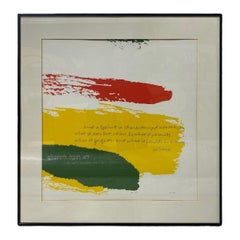
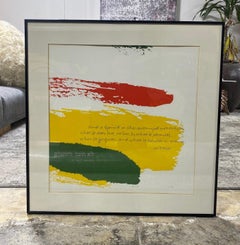
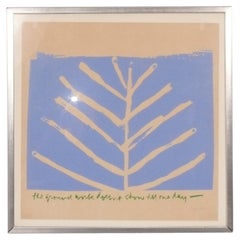
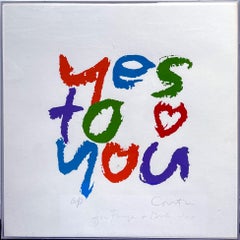
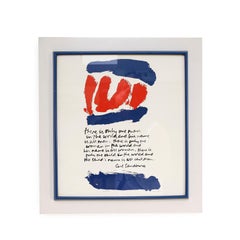
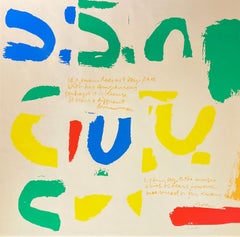
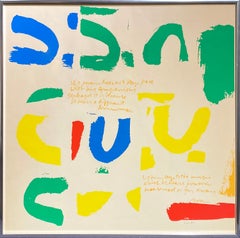
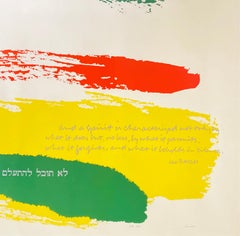
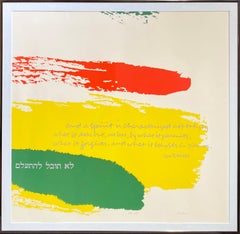
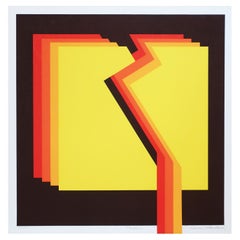
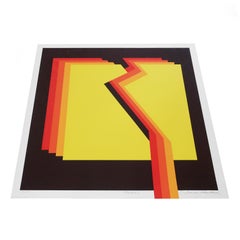
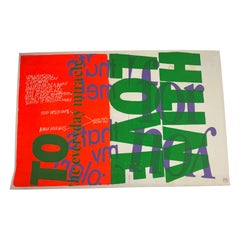
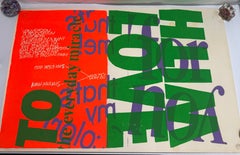
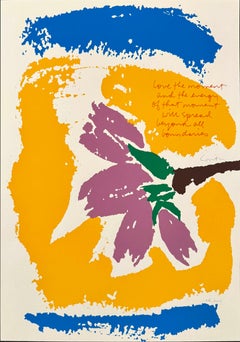
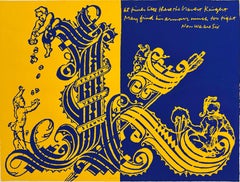
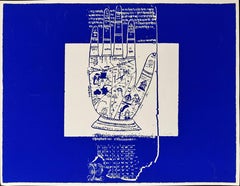
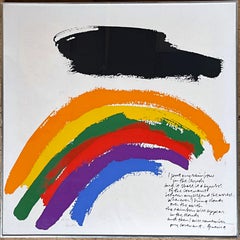
Rainbow Covenant, 1971
Color lithograph on wove paper
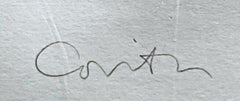
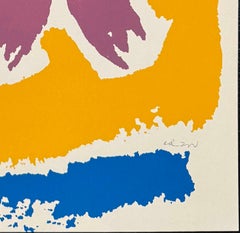
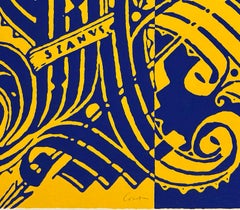
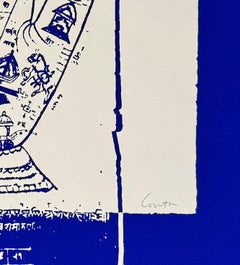
Signed in graphite pencil, and notated ed. 200 (edition of 200)
Limited Edition of 200
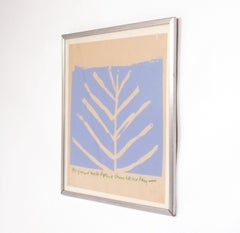
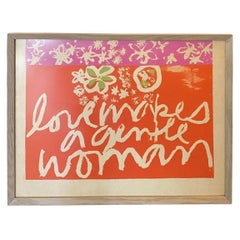
Vintage metal 1970s frame Included
One of the most coveted and elusive graphic works done by Sister Mary Corita Kent - done in the most desirable era.
Pencil signed on the front in a stated limited edition of 200
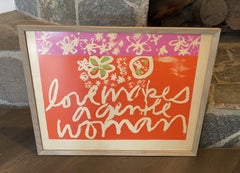
Held in vintage 1970s metal frame under glass.
Measurements:
Framed
23 inches by 23 inches by 1.25 inches
Artwork:
22.75 inches vertical by 22.75 inches
Commissioned by The Rainbow Shop in Beverly Hills for Amie Karen Cancer Fund for Children.
The quote on its face reads:
"I put my rainbow in the clouds and it shall be a symbol of the covenant between myself and the world. Whenever I bring clouds over the earth, the rainbow will appear in the clouds. And then I will remember my covenant." - Genesis 9
This Rainbow print was done in 1971 - the same year Sister Corita painted her rainbow swash on the 150-foot-high LNG storage tanks in Boston’s Dorchester neighborhood. It is not only a visible landmark, it is the largest copyrighted work of art in the world. One of Boston’s most controversial works of art hangs not in a museum, but on the walls of a massive gas storage tank. Originally painted by Sister Mary Corita Kent in 1971, the rainbow swashes are a welcome, lighthearted burst of color that have had some Bostonians up in arms for four decades. An outspoken pacifist during the Vietnam War, Kent painted simple pop art posters with with messages like, Stop the Bombing, Love is Here to Say, and I Should Like to Be Able to Love My Country and Still Love Justice.
Sister Corita Kent
Known for her willingness to stick it to the man, Kent ran into a bit of controversy after painting the gas tank in Boston’s Dorchester neighborhood, off Interstate 93 south of downtown. The largest copyrighted work of art in the world, the Rainbow Swash consists of orange, yellow, red, blue, green, and purple stripes strewn over a white background on the tank. On the left side of the blue strip, there’s a subtle profile of an eye and nose and seemingly long-pointed goatee beneath.
Considering Kent’s background and the politically tumultuous times, some people took on the belief that the profile was a portrait of Ho Chi Minh in protest against the Vietnam War. She denied the allegations and things were pretty much left there, but either for its enjoyable aesthetics or long-lasting message, the piece remained right there for Boston’s millions of daily commuters. Even in 1992 when they tore down the original tank, the Swash was immediately reproduced on a new, similar-looking tank.
Today, it’s considered a distinguished mark of the city. When parents take their kids home from a day at Fenway or the Museum of Science, they point to the tank and challenge their children to find the hidden face.
In 1985, The U.S. Postal Service sold more than 700 million of Corita Kent's Love’ postage stamps. The bright, optimistic design typified her work.
Corita Kent was born Frances Elizabeth Kent Nov. 20, 1918 in Fort Dodge, Iowa, to devout Catholic parents. Just after graduating from high school, she followed her older sister and joined the Roman Catholic order of Sisters of the Immaculate Heart of Mary in Los Angeles. As Sister Mary Corita, she taught art at Immaculate Heart College from 1938 to 1968, eventually heading the department.
At the college she created bold, colorful silkscreen works. She incorporated spiritual themes and literary and political writings with product slogans, street signs, and Beatles lyrics...
Category
1970s Pop Art Corita Kent Art
MaterialsLithograph, Pencil