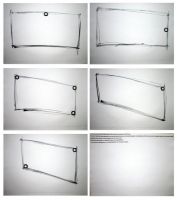
Dan Flavin Art

American, 1933-1996
Dan Flavin (1933-1996) was a prominent American artist best known for his illuminated light installations and sculptural fixtures. A pioneer of minimalism, Flavin repurposed commonplace industrial objects, such as harsh fluorescent lights, into transformative geometric installations. In the spirit of Marcel Duchamp's readymades, Flavin refrained from altering the objects and went as far as employing factory default colors for his strict palette of red, blue, green, pink, yellow, ultraviolet, and four different shades of white. Flavin's geometric compositions were an explicit study of color, light, and space. With almost no technical production required, Flavin was able to prioritize the installation and arrangement of the materials, focusing on how they cooperated with the space and the way the display might be experienced by the viewer.
to
4
2
6
4
3
Rare Albright Knox museum poster (hand signed and inscribed to renowned curator)
By Dan Flavin
Located in New York, NY
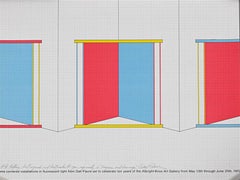
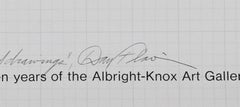
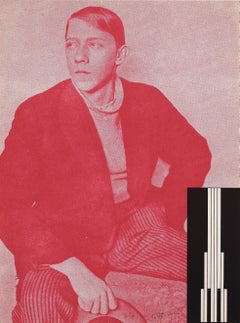
Dan Flavin Dan Flavin at Albright Knox Gallery (hand signed and inscribed to renowned curator) Offset Lithograph. Hand signed and inscribed by Dan Flavin 18 × 22 inches Provenance: Estate of artist and collector Rick Collar Unframed Uniquely inscribed and hand signed 1972 Dan Flavin exhibition poster from his Albright Knox exhibition. Dan Flavin hand signs and inscribes it to Paulus Hendrik Hefting, the curator of the Neue Nationalgalerie in Berlin. The inscription reads: "Best regards and best wishes to you especially in "diagrams and drawings". What Flavin is referring to is the important exhibition also in 1972, "Diagrams & Drawings" curated by Hefting, at the Rijksmuseum Kröller-Müller (Netherlands), which featured Carl Andre, Christo, Walter De Maria, Dan Flavin, Michael Heizer, Don Judd, Sol LeWitt, Robert Morris, Bruce Nauman, Claes Oldenburg, Richard Serra, Robert Smithson. An extremely rare signed poster with a unique inscription to a major European curator referencing an historic Minimalist exhibition in the early 1970s. We may not see the likes of something like this anytime soon! Dan Flavin Biography From 1963, when he conceived the diagonal of May 25, 1963 (to Constantin Brancusi), a single gold fluorescent lamp installed diagonally on the wall, until his death in 1996, Dan Flavin (1933-1996) produced a singularly consistent and prodigious body of work that utilized commercially available fluorescent lamps to create installations (or “situations,” as he preferred to call them) of light and color. Through these light constructions, Flavin was able to establish and redefine space. Flavin’s first solo exhibitions were held at the Judson Gallery in 1961 and the Green Gallery in 1964, both in New York. His first European exhibition was in 1966 at Galerie Rudolf Zwirner in Cologne, Germany; and in 1969, the National Gallery of Canada, Ottawa, organized his first major museum retrospective. His work was included in a number of key early exhibitions of Minimal art in the 1960s, among them Black, White, and Gray (Wadsworth Atheneum Museum of Art, Hartford, Connecticut, 1964); Primary Structures (The Jewish Museum, New York, 1966); and Minimal Art (Gemeentemuseum, The Hague, 1968). Flavin’s work would continue to be presented internationally over the course of the pursuant decades at venues including the St. Louis Art Museum, Missouri (1973); Kunsthalle Basel (1975); Museum Boymans-van Beuningen, Rotterdam (1975); Stedelijk Museum, Amsterdam (1986); and the Solomon R. Guggenheim Museum, New York (1992), among others. A major museum retrospective devoted to Flavin’s work was organized, in cooperation with the Estate of Dan Flavin, by the Dia Art Foundation in association with the National Gallery of Art, Washington, DC, where it was first on view in 2004. The exhibition traveled from 2005 to 2007 to the Modern Art Museum of Fort Worth, Texas; Museum of Contemporary Art, Chicago; Hayward Gallery, London; Musée d’Art Moderne de la Ville de Paris...
Category

1970s Abstract Geometric Dan Flavin Art

Materials

Pencil, Lithograph, Offset
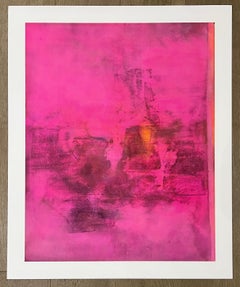
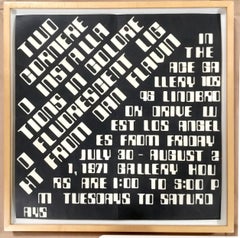
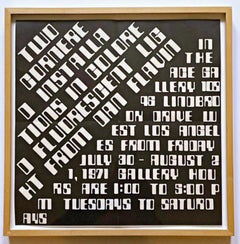
Historic invitation poster for 1970 ACE Gallery exhibition Minimalist light art
By Dan Flavin
Located in New York, NY
Dan Flavin Rare invitation poster for 1970 ACE Gallery exhibition, 1970 Letterpress and stencil on colored paper Not signed Frame included Floated in the original ACE gallery vintage wood frame. Measurements: Framed: 17.75" x 17.75" x 1.6 inches Poster: 16 inches x 16 inches Extremely uncommon letterpress and stencil poster designed by Dan Flavin on the occasion of his 1970 exhibition “Two Cornered Installations in Colored Fluorescent Light from Dan Flavin” at the legendary Ace Gallery in Los Angeles. The poster, like most exhibition invitations of that era (including those from the Leo Castelli gallery in New York) was undated, as these works were so much of the moment. This work was acquired directly from the collection of the ACE Gallery. Other than the present work, we've never seen another example of this collectors item anywhere in the world, on or off the market (If anyone is aware of others, we'd love to see!) More about the legendary ACE gallery, and the sale of some of its art collection from the bankruptcy estate, from where the present work was acquired: ACE Gallery founder Douglas Chrismas opened his own frame shop and gallery in Vancouver at the age of 17. His gallery became known as a venue where Vancouver artists could show alongside major New Yorkers, and get the feeling of belonging to a bigger scene. In the 60s and early 70s he brought artists such as Robert Rauschenberg, Carl Andre, Sol LeWitt, Bruce Nauman, and Donald Judd to Vancouver, Canada. The gallery expanded to Los Angeles in 1967 at the former Virginia Dwan Gallery space in Westwood, and then further expanded to New York in 1994. The galleries were noted for doing museum-level exhibitions by up and coming and internationally renowned artists. While in New York the gallery’s presence was amplified by doing exhibitions in conjunction with cultural institutions such as the Guggenheim Museum and the Cartier Foundation (Paris). Under Chrismas' directorship, ACE Gallery has had either offices or galleries in art centers outside of the United States, such as Mexico City, Paris, Berlin. and Beijing. In 1972, Chrismas mounted Robert Irwin’s installation Room Angle Light Volume at the first ACE/Venice, which opened at 72 Market Street in 1971. In 1977, ACE mounted exhibitions of work by Frank Stella and Robert Motherwell, along with Michael Heizer’s Displaced/Replaced Mass. Installed at ACE/Venice, the Heizer piece required that huge chunks be gouged out of the gallery floor to create recessed areas able to accommodate boulders. In April 2016, ACE Gallery emerged from a three-year bankruptcy proceeding under the leadership of Sam S. Leslie. In May 2016, founder Douglas Chrismas was terminated from all roles at the gallery. In July 2021, Douglas Chrismas was arrested by the FBI and charged with embezzlement. In May 2022, Douglas Chrismas was ordered to repay 14.2 million in ACE art sale profits, which were diverted to personal accounts. Chrismas is awaiting criminal trial in January, 2023. He faces up to 15 years in prison if convicted. Controversies In a 1983 lawsuit in Los Angeles federal court, Rauschenberg sought $500,000 from Chrismas' Flow ACE Gallery; the artist won a $140,000 judgment in the suit in 1984. Eventually the two reconciled their differences and in 1997 Robert Rauschenberg insisted that ACE Gallery New York (in conjunction with the Guggenheim Museum) host his Retrospective. In 1986, Chrismas pleaded no contest after Canadian real estate developer C. Frederick Stimpson alleged that he had improperly sold work belonging to the collector, among them pieces by Andy Warhol and Rauschenberg. Under the terms of the settlement, Chrismas agreed to pay Stimpson $650,000 over a period of five years. He continues to work with the Stimpson family in handling their art interests. In 1989, ACE Gallery wanted to borrow a work by Judd along with Carl Andre's 1968 Fall, both owned by Count Giuseppe Panza, for an exhibition devoted to minimal art called The Innovators Entering into the Sculpture. Rather than shipping the two large scale works from Italy, Panza authorized ACE Gallery to refabricate the pieces in Los Angeles. In Panza's collection archives, there is a series of signed certificates signed by Judd that granted Panza broad authority over the works by Judd in his collection. These certificates "authorized Panza and followers to reconstruct work for a variety of reasons," as long as instructions and documentation provided by Judd were followed and either he or his estate was notified. This even included the right to make "temporary exhibition copies, as long as the temporary copy was destroyed after the exhibition; and the right to recreate the work to save expense and difficulty in transportation as long as the original was then destroyed." Miwon Kwon, in her account of site specificity: "One Place After Another," presents the account of ACE Gallery recreating artworks by Donald Judd and Carl Andre without the artist's permission. Andre and Judd both publicly denounced these recreations as "a gross falsification" and a "forgery," in letters to Art in America, however, the fabrication of the pieces were permitted by Panza Collection in Italy, the owner of the works. Despite the confusion surrounding the Panza refabrications, both Carl Andre and Donald Judd maintained a professional relationship with Douglas Chrismas and ACE Gallery. Andre showcased works at ACE Gallery in 1997, 2002, 2007, 2011 and present day. In 2007, Carl Andre's show entitled "Zinc" was exhibited at ACE Gallery in Beverly Hills. Donald Judd paid a visit to The Innovators Entering into the Sculpture exhibition at ACE Gallery and agreed to keep his sculpture in the exhibition. After the exhibition was over, Chrismas planned to sell the metal used for the re-fabrication of Judd's work for scrap metal but Judd wanted to own the re-fabrication for himself. ACE Gallery then sold the re-fabrication of Donald Judd's work to Donald Judd. After having consigned more than $4 million worth of art to ACE Gallery to sell in 1997 and 1998, the sculptor Jannis Kounellis filed a lawsuit in Los Angeles Superior Court in 2006, accusing Chrismas of keeping most of the profits of artworks and refusing to return the pieces that did not sell. According to the lawsuit, the primary agreement between Kounellis and Chrismas was oral. Chrismas returned all of Kouenllis' artwork, and did a full accounting of the proceeds from Kounellis' work—minus the expense of exhibiting it. The matter was resolved between the two of them and ACE Gallery still sells and exhibits Kounellis' work today. By 2006, Chrismas had filed for Chapter 11 bankruptcy protection at least six times since 1982, barring most of his creditors from collecting the money immediately owed to them. Chrismas filed for Chapter 11 bankruptcy to protect the gallery's extensive real estate holdings from the problematic landlord. The landlord of the Wilshire Boulevard space, Wilshire Dunsmuir Company, claimed that ACE owed back rent and penalties however, the claim was disputed by Douglas Chrismas. In court papers, Chrismas Fine Art claimed that it would cure "the pre-petition" debt by Feb. 1, 2000, and was asking the court to protect its right to remain in the property. A declaration filed by Douglas Chrismas characterized this leasehold as the business' primary asset. -Courtesy Wikipedia About Dan Flavin Dan Flavin (1933–1996) was a pioneer of Minimal Art. He rose to fame in the 1960s with his work with industrially manufactured fluorescent tubes, inventing a new art form and securing his place in art history. The exhibition at the Kunstmuseum Basel focuses on his works that are dedicated to other artists or make reference to certain events. Back in 1963 Dan Flavin mounted a single, industrial fluorescent light tube at a 45-degree angle to the wall of his studio declaring it art; the act was radical, and it still is. Indeed, it was owing to this action that standard commercial products would be introduced into art: The nascent Minimal Art of the era emphasised seriality, reduction and matter-of-factness. Somewhat ironically, while the autodidact Flavin never himself sought membership to this movement in art, he would, and quite literally, go on to become one of its most illustrious exponents. Flavin began work with fluorescent light tubes from the early 1960s on; arranged in so-called ‘situations’, he would then further develop them into series and large-scale installations. The colours and dimensions of the materials he used were prescribed by industrial production. Flooded in light, viewers themselves become part of the works: The space, along with the objects within it, are set in relation to each other and thus become immersive experiences of art triggering sensual, almost spiritual experiences. Flavin liberated color from the two-dimensionality of painting. The prevalent perception of his light works has, to date, largely centred on their minimalist, industrial aspect, and thus on the inherent simplicity of their beauty. The exhibition at Kunstmuseum Basel, by contrast, places emphasis on looking at Flavin’s oeuvre in a less familiar setting: His pieces, although initially without clearly recognisable signature, frequently make reference in their titles to concrete events, such as wartime atrocities or police violence, or are dedicated to other artists—as in the work untitled (in memory of Urs Graf...
Category

1970s Minimalist Dan Flavin Art

Materials

Etching, Stencil

Dan Flavin, Untitled (Triptych): 3 Aquatint Prints, Abstract Art, Minimalism
By Dan Flavin
Located in Hamburg, DE
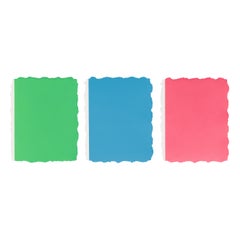
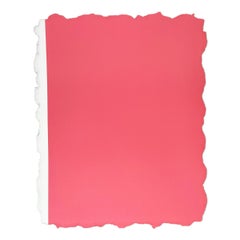
Dan Flavin (American, 1933-1996) Untitled (Triptych), 1996-98 Medium: Set of three aquatints on handmade rag paper Dimensions: each 50 x 40 cm (19.75 x 15.75 in) Edition of 60: Each ...
Category

Late 20th Century Abstract Dan Flavin Art

Materials

Aquatint

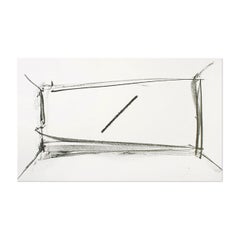
Dan Flavin, A Sketch of The Diagonal of May 25, 1963 in Fluorescent Light
By Dan Flavin
Located in Hamburg, DE
Dan Flavin (American, 1933-1996) A Sketch of The Diagonal of May 25, 1963 in Fluorescent Light, 1974 Medium: Lithograph on wove paper Dimensions: 18.5 x 31.5 cm Edition of 45: Hand-s...
Category

20th Century Minimalist Dan Flavin Art

Materials

Lithograph

Untitled -- Print, Screen Print, Figure, Tatlin, Light, Minimalist by Dan Flavin
By Dan Flavin
Located in London, GB
Dan Flavin Untitled, 1973 Screenprint, on rag paper Signed, dated and numbered from the edition of 300 With the artist's copyright inkstamp verso From The New York Collection for St...
Category

1970s Minimalist Dan Flavin Art

Materials

Screen

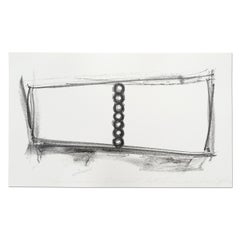
Dan Flavin, For Circular Fluorescent Light Of One Wall - Signed Print
By Dan Flavin
Located in Hamburg, DE
Dan Flavin (American, 1933-1996) For Circular Fluorescent Light Of One Wall, 1974 Medium: Lithograph on wove paper Dimensions: 18.5 x 31.5 cm Edition of 45: Hand-signed, titled and d...
Category

20th Century Minimalist Dan Flavin Art

Materials

Lithograph

Related Items
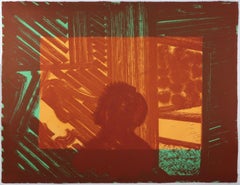
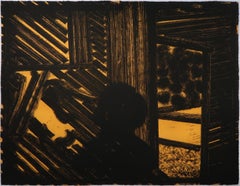
Artist and Model Howard Hodgkin abstracted orange and black watercolor gouache
By Howard Hodgkin
Located in New York, NY
Large black and marigold orange abstract interior scene of a bust in front of a window with fingerprints and painterly brushstrokes. Rich color and texture ideal for hanging in minim...
Category

Late 20th Century Abstract Dan Flavin Art

Materials

Watercolor, Gouache, Etching

Howard Hodgkin hand-colored Early Evening in the Museum of Modern Art
By Howard Hodgkin
Located in New York, NY
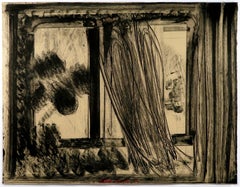
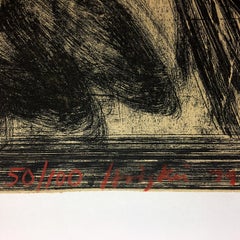
Large scale black and white abstract interior scene with dots, lines, brushstrokes, and hand painting in grey, to hang in contemporary, modern and minimalist spaces. While British pop artists such as David Hockney and Patrick Caulfield numbered amongst Howard Hodgkin's circle of friends, Hodgkin's work is painterly, emotional, expressionist, and abstract. Early Evening in the Museum of Modern Art, by Howard Hodgkin. Signed by the artist, numbered, and dated 79 lower center in red crayon. Soft-ground etching printed from the same plate as 'Late Afternoon in the Museum of Modern Art', with hand coloring in black gouache on Grey BFK Rives mould-made paper. This print depicts an abstracted scene, perhaps a sculpture in front of a window in the Museum of Modern Art, Oxford, in Hodgkin's signature painterly style. The expressive mark-making in this print is an example of the artist’s movement in the late 70s towards pronounced gestures. Wide areas of deep black pigment contrast urgent swipes of ink. Always seeking greater richness in his prints, Hodgkin layered ink and hand coloring in this print, rendering each impression in the edition unique. Part of a series of four prints reflecting on a visit to...
Category

Late 20th Century Abstract Dan Flavin Art

Materials

Gouache, Etching

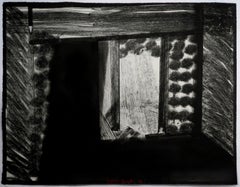
All Alone in the Museum of Modern Art Howard Hodgkin abstract black painting
By Howard Hodgkin
Located in New York, NY
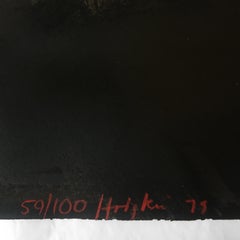
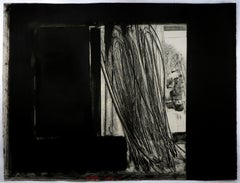
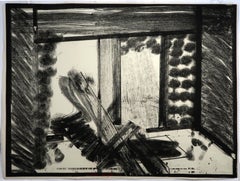
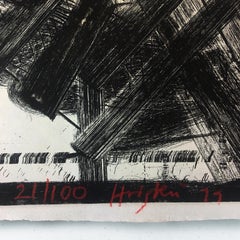
Large scale black and white abstract interior scene with dots, lines, brushstrokes, paint daubs, fingerprints, squares and rectangles, and hand painting in grey. Hang in contemporary, modern and minimalist spaces. While British pop artists such as David Hockney and Patrick Caulfield numbered amongst Howard Hodgkin's circle of friends, Hodgkin's work is painterly, emotional, expressionist, and abstract. Paper: 29.5 x 38.75 in. / 74.7 x 98.2 cm. Soft-ground etching with hand coloring in black gouache on grey BFK Rives mould made paper. Signed by the artist, dated 79, and numbered 59/100 lower center in red crayon. Printed from the same plate as 'Thinking Aloud in the Museum of Modern Art', this print was previously titled "Not Quite Alone in the Museum of Modern Art," suggesting an erotic dalliance in the museum. This print depicts an abstracted scene, perhaps a window and a door, in Hodgkin's signature painterly style. The expressive mark-making in this print is an example of the artist’s movement in the late 70s towards pronounced gestures. Beside bold black strokes, his fingerprints form areas of texture. Always seeking greater richness in his prints, Hodgkin layered ink and hand coloring in this print, rendering each print in the edition unique. Howard Hodgkin was introduced to the etching technique used in 'All Alone in the Museum of Modern Art' at Petersburg Press, where this print was produced and where he would become a long-time collaborator. This technique allowed him to work fluidly and spontaneously, creating the moody interior scenes that mark Hodgkin’s work from the late 70s and early 80s. Part of a series of four prints reflecting on a visit to the Museum...
Category

Late 20th Century Abstract Dan Flavin Art

Materials

Etching

Artist and Model Howard Hodgkin - green and yellow etching watercolour gouache
By Howard Hodgkin
Located in New York, NY
This vibrant abstract orange and green print is part of a group of soft-ground etchings (Artist and Model, Artist and Model (in green and yellow), These…Plants) by Howard Hodgkin. The two versions of Artist and Model are printed from the same plates, but in different colors. In this iteration, green watercolor contrasts beautifully with marigold orange, crimson, and terra cotta red. Seen in all three prints is a bust in silhouette before a window. Artist and Model is a surprising name, as Hodgkin never painted or drew from a model. Signed by the artist with initials, dated 1980, and numbered lower center in red crayon. Soft-ground etching with hand coloring in a yellow watercolor wash and green gouache on Stoneridge mould-made etching paper. Edition 100. Howard Hodgkin was introduced to the etching technique used in Artist and Model (in green and yellow) at Petersburg Press, where this print was produced and where he would become a long-time collaborator. This technique allowed him to work fluidly and spontaneously, creating the moody interior scenes that mark Hodgkin’s work from the late 70s and early 80s. Catalogue reference: Elizabeth Knowles...
Category

Late 20th Century Abstract Dan Flavin Art

Materials

Watercolor, Gouache, Etching

Thinking Aloud in the Museum of Modern Art, Hodgkin, abstract black and white
By Howard Hodgkin
Located in New York, NY
Large scale black and white abstract interior scene with dots, lines, brushstrokes, paint daubs, fingerprints, squares and rectangles, and hand painting in grey. Hang in contemporary...
Category

Late 20th Century Abstract Dan Flavin Art

Materials

Etching

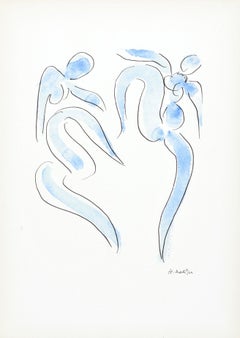
Henri Matisse, The Dance, from Twelve Contemporaries, 1959 (after)
By Henri Matisse
Located in Southampton, NY
This exquisite lithograph after Henri Matisse (1869–1954), titled La danse (The Dance), from the album Douze Contemporains (Twelve Contemporaries), originates from the 1959 edition p...
Category

1950s Modern Dan Flavin Art

Materials

Lithograph, Stencil

Bicentennial Dawn Lithograph and gold foil, Louise Nevelson sculpture signed/N
By Louise Nevelson
Located in New York, NY
Louise Nevelson Bicentennial Dawn, 1976 Photolithograph, silkscreen and gold foil on white wove paper hand signed, dated and numbered 15/100 with incised signature on the front 35 × ...
Category

1970s Abstract Dan Flavin Art

Materials

Foil

Souvenir, Howard Hodgkin: large scale black white gray abstract interior scene
By Howard Hodgkin
Located in New York, NY
Very large scale black and white abstract interior scene with dots, lines, brushstrokes, paint daubs, fingerprints, squares and rectangles. Striking print to hang in contemporary, modern and minimalist spaces. While British pop artists such as David Hockney and Patrick Caulfield numbered amongst Howard Hodgkin's circle of friends, Hodgkin's work is more painterly, expressionist, and abstract. Paper 45 x 55 in. / 114.3 x 139.7 cm. Souvenir by Howard Hodgkin. Screenprint on Arches aquarelle mould-made paper. Signed by the artist with initials and dated 80 in pencil lower center, numbered in pencil lower left. This bold Howard Hodgkin print layers five shades of black, with a wide variety of marks including some from the artist’s fingerprints and hand. Scribbles and lines of grey loosely define what could be an interior space with furniture. As is typical of his prints, there is a sense of space, and of the passage of time, expressed through shapes that seem to recede through the picture, deep black shades and, unusually for Hodgkin’s work, the white of the paper showing through. The last photograph displays these rich surface textures on the sheet at an angle. Catalogue reference: Elizabeth Knowles...
Category

Late 20th Century Abstract Dan Flavin Art

Materials

Screen

Pablo Picasso, Bathers, from Fifteen Drawings, 1946 (after)
By Pablo Picasso
Located in Southampton, NY
This exquisite lithograph and pochoir after Pablo Picasso (1881–1973), titled Bathers, from the folio Picasso, Fifteen Drawings, 1946, originates from the 1946 edition published by Pantheon Books, Inc., New York, and rendered and printed by Albert Carman, City Island, New York, 1946. Bathers reflects Picassos fascination with the human form and the sensual rhythm of nature, capturing the vitality, balance, and movement of figures intertwined with their environment. With an economy of line and expressive gesture, the composition distills the timeless harmony between form and flow, celebrating the unity of humanity and nature through a lyrical vision of grace and energy. Executed as a lithograph and pochoir on velin paper, this work measures 12.63 x 18.75 inches. Signed in the plate and unnumbered as issued. The edition exemplifies the exemplary standards and artistic integrity of the fine art publishing and printmaking of Pantheon Books, Inc., and Albert Carman whose next collaborative project following this edition was with Marc Chagall in the creation of his monumental suite, Four Tales from the Arabian Nights in 1948. Artwork Details: Artist: After Pablo Picasso (1881–1973) Title: Bathers, from the folio Picasso, Fifteen Drawings, 1946 Medium: Lithograph and pochoir on velin paper Dimensions: 12.63 x 18.75 inches (32.1 x 47.6 cm) Inscription: Signed in the plate and unnumbered as issued Date: 1946 Edition: D, primary edition; L, out of commerce, hand signed by Pablo Picasso Publisher: Pantheon Books, Inc., New York Printer: Albert Carman, City Island, New York Catalogue raisonne reference: Orozco, Miguel. Picasso Interpretation Prints II - Etchings, Pochoirs & Woodcuts. Catalogue Raisonne. 2023, illustration 388–402 Condition: Well preserved, consistent with age and medium Provenance: From the folio Picasso, Fifteen Drawings, 1946, published by Pantheon Books, Inc., New York; printed by Albert Carman, City Island, New York, 1946 About the Publication: Picasso, Fifteen Drawings (1946) was one of the earliest fine art portfolios issued in the United States to feature the work of Pablo Picasso in the mediums of lithography and pochoir. Published by Pantheon Books, Inc., New York—a press renowned for its pioneering role in introducing European modernism to American audiences—the portfolio marked an important cultural bridge between postwar Paris and the emerging art scene in New York. The suite comprised fifteen images selected from Picassos prolific oeuvre, including depictions of mythological figures, musicians, and introspective portraits. Each work was rendered using a combination of lithography and pochoir, printed by Albert Carman at his atelier in City Island, New York, whose craftsmanship ensured a remarkable fidelity to the tonal and chromatic nuances of Picassos originals. The portfolio was produced in an edition of D, primary edition; L, out of commerce, hand signed by Pablo Picasso, issued unbound within a printed paper folder, and distributed primarily through Pantheons art book division under the direction of Kurt Wolff and Monroe Wheeler—key figures in shaping the intellectual reception of modern art in the United States. Picasso, Fifteen Drawings helped establish the artists postwar reputation among American collectors, scholars, and institutions, introducing a generation of viewers to the expressive immediacy and psychological depth of his draftsmanship. The publication also exemplified Pantheons broader mission to make modern European art accessible to an American audience, alongside their landmark editions devoted to Henri Matisse, Georges Rouault, and Marc Chagall. Technically refined and historically significant, the portfolio stands as a testament to the transatlantic exchange of modernist aesthetics during the mid-20th century and remains one of the most sought-after Picasso print editions issued in the United States before 1950. About the Artist: Pablo Picasso (1881–1973) was a Spanish painter, sculptor, printmaker, and ceramicist whose extraordinary vision revolutionized modern art and defined the visual language of the 20th century. A child prodigy from Malaga, Spain, Picassos career spanned more than seven decades and encompassed an astonishing range of styles and innovations—from the melancholic Blue and romantic Rose periods to his pioneering invention of Cubism with Georges Braque, which shattered conventional notions of perspective and form. Influenced by the bold expressiveness of El Greco, the structure of Cezanne, and the vitality of African and Iberian sculpture, Picasso became a central figure of the Paris avant-garde, working in creative dialogue with contemporaries such as Henri Matisse, Alexander Calder, Alberto Giacometti, Salvador Dali, Joan Miro, Wassily Kandinsky, Marcel Duchamp, and Man Ray. His insatiable experimentation extended across painting, drawing, printmaking, ceramics, and sculpture, forever expanding the boundaries of artistic expression. A master of reinvention, Picasso profoundly shaped generations of artists who followed—from Andy Warhol, Roy Lichtenstein, David Hockney, and Jean-Michel Basquiat to Jeff Koons and Banksy—cementing his status as a timeless cultural icon whose works remain among the most sought after worldwide. His landmark painting Les Femmes d'Alger (Version O) achieved a record-breaking sale of 179,365,000 USD at Christie's, New York, on May 11, 2015, affirming Picassos enduring legacy as one of the most influential and valuable artists in history. Pablo Picasso Bathers, Picasso Fifteen Drawings 1946, Picasso Pantheon Books, Picasso Carman lithograph, Picasso pochoir...
Category

1940s Modern Dan Flavin Art

Materials

Lithograph, Stencil

Pablo Picasso, Bathers, from Fifteen Drawings, 1946 (after)
$3,996 Sale Price
20% Off
H 18.75 in W 12.625 in
Phil, Rubber Stamp Portfolio, Chuck Close
By Chuck Close
Located in Southampton, NY
Printer’s ink from rubber stamp on vélin Strathmore 3-ply paper. Paper Size: 8 x 8 inches. Inscription: Unsigned, as issued. Notes: From the folio, Rubber Stamp Portfolio, 1977. Publ...
Category

1970s Minimalist Dan Flavin Art

Materials

Printer's Ink

Rare 1970s offset lithograph exhibition poster (pencil signed by Philip Guston)
By Philip Guston
Located in New York, NY
Philip Guston at David McKee Gallery (pencil signed by Philip Guston), 1974 Lithograph and offset lithograph poster Signed in graphite pencil under the image 24 1/2 × 20 inches Unframed, unnumbered Rare vintage lithographic poster of 1974 Guston exhibition at David McKee Gallery Signed under the image in graphite pencil by Philip Guston Another hand signed edition is in the permanent collection of Vassar College; otherwise we haven't seen another besides the present work; a true collectors item when hand signed by the artist. Philip Guston Biography Philip Guston (1913 – 1980) is one of the great luminaries of twentieth-century art. His commitment to producing work from genuine emotion and lived experience ensures its enduring impact. Guston’s legendary career spanned a half century, from 1930 to 1980. His paintings—particularly the liberated and instinctual forms of his late work—continue to exert a powerful influence on younger generations of contemporary painters. Born in Montreal, Canada, in 1913 to poor Russian Jewish émigrés, Guston moved with his family to California in 1919. Briefly attending the Otis Art Institute in Los Angeles in 1930, he was otherwise completely self-taught. Guston’s first precocious work, Mother and Child, was completed when he was only seventeen years of age. Influenced by the social and political landscape of the 1930s, his earliest works evoked the stylized forms of Giorgio de Chirico and Pablo Picasso, social realist motifs of the Mexican muralists, and classical properties of Italian Renaissance frescoes of Piero della Francesca and Masaccio that he had seen only in reproduction. Painted in Mexico with another young artist, the huge fresco The Struggle Against War and Fascism drew national attention in the US. Guston’s success continued in the WPA, a Depression-era government program that commissioned American artists to create murals in public buildings. While not widely known today, the young artist’s early experiences as a mural painter allowed a development of narrative and scale that he would draw upon in his late figurative work. In the early 1940s, as the WPA program was ending, Guston found work teaching at universities in the Midwestern United States. In his studio, he was working in oils on easel paintings that were more personal and smaller in scale, focusing on portraits and allegories, like Martial Memory and If This Be Not I. His first solo exhibition in Iowa was well received and, within a few years, he was offered his first solo show in New York City. Guston was awarded a Prix de Rome, allowing him to leave teaching and spend a year in Italy, studying firsthand the Italian masters he loved. By the time he had finished The Tormentors, Guston’s move to abstraction was all but complete. On his return from Italy, he continued dividing his time between the artists’ colony of Woodstock in Upstate New York and New York City, which was then emerging as the center of the postwar art world. He rented a studio on 10th Street, where abstract expressionists Jackson Pollock, Willem de Kooning and Mark Rothko also worked. For Guston, success was never what mattered most. He was already impatient with the language of pure abstraction and experimenting with larger forms, using a limited palette of grays, pinks and blacks. As his forms became still more reduced, he stopped painting altogether and embarked on a series of simplified abstract “pure drawings” in brush or charcoal. At this juncture, Guston removed himself from the art scene in New York, living and working in Woodstock for the remainder of his life. Guston’s move ­was hardly a withdrawal. Freed from the distractions and formal constraints of the art world and the opinions of critics, he was able to experiment with new forms and to engage more deeply with the issues that mattered to him. The 1960s was a period of great social upheaval in the United States, characterized by assassinations and violence, civil rights and anti-war protests. “When the 1960s came along I was feeling split, schizophrenic,” Guston later said. “The war, what was happening to America, the brutality of the world. What kind of man am I, sitting at home, reading magazines...
Category

1970s Abstract Expressionist Dan Flavin Art

Materials

Lithograph, Offset
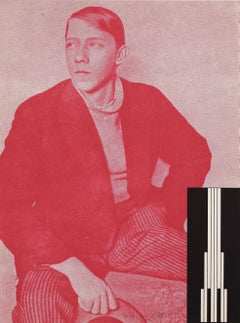
Amedeo Modigliani, Portrait, from Twelve Contemporaries, 1959 (after)
By Amedeo Modigliani
Located in Southampton, NY
This exquisite lithograph after Amedeo Modigliani (1884–1920), titled Portrait (Portrait), from the album Douze Contemporains (Twelve Contemporaries), originates from the 1959 editio...
Category

1950s Modern Dan Flavin Art

Materials

Lithograph, Stencil

Previously Available Items
Jewish Museum Retrospective Poster
By Dan Flavin
Located in Toronto, Ontario
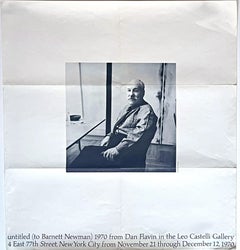
Dan Flavin (1933-1996) was a prominent American artist best known for his illuminated light installations and sculptural fixtures. A pioneer of minimalism, Flavin repurposed commonplace industrial objects, such as harsh fluorescent lights, into transformative geometric installations. In the spirit of Marcel Duchamp's readymades, Flavin refrained from altering the objects and went as far as employing factory default colors for his strict palette of red, blue, green, pink, yellow, ultraviolet, and four different shades of white. Flavin's geometric compositions were an explicit study of color, light, and space. With almost no technical production required, Flavin was able to prioritize the installation and arrangement of the materials, focusing on how they cooperated with the space and the way the display might be experienced by the viewer. This rare exhibition poster recalls Flavin's 1970 retrospective held at The Jewish Museum...
Category

1970s Minimalist Dan Flavin Art

Materials

Lithograph

Untitled -- Print, Screen Print, Figure, Tatlin, Light, Minimalist by Dan Flavin
By Dan Flavin
Located in London, GB
DAN FLAVIN Untitled, 1973 Screenprint, on rag paper Signed, dated and numbered from the edition of 300 With the artist's copyright inkstamp verso From The New York Collection for St...
Category

1970s Minimalist Dan Flavin Art

Materials

Screen

For One Walled Circular Fluorescent Light
By Dan Flavin
Located in Houston, TX
Suite of five lithographs with original title page and portfolio box. Each 22 1/8 x 30" Edition of 35
Category

Dan Flavin Art

Dan Flavin art for sale on 1stDibs.

Find a wide variety of authentic Dan Flavin art available for sale on 1stDibs. If you’re browsing the collection of art to introduce a pop of color in a neutral corner of your living room or bedroom, you can find work that includes elements of blue and other colors. You can also browse by medium to find art by Dan Flavin in aquatint, etching, lithograph and more. Much of the original work by this artist or collective was created during the 20th century and is mostly associated with the minimalist style. Not every interior allows for large Dan Flavin art, so small editions measuring 11 inches across are available. Customers who are interested in this artist might also find the work of Joel Shapiro, Richard Tuttle, and Omar Rayo. Dan Flavin art prices can differ depending upon medium, time period and other attributes. On 1stDibs, the price for these items starts at $250 and tops out at $10,000, while the average work can sell for $4,671.

Artists Similar to Dan Flavin

Still Thinking About These?

All Recently Viewed