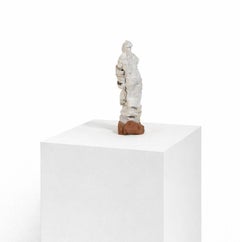
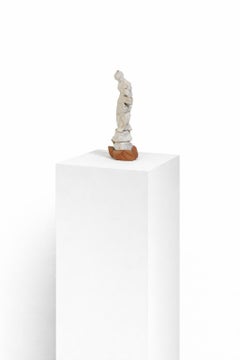
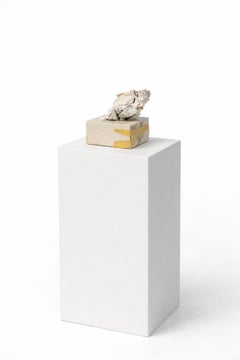
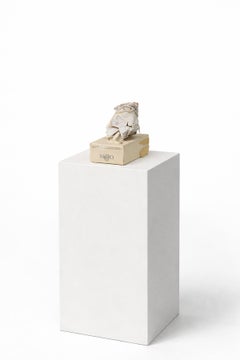
David Hare Art

American, 1917-1992

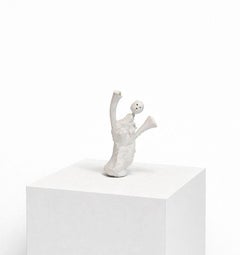
David Hare, a surrealist and Abstract Expressionist sculptor and photographer, was born in New York City on March 10, 1917. From 1936–37, he studied biology and chemistry at Bard College in Annandale-on-Hudson, New York. Hare had no formal training in art but began experimenting. He took up photography in the 1930s and by the end of the decade was working in color. The Walker Galleries in New York exhibited his photographs in 1939. From 1941–44, Hare founded and edited the surrealist magazine VVV with André Breton, Marcel Duchamp and Max Ernst. Peggy Guggenheim presented solo shows of Hare's work in her The Art of This Century Gallery from 1944–47. In 1948, he was a founding member, together with William Baziotes, Robert Motherwell and Mark Rothko, of The Subjects of the Artist school in New York and Hare, became friendly with Jean-Paul Sarte. Hare died on December 21, 1992, in Jackson.

to
1
5
7
Overall Width
to
Overall Height
to
13
2
8
3
10
1
7
6
1
1
1
11
11
11
7
6
13
10,442
2,791
2,504
1,384
3
8
13
Artist: David Hare
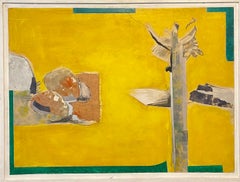
"Cronus Asleep in the Cave" David Hare, Large Abstract Surrealist Composition
By David Hare
Located in New York, NY
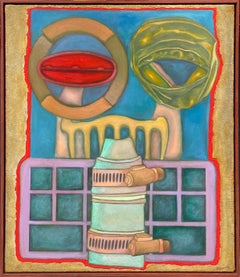
David Hare Cronus Asleep in the Cave, 1971 Acrylic on linen 55 x 67 inches “Freedom is what we want,” David Hare boldly stated in 1965, but then he added the caveat, “and what we are most afraid of.” No one could accuse David Hare of possessing such fear. Blithely unconcerned with the critics’ judgments, Hare flitted through most of the major art developments of the mid-twentieth century in the United States. He changed mediums several times; just when his fame as a sculptor had reached its apogee about 1960, he switched over to painting. Yet he remained attached to surrealism long after it had fallen out of official favor. “I can’t change what I do in order to fit what would make me popular,” he said. “Not because of moral reasons, but just because I can’t do it; I’m not interested in it.” Hare was born in New York City in 1917; his family was both wealthy and familiar with the world of modern art. Meredith (1870-1932), his father, was a prominent corporate attorney. His mother, Elizabeth Sage Goodwin (1878-1948) was an art collector, a financial backer of the 1913 Armory Show, and a friend of artists such as Constantin Brancusi, Walt Kuhn, and Marcel Duchamp. In the 1920s, the entire family moved to Santa Fe, New Mexico and later to Colorado Springs, in the hope that the change in altitude and climate would help to heal Meredith’s tuberculosis. In Colorado Springs, Elizabeth founded the Fountain Valley School where David attended high school after his father died in 1932. In the western United States, Hare developed a fascination for kachina dolls and other aspects of Native American culture that would become a recurring source of inspiration in his career. After high school, Hare briefly attended Bard College (1936-37) in Annandale-on-Hudson. At a loss as to what to do next, he parlayed his mother’s contacts into opening a commercial photography studio and began dabbling in color photography, still a rarity at the time [Kodachrome was introduced in 1935]. At age 22, Hare had his first solo exhibition at Walker Gallery in New York City; his 30 color photographs included one of President Franklin Roosevelt. As a photographer, Hare experimented with an automatist technique called “heatage” (or “melted negatives”) in which he heated the negative in order to distort the image. Hare described them as “antagonisms of matter.” The final products were usually abstractions tending towards surrealism and similar to processes used by Man Ray, Raoul Ubac, and Wolfgang Paalen. In 1940, Hare moved to Roxbury, CT, where he fraternized with neighboring artists such as Alexander Calder and Arshile Gorky, as well as Yves Tanguy who was married to Hare’s cousin Kay Sage, and the art dealer Julian Levy. The same year, Hare received a commission from the American Museum of Natural History to document the Pueblo Indians. He traveled to Santa Fe and, for several months, he took portrait photographs of members of the Hopi, Navajo, and Zuni tribes that were published in book form in 1941. World War II turned Hare’s life upside down. He became a conduit in the exchange of artistic and intellectual ideas between U.S. artists and the surrealist émigrés fleeing Europe. In 1942, Hare befriended Andre Breton, the principal theorist of surrealism. When Breton wanted to publish a magazine to promote the movement in the United States, he could not serve as an editor because he was a foreign national. Instead, Breton selected Hare to edit the journal, entitled VVV [shorth for “Victory, Victory, Victory”], which ran for four issues (the second and third issues were printed as a single volume) from June 1942 to February 1944. Each edition of VVV focused on “poetry, plastic arts, anthropology, sociology, (and) psychology,” and was extensively illustrated by surrealist artists including Giorgio de Chirico, Roberto Matta, and Yves Tanguy; Max Ernst and Marcel Duchamp served as editorial advisors. At the suggestion of Jacqueline Lamba...
Category

1970s David Hare Art

Materials

Linen, Acrylic

"Cronus Hunting" David Hare, Surrealist Abstract Mythological Composition
By David Hare
Located in New York, NY
David Hare Cronus Hunting, 1967 Acrylic and paper collage on linen 68 x 53 inches “Freedom is what we want,” David Hare boldly stated in 1965, but then he added the caveat, “and wha...
Category

1960s David Hare Art

Materials

Linen, Paper, Acrylic

"Cronus Elephant" David Hare, Surrealist Abstract Composition Painting
By David Hare
Located in New York, NY
David Hare Cronus Elephant, 1975 Acrylic on linen 82 x 60 inches “Freedom is what we want,” David Hare boldly stated in 1965, but then he added the caveat, “and what we are most afr...
Category

1970s Abstract David Hare Art

Materials

Linen, Acrylic

"Erotic #1 (Cronus Sex)" David Hare, Surrealist Abstract Composition
By David Hare
Located in New York, NY
David Hare Erotic #1 (Cronus Sex), 1970 Acrylic and paper collage on linen 68 x 51 inches “Freedom is what we want,” David Hare boldly stated in 1965, but then he added the caveat, ...
Category

1970s Abstract David Hare Art

Materials

Linen, Paper, Acrylic

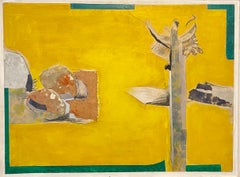
"Cronus Asleep in the Cave" David Hare, Mythological Surrealist Composition
By David Hare
Located in New York, NY
David Hare Cronus Asleep in the Cave, 1971 Acrylic on board 27 1/2 x 38 1/4 inches “Freedom is what we want,” David Hare boldly stated in 1965, but then he added the caveat, “and what we are most afraid of.” No one could accuse David Hare of possessing such fear. Blithely unconcerned with the critics’ judgments, Hare flitted through most of the major art developments of the mid-twentieth century in the United States. He changed mediums several times; just when his fame as a sculptor had reached its apogee about 1960, he switched over to painting. Yet he remained attached to surrealism long after it had fallen out of official favor. “I can’t change what I do in order to fit what would make me popular,” he said. “Not because of moral reasons, but just because I can’t do it; I’m not interested in it.” Hare was born in New York City in 1917; his family was both wealthy and familiar with the world of modern art. Meredith (1870-1932), his father, was a prominent corporate attorney. His mother, Elizabeth Sage Goodwin (1878-1948) was an art collector, a financial backer of the 1913 Armory Show, and a friend of artists such as Constantin Brancusi, Walt Kuhn, and Marcel Duchamp. In the 1920s, the entire family moved to Santa Fe, New Mexico and later to Colorado Springs, in the hope that the change in altitude and climate would help to heal Meredith’s tuberculosis. In Colorado Springs, Elizabeth founded the Fountain Valley School where David attended high school after his father died in 1932. In the western United States, Hare developed a fascination for kachina dolls and other aspects of Native American culture that would become a recurring source of inspiration in his career. After high school, Hare briefly attended Bard College (1936-37) in Annandale-on-Hudson. At a loss as to what to do next, he parlayed his mother’s contacts into opening a commercial photography studio and began dabbling in color photography, still a rarity at the time [Kodachrome was introduced in 1935]. At age 22, Hare had his first solo exhibition at Walker Gallery in New York City; his 30 color photographs included one of President Franklin Roosevelt. As a photographer, Hare experimented with an automatist technique called “heatage” (or “melted negatives”) in which he heated the negative in order to distort the image. Hare described them as “antagonisms of matter.” The final products were usually abstractions tending towards surrealism and similar to processes used by Man Ray, Raoul Ubac, and Wolfgang Paalen. In 1940, Hare moved to Roxbury, CT, where he fraternized with neighboring artists such as Alexander Calder and Arshile Gorky, as well as Yves Tanguy who was married to Hare’s cousin Kay Sage, and the art dealer Julian Levy. The same year, Hare received a commission from the American Museum of Natural History to document the Pueblo Indians. He traveled to Santa Fe and, for several months, he took portrait photographs of members of the Hopi, Navajo, and Zuni tribes that were published in book form in 1941. World War II turned Hare’s life upside down. He became a conduit in the exchange of artistic and intellectual ideas between U.S. artists and the surrealist émigrés fleeing Europe. In 1942, Hare befriended Andre Breton, the principal theorist of surrealism. When Breton wanted to publish a magazine to promote the movement in the United States, he could not serve as an editor because he was a foreign national. Instead, Breton selected Hare to edit the journal, entitled VVV [shorth for “Victory, Victory, Victory”], which ran for four issues (the second and third issues were printed as a single volume) from June 1942 to February 1944. Each edition of VVV focused on “poetry, plastic arts, anthropology, sociology, (and) psychology,” and was extensively illustrated by surrealist artists including Giorgio de Chirico, Roberto Matta, and Yves Tanguy; Max Ernst and Marcel Duchamp served as editorial advisors. At the suggestion of Jacqueline Lamba...
Category

1970s Abstract David Hare Art

Materials

Acrylic

"Cronus Descending" David Hare, Mythological Abstract Surrealist Painting
By David Hare
Located in New York, NY
David Hare Cronus Descending, 1971 Acrylic on linen 64 x 46 inches “Freedom is what we want,” David Hare boldly stated in 1965, but then he added the caveat, “and what we are most ...
Category

1970s Abstract David Hare Art

Materials

Linen, Acrylic

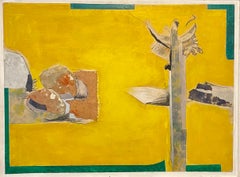
1970 Mod Surrealist Painting Collage David Hare Abstract Landscape Summer Land
By David Hare
Located in Surfside, FL
David Hare Summer Land, 1970 Acrylic or oil paint and collage on board Dimensions: 26 X 36 inches. Framed measuring 29 x 38 inches. Hand signed, dated and titled on tape to verso 'Summer Land 1970 Hare'. Provenance: Hamilton Gallery of Contemporary Art, New York David Hare (1917 – 1992) was an American artist, associated with the Surrealist movement. He is primarily known for his sculpture, though he also worked extensively in photography and oil painting. The VVV Surrealism Magazine was first published and edited by Hare in 1942. Born March 10, 1917 in New York City, New York to father Meredith Hare, a lawyer and mother Elizabeth Sage Goodwin, an art collector. In the 1920s the family moved first to Santa Fe, New Mexico and later to Colorado Springs, Colorado, in hope that the fresh air would help heal Meredith Hare's tuberculosis. His mother founded the Fountain Valley School, where David attended high school. After high school Hare married and moved to Roxbury, Connecticut where he worked as a color photographer. He attended Bard College in Annandale-on-Hudson from 1936 to 1937, studying biology and chemistry. In the late 1930s, with no previous artistic training, he began to experiment with color photography. Using his previous education in chemistry Hare developed an automatist technique called "heatage" in which he heated the unfixed negative from an 8 by 10-inch plate, causing the image to ripple and distort. Hare's Surrealist experiments in photography were only one of his many projects. In 1938 he met Susanna Winslow Wilson and the couple soon married. Both David and Susanna pursued their interests in Surrealism and regularly attended Surrealist gatherings in New York Larre French restaurant on 56th street and at Breton's Greenwich Village apartment. In 1940 he received a commission from the American Museum of Natural History to document the Pueblo Indians of the American Southwest, for which he eventually produced 20 prints developed using Eastman Kodak's then-new dye transfer process (a time-consuming and complicated technique). In the same year, he also opened his own commercial photography studio in New York City and exhibited his photographs in a solo show at the Julien Levy Gallery. In the next few years, through his cousin the painter Kay Sage, he came into contact with a number of Surrealist artists who had fled their native Europe because of World War II. Hare became closely involved with the émigré Surrealist movement and collaborated closely with them on projects such as the Surrealist journal VVV, which he co founded and edited from 1941 to 1944 with André Breton, Max Ernst, and Marcel Duchamp. With numerous illustrations by Breton, Leonora Carrington, Marc Chagall, Roberto Matta, Giorgio de Chirico, MarcelDuchamp, Max Ernst, Andre Masson, Joan Miro, Enrico Donati, Dorothea Tanning, and others. Published in only four issues between 1942-44, VVV was an experimental New York-based magazine devoted to the dissemination of Surrealism. Edited by David Hare, the short-lived magazine featured contributions from some of the leading avant-garde artists of the period. David and Susanna divorce in 1945 and Breton’s wife Jacqueline Lamba...
Category

1970s Surrealist David Hare Art

Materials

Acrylic, Board

"Cronus Waiting" David Hare, Black and White Surrealist Composition
By David Hare
Located in New York, NY
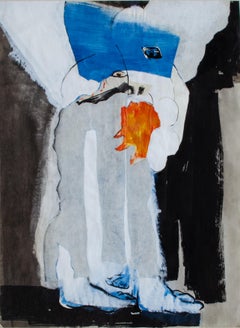
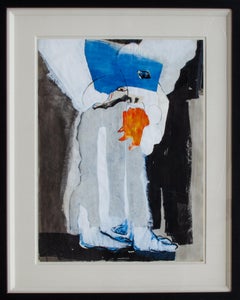
David Hare Cronus Waiting, 1990 Ink and Wash on Paper on Board 34 x 25 1/4 inches “Freedom is what we want,” David Hare boldly stated in 1965, but then he added the caveat, “and what we are most afraid of.” No one could accuse David Hare of possessing such fear. Blithely unconcerned with the critics’ judgments, Hare flitted through most of the major art developments of the mid-twentieth century in the United States. He changed mediums several times; just when his fame as a sculptor had reached its apogee about 1960, he switched over to painting. Yet he remained attached to surrealism long after it had fallen out of official favor. “I can’t change what I do in order to fit what would make me popular,” he said. “Not because of moral reasons, but just because I can’t do it; I’m not interested in it.” Hare was born in New York City in 1917; his family was both wealthy and familiar with the world of modern art. Meredith (1870-1932), his father, was a prominent corporate attorney. His mother, Elizabeth Sage Goodwin (1878-1948) was an art collector, a financial backer of the 1913 Armory Show, and a friend of artists such as Constantin Brancusi, Walt Kuhn, and Marcel Duchamp. In the 1920s, the entire family moved to Santa Fe, New Mexico and later to Colorado Springs, in the hope that the change in altitude and climate would help to heal Meredith’s tuberculosis. In Colorado Springs, Elizabeth founded the Fountain Valley School where David attended high school after his father died in 1932. In the western United States, Hare developed a fascination for kachina dolls and other aspects of Native American culture that would become a recurring source of inspiration in his career. After high school, Hare briefly attended Bard College (1936-37) in Annandale-on-Hudson. At a loss as to what to do next, he parlayed his mother’s contacts into opening a commercial photography studio and began dabbling in color photography, still a rarity at the time [Kodachrome was introduced in 1935]. At age 22, Hare had his first solo exhibition at Walker Gallery in New York City; his 30 color photographs included one of President Franklin Roosevelt. As a photographer, Hare experimented with an automatist technique called “heatage” (or “melted negatives”) in which he heated the negative in order to distort the image. Hare described them as “antagonisms of matter.” The final products were usually abstractions tending towards surrealism and similar to processes used by Man Ray, Raoul Ubac, and Wolfgang Paalen. In 1940, Hare moved to Roxbury, CT, where he fraternized with neighboring artists such as Alexander Calder and Arshile Gorky, as well as Yves Tanguy who was married to Hare’s cousin Kay Sage, and the art dealer Julian Levy. The same year, Hare received a commission from the American Museum of Natural History to document the Pueblo Indians. He traveled to Santa Fe and, for several months, he took portrait photographs of members of the Hopi, Navajo, and Zuni tribes that were published in book form in 1941. World War II turned Hare’s life upside down. He became a conduit in the exchange of artistic and intellectual ideas between U.S. artists and the surrealist émigrés fleeing Europe. In 1942, Hare befriended Andre Breton, the principal theorist of surrealism. When Breton wanted to publish a magazine to promote the movement in the United States, he could not serve as an editor because he was a foreign national. Instead, Breton selected Hare to edit the journal, entitled VVV [shorth for “Victory, Victory, Victory”], which ran for four issues (the second and third issues were printed as a single volume) from June 1942 to February 1944. Each edition of VVV focused on “poetry, plastic arts, anthropology, sociology, (and) psychology,” and was extensively illustrated by surrealist artists including Giorgio de Chirico, Roberto Matta, and Yves Tanguy; Max Ernst and Marcel Duchamp served as editorial advisors. At the suggestion of Jacqueline Lamba...
Category

1990s Abstract David Hare Art

Materials

Paper, Ink, Board

"Cronus View from the Cave" David Hare, Abstract Surrealist Composition
By David Hare
Located in New York, NY
David Hare Cronus View from the Cave, 1971 Graphite, Ink wash, Paper Collage on Paper on Board 25 x 33 inches “Freedom is what we want,” David Hare boldly stated in 1965, but then he added the caveat, “and what we are most afraid of.” No one could accuse David Hare of possessing such fear. Blithely unconcerned with the critics’ judgments, Hare flitted through most of the major art developments of the mid-twentieth century in the United States. He changed mediums several times; just when his fame as a sculptor had reached its apogee about 1960, he switched over to painting. Yet he remained attached to surrealism long after it had fallen out of official favor. “I can’t change what I do in order to fit what would make me popular,” he said. “Not because of moral reasons, but just because I can’t do it; I’m not interested in it.” Hare was born in New York City in 1917; his family was both wealthy and familiar with the world of modern art. Meredith (1870-1932), his father, was a prominent corporate attorney. His mother, Elizabeth Sage Goodwin (1878-1948) was an art collector, a financial backer of the 1913 Armory Show, and a friend of artists such as Constantin Brancusi, Walt Kuhn, and Marcel Duchamp. In the 1920s, the entire family moved to Santa Fe, New Mexico and later to Colorado Springs, in the hope that the change in altitude and climate would help to heal Meredith’s tuberculosis. In Colorado Springs, Elizabeth founded the Fountain Valley School where David attended high school after his father died in 1932. In the western United States, Hare developed a fascination for kachina dolls and other aspects of Native American culture that would become a recurring source of inspiration in his career. After high school, Hare briefly attended Bard College (1936-37) in Annandale-on-Hudson. At a loss as to what to do next, he parlayed his mother’s contacts into opening a commercial photography studio and began dabbling in color photography, still a rarity at the time [Kodachrome was introduced in 1935]. At age 22, Hare had his first solo exhibition at Walker Gallery in New York City; his 30 color photographs included one of President Franklin Roosevelt. As a photographer, Hare experimented with an automatist technique called “heatage” (or “melted negatives”) in which he heated the negative in order to distort the image. Hare described them as “antagonisms of matter.” The final products were usually abstractions tending towards surrealism and similar to processes used by Man Ray, Raoul Ubac, and Wolfgang Paalen. In 1940, Hare moved to Roxbury, CT, where he fraternized with neighboring artists such as Alexander Calder and Arshile Gorky, as well as Yves Tanguy who was married to Hare’s cousin Kay Sage, and the art dealer Julian Levy. The same year, Hare received a commission from the American Museum of Natural History to document the Pueblo Indians. He traveled to Santa Fe and, for several months, he took portrait photographs of members of the Hopi, Navajo, and Zuni tribes that were published in book form in 1941. World War II turned Hare’s life upside down. He became a conduit in the exchange of artistic and intellectual ideas between U.S. artists and the surrealist émigrés fleeing Europe. In 1942, Hare befriended Andre Breton, the principal theorist of surrealism. When Breton wanted to publish a magazine to promote the movement in the United States, he could not serve as an editor because he was a foreign national. Instead, Breton selected Hare to edit the journal, entitled VVV [shorth for “Victory, Victory, Victory”], which ran for four issues (the second and third issues were printed as a single volume) from June 1942 to February 1944. Each edition of VVV focused on “poetry, plastic arts, anthropology, sociology, (and) psychology,” and was extensively illustrated by surrealist artists including Giorgio de Chirico, Roberto Matta, and Yves Tanguy; Max Ernst and Marcel Duchamp served as editorial advisors. At the suggestion of Jacqueline Lamba...
Category

1970s Abstract David Hare Art

Materials

Paper, Ink, Graphite

"Cronus Waiting" David Hare, Mythological Allegory Surrealist Scene
By David Hare
Located in New York, NY
David Hare Cronus Waiting, 1990 Acrylic on linen 72 x 42 inches “Freedom is what we want,” David Hare boldly stated in 1965, but then he added the caveat, “and what we are most afraid of.” No one could accuse David Hare of possessing such fear. Blithely unconcerned with the critics’ judgments, Hare flitted through most of the major art developments of the mid-twentieth century in the United States. He changed mediums several times; just when his fame as a sculptor had reached its apogee about 1960, he switched over to painting. Yet he remained attached to surrealism long after it had fallen out of official favor. “I can’t change what I do in order to fit what would make me popular,” he said. “Not because of moral reasons, but just because I can’t do it; I’m not interested in it.” Hare was born in New York City in 1917; his family was both wealthy and familiar with the world of modern art. Meredith (1870-1932), his father, was a prominent corporate attorney. His mother, Elizabeth Sage Goodwin (1878-1948) was an art collector, a financial backer of the 1913 Armory Show, and a friend of artists such as Constantin Brancusi, Walt Kuhn, and Marcel Duchamp. In the 1920s, the entire family moved to Santa Fe, New Mexico and later to Colorado Springs, in the hope that the change in altitude and climate would help to heal Meredith’s tuberculosis. In Colorado Springs, Elizabeth founded the Fountain Valley School where David attended high school after his father died in 1932. In the western United States, Hare developed a fascination for kachina dolls and other aspects of Native American culture that would become a recurring source of inspiration in his career. After high school, Hare briefly attended Bard College (1936-37) in Annandale-on-Hudson. At a loss as to what to do next, he parlayed his mother’s contacts into opening a commercial photography studio and began dabbling in color photography, still a rarity at the time [Kodachrome was introduced in 1935]. At age 22, Hare had his first solo exhibition at Walker Gallery in New York City; his 30 color photographs included one of President Franklin Roosevelt. As a photographer, Hare experimented with an automatist technique called “heatage” (or “melted negatives”) in which he heated the negative in order to distort the image. Hare described them as “antagonisms of matter.” The final products were usually abstractions tending towards surrealism and similar to processes used by Man Ray, Raoul Ubac, and Wolfgang Paalen. In 1940, Hare moved to Roxbury, CT, where he fraternized with neighboring artists such as Alexander Calder and Arshile Gorky, as well as Yves Tanguy who was married to Hare’s cousin Kay Sage, and the art dealer Julian Levy. The same year, Hare received a commission from the American Museum of Natural History to document the Pueblo Indians. He traveled to Santa Fe and, for several months, he took portrait photographs of members of the Hopi, Navajo, and Zuni tribes that were published in book form in 1941. World War II turned Hare’s life upside down. He became a conduit in the exchange of artistic and intellectual ideas between U.S. artists and the surrealist émigrés fleeing Europe. In 1942, Hare befriended Andre Breton, the principal theorist of surrealism. When Breton wanted to publish a magazine to promote the movement in the United States, he could not serve as an editor because he was a foreign national. Instead, Breton selected Hare to edit the journal, entitled VVV [shorth for “Victory, Victory, Victory”], which ran for four issues (the second and third issues were printed as a single volume) from June 1942 to February 1944. Each edition of VVV focused on “poetry, plastic arts, anthropology, sociology, (and) psychology,” and was extensively illustrated by surrealist artists including Giorgio de Chirico, Roberto Matta, and Yves Tanguy; Max Ernst and Marcel Duchamp served as editorial advisors. At the suggestion of Jacqueline Lamba...
Category

1990s Abstract David Hare Art

Materials

Linen, Acrylic

"Cronus Asleep in the Cave" David Hare, Surrealist Mythological Allegory
By David Hare
Located in New York, NY
David Hare Cronus Asleep in the Cave, 1991 Acrylic on paper on board 26 X 34 1/4 inches “Freedom is what we want,” David Hare boldly stated in 1965, but then he added the caveat, “and what we are most afraid of.” No one could accuse David Hare of possessing such fear. Blithely unconcerned with the critics’ judgments, Hare flitted through most of the major art developments of the mid-twentieth century in the United States. He changed mediums several times; just when his fame as a sculptor had reached its apogee about 1960, he switched over to painting. Yet he remained attached to surrealism long after it had fallen out of official favor. “I can’t change what I do in order to fit what would make me popular,” he said. “Not because of moral reasons, but just because I can’t do it; I’m not interested in it.” Hare was born in New York City in 1917; his family was both wealthy and familiar with the world of modern art. Meredith (1870-1932), his father, was a prominent corporate attorney. His mother, Elizabeth Sage Goodwin (1878-1948) was an art collector, a financial backer of the 1913 Armory Show, and a friend of artists such as Constantin Brancusi, Walt Kuhn, and Marcel Duchamp. In the 1920s, the entire family moved to Santa Fe, New Mexico and later to Colorado Springs, in the hope that the change in altitude and climate would help to heal Meredith’s tuberculosis. In Colorado Springs, Elizabeth founded the Fountain Valley School where David attended high school after his father died in 1932. In the western United States, Hare developed a fascination for kachina dolls and other aspects of Native American culture that would become a recurring source of inspiration in his career. After high school, Hare briefly attended Bard College (1936-37) in Annandale-on-Hudson. At a loss as to what to do next, he parlayed his mother’s contacts into opening a commercial photography studio and began dabbling in color photography, still a rarity at the time [Kodachrome was introduced in 1935]. At age 22, Hare had his first solo exhibition at Walker Gallery in New York City; his 30 color photographs included one of President Franklin Roosevelt. As a photographer, Hare experimented with an automatist technique called “heatage” (or “melted negatives”) in which he heated the negative in order to distort the image. Hare described them as “antagonisms of matter.” The final products were usually abstractions tending towards surrealism and similar to processes used by Man Ray, Raoul Ubac, and Wolfgang Paalen. In 1940, Hare moved to Roxbury, CT, where he fraternized with neighboring artists such as Alexander Calder and Arshile Gorky, as well as Yves Tanguy who was married to Hare’s cousin Kay Sage, and the art dealer Julian Levy. The same year, Hare received a commission from the American Museum of Natural History to document the Pueblo Indians. He traveled to Santa Fe and, for several months, he took portrait photographs of members of the Hopi, Navajo, and Zuni tribes that were published in book form in 1941. World War II turned Hare’s life upside down. He became a conduit in the exchange of artistic and intellectual ideas between U.S. artists and the surrealist émigrés fleeing Europe. In 1942, Hare befriended Andre Breton, the principal theorist of surrealism. When Breton wanted to publish a magazine to promote the movement in the United States, he could not serve as an editor because he was a foreign national. Instead, Breton selected Hare to edit the journal, entitled VVV [shorth for “Victory, Victory, Victory”], which ran for four issues (the second and third issues were printed as a single volume) from June 1942 to February 1944. Each edition of VVV focused on “poetry, plastic arts, anthropology, sociology, (and) psychology,” and was extensively illustrated by surrealist artists including Giorgio de Chirico, Roberto Matta, and Yves Tanguy; Max Ernst and Marcel Duchamp served as editorial advisors. At the suggestion of Jacqueline Lamba...
Category

1990s Abstract David Hare Art

Materials

Paper, Acrylic, Board

"Cronus Dining" David Hare, Yellow & White Mythological Surrealist Composition
By David Hare
Located in New York, NY
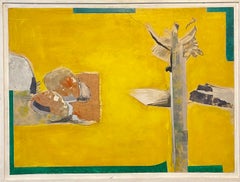
David Hare Cronus Dining, 1968 Graphite, acrylic, paper collage on board 44 x 34 inches “Freedom is what we want,” David Hare boldly stated in 1965, but then he added the caveat, “and what we are most afraid of.” No one could accuse David Hare of possessing such fear. Blithely unconcerned with the critics’ judgments, Hare flitted through most of the major art developments of the mid-twentieth century in the United States. He changed mediums several times; just when his fame as a sculptor had reached its apogee about 1960, he switched over to painting. Yet he remained attached to surrealism long after it had fallen out of official favor. “I can’t change what I do in order to fit what would make me popular,” he said. “Not because of moral reasons, but just because I can’t do it; I’m not interested in it.” Hare was born in New York City in 1917; his family was both wealthy and familiar with the world of modern art. Meredith (1870-1932), his father, was a prominent corporate attorney. His mother, Elizabeth Sage Goodwin (1878-1948) was an art collector, a financial backer of the 1913 Armory Show, and a friend of artists such as Constantin Brancusi, Walt Kuhn, and Marcel Duchamp. In the 1920s, the entire family moved to Santa Fe, New Mexico and later to Colorado Springs, in the hope that the change in altitude and climate would help to heal Meredith’s tuberculosis. In Colorado Springs, Elizabeth founded the Fountain Valley School where David attended high school after his father died in 1932. In the western United States, Hare developed a fascination for kachina dolls and other aspects of Native American culture that would become a recurring source of inspiration in his career. After high school, Hare briefly attended Bard College (1936-37) in Annandale-on-Hudson. At a loss as to what to do next, he parlayed his mother’s contacts into opening a commercial photography studio and began dabbling in color photography, still a rarity at the time [Kodachrome was introduced in 1935]. At age 22, Hare had his first solo exhibition at Walker Gallery in New York City; his 30 color photographs included one of President Franklin Roosevelt. As a photographer, Hare experimented with an automatist technique called “heatage” (or “melted negatives”) in which he heated the negative in order to distort the image. Hare described them as “antagonisms of matter.” The final products were usually abstractions tending towards surrealism and similar to processes used by Man Ray, Raoul Ubac, and Wolfgang Paalen. In 1940, Hare moved to Roxbury, CT, where he fraternized with neighboring artists such as Alexander Calder and Arshile Gorky, as well as Yves Tanguy who was married to Hare’s cousin Kay Sage, and the art dealer Julian Levy. The same year, Hare received a commission from the American Museum of Natural History to document the Pueblo Indians. He traveled to Santa Fe and, for several months, he took portrait photographs of members of the Hopi, Navajo, and Zuni tribes that were published in book form in 1941. World War II turned Hare’s life upside down. He became a conduit in the exchange of artistic and intellectual ideas between U.S. artists and the surrealist émigrés fleeing Europe. In 1942, Hare befriended Andre Breton, the principal theorist of surrealism. When Breton wanted to publish a magazine to promote the movement in the United States, he could not serve as an editor because he was a foreign national. Instead, Breton selected Hare to edit the journal, entitled VVV [shorth for “Victory, Victory, Victory”], which ran for four issues (the second and third issues were printed as a single volume) from June 1942 to February 1944. Each edition of VVV focused on “poetry, plastic arts, anthropology, sociology, (and) psychology,” and was extensively illustrated by surrealist artists including Giorgio de Chirico, Roberto Matta, and Yves Tanguy; Max Ernst and Marcel Duchamp served as editorial advisors. At the suggestion of Jacqueline Lamba...
Category

1960s Abstract David Hare Art

Materials

Paper, Acrylic, Graphite

"Cronus Asleep in the Cave" David Hare, Surrealist Mythological Composition
By David Hare
Located in New York, NY
David Hare Cronus Asleep in the Cave, 1971 Acrylic, ink wash, graphite, paper collage on paper on board 26 x 35 inches “Freedom is what we want,” David Hare boldly stated in 1965, b...
Category

1970s Abstract David Hare Art

Materials

Acrylic, Paper, Ink, Graphite

Related Items
The Secret Garden (Abstract Contemporary Painting, Framed)
By G. Campbell Lyman
Located in New Orleans, LA
(Comes professionally framed in a solid maple floater frame, ready to hang) Artist's Statement "This series of intensely colorful paintings was begun a couple of years back in reaction to the gray oppressive weight that had descended like a pall on the American scene. I wanted to make paintings about nothing but pure delight, in honor of the fact that beneath the fog of germs and political antagonism, we still eat, laugh, love and if we're wise, acknowledge how spectacularly fortunate we are -- at least for now, in this time and place, despite the problems. For me, the colors, forms and brushstrokes here feel exuberant without suggesting an unnerving chaos. I have purposely used unlikely color combinations that despite their dissonance seem to work together. I don't feel this is a time to be making brooding works that reflect the problems we are working our way through; we all know about this. On the contrary, I think it's a time for art...
Category

2010s Abstract Expressionist David Hare Art

Materials

Lacquer, Charcoal, House Paint, Oil, Acrylic

"Geostructure II" Abstract, Geometric, Colors, Primary Shapes, Acrylic
By Franklin Jonas
Located in Detroit, MI
"Geostructure II" is an intensely colorful painting of the primary shapes of the circle, square, and triangle. Though the shapes are repetitive their mixed juxtapositions and the creative use of color moves the eye around the canvas with constant interest. This painting is an extraordinary example of Franklin Jonas...
Category

1990s Abstract Geometric David Hare Art

Materials

Acrylic, Linen

Turbulence, water, abstract expressionism, blue, white, gold, yellow, nature
Located in Jönköping, SE
In keeping with my passion of nature, this collection focusses on the movement and structure of nature. Movement of water, vegetation and even sound. I am fascinated in seeing thing...
Category

2010s Abstract David Hare Art

Materials

Linen, Acrylic

"Large Gridish #14" - Contemporary Multimedia Abstract Painting
By G. Campbell Lyman
Located in New Orleans, LA
(NOTE: if you enter "Gridish" into the 1stDibs search field you can view other paintings in this series) Artist’s Statement: “As I often do, I chose a very simple form to work with ...
Category

2010s Abstract David Hare Art

Materials

Charcoal, House Paint, Acrylic

"Geostructure X" Abstract, Colors, Geometric, Primary Shapes, Acrylic
By Franklin Jonas
Located in Detroit, MI
"Geostructure X" is an intensely colorful painting of the primary shapes of the circle, square, and triangle. Though the shapes are repetitive their mixed juxtapositions and the creative use of color moves the eye around the canvas with constant interest. This painting is an extraordinary example of Franklin Jonas...
Category

1990s Abstract Geometric David Hare Art

Materials

Linen, Acrylic

"Geostructure VI" Abstract, Graphic, Colors, Geometric, Primary Shapes, Acrylic
By Franklin Jonas
Located in Detroit, MI
"Geostructure VI" is an intensely colorful painting of the primary shapes of the circle, square, and triangle. Though the shapes are repetitive their mixed juxtapositions and the creative use of color moves the eye around the canvas with constant interest. This painting is an extraordinary example of Franklin Jonas...
Category

1990s Abstract Geometric David Hare Art

Materials

Linen, Acrylic

Contemporary New Abstract Lines Artwork Colors Artist Christina Gschwantner
Located in Barcelona, Barcelona
At Escat Gallery we are committed to maintaining the highest standards of trust and professionalism for our collectors. Every artwork in our collection comes with a Certificate of Au...
Category

2010s Abstract David Hare Art

Materials

Raw Linen, Oil, Acrylic

Tjintjintjin
By Walangkura Napanangka
Located in Miami, FL
As one of the last generation to remember a childhood lived in the desert hunting and gathering with her family, Walangkura Napanangka's paintings recall the stories of country and the location of specific sites in her traditional homeland west of the salt lake of Karrkurutinjinya (Lake Macdonald). Born around 1946, at Tjitururrnga west of Kintore, in the remote and arid country between the Northern Territory and Western Australia, she lived with her father Rantji Tjapangati and mother Inyuwa Nampitjinpa and later, while still a teenager, travelled by foot with her family over the hundreds of kilometres from their remote desert home eventually joining Uta Uta Tjangala's group as they walked in to the settlements of Haasts Bluff and then Papunya. The lure of settlement life with its promise of plentiful food and water belied the harsh conversion they would make to an alien lifestyle with its many problems and unfamiliar demands. The upheaval however, was ameliorated to some degree by the proximity of her immediate family including her mother Inyuwa, adoptive father Tutuma Tjapangati, and sister Pirrmangka Napanangka (now deceased) all of whom became artists. Relocated to the community of Kintore in 1981 when the outstation movement began, Walangkura participated in the historic women's collaborative painting project (1994) that was initiated by the older women as a means of re-affirming their own spiritual and ancestral roots. It was a time of specifically female singing, ceremony and painting, away from the gaze of outsiders and men folk. The huge and colourful canvases that emerged from the women's camp were 'alive with the ritual excitement and narrative intensity of the occasion' (Johnson 2000: 197). Within a year, Papunya Tula Artists, now established at Kintore, had taken on many of these women as full-time artists, revitalising the company after the deaths of many of the original 'painting men'. While individual women forged their own stylistic trajectory, these paintings were immediately distinguishable from the men's more cerebral and symmetrical style. They radiated an exuberant and vibrant energy, the felt heart-beat of women's affinity to country and spirit. Walangkura's early works, created from 1996 onward, are characterized by masses of small markings and motifs covering large areas of canvas. Her favorite colour, a deep sandy orange predominates, accentuated against more somber blacks and reds and dusky greens or yellows. More recent works show a gestural quality though still tightly packed with an intensity of geometric line work representing sandhills. In a sense this provides a strong visual and contextual link to the men's linear style as exemplified by the works of George Tjungurrayi...
Category

2010s Contemporary David Hare Art

Materials

Linen, Cotton Canvas, Acrylic

Tjintjintjin
Tjintjintjin
$45,000
H 78.75 in W 118.12 in
"Geostructure IX" Abstract, Geometric, Colors, Primary Shapes, Acrylic
By Franklin Jonas
Located in Detroit, MI
"Geostructure IX" is an intensely colorful painting of the primary shapes of the circle, square, and triangle. Though the shapes are repetitive their mixed juxtapositions and the creative use of color moves the eye around the canvas with constant interest. This painting is an extraordinary example of Franklin Jonas...
Category

1990s Abstract Geometric David Hare Art

Materials

Linen, Acrylic

Contemporary New Abstract Artwork Colors by Artist Christina Gschwantner 2023
Located in Barcelona, Barcelona
In her work, artist Christina Gschwantner combines contrasting art movements such as Art Informel and Minimal Art. She succeeds in depicting and...
Category

2010s Abstract David Hare Art

Materials

Raw Linen, Oil, Acrylic

Contemporary New Abstract Artwork Colors by Artist Christina Gschwantner 2024
Located in Barcelona, Barcelona
Artwork signed on the back. Christina Gschwantner combines contrasting art movements such as Art Informel and Minimal Art. She succeeds in depicting and creating her very own vie...
Category

2010s Abstract David Hare Art

Materials

Raw Linen, Oil, Acrylic

F30 - Geometric Abstract Shaped Painting Apricot Orange Navy Blue Stripes, 2022
By Elizabeth Gourlay
Located in Kent, CT
In this contemporary painting in acrylic on linen mounted on a shaped panel, two vertical blocks of color in dark lapis blue and soft, mottled orange are luminous against thinner neutral sections of exposed linen. Signed, dated and titled on verso. Elizabeth Gourlay’s work is a meditation on color and form, a gradual yet progressive analysis leading to a complex vocabulary of shapes, color and line. Musical composition, emotional states and our collective subconscious resonate within bars, lines and blocks of color. The abstract forms emerge, layer and shift in precisely ordered, carefully composed rhythms. The artist contemplates the elements that make color in reduced forms come to life: size, flatness, relation to its edges, and how the presence of other colors affect how it is perceived. Gourlay draws inspiration from shapes found in everyday life and in her studio. The observed shapes either remain as they are or become simplified to their essential geometric elements. Subtleties in color, area, edge or orientation are the catalyst for emotive responses. Palette is minimized; the artist rarely uses a wide palette within one work. Rather, a broad range of colors are explored and then reduced. Gourlay investigates color properties: complementary or analogous color, value, saturation and color harmony vs. color anomaly. Elizabeth’s Gourlay’s work has been shown extensively throughout the United States. The artist was the recipient of numerous residencies, fellowships and awards including Artist in Residence at the studio of Sol LeWitt in Spoleto, Italy. Gourlay’s work has been written about in The New Criterion, Painters’ Table and Gorky’s Granddaughter, to name a few. Gourlay earned her MFA at Yale University School of Art, New Haven, CT, and her BA from Edinburgh...
Category

2010s Contemporary David Hare Art

Materials

Linen, Acrylic, Panel

Previously Available Items
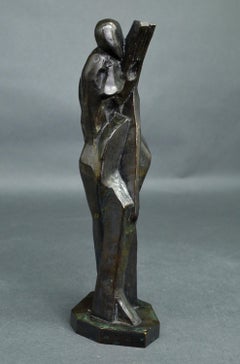
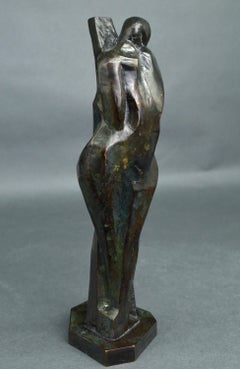
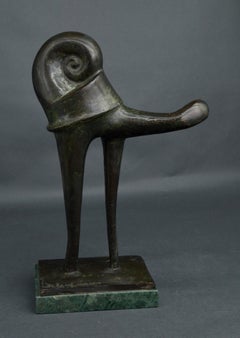
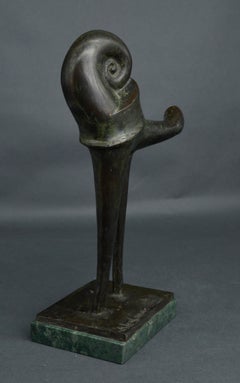
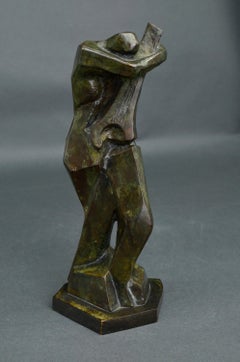
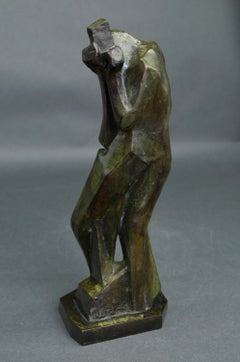
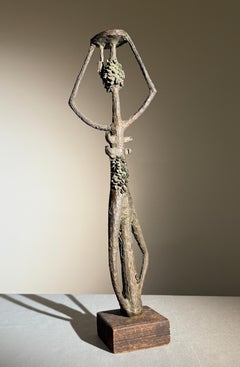
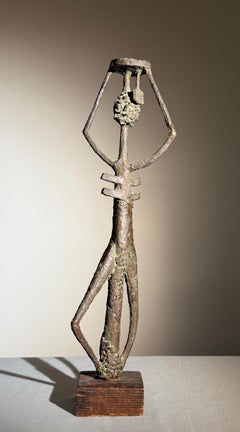
"Untitled" David Hare, Surrealist, Anthropomorphic, Modernist, Ab-Ex Sculpture
By David Hare
Located in New York, NY
David Hare Untitled, circa 1949 Bronze 25 x 8 x 7 inches Provenance Kootz Gallery, New York Collection of Samuel Kootz New York Estate of the above Collection of Dr. Joyce Kootz, Ne...
Category

1940s Surrealist David Hare Art

Materials

Bronze

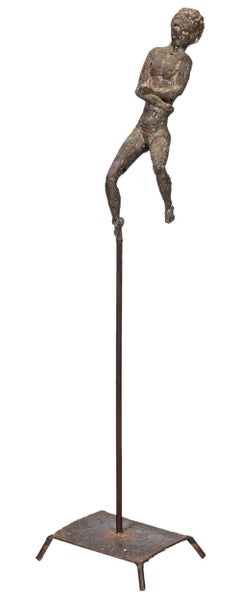
"Dancer" David Hare, Male Nude, Figurative Sculpture, Mid-Century Surrealist
By David Hare
Located in New York, NY
David Hare Dancer, circa 1955 Bronze with integral stand 68 high x 17 wide x 13 1/2 deep inches “Freedom is what we want,” David Hare boldly stated in 1965, but then he added the caveat, “and what we are most afraid of.” No one could accuse David Hare of possessing such fear. Blithely unconcerned with the critics’ judgments, Hare flitted through most of the major art developments of the mid-twentieth century in the United States. He changed mediums several times; just when his fame as a sculptor had reached its apogee about 1960, he switched over to painting. Yet he remained attached to surrealism long after it had fallen out of official favor. “I can’t change what I do in order to fit what would make me popular,” he said. “Not because of moral reasons, but just because I can’t do it; I’m not interested in it.” Hare was born in New York City in 1917; his family was both wealthy and familiar with the world of modern art. Meredith (1870-1932), his father, was a prominent corporate attorney. His mother, Elizabeth Sage Goodwin (1878-1948) was an art collector, a financial backer of the 1913 Armory Show, and a friend of artists such as Constantin Brancusi, Walt Kuhn, and Marcel Duchamp. In the 1920s, the entire family moved to Santa Fe, New Mexico and later to Colorado Springs, in the hope that the change in altitude and climate would help to heal Meredith’s tuberculosis. In Colorado Springs, Elizabeth founded the Fountain Valley School where David attended high school after his father died in 1932. In the western United States, Hare developed a fascination for kachina dolls and other aspects of Native American culture that would become a recurring source of inspiration in his career. After high school, Hare briefly attended Bard College (1936-37) in Annandale-on-Hudson. At a loss as to what to do next, he parlayed his mother’s contacts into opening a commercial photography studio and began dabbling in color photography, still a rarity at the time [Kodachrome was introduced in 1935]. At age 22, Hare had his first solo exhibition at Walker Gallery in New York City; his 30 color photographs included one of President Franklin Roosevelt. As a photographer, Hare experimented with an automatist technique called “heatage” (or “melted negatives”) in which he heated the negative in order to distort the image. Hare described them as “antagonisms of matter.” The final products were usually abstractions tending towards surrealism and similar to processes used by Man Ray, Raoul Ubac, and Wolfgang Paalen. In 1940, Hare moved to Roxbury, CT, where he fraternized with neighboring artists such as Alexander Calder and Arshile Gorky, as well as Yves Tanguy who was married to Hare’s cousin Kay Sage, and the art dealer Julian Levy. The same year, Hare received a commission from the American Museum of Natural History to document the Pueblo Indians. He traveled to Santa Fe and, for several months, he took portrait photographs of members of the Hopi, Navajo, and Zuni tribes that were published in book form in 1941. World War II turned Hare’s life upside down. He became a conduit in the exchange of artistic and intellectual ideas between U.S. artists and the surrealist émigrés fleeing Europe. In 1942, Hare befriended Andre Breton, the principal theorist of surrealism. When Breton wanted to publish a magazine to promote the movement in the United States, he could not serve as an editor because he was a foreign national. Instead, Breton selected Hare to edit the journal, entitled VVV [shorth for “Victory, Victory, Victory”], which ran for four issues (the second and third issues were printed as a single volume) from June 1942 to February 1944. Each edition of VVV focused on “poetry, plastic arts, anthropology, sociology, (and) psychology,” and was extensively illustrated by surrealist artists including Giorgio de Chirico, Roberto Matta, and Yves Tanguy; Max Ernst and Marcel Duchamp served as editorial advisors. At the suggestion of Jacqueline Lamba...
Category

1950s Abstract David Hare Art

Materials

Bronze

"Cronus Dining (Night)" David Hare, Abstract Surrealist Mythological Painting
By David Hare
Located in New York, NY
David Hare Cronus Dining (Night), 1971 Acrylic, ink, paper collage on paper on board 39 1/2 x 29 5/8 inches “Freedom is what we want,” David Hare boldly stated in 1965, but then he ...
Category

1970s Abstract David Hare Art

Materials

Ink, Acrylic, Board

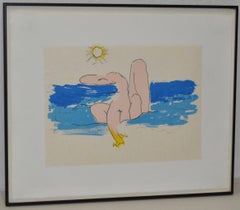
Venus Rising
By David Hare
Located in San Francisco, CA
A rare, five-color lithograph by David Hare (American, 1917-1992) from 1987 titled "Venus Rising" Printed by Lynne D. Allen. Printed with aluminum yellow...
Category

Late 20th Century Abstract David Hare Art

Materials

Lithograph

Venus Rising
Venus Rising
H 19.5 in W 23 in D 2 in

David Hare art for sale on 1stDibs.

Find a wide variety of authentic David Hare art available for sale on 1stDibs. You can also browse by medium to find art by David Hare in acrylic paint, board, lithograph and more. Much of the original work by this artist or collective was created during the 20th century and is mostly associated with the Surrealist style. Not every interior allows for large David Hare art, so small editions measuring 23 inches across are available. Customers who are interested in this artist might also find the work of John Hultberg, Valton Tyler, and Thom Cooney-Crawford. David Hare art prices can differ depending upon medium, time period and other attributes. On 1stDibs, the price for these items starts at $750 and tops out at $8,500, while the average work can sell for $4,625.