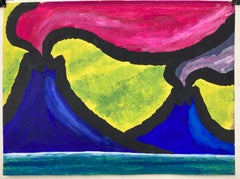
Edward HagedornSURREALIST LANDSCAPE
$3,000Sale Price|33% Off
SURREALIST LANDSCAPE
By Edward Hagedorn
Located in Santa Monica, CA
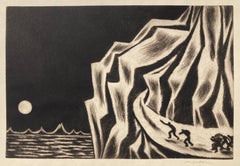
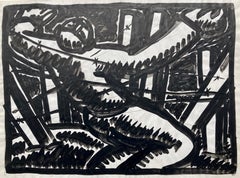
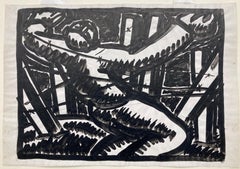
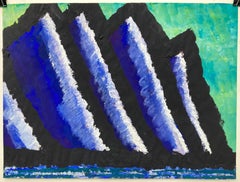
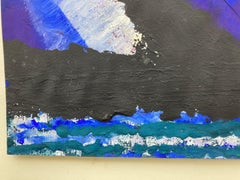
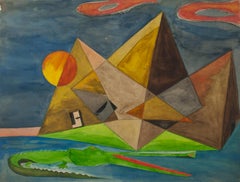
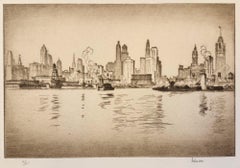
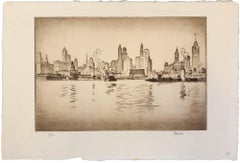
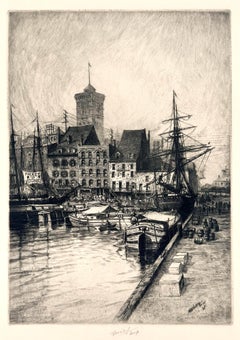
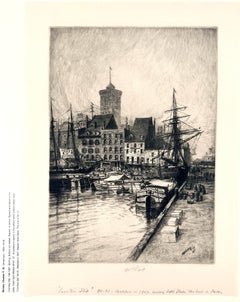
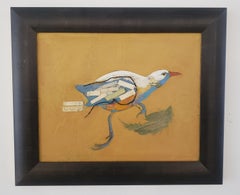
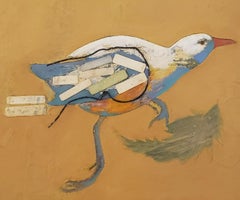
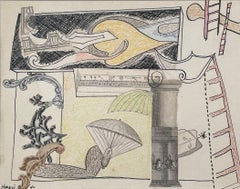
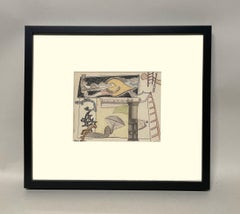
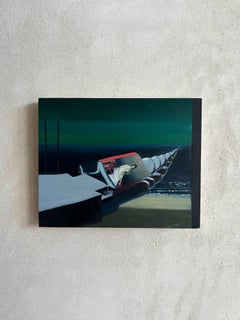
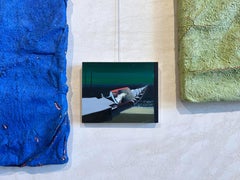
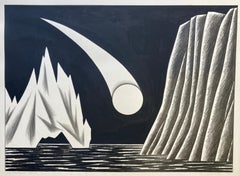
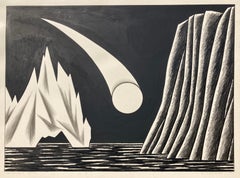
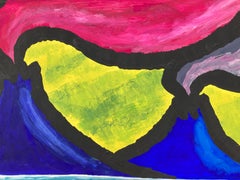
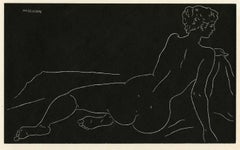
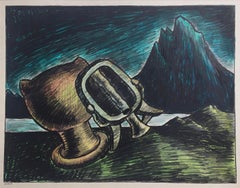
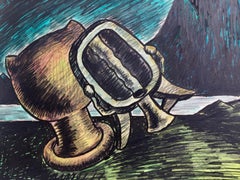
EDWARD HAGEDORN (AMERICAN 1902 – 1982) SURREAL LANDSCAPE 1931 mixed media on paper, Graphite, ink and watercolor. Unsigned. Dtaed 2/26/31, in ink lower left margin. Image 13 3/4 x 16 1/2 inches. On a large sheet 20 x 25 inches. Provenance: Hagedorn estate, Around the mid 1980's The Hagedorn estate was dispersed in Berkeley by a local dealer. This drawing was part of a group of Hagedorn works on paper that I acquired from that dispersal. Much of the balance was later acquired the Struart Denenberg Fine Art. Denenberg published a very fine book on the artist's work. EDWARD HAGEDORN: CALIFORNIA MODERNIST, RESTLESSNESS AND RESTRAINT Hardcover – January 1, 2009 Subsequently Hagedorn's works on paper have been acquired by many museums and some accompanying exhibitions. ALL OF THE COMMENTS BELOW ARE FROM THE FOLLOWING EXHIBITION EDWARD HAGEDORN (1902-1982) American Modernist A New Traveling Exhibition “VOLCANOS, WRECKS, RIOTS, & NUDES”, EDWARD HAGEDORN (1902-1982) premiere at the Danforth Museum. Framingham, MA, in March 2016. The exhibition includes 75 works of art in various mediums and is accompanied by the first monograph devoted to the artist’s work with essays by leading curators, critics, and art historians. Edward Hagedorn was a true Modernist who created a trove of powerful works on paper--drawings, watercolors, oils, and original graphics that reveal the hand of a master draftsman and the mind of an astute political observer. He rejected the general trend in early 20th century California of local landscapes and coastal views, becoming virtually the single voice of Expressionism. He conveyed the darkness and upheaval that gripped the country in the depression years between the two World Wars, 1925- 1935, more forcefully than any of his contemporaries, influenced by German art of the time, engaging in modernist styles of Expressionism and Surrealism. Hagedorn’s skeletons are ferocious yet somehow endearing; printed in deep black ink on off-white paper, they march across Lilliputian landscapes of grim disorder and destruction. Comets and volcanoes explode in fauvist colors, their other-worldly fluorescent temperas framed in black, while nude female figures, executed in exquisitely refined pen and ink, or graphite line drawings, are as economical in their means as Matisse, and can be compared with the neo-classical drawings of Picasso. Among his most lyrical works of the 1920s is a series of rhythmically abstracted watercolor and ink views of Golden Gate Park, evoking the sensual demi-geometries of Balthus, Derain , and early Mondrian. American Modernist Edward Hagedorn (1902-1982) was born in San Francisco of German descent; his mother (née Kafka) died in childbirth, and he was legally adopted and raised by his grandmother and aunt. After attendance at the San Francisco School of Fine Arts in the early 1920s, by age 22 he had a studio in the famed "100" block of Montgomery Street ("the Monkey Block,") then a haven for bohemians. In 1926, a year of tremendous importance in California artists' embrace of modern art, the Oakland Art Gallery, with the guidance and inspiration of their European representative Emmy (Galka) Scheyer, was the first museum in the United States to show the art of the "Blue Four," among the leading artists of International Modernism--Paul Klee, Lyonel Feininger, Alexei Jawlensky...
1930s American Modern Edward Hagedorn Art
Watercolor