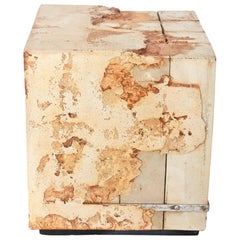
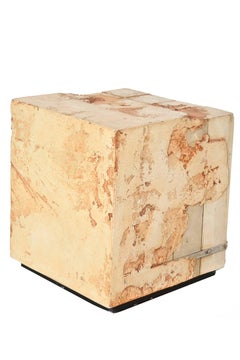
Emanoel Araújo Decorative Objects

to
1
1
1
1
1
1
1
1
1
Height
to
Width
to
1
1
1
1
1,522
692
540
514
Creator: Emanoel Araújo
Related Items
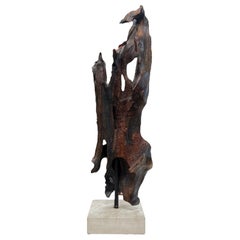
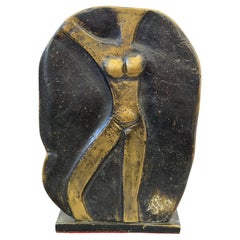
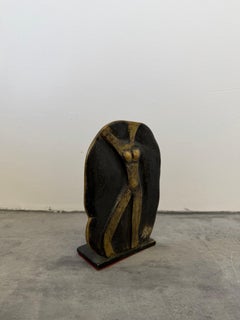
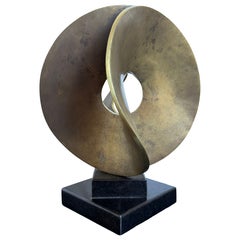
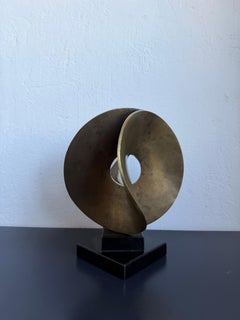
Brazilian Organic Modern Abstract Sculpture on Granite Base, 1980s

Brazilian Organic Modern Abstract Sculpture on Granite Base, 1980s

Located in Miami, FL

Organic Brazilan modern patinated bronze abstract sculpture on granite base. Unsigned circa 1980s.

Category

Late 20th Century Brazilian Organic Modern Emanoel Araújo Decorative Objects

Materials

Granite, Bronze

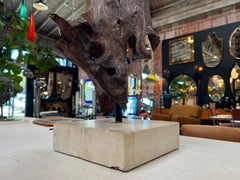
Vintage Italian Organic Wood Sculpture 1980s

Vintage Italian Organic Wood Sculpture 1980s

Located in Los Angeles, CA

The Vintage Italian Organic Wood Sculpture from the 1980s, displayed on a square marble base, is a captivating art piece that harmoniously combines natural wood forms with the elegan...

Category

1980s Italian Mid-Century Modern Vintage Emanoel Araújo Decorative Objects

Materials

Marble

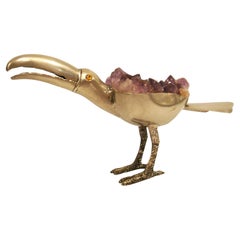
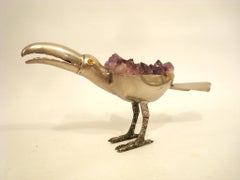
Silver Plated and Amethyst Decorative Bird Sculpture, Brazil circa 1970

Silver Plated and Amethyst Decorative Bird Sculpture, Brazil circa 1970

By Binazzi

Located in Buenos Aires, Olivos

Nice decorative exotic bird sculpture / Paperweight / Decorative item. Silver plated and amethyst, circa 1970, Brazil. Stamped underneath Gerson BA P90. This object would be stunnin...

Category

Late 20th Century Brazilian Mid-Century Modern Emanoel Araújo Decorative Objects

Materials

Amethyst, Silver Plate

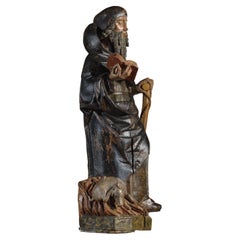
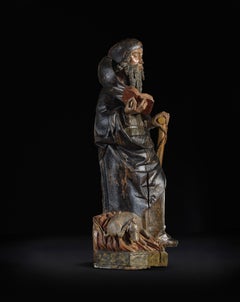
Sculpture in Polychrome Wood Representing Saint Anthony Hermit

Sculpture in Polychrome Wood Representing Saint Anthony Hermit

Located in Saint-Ouen, FR

Sculpture In Polychrome Wood Representing Saint Anthony Hermit Origin : East of France Period : End of the 15th century Measures: Height : 97 cm Width : 32 cm Depth : 26 cm Polychrome wood The saint is represented by an old, bearded man, dressed in a hooded monk’s habit over the tunic of his religious order. He is stood upright, holding an open book, La Règle des Antonnites, in his right hand. In the other hand, he is holding a staff in the form of the Greek letter tau with a rosary hanging down over it. At his feet lies a pig wearing a small bell around its neck. He rests on his right leg, whilst the left advances forward as if he were about to start walking. His belted tunic, forming several rectilinear pleats, is covered by a habit which is open only at the waist, therefore revealing these pleats. He is also wearing a hooded scapular over his shoulders. His thick hair escapes from under a distinctive hat, forming a collection of finely sculpted ringlets. This fine detail is also applied to the four long ringlets of his superb beard, which sit just below the shorter ones of his moustache. His face is a picture of harmony, with lowered eyes and his small mouth lost amongst the abundance of hair. At his feet on a pedestal of flames, hinting to the fire of Saint Anthony no doubt, a pig trying to scratch its ear. Born in 251 in Upper Egypt, he withdrew into solitude at a very young age. He would have been plagued in the desert with extremely diabolical temptations. He payed a visit to Saint Paul the hermit towards the end of his life. He was the dean of the Thébaïde anchorites, who was miraculously fed by a crow. On the day that Saint Anthony visited, the crow brought two portions of bread in its beak instead of one. Some time after, having learnt of the death of his venerable brother, Saint Anthony went to bury him with the help of two lions. The King of Catalonia pleaded to come and exorcise his posessed wife and children. He left Thébaïde for Barcelona. He appeared at the house of the provost André, bringing him a sow in his mouth, a monstrous piglet born without eyes. André wanted to kill it but Anthony stopped him, telling him that the poor beast wanted to ask for healing, as the King had done for his offspring. He made a sign of the cross on the piglet and it suddenly acquired its sight and the members which it did not have at birth. After which, André, guided by Saint Anthony, exorcised the Queen of Catalonia in the same way whilst she knelt at his feet. Théophile discovered the body of Saint Anthony wrapped in a palm fibre tunic which he had been given by Saint Paul the Hermit. In the Red Sea Desert there are two Coptic, IV century, monasteries which stand next to each other, one dedicated to Saint Anthony, the other to Saint Paul the Hermit. They are the oldest monasteries in the Christian world. The body of the famous hermit was transported to Constantinople and would have been transferred into the abbaye, Saint Antoine-en-Viennois, Dauphine. The Antonnite Order was a charitable order which specialised in treating contagious diseases. The fire of Saint Anthony, was identified by doctors as a grangrenous ergotism, caused by a diet of rye bread contaminated with the parasite ergot. The effect of this is the drying out of hands and feet which then need amputation, the plague and then later syphilis. All the skin diseases came from Saint Anthony. Saint Anthony’s pilgrimage to Dauphine rivaled that of Saint Jacques to Compostela. Thanks to the various commanderies created by the mother house, Saint Anthony’s cult spread throughout Christianity. In order to maintain commanderies and their hospitals, the Antonnites resorted to pig farming. They enjoyed having the benefit of letting their pigs roam freely through the streets of the villages, with little bells round their necks that had a recognisable chime so that they were able to find them. This privilege was very envied by other monastic Orders. Saint Anthony was the patron saint of several crafts such as basket makers and gravediggers. However it is to the pig that he owes the majority of his patronages; pigkeepers, pig sellers, butchers, porc butchers, brush makers who use pig bristle and bell-ringers because of the pig bells...

Category

15th Century and Earlier Antique Emanoel Araújo Decorative Objects
Materials

Wood

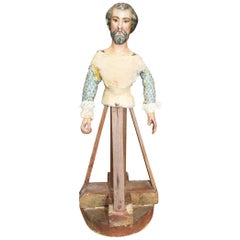
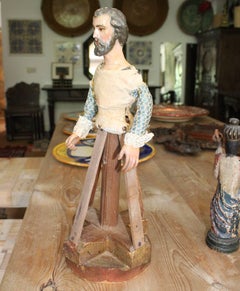
18th Century Wood and Felt Paper Spanish Hand-Carved Polychrome Sculpture

18th Century Wood and Felt Paper Spanish Hand-Carved Polychrome Sculpture

Located in Marbella, ES

18th Century wooden hand-carved polychrome sculpture from the south of Spain. Head made from felt paper and dressed with original clothing.

Category

Early 18th Century Spanish Antique Emanoel Araújo Decorative Objects
Materials

Wood, Paper

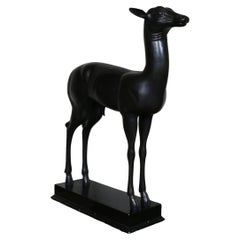
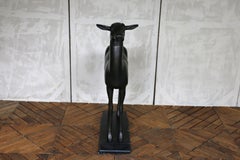
1980s Vintage Deer Figurative Sculpture, Bronze-Finish Fiberglass

1980s Vintage Deer Figurative Sculpture, Bronze-Finish Fiberglass

Located in North Hollywood, CA

A striking vintage deer sculpture dating to the 1980s, crafted in fiberglass and finished with a rich bronze-like patina that gives it the appearance of cast metal. The figure is bea...

Category

1980s Modern Vintage Emanoel Araújo Decorative Objects

Materials

Fiberglass, Wood

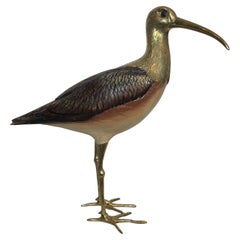
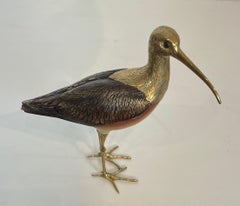
Sculpture representing a bird in polychrome wood and brass. Signed Italian work

Sculpture representing a bird in polychrome wood and brass. Signed Italian work

Located in Marcq-en-Barœul, Hauts-de-France

This very nice and fine sculpture representing a bird is made of polychrome wood and chiseled brass. This an Italian work, Signed . Circa 1970

Category

1970s French Mid-Century Modern Vintage Emanoel Araújo Decorative Objects

Materials

Brass

Saint Joseph sculpture in carved, gilded, and polychrome wood Andalusian

Saint Joseph sculpture in carved, gilded, and polychrome wood Andalusian

Located in Madrid, España

Saint Joseph sculpture in carved, gilded, and polychrome wood with a flowering staff and halo in silver, Andalusian school, 17th century. Total dimensions: 130 cm high (including st...

Category

17th Century Spanish Antique Emanoel Araújo Decorative Objects
Materials

Silver

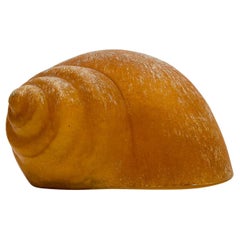
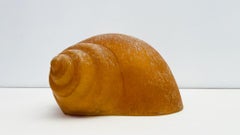
Camilli Sergio snail sculpture in semi-transparent fiberglass

Camilli Sergio snail sculpture in semi-transparent fiberglass

Located in Brussels, BE

This mid-century style snail sculpture by Camilli Sergio is crafted from semi-transparent fiberglass, embodying the design principles of the era with its organic form and warm amber ...

Category

1970s Italian Mid-Century Modern Vintage Emanoel Araújo Decorative Objects

Materials

Fiberglass

Vintage Life Size Heron Sculpture, Lacquered Fiberglass, 1980s Italy

Vintage Life Size Heron Sculpture, Lacquered Fiberglass, 1980s Italy

Located in Roma, IT

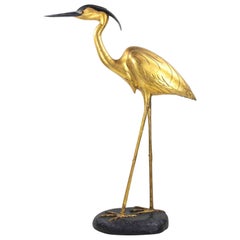
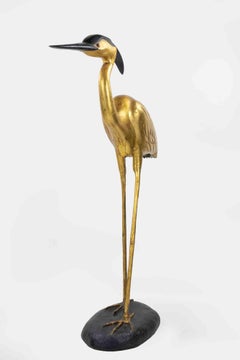
Vintage Life Size Heron in gilded and lacquered fiberglass. Hollywood Regency style. Glass eyes. In excellent condition, it was manufactured in the early 1980s in Europe.

Category

1980s Italian Vintage Emanoel Araújo Decorative Objects

Materials

Fiberglass

Trinity , Polychrome Sculpture , Germany, circa 1550

Trinity , Polychrome Sculpture , Germany, circa 1550

Located in PARIS, FR

Trinity in carved and polychromed wood, in the round, the back partially hollowed out. It is represented here as a "Throne of Grace". In this original formula, which probably origina...

Category

16th Century Antique Emanoel Araújo Decorative Objects
Materials

Wood

Emanoel Araújo decorative objects for sale on 1stDibs.

Emanoel Araújo decorative objects are available for sale on 1stDibs. These distinctive items are frequently made of wood and are designed with extraordinary care. Prices for Emanoel Araújo decorative objects can differ depending upon size, time period and other attributes — on 1stDibs, these items begin at $8,100 and can go as high as $8,100, while a piece like these, on average, fetch $8,100.