English School

Average Sold Price
$5,918
Materials
Related Artists
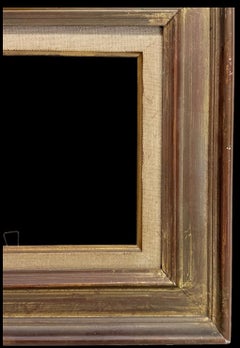
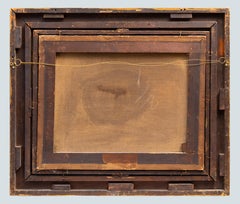
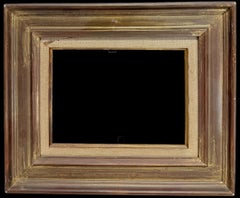
Vintage Giltwood Picture Frame Small Decorative English Wall Art Frame

Vintage Giltwood Picture Frame Small Decorative English Wall Art Frame

By English School

Located in Cirencester, Gloucestershire

Vintage Giltwood Picture Frame Small Decorative English Wall Art Frame English, Mid 20th century period giltwood picture frame Overall outer size: 11 x 13 inches Internal rebate / si...

Category

Mid-20th Century English School English School

Materials

Plaster, Wood

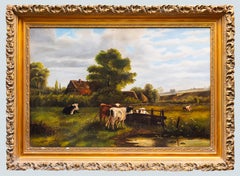
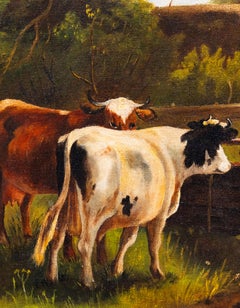
Antique English Pastoral Landscape Oil Painting with Cows by H. R. Warburton

Antique English Pastoral Landscape Oil Painting with Cows by H. R. Warburton

By English School

Located in GB

Charming antique English pastoral landscape painting by H. R. Warburton, depicting cattle grazing peacefully within a sunlit countryside setting. The composition features a tranquil ...

Category

Early 20th Century Romantic English School

Materials

Canvas, Oil

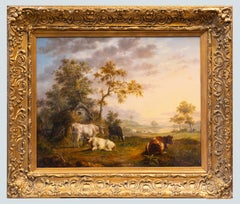
19th Century English Pastoral Landscape Painting with Cattle and Cottage at Suns

19th Century English Pastoral Landscape Painting with Cattle and Cottage at Suns

By English School

Located in GB

A beautifully atmospheric 19th-century English pastoral landscape depicting cattle resting peacefully within an expansive rural setting at sunset. Rich in warmth, light, and idyllic ...

Category

19th Century Romantic English School

Materials

Canvas, Oil

Portrait of Edward VI when Prince of Wales

Portrait of Edward VI when Prince of Wales

By English School

Located in London, GB

This striking portrait depicts Edward VI in the regalia of the Prince of Wales, shortly before he was to become the King of England. The Roman numerals on the painting indicate a creation year of 1546, meaning that Edward was only nine when this likeness was captured. It is believed that this work is a copy of a portrait held by the Met Museum of New York, completed by the Flemish portraitist William Scrots, who worked extensively with Henry VIII as the King’s Painter. Henry VIII had utilised the side-profile perspective as an artistic motif to assert the power of his Tudor dynasty. The perspective became associated with royalty, and its application in this portrait affirms Edward’s succession and future role as the English monarch. Portraits were an important way in which those in the 16th century captured likenesses of important public figures, such as the crown prince - for this reason, Edward VI is one of the most well documented Tudor monarchs, with multiple portraits capturing his childhood. This current work is exquisitely detailed, with great care taken to depict Edward’s lavish clothing. It is possible to make out the most minute of details, from the acorns on his collar to the individual barbs of the feathers on his cap. The gold chains fixing his jacket in place and the metallic aglets on his cap are also remarkable, indicating the absolute wealth and power of the Tudor dynasty. This portrait recently underwent dendrochronological analysis, which revealed that the work was painted during Edward’s lifetime. It was later altered to fit the diamond format that we see currently, which is also likely when the ‘ich dien’ (the motto of the Prince of Wales, meaning ‘I serve’) was added. King Edward VI On the 12th of October 1537, Jane Seymour gave birth to Henry VIII’s only son, who would be named Edward. As a celebration of this new heir to the throne, two thousands rounds of ammunition were shot from the Tower of London, and parties and festivities occurred all across England. Edward was baptised three days after his birth by Thomas Cranmer in a lavish ceremony before retiring to the Queen’s apartments to receive parental blessings. In a sad turn of events, Jane Seymour never recovered from the birth of her son, dying only 12 days after giving birth. Increasingly paranoid about Edward’s wellbeing as his only male heir, Henry VII ordered that he would remain at Hampton Court Palace. Edward was afforded a luxurious suite, but was initially kept in the presence chamber in a ‘cradle of state’ so that nobles and courtiers could visit the young prince. After this, Edward lived in his own bedchamber and was served by his own kitchen to avoid contamination. Once weaned, his food was tested by a servant to ensure it was safe for the prince to consume. Edward’s clothes were washed before he wore them, everything he touched had to be cleaned before he could do so, and the walls, floors and ceilings of his suite had to be scrubbed clean multiple times a day. Any visitors were forced to wash before seeing the prince, and they could not attend the chambers if they had even the smallest sign of sickness. Edward was raised by the women of the court and was known as a healthy, handsome, tall and well-fed young boy. He was shy and looked to his nurses for reassurance, and it is documented that even the most stern of nursemaids doted upon him. His elder half-sister Mary visited him regularly and showered him with lavish gifts - this makes their later divide over religion all the more heartbreaking. He was educated alongside his sister, Elizabeth, to whom he was the closest in age. Edward saw little of his father until he became an ‘adult’ at the age of six. From this point on, Edward was expected to play the heir to the throne. His female attendants were dismissed and his education became that of a prince. His suite and wardrobe were redesigned to match Henry VIII’s own. His schoolmasters noted him for his maturity, but also for his fierce temper. Edward studied humanist subjects such as classics, Latin, Greek and rhetoric, as well as gentlemanly pursuits of fencing, riding, and music. He was also educated in religion and scripture by the Archbishop Thomas Cranmer, who became somewhat of a father figure for the prince. In 1547, when Edward was nine years old, Henry VII died - his young son was crowned as King only a month later. Due to his young age, Edward was supported by a regency council, but this was quickly overpowered by the King’s uncle, Edward Seymour, who seized control as Lord Protector. Edward kept a diary during this period, whose writings characterise him as a cold and unfeeling young boy - these qualities may well have become disastrous for a monarch if he had survived. Edward is most renowned for his Protestant reforms. He introduced a new Book of Common Prayer in 1549, and again in 1552. This second Book provided the basis for worship within the Church of England for the next four hundred years. He also banned Catholic rituals such as casting of holy water, pilgrimages, and using rosaries...

Category

16th Century English School

Materials

Oil, Panel

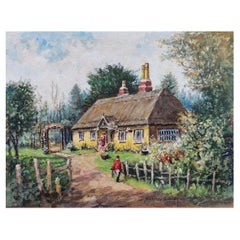
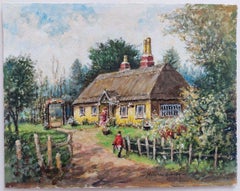
Traditional English Painting Thatched Cottage Wrotham Hill, Kent, with Figures

Traditional English Painting Thatched Cottage Wrotham Hill, Kent, with Figures

By English School

Located in Cirencester, Gloucestershire

Artist/ School: Norman A. Olley ( British, 20th Century, 1908-1996), undated, signed to the front and inscribed verso Title - Yew Tree Cottage at Wrotham Hill in Kent, England A del...

Category

Mid-20th Century English School

Materials

Acrylic
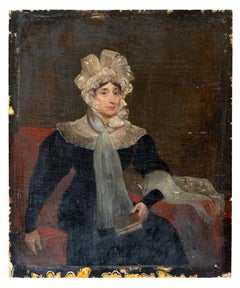
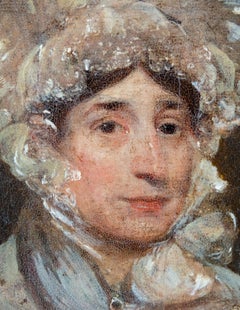
Portrait of a Lady, Victorian Oil on Panel, Mid-19th Century, Unframed

Portrait of a Lady, Victorian Oil on Panel, Mid-19th Century, Unframed

By English School

Located in GB

This mid-19th-century portrait depicts a seated lady rendered in the sober elegance characteristic of Victorian portraiture. She wears a black dress, modestly cut with long sleeves a...

Category

Mid-19th Century Victorian English School

Materials

Oil, Panel

19th Century English School Painting of a Young Boy Reading with His Dog

19th Century English School Painting of a Young Boy Reading with His Dog

By English School

Located in GB

An enchanting and intimate 19th-century genre painting depicting a young boy seated beside his loyal dog within a rustic interior. Illuminated by soft, atmospheric light, the child i...

Category

19th Century Romantic English School

Materials

Canvas, Oil

Erasmus of Rotterdam Portrait, 19th Century Oil on Wood Panel

Erasmus of Rotterdam Portrait, 19th Century Oil on Wood Panel

By English School

Located in GB

Hans Holbein the Younger (1497/98 – 1543) was one of the greatest painters of the Northern Renaissance. Born in Augsburg, Germany, he was the son of Hans Holbein the Elder, also a pa...

Category

19th Century Old Masters English School

Materials

Oil, Wood Panel

Browse all Art from English School
Shop Now

English School Sale Prices

Sold DateSold PriceCategoryMediumCreation Year
2026$10,671Dining Room Tables, TablesOak1730-50
2025$1,000Landscape Paintings, Animal PaintingsOil Paint, Board
$5,918
Average sold price of items in the past 12 months
$1,165-$10,671
Sold price range of items in the past 12 months

Artists Similar to English School

English School art for sale on 1stDibs.

Find a wide variety of authentic English School art available for sale on 1stDibs.