Eugen Hamm Prints and Multiples

to
1
5
2
Overall Width
to
Overall Height
to
7
7
1,439
1,042
915
903
7
7
6
1
7
5
5
3
3
3
3
2
1
7
7
Artist: Eugen Hamm
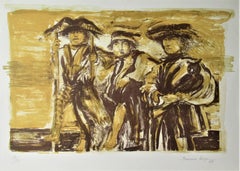
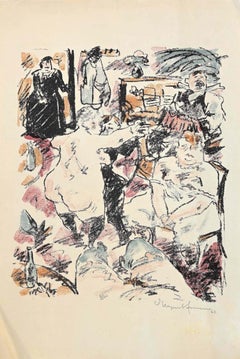
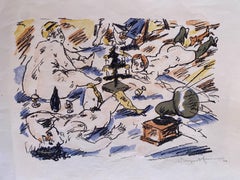
In the Brothel - Original Lithograph by Eugen Hamm - 1922

In the Brothel - Original Lithograph by Eugen Hamm - 1922

By Eugen Hamm

Located in Roma, IT

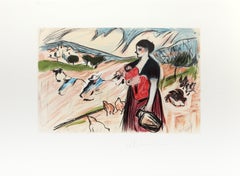
In the Brothel is an original lithograph realized by Eugen Hamm in 1922. In good conditions. This artwork represents a brothel with several nude women. H...

Category

1920s Expressionist Eugen Hamm Prints and Multiples

Materials

Lithograph
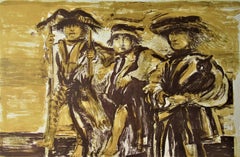
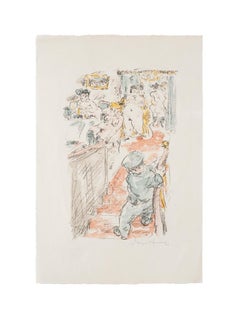
In the Brothel - Original Lithograph by Eugen Hamm - 1922

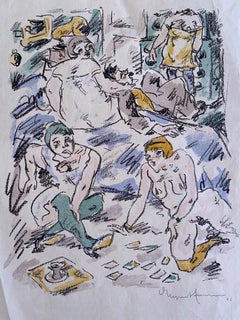
In the Brothel - Original Lithograph by Eugen Hamm - 1922

By Eugen Hamm

Located in Roma, IT

In the Brothel is an original lithograph, realized by the German artist Eugen Hamm in 1922s. In good conditions. This artwork represents a brothel with se...

Category

1920s Expressionist Eugen Hamm Prints and Multiples

Materials

Lithograph
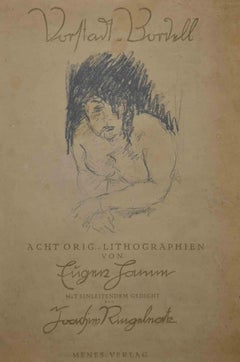
In the Brothel - Original Lithograph by Eugen Hamm - 1922

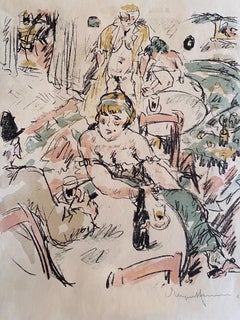
In the Brothel - Original Lithograph by Eugen Hamm - 1922

By Eugen Hamm

Located in Roma, IT

In the Brothel is an original lithograph realized by Eugen Hamm a german artist in 1922. In good conditions. This artwork represents a brothel with severa...

Category

1920s Expressionist Eugen Hamm Prints and Multiples

Materials

Lithograph
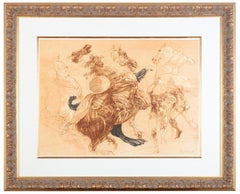
In the Brothel - Original Lithograph by Eugen Hamm - 1922

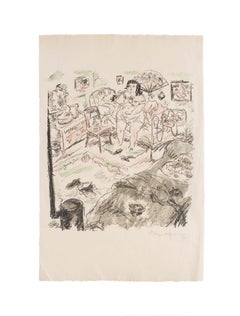
In the Brothel - Original Lithograph by Eugen Hamm - 1922

By Eugen Hamm

Located in Roma, IT

In the Brothel is an original lithograph realized by Eugen Hamm in 1922. In good conditions. This artwork represents a brothel with several nude women. H...

Category

1920s Expressionist Eugen Hamm Prints and Multiples

Materials

Lithograph
Related Items
Eduardo Chillida Spanish Artist Original Unused Lithograph Poster

Eduardo Chillida Spanish Artist Original Unused Lithograph Poster

By Eduardo Chillida

Located in Miami, FL

Eduardo Chillida (Spain, 1924-2002) '5 Livres Gravés', 1974 Original poster from show lithograph on paper 25.2 x 17 in. (64 x 43 cm.) Unframed Ref: CHI100-202 Eduardo Chillida He be...

Category

1970s Expressionist Eugen Hamm Prints and Multiples

Materials

Lithograph
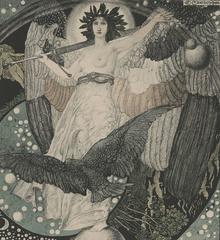
Gerlach's Allegorien Folio, plate #58: "Sculpture" Lithograph, Gustav Klimt.

Gerlach's Allegorien Folio, plate #58: "Sculpture" Lithograph, Gustav Klimt.

By Gustav Klimt

Located in Palm Beach, FL

As an artist trained in the applied arts, Gustav Klimt valued all forms of art, including the graphic arts. This final design from 1896 for inclusion in Allegorien published by Gerlach & Schenk demonstrates respect for artistic precedent and for a wide range of media and technique. The publication was printed in an unknown number of copies. Klimt’s rendering in latin of the title, “SCVLPTVR.,” with three-dimensional effect on the wall, is a figurative allusion to this medium as well as a literal reference to Ancient Rome. By doing the same with his signature and date in roman numerals on the right hand side of the image, Klimt places himself, The Artist, firmly in this linear and legitimizing context of art history and as its modern standard-bearer. Playing on Classical mythology and the story of Pygmalion, in which a statue comes to life, Klimt presents his modern Venus holding an apple. Klimt’s Venus exhibits a curvilinear softness; there are no angles. Klimt deftly shows the possibilities in a graphic image to give life to dark, wavy hair and tenderness to swelling breasts and belly. To further emphasize the allegory of thriving modern art, he contrasts his Venus with the cold, hard ancient classical head whose eyes are vacuous and whose hair is but a stylized mass of curls. Klimt’s living Venus stands in front of the large bust and large classical pillar upon which is a sculpture of a Sphinx and a Greek Attic bust. As if a gallery to represent sculpture’s “best of” through the ages, the upper horizontal panel includes bust depictions in marble, cast metal and wood...

Category

1890s Vienna Secession Eugen Hamm Prints and Multiples

Materials

Lithograph
Gerlach's Allegorien Plate #37: "Music" Lithograph

Gerlach's Allegorien Plate #37: "Music" Lithograph

By Koloman Moser

Located in Palm Beach, FL

Koloman Moser (1868 –1918), AUSTRIAN Instead of applying his flair and art education solely to painting, Koloman Moser embodied the idea of Gesamt Kunstwerk (all-embracing art w...

Category

1890s Vienna Secession Eugen Hamm Prints and Multiples

Materials

Lithograph
Gerlach's Allegorien Plate #89: "Bookplate Spring" Lithograph

Gerlach's Allegorien Plate #89: "Bookplate Spring" Lithograph

By Koloman Moser

Located in Palm Beach, FL

Koloman Moser (1868 –1918), AUSTRIAN Instead of applying his flair and art education solely to painting, Koloman Moser embodied the idea of Gesamt Kunstwerk (all-embracing art work) by designing architecture, furniture, jewelry, graphics, and tapestries meant to coordinate every detail of an environment. His work transcended the imitative decorative arts of earlier eras and helped to define Modernism for generations to come. Moser achieved a remarkable balance between intellectual structure (often geometric) and hedonistic luxury. Collaborating with Gustav Klimt and Josef Hoffmann, the artist was an editor and active contributor to Ver Sacrum, (Sacred Spring), the journal of the Viennese Secession that was so prized for its aesthetics and high quality production that it was considered a work of art. The magazine featured drawings and designs in the Jugendstil style (Youth) along with literary contributions from distinguished writers from across Europe. It quickly disseminated both the spirit and the style of the Secession. In 1903 Moser and Hoffmann founded and led the Wiener Werkstatte (Viennese Workshop) a collective of artisans that produced elegant decorative arts items, not as industrial prototypes but for the purpose of sale to the public. The plan, as idealistic then as now, was to elevate the lives of consumers by means of beautiful and useful interior surroundings. Moser’s influence has endured throughout the century. His design sensibility is evident from the mid-century modern furniture of the 1950s and ‘60s to the psychedelic rock posters...

Category

1890s Vienna Secession Eugen Hamm Prints and Multiples

Materials

Lithograph
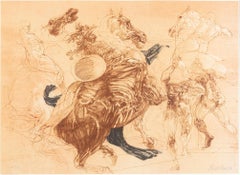
Polish French Figurative Abstract Art Brut Expressionist Lithograph Maryan

Polish French Figurative Abstract Art Brut Expressionist Lithograph Maryan

By Pinchas Maryan

Located in Surfside, FL

Pinchas Burstein, known as Maryan Lithograph (after the drawing). 1960 Dimensions: 12 3/8 x 9 3/8 inches (315 x 240mm). There is printed text on the back, as issued. Signed in the...

Category

1960s Expressionist Eugen Hamm Prints and Multiples

Materials

Paper, Lithograph

Gerlach's Allegorien Plate #51: "Summer" Lithograph

Gerlach's Allegorien Plate #51: "Summer" Lithograph

By Koloman Moser

Located in Palm Beach, FL

Koloman Moser (1868 –1918), AUSTRIAN Instead of applying his flair and art education solely to painting, Koloman Moser embodied the idea of Gesamt Kunstwerk (all-embracing art w...

Category

1890s Vienna Secession Eugen Hamm Prints and Multiples

Materials

Lithograph
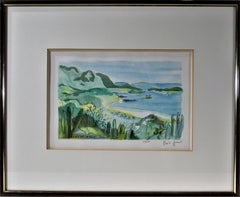
Gerlach's Allegorien Plate #35: "Love & Wine" Lithograph

Gerlach's Allegorien Plate #35: "Love & Wine" Lithograph

By Koloman Moser

Located in Palm Beach, FL

Koloman Moser (1868 –1918), AUSTRIAN Instead of applying his flair and art education solely to painting, Koloman Moser embodied the idea of Gesamt Kunstwerk (all-embracing art work) by designing architecture, furniture, jewelry, graphics, and tapestries meant to coordinate every detail of an environment. His work transcended the imitative decorative arts of earlier eras and helped to define Modernism for generations to come. Moser achieved a remarkable balance between intellectual structure (often geometric) and hedonistic luxury. Collaborating with Gustav Klimt and Josef Hoffmann, the artist was an editor and active contributor to Ver Sacrum, (Sacred Spring), the journal of the Viennese Secession that was so prized for its aesthetics and high quality production that it was considered a work of art. The magazine featured drawings and designs in the Jugendstil style (Youth) along with literary contributions from distinguished writers from across Europe. It quickly disseminated both the spirit and the style of the Secession. In 1903 Moser and Hoffmann founded and led the Wiener Werkstatte (Viennese Workshop) a collective of artisans that produced elegant decorative arts items, not as industrial prototypes but for the purpose of sale to the public. The plan, as idealistic then as now, was to elevate the lives of consumers by means of beautiful and useful interior surroundings. Moser’s influence has endured throughout the century. His design sensibility is evident from the mid-century modern furniture of the 1950s and ‘60s to the psychedelic rock posters...

Category

1890s Vienna Secession Eugen Hamm Prints and Multiples

Materials

Lithograph
Dancing Sailors - Original Lithograph, SIGNED

Dancing Sailors - Original Lithograph, SIGNED

By Pierre Ambrogiani

Located in Paris, IDF

Pierre AMBROGIANI (1907-1985) Dancing Sailors, 1974 Original Lithograph (Gourdon Workshop) Signed with the artist's stamp On vellum Arches 38 x 28 cm (c. 14.9 x 11 in) Excellent co...

Category

Mid-20th Century Expressionist Eugen Hamm Prints and Multiples

Materials

Lithograph
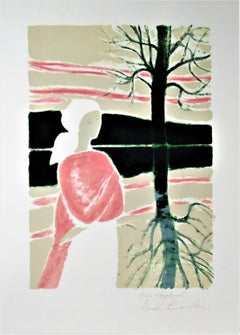
THE BEGGARS (DIE BETTLER, 1922)

THE BEGGARS (DIE BETTLER, 1922)

By Max Beckmann

Located in Santa Monica, CA

MAX BECKMANN (1884 – 1950) THE BEGGARS (DIE BETTLER, 1922) (Glaser 195; Hofmaier 219B) Lithograph, Plate 7 from 11-part print portfolio "Berliner Reise" (Trip to Berlin) Edition ...

Category

1920s Expressionist Eugen Hamm Prints and Multiples

Materials

Lithograph
Armand Nakache - Original Handsigned Lithograph - Ecole de Paris

Armand Nakache - Original Handsigned Lithograph - Ecole de Paris

By Armand Nakache

Located in Collonge Bellerive, Geneve, CH

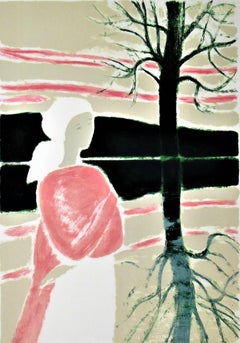
Armand Nakache Original Handsigned Lithograph Dimensions: 76 x 54 cm Edition: HC XXI/XXX HandSigned and Numbered Ecole de Paris au seuil de la mutation des Arts Sentiers Editions ...

Category

1960s Expressionist Eugen Hamm Prints and Multiples

Materials

Lithograph
Der Polster

Max KurzweilDer Polster, 1903

$3,500

H 11.025 in W 10.025 in

Der Polster

By Max Kurzweil

Located in New York, NY

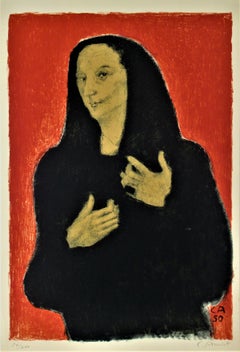
Kurzweil, Maximilian. Der Polster, 1903. Color woodcut on japon. Included as an insert in Pan. Unsigned. Framed.11 1/4 x 10 1/4. 1 Ref: Hofstatter, p. 241; Pabst, p. 154. Maximillian Kurzweil was the co-founder of the Vienna Secession in 1897 and editor and illustrator of the influential Secessionist magazine Ver Sacrum...

Category

Early 1900s Vienna Secession Eugen Hamm Prints and Multiples

Materials

Lithograph
Kostume, Plakate, und Dekorationen, "Läderlappen"

Kostume, Plakate, und Dekorationen, "Läderlappen"

By Walter Schnackenberg

Located in Palm Beach, FL

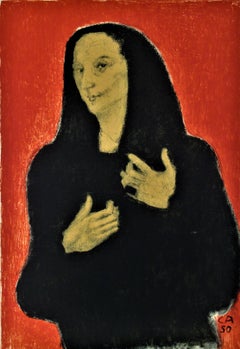
Walter Schnackenberg’s style changed several times during his long and successful career. Having studied in Munich, the artist traveled often to Paris where he fell under the spell of the Henri de Toulouse-Lautrec’s colorful and sensuous posters depicting theatrical and decadent subjects. Schnackenberg became a regular contributor of similar compositions to the German magazines Jugend and Simplicissimus before devoting himself to the design of stage scenery and costumes. In the artist’s theatrical work, his mastery of form, ornamentation, and Orientalism became increasingly evident. He excelled at combining fluid Art Nouveau outlines, with spiky Expressionist passages, and the postures and patterns of the mysterious East. In his later years, Schnackenberg explored the unconscious, using surreal subject matter and paler colors that plainly portrayed dreams and visions, some imbued with political connotations. His drawings, illustrations, folio prints, and posters are highly sought today for their exceedingly imaginative qualities, enchanting subject matter, and arresting use of color. SCHNACKENBERG: KOSTUME, PLAKATE UND DEKORATIONEN, a cardboard bound art book consisting of 43 prints of work by Walter Schnackenberg, 30 of which are color lithographs that are signed and some are titled and dated in the plate, as well as black and white prints and photographs with accompanying text by Oskar Bie; lithographs printed at Kunstanstalt Oskar Consee in Munich, other images printed by Gesellschaft Pick & Co. in Munich, the text and cover with color images by Schnackenberg front and verso printed by R. Oldenbourg in Munich; published by Musarion Verlag, Munich, 1920. The majority of Walter Schnackenberg’s artistic output was destroyed by bomb attacks in Munich in 1944. The highly publicized 2013 auction in New York of the recovered pre-war poster collection once belonging to German poster aficionado, Hans Sachs has reintroduced the world to Walter Schnackenberg’s graphic genius and priceless ephemeral art from a lost era. Besides the museum world, designer Karl Lagerfeld is one of the most prodigious collectors of Schnackenberg. Flipping through the pages of Kostume, Plakate und Dekorationen, it becomes quite clear that Schnackenberg’s collection is ground zero at the crossroads of early modern fashion where the cult of celebrity meets up with dance, music, theater and cabaret, film and the graphic medium. Berlin and Munich under Germany’s Weimar Republic in the first quarter of the 20th century produced just the atmosphere to feed this burgeoning industry. Rising inflation sparked a recklessness to live large for the moment and heightened a desire for escapism. An influx of Indian and East Asian dancers and musicians added to the artsy bohemian cultural mix. A new decadence and tolerance resulted. Film boldly featured provocative subject matter. Cabarets became popular venues giving rise to the demi-monde in which people from all social stations mixed more freely in a thriving underground economy and culture where there was a blurring of boundaries and of social codes. Noted art historian and cultural doyen, Oskar Bie astutely observes in his introduction to Schnackenberg’s publication that what unites the images is fantasy and advertisement. Schnackenberg uses the eye as an instrument to brilliantly construct and convey this double message. His personages never directly confront the viewer. Their eyes gaze off in the distance like those of the screenplayer and film star Hedamaria Scholz in Schnackenberg’s “Die Rodelhexe” movie poster. Their eyes follow the path of a dance composition or become a transfixed and ogling male gaze such as the iconic 1911 Odeon Casino poster...

Category

1910s Expressionist Eugen Hamm Prints and Multiples

Materials

Lithograph
Eugen Hamm prints and multiples for sale on 1stDibs.

Find a wide variety of authentic Eugen Hamm prints and multiples available for sale on 1stDibs. You can also browse by medium to find art by Eugen Hamm in lithograph and more. Much of the original work by this artist or collective was created during the 1920s and is mostly associated with the Expressionist style. Not every interior allows for large Eugen Hamm prints and multiples, so small editions measuring 12 inches across are available. Eugen Hamm prints and multiples prices can differ depending upon medium, time period and other attributes. On 1stDibs, the price for these items starts at $444 and tops out at $832, while the average work can sell for $832.