Fabio Fabbi Art

Italian, 1861-1910
“Fabio Fabbi studied painting and sculpture at the Accademia di Belle Arti in Florence, in the studio of Augusto Rivalta, and won several prizes in both disciplines during the early 1880s. He then visited Paris, Munich and Egypt. When he returned to Italy he devoted himself solely to painting. In 1893, he was teaching at the Accademia in Florence, and in 1894 he was a member of the Accademia di Belle Arti in Bologna. He was decorated with the title of knight of the crown of Italy in 1898. Fabio Fabbi painted a few religious pictures, but he mostly chose Middle Eastern themes for his subjects: odalisques, markets, bazaars and harems. He also designed medals. The style of his paintings varies according to the technique used. In his pastel works, form and movement are merely suggested by a few strokes of the chalk, whereas his oil paintings on ivory are more boldly executed. He chose the medium of watercolor to illustrate new editions of the Aeneid, the Iliad and the Odyssey. He took part in various exhibitions including exhibitions in Monaco, in Turin from 1884 where he won a prize in 1899, in Florence in 1888, and in Milan” (Benezit, Dictionary of Artists, Gründ, 2006).
to
2
2
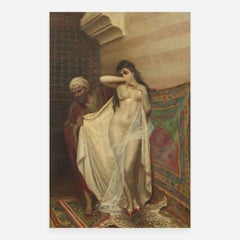
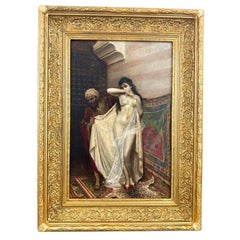
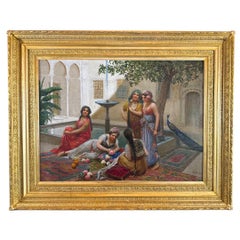
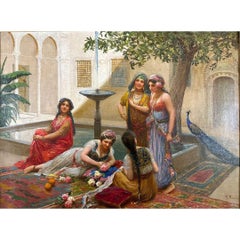
Harem Girls in the Palace Courtyard 19th Century Antique Oil Painting on Canvas

Harem Girls in the Palace Courtyard 19th Century Antique Oil Painting on Canvas

By Fabio Fabbi

Located in Jacksonville, FL

Description: Fabio Fabbi: A Master of Orientalist Intrigue The painting is signed on the bottom left side. Fabio Fabbi, an esteemed Italian artist of the late 19th and early 20th centuries, emerged as a prominent figure within the Orientalist art movement. Born in Rome in 1861, Fabbi’s passion for capturing the exotic and mysterious landscapes and cultures of the East would define his artistic career and leave an indelible mark on the art world. Fabbi’s artistic journey began with formal training at the Accademia di Belle Arti in Rome, where he developed a deep appreciation for classical techniques and aesthetics. However, it was his encounters with Orientalist themes and subjects that ignited his imagination and set him on a path to becoming a renowned master of Orientalist art. One of Fabbi’s most captivating works, “Harem Girls in the Palace Courtyard,” stands as a testament to his exceptional talent for depicting scenes of intrigue and sensuality within the luxurious settings of the Ottoman Empire. This mesmerizing painting invites viewers into the opulent world of a harem, where a group of beautiful women gracefully gather in a sunlit courtyard. Fabbi’s brushwork skillfully captures the vibrant colors, exquisite textiles, and intricate architectural details that define the environment. In “Harem Girls in the Palace Courtyard,” Fabbi delves into the alluring realm of the harem, exploring the interplay between power, desire, and secrecy. With meticulous attention to detail, he captures the expressions and body language of the women, evoking a sense of mystery and sensuality. The play of light and shadow adds depth and dimension to the composition, further immersing viewers in the rich atmosphere of the scene. Fabbi’s ability to weave narratives within his artworks sets him apart. “Harem Girls in the Palace Courtyard” not only showcases his technical skill but also tells a story—a glimpse into a hidden world that fascinates and captivates. Through his artistry, Fabbi offers a nuanced portrayal of Eastern culture, emphasizing the beauty and complexity that lie beneath the surface. Throughout his career, Fabio Fabbi gained recognition and admiration for his Orientalist works. His paintings were exhibited in prominent galleries across Europe, where audiences marveled at his ability to transport them to distant lands and evoke a sense of wonder and intrigue. Fabbi’s talent for capturing the essence of Orientalist themes and his exquisite attention to detail earned him a place among the most respected artists of his time. Fabio Fabbi’s legacy lives on through his remarkable artworks. His ability to portray the mysteries and allure of the East continues to inspire and captivate art enthusiasts worldwide. “Harem Girls in the Palace Courtyard” exemplifies Fabbi’s mastery of the Orientalist genre, inviting viewers to step into a world of beauty, enchantment, and hidden desires. His paintings exhibited at prestigious venues in Turin and Milan. Knighted in the Order of the Crown of Italy in 1892. Notable works include the Sacred Heart...

Category

19th Century Realist Fabio Fabbi Art
Materials

Canvas, Oil

A Fair Price
A Fair Price

A Fair Price

By Fabio Fabbi

Located in Jacksonville, FL

Fabio Fabbi, born in Italy in 1861, stands as an acclaimed Orientalist painter renowned for his devotion to capturing the exotic allure of the Orie...

Category

19th Century Fabio Fabbi Art

Materials

Canvas, Oil

Related Items
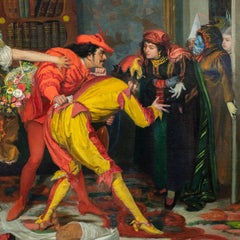
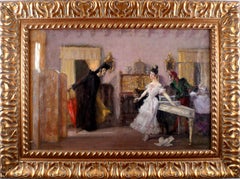
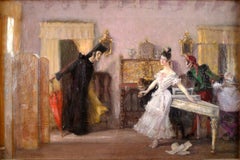
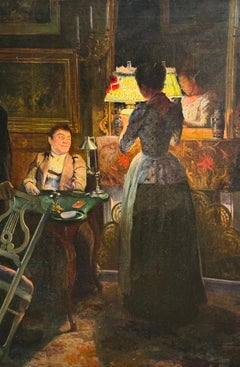
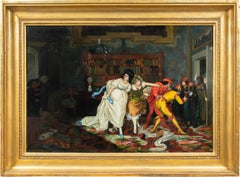
Vincenzo Colleoni (Venetian master) - 19th century Realist masquerade scene

Vincenzo Colleoni (Venetian master) - 19th century Realist masquerade scene

Located in Varmo, IT

Vincenzo Colleoni (Active in Venice in the second half of the 19th century) - Interior scene with masked figures. 110 x 160 cm (without frame) - 145 x 194 cm (with frame). Oil on c...

Category

Late 19th Century Realist Fabio Fabbi Art
Materials

Canvas, Oil

Lovers Oil on Canvas Painting, Realist Style, 21st Century, Signed

Lovers Oil on Canvas Painting, Realist Style, 21st Century, Signed

By Anastasia Aureum

Located in London, London

oil on canvas one-of-a-kind hand signed The canvas will be shipped STRETCHED, unframed All custom charges are included in the final price agreed

Category

21st Century and Contemporary Realist Fabio Fabbi Art

Materials

Canvas, Cotton Canvas, Oil

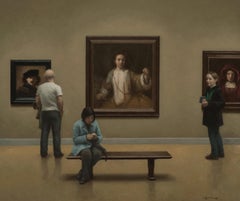
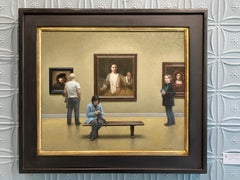
"The Rembrandt Room" Realist Oil Painting on Canvas, Museum Scene, Framed

"The Rembrandt Room" Realist Oil Painting on Canvas, Museum Scene, Framed

By Steven J. Levin

Located in Sag Harbor, NY

"The Rembrandt Room" is a realist oil painting by Steven J. Levin. It depicts three people in a museum gallery. One person is looking at the art, another is seated on a bench, with t...

Category

21st Century and Contemporary Realist Fabio Fabbi Art

Materials

Canvas, Oil

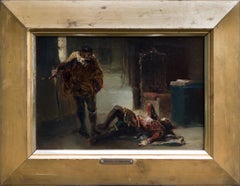
The Dueling Partners 1850's French Oil, Chateau Staircase Interior Beautiful oil

The Dueling Partners 1850's French Oil, Chateau Staircase Interior Beautiful oil

Located in Cirencester, Gloucestershire

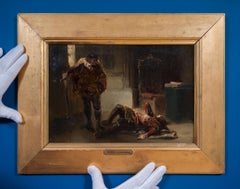
The Duel by Alcide Joseph LORENTZ (French 1813-1891) signed and dated 1857 oil painting on canvas, framed framed size: 30 x 25 inches canvas: 25 x 20.5 inches condition: very good an...

Category

Mid-19th Century Realist Fabio Fabbi Art
Materials

Canvas, Oil

"The Barber of Seville", Early 20th Century Oil on Canvas by José Villegas

"The Barber of Seville", Early 20th Century Oil on Canvas by José Villegas

Located in Madrid, ES

JOSÉ VILLEGAS CORDERO Spanish, 1844 - 1921 THE BARBER OF SEVILLE signed & dated "J. Villegas. / Junio 1913." (lower left) oil on canvas 19-3/8 x 28-3/4 inches (49 x 73 cm.) framed: 27-1/2 x 36-3/4 inches (69.5 x 93 cm.) PROVENANCE Private Collector, Seville, Spain José Villegas Cordero (Seville, August 26, 1844-Madrid, November 9, 1921) was a Spanish painter. He directed the Prado Museum between 1901 and 1918. He was the brother of the painter Ricardo Villegas Cordero. He began his apprenticeship very young with José María Romero, with whom he remained for two years until entering the School of Fine Arts in Seville, where he was under the tutelage of Eduardo Cano. In 1860, when he was only 16 years old, he sold his work Little Philosophy for 2,000 reais at the Seville Exhibition. In 1867 he traveled to Madrid, where he entered Federico Madrazo's studio. There he established friendship with painters Eduardo Rosales and Fortuny. He went regularly to the Prado where he copied Velázquez, from whom he acquired spontaneity and the use of color for his technique. Finally, and out of admiration for Fortuny's orientalist painting, he returned to Seville and organized an excursion to Morocco. At the end of 1868 he decided to travel to Rome accompanied by the painters Rafael Peralta and Luis Jiménez Aranda...

Category

1910s Realist Fabio Fabbi Art

Materials

Canvas, Oil

Portrait of young man - The artist's son

Portrait of young man - The artist's son

Located in BELEYMAS, FR

Auguste-Joseph Delécluse (Roubaix 1855 - Paris 1928) Portrait of the artist's son, Eugène Delécluse Oil on canvas H. 98 cm; W. 116 cm Signed lower right 1903 Exhibition: 1903, Salon...

Category

Early 1900s French School Fabio Fabbi Art

Materials

Canvas, Oil

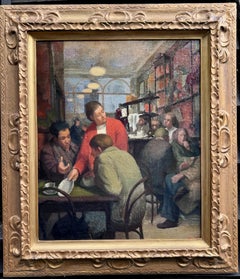
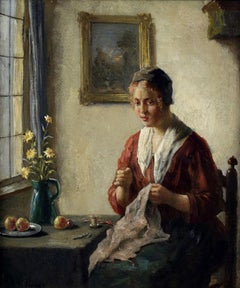
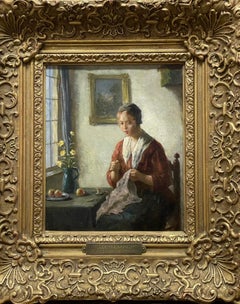
"Meditation" Dutch Woman Sewing Interior Genre Home scene Fruit Flowers on Table

"Meditation" Dutch Woman Sewing Interior Genre Home scene Fruit Flowers on Table

By Bernard De Hoog

Located in Rancho Santa Fe, CA

Bernard de Hoog was born in Amsterdam in 1866. He studied under J.F. Hulk and J.C. van Essen at the Quellinus School in Amsterdam. Mainly a genre and portrait painter, he occupies a distinguished place among the masters of Dutch modernism. He was associated with The Hague School, primarily a movement of realism, a reaction against Romanticism. He lived and worked in Laren, Haarlem, Bussum, and The Hague enjoying much commercial success. His paintings were readily exported to the United State, Canada, and England. De Hoog advocated the simple country life and produced many endearing interior scenes inspired by compassion for the impoverished existence of the Dutch peasantry. Set within a quiet domestic interior space, our painting catches a meditative moment of a woman in the midst of her sewing. A large window illuminates this intimate interior. de Hoog’s delicate brushwork captures the sunlight reflected in the woman’s red dress...

Category

Late 19th Century Realist Fabio Fabbi Art
Materials

Canvas, Oil

Portrait of a couple

Portrait of a couple

Located in BELEYMAS, FR

Jean-Baptiste SANTERRE (Magny en Véxins 1651 - Paris 1717) Portrait of a couple Oil on original oval canvas H. 115 cm; L. 90 cm (140 x 115 cm with frame) Around 1695 Jean-Baptiste S...

Category

1690s French School Fabio Fabbi Art

Materials

Canvas, Oil

Young girl portrait
Young girl portrait

Young girl portrait

By Jacob Ferdinand Voet 1

Located in BELEYMAS, FR

Circle of Jacob Ferdinand Voet Portrait of a Little Girl Oil on canvas H. 44 cm; W. 38 cm Unsigned This delicate portrait of a child, from the circle of Jacob Ferdinand Voet, demons...

Category

1690s French School Fabio Fabbi Art

Materials

Canvas, Oil

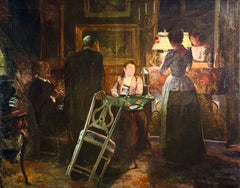
Partida de Tresillo
Partida de Tresillo

Partida de Tresillo

Located in Madrid, ES

JOSÉ JIMÉNEZ ARANDA Spanish, 1837 - 1903 PARTIDA DE TRESILLO signed, located & dated “Jz. Aranda / Madrid. 1893.” (lower right) oil on canvas 31-1/2 x 39-1/3 inches (80 x 100 cm) unframed BIBLIOGRAPHY - This painting being mentioned and reproduced in “LA ILUSTRACION ESPAÑOLA Y AMERICANA”, Madrid, September 15th, 1895 - B. Pantorba, José Jiménez Aranda, 1973, p. 75, 203 - José Jiménez Aranda, 1837-1903: Centro Cultural El Monte, Sevilla, October, 2005, reproduced on p. 102 EXHIBITED Madrid, Esposición Nacional de Bellas Artes, 1895 PROVENANCE Private Collection, USA José Jiménez Aranda (7 February 1837 – 6 May 1903) was a Spanish painter and brother of the painters Luis Jiménez...

Category

1890s Realist Fabio Fabbi Art
Materials

Oil, Canvas

Previously Available Items
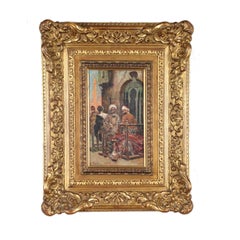
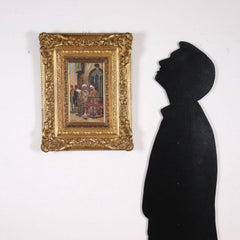
Arabic coffee, late XIXth century

Arabic coffee, late XIXth century

By Fabio Fabbi

Located in Milan, IT

Oil on the table. signed lower left. An orientalist subject who proposes the Arab coffee as a place also responsible for smoking the hookah, an activity in which two men are intent: ...

Category

Late 19th Century Other Art Style Fabio Fabbi Art
Materials

Oil

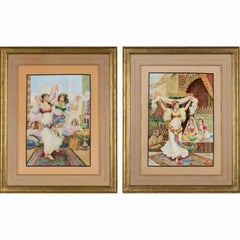
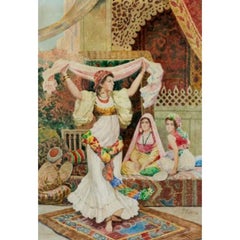
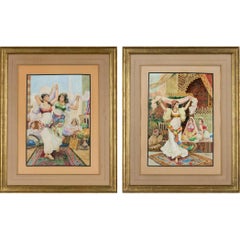
Fabio Fabbi ‘Italian, 1861-1946’ Pair of Orientalist Watercolors "Harem Dancers"

Fabio Fabbi ‘Italian, 1861-1946’ Pair of Orientalist Watercolors "Harem Dancers"

By Fabio Fabbi

Located in Queens, NY

Fabio Fabbi (Italian, 1861-1946) An exceptional pair of Orientalist Watercolors "Harem Dancers" Each signed F. Fabbi, lower right. Each watercolor on paper Sight Size o...

Category

19th Century Fabio Fabbi Art
Materials

Paper, Watercolor

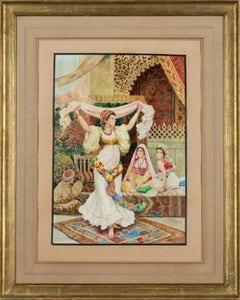
Fabio Fabbi ‘Italian, 1861-1946’ Pair of Orientalist Watercolors "Harem Dancers"

Fabio Fabbi ‘Italian, 1861-1946’ Pair of Orientalist Watercolors "Harem Dancers"

By Fabio Fabbi

Located in Long Island City, NY, NY

Fabio Fabbi (Italian, 1861-1946) An exceptional pair of Orientalist Watercolors "Harem Dancers" Each signed F. Fabbi, lower right. Each watercolor on paper Sight Size ...

Category

19th Century Italian Islamic Antique Fabio Fabbi Art
Materials

Paint

Fabio Fabbi art for sale on 1stDibs.

Find a wide variety of authentic Fabio Fabbi art available for sale on 1stDibs. You can also browse by medium to find art by Fabio Fabbi in oil paint, paint, canvas and more. Not every interior allows for large Fabio Fabbi art, so small editions measuring 16 inches across are available. Customers who are interested in this artist might also find the work of Addison Thomas Millar, Dommersen, William Raymond, and John Horace Hooper. Fabio Fabbi art prices can differ depending upon medium, time period and other attributes. On 1stDibs, the price for these items starts at $28,000 and tops out at $75,000, while the average work can sell for $49,000.

Artists Similar to Fabio Fabbi