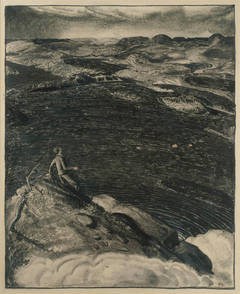
By George Wesley Bellows
Located in Fairlawn, OH
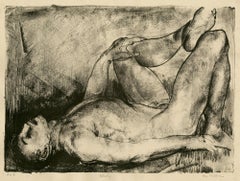
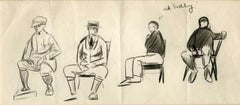
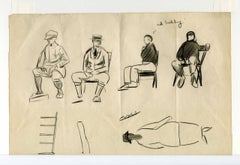
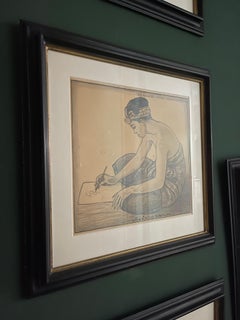
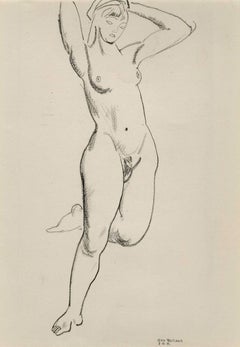
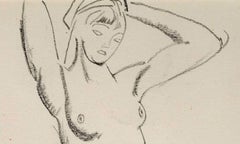
Standing Female Nude
Graphite on wove paper, c. 1915
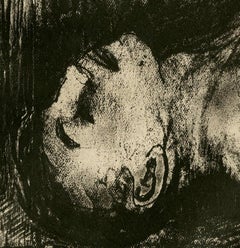
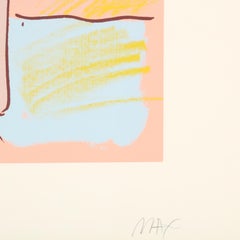
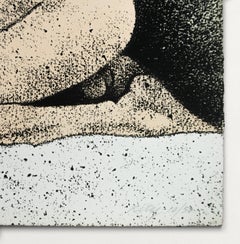
Signed by the artist's daughter, Jean Bellows Booth (JBB) (see photo)
Provenance:
Estate of the artist
H. V. Allison Galleries (#94 on partial label), agent for Bellows Trust
Ronald Sloter, Columbus, OH, noted collector
Columbus College of Art and Design
Biography
George Wesley Bellows grew up in Columbus, Ohio, the son of a devout and solidly Midwestern building contractor, and a mother who hoped that her son would become a Methodist Bishop. He always felt deeply ambivalent about his father, noting at the time of his death that, "He was a wonderfully fine man, yet being fifty-five when I appeared, his point of view, his character even, belonged to so remote a past that I look upon many of his ideas to this day with amazement and sorrow."
Teased as a sissy by his classmates, George Bellows quickly learned to defend himself with his fists, and compensated for his gangling awkwardness by becoming an outstanding athlete, particularly in baseball. His love of drawing was kindled early since he was forbidden to play outside on Sundays but allowed to draw while his mother read aloud from the Bible.
At Ohio State University, George Bellows proved a spirited extrovert, excelling in baseball as well as in the new sport of basketball, singing in theatricals, and producing drawings of Gibson-like girls for the university's magazine. Bellows's athletic prowess almost diverted him from a career in art, but in 1904 he decided to turn down a professional baseball contact and move to New York City to study painting.
The sprawling, teaming city of New York was a revelation to him after the neat lawns and tidy homes of Columbus. There he quickly fell under the spell of the charismatic teacher Robert Henri, who introduced him to Shaw, Ibsen and socialism, and inspired him to shift from drawing Gibson Girls to painting the life of the streets. Bellows was still a relative newcomer to New York when Henri and his followers staged their famous exhibition of "The Eight" at the Macbeth Gallery, and consequently he was not included. But in spirit his work belongs with that display - perhaps someday Henri’s group will be rechristened "The Nine" to pay tribute to the fact that George Bellows was the painter whose work best expresses the goals of the group.
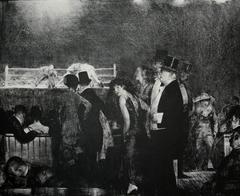
In 1906 Bellows painted his first masterpiece, "The Cross-Eyed Boy." He followed with several other equally memorable likenesses of street urchins, and then expanded his vision with a series of masterful urban scenes that record such subjects as boys swimming...
Category
1920s Ashcan School George Wesley Bellows Art