George Romney Portrait Paintings

English, 1734-1802

George Romney is best known as one of British society’s foremost portrait painters of the 18th century, rivaling other widely acknowledged portraitists such as Thomas Gainsborough and Joshua Reynolds.

Born in 1734 in Dalton-on-Furness, Romney was the son of a cabinetmaker. In 1755, he began his artistic career as an apprentice to portrait painter Christopher Steele before traveling to northern England to establish a painting studio in Kendal. Romney’s talent in portraiture proved fruitful. By 1762, he had made enough money to set up a studio in London, where he became renowned for an “ability to paint flattering images regardless of personality.” 

During the 1760s, Romney had hoped to become a history painter but was unsuccessful. To refine and improve his technique, he traveled to Rome in 1773, where he spent two years studying the Old Masters, including Titian, Correggio and Raphael. While there, he was also influenced by the works of Swiss painter Henry Fuseli.  

Upon his return to London, in 1775, and with his newly honed painting style, Romney became even more popular among the British aristocracy and nobility. Although his primary aspiration was to make a living as a historical painter, Romney was in demand as a portraitist. His favorite subjects were children and women, particularly his muse, Emma Hart — who later became Lady Hamilton and mistress of Admiral Lord Nelson. Romney painted several Romantic portraits and drew many sketches of Lady Hamilton, whom he considered to represent the ideal of feminine beauty.

In his later years, Romney produced several portraits and drawings of Shakespearean subjects for John Boydell’s Shakespeare Gallery in 1790. 

Romney’s figurative works, portraits and prints are held in collections of numerous major museums and galleries, including the National Portrait Gallery in London, the National Gallery of Canada in Ottawa, the Metropolitan Museum of Art and the Frick Collection in New York. In 2002, an exhibition commemorating the bicentenary of Romney’s death was organized by the National Museums Liverpool in partnership with the National Portrait Gallery and the Huntington Library, Art Collections and Gardens in San Marino, California. 

On 1stDibs, find a range of original George Romney drawings, paintings and prints.

to
2
1
3
Overall Width
to
Overall Height
to
3
1
1
3
3
4
4
3
3
2
1
1
4
4
1
1
9
281
120
85
69
3
3
1
Artist: George Romney
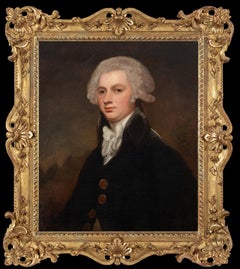
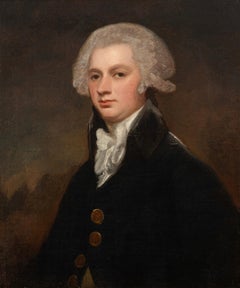
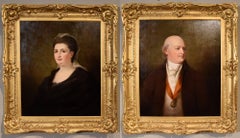
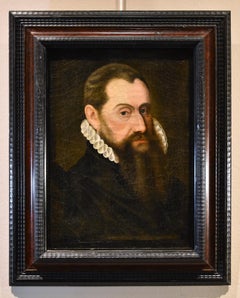
Portrait of a Gentleman, traditionally identified as Edward Addison, Esq., 1780s

Portrait of a Gentleman, traditionally identified as Edward Addison, Esq., 1780s

By George Romney

Located in Edinburgh, Scotland

George Romney (1734-1802) Portrait of a Gentleman, traditionally identified as Edward Addison, Esq., c.1780s Oil on canvas In a period carved and gilded swept frame 76.3 x 63.2 cm.; ...

Category

1780s Old Masters George Romney Portrait Paintings

Materials

Oil

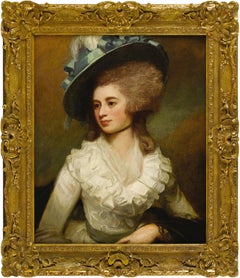
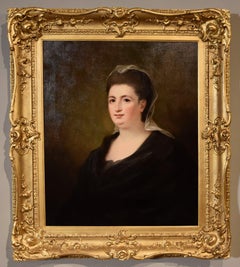
Portrait of Lady Caroline Price

Portrait of Lady Caroline Price

By George Romney

Located in Miami, FL

DESCRIPTION: Perhaps the best Romney in private hands. If Vogue Magazine existed in the late 18th century, this image of Lady Caroline Price would be ...

Category

1970s Old Masters George Romney Portrait Paintings

Materials

Oil, Canvas

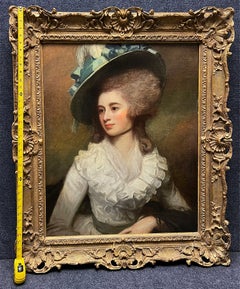
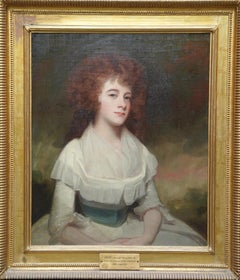
Portrait of Anne Evelyn - British 18thC Old master oil painting excellent prov.

Portrait of Anne Evelyn - British 18thC Old master oil painting excellent prov.

By George Romney

Located in Hagley, England

This stunning British 18th century Old Master portrait oil painting, with exceptional provenance, is by noted artist George Romney. It was painted in 1788, commissioned by James Evelyn of Felbridge as it is of his younger daughter Anne, aged 20 years old. James was a Doctor of Law and Anne's mother was his second wife, Jane. Felbridge house, Anne's home, was in the village of Godstone in Surrey. This superb oil painting is a seated portrait of Anne, wearing a white dress with a green sash, her forearms exposed and her hands in her lap. Anne is blessed with the most wonderful long auburn curly hair and is visually stunning. Her body is partly turned away from the artist/viewer and she is slightly gazing down at us with confident, clear eyes. Anne is pictured in a landscape with a dramatic sky behind her. Romney's brushwork on her dress, hair and the background is superb. The delicate detailing of her facial features is also stunning. Sometimes Old Master portraits can be a little staid, but this one of Anne with her wild auburn hair and bold look is just magnificent. This is a fantastic example of George Romney's work and of an 18th century British Old Master with exceptional detailed provenance. Name plate states: Anne, younger daughter of James Evelyn of Fellbridge Esq. 1788, aged 20. Romney. Provenance. With Charles Cecil Cope Jenkinson, 3rd Earl of Liverpool (1784-1851) With The Hon. Henry Berkeley Portman (1860-1923), Later 3rd Viscount Portman; with Emma, Viscountess Portman (1862-1929) By 1926; with her daughter Lady Moyra Dawson-Damer (1897-1962) Thence by family descent. Painted in 1788. There are various labels verso. Mentioned in Lord Hawkesbury's Catalogues of Portraits at Compton Place and at Buxted Park, in Sussex, 1903, p.18, no. 3, at Buxted Park, as in the 'Dining Room, South Wall'. Further Bibliography: Gower (R. S.) Romney, London, 1904, p. 175 Kidson (Alex) George Romney, A Complete Catalogue of his Paintings, New Haven and London: Yale University Press, 2015, I, p. 205, no. 422 (illus).Ward (Humphrey) and Roberts (William) Romney: A Biographical and Critical Essay, London: T Agnew & Sons, 1904, p. 51 Condition. Oil on canvas. Image size 30 inches by 24 inches and in good condition. Frame. Housed in an ornate gilt frame with name plate, 37 inches by 31 inches and in good condition. George Romney (1734-1802) was born in Dalton-on-Furness, Lancashire, on 15 December 1734, the third of the eleven children of John Romney and Anne Simpson. Leaving school at the age of eleven, he worked for eight years in his father's cabinetmaking workshop before being apprenticed to a local painter, Christopher Steele, with whom he served for two years, from 1755 to 1757, in Kendal, York, and Lancaster. He married a Kendal girl, Mary Abbot...

Category

1780s Old Masters George Romney Portrait Paintings

Materials

Oil

Related Items
Rebel - Oil on Canvas Figurative Painting, 40h x 30w in, Signed, 2026

Rebel - Oil on Canvas Figurative Painting, 40h x 30w in, Signed, 2026

By Bruno Surdo

Located in Chicago, IL

A contemporary cowboy is rendered with the gravity of a classical male nude. Surdo treats the body with the care of an Old Master while layering in the mythology of American masculin...

Category

2010s Old Masters George Romney Portrait Paintings

Materials

Canvas, Oil

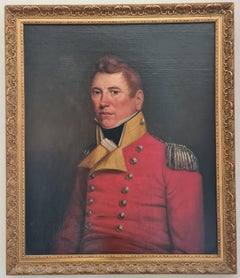
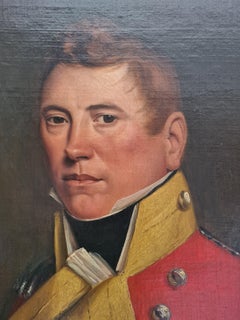
18th Century Oil on Canvas Portrait, Major Alexander Brown in Military Uniform.

18th Century Oil on Canvas Portrait, Major Alexander Brown in Military Uniform.

By Sir David Wilkie

Located in Cotignac, FR

18th Century Military portrait of a young officer in Napoleonic period military dress. The painting is not signed but the subject is Major Alexander Brown. The work is oil on canvas later mounted on board and presented in a fine 'Regence style' carved gilt frame. There are labels to the back referring to the subject, 'Major Brown of Trinity' and a framers trade label from Edinburgh. A magnificent and imposing portrait of a young military officer in the prime of his life. His red uniform adorned with fine buttons, fringed epaulettes and high gilt collar. His ruddy complexion offset by his stylish hair, a quiff and swept forward to the sides as was the fashion at the time. Sir David Wilkie RA (18 November 1785 – 1 June 1841) was a Scottish painter, especially known for his portraits, including formal royal ones, and scenes from his travels to Europe and the Middle East. He painted successfully in a wide variety of genres, including historical scenes. His main base was in London, but he died and was buried at sea, off Gibraltar, returning from his first trip to the Middle East. He was sometimes known as the "people's painter". He was Principal Painter in Ordinary to King William IV and Queen Victoria. Apart from royal portraits, his best-known painting today is probably The Chelsea Pensioners Reading the Waterloo Dispatch of 1822 in Apsley House. Sir David Wilkie was actually admitted in 1799 (despite only being 14) through the influence of the Earl of Leven...

Category

Late 18th Century Old Masters George Romney Portrait Paintings

Materials

Canvas, Oil, Board

Portrait Noblewoman Kneller 17/18th Century Paint Oil on canvas Old master Art

Portrait Noblewoman Kneller 17/18th Century Paint Oil on canvas Old master Art

Located in Riva del Garda, IT

Godfrey Kneller (Lübeck 1646 – London 1723) Portrait of an English noblewoman, presumably Mary Capel, Countess of Essex (1679–1726) Oil on canvas 128 x 104 cm. In frame 146 x...

Category

17th Century Old Masters George Romney Portrait Paintings

Materials

Oil

Soldier in an Interior, Early 17th Century Dutch Oil

Soldier in an Interior, Early 17th Century Dutch Oil

Located in London, GB

Pieter Symonsz Potter Dutch 1600 - 1652 Soldier in an Interior Oil on oak panel, red seal to reverse Image size: 15 x 10 3/4 inches Dutch Ebonised frame Bathed in a well lit roo...

Category

Early 17th Century Old Masters George Romney Portrait Paintings

Materials

Oil, Board

Study of a Head, Oil on Laid Paper, 17th Century, Unsigned, 39.5x29 cm

Study of a Head, Oil on Laid Paper, 17th Century, Unsigned, 39.5x29 cm

By Artus Wolfort

Located in Paris, Île-de-France

Artus WOLFAERTS (1581-1641) Study of a head Oil on paper, transferred on panel. 39,5 x 29 cm Unsigned Provenance Private collection, France Firstly thought to be from Rubens’s S...

Category

17th Century Old Masters George Romney Portrait Paintings

Materials

Oil, Laid Paper

Child Jesus Paint Oil on canvas Old master 17th Century Baby Italian Religious

Child Jesus Paint Oil on canvas Old master 17th Century Baby Italian Religious

Located in Riva del Garda, IT

Lombard painter active in the 17th century Infant Jesus Oil painting on canvas 70 x 82 cm. - In antique frame 78 x 91 cm. This painting depicts an unusual and pleasant iconographic...

Category

17th Century Old Masters George Romney Portrait Paintings

Materials

Oil

19th Century Historical English Painting David Wilkie

19th Century Historical English Painting David Wilkie

By Sir David Wilkie

Located in Roma, IT

Sir David Wilkie RA (18 November 1785 – 1 June 1841) “The Parish Beadle” Oil on canvas Although unsigned, this beautiful painting is undoubtedly an original work by David Wilkye as...

Category

Early 19th Century Old Masters George Romney Portrait Paintings

Materials

Canvas, Oil

Portrait Duchess Wissing Paint 17th Century Oil on canvas Old master English

Portrait Duchess Wissing Paint 17th Century Oil on canvas Old master English

Located in Riva del Garda, IT

Willem Wissing (Amsterdam, 1656 – Stamford, 1687) attributed Portrait of the Duchess of Marlborough as Minerva Oil on canvas 128 x 103 cm – in a gilt frame 149 x 125 cm. Prov...

Category

17th Century Old Masters George Romney Portrait Paintings

Materials

Oil

Queen Sofonisba Portrait Nuvolone Paint 17th Century Oil on canvas Old master

Queen Sofonisba Portrait Nuvolone Paint 17th Century Oil on canvas Old master

Located in Riva del Garda, IT

Carlo Francesco Nuvolone (Milan 1609 – Milan 1662), attributed The Suicide of Queen Sofonisba Oil on canvas 76 x 60 cm. - In frame 100 x 85 cm. This painting captures the tr...

Category

17th Century Old Masters George Romney Portrait Paintings

Materials

Oil

Portrait of Lady, Mary Hammond, Oil on Panel c.1618-22, Manor House Provenance

Portrait of Lady, Mary Hammond, Oil on Panel c.1618-22, Manor House Provenance

By Cornelius Johnson

Located in London, GB

Portrait of Mary Hammond in Sumptuous Attire, Jewels and Lace c.1618-22 Circle of Cornelius Johnson (1593-1661) This portrait of a lady, presented by Titan Fine Art, is an exquisite example of early seventeenth-century portraiture, remarkable both for the lavishness of its subject’s attire and for the distinguished provenance that has accompanied it across four centuries that adds a rich layer of historical significance. It was once part of the notable collection of Sir William Temple, 1st Baronet (1628–1699) at Moor Park, a stately mansion in Hertfordshire. Temple was a diplomat, essayist, philosopher, and the patron of Jonathan Swift. He was a key participate at an important period in English history, helping not only to negotiate the Triple Alliance, but also the marriage between William of Orange and Princess Mary. His collection at Moor Park was well known in its day, reflecting both his cultivated taste in art and literature and his international connections. Its fabulous attire, rendered with almost microscopic attention, is not merely decorative but emblematic of a world in which visual display was a language of power. Its provenance, stretching from the English country house and Enlightenment scholarship to modernist circles, forms a microcosm of cultural exchange across four centuries. Thus, the portrait of Mary Hammond stands as both a masterpiece of early seventeenth-century craftsmanship and a witness to the grand narrative of collecting and connoisseurship—a testament to the enduring fascination of beauty, status, and history intertwined. By tradition the portrait depicts Mary Hammond (born c.1602), who was Sir William Temple’s mother, and the daughter of the royal physician who served James I, Dr John Hammond (c.1555–1617) and whose family owned Chertsey Abbey in Surrey. The woman appears between 18 and 25 years old, and Mary would be about 18–20 when the portrait was painted circa 1620, therefore this matches the apparent age of the sitter and the fashion perfectly. Mary stood at the intersection of learned/courtly and gentry worlds. On 22 June 1627 she married her first cousin (a common practice for consolidating family wealth and influence during that era.) Sir John Temple (1600-1677) at St Michael, Cornhill in the City of London. The couple resided nearby, at Blackfriars. Her marriage to Sir Temple placed her at the heart of the social and political circles that shaped British history. The couple had at least five children, and they became highly significant historical figures: The eldest son, Sir William Temple, 1st Baronet, became a distinguished diplomat, statesman, and essayist, famous for his role in the Triple Alliance and as a patron and mentor to the writer Jonathan Swift – our portrait was in his collection. Their daughter, Martha Temple, later Lady Giffard, was a notable figure in her own right. She became her brother William's first biographer and a respected letter-writer, providing a rare female perspective on the events and high society of the time. Another son, also named Sir John Temple, became Attorney General for Ireland and was involved in the turbulent politics surrounding the English Civil War and the Act of Settlement in Ireland. Mary died in November 1638 after giving birth to twins and was buried at Penshurst, Kent. The family's connection to Penshurst Place is a major point of interest as this historic manor was the seat of the Sidney family, a major aristocratic and literary dynasty. The portrait was in the collection of the Mary’s son, Sir William Temple. From there it descended to his daughter, and then to her nephew, the Reverend Nicholas Bacon of Spixworth Park, Norfolk (his mother was Dorothy Temple who died in 1758). Indeed, by this time, many Temple relics were in the collection at Spixworth including the engagement ring of the illustrious Dorothy Osborne, Lady Temple, wife of Sir William Temple. The portrait thus linked two prominent English families—the Temples and the Bacons—for generations. It is listed in a Spixworth Park inventory of 27 October 1910 by the local collector and art historian, Prince Duleep Singh. He described it with characteristic precision as: “No. 69. Lady Half Length, body and face turned towards the sinister, hazel eyes upwards to the dexter, red hair dressed low and over the ears, a jewelled coronet behind, pearl ear-rings tied with black strings. Dress: black, bodice cut low and square, with lace all round the opening and over shoulders, sleeves with double slashes showing red lining and lace under, falling thin pleated lace collar, black strings tied behind it, a jewel suspended on a black string round the neck, and a double row of agate and silver beads all round to the shoulders. M. In brown veined stone frame. Age 30. Date c.1620. It is called ‘Dutch portrait from Moor Park, mentioned by Nicholas Bacon of Coddenham and Shrubland as a very valuable painting.’ A few years later, when Robert Bacon Longe’s executors sold the contents of Spixworth Park (19–22 May 1912), the portrait appeared as lot 262, described as: “A very valuable half-length portrait on panel, ‘Dutch Lady, with deep lace collar and pearl and amethyst necklace, pendant, and ear-rings, and auburn hair, with coronet’ Early Dutch School 1620.” Following this sale the painting entered the collection of David and Constance Garnett, prominent literary figures of the early twentieth century, before being gifted to Andre Vladimervitch Tchernavin by 1949, and subsequently passed by him to the present owners in 1994. The two great houses associated with the painting, Moor Park and Spixworth Park, further underscore its pedigree. Moor Park, in Hertfordshire, was among the grandest country estates of seventeenth-century England—its gardens famously redesigned by Sir William Temple himself and later influencing landscape design across Europe. Sir William's Temple's secretary was Jonathan Swift, who lived at Moor Park between 1689 and 1699. Swift began to write "A Tale of the Tub" and "The Battle of the Books" at Moor Park. Spixworth Park, near Norwich, was an Elizabethan country house in Spixworth, Norfolk, located just north of the city of Norwich. It was home to successive generations of the Bacon family, one of Norfolk’s most distinguished dynasties (later, the Bacon Longe family), who were considerable land owners (owning Reymerston Hall, Norfolk, Hingham Hall, Norfolk, Dunston Hall, Norfolk, Abbot's Hall, Stowmarket, and Yelverton Hall, Norfolk). Spixworth Hall and the surrounding parkland remained in the Longe family for 257 years until 1952, when it was demolished. Rendered with meticulous precision and sumptuous detail, the painting depicts an elegantly dressed woman—her poise, costume, and jewels all communicating a message of wealth, refinement, and social rank. Every brushstroke conveys an artist deeply attuned to the textures of luxury and the nuances of feminine dignity. The sitter’s attire is nothing short of magnificent. Her bodice and sleeves are fashioned from the finest black silk or satin, the fabric absorbing and reflecting light in equal measure, suggesting both depth and lustre. Around her shoulders lies an opulent lace ruff—a deep, radiating lace collar worked in such intricate detail that it testifies to both the artist’s technical skill and the sitter’s extravagant taste. Lace of this quality, especially Venetian or Flemish bobbin lace, was one of the costliest materials available in early seventeenth-century Europe, its weight worth more than gold, and was a marker of prestige that rivalled jewels in value. The painter has taken great care to delineate every loop and scallop of the lace, achieving an almost tactile realism. Pale skin was also a desired beauty standard, sometimes accentuated with contrasting black ribbons or strings. Her jewels amplify this display of affluence. Matching earrings and a delicate coronet or jewelled hair ornament with a feather adorn her hair, which is styled in the modest yet fashionable manner of the time. These details are far from decorative excess—they serve as visual emblems of social standing, refinement, and lineage. Portraits of this kind were statements of both identity and aspiration, intended to project a family’s prosperity and moral virtue to posterity. The portrait was most likely painted in London around 1618-1622. The low-cut, décolletage-revealing neckline was fashionable in the courts of England and France during the late Elizabethan and Jacobean eras (c. 1590s-1610s), this style did not prevail in the public fashion of the Low Countries at this time. This style of lace ruff — delicate needle lace with geometric openwork — was fashionable from c.1615 to 1622, and the jewelled caul (hair net) and lace edging over a stiffened coif are consistent with high-status English women’s portraiture between 1610–1620. The puffed sleeve slash and the use of pink satin beneath black velvet belong squarely to the late Jacobean...

Category

17th Century Old Masters George Romney Portrait Paintings

Materials

Oil, Panel

18th century French Old Master Portrait of a woman in oriental costume

18th century French Old Master Portrait of a woman in oriental costume

Located in Aartselaar, BE

French 18th century old master portrait of a majestic lady dressed "à la Turque" The sitter at the viewer with a kind and enigmatic smile and twinkling eyes. She looks elegant and kind, yet also has an intelligent and determined aura, reflecting the character of someone who is in charge of her own life and destiny. De Silvestre paid great attention to her spectacular outfit, which is striking in its portrayal of the sumptuous fabrics and their decorative richness. She is wearing a luxurious royal blue robe à la...

Category

1740s Old Masters George Romney Portrait Paintings

Materials

Canvas, Oil

Dutch-Flemish Baroque old master - Late 17th century nobleman portrait oil

Dutch-Flemish Baroque old master - Late 17th century nobleman portrait oil

Located in Varmo, IT

European master (17th–18th century) - Portrait of a Nobleman. 81 x 65 cm (without frame) - 100.5 x 83.5 cm (with frame). Oil on canvas, in a carved and gilded wooden frame (not sig...

Category

17th Century Old Masters George Romney Portrait Paintings

Materials

Canvas, Oil

George Romney portrait paintings for sale on 1stDibs.

Find a wide variety of authentic George Romney portrait paintings available for sale on 1stDibs. You can also browse by medium to find art by George Romney in oil paint, paint, canvas and more. Much of the original work by this artist or collective was created during the 18th century and is mostly associated with the Old Masters style. Not every interior allows for large George Romney portrait paintings, so small editions measuring 25 inches across are available. Customers who are interested in this artist might also find the work of Sir Godfrey Kneller, and Studio of Sir Peter Lely. George Romney portrait paintings prices can differ depending upon medium, time period and other attributes. On 1stDibs, the price for these items starts at $8,855 and tops out at $1,495,000, while the average work can sell for $751,928.
Questions About George Romney Portrait Paintings
  • 1stDibs ExpertApril 5, 2022
    George Romney studied under Christopher Steel from 1755-1757. Romney then went on to become one of the most fashionable portrait artists of his day. You can shop a selection of George Romney’s pieces from some of the world’s top art dealers on 1stDibs.