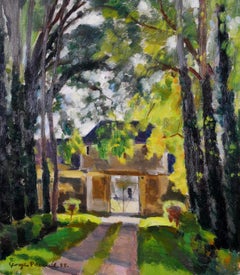
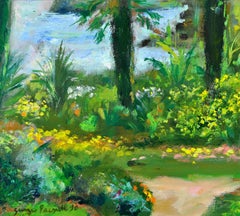
Georges Pacouil Landscape Paintings

French, 1903-1997
undefined
to
1
1
2
1
Overall Width
to
Overall Height
to
4
3
1
3
2
2
2
1
1
1
1
1
1
4
4
3
1
1
4
640
632
484
343
2
2
4
Artist: Georges Pacouil
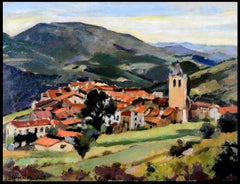
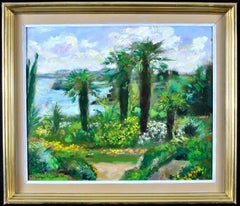
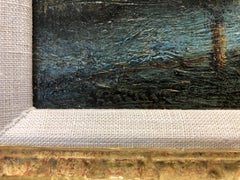
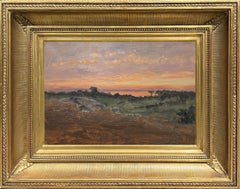
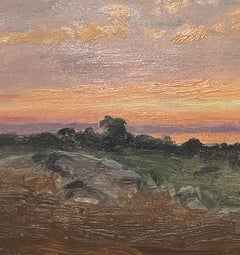
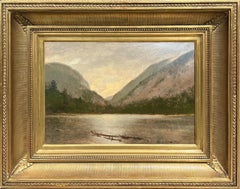
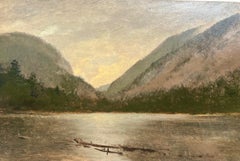
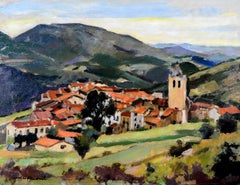
Pyrenees Landscape - Early 20th Century French Impressionist Oil Painting

Pyrenees Landscape - Early 20th Century French Impressionist Oil Painting

By Georges Pacouil

Located in Sevenoaks, GB

A beautiful early 20th century French impressionist oil on canvas depicting a Pyrenees landscape, by Georges Pacouil. The work is signed lower left and inscribed with artist's name...

Category

Early 20th Century Georges Pacouil Landscape Paintings

Materials

Oil, Canvas

Related Items
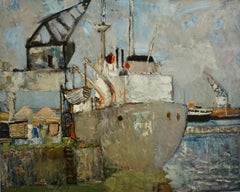
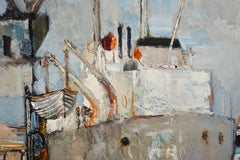
Mid-20th Century Oil on Board Abstract Impressionist Maritime Scene, René Genis

Mid-20th Century Oil on Board Abstract Impressionist Maritime Scene, René Genis

By René Genis

Located in Berlin, MD

Step into the bustling energy of a portside moment with René Genis’ “Les Grues” (The Cranes)”, a captivating oil-on-mat-board painting that transforms the in...

Category

Late 20th Century Abstract Impressionist Georges Pacouil Landscape Paintings

Materials

Oil, Illustration Board

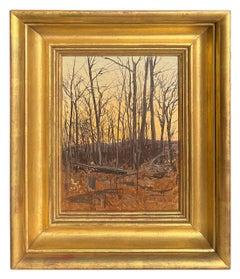
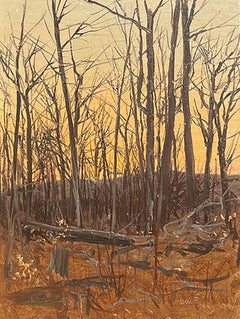
Dusk Forest Scene, Catskills by Lockwood DeForest (American, 1850-1932)

Dusk Forest Scene, Catskills by Lockwood DeForest (American, 1850-1932)

By Lockwood DeForest

Located in New York, NY

"Dusk Forest Scene, Catskills," 1875 by Hudson River School painter Lockwood DeForest (American, 1850-1932) is oil on artists card-stock and measures 9.5 x 7 inches. The work is signed by DeForest, and dated May 13, 1875 at lower right. The work is framed in an elegant, period appropriate frame, and ready to hang. Lockwood DeForest was born in New York in 1850 to a prominent family. He grew up in Greenwich Village and on Long Island at the family summer estate in Cold Spring Harbor. As was customary for a cultivated family in the Gilded Age, the DeForests made frequent trips abroad. Excursions to the great museums, which were prominent on the DeForests agenda, deepened the young Lockwood's familiarity with European painting and sculpture. Though he had begun drawing and painting somewhat earlier, it was during a visit to Rome in 1868 that nineteen-year-old DeForest first began to study art seriously, taking painting lessons from the Italian landscapist Hermann David Salomon Corrodi (1844–1905). More importantly, on the same trip, Lockwood met one of America’s most celebrated painters, (and his maternal great- uncle by marriage) Frederic Edwin Church (1826–1900), who quickly became his mentor. DeForest accompanied Church on sketching trips around Italy and continued this practice when they both returned to America in 1869. Early on in his career, de Forest made a habit of recording the date and often the place of his oil sketches, as to create a visual diary of his travels. Lockwood’s profession as a landscape painter can be primarily attributed to Frederic E. Church and his belief in the young artist’s talent. DeForest often visited Church in the Hudson River community of Catskill where, in addition to sketching trips and afternoons of painting, he assisted with the architectural drawings and planning of Olana. In 1872, DeForest took a studio at the Tenth Street Studio Building in New York. During these formative years DeForest counted among his friend’s artists such as Sanford Robinson Gifford (1823–80), George Henry Yewell (1830–1923), John Frederick Kensett (1816–72), Jervis McEntee (1828–91), and Walter Launt Palmer (1854–1932). Over the next decade DeForest experienced success as a painter. He exhibited for the first time at the National Academy of Design in 1872, and made two more painting trips abroad, in 1875–76 and 1877–78, traveling to the major continental capitals but also the Middle East and North Africa. His trip to the Middle East and the library at Church’s home, Olana, established his interest in design during his mid-twenties. From about 1878 to 1902, landscape painting was overshadowed by his activities and preoccupation with East Indian architecture and décor, a style that became quite fashionable in late nineteenth century America. From 1879-1883, de Forest founded Associated Artists along with Louis Comfort Tiffany, Candace Wheeler...

Category

19th Century Hudson River School Georges Pacouil Landscape Paintings

Materials

Oil, Board

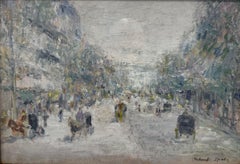
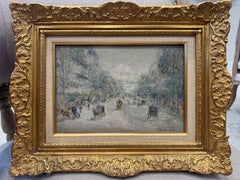
Les Boulevards, Paris

Gabriel SpatLes Boulevards, Paris

$1,800

H 8 in W 11.25 in

Les Boulevards, Paris

By Gabriel Spat

Located in Greenville, DE

Loosely painted Paris street scene, typical of Spat's early work. The painting's surface is in excellent condition, however it needs varnishing as the colors will be much more pronou...

Category

Early 20th Century Impressionist Georges Pacouil Landscape Paintings

Materials

Oil, Cardboard

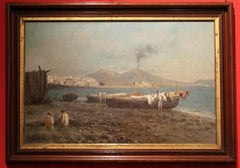
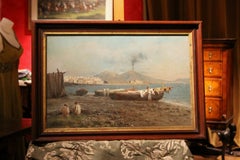
Italian Impressionist Oil on Board Marine Landscape Painting Naples Bay View

Italian Impressionist Oil on Board Marine Landscape Painting Naples Bay View

By Francesco Coppola Castaldo

Located in Firenze, IT

Everyday fishermen life is captured in this wonderful Italian impressionist late 19th century oil painting on thin board titled fishermen ashore. We love the neutral and natural colo...

Category

Late 19th Century Impressionist Georges Pacouil Landscape Paintings

Materials

Oil, Board

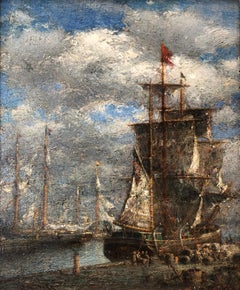
Home Safe
Home Safe

James Gale TylerHome Safe

$2,400

H 12 in W 10 in

Home Safe

By James Gale Tyler

Located in Greenville, DE

Very well executed seascape. Alternate title "In Point" inscribed on the rear. 17 x 15in in frame, including linen liner. ...

Category

Late 19th Century Impressionist Georges Pacouil Landscape Paintings

Materials

Oil, Board

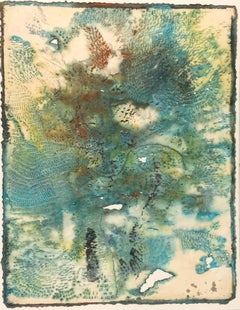
Untitled Jacques Rouby (1953-2019) Contemporary abstract art painted cardboard

Untitled Jacques Rouby (1953-2019) Contemporary abstract art painted cardboard

By Jacques Rouby

Located in Paris, FR

Painted sculpted cardboard Unique work Coming from the artist's studio Jacques ROUBY, the aesthetics of mystery "Experimental dreamer, passionate about graphic adventures, delibera...

Category

1990s Abstract Georges Pacouil Landscape Paintings

Materials

Oil, Cardboard

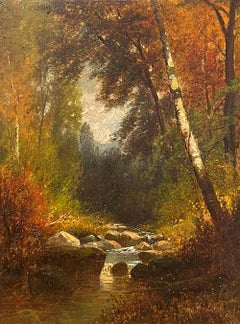
Adirondack Stream by Hudson River artist Joseph Antonio Hekking (1830-1903)

Adirondack Stream by Hudson River artist Joseph Antonio Hekking (1830-1903)

By Joseph Antonio Hekking

Located in New York, NY

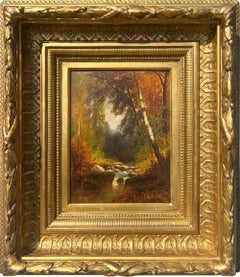
Painted by Hudson River School artist Joseph Antonio Hekking (1830-1903), "Adirondack Stream in Fall" is oil on board and measures 8.5 x 6.5 inches. The painting is signed at the low...

Category

19th Century Hudson River School Georges Pacouil Landscape Paintings

Materials

Oil, Board

Coming Home at Sunset

Coming Home at Sunset

By William Harnden

Located in Greenville, DE

Very well executed work by American artist William Harnden who specialized in Native American subjects. 23 3/4 x 29 1/2 in excellent condition frame. Signed lower right.

Category

Mid-20th Century Realist Georges Pacouil Landscape Paintings

Materials

Oil, Board

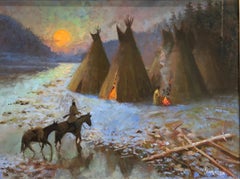
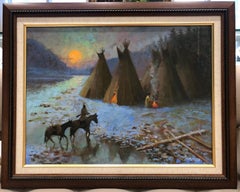
Native American Encampment

Native American Encampment

By William Harnden

Located in Greenville, DE

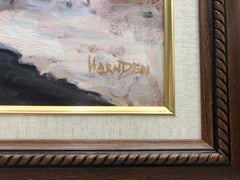
Very well executed work by American artist William Harnden who specialized in Native American subjects. 23 3/4 x 29 1/2 in excellent condition frame. Signed lower right.

Category

Mid-20th Century Realist Georges Pacouil Landscape Paintings

Materials

Oil, Board

New England Sunrise, 1910 by Lockwood DeForest (American, 1850-1932)

New England Sunrise, 1910 by Lockwood DeForest (American, 1850-1932)

By Lockwood DeForest

Located in New York, NY

"New England Sunrise," 1910 by Hudson River School painter Lockwood DeForest (American, 1850-1932) is oil on artists card-stock and measures 9.75 x 14 inches. The work is signed by DeForest and dated Sept. 17, 1910 at lower left. The work is framed in an elegant, period appropriate frame, and ready to hang. Lockwood de Forest was born in New York in 1850 to a prominent family. He grew up in Greenwich Village and on Long Island at the family summer estate in Cold Spring Harbor. As was customary for a cultivated family in the Gilded Age, the de Forests made frequent trips abroad. Excursions to the great museums, which were prominent on the de Forests agenda, deepened the young Lockwood's familiarity with European painting and sculpture. Though he had begun drawing and painting somewhat earlier, it was during a visit to Rome in 1868 that nineteen-year-old de Forest first began to study art seriously, taking painting lessons from the Italian landscapist Hermann David Salomon Corrodi (1844–1905). More importantly, on the same trip, Lockwood met one of America’s most celebrated painters, (and his maternal great- uncle by marriage) Frederic Edwin Church (1826–1900), who quickly became his mentor. DeForest accompanied Church on sketching trips around Italy and continued this practice when they both returned to America in 1869. Early on in his career, de Forest made a habit of recording the date and often the place of his oil sketches, as to create a visual diary of his travels. Lockwood’s profession as a landscape painter can be primarily attributed to Frederic E. Church and his belief in the young artist’s talent. De Forest often visited Church in the Hudson River community of Catskill where, in addition to sketching trips and afternoons of painting, he assisted with the architectural drawings and planning of Olana. In 1872, de Forest took a studio at the Tenth Street Studio Building in New York. During these formative years de Forest counted among his friend’s artists such as Sanford Robinson Gifford (1823–80), George Henry Yewell (1830–1923), John Frederick Kensett (1816–72), Jervis McEntee (1828–91), and Walter Launt Palmer (1854–1932). Over the next decade de Forest experienced success as a painter. He exhibited for the first time at the National Academy of Design in 1872, and made two more painting trips abroad, in 1875–76 and 1877–78, traveling to the major continental capitals but also the Middle East and North Africa. His trip to the Middle East and the library at Church’s home, Olana, established his interest in design during his mid-twenties. From about 1878 to 1902, landscape painting was overshadowed by his activities and preoccupation with East Indian architecture and décor, a style that became quite fashionable in late nineteenth century America. From 1879-1883, de Forest founded Associated Artists along with Louis Comfort Tiffany, Candace Wheeler...

Category

Early 20th Century Hudson River School Georges Pacouil Landscape Paintings

Materials

Oil, Board

Hudson Highlands by Lockwood DeForest (American, 1850-1932)

Hudson Highlands by Lockwood DeForest (American, 1850-1932)

By Lockwood DeForest

Located in New York, NY

"Hudson Highlands," by Hudson River School painter Lockwood DeForest (American, 1850-1932) is oil on artists card-stock and measures 9.5 x 14 inches. The work is framed in an elegant, period appropriate frame, and ready to hang. Lockwood de Forest was born in New York in 1850 to a prominent family. He grew up in Greenwich Village and on Long Island at the family summer estate in Cold Spring Harbor. As was customary for a cultivated family in the Gilded Age, the de Forests made frequent trips abroad. Excursions to the great museums, which were prominent on the de Forests agenda, deepened the young Lockwood's familiarity with European painting and sculpture. Though he had begun drawing and painting somewhat earlier, it was during a visit to Rome in 1868 that nineteen-year-old de Forest first began to study art seriously, taking painting lessons from the Italian landscapist Hermann David Salomon Corrodi (1844–1905). More importantly, on the same trip, Lockwood met one of America’s most celebrated painters, (and his maternal great- uncle by marriage) Frederic Edwin Church (1826–1900), who quickly became his mentor. DeForest accompanied Church on sketching trips around Italy and continued this practice when they both returned to America in 1869. Early on in his career, de Forest made a habit of recording the date and often the place of his oil sketches, as to create a visual diary of his travels. Lockwood’s profession as a landscape painter can be primarily attributed to Frederic E. Church and his belief in the young artist’s talent. De Forest often visited Church in the Hudson River community of Catskill where, in addition to sketching trips and afternoons of painting, he assisted with the architectural drawings and planning of Olana. In 1872, de Forest took a studio at the Tenth Street Studio Building in New York. During these formative years de Forest counted among his friend’s artists such as Sanford Robinson Gifford (1823–80), George Henry Yewell (1830–1923), John Frederick Kensett (1816–72), Jervis McEntee (1828–91), and Walter Launt Palmer (1854–1932). Over the next decade de Forest experienced success as a painter. He exhibited for the first time at the National Academy of Design in 1872, and made two more painting trips abroad, in 1875–76 and 1877–78, traveling to the major continental capitals but also the Middle East and North Africa. His trip to the Middle East and the library at Church’s home, Olana, established his interest in design during his mid-twenties. From about 1878 to 1902, landscape painting was overshadowed by his activities and preoccupation with East Indian architecture and décor, a style that became quite fashionable in late nineteenth century America. From 1879-1883, de Forest founded Associated Artists along with Louis Comfort Tiffany, Candace Wheeler...

Category

19th Century Hudson River School Georges Pacouil Landscape Paintings

Materials

Oil, Board

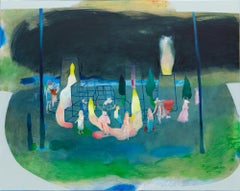
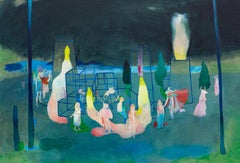
Incoherence of compulsory ways #1 - Hélène Duclos, Contemporary figurative paint

Incoherence of compulsory ways #1 - Hélène Duclos, Contemporary figurative paint

By Hélène Duclos

Located in Paris, FR

Oil on canvas Signed lower right Unique work 1 / Hélène DUCLOS, 2016 – Artist Statement “Questioning the human condition and the position of being alive – What is it to be a living being? Who / what can we believe? Who / what can we trust? How real is our view of the world? And how is that perspective angled, and ultimately limited? These are the issues at the heart of my work as an artist. Painting, drawing, engraving and embroidery give me the freedom to approach my subjects from an ambivalent and flexible standpoint. I am building up a dynamic body of work, like pieces that you can put together in one way or another to shape different structures, pierced with numerous openings. And the title that I give each piece acts as a possible clue as to how to enter inside that system. I can portray both softness and monstrosities. I focus on the links and barriers lying between living beings and their surroundings, and evoke how permeable these connections are. My aim is not to create a visual documentary reporting fact, but rather immerse myself in observing everyday life, and in a host of images depicting real events (pictures, photos and videos). Instilled with these images, I can give a more personalized, unique and allegorical vision of the world around me. I am also interested in the key transition periods of human existence, those turning points that forge our identity within a family, a group, and society as a whole at the heart of a specific environment. I centre on what makes up and creates cohesion (rituals, myths and tales….), and indeed the opposite - what leads to life becoming shattered, hindered and frustrated (moving populations, exile and migration…) Amidst a landscape roaming with wild beasts and hybrid creatures, between love and separation, metaphors for our own desires and fears lie in hiding, or reveal themselves in the painted or embroidered spaces. Sometimes they are etched with lines, symbols and tiny architectural designs. These works might depict our inner landscapes, as if harking back to a primordial and cosmic point of origin. My most recent collections recreate the images of bodies or landscapes using abstract zones and figurative details that have no direct link with either anatomy or geography. Intimacy and the unspeakable are themes that run throughout my work, and I make sure to incorporate areas of both visual tension and relief, so as to give the viewer the space to project him or herself into the work. And here, such paradoxes can only be reached through the interplay between abstraction and figuration.” 2 / Thierry Delcourt Psychiatrist, psychoanalyst and author of works on the process of artistic creation, and the conditions of existential and social creativity : "Entering into the world of Hélène Duclos in her drawings, paintings, embroidery and words means letting yourself be carried away by a torrent towards strange shores of creation where only a few artists have ever dared to venture. As if perched on a watchtower on the threshold of different worlds, Hélène Duclos throws us out of our depth, plunging us into spaces filled with destitute mankind, and guiding us through her stem-like maze of a scheme, bristling with roots and clues. But the mystery here, like a poetic, human rebus that never ends, only compels us to take a closer look.” 3 / Hélène Duclos ‘s biography : After graduating from the Duperré School of Applied Arts in Paris with a degree in textile design, I set off on a six-month sea voyage from Vannes in Brittany, to Dakar. On returning to France, I set up my atelier...

Category

2010s Contemporary Georges Pacouil Landscape Paintings
Materials

Canvas, Oil

Georges Pacouil landscape paintings for sale on 1stDibs.
Find a wide variety of authentic Georges Pacouil landscape paintings available for sale on 1stDibs. You can also browse by medium to find art by Georges Pacouil in oil paint, paint, board and more. Much of the original work by this artist or collective was created during the 20th century and is mostly associated with the Post-Impressionist style. Not every interior allows for large Georges Pacouil landscape paintings, so small editions measuring 23 inches across are available. Georges Pacouil landscape paintings prices can differ depending upon medium, time period and other attributes. On 1stDibs, the price for these items starts at $1,527 and tops out at $1,908, while the average work can sell for $1,718.