Gilbert Jackson Art

to
1
Overall Width
to
Overall Height
to
1
1
1
1
1
1
1
1
1
10,113
2,801
2,503
1,389
1
1
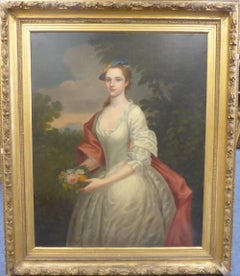
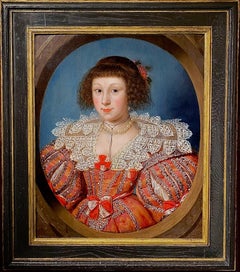
Artist: Gilbert Jackson
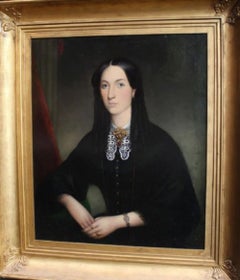
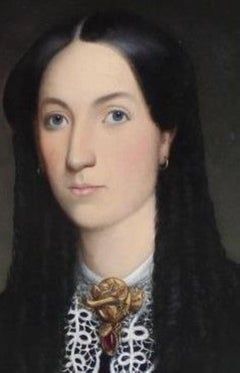
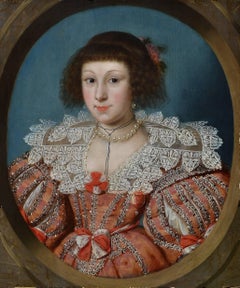
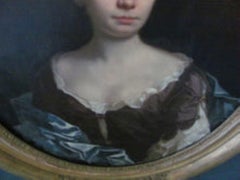
Portrait of a Girl, 17th Century English School Old Masters Oil
By Gilbert Jackson
Located in London, GB
Gilbert Jackson English Active: 1620 - 1650 Portrait of a Girl Oil on panel, signed upper left and Inscribed upper right Image size: 24 ½ x 20 inches Contemporary style hand made...
Category

17th Century Old Masters Gilbert Jackson Art
Materials

Oil

Related Items
Ecce Homo Coxie Paint 16/17th Century Paint Oil on table Old master Flemish Art
Located in Riva del Garda, IT
Circle of Michael Coxie (Malines, 1499 - Malines, 1592) Ecce Homo with Pontius Pilate Oil on panel Flemish school 16th-17th century 112 x 81 cm - framed 121 x 90 cm. The proposed p...
Category

16th Century Old Masters Gilbert Jackson Art
Materials

Oil

Study Of A Head
By Artus Wolfort
Located in Paris, Île-de-France
Artus WOLFAERTS (1581-1641) Study of a head Oil on paper, transferred on panel. 39,5 x 29 cm Unsigned Provenance Private collection, France Firstly thought to be from Rubens’s S...
Category

17th Century Old Masters Gilbert Jackson Art

Materials

Oil, Laid Paper

Study Of A Head
Study Of A Head
$9,023
H 15.56 in W 11.42 in
Portrait of a senior naval officer, c. 1740s
By Thomas Hudson
Located in Henley-on-Thames, England
Thomas Hudson (Devon 1701 - London 1779) Portrait of a senior naval officer, c. late 1740s Probably a captain or admiral; half-length, holding a telescope, with a warship beyond Oil on canvas 91.3 x 71.1 cm.; (within frame) 114.3 x 93.8 cm. (Unsigned) Provenance: Christie’s, London, 22 November 1985, lot 105 (as Thomas Hudson); Private collection, United Kingdom; Haynes Fine Art, Broadway, Worcestershire; Where acquired, private collection, United States, 16 August 1988; Neal Auction, New Orleans, 14 September 2025, lot 302 (as Attributed to Thomas Hudson); Where acquired by Haveron Fine Art. Literature: Bridgeman Art Library, The Bridgeman Art Library (London: The Library, 1995), p. 89 Christie’s, London, Important English Pictures (London: Christie’s, 22 November 1985) Archival: Witt Library, Courtauld Institute of Art (no. 061487); Heinz Archive and Library, National Portrait Gallery, 1725-50, Thomas Hudson: Men Authentic (1) (Box) This attractive and quintessential half-length is exemplary of Hudson’s leading portrait practice, produced in the years immediately preceding his decade-long dominance over the London market, beginning in 1749. The work is stylistically typical of Hudson's prime 1750s output, displaying a deliberate refinement of his technique: namely the emphasis of directional brushstrokes, which sensitively follow the contours of the facial features. However, since the sitter wears civilian dress and not a naval uniform (introduced officially in April 1748), a late 1740s date of creation is most likely. Displaying the merits of Hudson's evolving handling, a distinctive feathery quality is combined here with a striking chiaroscuro effect, which Hudson borrowed directly from Rembrandt. Amalgamating the rich colouring of the Rococo with a mannered Baroque posing, Hudson renders the senior naval officer with a characteristic presence. Resting one hand assuredly at his hip, the finely worked telescope illustrates the officer’s seniority; the warship sailing on the horizon beyond provides further indication of his commanding rank. The telescope is held by a hand modelled with sculptural poise, and the typically Van Dyck manner (seen elsewhere, e.g. Princess Amelia Sophia Eleonore of Great Britain, YCBA B2001.2.246) further illustrates Hudson's studied grounding. The sitter wears civilian clothes, and not the naval uniform first introduced in 1748 (which officers afterwards invariably chose to be shown in). His red waistcoat is of a type popular amongst British officers before 1748, perhaps inspired by French naval uniforms. The officer has previously been suggested as Edward Henry Sartorius, of the prominent naval Sartorius family; however, this identification is improbable on biographical and documentary grounds. Hudson was regularly commissioned by leading naval officers, and produced highly satisfactory portraits praised for their great likeness and genteel swagger. He charged 24 guineas for a standard 50 x 40 inch half-length in the 1750s period, and the present work (somewhat smaller in size) would have cost not much less. Comparable works include those of Admirals of the Fleet George Anson, 1st Baron Anson, and Sir John Norris; Admiral Sir George Pocock; Admiral Sir Peter Warren; Vice-Admiral The Honourable John Byng; and Rear-Admiral Richard Tyrrell. The present portrait is particularly similar in composition to Hudson’s Portrait of a Flag Officer of The White Squadron, which similarly employs the narrative device of a telescope held at a dynamic angle across the composition, with a warship to the left side of the officer’s retracted arm. Thomas Hudson (Devon 1701 - London 1799) Thomas Hudson rose to become the leading British portraitist of the mid-18th century, albeit in close competition with his Scottish counterpart Allan Ramsay. Born in Devon, Hudson studied alongside George Knapton under Jonathan Richardson the Elder (marrying his daughter in 1725, expressly against Richardson’s wishes), and inherited a dignified formality jointly derived from Van Loo. His work is first recorded in 1728, and between 1730-40 he practised in Bath and the West Country, where in addition to portrait commissions, he was employed to retouch and reline old pictures. He returned permanently to London thereafter, and devised a series of stock poses to which he would return with variation throughout his career. Beginning in 1745 with the death of Richardson and the departure of Van Loo, Hudson became the city’s most successful portraitist, and embarked on ambitious defining works such as his Portrait of Theodore Jacobsen ‒ not drastically unlike the continental heights of Pompeo Batoni in conception. Profiting from his success, he relocated from Lincoln’s Inn Fields to a house in Great Queen Street previously inhabited by Van Loo, and one door down from Kneller’s old rooms. An exceptionally productive period began in 1749 which lasted until the late 1750s. Among this output were highly praised portraits of the Prince and Princess of Wales, commissions for most of the preeminent aristocrats, and superlative group portraits including Benn’s Club of Aldermen, and those of the Thistlethwayte, Marlborough and Radcliffe families. Hudson relocated to King Street, Covent Garden, operating a prolific studio operation which resulted in some four hundred paintings ‒ of which at least eighty were engraved. A prodigious assembly of young pupils included Sir Joshua Reynolds (1740-3), Joseph Wright of Derby (1751-3, 1756), Richard Cosway, John Hamilton Mortimer, and the drapery painters Joseph and Alexander van Aken (also employed by Ramsay). As one later reviewer expressed: ‘Hudson, his art may well display to sight / Who gave Mankind a Reynolds and a Wright’ (Miles, ‘Introduction’). The ambitious young Reynolds made many drawings from classical statuary under Hudson’s instruction, and wrote home that, ‘While doing this I am the happiest creature Alive (sic.)’ (Sweetser, p.12). However, he was later dismissed from his pupilage some two years prematurely for refusing to carry a painting to Van Aken’s studio in the rain. It was at this point that Reynolds returned to Plymouth (Devonport), and produced some thirty portraits of the local gentry (including one example presently owned by Haveron Fine Art). Hudson was one of a number of artists who congregated in Old Slaughter’s Coffee House, alongside Hogarth, Ramsay, Hayman, and Rysbrack. Together they supported Thomas Coram’s Foundling Hospital, of which they each belonged to the 600 governors (in whom Hudson met many of his future clients), and promoted the building as London’s first public space of artistic exhibition. He visited the Netherlands and France for five weeks in 1748 accompanied by St Martin’s Lane colleagues, and was arrested with Hogarth for making drawings of the Bastille fortifications. He afterwards stayed in Rome and Naples in 1752 with Roubiliac, meeting Reynolds twice on the return journey. He returned to England and bought a house at Cross Deep, Twickenham (upstream from Pope’s villa), and made an effective museum of the space. He lived there with his second wife, a wealthy widow named Mrs Fynes. Having been involved with early attempts to establish a royal academy of the arts, Hudson exhibited at the Society of Arts in 1761 and 1766, although he had effectively retired from painting by the latter date. His last painting was in 1767, and he died at Twickenham in January 1779 aged seventy-eight. Hudson was also exceptional for the extensive collection of artworks which he amassed during his lifetime. The collection was thoroughly impressive in extent, and included outstanding Old Masters: Breughel, Canaletto, van Dyck, Hals, Holbein, Kneller, Lely, Michelangelo, Parmigianino, Poussin, Raphael, Rembrandt, Rubens, Tintoretto, Titian, Vasari, and Velázquez. His earliest recorded purchase was in 1741, and he spent heavily at the sale of his father-in-law, even buying works jointly with Van Aken. Likewise, at the posthumous 1750 sale of Van Aken, Hudson spent £215 on the second day (nearly half that day’s sale total). As a pupil, Reynolds had been sent to bid for Hudson in Lord Oxford’s sale of 1742, and proudly recalled having been greeted with a handshake by Hudson’s friend Pope at another picture sale. Hudson also collected extensively from within his own generation, acquiring works by contemporaries including Gainsborough, Reynolds, Richardson, Rysbrack, Vanderbank, and his predecessor Van Loo. Following his death, the works were dispersed in two sales at Messrs. Langford, with the finer works sold at Christie’s in 1785 after the death of his second wife. However, his connoisseurship was not without flaw ‒ having outbid Benjamin Wilson for a Rembrandt drawing, Wilson etched and printed a new ‘Rembrandt’ plate...
Category

1750s Old Masters Gilbert Jackson Art

Materials

Oil

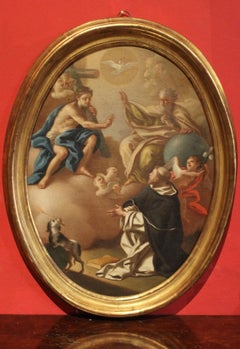
Virgin Madonna Mater Dolorosa Reni 17th Centutr Paint Oil on canvas Old master
By Guido Reni (Bologna, 1575 - 1642)
Located in Riva del Garda, IT
The workshop of Guido Reni (Bologna, 1575 - Bologna, 1642) The Virgin at Prayer (or Mater dolorosa) Oil on canvas 77 x 64 cm, framed 97 x 83 cm. The Madonna of our canvas is depict...
Category

17th Century Old Masters Gilbert Jackson Art
Materials

Oil

Holy Family Giovannino Bronzino Paint Oil on table 16th Century Old master Italy
By Agnolo Bronzino
Located in Riva del Garda, IT
Agnolo di Cosimo, known as 'il Bronzino' (Monticelli of Florence, 1503 – Florence, 1572) The Holy Family with San Giovannino Oil on table (120 x 90cm. - I...
Category

16th Century Old Masters Gilbert Jackson Art
Materials

Oil

Portrait Mignard Paint Oil on canvsa Old master 17th Century French Lady Woman
Located in Riva del Garda, IT
Pierre Mignard, known as Le Romain (Troyes 1612 - Paris 1695), attributed Portrait of 'Louise Renée de Penancoët de Keroualle, Duchess of Portsmouth and Aubigny (Brest 1649 - Paris 1734) as MADDALENA Oil on canvas 97 x 88 cm In an important gilded frame 132 x 122 cm. Provenance: Private collection, Naples The young and attractive noblewoman portrayed in this painting is Louis Renée de Penancoet de Keroualle, Duchess of Portsmouth and Aubigny (Brest 1649 - Paris 1734), known to have been King Charles II's favourite mistress for over fifteen years, from whose relationship Charles Lennox, 1st Duke of Richmond, was born, but above all to have gone down in history as one of Louis XIV's French informants at the English court. The duchess was a very influential figure at court, promoting French interests and often acting as an intermediary between the king, his ministers and French ambassadors. After the death of Charles II this influence quickly came to an end, forcing her to hastily leave London and renounce all her possessions to return to her homeland, between Aubigny-sur-Nère and Paris, where she died in 1734, always remaining in the sovereign's good graces. The peculiarity of the portrait, probably executed after her return to her homeland, is that the noblewoman takes the form of a charming Mary Magdalene, depicted here following her renunciation of earthly possessions, her rich robes and jewellery, in order to aspire to heavenly riches; We see her immortalised with her long hair loose on one breast, her intriguing but serene gaze directed at the observer, as she rests her crossed hands, as if in prayer, on the ampulla of perfumed ointments and the open book, both iconographic symbols. The custom of being portrayed in the guise of Magdalene was in vogue for powerful women of the great European courts as early as the 16th century, as it represented the most appropriate image to justify the union of female power and virtue. It must be said that court culture exalted only the positive characteristics of her personality, glossing over or downplaying all references to her sinful past and dissolute life. The work, whose style fits perfectly into 17th century French portraiture, suggests the pertinent attribution to the Baroque painter Pierre Mignard (Troyes, 1612 - Paris, 1695), whose works were highly praised and earned him a great reputation as a portrait painter for the demanding Parisian aristocracy at the time of Louis XIV, and who portrayed the Duchess de Kérouaille on numerous occasions. His first important artistic training took place in Simon Vouet's studio, and he then moved to Italy for over twenty years before returning to Paris, blending his own with the influence of Roman classicism. The elegant looseness of touch and sensual refinement typical of Mignard, combined with a very accurate chiaroscuro rendering, inherited from his artistic training in Rome (which he looked up to the examples of Ferdinad Voet), and the exceptional sweetness of the drawing, the floridity of the complexion and the almost enamelled surfaces, and finally, the peculiar pose of the figure portrayed (the beauty of the two intertwined hands...
Category

17th Century Old Masters Gilbert Jackson Art
Materials

Oil

Ecce Homo Christ Metsys 16th Century Paint Oil on table Flemish Old master
Located in Riva del Garda, IT
16th-century Flemish master Circle of Quentin Metsys (Leuven, 1466 - Antwerp, 1530) Ecce Homo oil on panel cm. 34 x 23 with frame 47 x 37 (not contemporary) An important painting...
Category

16th Century Old Masters Gilbert Jackson Art
Materials

Oil

Philip V King Spain Louise Savoy Queen Gobert Paint Oil 18th Century Old master
Located in Riva del Garda, IT
Circle of Pierre Gobert (Fontainebleau 1662 - Paris 1744) Pair of portraits Portrait of Philip V, King of Spain (Versailles 1683 - Madrid 1746) Portrait of Queen Louise of Savoy (16...
Category

18th Century Old Masters Gilbert Jackson Art
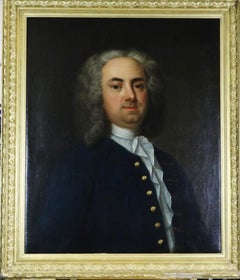
Materials

Oil

Portrait Woman Parodi 17/18th Century Oil on canvas Old master
By Domenico Parodi (Genoa, 1672 - 1742)
Located in Riva del Garda, IT
Domenico Parodi (Genoa, 1672 - 1742) Portrait of Anne Marie d'Orléans (Château de Saint-Cloud, 27 August 1669 - Turin, 26 August 1728), first queen consort of Sardinia and maternal g...
Category

18th Century Old Masters Gilbert Jackson Art
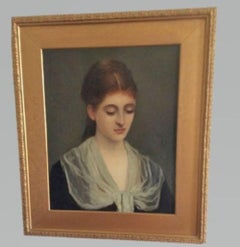
Materials

Oil

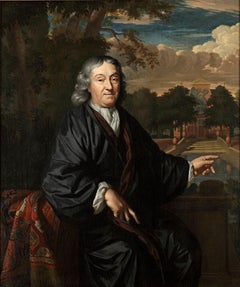
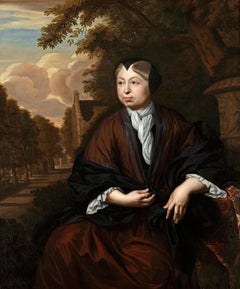
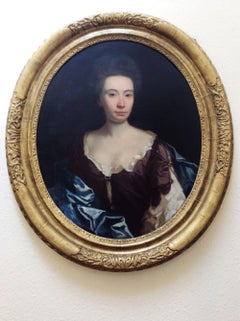
Portrait of Gentleman in blue, Portrait of Lady, oval pair Fine Carved Frames
Located in London, GB
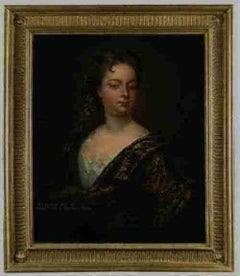
Portrait of a Gentleman with Blue Cloak and Portrait of a Lady in Russet Dress c.1697 Thomas Murray (1663-1735) These fascinating portraits are exquisite examples of portraiture in ...
Category

17th Century Old Masters Gilbert Jackson Art
Materials

Oil, Canvas

Óleo sobre lienzo - Retrato de un Rabino
Located in Sant Celoni, ES
Como pueden apreciar, la obra va firmada por el artista en la parte inferior (A.GROSZ) Se presenta enmarcada la obra (el marco presenta algunas faltas) El estado de la obra es buen...
Category

Early 1900s Old Masters Gilbert Jackson Art
Materials

Oil

Óleo sobre lienzo - Retrato de un Rabino
$529 Sale Price
20% Off
H 24.02 in W 33.08 in D 1.19 in
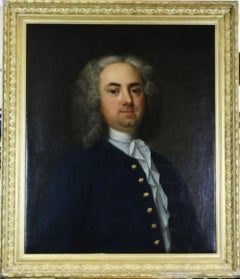
Portrait of Gentleman, Sir Henry Hobart, Blue Cloak & cravat, Wissing oil canvas
By Willem Wissing
Located in London, GB
Portrait of a Gentleman, Sir Henry Hobart Blue Cloak and cravat c.1683-1684 Attributed to Willem Wissing (1656-1687) This impressive portrait, presented by Titan Fine Art, depicts t...
Category

17th Century Old Masters Gilbert Jackson Art
Materials

Cotton Canvas, Oil

Gilbert Jackson art for sale on 1stDibs.

Find a wide variety of authentic Gilbert Jackson art available for sale on 1stDibs. You can also browse by medium to find art by Gilbert Jackson in oil paint, paint and more. Much of the original work by this artist or collective was created during the 18th century and earlier and is mostly associated with the Old Masters style. Not every interior allows for large Gilbert Jackson art, so small editions measuring 20 inches across are available. Customers who are interested in this artist might also find the work of Sir Godfrey Kneller, Flemish School, 17th Century, and Jean-Baptiste Monnoyer. Gilbert Jackson art prices can differ depending upon medium, time period and other attributes. On 1stDibs, the price for these items starts at $92,025 and tops out at $92,025, while the average work can sell for $92,025.

Artists Similar to Gilbert Jackson