By György Kepes
Located in New York, NY
Gyorgy Kepes (1906 - 2001)
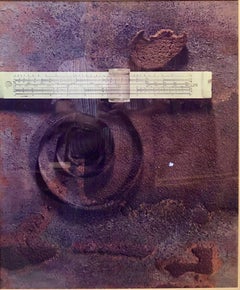
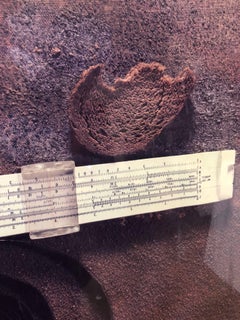
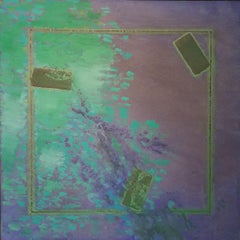
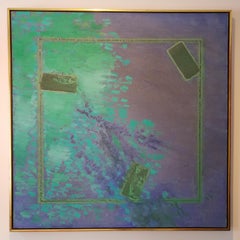
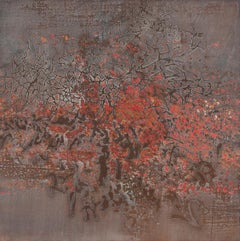
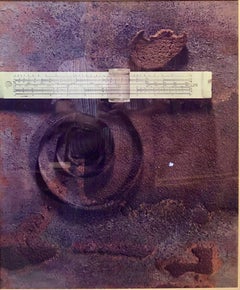
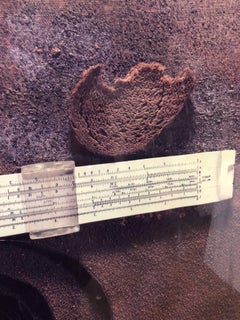
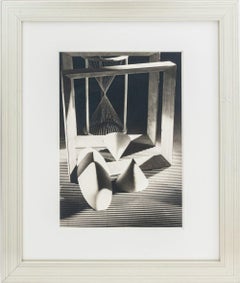
Untitled
Mixed media on canvas
48 x 48 inches
Kepes was born in Selyp, Hungary. His younger brother was Imre Kepes, ambassador in Argentina, father of András Kepes, a journalist, documentary filmmaker and author. At age 18, he enrolled at the Royal Academy of Fine Arts in Budapest, where he studied for four years with Istvan Csok, a Hungarian impressionist painter. In the same period, he was also influenced by the socialist avant-garde poet and painter Lajos Kassak, and began to search for means by which he could contribute to the alleviation of social injustice, especially (as he later recalled) "the inhumane conditions of the Hungarian peasantry."
Kepes gave up painting temporarily and turned instead to filmmaking. In 1930, he settled in Berlin, where he worked as a publication, exhibition and stage designer. Around this time, he designed the dust jacket for Gestalt psychologist Rudolf Arnheim's famous book, Film als Kunst (Film as Art), one of the first published books on film theory. In Berlin, he was also invited to join the design studio of László Moholy-Nagy, the Hungarian photographer who had taught at the Dessau Bauhaus. When, in 1936, Moholy relocated his design studio to London, Kepes joined him there as well.
A fortunate consequence of moving to London was that Kepes found his future wife, a 17-year-old British woman née Juliet Appleby, an artist and illustrator. By chance, he saw her on the street, introduced himself, and soon the two began to date. The following year, when Moholy agreed to become the director of a new art school in Chicago (which Moholy dubbed the New Bauhaus), Kepes was invited to join the faculty and to head a curricular area in Light and Color. Kepes asked Juliet to join him. While teaching at the Institute of Design (or New Bauhaus) from 1937 to 1943, Kepes enlarged and refined his ideas about design theory, form in relation to function, and (his own term) the "education of vision." Kepes was lured to Brooklyn College by Russian-born architect Serge Chermayeff, who had been appointed chair of the Art Department in 1942. There he taught graphic artists such as Saul Bass.
In 1944, he published Language of Vision, an influential book about design and design education. Widely used for many years as a college textbook (it had thirteen printings, in four languages), it began by acknowledging Kepes' indebtedness to the Berlin-based Gestalt psychologists, and by asserting that "Visual communication is universal and international; it knows no limits of tongue, vocabulary, or grammar, and it can be perceived by the illiterate as well as by the literate…[The visual arts, as] the optimum forms of the language of vision, are, therefore, an invaluable educational medium". In part, the book was important because it predated three other influential texts on the same subject: Paul Rand, Thoughts on Design (1946), László Moholy-Nagy, Vision in Motion (1947), and Rudolf Arnheim, Art and Visual Perception (1954).
In 1942, Kepes had been one of a number of people (Moholy was another) who were asked by the U.S. Army to offer advice on military and civilian urban camouflage, in the course of which he viewed Chicago from the air. He alluded to this experience in Language of Vision, when he talked about natural camouflage: "The numerous optical devices which nature employs in the animal world to conceal animals from their enemies reveal the workings of this law [i.e., perceptual grouping] of visual organization".
In 1947, Kepes accepted an invitation from the School of Architecture and Planning at MIT to initiate a program there in visual design, a division that later became the Center for Advanced Visual Studies (c1968). Some of the Center's early fellows included artists Otto Piene, Panayiotis Vassilakis, Jack Burnham, Wen-Ying Tsai, Stan Vanderbeek, Maryanne Amacher, Joan Brigham, Lowry Burgess, Peter Campus, Muriel Cooper, Douglas Davis, Susan Gamble, Dieter Jung, Piotr Kowalski, Charlotte Moorman, Antoni Muntadas, Yvonne Rainer, Keiko Prince, Alan Sonfist, Aldo Tambellini, Joe Davis, Bill Seaman, Tamiko Thiel, Alejandro Sina, Don Ritter, Luc Courchesne, and Bill Parker.
While teaching at MIT (where he remained until his retirement in 1974), Kepes was in contact with a wide assortment of artists, designers, architects and scientists, among them Norbert Wiener, Buckminster Fuller, Rudolf Arnheim, Marcel Breuer, Charles Eames, Erik Erikson...
Category
Mid-20th Century Bauhaus Gyorgy Kepes Art
MaterialsCanvas, Mixed Media
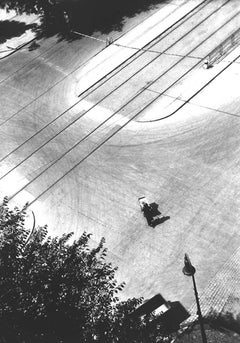
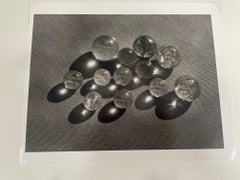
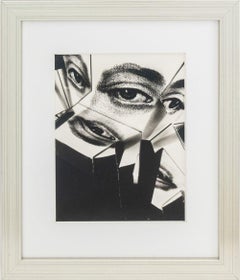
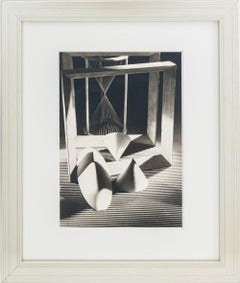
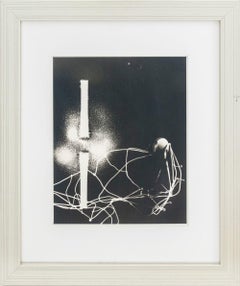
![Untitled [Abstract Shapes] Framed Gelatin Silver Print](https://a.1stdibscdn.com/gyorgy-kepes-photography-untitled-abstract-shapes-for-sale/a_28452/1759326570456/122014_1_master.jpg?width=240)
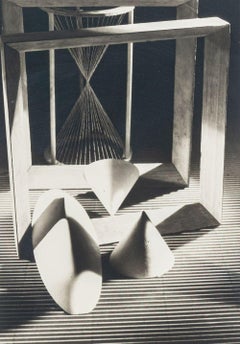
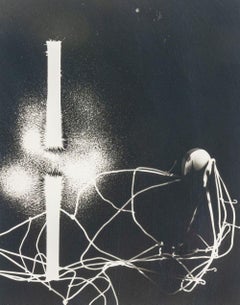
![Untitled [Abstract Shapes] Framed Gelatin Silver Print](https://a.1stdibscdn.com/gyorgy-kepes-photography-untitled-abstract-shapes-for-sale-picture-2/a_28452/a_170087021759326803372/122014_2_master.jpg?width=240)
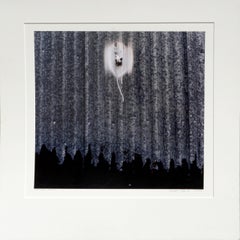
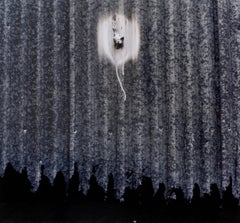

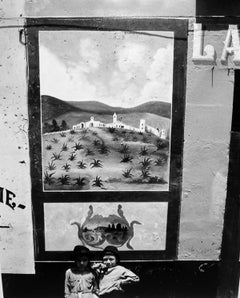

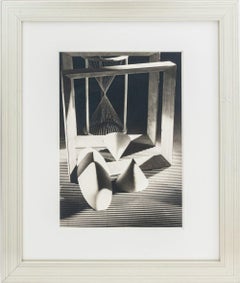

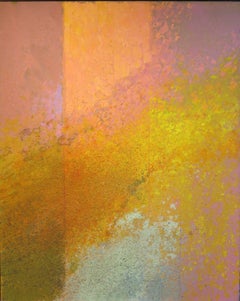
![Untitled [Abstract Composition]](https://a.1stdibscdn.com/gyorgy-kepes-photography-untitled-abstract-composition-for-sale/a_28452/1759327394580/122016_1_master.jpg?width=240)
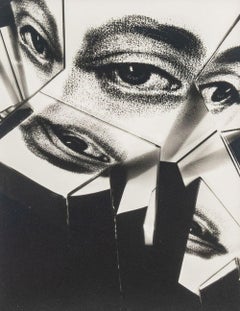
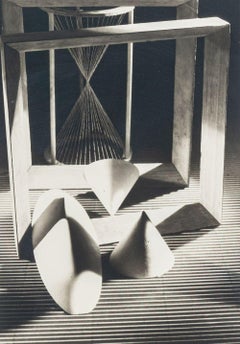
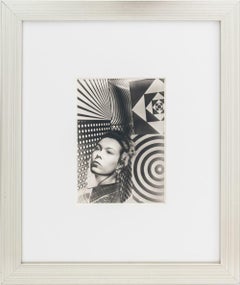
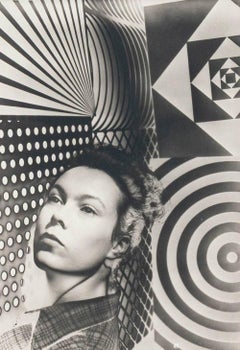
![Untitled [Abstract Composition]](https://a.1stdibscdn.com/gyorgy-kepes-photography-untitled-abstract-composition-for-sale-picture-2/a_28452/a_170087221759327837297/122016_2_master.jpg?width=240)