Harry Shokler Art

to
1
1
Overall Width
to
Overall Height
to
2
1
2
2
2
2
1
1
1
1
1
1
2
10,575
2,818
2,500
1,410
2
Artist: Harry Shokler
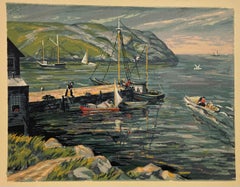
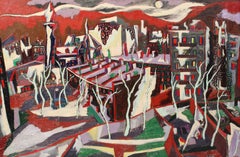
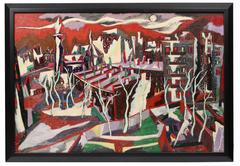
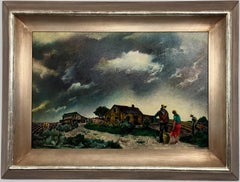
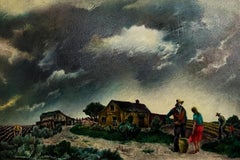
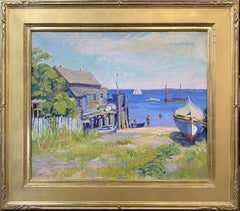
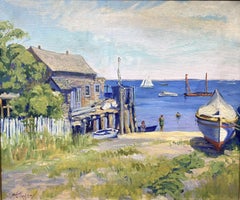
Harry Shokler, Island Harbor

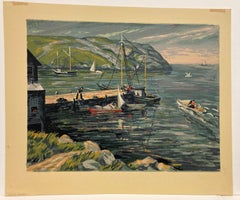
Harry Shokler, Island Harbor

By Harry Shokler

Located in New York, NY

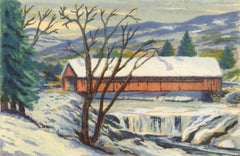
Harry Shokler used serigraphy to great advantage in this landscape. It's colorful and detailed. It is signed in the image at the lower left. When printmakers began making serigraphs...

Category

1940s American Modern Harry Shokler Art

Materials

Screen

Related Items
Hollywood

Walter C. BeckwithHollywood, 1941

$4,500

H 24 in W 18 in D 1 in

Hollywood

Located in Los Angeles, CA

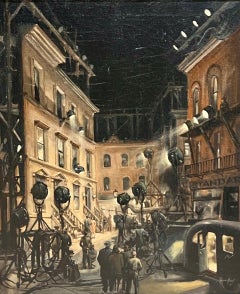
Hollywood, 1941, oil on board, 18 x 24 inches, signed and dated lower right, illegible writing verso About the Painting From a distance, Beckwith deftly captures the spectacle of a Hollywood premiere. But we have not been invited to the party. Our view is from the shadows of a less glamorous neighborhood with a shaggy, unkept palm tree and rundown buildings in the shadows. We look down through the darkness past a packed parking lot to the bright lights of two iconic Hollywood landmarks, the Pantages Theater and the Broadway Building. Completed in 1930, the Pantages was built as an exuberant Art Deco movie palace, while the Broadway Building housed an upscale department store which catered to entertainment industry elites who were less impacted by the Great Depression than the common man, since movies had become the mainstay of popular culture entertainment during the 1930s with large numbers of Americans looking to immerse themselves in Hollywood escapism. Here, in a rare Los Angeles urban image, Beckwith combines that Hollywood fantasy with the more sobering foreground images which could have been pulled from the L.A. Noire fiction of Raymond Chandler...

Category

1940s American Modern Harry Shokler Art

Materials

Oil

A brooding American modernist landscape painting with a house or outbuilding

A brooding American modernist landscape painting with a house or outbuilding

Located in Colfax, CA

A nice American modernist landscape painting, dating from the 1940s. This work is on the manner of E. Oscar Thalinger, but does not appear to be signed. The work is unframed, as it...

Category

1940s American Modern Harry Shokler Art

Materials

Oil

Vintage Rockwell Kent Copy of "Vermont Winter 1921" Oil on Canvas Painting, 1960

Vintage Rockwell Kent Copy of "Vermont Winter 1921" Oil on Canvas Painting, 1960

By Rockwell Kent

Located in Baltimore, MD

This large painting is a ca. 1960 copy of a famous Rockwell Kent painting that was executed in Vermont in 1921. The work is oil on canvas and well represents the original image, tho...

Category

1960s American Modern Harry Shokler Art

Materials

Oil

American Modernist Snowscene

American Modernist Snowscene

Located in Buffalo, NY

A modern 1940s American oil painting depicting a rural landscape in winter. This work comes housed in a rustic barn wood frame likely original to the piece

Category

1940s American Modern Harry Shokler Art

Materials

Board, Oil

Modernist Silkscreen Screenprint 'El Station, Interior' NYC Subway, WPA Artist

Modernist Silkscreen Screenprint 'El Station, Interior' NYC Subway, WPA Artist

By Anthony Velonis

Located in Surfside, FL

screenprint printed in color ink on wove paper. New York City subway station interior. Anthony Velonis (1911 – 1997) was an American painter and designer born in New York City who helped introduce the public to silkscreen printing in the early 20th century. While employed under the federal Works Progress Administration, WPA during the Great Depression, Velonis brought the use of silkscreen printing as a fine art form, referred to as the "serigraph," into the mainstream. By his own request, he was not publicly credited for coining the term. He experimented and mastered techniques to print on a wide variety of materials, such as glass, plastics, and metal, thereby expanding the field. In the mid to late 20th century, the silkscreen technique became popular among other artists such as Robert Rauschenberg and Andy Warhol. Velonis was born into a relatively poor background of a Greek immigrant family and grew up in the tenements of New York City. Early on, he took creative inspiration from figures in his life such as his grandfather, an immigrant from the mountains in Greece, who was "an ecclesiastical painter, on Byzantine style." Velonis attended James Monroe High School in The Bronx, where he took on minor artistic roles such as the illustration of his high school yearbook. He eventually received a scholarship to the NYU College of Fine Arts, into which he was both surprised and ecstatic to have been admitted. Around this time he took to painting, watercolor, and sculpture, as well as various other art forms, hoping to find a niche that fit. He attended NYU until 1929, when the Great Depression started in the United States after the stock market crash. Around the year 1932, Velonis became interested in silk screen, together with fellow artist Fritz Brosius, and decided to investigate the practice. Working in his brother's sign shop, Velonis was able to master the silkscreen process. He reminisced in an interview three decades later that doing so was "plenty of fun," and that a lot of technology can be discovered through hard work, more so if it is worked on "little by little." Velonis was hired by Mayor LaGuardia in 1934 to promote the work of New York's city government via posters publicizing city projects. One such project required him to go on a commercial fishing trip to locations including New Bedford and Nantucket for a fortnight, where he primarily took photographs and notes, and made sketches. Afterward, for a period of roughly six months, he was occupied with creating paintings from these records. During this trip, Velonis developed true respect and affinity for the fishermen with whom he traveled, "the relatively uneducated person," in his words. Following this, Velonis began work with the Public Works of Art Project (PWAP), an offshoot of the Civil Works Administration (CWA), where he was assigned to serve the different city departments of New York. After the formation of the federal Works Progress Administration, which hired artists and sponsored projects in the arts, he also worked in theater. Velonis began working for the federal WPA in 1935. He kept this position until 1936 or 1938, at which point he began working in the graphic art division of the Federal Art Project, which he ultimately led. Under various elements of the WPA program, many young artists, writers and actors gained employment that helped them survive during the Depression, as well as contributing works that created an artistic legacy for the country. When interviewed in December 1994 by the Library of Congress about his time in the WPA, Velonis reflected that he had greatly enjoyed that period, saying that he liked the "excitement" and "meeting all the other artists with different points of view." He also said in a later interview that "the contact and the dialogue with all those artists and the work that took place was just invaluable." Among the young artists he hired was Edmond Casarella, who later developed an innovative technique using layered cardboard for woodcuts. Velonis introduced silkscreen printing to the Poster Division of the WPA. As he recalled in a 1965 interview: "I suggested that the Poster division would be a lot more productive and useful if they had an auxiliary screen printing project that worked along with them. And apparently this was very favorably received..." As a member of the Federal Art Project, a subdivision of the WPA, Velonis later approached the Public Use of Arts Committee (PUAC) for help in "propagandizing for art in the parks, in the subways, et cetera." Since the Federal Art Project could not be "self-promoting," an outside organization was required to advertise their art more extensively. During his employment with the Federal Art Project, Velonis created nine silkscreen posters for the federal government. Around 1937-1939 Velonis wrote a pamphlet titled "Technical Problems of the Artist: Technique of the Silkscreen Process," which was distributed to art centers run by the WPA around the country. It was considered very influential in encouraging artists to try this relatively inexpensive technique and stimulated printmaking across the country. In 1939, Velonis founded the Creative Printmakers Group, along with three others, including Hyman Warsager. They printed both their own works and those of other artists in their facility. This was considered the most important silkscreen shop of the period. The next year, Velonis founded the National Serigraph Society. It started out with relatively small commercial projects, such as "rather fancy" Christmas cards that were sold to many of the upscale Fifth Avenue shops...

Category

1980s American Modern Harry Shokler Art

Materials

Screen

“Middleton Place II, 1974” Wolf Kahn, West Brattleboro, Vermont Barn Oil Canvas

“Middleton Place II, 1974” Wolf Kahn, West Brattleboro, Vermont Barn Oil Canvas

By Wolf Kahn

Located in Yardley, PA

A fantastic early painting from Kahn’s iconic barn series depicting Dr. Middleton’s property in West Brattleboro, VT. Here, Kahn turns a familiar rural motif into something hovering ...

Category

1970s American Modern Harry Shokler Art

Materials

Canvas, Oil

"6th Avenue El" American Scene Social Realism Mid-20th Century New York City

"6th Avenue El" American Scene Social Realism Mid-20th Century New York City

By Ernest Fiene

Located in New York, NY

"6th Avenue El" American Scene Social Realism Mid-20th Century New York City Ernest Fiene (1894-1965) "6th Avenue El" 12 1/4 x 14 1/4 Oil on canvas board, c. 1940s Signed lower righ...

Category

1940s American Modern Harry Shokler Art

Materials

Oil, Board

Original Continental Airlines limited edition travel poster

Original Continental Airlines limited edition travel poster

Located in Spokane, WA

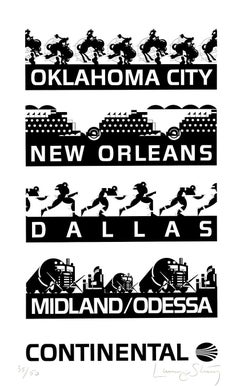
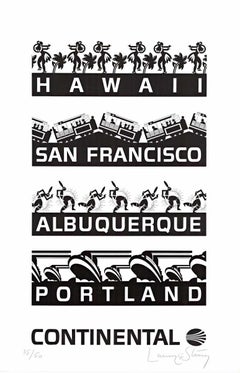
Original Continental Airlines travel poster. Linen backed in fine condition. Signed and numbered 35/50. This original Continental Airlines poster artistically represents regional destinations prominently served by Continental Airlines in the past. The design is modern and bold, showcasing a unique black-and-white theme with strong, futuristic typography and graphical illustrations. Each city is creatively depicted using stylized imagery that resonates with its character—Oklahoma City features a cowboy motif, New Orleans embraces a jazzy, cultural essence, Dallas reflects the energy of movement, and Midland/Odessa highlights industrial and oil-centric themes. This limited-edition poster is printed in black and white. It features Oklahoma City, New Orleans, Dallas, and Midland / Odessa destinations. Above each name is a design that represents each destination city. Oklahoma City has rodeo horseback riding. New Orleans has steamships, Dallas has football players, and Midland has large oil tanker trucks. This image features the Saul Bass l967 Continental logo in the design. Continental Airlines was a major United States airline founded in 1934 and eventually headquartered in Houston, Texas. The airline was acquired by UAL Corporation, the parent company of United Airlines, on October 1, 2010. This is an original vintage Continental Airlines poster...

Category

Late 20th Century American Modern Harry Shokler Art

Materials

Screen

DISCOVERY OF GOLD - Very Large Serigraph - WPA Artist - California Murals

DISCOVERY OF GOLD - Very Large Serigraph - WPA Artist - California Murals

By Anton Refregier

Located in Santa Monica, CA

ANTON REFREGIER (1905 – 1979) DISCOVERY OF GOLD, 1949. Color serigraph. Signed and numbered in pencil, edition of 90. Image 23 ¼ x 21 ¾" Large sheet, 29 3/4 x 25 ¼”. Printed title...

Category

1940s American Modern Harry Shokler Art

Materials

Screen

Fracas at Calamity's Place, Warrington Colescott

Fracas at Calamity's Place, Warrington Colescott

By Warrington Colescott

Located in Fairfield, CT

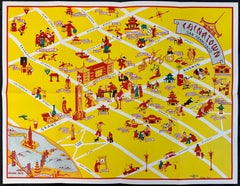
Artist: Warrington Colescott (1921-2018) Title: Fracas at Calamity's Place Year: 1969 Edition: 35/40, plus proofs Medium: Lithograph on paper Inscription: Signed & numbered in pencil...

Category

1960s American Modern Harry Shokler Art

Materials

Lithograph

Bejeweled Nocturne
Bejeweled Nocturne

Bejeweled Nocturne

By Arthur Meltzer

Located in New York, NY

Arthur Meltzer 

(American, 1893-1989)

 Title: Bejeweled Nocturne
 Medium: Oil on Canvas
 Size: 22 x 32 inches / 28 ¾ x 38 ½ 
Markings: Signed lower left
 Titled and dated 1980 on ...

Category

20th Century American Modern Harry Shokler Art

Materials

Canvas, Oil

Factory #2/Yellow Shed

Marina SternFactory #2/Yellow Shed, 1996

$6,000

H 16 in W 28 in D 1 in

Factory #2/Yellow Shed

By Marina Stern

Located in Los Angeles, CA

This work is part of our exhibition Marina Stern Luminary, the first retrospective of the artist since 2007. Marina Stern was a multifaceted New York-based artist whose works ranged from Expressionism and Pop Art to the Neo Immaculate paintings and pastels for which she is best known. A native of Venice, Stern and her family fled in 1939 to escape Italy’s repressive racial laws. After living in England for several years, the family arrived in the United States in 1941. A bright and capable student, Stern graduated from New York’s Julia Richman High School at age 15 and soon enrolled in the Pratt Institute to pursue an interdisciplinary education in the arts. Despite majoring in advertising design, Stern favored her fine art courses. She graduated from Pratt in 1946 at age 18 and began working for advertising agencies. After a brief marriage which ended in divorce, Stern married her second husband, who encouraged the artist to study at the Art Students League of New York, under the renowned Japanese American modernist, Yasuo Kuniyoshi. In Fall 1953, Stern gave birth to her first child, Michael, as she continued to study at the Arts Students League. Later in the Spring of 1957, Stern gave birth to her daughter Nina, as she continued to balance motherhood with her fine art practice and commercial art and design work. Stern’s first significant exhibitions were in 1962 at the Waverly Gallery and the Osgood Gallery, both in New York, followed by inclusion of her work in the Bertha Schaefer Traveling Collage Show from 1963 to 1964. Stern made a splash in the avant-garde art world in 1964 when Time magazine reviewed a show at Amel Gallery which featured three of her audio-visual paintings. Time’s critic noted that Stern created the “cleverest noisemakers” in the exhibition. Time dubbed this work “Talkie Pop,” a label which Stern rejected. Following this recognition, Stern was selected for inclusion in The New American Realism at the Worcester Art Museum—a major showcase of leading artists, including Andy Warhol, Robert Indiana, Roy Lichtenstein, and Jasper Johns. After the Worcester exhibition, Stern began to shift away from her “talking” Pop paintings to mysterious, interior scenes with orange, blue or black walls with windows or doors rising above black and white floors, often depopulated, but sometimes with figures. One of these works, Seven Minus Twenty-One Equals Seven, entered the permanent collection of New York’s Museum of Modern Art in 1966. By 1969, Stern began to incorporate industrial images into these scenes, and in the early 1970s, Stern created her first Neo-Immaculate works of rural, and urban landscapes, which she described as her most satisfying work. Stern often depicted locations that she held close -- New York, New Jersey, Iowa (where her son attended college), Sharon, Connecticut (where her family spent weekends and vacations) and her native Venice, Italy. Stern’s success as a Neo Immaculate painter led to consistent New York gallery representation for over two decades, first with Lee Ault & Co and James Yu Gallery, and then Forum Gallery, where she had six solo shows. Stern completed a Neo-Immaculate mural commission for the Port Authority of New York, George Washington Bridge #1 and #2, followed by another commission from the NY Cityarts Public Art Program in 1976 for a mural on Mulberry Street. Stern also enjoyed solo exhibitions in Boston (Eleanor Rigelhaupt Gallery), Connecticut (Silo Gallery, the Hotchkiss School, J. Rosenthal Fine Arts Gallery, Tremaine Gallery, and Staib Gallery), Chicago (Michael Rosenfeld Gallery), and Santa Fe (Santa Fe East Gallery). Her work was included in group shows at over a dozen public institutions, including The National Academy of Design, The Staten Island Museum, Worcester Art Museum, the Oklahoma Art Center, and the Arkansas Art Center. The Southern Alleghenies Museum of Art hosted a retrospective of four decades of Stern’s work from January 19 to April 22, 2007, entitled Perception and the Cultural Environment: The Paintings of Marina...

Category

1990s American Modern Harry Shokler Art

Materials

Canvas, Oil

Previously Available Items
Summer Afternoon
Summer Afternoon

Harry ShoklerSummer Afternoon, 1926

Sold

H 28 in W 30 in D 1.25 in

Summer Afternoon

By Harry Shokler

Located in Milford, NH

This fine coastal oil painting was painted by American artist Henry Shokler (1896-1978). Shokler was born in Cincinnati, OH and was an active artist and pioneer in silk screen and se...

Category

1920s American Impressionist Harry Shokler Art

Materials

Canvas, Oil

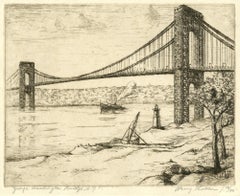
George Washington Bridge, N.Y.C.

George Washington Bridge, N.Y.C.

By Harry Shokler

Located in Middletown, NY

A serene view of the Hudson and the newly constructed George Washing Bridge as it appeared from Fort Washington Park in 1931, with the storied "Little Red Lighthouse" in the foregrou...

Category

Early 20th Century American Modern Harry Shokler Art

Materials

Handmade Paper, Etching, Drypoint

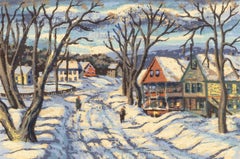
Walking in the Snow (Vermont village)

Walking in the Snow (Vermont village)

By Harry Shokler

Located in New Orleans, LA

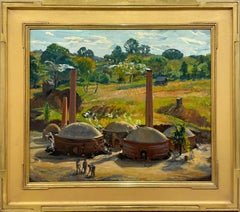
Harry Shokler was born in Ohio in 1896 and died in Londonderry, Vermont in 1978. He was a pioneer in the serigraph or silk screen technique in the mid 30s. He moved to Vermont in 1...

Category

1930s American Modern Harry Shokler Art
Materials

Screen

Covered Bridge (South Londonderry, Vermont Bridge across the West River)

Covered Bridge (South Londonderry, Vermont Bridge across the West River)

By Harry Shokler

Located in New Orleans, LA

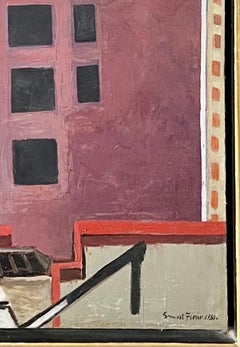
Harry Shokler was born in Ohio in 1896 and died in Londonderry, Vermont in 1978. He was a pioneer in the serigraph or silk screen technique in the mid 30s. He moved to Vermont in 1...

Category

Mid-20th Century American Modern Harry Shokler Art
Materials

Screen

Harry Shokler art for sale on 1stDibs.

Find a wide variety of authentic Harry Shokler art available for sale on 1stDibs. You can also browse by medium to find art by Harry Shokler in oil paint, paint, screen print and more. Much of the original work by this artist or collective was created during the 20th century and is mostly associated with the modern style. Not every interior allows for large Harry Shokler art, so small editions measuring 17 inches across are available. Customers who are interested in this artist might also find the work of Thomas Hart Benton, Lawrence Wilbur, and Clifford Isaac Addams. Harry Shokler art prices can differ depending upon medium, time period and other attributes. On 1stDibs, the price for these items starts at $900 and tops out at $9,000, while the average work can sell for $4,950.

Artists Similar to Harry Shokler