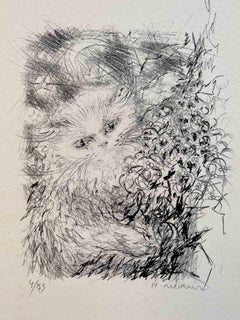
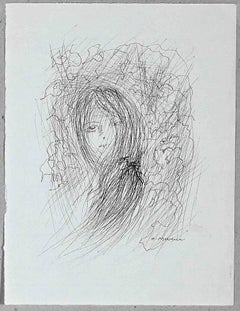
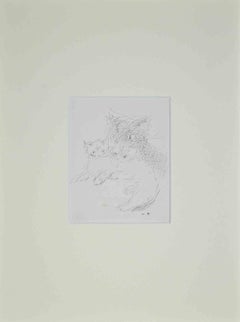
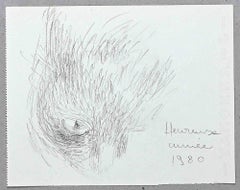
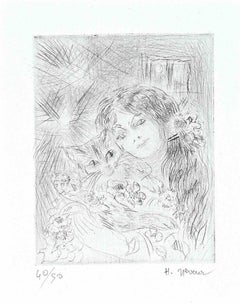
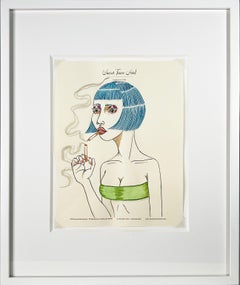
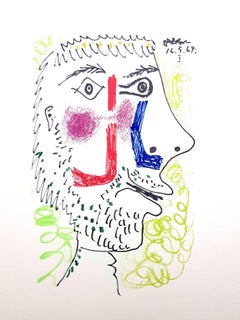
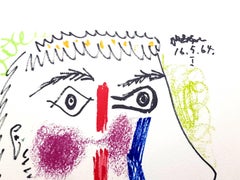
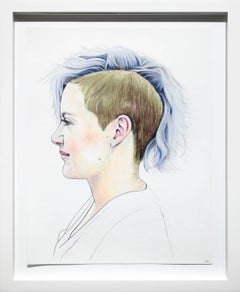
Helène Neveur Art

to
8
Overall Width
to
Overall Height
to
8
6
1
7
1
5
3
8
3
3
2
2
1
1
1
1
5
2
1
1
1
8
11,309
2,855
2,494
1,461
8
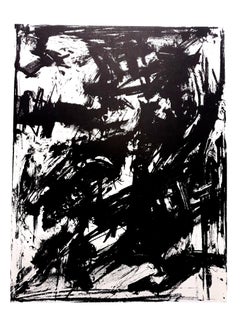
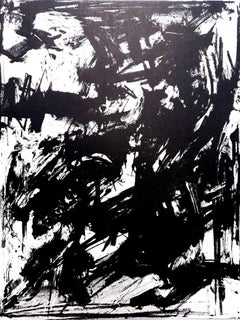
Artist: Helène Neveur
Related Items
Au Repos
Au Repos

Graciela Rodo BoulangerAu Repos, 1983

$1,700

H 38.75 in W 31 in D 1.75 in

Au Repos

By Graciela Rodo Boulanger

Located in San Francisco, CA

This artwork titled "Au Repos (At Rest)" 1983 is an original color lithograph on paper by noted Bolivian artist Graciela Rodo Boulanger, b.1935. It is hand signed and numbered 157/20...

Category

Late 20th Century Modern Helène Neveur Art

Materials

Lithograph

Walasse Ting - Green Cat, etching and aquatint, Signed/N, scarce Italian print

Walasse Ting - Green Cat, etching and aquatint, Signed/N, scarce Italian print

By Walasse Ting

Located in New York, NY

Walasse Ting 丁雄泉 Green Cat, 1984 Color etching and aquatint on copper plate, printed on Fabriano Rosaspina paper Pencil signed, numbered 178/230, dated 1984 along with artist's perso...

Category

1980s Pop Art Helène Neveur Art

Materials

Ink, Mixed Media, Pencil, Graphite, Etching, Aquatint

Torero
Torero

Fernando BoteroTorero, 1989

$45,000

H 12 in W 8 in

Torero

By Fernando Botero

Located in Miami, FL

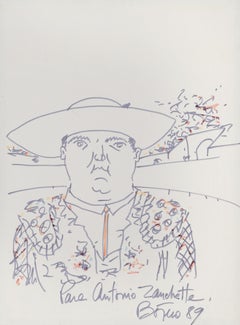
Fernando Botero Torero, 1989 Colored markers on paper 12 x 8 1/2 in Provenance: Allegrini Piero, Brescia. Galleria Panantu Casa de'Aste. Arte Moderna e Contemporanea. August 5 - Sep...

Category

Late 20th Century Contemporary Helène Neveur Art

Materials

Permanent Marker, Laid Paper

Georges Braque - Original Lithograph

Georges Braque - Original Lithograph

By Georges Braque

Located in Collonge Bellerive, Geneve, CH

Georges Braque - Original Lithograph 1963 Dimensions: 32 x 24 cm Andre Sauret, Monte Carlo The father of Cubism Three Cubist that distinguishes art historian periods were initiated and developed by Georges Braque: The Cubist Cézanne (1907-1909), Executive (1909-1912) and synthetic (1912-1922). Post-Impressionist and fawn, Braque no longer adheres to the contingency of a decorative way or the other. Cézanne’s paintings exhibited at the Grand Palais during the retrospective of 1907 are a revelation: Cézanne sought and invented a pictorial language. In his footsteps, Braque went to the South with the reasons of the Master. He returned with Estaque landscapes and surprising Ciotat it keeps Cezanne geometric model and retains the “passages” continuity from one surface to another to create the sensation of “turning around” of the object represented. But he wants to go after the consequences of the vision of Cezanne. In his paintings Houses in L’Estaque (1908) it simplifies the volumes of houses, neglects detail by removing doors and windows: the plastic rhythm that builds the table. Large Nude , a masterpiece of the period, can be considered the first work of Cézanne cubism . Systematizing and deepening Braque discoveries open the door analytical cubism. In 1909, his painting became more cerebral than sensual. The pattern is recreated in the two-dimensionality of the canvas, leaving aside any illusionistic perspective. In Still Life with Violin, objects are analyzed facets according to their characteristic elements, each facet referring to a particular view of the object. There are so many facets of points selected view: Table reflects the knowledge of the object and the ubiquity of the eye. Moreover, Braque is looking for the essence of the objects in the world rather than their contingency, which explains the absence of light source and use of muted colors (gray, ocher), contingent aspects of the object . But formal logic has stepped facets, erased any anecdote to the object and ultimately led to his painting a hermetic more marked on the edge of abstraction (see the series of Castle Roche-Guyon ). Braque, anxious to keep the concrete and refusing at all costs that the logic of Cubism takes the paintings to abstract, reintroduced signs of reality in his paintings in 1912 marks the beginning of Synthetic Cubism. Historians speak of “signs of real” rather than reality because what interests Braque, this is not to put reality into a table, but to create a painting which, by its language, refers to the real. To do this, he invented two major techniques XX th century inclusions and contributions. The inclusions consist of painting objects that have no real depth, materials (wallpaper in Nature morte aux playing cards faux wood is a pictorial inclusion) or letters (calligraphic inclusion in Portuguese ), made first brush and a few months later stencil. Contributions are defined in contrast with the collage on canvas of foreign materials: glued or sand paper, sawdust, etc.. Regarding the collages, Braque used for the first time in September 1912 a piece of adhesive paper imitating faux wood Compote and Glass , then the packet envelope of tobacco Bock in 1912-1913, or an advertisement in Damier , 1913). Inputs and inclusions refer to an external object in the table, without “emulate” this object. Away from their appearances, objects are represented in closest essence of the objects in the real world sense. This is also the time of Synthetic Cubism that Braque invented paper sculpture. There are, unfortunately, and no one is living proof of a photograph makes it possible to realize: Paper and paperboard. Métamorphoses period(1961-1963). In 1961, Georges Braque worked on a Greek head for the Louvre, which obsesses him, and he wishes to free his mind. He tried several times to bring out the paint and the result was unsatisfactory. He thinks the ultimate metamorphosis its Greek head projected in three dimensions. He calls in his studio of Baron Heger Loewenfeld, master lapidary, and he communicates his enthusiasm during the “fateful encounter.” Nine months later, in honor of the eighty years of Georges Braque, Heger Loewenfeld offers the Master of the ring Circe: the famous Greek head finally exorcised, carved in an onyx. Braque Loewenfeld then asked to identify other issues that haunt him. From dated and signed by Georges Braque, Heger gouaches Loewenfeld shapes works in the fields of jewelery, lapidary art...

Category

1960s Modern Helène Neveur Art

Materials

Lithograph

Pablo Picasso - Jeu de la Cape - Lithograph

Pablo Picasso - Jeu de la Cape - Lithograph

By Pablo Picasso

Located in Collonge Bellerive, Geneve, CH

Lithograph by Picasso Atelier Mourlot. Paper: Vélin. Dimensions : 9 5/8 x 12 7/16 inches Reference: Bloch 1015 Picasso is not just a man and his work. Picasso is always a legend, ...

Category

1960s Modern Helène Neveur Art

Materials

Lithograph

The Flight into Egypt

Luca CambiasoThe Flight into Egypt

$50,000

H 14.875 in W 11.25 in

The Flight into Egypt

Located in New York, NY

Inscribed: 3. una Madonna che va in Egitto, verso, and Madonna che va in Egitto, recto Provenance: Private Collection, UK, since 1999 This expressive and boldly executed drawing is the work of Luca...

Category

16th Century Old Masters Helène Neveur Art

Materials

Chalk, Ink, Pen, Paper

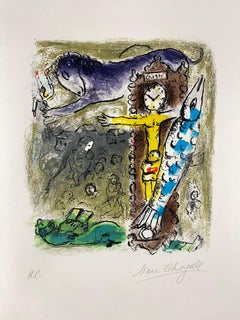
Le Christ a l'Horloge, Paris (Christ in the Clock)

Le Christ a l'Horloge, Paris (Christ in the Clock)

By Marc Chagall

Located in Missouri, MO

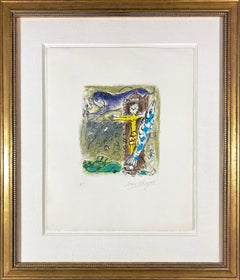
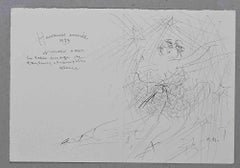
Marc Chagall "Le Christ a l'Horloge, Paris" (Christ in the Clock) 1957 (M. 196) Color Lithograph on Arches Wove Paper Signed in Pencil "Marc Chagall" Lower Right Initialed "H.C." (Hors Commerce) Lower Left, aside from numbered edition of 90 *Floated in Gold Frame with Linen Matting, UV Plexiglass Sheet Size: 18 3/4 x 14 3/4 inches (47.5 cm x 38 cm) Image Size: 9 3/4 x 8 1/2 inches Framed Size: 28.5 x 24.25 inches Marc Chagall was a man of keen intelligence, a shrewd observer of the contemporary scene, with a great sympathy for human suffering. He was born on July 7, 1887 in Vitebsk, Russia; his original name was Moishe Shagal (Segal), but when he became a foremost member of the Ecole de Paris, he adopted French citizenship and the French spelling of his name. Vitebsk was a good-sized Russian town of over 60,000, not a shtetl. His father supported a wife and eight children as a worker in a herring-pickling plant. Sheltered by the Jewish commandment against graven images, the young Chagall never saw so much as a drawing until, one day, he watched a schoolmate copying a magazine illustration. He was ridiculed for his astonishment, but he began copying and improvising from magazines. Both Chagall's parents reluctantly agreed to let him study with Yehuda Pen, a Jewish artist in Vitebsk. Later, in 1906, they allowed their son to study in St. Petersburg, where he was exposed to Russian Iconography and folk art. At that time, Jews could leave the Pale only for business and employment and were required to carry a permit. Chagall, who was in St. Petersburg without a permit, was imprisoned briefly. His first wife, Bella Rosenfeld, was a product of a rich cultivated and intellectual group of Jews in Vitebsk. Chagall was made commissar for the arts for the area, charged with directing its cultural life and establishing an art school. Russian folklore, peasant life and landscapes persisted in his work all his life. In 1910 a rich patron, a lawyer named Vinaver, staked him to a crucial trip to Paris, where young artists were revolutionizing art. He also sent him a handsome allowance of 125 francs (in those days about $24) each month. Chagall rejected cubism, fauvism and futurism, but remained in Paris. He found a studio near Montparnasse in a famous twelve-sided wooden structure divided into wedge-shaped rooms. Chaim Soutine, a fellow Russian Jew, and Modigliani lived on the same floor. To Chagall's astonishment, he found himself heralded as one of the fathers of surrealism. In 1923, a delegation of Max Ernst, Paul Eluard and Gala (later Salvador Dali's wife) actually knelt before Chagall, begging him to join their ranks. He refused. To understand Chagall's work, it is necessary to know that he was born a Hasidic Jew, heir to mysticism and a world of the spirit, steeped in Jewish lore and reared in the Yiddish language. The Hasidim had a special feeling for animals, which they tried not to overburden. In the mysterious world of Kabbala and fantastic ancient legends of Chagall's youth, the imaginary was as important as the real. His extraordinary use of color also grew out of his dream world; he did not use color realistically, but for emotional effect and to serve the needs of his design. Most of his favorite themes, though superficially light and trivial, mask dark and somber thoughts. The circus he views as a mirror of life; the crucifixion as a tragic theme, used as a parallel to the historic Jewish condition, but he is perhaps best known for the rapturous lovers he painted all his life. His love of music is a theme that runs through his paintings. After a brief period in Berlin, Chagall, Bella and their young daughter, Ida, moved to Paris and in 1937 they assumed French citizenship. When France fell, Chagall accepted an invitation from the Museum of Modern Art to immigrate to the United States. He was arrested and imprisoned in Marseilles for a short time, but was still able to immigrate with his family. The Nazi onslaught caught Chagall in Vichy, France, preoccupied with his work. He was loath to leave; his friend Varian Fry rescued him from a police roundup of Jews in Marseille, and packed him, his family and 3500 lbs. of his art works on board a transatlantic ship. The day before he arrived in New York City, June 23, 1941, the Nazis attacked Russia. The United States provided a wartime haven and a climate of liberty for Chagall. In America he spent the war years designing large backdrops for the Ballet. Bella died suddenly in the United States of a viral infection in September 1944 while summering in upstate New York. He rushed her to a hospital in the Adirondacks, where, hampered by his fragmentary English, they were turned away with the excuse that the hour was too late. The next day she died. He waited for three years after the war before returning to France. With him went a slender married English girl, Virginia Haggard MacNeil; Chagall fell in love with her and they had a son, David. After seven years she ran off with an indigent photographer. It was an immense blow to Chagall's ego, but soon after, he met Valentine Brodsky, a Russian divorcee designing millinery in London (he called her Fava). She cared for him during the days of his immense fame and glory. They returned to France, to a home and studio in rustic Vence. Chagall loved the country and every day walked through the orchards, terraces, etc. before he went to work. Chagall died on March 28, 1985 in the south of France. His heirs negotiated an arrangement with the French state allowing them to pay most of their inheritance taxes in works of art. The heirs owed about $30 million to the French government; roughly $23 million of that amount was deemed payable in artworks. Chagall's daughter, Ida and his widow approved the arrangement. Written and submitted by Jean Ershler Schatz, artist and researcher from Laguna Woods, California. Sources: Hannah Grad Goodman in Homage to Chagall in Hadassah Magazine, June 1985 Jack Kroll in Newsweek, April 8, 1985 Andrea Jolles in National Jewish Monthly Magazine, May 1985 Michael Gibson...

Category

1950s Modern Helène Neveur Art
Materials

Lithograph

The Human Comedy - Lithograph

The Human Comedy - Lithograph

By (after) Pablo Picasso

Located in Collonge Bellerive, Geneve, CH

After Pablo Picasso The Human Comedy - Lithograph after an original drawing, as published in the journal "Verve" Printed signature and date Dimensions...

Category

1950s Modern Helène Neveur Art
Materials

Lithograph

19th century black and white etching aquatint outdoors figurative animal print

19th century black and white etching aquatint outdoors figurative animal print

By Camille Pissarro

Located in Milwaukee, WI

"Vachere au Bord de L'Eau" is an original etching and aquatint by Camille Pissarro, the 8th state. It can be found in the catalogue raisonne Delteil #93. It features a woman sitting ...

Category

1890s Realist Helène Neveur Art

Materials

Etching, Aquatint

Original Watch Out .. Safe Direction  NRS vintage gun safety poster

Original Watch Out .. Safe Direction NRS vintage gun safety poster

Located in Spokane, WA

Original “Watch Out .. Point the Muzzle in a SAFE Direction” vintage National Rifle Association of America vintage poster. Printed in 1946 on a thick cardboard stock. Excellent ...

Category

1940s American Modern Helène Neveur Art
Materials

Lithograph

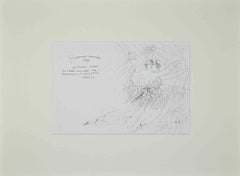
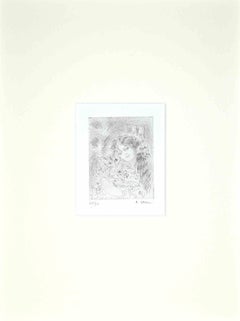
Helène Neveur art for sale on 1stDibs.

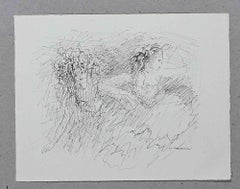
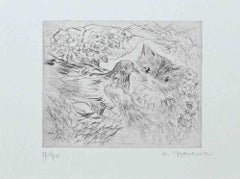
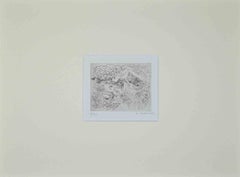
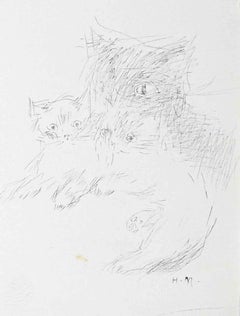
Find a wide variety of authentic Helène Neveur art available for sale on 1stDibs. You can also browse by medium to find art by Helène Neveur in pen, etching, aquatint and more. Much of the original work by this artist or collective was created during the 20th century and is mostly associated with the contemporary style. Not every interior allows for large Helène Neveur art, so small editions measuring 5 inches across are available. Helène Neveur art prices can differ depending upon medium, time period and other attributes. On 1stDibs, the price for these items starts at $100 and tops out at $371, while the average work can sell for $173.