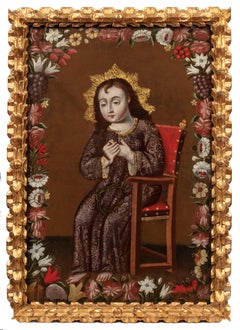
Henry Perronet Briggs Art

to
1
1
Overall Width
to
Overall Height
to
2
1
2
2
2
1
1
1
1
1
1
1
1
1
1
1
2
11,411
2,867
2,494
1,538
2
1
1
Artist: Henry Perronet Briggs
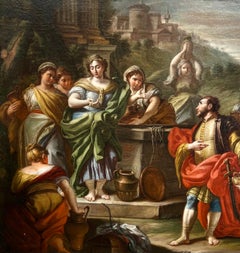
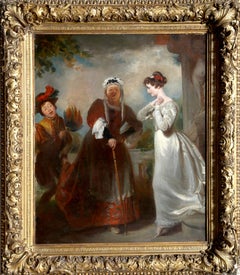
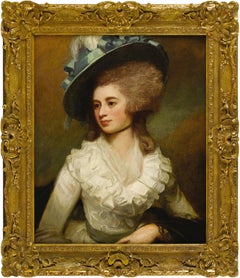
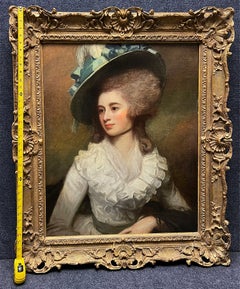
Juliet and her Nurse..., Oil Painting on Canvas by Henry Perronet Briggs

Juliet and her Nurse..., Oil Painting on Canvas by Henry Perronet Briggs

By Henry Perronet Briggs

Located in Long Island City, NY

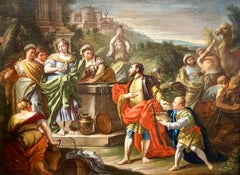
Artist: Henry Perronet Briggs, Attributed to, English (1793 - 1844) Title: Juliet and Her Nurse with the Page Peter from Shakespeare's Romeo and Juliet Year: circa 1820 Medium: Oil o...

Category

1820s Old Masters Henry Perronet Briggs Art

Materials

Canvas, Oil

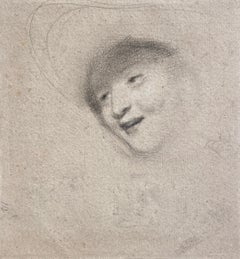
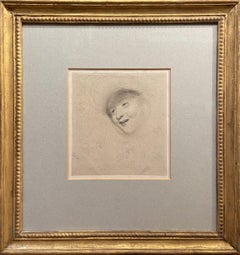
Graphite Study of a Head, Monogrammed Victorian Sketch, Gilt Fame

Graphite Study of a Head, Monogrammed Victorian Sketch, Gilt Fame

By Henry Perronet Briggs

Located in London, GB

Graphite on paper, monogrammed lower left Image size: 6 x 6 1/2 inches (15.25 x 16.5 cm) Contemporary style handmade gilt frame Henry Perronet Briggs Henry Perronet Briggs RA wa...

Category

Early 19th Century Henry Perronet Briggs Art

Materials

Paper, Graphite

Related Items
17th Century Memento Mori Vanitas Skull Old Master Oil Ex-Christie’s

17th Century Memento Mori Vanitas Skull Old Master Oil Ex-Christie’s

Located in Yardley, PA

This wonderful 17th-century French School vanitas painting is a meditation on mortality and the transience of earthly pleasures. The composition centers on a finely rendered human sk...

Category

17th Century Old Masters Henry Perronet Briggs Art

Materials

Canvas, Oil

“Reclining Nude, c. 1930” American Modernist Female Drawing Lady African Mask

“Reclining Nude, c. 1930” American Modernist Female Drawing Lady African Mask

By Louise Nevelson

Located in Yardley, PA

“Reclining Nude, c. 1930” by Louise Nevelson (1899-1988) This wonderful original ink drawing highlights Nevelson’s interest in the early 20th century avant-garde. Inspired by Picass...

Category

Early 20th Century American Modern Henry Perronet Briggs Art

Materials

Paper, Pencil, Graphite

Shipping in Stormy Waters, Attributed to Italian Artist Francesco Guardi

Shipping in Stormy Waters, Attributed to Italian Artist Francesco Guardi

By Francesco Guardi

Located in Stockholm, SE

The splendour of the tragic sea Francesco Guardi and maritime painting in Venetian art No Venetian painter was a stranger to the sea. After all, Venice was not only one of the most prominent ports of the Mediterranean, but indeed a city literally submerged in the ocean from time to time. Curiously however, the famous Venetian school of painting showed little interest in maritime motifs, favouring scenes from the iconic architecture of the city rather than seascapes. That is why this painting is a particularly interesting window into not only the painter Francesco Guardi himself – but to the significance of the element of water in art history, in absence as well as in the centre of attention. Whether it be calm, sunny days with stunning views of the palaces alongside the canals of Venice or – more rarely – stormy shipwrecking tragedies at sea, water as a unifying element is integral to the works of painter Francesco Guardi (1712–1793). During his lifetime, Venetian art saw many of its greatest triumphs with names like Tiepolo or Canaletto gaining international recognition and firmly establishing Venice as one of the most vibrant artistic communities of Europe. While the city itself already in the 18th century was something of an early tourist spot where aristocrats and high society visited on their grand tour or travels, the artists too contributed to the fame and their work spread the image of Venice as the city of romance and leisure to an international audience, many of whom could never visit in person. Still today, the iconic image of Venice with its whimsical array of palaces, churches and other historic buildings is much influenced by these artists, many of whom have stood the test of time like very well and remain some of the most beloved in all of art history. It was not primarily subtility, intellectual meanings or moral ideals that the Venetian art tried to capture; instead it was the sheer vibrancy of life and the fast-paced city with crumbling palaces and festive people that made this atmosphere so special. Of course, Venice could count painters in most genres among its residents, from portraiture to religious motifs, history painting and much else. Still, it is the Vedutas and views of the city that seems to have etched itself into our memory more than anything else, not least in the tradition of Canaletto who was perhaps the undisputed master of all Venetian painters. Born into his profession, Francesco lived and breathed painting all his life. His father, the painter Domenico Guardi (1678–1716) died when Francesco was just a small child, yet both he and his brothers Niccolò and Gian Antonio continued in their fathers’ footsteps. The Guardi family belonged to the nobility and originated from the mountainous area of Trentino, not far from the Alps. The brothers worked together on more challenging commissions and supported each other in the manner typical of family workshops or networks of artists. Their sister Maria Cecilia married no other than the artist Giovanni Battista Tiepolo himself, linking the family to the most renowned Venetian name of the time. During almost a decade, Guardi worked in the studio of Michele Giovanni Marieschi, sometimes simply known as Michiel, a painted similar in both style and motif. Canaletto is, however, the artist Guardi is most often compared to since they shared a mutual fascination for depicting the architecture and cityscape of Venice. During the course of his career, Guardi tried his hand in many different genres. He was as swift in painting landscapes, Vedutas of Venice, sacred motifs, interiors and architectural compositions as he was in a number of other motifs. His style is typical of the Venetian school but also distinct and personal once we look a little closer. There is an absolute certainty in the composition, the choice of which sometimes feels like that of a carefully calculated photograph – yet it is also very painterly, in the best sense of the word: fluid, bold, sensitive and full of character. The brushwork is rapid, intense, seemingly careless and extraordinarily minute at the same time; fresh and planned in a very enjoyable mixture. His interiors often capture the breath-taking spacious glamour of the palaces and all their exquisite decor. He usually constructed the motif through remarkably simple, almost spontaneous yet intuitively precise strokes and shapes. The result was a festive, high-spirited atmospheric quality, far away from the sterile and exact likeness that other painters fell victim to when trying to copy Canaletto. The painting here has nothing of the city of Venice in it. On the contrary, we seem to be transported far away into the solitary ocean, with no architecture, nothing to hold on to – only the roaring sea and the dangerous cliffs upon which the ships are just moments away from being crushed upon. It is a maritime composition evoking both Flemish and Italian precursors, in the proud tradition of maritime painting that for centuries formed a crucial part of our visual culture. This genre of painting is today curiously overlooked, compared to how esteemed and meaningful it was when our relationship to the sea was far more natural than it is today. When both people and goods travelled by water, and many nations and cities – Venice among them – depended entirely on sea fare, the existential connection to the ocean was much more natural and integrated into the imagination. The schools and traditions of maritime art are as manifold as there are countries connected to the sea, and all reflect the need to process the dangers and wonders of the ocean. It could symbolize opportunity, the exciting prospects of a new countries and adventures, prospering trade, beautiful scenery as well as war and tragedy, loss of life, danger and doom. To say that water is ambivalent in nature is an understatement, and these many layers were something that artists explored in the most wondrous ways. Perhaps it takes a bit more time for the modern eye to identify the different nuances and qualities of historic maritime paintings, they may on first impression seem hard to differentiate from each other. But when allowing these motifs to unfold and tell stories of the sea in both fiction and reality – or somewhere in between – we are awarded with an understanding of how the oceans truly built our world. In Guardi’s interpretation, we see an almost theatrically arranged shipwrecking scene. No less than five ships are depicted right in the moment of utter disaster. Caught in a violent storm, the waves have driven them to a shore of sharp cliffs and if not swallowed by the waves, crushing against the cliffs seems to be the only outcome. The large wooden ships are impressively decorated with elaborate sculpture, and in fact relics already during Guardi’s lifetime. They are in fact typical of Dutch and Flemish 17th century ships, giving us a clue to where he got the inspiration from. Guardi must have seen examples of Flemish maritime art, that made him curious about these particular motifs. One is reminded of Flemish painters like Willem van de Velde and Ludolf Backhuysen, and this very painting has indeed been mistakenly attributed to Matthieu van Plattenberg...

Category

18th Century Old Masters Henry Perronet Briggs Art

Materials

Canvas, Oil

Bustling 17th century harbour landscape with fishermen, visitors and merchants

Bustling 17th century harbour landscape with fishermen, visitors and merchants

Located in Aartselaar, BE

A bustling scene of fishermen, merchants, and visitors in a peaceful and picturesque port village This engaging painting offers a vivid and atmospheric glimpse into daily life in th...

Category

17th Century Old Masters Henry Perronet Briggs Art

Materials

Canvas, Oil

Monk in a Monastic Cell, Roma, Italy

Monk in a Monastic Cell, Roma, Italy

By Egron Sellif Lundgren

Located in Stockholm, SE

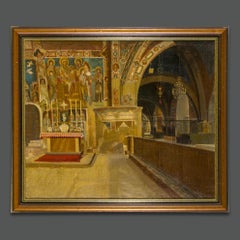
Egron Lundgren (1815–1875) Monk in a Monastic Cell signed and dated Egron Lundgren Rom 1848 oil on relined canvas unframed 62 x 50 cm (24 ½ x 19 ¾ in.) framed 79 x 68 cm (31 x 26 ¾...

Category

1840s Old Masters Henry Perronet Briggs Art

Materials

Canvas, Oil

The Grape Seller - Workshop of Jacob Ochtervelt

The Grape Seller - Workshop of Jacob Ochtervelt

Located in Stockholm, SE

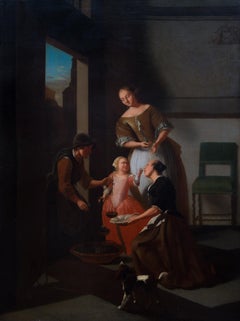
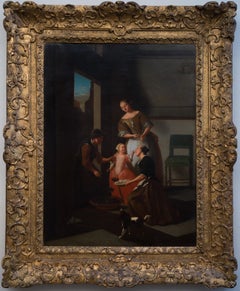
Jacob Ochtervelt (Workshop) The Grape Seller oil on canvas unframed: 80.7 x 61 cm.; 31 ¾ x 24 in. framed: 109.5 x 89 cm.; 43 1/8 x 35 in. Essay: This captivating piece, originating from the studio of the revered Dutch artist Jacob Ochtervelt, mirrors the composition of a signed and dated 1669 canvas by Ochtervelt that is presently housed in the Hermitage museum. Its subject, "The Grape Seller" immerses us in a typical 17th-century interior, replete with characters from various strata of society. At the center, a fruit vendor is depicted bending over to weigh grapes for the buyer. A child hands some of the grapes to her mother to taste, their attentive maid standing by. The backdrop showcases typical Ochtervelt details: a hint of the city visible through the doorway, light filtering in through an overhead window, and a playful dog at their side. The exquisite quality of the piece is evident in the minutiae, such as the intricate detailing of the mother's earring, which in reality spans only a few millimeters yet boasts impressive attention to detail. Initially, Sotheby's considered this work to be an autograph piece by Ochtervelt. But due to some uncertainty, it was auctioned as Workshop of Jacob Ochtervelt. On the other hand, the esteemed Cabinet Turquin in Paris leans toward attributing the piece directly to Jacob Ochtervelt himself. The painting is framed in an authentic period frame, which has been delicately restored by Stockholm's Förgyllning och Bildhuggeri. The frame retains its age-old patina and, while in used condition, has minor imperfections adding to its charm. Another interesting thing worth to mention is the painting's provenance. It was once owned by the 1st Viscount Rothermere (1868-1940), the founder of the Daily Mail and Daily Mirror...

Category

17th Century Old Masters Henry Perronet Briggs Art
Materials

Canvas, Oil

19th Century by Salvatore Postiglione Pastime of a young lady Oil on canvas

19th Century by Salvatore Postiglione Pastime of a young lady Oil on canvas

Located in Milano, Lombardia

Salvatore Postiglione (Naples, Italy, 1861 – 1906) Title: Pastime of a young lady from a good family Medium: Oil on canvas Dimensions: without frame 88.3 × 33.3 cm – with frame 115 x...

Category

19th Century Old Masters Henry Perronet Briggs Art
Materials

Canvas, Oil

17th-Century Flemish Oil - Saint Barbara, A Symbol of Protection and Resilience

17th-Century Flemish Oil - Saint Barbara, A Symbol of Protection and Resilience

Located in Aartselaar, BE

17th century Flemish School, Saint Barbara This accomplished 17th-century Flemish oil painting depicts Saint Barbara, shown as a serene and powerful woman dressed in a luminous red gown, set against a warm, atmospheric background and proudly holding her traditional attribute; a tower. The invention of the present composition stems from 17th century Antwerp and was likely drawn by Theodoor van Thulden...

Category

17th Century Old Masters Henry Perronet Briggs Art
Materials

Canvas, Oil

A 17th c. Italian school, Capriccio with the Colosseum, circle of V. Codazzi

A 17th c. Italian school, Capriccio with the Colosseum, circle of V. Codazzi

Located in PARIS, FR

A capriccio with the Colosseum in Roma 17th century Italian school Circle of Viviano Codazzi (1604-1670) Oil on canvas Dimensions: h. 35.43 in, w. 51.18 in Modern 17th century style ...

Category

17th Century Old Masters Henry Perronet Briggs Art
Materials

Canvas, Oil

The Archangel Gabriel

The Archangel Gabriel

By Cristobal de Villalpando

Located in New York, NY

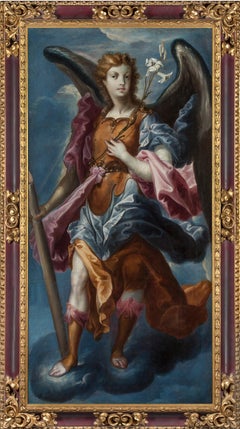
Provenance: Private Collection, Cranston, Rhode Island (by the 1950s?); by family descent until sold at: Bill Spicer Auction, North Kingstown, Rhode Island, 26 January 2011; where a...

Category

Late 17th Century Old Masters Henry Perronet Briggs Art
Materials

Canvas, Oil

Jean-Marc Nattier (1685 - 1766) - Portrait of Charlotte de Hesse-Rheinfels

Jean-Marc Nattier (1685 - 1766) - Portrait of Charlotte de Hesse-Rheinfels

By Jean-Marc Nattier

Located in PARIS, FR

Jean-Marc Nattier (Paris, 1685 - 1766) and his workshop Portrait of Charlotte de Hesse-Rheinfels Oil on canvas : h. 44.09 in, w. 38.19 in 18th century carved giltwood framed Framed : h. 52.36 in, w. 47.63 in Charlotte de Hesse-Rheinfels (1714-1741), daughter of Landgrave Ernest-Léopold de Hesse-Rheinfels-Rotenburg and Éléonore de Lowenstein-Wertheim and Kazazyan, was Princess of Condé by her marriage in 1728 to Duke Louis-Henri de Bourbon-Condé known as Monsieur le Duc. The princess is portrayed seated on a canopy of gilded wood trimmed with raspberry red velvet, the body positioned facing forward while the face is turned three-quarters to the left. The face with a thoughtful and thoughtful gaze is awakened by its large gray eyes, the translucent skin with painted cheeks accentuates the effect of a melted execution of the model. Her powdered and tied hair is adorned with an orange veil which goes down on her shoulders. The separation fades between the powdered hair and the face. Dressed in a golden yellow satin dress embellished with multiple rows of white and black lace flounces at the bodice and sleeves, the neckline of her dress reveals her bare throat. The ermine coat lined with blue velvet is placed behind his shoulders, the sides of the coat come back to the front and are arranged in angular folds on his knees. With her right hand, arm bent at the elbow, she caresses her little dog, while the left arm resting on the armrest of the armchair is extended and the index finger of her open hand points to the right. The positions of the arms and the head generate an illusion of diagonal movement allowing to break the static character of portrait. This stretching of the arms horizontally is characteristic of Nattier's works, the figure thus grows in size in the painting by occupying a larger place there. This process carried out by highlighting the elegance of refined gestures increases the natural grace of the young woman. The sober architectural background is composed of a column draped with a green curtain and flattened pilasters with Ionian capitals. The light coming from the right partially illuminates the figure, leaving the left part in shadow. Illuminated, the young woman's dress reflects golden reflections in warm orange tones, while the velvet of the coat broken into angular folds reveals its surface through icy white ridges. This opposition only accentuates the volumes and textures of the fabrics. The facial features under a subtle effect of blurred appear more softened while the pearly white complexions seem illuminated with an inner radiance. Related works: Our work is a variant of the painting executed by Jean Marc Nattier...

Category

1730s Old Masters Henry Perronet Briggs Art
Materials

Canvas, Oil

Luca Giordano, The Judgement of Solomon, Important Baroque Oil Sketch

Luca Giordano, The Judgement of Solomon, Important Baroque Oil Sketch

Located in Paris, Île-de-France

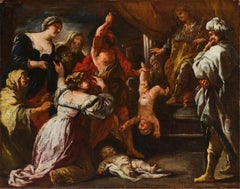
Luca GIORDANO (Naples 1634 – 1705) The Judgement of Solomon, circa 1670 Oil on canvas 38 × 48 cm - Unsigned Collection stamp on the reverse depicting a Roman intaglio. The same ma...

Category

17th Century Old Masters Henry Perronet Briggs Art
Materials

Canvas, Oil

Henry Perronet Briggs art for sale on 1stDibs.

Find a wide variety of authentic Henry Perronet Briggs art available for sale on 1stDibs. You can also browse by medium to find art by Henry Perronet Briggs in canvas, fabric, graphite and more. Much of the original work by this artist or collective was created during the 19th century and is mostly associated with the Old Masters style. Not every interior allows for large Henry Perronet Briggs art, so small editions measuring 2 inches across are available. Customers who are interested in this artist might also find the work of Michela De Vito, George Romney, and William Bromley. Henry Perronet Briggs art prices can differ depending upon medium, time period and other attributes. On 1stDibs, the price for these items starts at $1,934 and tops out at $5,000, while the average work can sell for $3,467.

Artists Similar to Henry Perronet Briggs