Italo Scanga Sculptures

American, Italian, 1932-2001
Italo Scanga was born in the Calabria region of Italy, and at 14 immigrated to the United States with his family after World War II. Living in Detroit, he worked on the General Motors assembly line and served in the United States Army before attending Michigan State University, where he received a bachelor's degree in 1960 and a master's degree in sculpture a year later. Scanga worked in an amazing range of media from printmaking to ceramics, from found-object sculptures to works made of glass, cultivating a style that blended Cubist and folk influences. His penchant for transforming found objects into art translates into his printmaking style, where a recognizable collage-like composition is often evident. Scanga was the recipient of numerous grants including two National Endowment for the Arts Grants (1989, 1980), a Copley Foundation Grant (1972) and a Howard Foundation Grant (1970), among others. He has had one-person shows at the Whitney Museum of American Art, the Los Angeles County Museum of Art, the Museum of Fine Art, Boston, and the Museo Rufino Tamayo in Mexico City and elsewhere. His work is in the collection of many museums, including the Metropolitan Museum of Art, the Museum of Modern Art in New York, the Art Institute of Chicago, the Detroit Institute of Art, the Philadelphia Museum of Art, the Yale University Gallery of Art, the San Diego Museum of Art, the Hirshhorn Museum, the Fogg Museum at Harvard University, the Guggenheim Museum, and the Walker Art Center in Minneapolis, among others.
to
2
Overall Width
to
Overall Height
to
2
2
2
2
2
2
17
212
210
157
128
2
Artist: Italo Scanga
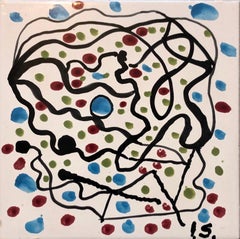
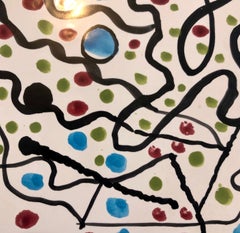
Abstract Painted Ceramic Tile Pop Art Painting Italian Neo Figurative Painting

Abstract Painted Ceramic Tile Pop Art Painting Italian Neo Figurative Painting

By Italo Scanga

Located in Surfside, FL

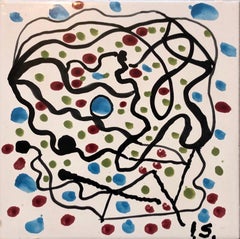
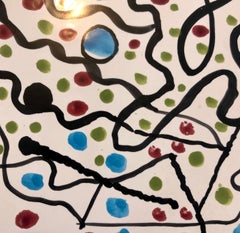
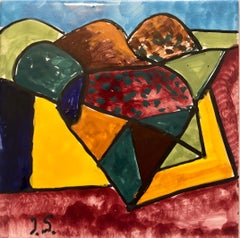
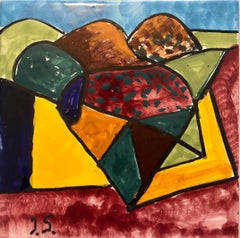
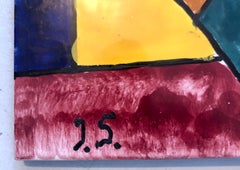
This painted ceramic tile by Italo Scanga, epitomizes the characteristics of his oeuvre. Polychrome and vibrant art from the Memphis Milano era. This is signed with his initials. This is reminiscent of the mid century work of Jean Lurcat and Jean Picart le Doux. Italo Scanga (June 6, 1932 - July 7, 2001), an Italian-born American artist, was known for his sculptures, prints and, paintings, mostly created from found objects. In his youth in Calabria, Italy he worked as a cabinetmaker's apprentice and studies sculpture with a man who carved statues of saints. Italo Scanga was an innovative neo Dada, neo-Expressionist, and neo-Cubist multimedia artist who made assemblage, collage, sculptures of ordinary objects and created prints, glass, and ceramic works. Modern Italian abstract geometric folk art. Scanga's materials included natural objects like branches and seashells, as well as kitsch figurines, castoff musical instruments and decorative trinkets salvaged from flea markets and thrift shops. He combined these ingredients into free-standing assemblages, which he then painted. Although visually ebullient, the results sometimes referred to gruesome episodes from Greek mythology or the lives and deaths of martyred saints. He considered his artistic influences to be sweepingly pan-cultural, from African sculpture to Giorgio de Chirico. He often collaborated with the sculptor Dale Chihuly, who was a close friend. Constructed of wood and glass, found objects or fabric, his ensembles reflect a trio of activities—working, eating, and praying. These activities dominate the lives of those who live close to the land, but they are also activities that are idealized by many who contemplate, romantically, a simpler, bucolic life. Italo graduated from Michigan State University where he befriended fellow artists Richard Merkin and David Pease. He studied under Lindsey Decker who introduces him to welding and sculpture after his initial interest in photography. Also studies with Charles Pollock, the brother of Abstract Expressionist Jackson Pollock. His first teaching job was at University of Wisconsin (through 1964). where he met Harvey Littleton, a fellow instructor. He later moves to Providence, Rhode Island,I to teach at Rhode Island School of Design (RISD). Is colleagues with artists Richard Merkin and Hardu Keck. Starts a correspondence with HC Westermann. Spends summers teaching at Brown University; colleague of Hugh Townley. Moves to State College, PA, and teaches at Pennsylvania State University for one year. Meets artists Juris Ubans, Harry Anderson, Richard Frankel, and Richard Calabro, who remain friends throughout his career. 1967: David Pease helps him get a tenure track position at Tyler School of Art in Philadelphia, PA, . Artists he works closely with include Ernest Silva, Lee Jaffe, Donald Gill, and William Schwedler. Meets graduate student Dale Chihuly while lecturing at RISD and develops a lifelong friendship. 1969: One person exhibition, Baylor Art Gallery, Baylor University, Waco, TX. Works very closely with students Larry Becker and Heidi Nivling (who later run a gallery in Philadelphia, PA), and Harry Anderson. Welcomes many artists into his home including Donald Judd, Dan Flavin, Bruce Nauman (a former student), Vito Acconci, Ree Morton and Rafael Ferrer. 1973: "Saints Glass" at 112 Greene Street Gallery, NYC. Installation at the Institute of Contemporary Art at University of Pennsylvania, Philadelphia, PA. Meets Gordon Matta Clark and contributes to an artist cookbook. Goes to Pilchuck Glass School, Stanwood, WA, founded by Dale Chihuly, as a visiting artist. He continues to work there annually through 2001. Works over the years with Pilchuck artists Richard Royal, Seaver Leslie, Jamie Carpenter, Joey Kirkpatrick, Flora Mace, Robbie Miller, Billy Morris, Buster Simpson...

Category

1980s Neo-Expressionist Italo Scanga Sculptures

Materials

Enamel
Abstract Painted Ceramic Tile Pop Art Painting Italian Neo Figurative Painting

Abstract Painted Ceramic Tile Pop Art Painting Italian Neo Figurative Painting

By Italo Scanga

Located in Surfside, FL

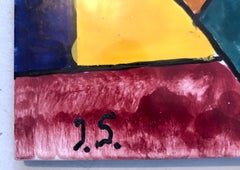
This painted ceramic tile by Italo Scanga, epitomizes the characteristics of his oeuvre. Polychrome and vibrant art from the Memphis Milano era. This is signed with his initials. This is reminiscent of the mid century work of Jean Lurcat and Jean Picart le Doux. Italo Scanga (June 6, 1932 - July 7, 2001), an Italian-born American artist, was known for his sculptures, prints and, paintings, mostly created from found objects. In his youth in Calabria, Italy he worked as a cabinetmaker's apprentice and studies sculpture with a man who carved statues of saints. Italo Scanga was an innovative neo Dada, neo-Expressionist, and neo-Cubist multimedia artist who made assemblage, collage, sculptures of ordinary objects and created prints, glass, and ceramic works. Modern Italian abstract geometric folk art. Scanga's materials included natural objects like branches and seashells, as well as kitsch figurines, castoff musical instruments and decorative trinkets salvaged from flea markets and thrift shops. He combined these ingredients into free-standing assemblages, which he then painted. Although visually ebullient, the results sometimes referred to gruesome episodes from Greek mythology or the lives and deaths of martyred saints. He considered his artistic influences to be sweepingly pan-cultural, from African sculpture to Giorgio de Chirico. He often collaborated with the sculptor Dale Chihuly, who was a close friend. Constructed of wood and glass, found objects or fabric, his ensembles reflect a trio of activities—working, eating, and praying. These activities dominate the lives of those who live close to the land, but they are also activities that are idealized by many who contemplate, romantically, a simpler, bucolic life. Italo graduated from Michigan State University where he befriended fellow artists Richard Merkin and David Pease. He studied under Lindsey Decker who introduces him to welding and sculpture after his initial interest in photography. Also studies with Charles Pollock, the brother of Abstract Expressionist Jackson Pollock. His first teaching job was at University of Wisconsin (through 1964). where he met Harvey Littleton, a fellow instructor. He later moves to Providence, Rhode Island,I to teach at Rhode Island School of Design (RISD). Is colleagues with artists Richard Merkin and Hardu Keck. Starts a correspondence with HC Westermann. Spends summers teaching at Brown University; colleague of Hugh Townley. Moves to State College, PA, and teaches at Pennsylvania State University for one year. Meets artists Juris Ubans, Harry Anderson, Richard Frankel, and Richard Calabro, who remain friends throughout his career. 1967: David Pease helps him get a tenure track position at Tyler School of Art in Philadelphia, PA, . Artists he works closely with include Ernest Silva, Lee Jaffe, Donald Gill, and William Schwedler. Meets graduate student Dale Chihuly while lecturing at RISD and develops a lifelong friendship. 1969: One person exhibition, Baylor Art Gallery, Baylor University, Waco, TX. Works very closely with students Larry Becker and Heidi Nivling (who later run a gallery in Philadelphia, PA), and Harry Anderson. Welcomes many artists into his home including Donald Judd, Dan Flavin, Bruce Nauman (a former student), Vito Acconci, Ree Morton and Rafael Ferrer. 1973: "Saints Glass" at 112 Greene Street Gallery, NYC. Installation at the Institute of Contemporary Art at University of Pennsylvania, Philadelphia, PA. Meets Gordon Matta Clark and contributes to an artist cookbook. Goes to Pilchuck Glass School, Stanwood, WA, founded by Dale Chihuly, as a visiting artist. He continues to work there annually through 2001. Works over the years with Pilchuck artists Richard Royal, Seaver Leslie, Jamie Carpenter, Joey Kirkpatrick, Flora Mace, Robbie Miller, Billy Morris, Buster Simpson...

Category

1980s Neo-Expressionist Italo Scanga Sculptures

Materials

Enamel
Related Items
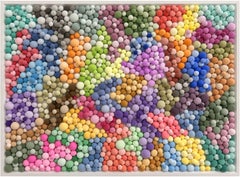
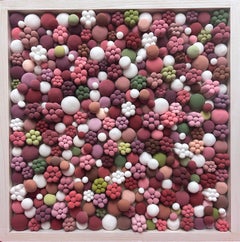
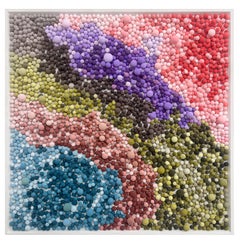
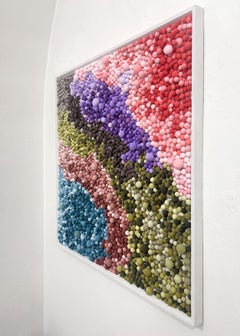
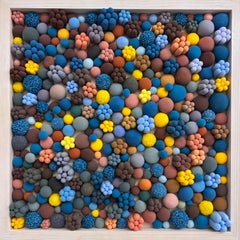
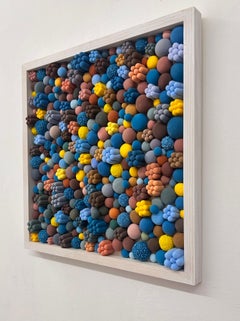
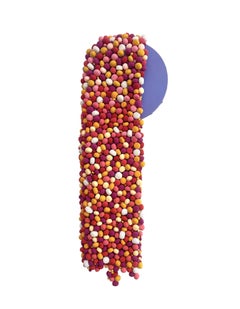
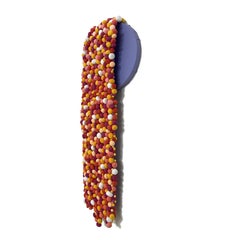
Colorful Floral Bubble Wall Sculpture Polymer Clay Mosaic Wall Art Painting

Colorful Floral Bubble Wall Sculpture Polymer Clay Mosaic Wall Art Painting

By Elizabeth Art Candy

Located in FISTERRA, ES

Colorful floral bubble wall sculpture composed of hundreds of hand-modeled polymer clay elements, creating a lightweight mosaic of color, texture and organic growth. Flower Bubbles ...

Category

2010s Pop Art Italo Scanga Sculptures

Materials

Clay, Spray Paint, Board

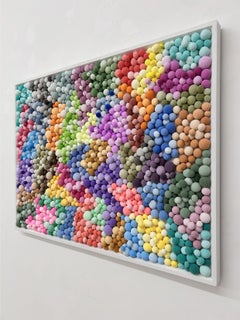
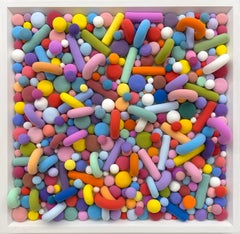
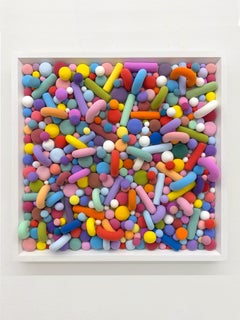
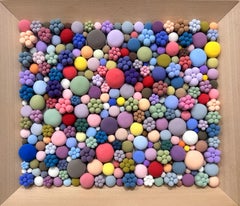
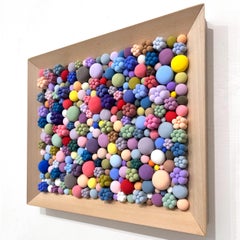
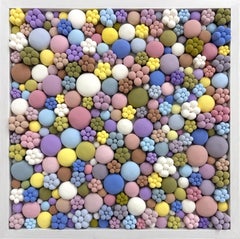
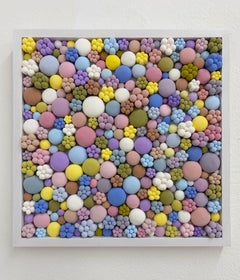
Pastel Candy Mosaic Contemporary Clay Relief Wall Sculpture

Pastel Candy Mosaic Contemporary Clay Relief Wall Sculpture

By Elizabeth Art Candy

Located in FISTERRA, ES

Pastel candy mosaic wall sculpture composed of hand modeled clay forms arranged in a dense contemporary relief with playful sculptural texture. This contemporary clay relief transfo...

Category

2010s Pop Art Italo Scanga Sculptures

Materials

Clay, Spray Paint, Board

Blue Hexagonal Polymer Clay Wall Sculpture Textured Pop Art Relief Artwork

Blue Hexagonal Polymer Clay Wall Sculpture Textured Pop Art Relief Artwork

By Elizabeth Art Candy

Located in FISTERRA, ES

Blue hexagonal polymer clay wall sculpture featuring an intricate network of intertwined forms, combining pop art aesthetics, textured relief and collectible contemporary design. Ot...

Category

2010s Italo Scanga Sculptures

Materials

Clay, Canvas, Spray Paint

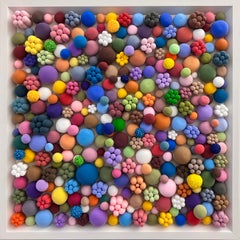
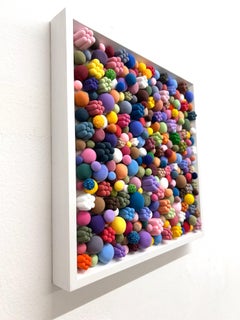
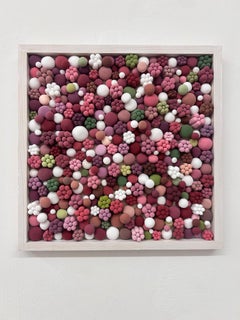
Pink Floral Bubble Clay Wall Sculpture 3D Mosaic Panel in Hand Molded Ceramic

Pink Floral Bubble Clay Wall Sculpture 3D Mosaic Panel in Hand Molded Ceramic

By Elizabeth Art Candy

Located in FISTERRA, ES

Pink floral bubble clay wall sculpture in hand molded ceramic relief forming a 3D mosaic panel with clustered organic composition. This wall-mounted 3D mosaic panel is composed of i...

Category

2010s Pop Art Italo Scanga Sculptures

Materials

Clay, Spray Paint, Board

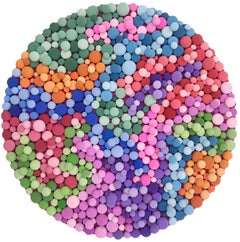
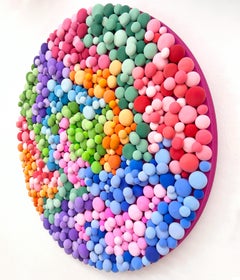
Large Abstract Bubble Wall Sculpture in Hand Molded Clay 3D Mosaic Panel

Large Abstract Bubble Wall Sculpture in Hand Molded Clay 3D Mosaic Panel

By Elizabeth Art Candy

Located in FISTERRA, ES

Large abstract bubble wall sculpture in hand molded clay forming a multicolor 3D mosaic panel with high relief surface. This large-scale wall sculpture is composed of individually h...

Category

2010s Pop Art Italo Scanga Sculptures

Materials

Clay, Spray Paint, Board

Oceano Blue Hand Molded Clay Geometric Wall Relief in Hexagonal Modular Format

Oceano Blue Hand Molded Clay Geometric Wall Relief in Hexagonal Modular Format

By Elizabeth Art Candy

Located in FISTERRA, ES

Ocean blue hand molded clay geometric wall relief in hexagonal modular format for contemporary interiors. This geometric wall relief is constructed from hand molded natural clay, lo...

Category

2010s Abstract Italo Scanga Sculptures

Materials

Clay, Canvas, Spray Paint

Blue Floral Bubble Clay Wall Relief 3D Mosaic Panel in Hand Molded Texture

Blue Floral Bubble Clay Wall Relief 3D Mosaic Panel in Hand Molded Texture

By Elizabeth Art Candy

Located in FISTERRA, ES

Blue floral bubble clay wall relief in hand molded ceramic forming a 3D mosaic panel with layered texture and multicolor composition. This wall-mount...

Category

2010s Pop Art Italo Scanga Sculptures

Materials

Clay, Spray Paint, Board

Colorful Textured Mixed Media Wall Sculpture with Candy-Like Spheres and Circle

Colorful Textured Mixed Media Wall Sculpture with Candy-Like Spheres and Circle

By Elizabeth Art Candy

Located in FISTERRA, ES

Colorful textured mixed media wall sculpture composed of clustered candy-like spheres and a contrasting lavender circular form. This wall-mounted artwork by Elizabeth Art Candy pres...

Category

2010s Abstract Italo Scanga Sculptures

Materials

Clay, Spray Paint, Board

Round Red Lips Clay Mosaic Wall Sculpture with Floral Relief Detail

Round Red Lips Clay Mosaic Wall Sculpture with Floral Relief Detail

By Elizabeth Art Candy

Located in FISTERRA, ES

Round red lips clay mosaic wall sculpture in high relief with hand molded and fired ceramic elements. This circular wall relief reinterprets the lips motif through a dense aggregatio...

Category

2010s Contemporary Italo Scanga Sculptures

Materials

Clay, Canvas, Spray Paint

Hexagonal Pink Clay Wall Sculpture in Hand Molded Ceramic Relief Modular Panel

Hexagonal Pink Clay Wall Sculpture in Hand Molded Ceramic Relief Modular Panel

By Elizabeth Art Candy

Located in FISTERRA, ES

Hexagonal pink clay wall sculpture in hand molded ceramic relief designed as a modular wall installation. This sculptural wall piece is constructed from hand molded natural clay, lo...

Category

2010s Contemporary Italo Scanga Sculptures

Materials

Clay, Canvas, Spray Paint

Natural Abstract Clay Mosaic Relief Sculpture With Botanical Forms Wall Art

Natural Abstract Clay Mosaic Relief Sculpture With Botanical Forms Wall Art

By Elizabeth Art Candy

Located in FISTERRA, ES

Natural is a contemporary clay mosaic relief sculpture composed of hand-shaped spherical elements, botanical clusters and layered pastel color relationships. Created in 2026, this u...

Category

2010s Pop Art Italo Scanga Sculptures

Materials

Clay, Spray Paint, Board

Previously Available Items
Abstract Geometric Cubist Painted Wood Sculpture Head Italian Neo Figurative Art

Abstract Geometric Cubist Painted Wood Sculpture Head Italian Neo Figurative Art

By Italo Scanga

Located in Surfside, FL

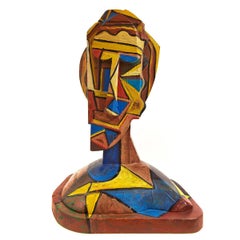
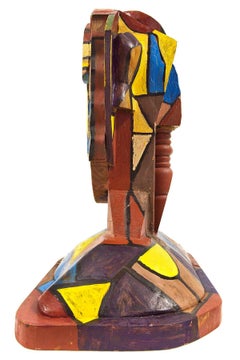
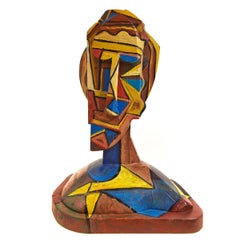
This painted wood assemblage sculpture by Italo Scanga, epitomizes the characteristics of his oeuvre. Polychrome head portrait bust. This was signed on a brass or bronze plaque but that has gone missing. It is unsigned. I believe there might be a studio stamp on the bottom. Italo Scanga (June 6, 1932 - July 7, 2001), an Italian-born American artist, was known for his sculptures, prints and, paintings, mostly created from found objects. In his youth in Calabria, Italy he worked as a cabinetmaker's apprentice and studies sculpture with a man who carved statues of saints. Italo Scanga was an innovative neo Dada, neo-Expressionist, and neo-Cubist multimedia artist who made assemblage, collage, sculptures of ordinary objects and created prints, glass, and ceramic works. Modern Italian abstract geometric folk art. Scanga's materials included natural objects like branches and seashells, as well as kitsch figurines, castoff musical instruments and decorative trinkets salvaged from flea markets and thrift shops. He combined these ingredients into free-standing assemblages, which he then painted. Although visually ebullient, the results sometimes referred to gruesome episodes from Greek mythology or the lives and deaths of martyred saints. He considered his artistic influences to be sweepingly pan-cultural, from African sculpture to Giorgio de Chirico. He often collaborated with the sculptor Dale Chihuly, who was a close friend. Constructed of wood and glass, found objects or fabric, his ensembles reflect a trio of activities—working, eating, and praying. These activities dominate the lives of those who live close to the land, but they are also activities that are idealized by many who contemplate, romantically, a simpler, bucolic life. Italo graduated from Michigan State University where he befriended fellow artists Richard Merkin and David Pease. He studied under Lindsey Decker who introduces him to welding and sculpture after his initial interest in photography. Also studies with Charles Pollock, the brother of Abstract Expressionist Jackson Pollock. His first teaching job was at University of Wisconsin (through 1964). where he met Harvey Littleton, a fellow instructor. He later moves to Providence, Rhode Island,I to teach at Rhode Island School of Design (RISD). Is colleagues with artists Richard Merkin and Hardu Keck...

Category

1980s Cubist Italo Scanga Sculptures

Materials

Wood, Oil

Abstract Painted Ceramic Tile Pop Art Painting Italian Neo Figurative Painting

Abstract Painted Ceramic Tile Pop Art Painting Italian Neo Figurative Painting

By Italo Scanga

Located in Surfside, FL

This painted ceramic tile by Italo Scanga, epitomizes the characteristics of his oeuvre. Polychrome and vibrant art from the Memphis Milano era. This is signed with his initials. This is reminiscent of the mid century work of Jean Lurcat and Jean Picart le Doux. Italo Scanga (June 6, 1932 - July 7, 2001), an Italian-born American artist, was known for his sculptures, prints and, paintings, mostly created from found objects. In his youth in Calabria, Italy he worked as a cabinetmaker's apprentice and studies sculpture with a man who carved statues of saints. Italo Scanga was an innovative neo Dada, neo-Expressionist, and neo-Cubist multimedia artist who made assemblage, collage, sculptures of ordinary objects and created prints, glass, and ceramic works. Modern Italian abstract geometric folk art. Scanga's materials included natural objects like branches and seashells, as well as kitsch figurines, castoff musical instruments and decorative trinkets salvaged from flea markets and thrift shops. He combined these ingredients into free-standing assemblages, which he then painted. Although visually ebullient, the results sometimes referred to gruesome episodes from Greek mythology or the lives and deaths of martyred saints. He considered his artistic influences to be sweepingly pan-cultural, from African sculpture to Giorgio de Chirico. He often collaborated with the sculptor Dale Chihuly, who was a close friend. Constructed of wood and glass, found objects or fabric, his ensembles reflect a trio of activities—working, eating, and praying. These activities dominate the lives of those who live close to the land, but they are also activities that are idealized by many who contemplate, romantically, a simpler, bucolic life. Italo graduated from Michigan State University where he befriended fellow artists Richard Merkin and David Pease. He studied under Lindsey Decker who introduces him to welding and sculpture after his initial interest in photography. Also studies with Charles Pollock, the brother of Abstract Expressionist Jackson Pollock. His first teaching job was at University of Wisconsin (through 1964). where he met Harvey Littleton, a fellow instructor. He later moves to Providence, Rhode Island,I to teach at Rhode Island School of Design (RISD). Is colleagues with artists Richard Merkin and Hardu Keck. Starts a correspondence with HC Westermann. Spends summers teaching at Brown University; colleague of Hugh Townley. Moves to State College, PA, and teaches at Pennsylvania State University for one year. Meets artists Juris Ubans, Harry Anderson, Richard Frankel, and Richard Calabro, who remain friends throughout his career. 1967: David Pease helps him get a tenure track position at Tyler School of Art in Philadelphia, PA, . Artists he works closely with include Ernest Silva, Lee Jaffe, Donald Gill, and William Schwedler. Meets graduate student Dale Chihuly while lecturing at RISD and develops a lifelong friendship. 1969: One person exhibition, Baylor Art Gallery, Baylor University, Waco, TX. Works very closely with students Larry Becker and Heidi Nivling (who later run a gallery in Philadelphia, PA), and Harry Anderson. Welcomes many artists into his home including Donald Judd, Dan Flavin, Bruce Nauman (a former student), Vito Acconci, Ree Morton and Rafael Ferrer. 1973: "Saints Glass" at 112 Greene Street Gallery, NYC. Installation at the Institute of Contemporary Art at University of Pennsylvania, Philadelphia, PA. Meets Gordon Matta Clark and contributes to an artist cookbook. Goes to Pilchuck Glass School, Stanwood, WA, founded by Dale Chihuly, as a visiting artist. He continues to work there annually through 2001. Works over the years with Pilchuck artists Richard Royal, Seaver Leslie, Jamie Carpenter, Joey Kirkpatrick, Flora Mace, Robbie Miller, Billy Morris, Buster Simpson, Toots Zynsky, Howard Ben Tre...

Category

1980s Neo-Expressionist Italo Scanga Sculptures

Materials

Enamel
Abstract Painted Ceramic Tile Pop Art Painting Italian Neo Figurative Painting

Abstract Painted Ceramic Tile Pop Art Painting Italian Neo Figurative Painting

By Italo Scanga

Located in Surfside, FL

This painted ceramic tile by Italo Scanga, epitomizes the characteristics of his oeuvre. Polychrome and vibrant art from the Memphis Milano era. This is signed with his initials. This is reminiscent of the mid century work of Jean Lurcat and Jean Picart le Doux. Italo Scanga (June 6, 1932 - July 7, 2001), an Italian-born American artist, was known for his sculptures, prints and, paintings, mostly created from found objects. In his youth in Calabria, Italy he worked as a cabinetmaker's apprentice and studies sculpture with a man who carved statues of saints. Italo Scanga was an innovative neo Dada, neo-Expressionist, and neo-Cubist multimedia artist who made assemblage, collage, sculptures of ordinary objects and created prints, glass, and ceramic works. Modern Italian abstract geometric folk art. Scanga's materials included natural objects like branches and seashells, as well as kitsch figurines, castoff musical instruments and decorative trinkets salvaged from flea markets and thrift shops. He combined these ingredients into free-standing assemblages, which he then painted. Although visually ebullient, the results sometimes referred to gruesome episodes from Greek mythology or the lives and deaths of martyred saints. He considered his artistic influences to be sweepingly pan-cultural, from African sculpture to Giorgio de Chirico. He often collaborated with the sculptor Dale Chihuly, who was a close friend. Constructed of wood and glass, found objects or fabric, his ensembles reflect a trio of activities—working, eating, and praying. These activities dominate the lives of those who live close to the land, but they are also activities that are idealized by many who contemplate, romantically, a simpler, bucolic life. Italo graduated from Michigan State University where he befriended fellow artists Richard Merkin and David Pease. He studied under Lindsey Decker who introduces him to welding and sculpture after his initial interest in photography. Also studies with Charles Pollock, the brother of Abstract Expressionist Jackson Pollock. His first teaching job was at University of Wisconsin (through 1964). where he met Harvey Littleton, a fellow instructor. He later moves to Providence, Rhode Island,I to teach at Rhode Island School of Design (RISD). Is colleagues with artists Richard Merkin and Hardu Keck. Starts a correspondence with HC Westermann. Spends summers teaching at Brown University; colleague of Hugh Townley. Moves to State College, PA, and teaches at Pennsylvania State University for one year. Meets artists Juris Ubans, Harry Anderson, Richard Frankel, and Richard Calabro, who remain friends throughout his career. 1967: David Pease helps him get a tenure track position at Tyler School of Art in Philadelphia, PA, . Artists he works closely with include Ernest Silva, Lee Jaffe, Donald Gill, and William Schwedler. Meets graduate student Dale Chihuly while lecturing at RISD and develops a lifelong friendship. 1969: One person exhibition, Baylor Art Gallery, Baylor University, Waco, TX. Works very closely with students Larry Becker and Heidi Nivling (who later run a gallery in Philadelphia, PA), and Harry Anderson. Welcomes many artists into his home including Donald Judd, Dan Flavin, Bruce Nauman (a former student), Vito Acconci, Ree Morton and Rafael Ferrer. 1973: "Saints Glass" at 112 Greene Street Gallery, NYC. Installation at the Institute of Contemporary Art at University of Pennsylvania, Philadelphia, PA. Meets Gordon Matta Clark and contributes to an artist cookbook. Goes to Pilchuck Glass School, Stanwood, WA, founded by Dale Chihuly, as a visiting artist. He continues to work there annually through 2001. Works over the years with Pilchuck artists Richard Royal, Seaver Leslie, Jamie Carpenter, Joey Kirkpatrick, Flora Mace, Robbie Miller, Billy Morris, Buster Simpson, Toots Zynsky, Howard Ben Tre...

Category

1980s Neo-Expressionist Italo Scanga Sculptures

Materials

Enamel

Abstract Geometric Cubist Painted Wood Sculpture Head Italian Neo Figurative Art

Abstract Geometric Cubist Painted Wood Sculpture Head Italian Neo Figurative Art

By Italo Scanga

Located in Surfside, FL

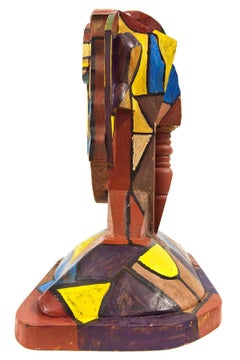
This painted wood assemblage sculpture by Italo Scanga, epitomizes the characteristics of his oeuvre. Polychrome head portrait bust. This was signed on a brass or bronze plaque but that has gone missing. It is unsigned. I believe there might be a studio stamp on the bottom. Italo Scanga (June 6, 1932 - July 7, 2001), an Italian-born American artist, was known for his sculptures, prints and, paintings, mostly created from found objects. In his youth in Calabria, Italy he worked as a cabinetmaker's apprentice and studies sculpture with a man who carved statues of saints. Italo Scanga was an innovative neo Dada, neo-Expressionist, and neo-Cubist multimedia artist who made assemblage, collage, sculptures of ordinary objects and created prints, glass, and ceramic works. Modern Italian abstract geometric folk art. Scanga's materials included natural objects like branches and seashells, as well as kitsch figurines, castoff musical instruments and decorative trinkets salvaged from flea markets and thrift shops. He combined these ingredients into free-standing assemblages, which he then painted. Although visually ebullient, the results sometimes referred to gruesome episodes from Greek mythology or the lives and deaths of martyred saints. He considered his artistic influences to be sweepingly pan-cultural, from African sculpture to Giorgio de Chirico. He often collaborated with the sculptor Dale Chihuly, who was a close friend. Constructed of wood and glass, found objects or fabric, his ensembles reflect a trio of activities—working, eating, and praying. These activities dominate the lives of those who live close to the land, but they are also activities that are idealized by many who contemplate, romantically, a simpler, bucolic life. Italo graduated from Michigan State University where he befriended fellow artists Richard Merkin and David Pease. He studied under Lindsey Decker who introduces him to welding and sculpture after his initial interest in photography. Also studies with Charles Pollock, the brother of Abstract Expressionist Jackson Pollock. His first teaching job was at University of Wisconsin (through 1964). where he met Harvey Littleton, a fellow instructor. He later moves to Providence, Rhode Island,I to teach at Rhode Island School of Design (RISD). Is colleagues with artists Richard Merkin and Hardu Keck. Starts a correspondence with HC Westermann. Spends summers teaching at Brown University; colleague of Hugh Townley. Moves to State College, PA, and teaches at Pennsylvania State University for one year. Meets artists Juris Ubans, Harry Anderson, Richard Frankel, and Richard Calabro, who remain friends throughout his career. 1967: David Pease helps him get a tenure track position at Tyler School of Art in Philadelphia, PA, . Artists he works closely with include Ernest Silva, Lee Jaffe, Donald Gill, and William Schwedler. Meets graduate student Dale Chihuly while lecturing at RISD and develops a lifelong friendship. 1969: One person exhibition, Baylor Art Gallery, Baylor University, Waco, TX. Works very closely with students Larry Becker and Heidi Nivling (who later run a gallery in Philadelphia, PA), and Harry Anderson. Welcomes many artists into his home including Donald Judd, Dan Flavin, Bruce Nauman (a former student), Vito Acconci, Ree Morton and Rafael Ferrer. 1973: "Saints Glass" at 112 Greene Street Gallery, NYC. Installation at the Institute of Contemporary Art at University of Pennsylvania, Philadelphia, PA. Meets Gordon Matta Clark and contributes to an artist cookbook. Goes to Pilchuck Glass School, Stanwood, WA, founded by Dale Chihuly, as a visiting artist. He continues to work there annually through 2001. Works over the years with Pilchuck artists Richard Royal, Seaver Leslie, Jamie Carpenter, Joey Kirkpatrick, Flora Mace, Robbie Miller, Billy Morris, Buster Simpson, Toots Zynsky, Howard Ben Tre...

Category

1980s Cubist Italo Scanga Sculptures

Materials

Wood, Oil

Italo Scanga sculptures for sale on 1stDibs.

Find a wide variety of authentic Italo Scanga sculptures available for sale on 1stDibs. You can also browse by medium to find art by Italo Scanga in paint, ceramic, enamel and more. Not every interior allows for large Italo Scanga sculptures, so small editions measuring 8 inches across are available. Customers who are interested in this artist might also find the work of Michael Gross, Jim Ritchie, and Mariko. Italo Scanga sculptures prices can differ depending upon medium, time period and other attributes. On 1stDibs, the price for these items starts at $750 and tops out at $3,800, while the average work can sell for $750.