Jack Beal Art

American, 1931-2013
Walter Henry "Jack" Beal Jr. was an American realist painter
to
5
1
5
4
2
Overall Width
to
Overall Height
to
12
7
1
2
10
2
6
5
5
4
4
4
3
2
2
1
1
1
1
1
6
3
3
12
10,119
2,805
2,503
1,394
12
Artist: Jack Beal
Jack Beal TRILLIUM Linocut

Jack Beal TRILLIUM Linocut

By Jack Beal

Located in Lake Worth Beach, FL

Artist/Designer; Manufacturer: Jack Beal (American, 1921-2013)
Marking(s); notes: signed; AP X for the edition of 50
Materials: ...

Category

20th Century Jack Beal Art

Materials

Linocut

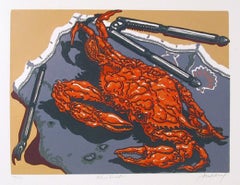
Jack Beal KIDDO Linocut

Jack Beal KIDDO Linocut

By Jack Beal

Located in Lake Worth Beach, FL

Artist/Designer; Manufacturer: Jack Beal (American, 1921-2013)
Marking(s); notes: signed; AP 2/6 for the edition of 27; 1977-78
...

Category

20th Century Jack Beal Art

Materials

Linocut

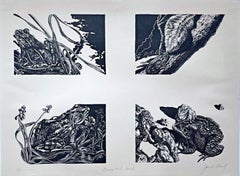
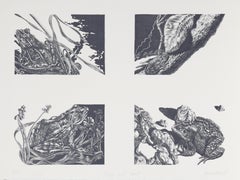
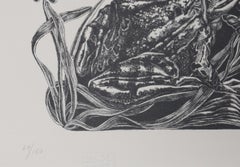
Frogs and Toad, Signed lithograph (AP), from Conspiracy: The Artist as Witness

Frogs and Toad, Signed lithograph (AP), from Conspiracy: The Artist as Witness

By Jack Beal

Located in New York, NY

Jack Beal Frogs and Toad, 1971 Hand signed in pencil by Jack Beal, annotated AP One-color lithograph proofed by hand and pulled by machine from a zinc plate on Arches buff paper with deckled edges at the Shorewood Bank Street Atelier Stamped, hand numbered AP, aside from the regular edition of 150 Stamped on reverse: COPYRIGHT © 1971 BY JACK BEAL, bears blind stamp 18 × 24 inches Unframed 18 x 24 inches Stamped on reverse: COPYRIGHT © 1971 BY JACK BEAL, bears distinctive blind stamp of publisher (shown) Publisher: David Godine, Center for Constitutional Rights, Washington, D.C. Jack Beal's "Frogs and Toads" is a classic example of protest art from the early 1970s - the most influential era until today. This historic graphic was created for the legendary portfolio "CONSPIRACY: the Artist as Witness", to raise money for the legal defense of the Chicago 8 - a group of anti-Vietnam War activists indicted by President Nixon's Attorney General John Mitchell for conspiring to riot during the 1968 Democratic National Convention. (1968 was also the year Bobby Kennedy was killed and American casualties in Vietnam exceeded 30,000.) The eight demonstrators included Abbie Hoffman, Jerry Rubin, David Dellinger, Tom Hayden, Rennie Davis, John Froines, Lee Weiner, and Bobby Seale. (The eighth activist, Bobby Seale, was severed from the case and sentenced to four years for contempt after being handcuffed, shackled to a chair and gagged.) Although Abbie Hoffman would later joke that these radicals couldn't even agree on lunch, the jury convicted them of conspiracy, with one juror proclaiming the demonstrators "should have been shot down by the police." All of the convictions were ultimately overturned by the 7th Circuit Court of Appeals. This lithograph has fine provenance: it comes directly from the original Portfolio: "Conspiracy The Artist as Witness" which also featured works by Alexander Calder, Nancy Spero and Leon Golub, Romare Bearden Sol Lewitt, Robert Morris, Claes Oldenburg, Larry Poons, Peter Saul, Raphael Soyer and Frank Stella - as well as this one by Jack Beal. It was originally housed in an elegant cloth case, accompanied by a colophon page. This is the first time since 1971 that this important work has been removed from the original portfolio case for sale. It is becoming increasingly scarce because so many from this edition are in the permanent collections of major museums and institutions worldwide. Jack Beal wrote a special message about this work on the Portfolio's colophon page. It says, "In 1956, shortly after Sondra and I moved to New York, two friends were arrested and jailed for protesting air-raid drills. From them and their friends came our education. This work is dedicated to them and their families. "In Memory of Patricia McClure Daw and AL Uhrie" - This print was made for their children. Jack Beal Biography: Early in his career Walter Henry “Jack” Beal Jr. painted abstract expressionist canvases, because he believed it was “the only valid way to paint.” By the early 1960s he totally altered his approach and fully repudiated abstraction. Turning to representation, he painted narrative and figurative subjects, often enhanced by bright colors and dramatic perspectives. Beal was born in Richmond, Virginia, and from 1950 to 1953 he attended the Norfolk Division of William and Mary College Polytechnic Institute, (now Old Dominion University) where he studied biology and anatomy. Shifting gears, he sought art training at the School of the Art Institute of Chicago where he focused on drawing, and met his wife, artist Sondra Freckelton. His art history instructor encouraged her students to paint in the manner of established artists, and to that end he frequented the Institute’s galleries. For Beal this was significant: “Until I saw pictures of real quality I had tended to think of painting as just so much self-indulgent smearing around, but when I saw masterpieces by Cézanne and Matisse, and other painters of similar stature, I was bowled over; suddenly I realized the force of art.” After spending three years (1953–1956) at the Art Institute, Beal concluded his studies there without getting a terminal degree, thinking it was only useful if he wanted to teach, which, at the time, he did not. He also took courses at the University of Chicago in 1955 and 1956. During this period he married Freckelton, a fellow student and sculptor who began her career working in wood and plastic. Together they moved to New York’s SoHo District before its transformation from a wasteland of sweatshops and small factories into an arts district. They were active with the Artist Tenants Association which was instrumental in getting zoning laws changed so that artists could live and work in the well-lit lofts. Embracing what came to be called “New Realism,” Beal initially painted an occasional landscape as well as earthy-toned still lifes which consisted of jumbled collections filled with personal objects. His signature style started with a series of female nudes—all modeled by Freckelton—based on Greek mythology. These were large canvases with flat paint surfaces, dramatic foreshortening, and unusual perspectives. He further enlivened them with vivid colors, stark lighting, and dynamic patterns derived from textiles and overstuffed furniture. He stopped painting nudes after two episodes. The first came as he was loading a canvas of his naked wife onto a truck in lower Manhattan; several laborers walked by and started to fondle and kiss the painting. On the one hand he felt his wife had been violated, while on the other he was pleased that his realism was so convincing. The second occurred after a solo exhibition in Chicago at which the reception had been sponsored by Playboy magazine. A few days later he was approached by a publicist and asked if Playboy bunnies could be photographed in front of his paintings. He refused. Some portrait commissions came Beal’s way, but he preferred only portraying friends. More significant were four large murals on the History of Labor in America, the 20th Century: Technology (1975), which he undertook for the headquarters of the United States Department of Labor in Washington. Following a historical timeline, the themes were: colonization, settlement, nineteenth century industry, and twentieth century technology. The unveiling ceremony was attended by government officials and Joan Mondale, an arts advocate and wife of the vice-president. The reviewer for the Washington Post wrote enthusiastically: “They’re heartfelt and they’re big (each is 12 feet square). Their many costumed actors (the Indian, the trapper, the scientist, the hardhat, the capitalist in striped pants, the union maid, etc.) strike dramatic poses in dramatic settings (a seaside wood at dawn, an outdoor blacksmith’s forge, a 19th-century mill, a 20th-century lab). The lighting is theatrical. Beal’s compositions, with their swooping curves and bunched diagonals, are as complicated as his interwoven plots.” To accomplish the murals Beal assembled a team of assistants and models, much in the manner of Renaissance masters, which included artist friends and Freckelton. who by then was painting brightly colorful still lifes. A second mural commission ensued from New York City’s Metropolitan Transit Authority for two twenty-foot long installations for the Times Square Interborough Rapid Transit Company subway station. Beal’s designs for The Return of Spring (installed in 2001, three days after the terrorist attacks in New York, Washington, DC and Philadelphia) and The Onset of Winter (installed in 2005), Beal captured the appearance of his models in an oil painting made to the scale of the intended mosaic. A collaboration with Miotto Mosaics, the canvases were shipped to the Travisanutto Workshop, in Spilimbergo, Italy, where craftsmen fabricated the design to glass mosaics. The Return of Spring depicted construction workers and other New Yorkers in front of a subway kiosk and an outdoor produce market and in The Onset of Winter, a crowd watches a film crew recording a woman entering the subway as snow falls against the city’s skyline. Harkening back to some of his early nudes based on Greek myth, Persephone, goddess of fertility and wife of Hades, appears in both. The symbolism is pertinent, since she spent six months each year below ground. Although he disparaged teaching early on, Beal and Freckelton offered four summertime workshops on their farm in Oneonta, New York. He was an instructor at the New York Academy of Art, a graduate art school he helped to establish in 1982. Returning to Virginia, he taught at Hollins College...

Category

1970s Realist Jack Beal Art
Materials

Lithograph

Buds
Buds

Buds

By Jack Beal

Located in Fairlawn, OH

Buds Color lithograph, 1980 Signed, titled, and editioned in pencil by the artist Publisher: Art Matters Printer: Bud Shark, Shark's Ink, Lyons, CO Condition: Excellent Image: 31-1/8 x 41-1/4" (79 x 104.7 cm.) "An Abstract Expressionist when he left the Art Institute of Chicago in 1956, Beal has since become a dedicated realist who sees art as a potentially powerful moral force. He has great regard for Platonic ideals of truth, beauty, and goodness, and admires both the realism of seventeenth-century Dutch painting and the compositional authority of Renaissance art. Since moving to New York in the late 1950s with his wife, painter Sondra Freckelton, Beal has painted still lifes, portraits, and landscapes, although in recent years his most ambitious undertakings have been large-scale allegories and myths. In describing his approach, Beal calls himself a "life painter" and says he is committed to human over aesthetic concerns. Yet his intricate complexes of figures and surface patterns, along with his adroit handling of space, reveal his sophisticated, accomplished sense of composition. Virginia M. Mecklenburg Biography Jack Beal (1931-2013) was born and raised in Richmond, Virginia. He briefly attended the College of William and Mary, studying biology, but dropped out after two years. A decision to take evening art classes lead to his attending the Art Institute of Chicago, where he studied from the old masters in the Institute’s collection and with Isobel Steele MacKinnon, a student of Hans Hoffman. His classmates there included Red Grooms, Richard Estes, Claes Oldenberg and Robert Barnes, and while abstract expressionism remained “the only valid way to paint,” it was a style that all would eventually reject. In 1956 Beal left the Art Institute and moved to New York with the aim of finding success as a painter, eventually becoming one of the first artists to settle in the SoHo neighborhood. A turning point came in 1962 when, spending the summer in upstate New York, Beal decided to begin painting outdoors. Dissatisfied with abstract painting, he “wanted to give Art one more try” and in working from nature “fell in love with painting all over again.” Over the next few years Beal worked toward a balance between expressionistic paint handling and realistic, narrative pictures. Clement Greenberg’s pronouncement around this time, that the figure was no longer a valid subject was taken as a challenge by many artists, Beal included. His subsequent adoption of the female nude - modeled by his wife, the artist Sondra Freckelton - was a break-through. Though the paintings retained the sensuousness of his earlier canvases, the rigorous formality of their composition and the masterful treatment of light and shadow offered a new approach to realist painting. Indeed, Beal was not alone in this transformation; friends and colleagues in New York were coming to similar conclusions and the group, who included painters such as Philip Pearlstein, Alfred Leslie, Yvonne Jacquette, Alex Katz, Jack Tworkov, Nell Blaine and Fairfield Porter, would eventually be considered the ‘New Realists.’ With the resurgence of figurative painting, Beal distinguished himself for his skillful handling of color and modeling as well as what was later described as his “pushing of representational forms to their interface with abstraction”. Through the later half of the 1960s, while his subject matter remained unchanged, his paintings were increasingly given over to wide areas of flat color. In 1969, he exhibited a series of Table Paintings which, with their hard-edge style and near complete abstraction of the form, were a radical departure for Beal. So radical in fact, he was accosted by fellow realist painters Alfred Leslie and Sidney Tillim, who berated him “for betraying realism and betraying [himself], for moving away from ‘the true path’.” The incident had its intended effect and Beal did return to a more naturalistic and humanistic style, eventually abandoning the nude in favor of increasingly allegorical portraits. In 1974, the United States General Services Administration commissioned Beal to produce a series of murals for the U.S. Department of Labor headquarters in Washington D.C. The result was The History of Labor, four, 12 x 13 foot paintings in the vein of George Caleb Bingham, each illustrating a century of American development. Following the completion of the murals in 1977, Beal continued to make use of narrative in his paintings, with portraiture and self-portraiture as a means of exploring moral and didactic themes. He and Sondra had purchased an old mill in upstate New York in 1974 and after extensive renovations, it became their permanent residence. Unsurprisingly, many of his later paintings are pastoral scenes based on his rural surroundings or still lives including flowers which they grew on the property. In 1986, Beal was commissioned by the Art in Transit Initiative to create a large-scale mural as part of the redevelopment of the Times Square Subway Station. The proposed mosaic mural, The Return of Spring, took over fifteen years to complete, with the two, 7 x 20 foot sections finally installed in 2001 and 2005. Together they update the Greek myth of Persephone with a New York setting, showing her abduction by Hades, initiating the arrival of winter, and her release, bringing the bountiful return of spring. Beal was a founder of the Artist’s Choice Museum, New York and the New York Academy of Art as well as the recipient of numerous grants and awards, including honorary degrees from the Art Institute of Boston and the Hollins College...

Category

1980s Contemporary Jack Beal Art

Materials

Lithograph

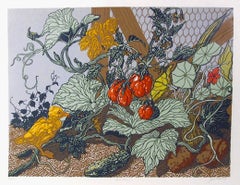
Garden, Pop Art Screenprint by Jack Beal

Garden, Pop Art Screenprint by Jack Beal

By Jack Beal

Located in Long Island City, NY

Artist: Jack Beal, American (1931 - 2013) Title: Garden Year: circa 1975 Medium: Screenprint, Signed and numbered in pencil Edition: 74 Image: 18 x 24 inches Sheet Size: 24.5 in. x 3...

Category

1970s Realist Jack Beal Art
Materials

Screen

Buds, Still Life Realist Screenprint by Jack Beal

Buds, Still Life Realist Screenprint by Jack Beal

By Jack Beal

Located in Long Island City, NY

Artist: Jack Beal, American (1931 - 2013) Title: Buds Year: circa 1975 Medium: Screenprint, signed and numbered in pencil Edition: 50 Size: 31 in. x 41 in. (78.74 cm x 104.14 cm)

Category

1970s American Realist Jack Beal Art

Materials

Screen

Wisconsin, American Realist Black and White Lithograph by Jack Beal

Wisconsin, American Realist Black and White Lithograph by Jack Beal

By Jack Beal

Located in Long Island City, NY

Artist: Jack Beal, American (1931 - 2013) Title: Wisconsin Year: circa 1975 Medium: Lithograph, signed and numbered in pencil Edition: 50, AP 6 Size: 22 in. x 27.5 in. (55.88 cm x 69...

Category

1970s American Realist Jack Beal Art

Materials

Lithograph

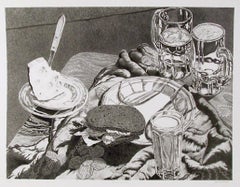
Jack Beal STILL LIFE II Lithograph

Jack Beal STILL LIFE II Lithograph

By Jack Beal

Located in Lake Worth Beach, FL

Artist/Designer; Manufacturer: Jack Beal (American, 1921-2013)
Marking(s); notes: signed, blind stamp; Trial; 1978
Materials:

Category

20th Century Jack Beal Art

Materials

Lithograph

Jack Beal CONSPIRACY Portfolio Screenprint

Jack Beal CONSPIRACY Portfolio Screenprint

By Jack Beal

Located in Lake Worth Beach, FL

Artist/Designer; Manufacturer: Jack Beal (American, 1931-2013) Marking(s); notes: signed, blind stamp, marking(s); ed. 69/150; 1971 Materials: lithograph on Arches buff Dimensions (H...

Category

1970s Contemporary Jack Beal Art

Materials

Lithograph

Jack Beal WOMAN WITH FAN Linocut

Jack Beal WOMAN WITH FAN Linocut

By Jack Beal

Located in Lake Worth Beach, FL

Artist/Designer; Manufacturer: Jack Beal (American, 1921-2013)
Marking(s); notes: signed; AP 1/6
Materials: linoleum cu...

Category

20th Century Jack Beal Art

Materials

Linocut

Related Items
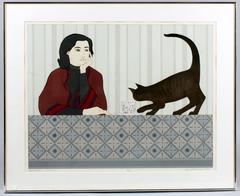
Three Sisters

Will MentorThree Sisters, 1997

$720Sale Price|40% Off

H 36 in W 28 in

Three Sisters

By Will Mentor

Located in New York, NY

Will Mentor received his BFA at the Rhode Island School of Design and arrived on the New York art scene in the early 1980’s, gaining instant success for what critics referred to as h...

Category

1990s Contemporary Jack Beal Art

Materials

Lithograph

Pintail
Pintail

Christopher ForrestPintail, c.1990

$750

H 27.35 in W 32.5 in D 1 in

Pintail

Located in San Francisco, CA

This artwork titled "Pintail" c.1990 is a color lithograph by noted Wild life American artist Christopher Forrest, b.1946. It is hand signed, titled and numbered 86/300 in pencil by the artist. The image size is 17.5 x 22.85 inches, framed size is 27.35 x 32.5 inches. Custom framed in a oak frame, with light brown matting. It is in excellent condition About the artist: Born in Trenton, New Jersey, 1946 Interested in art from the age of 7, Christopher Forrest still speaks fondly of a set of colored pencils presented to him then by his parents; At 11, he won his first award for painting and started exhibiting in galleries. Along with his interest in art grew a keen attraction for the outdoors and the wildlife which thrived there. After considering schooling in art, Chris chose to study civil engineering. Upon graduation from Virginia Polytechnic Institute, Chris began a career as a commissioned officer in the United States Army Corps of Engineers. The Army provided Chris the opportunity to observe wildlife from the swamps of Florida to the lakes of Quebec, in addition to Europe and Viet Nam. In 1973, the Army sent Chris to graduate school at North Carolina State University, at this time Chris started to paint wildlife. Chris resigned from the Army in 1978 and took a position as an artist with Evergreen Publishing Co. He has produced more than thirty original graphic editions for Evergreen. His original graphics are handled by some 350 galleries in North America. He is currently General Manager at Evergreen. His work and articles about his work have appeared in numerous wildlife and art publications. Chris strongly believes in wildlife conservation and is a member of many conservationist organizations. His donated prints have raised a great deal of money for Ducks Unlimited, Newjersey, Audubon and Ward Foundations. In 1980 he realized one of his major professional goals. He was elected to membership in the Society of Animal Artists. "Creating a painting or graphic is an exciting adventure and challenge for me. Starting with the observation of the animal in the wilderness, I then approach the painting with the attitude that it will be my finest work." COLLECTIONS National Academy of Science, Washington, D.C. New Jersey State Museum, Trenton, N.J. Ferrum College, Ferrum, Va. Franklin Mint, Franklin Center, Pa. Parsons, Brinkerhoff, Quade & Douglas, consulting Engineers, N.Y.C. Fine Art Corporation of America, N.Y.C. Central Carolina Bank, Raleigh, N.C. Ward Foundation Museum, Salisbury, Md. New Jersey Audubon Society, Rancocas, N.J. I.B.M., Louisville, Ky. American World Airways (Pan Am), Miami, Fla. Baush & Lomb, Rochester, N.Y. Thermos, Norwich, Conn. Metro-Goldwyn Mayer, Ca. Ford Motor Co., Atlanta, Ga. Chemical Bank, N.Y.C. City Bank, N.Y.C. ONE-MAN SHOWS N.J. State Museum, Trenton, N.J. 1979 Palette Gallery, Cary, N.C., 1973,-74,-77,-78,-79 Lambertville House, Lambertvi lie, N.J., 1975-76 Triangle Art, Trenton, N.J., 1975 INVITATIONAL SHOWS Triangle Art Christmas Show, 1975 Golden Door Gallery Wildlife Show, New Hope, Pa., 1976 Ward Foundation Wildlife Art & Carving Exhibition, Salisbury and Ocean City, Md., 1976,-78,-79 Easton Waterfowl Art...

Category

Late 20th Century American Realist Jack Beal Art

Materials

Lithograph

19th century color lithograph butterflies flowers nature trees scene signed

19th century color lithograph butterflies flowers nature trees scene signed

By Louis Prang

Located in Milwaukee, WI

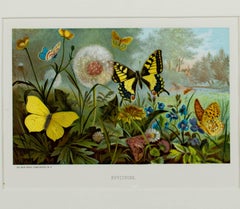
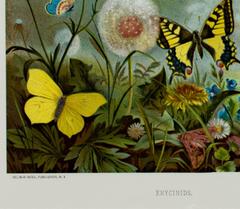
"Erycinids" is an original color lithograph by Louis Prang. It depicts colorful butterflies around a variety of flowers. 5" x 8" art 16 1/2" x 19" framed Louis Prang was an American printer, lithographer, and publisher. He is sometimes known as the father of the American Christmas card. He created L. Prang and Company in 1860 and became successful and known for their Civil War maps...

Category

Late 19th Century American Realist Jack Beal Art

Materials

Lithograph

SCROLLS Signed Lithograph, Jewish History, Dead Sea Scrolls, Red, Gold, Black

SCROLLS Signed Lithograph, Jewish History, Dead Sea Scrolls, Red, Gold, Black

By Moshe Castel

Located in Union City, NJ

SCROLLS by the Israeli artist Moshe Castel (1909-1991) is a limited edition lithograph printed using traditional hand lithography techniques on archival Somerset paper 100% acid free. SCROLLS is a dramatic abstract collage, its vertical arrangement depicting a grouping of yellow and gold beige papyrus scroll fragments against a textured background of rich vibrant red and black. Ancient alphabet symbols written on the parchment are visible resembling Aramaic letters which create a mystical quality evoking the biblical history of the Dead Sea Scrolls. Aramaic was once the main language of the Jews and appears in some of the Dead Sea Scrolls. It is closely related to Hebrew with the script being very similar. In SCROLLS, Moshe Castel creates a very aesthetically appealing and captivating contemporary arrangement of ancient Jewish symbolism. Print size - 29.75 x 21.5 in. unframed, excellent condition, vivid colors, hand signed in pencil by Moshe Castel Edition size - 150, plus proofs Year published - 1981 Printer - J K Fine Art Editions Co., NY Moshe Elazar Castel born in Jerusalem, Ottoman Palestine, in 1909, to Rabbi Yehuda Castel and his wife Rachel. The family was descended from Spanish Jews from Castile who immigrated to the Holy Land after the expulsion of the Jews from Spain in 1492. Castel attended his father’s school until the age of 13. He went on to study at the Bezalel Art School in Jerusalem, where he was encouraged by his teacher to study in Paris furthering his art education at the Academie Julian and Ecole de Louvre in Paris. He was greatly influenced by European masters Rembrandt, Velasquez, Delacroix and Courbert after spending his days copying their works hanging in the Louvre. Castel returned to Palestine at the onset of WWII. The subject of Castel’s early paintings were scenes of Sephardic Jews in the Holy Land. In 1947, Castel helped to found the "New Horizons" (Ofakim Hadashim) group together with Yosef Zaritsky, Yehezkel Streichman...

Category

1980s Contemporary Jack Beal Art

Materials

Lithograph

Full Blue Moon, Handmade Cyanotype on Watercolor Paper, Cosmos, Deep Blue Space

Full Blue Moon, Handmade Cyanotype on Watercolor Paper, Cosmos, Deep Blue Space

By Kind of Cyan

Located in Barcelona, ES

This is an exclusive handprinted limited edition cyanotype. "Blue Moon" shows an outstanding full moon with all its details. Details: + Title: Blue Moon + Year: 2022 + Edition Size...

Category

2010s Realist Jack Beal Art

Materials

Emulsion, Watercolor

Pacific Sunset Waves, Contemporary Cyanotype on Paper, Navy Blue, Beach House

Pacific Sunset Waves, Contemporary Cyanotype on Paper, Navy Blue, Beach House

By Kind of Cyan

Located in Barcelona, ES

This is an exclusive handprinted limited edition cyanotype. "Pacific Sunset Waves" is an original cyanotype that abstractly shows the sunset reflections on the sea. Details: + Titl...

Category

2010s Realist Jack Beal Art

Materials

Emulsion, Mixed Media, Watercolor, Photographic Paper, Lithograph, Monop...

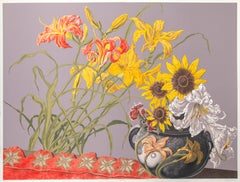
HARBINGER OF SPRING Signed Lithograph, Farm House Landscape Blue Sky White Barn

HARBINGER OF SPRING Signed Lithograph, Farm House Landscape Blue Sky White Barn

By Mel Hunter

Located in Union City, NJ

HARBINGER OF SPRING is an original limited edition, hand drawn lithograph(not a photo reproduction or digital print) by the American artist/illustrator Mel Hunter, printed using hand...

Category

1970s Realist Jack Beal Art
Materials

Lithograph

BACKLAND Signed Lithograph, Bucks County Landscape, Stone Farmhouse, Yellow Sky

BACKLAND Signed Lithograph, Bucks County Landscape, Stone Farmhouse, Yellow Sky

By Peter Sculthorpe

Located in Union City, NJ

BACKLAND is an original hand drawn limited edition lithograph(not a photo reproduction or digital print) by the realist painter, Peter Sculthorpe (b.1948 Ontario, Canada) printed using hand lithography techniques on archival Arches paper, 100% acid free. BACKLAND is a finely detailed drawing of a Bucks County...

Category

1990s Realist Jack Beal Art

Materials

Lithograph

Minaret El Rhamree in Cairo, Egypt: Original 19th C. Lithograph by D. Roberts

Minaret El Rhamree in Cairo, Egypt: Original 19th C. Lithograph by D. Roberts

By David Roberts

Located in Alamo, CA

This is an original 19th century duotone lithograph entitled "Minaret of the Mosque El Rhamree" by David Roberts, from his Egypt and Nubia volumes of the large folio edition, publish...

Category

1840s Realist Jack Beal Art

Materials

Lithograph

THREE'S A CROWD
THREE'S A CROWD

Marguerite KirmseTHREE'S A CROWD, c. 1930

$506Sale Price|25% Off

H 6.375 in W 9.75 in

THREE'S A CROWD

By Marguerite Kirmse

Located in Santa Monica, CA

MARGUERITE KIRMSE (English/American 1885-1954) THREE’S A CROWD, c 1930 Etching, signed and titled in pencil. Plate 6 3/8 x 9 ¾ inches. Full sheet with edges on all sides. Sheet 10 5/8 x 13 5/8 inches. In good condition, save for old tape on sheet edges verso, showing through to recto. A hint of a mat line below the signature Kirmse is considered to be one of the most important etchers of Dogs. Sheet with even white tone - photos show oblique shadows From Wikipedia: Marguerite first trained as a harpist at the Royal Academy of Music but spent much of her spare time drawing animals. She went to the United States in 1910 on holiday with friends but stayed there.[4] She was not successful in advancing her musical career and focused her attention increasingly on her animal drawing, which she developed by frequent sketching trips to the Bronx Zoo.[5] In 1921 she started producing etchings of dogs...

Category

1930s American Realist Jack Beal Art

Materials

Etching

Previously Available Items
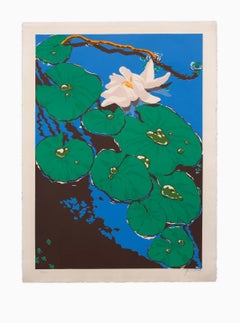
"Pond Lilies", Color Lithograph Pencil Signed and Numbered (42/120)

"Pond Lilies", Color Lithograph Pencil Signed and Numbered (42/120)

By Jack Beal

Located in Detroit, MI

"Pond Lilies" by Jack Beal is a 1971 work from the "Ten Lithographs by Ten Artists" portfolio that was put together and published for the Skowhegan School of Painting and Sculpture i...

Category

1970s Jack Beal Art

Materials

Lithograph

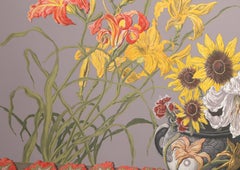
Garden, Silkscreen by Jack Beal

Garden, Silkscreen by Jack Beal

By Jack Beal

Located in Long Island City, NY

Artist: Jack Beal, American (1931 - 2013) Title: Garden Year: circa 1975 Medium: Silkscreen, Signed and numbered in pencil Edition: 74 Size: 24.5 in. x 30 in. (62.23 cm x 76.2 cm)

Category

1970s Realist Jack Beal Art
Materials

Screen

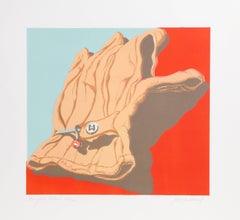
Doyle's Glove
Doyle's Glove

Jack BealDoyle's Glove, 1969

Sold

H 20 in W 21 in

Doyle's Glove

By Jack Beal

Located in Long Island City, NY

Artist: Jack Beal, American (1931-2013) Title: Doyle's Glove Year: 1969 Medium: Screenprint on Rives BFK, signed and numbered in pencil Edition: 50/60 Image Size: 12 x 13 inches Size...

Category

1960s Pop Art Jack Beal Art
Materials

Screen

Jack Beal art for sale on 1stDibs.
Find a wide variety of authentic Jack Beal art available for sale on 1stDibs. You can also browse by medium to find art by Jack Beal in screen print, lithograph and more. Much of the original work by this artist or collective was created during the 1970s and is mostly associated with the Photorealist style. Not every interior allows for large Jack Beal art, so small editions measuring 20 inches across are available. Customers who are interested in this artist might also find the work of Theo Wujcik, William Acheff, and Popo and Ruby Lee. Jack Beal art prices can differ depending upon medium, time period and other attributes. On 1stDibs, the price for these items starts at $600 and tops out at $1,200, while the average work can sell for $900.