Jacques Beurdeley Art

to
4
Overall Width
to
Overall Height
to
4
2
1
1
3
1
1
4
4
11,311
2,858
2,497
1,459
4
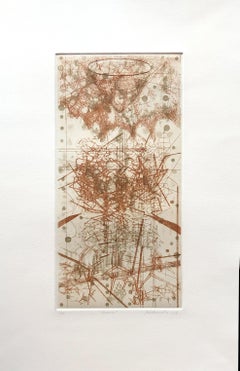
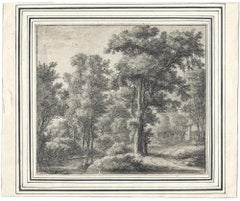
Artist: Jacques Beurdeley
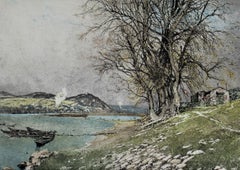
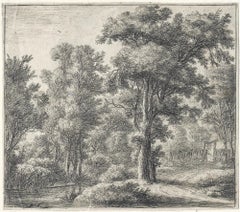
"Le buisson" etching

"Le buisson" etching

By Jacques Beurdeley

Located in Henderson, NV

Medium: etching. Etched by Jacques Beurdeley after Jacob van Ruisdael. Catalogue reference: Sanchez & Seydoux 1906-2. Printed in Paris and published in 1906 by Gazette des Beaux ...

Category

Early 1900s Realist Jacques Beurdeley Art

Materials

Etching

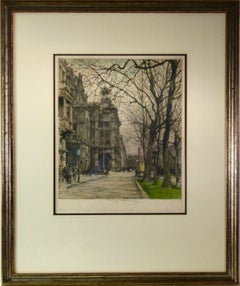
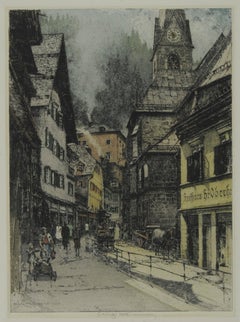
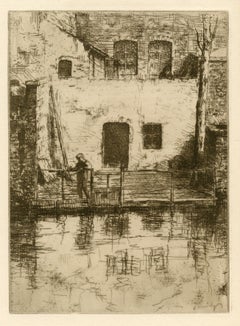
"Un coin a Bruges" original etching

"Un coin a Bruges" original etching

By Jacques Beurdeley

Located in Henderson, NV

Medium: original etching. Catalogue reference: Sanchez and Seydoux 1910-7. Printed in Paris and published in 1910 by Gazette des Beaux Arts. Plate size: 8 1/4 x 6 inches (210 x 155 m...

Category

1910s Realist Jacques Beurdeley Art

Materials

Etching

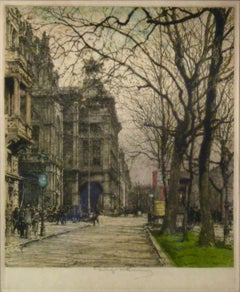
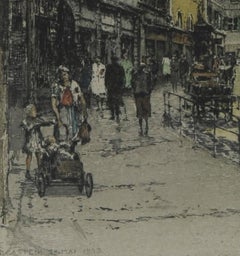
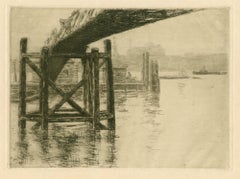
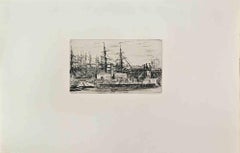
"Sur la Tamise" original etching  Thames River

"Sur la Tamise" original etching Thames River

By Jacques Beurdeley

Located in Henderson, NV

Medium: original etching. A rather atmospheric view of London's Thames River and a good impression on thin laid paper, published in Paris in 1909 for the Revue de l'art ancien et mod...

Category

Early 1900s Realist Jacques Beurdeley Art

Materials

Etching
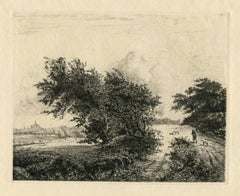
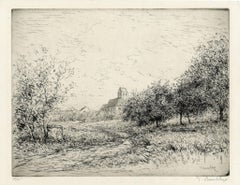
Le chemin de l'eglise

Le chemin de l'eglise

By Jacques Beurdeley

Located in Fairlawn, OH

Signed and numbered in pencil; Signed in the plate Edition: 75 Provenance: Frederick Keppel & Co. Inc. No. L 8621 (label) References And Exhibitions: Published by Edmund Sagot, ...

Category

1920s Jacques Beurdeley Art

Materials

Etching
Related Items
Pacific Ocean Currents, Handmade Cyanotype Seascape in Blue, Waves Landscape

Pacific Ocean Currents, Handmade Cyanotype Seascape in Blue, Waves Landscape

By Kind of Cyan

Located in Barcelona, ES

This is an exclusive handprinted limited edition cyanotype. "Pacific Ocean Currents" is a handmade cyanotype print of rough water texture resembling Pacific Ocean swell. Details: + ...

Category

2010s Realist Jacques Beurdeley Art

Materials

Paper, Emulsion, Engraving, Etching

Evening - The depth of the visible -

Evening - The depth of the visible -

Located in Berlin, DE

Max Clarenbach (1880 Neuss - Cologne 1952), Evening. Etching, 18 x 41 cm (platemark), 33.5 x 57 cm (frame), inscribed "Abend" in pencil at lower left, signed and dated "M. Clarenbach. 28.III.[19]09". Framed and mounted under glass. - Somewhat browned and slightly foxed. About the artwork The horizontally elongated etching depicts the panoramic view of a small town as seen from the other side of the river. There are gabled houses on the left and a mighty church spire on the right. The bourgeois houses and the large religious building indicate the urban character. These buildings are rendered in dark tones to emphasise the lighter row of houses in the centre of the picture, closer to the water. The chiaroscuro contrast creates two parallel planes that open up a space for the imagination of what the city could be. The imagination is stimulated by the almost entirely dark, barely recognisable buildings, while the arm of the river leading into the city further stimulates the imagination. However, as the silhouette of the city as a whole is reflected in the water, the parallel planes are perceived as a band of houses that stretches across the entire horizontality of the etching and seems to continue beyond the borders of the picture. The reflection has almost the same intensity as the houses themselves, so that the band of buildings merges with their reflection to form the dominant formal unit of the picture. Only the parallel horizontal hatching creates the convincing impression of seeing water, demonstrating Max Clarenbach's mastery of the etching needle. The water is completely motionless, the reflection unclouded by the slightest movement of the waves, creating a symmetry within the formal unity of the cityscape and its reflection that goes beyond the motif of a mere cityscape. A pictorial order is established that integrates everything in the picture and has a metaphysical character as a structure of order that transcends the individual things. This pictorial order is not only relevant in the pictorial world, but the picture itself reveals the order of the reality it depicts. Revealing the metaphysical order of reality in the structures of its visibility is what drives Clarenbach as an artist and motivates him to return to the same circle of motifs. The symmetry described is at the same time inherent an asymmetry that is a reflection on art: While the real cityscape is cut off at the top of the picture, two chimneys and above all the church tower are not visible, the reflection illustrates reality in its entirety. The reflection occupies a much larger space in the picture than reality itself. Since antiquity, art has been understood primarily as a reflection of reality, but here Clarenbach makes it clear that art is not a mere appearance, which can at best be a reflection of reality, but that art has the potential to reveal reality itself. The revealed structure of order is by no means purely formalistic; it appears at the same time as the mood of the landscape. The picture is filled with an almost sacred silence. Nothing in the picture evokes a sound, and there is complete stillness. There are no people in Clarenbach's landscape paintings to bring action into the picture. Not even we ourselves are assigned a viewing position in the picture, so that we do not become thematic subjects of action. Clarenbach also refrains from depicting technical achievements. The absence of man and technology creates an atmosphere of timelessness. Even if the specific date proves that Clarenbach is depicting something that happened before his eyes, without the date we would not be able to say which decade, or even which century, we are in. The motionless stillness, then, does not result in time being frozen in the picture, but rather in a timeless eternity that is nevertheless, as the title "Abend" (evening), added by Clarenbach himself, makes clear, a phenomenon of transition. The landscape of the stalls is about to be completely plunged into darkness, the buildings behind it only faintly discernible. The slightly darkened state of the sheet is in keeping with this transitional quality, which also lends the scene a sepia quality that underlines its timelessness. And yet the depiction is tied to a very specific time. Clarenbach dates the picture to the evening of 28 March 1909, which does not refer to the making of the etching, but to the capture of the landscape's essence in the landscape itself. If the real landscape is thus in a state of transition, and therefore something ephemeral, art reveals its true nature in that reality, subject to the flow of phenomena, is transferred to an eternal moment, subject to a supra-temporal structure of order - revealed by art. Despite this supratemporality, the picture also shows the harbingers of night as the coming darkening of the world, which gives the picture a deeply melancholy quality, enhanced by the browning of the leaf. It is the philosophical content and the lyrical-melancholic effect of the graphic that give it its enchanting power. Once we are immersed in the image, it literally takes a jerk to disengage from it. This etching, so characteristic of Max Clarenbach's art, is - not least because of its dimensions - a major work in his graphic oeuvre. About the artist Born into poverty and orphaned at an early age, the artistically gifted young Max Clarenbach was discovered by Andreas Achenbach and admitted to the Düsseldorf Art Academy at the age of 13. "Completely penniless, I worked for an uncle in a cardboard factory in the evenings to pay for my studies.” - Max Clarenbach At the academy he studied under Arthur Kampf, among others, and in 1897 was accepted into Eugen Dücker...

Category

Early 1900s Realist Jacques Beurdeley Art

Materials

Etching
Bords du Lac du Bourget

Bords du Lac du Bourget

By Adolphe APPIAN

Located in Middletown, NY

Gazette des Beaux-Arts, 1866 Etching on Chine collé with engraving mounted to cream laid paper with an uknown, partial watermark bearing the letters "ST," 5 3/4 x 9 3/8 inches (147 x...

Category

Mid-19th Century French School Jacques Beurdeley Art

Materials

Handmade Paper, Engraving, Etching

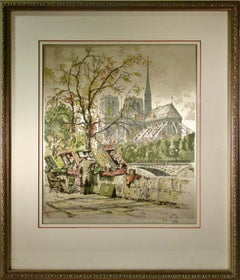
Les Quais with Notre Dame de Paris

Les Quais with Notre Dame de Paris

By Hans Figura

Located in San Francisco, CA

Artist: Hans Figura (Austrian, 1898-1978) Title: Les Quais with Notre Dame de Paris Year: Circa 1950 Medium: Color etching with aquatint on silk Edition: Unknown Plate mark ...

Category

Mid-20th Century Realist Jacques Beurdeley Art

Materials

Etching
Yosemite Blue Mountain, Cyanotype on Watercolor Paper, Landscape in Indigo

Yosemite Blue Mountain, Cyanotype on Watercolor Paper, Landscape in Indigo

By Kind of Cyan

Located in Barcelona, ES

This is an exclusive handprinted limited edition cyanotype. This cyanotype shows one of the mountains in beautiful Yosemite National park in California. Details: + Title: Yosemite Blue Mountain + Year: 2021 + Edition Size: 100 + Stamped and Certificate of Authenticity provided + Measurements : 70x100 cm (28x 40 in.), a standard frame size + All cyanotype prints are made on high-quality Italian watercolor paper * Frame is for illustrative purposes only. Artwork shipped carefully rolled and packaged in a tube. WHAT IS A CYANOTYPE? The cyanotype (a.k.a. sun-print) process is one of the oldest in the history of photography, dating back to the 1840's. Cyanotypes were then made famous by Anna Atkins, considered the first female photographer. Inspired by nature, we feel the need to look back at a craft that is handmade, analogue, and using an all-natural light source: the sun. Our cyanotypes are made by coating high-quality Italian watercolor paper with a light-sensitive emulsion. We then expose it in direct sunlight for several minutes using a photo negative to get the best image quality. Finally, the print is washed and fixed with water to stop the reaction and prevent fading. What you get is an amazing, royal blue image...

Category

2010s Photorealist Jacques Beurdeley Art

Materials

Emulsion, Watercolor, Photographic Paper, C Print, Engraving, Etching, M...

Château de Chaumont
Château de Chaumont

Château de Chaumont

By Maxime Lalanne

Located in Middletown, NY

Etching with drypoint on cream laid paper 4 x 6 1/2 inches (102 x 166 mm); sheet 5 1/8 x 7 5/8 inches (130 x 194 mm), full margins with a deckle edge. In good condition with light ye...

Category

Late 19th Century French School Jacques Beurdeley Art

Materials

Laid Paper, Drypoint, Etching

Shallaburg
Shallaburg

Josef EidenbergerShallaburg, c.1970

$575

H 21 in W 17.25 in D 1.5 in

Shallaburg

By Josef Eidenberger

Located in San Francisco, CA

This artwork titled "Schallaburg" 1970, is an original colors etching by noted Austrian artist Josef Eidenberger, 1899-1991. It is hand signed in pencil by the artist. The plate mark...

Category

Late 20th Century Realist Jacques Beurdeley Art

Materials

Etching
Bad Gastein Church, Austria

Bad Gastein Church, Austria

By Luigi Kasimir

Located in Fairlawn, OH

Bad Gastein Church, Austria Soft ground etching & aquatint, c. 1930 Signed in pencil by the artist (see photo) Image: 18 1/2 x 13 3/4" Condition: Very good...

Category

1930s Realist Jacques Beurdeley Art

Materials

Etching
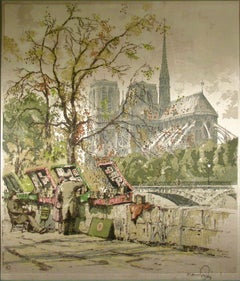
Karlskinche, Vienna
Karlskinche, Vienna

Luigi KasimirKarlskinche, Vienna, 1925

$825

H 29.25 in W 25.75 in D 0.01 in

Karlskinche, Vienna

By Luigi Kasimir

Located in San Francisco, CA

This artwork titled "Karlskinche, Vienna" 1925, is a colors etching on Wove paper by Austrian artist Luigi Kasimir 1881-1962. It is hand signed by the artist's estate in pencil at ...

Category

Early 20th Century Realist Jacques Beurdeley Art

Materials

Etching
Leap Fail Leap

Leap Fail Leap

By Robert Flemming & Mizin Shin

Located in Buffalo, NY

An original mixed media Photo Etching, Aquatint and Drypoint Printed on Arches Cover titled Leap Fail Leap, created by the artistic collaboration of Robert Flemming and Mizin Shin. ...

Category

2010s Realist Jacques Beurdeley Art

Materials

Paper, Drypoint, Etching, Aquatint

Venetian Scene with Arches

Venetian Scene with Arches

By James Hamilton Mackenzie

Located in San Francisco, CA

This artwork "Venetian Scene with Arches" c.1910, is an original etching on paper by noted Scottish artist James Hamilton Mackenzie, 1875-1926. It is hand signed at the lower right c...

Category

Early 20th Century Realist Jacques Beurdeley Art

Materials

Etching
Un coin de ferme (A Corner of the Farmyard)

Un coin de ferme (A Corner of the Farmyard)

By Charles-Emile Jacque

Located in Middletown, NY

Paris: 1845. Etching on Chine collé mounted to a wove matrix with a false platemark, 4 x 5 inches (101 x 127 mm); matrix 9 1/2 x 12 5/8 inches (242 x 320 mm). full margins. A second...

Category

Mid-19th Century French School Jacques Beurdeley Art

Materials

Handmade Paper, Etching

Previously Available Items
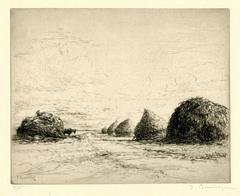
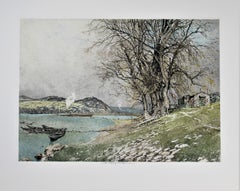
Les Meules au Crepuscule

Les Meules au Crepuscule

By Jacques Beurdeley

Located in Fairlawn, OH

Signed and editioned in pencil by the artist; Sagot blindstamp lower right; titled verso Edition: 75 (41/75) Published by Sagot, Paris

Category

1920s Jacques Beurdeley Art

Materials

Etching
Jacques Beurdeley art for sale on 1stDibs.

Find a wide variety of authentic Jacques Beurdeley art available for sale on 1stDibs. You can also browse by medium to find art by Jacques Beurdeley in etching and more. Not every interior allows for large Jacques Beurdeley art, so small editions measuring 7 inches across are available. Customers who are interested in this artist might also find the work of Leon Danchin, Max Pollak, and Carle Vernet (Antoine Charles Horace Vernet). Jacques Beurdeley art prices can differ depending upon medium, time period and other attributes. On 1stDibs, the price for these items starts at $150 and tops out at $225, while the average work can sell for $175.

Artists Similar to Jacques Beurdeley