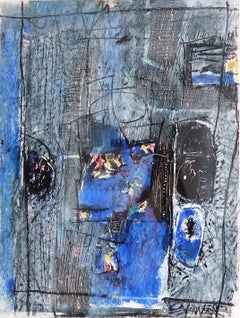
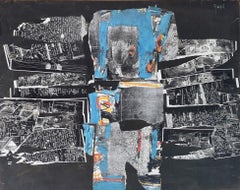
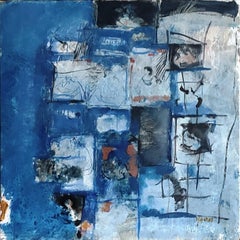
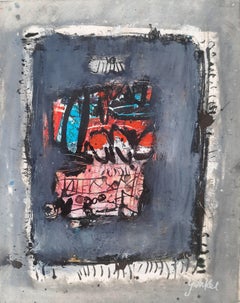
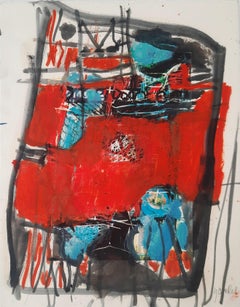
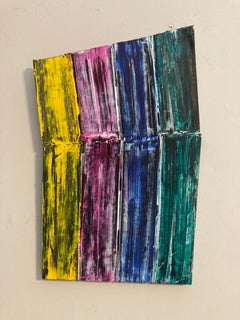
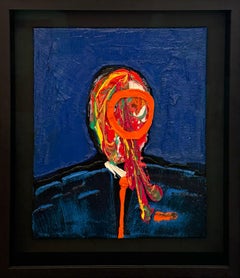
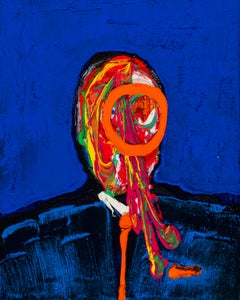
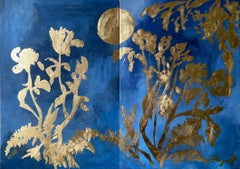
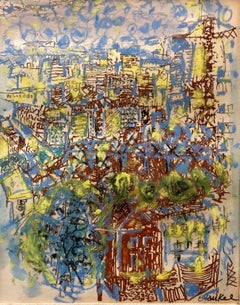
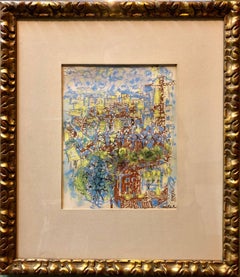
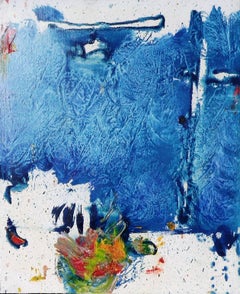
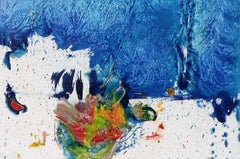
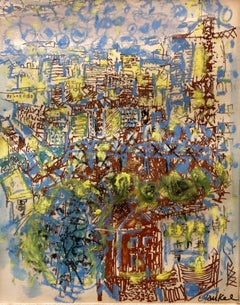
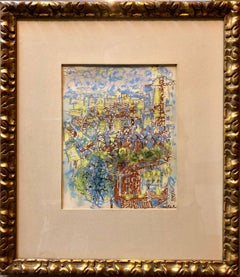
By Jacques Yankel
Located in Surfside, FL
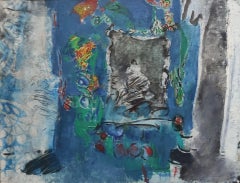
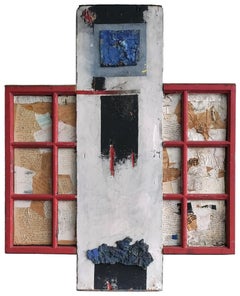
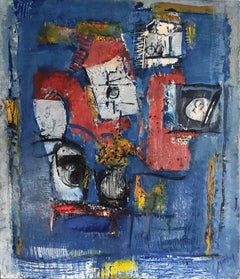
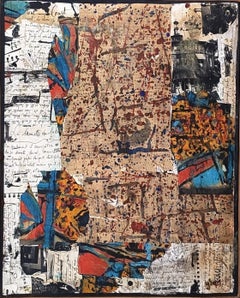
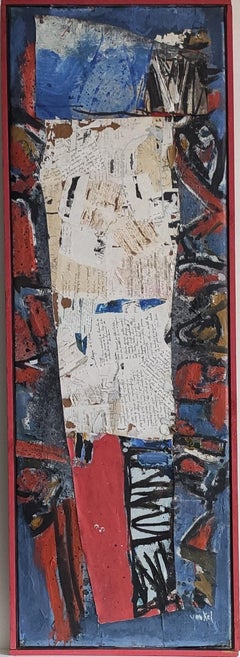
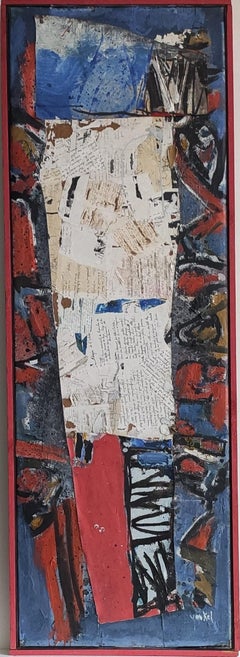
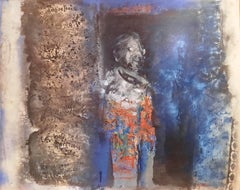
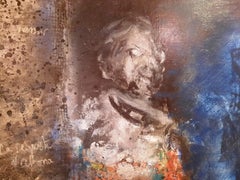
Jacques Yankel, pseudonym of Jakob Kikoine, born on April 14 , 1920 in Paris, is a French painter and sculptor.
He is the son of the painter Michel Kikoine.
Born in Boucicaut hospital, Jacques lived as a child in the artists' colony La Ruche in Paris. He grew up to the age of ten at La Ruche, the workshop created for artists by the sculptor Alfred Boucher, in the 15th arrondissement of Paris. Around him live also other artists, including the inseparable Pincus Krémègne and Chaïm Soutine, arrived from Vilnius in Russia where they met. It is an extraordinary intellectual and artistic universe where the genius of the artists and their great poverty rub shoulders in a Paris which hosts this Expressionist school which will become "the School of Paris". Chagall, Modigliani, Fernand Léger, Alexander Archipenko, Max Jacob and others. When he had just started studying at the École des Arts Appliqués in Paris, he was forced to flee to Southern France with his family to escape the Nazis.
During the Second World War, he held temporary jobs in printing and engraving workshops, notably at the Draeger printing press in Toulouse, where events led him to take refuge with his family. From 1940 to 1945, he pursued very advanced studies of geology at the Faculty of Sciences, specializing in micro-geology. He graduated in 1943.
In 1947, he participates episodically as an amateur painter in the Chariot group, with the artists Jean Hugon, Michel Goedgebuer, Robert Pagès, Christian Schmidt, Andre-Francois Vernette, Jean Teulieres. The group is active until 1954.
In 1949, he was hired by the Colonial Office for the geological map of Gao - Timbuktu - Tabankort in French West Africa . From this episode, he will keep a certain taste for African art of which he will become a collector. The following year, he unexpectedly met Simone de Beauvoir and Jean-Paul Sartre in Gao. The latter encourages him to return to painting.
He won the Neuman First Prize, which he shared with Reginald Pollack and a Fénéon Prize Scholarship. Among his friends are Clavé, Cottavoz, Pelayo, Hanna Ben-dov, Pollack, Jean Jansem, Roger Lersey.
In 1953, accompanied by Orlando Pélayo, he discovered the village of Labeaume, in Ardèche, where he settled every summer. He won the Second Prize for Young Painting.
In 1954, he exhibited his works in Paris, the Salons des Indépendants, and appears in the exhibition "Aspects of Realism" at the Museum of Mulhouse. He also won the Society of Art Lovers Prize at the Galerie des Beaux-Arts; he is invited to the Sao Paulo Biennial. He now participates in many international group exhibitions.
In 1955, these are his first successes as a recognized artist, his first solo exhibition. From 1957 to 1959, he continues to exhibit and travels to the Maghreb, the Balearic Islands, Geneva and Israel. Jacques Yankel is then part of what is called the "New School of Paris".
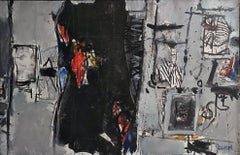
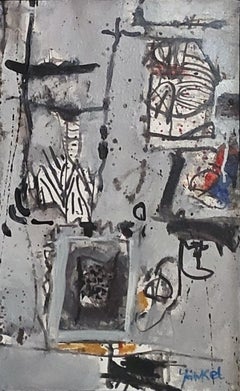
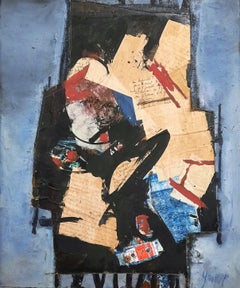
The 1950s made his art a period of expressionism, referring to Gruber, Bernard Lorjou, Buffet, Rebeyrolle. From 1961 to 1965, he exhibited in Paris, Israel and Amsterdam. From 1957 to 1959, he continues to exhibit and travels to the Maghreb, the Balearic Islands, Geneva and Israel. In 1960, he married Jacqueline Daneyrole in Labeaume (Ardèche) . From 1961 to 1965, he exhibited in Paris, Israel and Amsterdam. In 1966, his mother, Rose Kikoin, died. In 1967, he hurriedly leaves for Israel for the Six-Day War. He disembarks the sixth. He voluntarily commits to Kibbutz Zikron Jacob and Mayan Zvi and works there for three months.
In 1968, his father, Michel Kikoin died. He is engaged as a professor of plastic art by students at the School of Fine Arts in Paris. He will continue this activity until 1985.
In the 1970s, he continues to exhibit. In 1978, he participated in the realization of the sets of the play Othello Shakespeare mounted by George Wilson...
Category
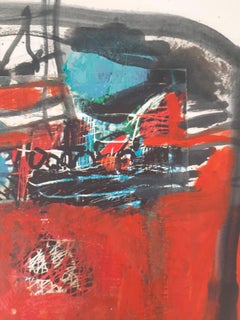
Mid-20th Century Abstract Expressionist Jacques Yankel Art
MaterialsPaper, Oil Pastel