By James Havard
Located in Wilton Manors, FL
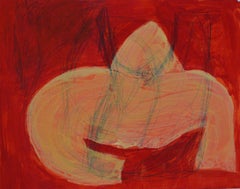
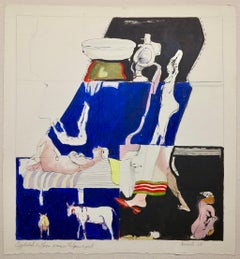
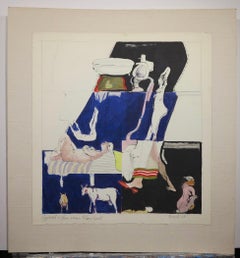
James Havard (b.1937). Exploded Bathroom Views with Spanish Goat, 1965. Pencil, watercolor and gouache on paper glued down to matte board. Sheet measures 20.5 x 19 inches; 24 x 26 inches on matting. Excellent condition. Signed, title and dated lower margin. Unframed. Although known as a Sant a Fe, NM artist, Havard attended PAFA in Philadelphia 1961-65. This piece is an outstanding example from the artist's 1960's experimental period. Provenance: Philadelphia estate.
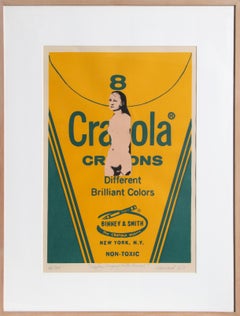
Havard was born in Galveston, Texas, in 1937. Although he entered Houston State College on an agricultural scholarship, shortly thereafter, he turned his interests to the visual arts. Intrigued by the East, he moved upon graduation in 1959 to Philadelphia where he attended the Pennsylvania Academy of the Fine Arts. Havards early work focused on still lifes and more traditional forms of art making, but by the early 1960s experimentation and rule-breaking was replacing the accepted norms of the school.
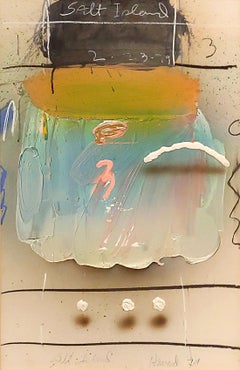
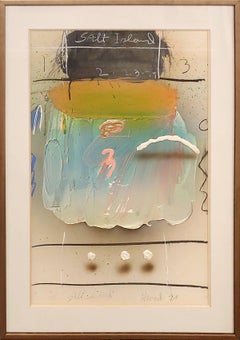
Avoiding pop art, Havard instead delved into minimalism and began a twenty-year professional relationship with noted Marion Locks Gallery in Philadelphia with his first solo show there in 1970. During this time he began to experiment with industrial materials, vacuformed plastic shapes and metallic paints from the auto body show beneath his studio. Finding the luminescence of his new pearlescent surfaces more lyrical in quality, Havard scratched and abraded the surface of these works and soon realized the illusionistic techniques that could be controlled by the use of airbrushing. These original experimentations were later refined into the painterly, abstract trompe loeil gestures for which he is known today.
Rich squeezings of paint squirted directly onto the canvas surface contrasted against subtle pastel backgrounds became his trademark by the late 1970s. "Abstract illusionism," actually more of a commercial term used to define his work, overshadowed his interest in the Native American subject matter which would become as important, in time, as his bravura painting style. Making reference in text or figurative reference to the Arapaho, Iroquois, and episodes in Native American history, Havard infused his expressive work with poetic metaphors about Native American artifacts and culture (while several exhibitions of Native American art have included works by James Havard, he denies any specific, official affiliation with any particular tribe).
After moving to New York City in the 1980s, Havard focused on large-scale, expressive paintings referencing Native American culture in a most unique way. Over the next ten years, he made frequent visits to Santa Fe, New Mexico, for inspiration and to pursue his interest in collecting. Havards style of blending expressionistic abstraction with indigenous symbols caught the attention of museums through the country and soon his works were added to several important collections, including the Metropolitan Museum of Art, the Los Angeles County Museum of Art and the Solomon R. Guggenheim Museum of Art. Havard was now exhibiting his work in Sweden, Australia, New York and Paris and newspapers from the Houston Post to the New York Times were reviewing his exhibitions. His works became even more colorful and expressive and iconistic than ever before.
In 1989 Havard moved to Santa Fe, New Mexico. In contrast to previous decade, his work became smaller, partly due to the limitations of his new studio space, but his repertoire of images expanded to include early American images and icons and even personal whimsy such as abstracted references to his love of the sport of golf. Once again employing the use of industrial technology, Havard added photo silk screened images of Hopi masks and tabletas and motifs from Zuni pottery...
Category
Mid-20th Century Surrealist James Havard Art