By John Francis Murphy
Located in New York, NY
John Francis Murphy (1853 - 1921)
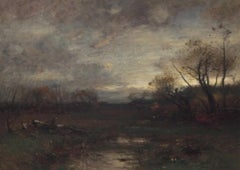
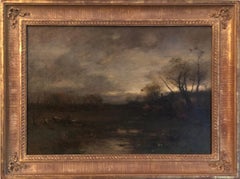
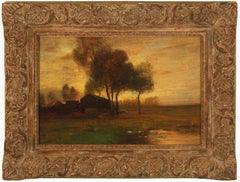
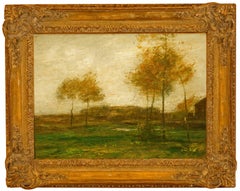
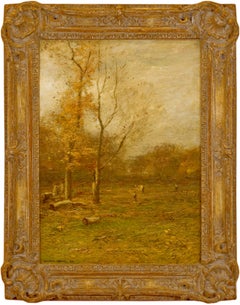
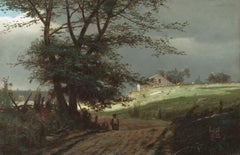
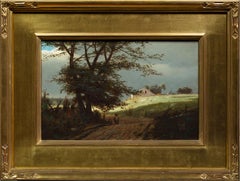
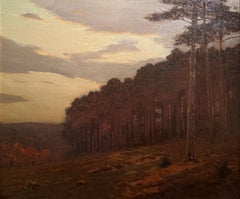
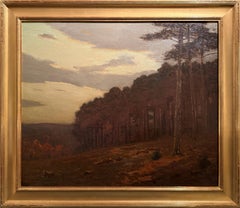
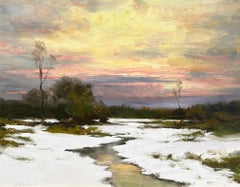
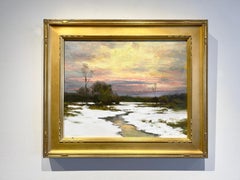
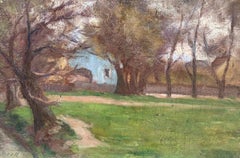
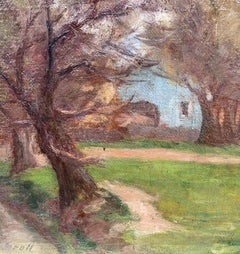
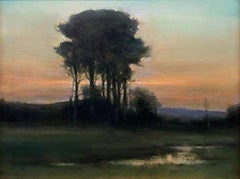
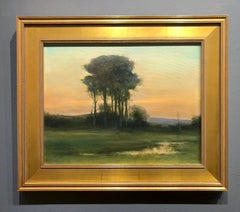
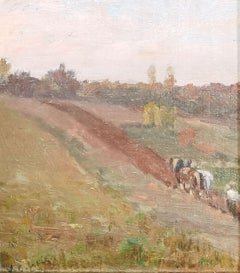
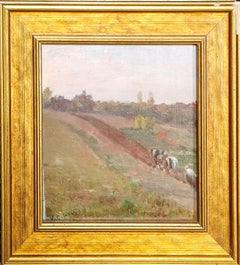
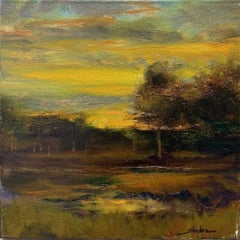
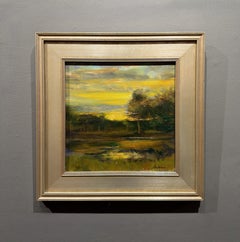
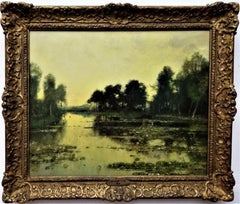
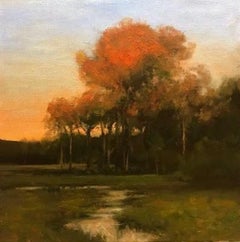
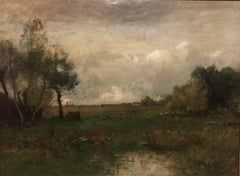
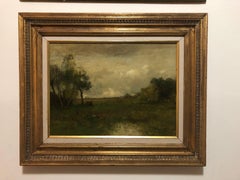
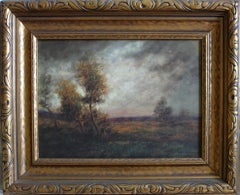
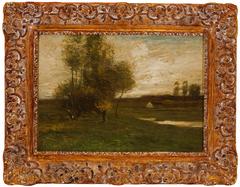
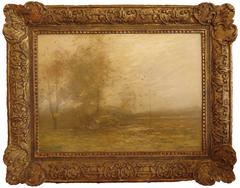
Autumn Landscape, Catskills, New York, 1890
Oil on canvas
13 1/2 x 18 1/2 inches
Signed and dated lower right: J. Francis Murphy 1890
Provenance:
Private Collection, Beverly Hills, California
Private Collection, Corpus Christi, Texas
John Francis Murphy is increasingly recognized today as one of the leading American Tonalist painters of the nineteenth and early twentieth centuries. Over a productive career of some fifty years, he developed a highly individual aesthetic that was notable for its expressive and poetic nuance. His art attracted a wide following, and was avidly collected by individuals and museums both during his lifetime and in the period following his death.
Murphy was born in Oswego, New York, near Lake Ontario. With his family he moved to Chicago in 1868, where his father was employed in the shipping industry. In Chicago, Murphy began working as a scene painter in a local theatre and was quickly promoted to lead his co-workers. Largely self-taught, his only training consisted of a few classes at the Chicago Academy of Design. There he became friends with Emil Carlsen and Theodore Robinson, and in 1873, Academy members elected him an Associate; a few weeks later, he became an Academician.
That same year, through private art lessons and sales of his work, Murphy was able to finance a three-month sketching trip to the Adirondack Mountains. He spent most of this time in Keene Valley in Essex County, where he met Winslow Homer. With so many other young painters during this period, Murphy was initially drawn to the descriptive naturalism of the Hudson River school artists. He particularly admired the pictures of William Hart, and his early works suggest the influence of that older painter.
Frustrated with Chicago and the public's tepid support for the visual arts, Murphy moved to New York in 1875. The National Academy of Design accepted one of his paintings for its annual exhibition in 1876. Financial circumstances soon forced the artist to move to Denmark, New Jersey, where he boarded with family friends from Chicago in exchange for helping on their farm. In the following year, Murphy returned to New York and rented a studio over the Vienna Bakery on Broadway. While he managed to sell an occasional picture, he supported himself primarily through illustration work. He joined the Salmagundi Club in 1878 and began to exhibit more widely.
The following year the American Water Color Society accepted one of Murphy's watercolors for exhibition, and he was elected a member of the Society in 1880. By this time Murphy had adopted a less descriptive and more suggestive style of painting that placed greater emphasis upon his emotional response to nature rather than simply delineating its visible forms. He started to blur the edges of natural forms and moderate strong contrasts of light and dark, seeking tonal harmonies in a limited range of hues. Tonalist painters like Alexander Wyant and George Inness strongly influenced his new style while his reflections on nature were increasingly informed by the writings of Henry Thoreau and Ralph Waldo Emerson. As wispy, arboreal forms and green and pink tonalities appeared in his canvases, critical reviews began to describe Murphy as "the American Corot." His paintings more readily found buyers, and he became friends with such important artists as Elihu Vedder, George Fuller...
Category
1890s Tonalist John Francis Murphy Art