John Ogilby Furniture

to
2
11
2
13
6
1
13
12
2
2
13
12
6
2
13
13
13
8
12,905
3,863
2,382
2,247
Creator: John Ogilby
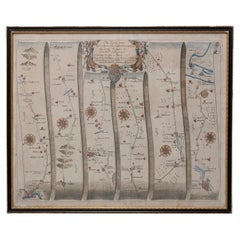
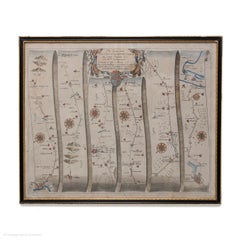
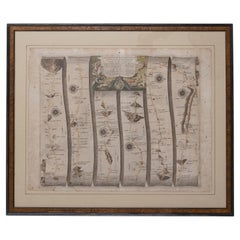
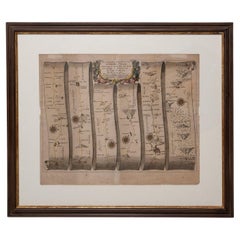
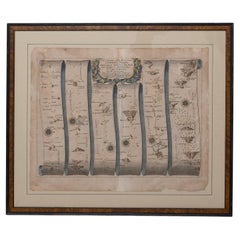
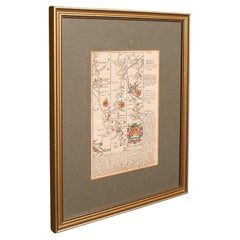
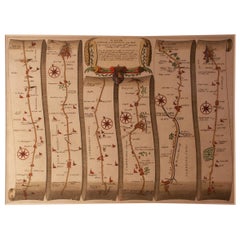
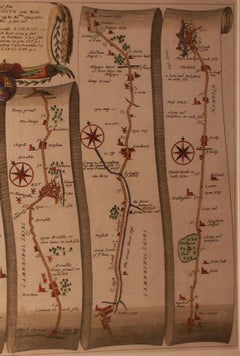
Map Road Strip Britannia Sheet 2 John Ogilby London Aberistwith Islip Bramyard

Map Road Strip Britannia Sheet 2 John Ogilby London Aberistwith Islip Bramyard

By John Ogilby

Located in BUNGAY, SUFFOLK

From John Ogilby's, 'Britannia, an Illustration of the Kingdom of England and Dominion of Wales'. First published in 1675 it remains the greatest advance ...

Category

17th Century English Baroque Antique John Ogilby Furniture

Materials

Paper

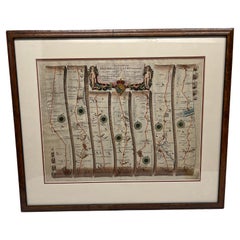
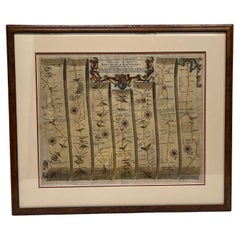
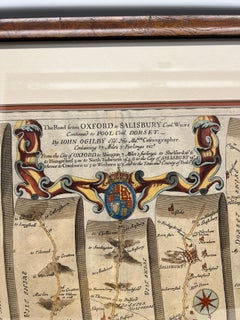
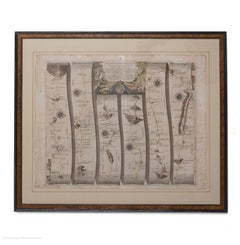
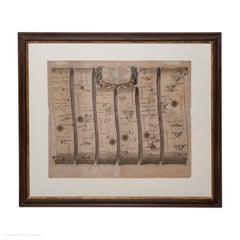
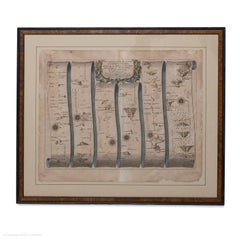
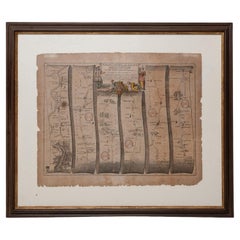
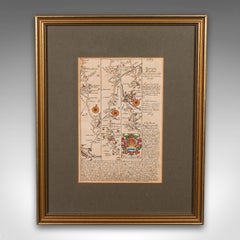
John Ogilby Oxford to Salisbury Road Map #82 Circa 1675

John Ogilby Oxford to Salisbury Road Map #82 Circa 1675

By John Ogilby

Located in Atlanta, GA

John Ogilby (Scottish, 1600-1676). - Circa 1675 This map is part of his Britannica publication and is #82. "The road map was first popularised by John Ogilby (1600-1676), Scotsm...

Category

17th Century Scottish French Provincial Antique John Ogilby Furniture

Materials

Burl

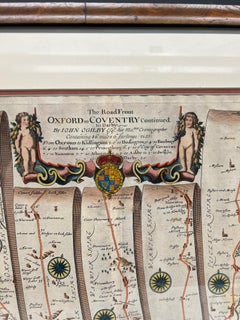
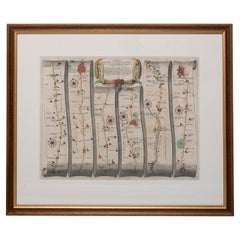
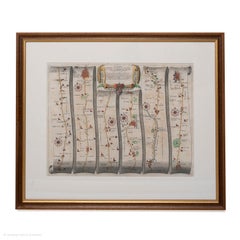
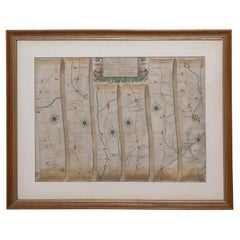
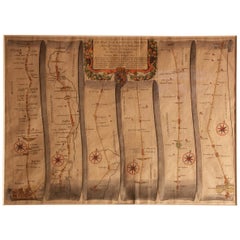
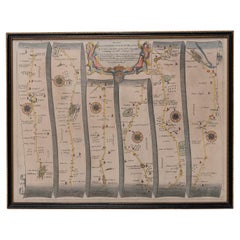
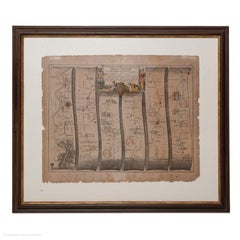
John Ogilby Oxford to Salisbury Road Map #83 Circa 1675

John Ogilby Oxford to Salisbury Road Map #83 Circa 1675

By John Ogilby

Located in Atlanta, GA

John Ogilby (Scottish, 1600-1676). - Circa 1675 This map is part of his Britannica publication and is #83. "The road map was first popularised by John Ogilby (1600-1676), Scotsm...

Category

17th Century Scottish Regency Antique John Ogilby Furniture

Materials

Burl, Paper

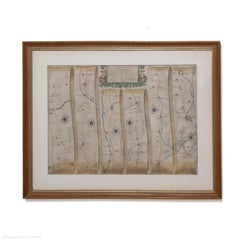
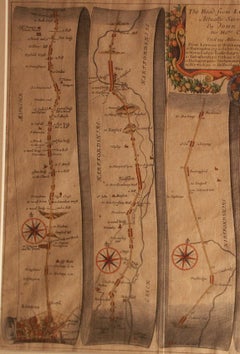
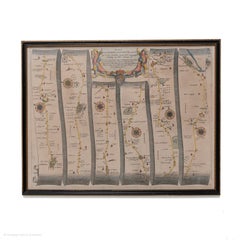
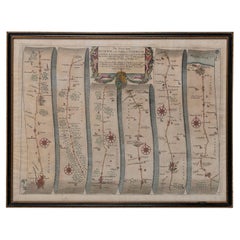
Road Map Britannia No 32 the Road from London to Barnstable John Ogilby Framed

Road Map Britannia No 32 the Road from London to Barnstable John Ogilby Framed

By John Ogilby

Located in BUNGAY, SUFFOLK

A road map from Britannia, by John Ogilby Esq., Cosmographer and Geographick Printer to Charles II. Containing 293 miles. No 32. From Standard in Cornhill London to Andover thence to Amesbury, to Shruton, to Warminster, to Maiden-Bradley, to Bruton, to Weston, to Ascot and to Bridgewater Hand coloured, some foxing and creasing, commensurate with age. Floated in a cream mount with a gilded linear border within a burr walnut, ebonised and gilded frame. Provenance : purchased as pair from a collector with no 15 London to St Davids. Framed as a pair. Measures: Black Linear Border around Map Length 44cm., 17 1/8" Height 36cm., 14". Full Sheet Length 51cm., 20" Height 39cm., 15 1/4" Frame Length 62cm., 24 1/2 " Height 52cm., 20 1/2" Literature: In a remarkable life John Ogilby pursued, several careers, each ending in misfortune, and yet he always emerged undeterred, to carry on. His modern reputation is based on his final career, started in his sixty-sixth year, as a publisher of maps and geographical accounts. Ogilby was born outside Dundee, in 1600, the son of a Scottish gentleman. While he was still a child, the family moved to London. When the elder Ogilby was imprisoned for debt, the young John invested his savings in a lottery, won a minor prize, and settled his father's debts. Unfortunately, not enough money was left to secure John a good apprenticeship; instead, he was apprenticed to a dance master. Ogilby was soon dancing in masques at court but, one day, while executing a particularly ambitious leap, he landed badly. The accident left him with a permanent limp, and ended his dancing career. However, he had come to the attention of Thomas Wentworth, later Earl of Strafford, Charles I's most senior minister. Ever one to exploit his contacts, Ogilby became a dance instructor in Strafford's household. When Strafford was sent to Ireland, Ogilby accompanied him as Deputy-Master of the Kings Revels, and then Master of Revels. In Dublin, he built the New Theatre, in St. Werburgh Street, which prospered at first, but the Irish Rebellion, in 1641, cost Ogilby his fortune, which he estimated at £2,000, and almost his life. After brief service as a soldier, he returned to England, survived shipwreck on the way, and arrived back penniless. On his return, Ogilby turned his attention to the Latin classics, as a translator and publisher. His first faltering attempt, in 1649, was a translation of the works of Virgil, but after his marriage to a wealthy widow the same year, his publishing activities received a considerable boost. One means by which Ogilby financed these volumes was by subscription, securing advance payments from his patrons, in return for including their name and coats-of-arms on the plates of illustrations. Another approach was to secure a patron, preferably in the court circle. Ogilby's first patron was Strafford, who found out too late that all leading ministers are dispensable when Charles I assented to his execution in 1641. As he re-established himself, Ogilby sought a new patron, the King himself. In 1661, Ogilby was approached to write poetry for Charles II's coronation procession; he later published 'The Relation of His Majesties Entertainment Passing Through the City of London', and a much enlarged edition the following year, which included a Fine set of plates depicting the procession. Royal favour was bestowed in 1674 when John Ogilby received the title of 'His Majesty's Cosmographer and Geographick Printer' with a salary of £13.6s.8d per annum. In 1665, Ogilby left London to avoid the Plague then ravaging the capital. The following year, in the Great Fire of London, Ogilby claimed that he lost his entire stock of books valued at some £3,000, as well as his shop and house, leaving him worth just £5. As he sought to restore his fortunes, Ogilby was already looking in new directions. The initial opportunity he seized on was the reconstruction of London's burnt-out centre. He secured appointment as a 'sworn viewer', whose duty was to establish the property boundaries as they existed before the Fire. Ogilby was assisted in the project by his step-grandson, William Morgan...

Category

Late 17th Century English Charles II Antique John Ogilby Furniture

Materials

Paper

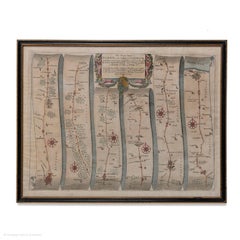
Road Map, John Ogilby, London, Barwick, York, Chester, Darlington, Durham Framed

Road Map, John Ogilby, London, Barwick, York, Chester, Darlington, Durham Framed

By John Ogilby

Located in BUNGAY, SUFFOLK

The continuation of the road from London to Barwick beginning at York and extending to Chester in ye Street. Plate ye 4th continuing 76 ½ miles. No 8. York to Burrowbridge, to Top...

Category

1670s English Baroque Antique John Ogilby Furniture

Materials

Paper

Road Map No43 London to Kings Lynn, Royston to Downham, John Ogilby, Britannia

Road Map No43 London to Kings Lynn, Royston to Downham, John Ogilby, Britannia

By John Ogilby

Located in BUNGAY, SUFFOLK

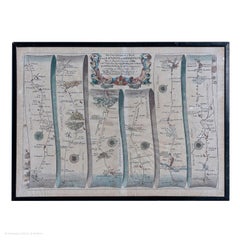
John Ogilby (British 1600-1676) Cosmographer and Geographick Printer to Charles II. A road map from Britannia, 1675/6. The road from London to Kings Lynn, showing Royston to Downham. In oak and gilded frame. In a remarkable life John Ogilby pursued, several careers, each ending in misfortune, and yet he always emerged undeterred, to carry on. His modern reputation is based on his final career, started in his sixty-sixth year, as a publisher of maps and geographical accounts. Ogilby was born outside Dundee, in 1600, the son of a Scottish gentleman...

Category

Late 17th Century British Charles II Antique John Ogilby Furniture

Materials

Paper

Road Map Britannia No 15 London to St Davids John Ogilby Brown Gilt Frame

Road Map Britannia No 15 London to St Davids John Ogilby Brown Gilt Frame

By John Ogilby

Located in BUNGAY, SUFFOLK

The continuation of the road from London to St Davids, commencing at Abingdon Com Berks and extending to Monmouth By John Ogilby Esq, His Majesties Cosmographer. From Abingdon to Farringdon, to Lechlade, to Fairford, to Barnsley to Gloucester showing Monmouth as the destination. A road map from Britannia, 1675/6. No 15. Hand coloured and floated on a cream mount within a brown painted and gilded ogee frame. Some foxing and creasing, uneven edge of sheet, all commensurate with age Provenance : purchased as pair from a collector with no 25 London to Lands End. Framed as a pair. Sheet width 46.5cm., 18 ¼ ”., height 37.5cm., 14 ¾ “ Frame width 66.5cm., 26”., height 56cm., 22 ” In a remarkable life John Ogilby pursued, several careers, each ending in misfortune, and yet he always emerged undeterred, to carry on. His modern reputation is based on his final career, started in his sixty-sixth year, as a publisher of maps and geographical accounts. Ogilby was born outside Dundee, in 1600, the son of a Scottish gentleman. While he was still a child, the family moved to London. When the elder Ogilby was imprisoned for debt, the young John invested his savings in a lottery, won a minor prize, and settled his father's debts. Unfortunately, not enough money was left to secure John a good apprenticeship; instead, he was apprenticed to a dance master. Ogilby was soon dancing in masques at court but, one day, while executing a particularly ambitious leap, he landed badly. The accident left him with a permanent limp, and ended his dancing career. However, he had come to the attention of Thomas Wentworth, later Earl of Strafford, Charles I's most senior minister. Ever one to exploit his contacts, Ogilby became a dance instructor in Strafford's household. When Strafford was sent to Ireland, Ogilby accompanied him as Deputy-Master of the Kings Revels, and then Master of Revels. In Dublin, he built the New Theatre, in St. Werburgh Street, which prospered at first, but the Irish Rebellion, in 1641, cost Ogilby his fortune, which he estimated at £2,000, and almost his life. After brief service as a soldier, he returned to England, survived shipwreck on the way, and arrived back penniless. On his return, Ogilby turned his attention to the Latin classics, as a translator and publisher. His first faltering attempt, in 1649, was a translation of the works of Virgil, but after his marriage to a wealthy widow the same year, his publishing activities received a considerable boost. One means by which Ogilby financed these volumes was by subscription, securing advance payments from his patrons, in return for including their name and coats-of-arms on the plates of illustrations. Another approach was to secure a patron, preferably in the court circle. Ogilby's first patron was Strafford, who found out too late that all leading ministers are dispensable when Charles I assented to his execution in 1641. As he re-established himself, Ogilby sought a new patron, the King himself. In 1661, Ogilby was approached to write poetry for Charles II's coronation procession; he later published 'The Relation of His Majesties Entertainment Passing Through the City of London', and a much enlarged edition the following year, which included a fine set of plates depicting the procession. Royal favour was bestowed in 1674 when John Ogilby received the title of 'His Majesty's Cosmographer and Geographick Printer' with a salary of £13.6s.8d per annum. In 1665, Ogilby left London to avoid the Plague then ravaging the capital. The following year, in the Great Fire of London, Ogilby claimed that he lost his entire stock of books valued at some £3,000, as well as his shop and house, leaving him worth just £5. As he sought to restore his fortunes, Ogilby was already looking in new directions. The initial opportunity he seized on was the reconstruction of London's burnt-out centre. He secured appointment as a "sworn viewer", whose duty was to establish the property boundaries as they existed before the Fire. Ogilby was assisted in the project by his step-grandson, William Morgan...

Category

Late 17th Century British Charles II Antique John Ogilby Furniture

Materials

Paper

Road Map, John Ogilby, No 54, London, Yarmouth, Britannia

Road Map, John Ogilby, No 54, London, Yarmouth, Britannia

By John Ogilby

Located in BUNGAY, SUFFOLK

The Road from London to Yarmouth com. Norfolk. By John Ogilby, His Majesties Cosmographer. Containing 122 miles, 5 furlongs. No 54. From Standard in Co...

Category

1670s English Baroque Antique John Ogilby Furniture

Materials

Paper

Road Map Britannia No 25 London to the Lands End, John Ogilby Brown Gilded Frame

Road Map Britannia No 25 London to the Lands End, John Ogilby Brown Gilded Frame

By John Ogilby

Located in BUNGAY, SUFFOLK

The road from London to the lands end. Commencing at the Standard in Cornhill and extending to Senan in Cornwall. By John Ogilby His Majesties Cosmographer. A road map from Britannia, 1675/6. No 25. Continuing 308 miles, 3 furlongs. London Southwark to Brentford, to Hampton Court, to Hounslow, to Windsor, to Cobham, to Farnham, to Basingstoke to Winchester The handcoloured sheet free floated. In a brown painted and gilded, ogee moulded frame. Some foxing and creasing, uneven edge of sheet, all commensurate with age Provenance : purchased as pair from a collector with no 15 London to St David's. Framed as a pair. Sheet width 48cm., 19 ”., height 38cm., 15 “ Frame width 66.5cm., 26”., height 56cm., 22 ” In a remarkable life John Ogilby pursued, several careers, each ending in misfortune, and yet he always emerged undeterred, to carry on. His modern reputation is based on his final career, started i Black Linear Border around Map Length 44cm., 17 1/8" Height 32cm., 12 1/2" Full Sheet Length 58cm., 22 3/4" Height 38cm., 15" Frame Length 66cm., 26"., Height 56cm., 22" In a remarkable life John Ogilby pursued, several careers, each ending in misfortune, and yet he always emerged undeterred, to carry on. His modern reputation is based on his final career, started in his sixty-sixth year, as a publisher of maps and geographical accounts. Ogilby was born outside Dundee, in 1600, the son of a Scottish gentleman. While he was still a child, the family moved to London. When the elder Ogilby was imprisoned for debt, the young John invested his savings in a lottery, won a minor prize, and settled his father's debts. Unfortunately, not enough money was left to secure John a good apprenticeship; instead, he was apprenticed to a dance master. Ogilby was soon dancing in masques at court but, one day, while executing a particularly ambitious leap, he landed badly. The accident left him with a permanent limp, and ended his dancing career. However, he had come to the attention of Thomas Wentworth, later Earl of Strafford, Charles I's most senior minister. Ever one to exploit his contacts, Ogilby became a dance instructor in Strafford's household. When Strafford was sent to Ireland, Ogilby accompanied him as Deputy-Master of the Kings Revels, and then Master of Revels. In Dublin, he built the New Theatre, in St. Werburgh Street, which prospered at first, but the Irish Rebellion, in 1641, cost Ogilby his fortune, which he estimated at £2,000, and almost his life. After brief service as a soldier, he returned to England, survived shipwreck on the way, and arrived back penniless. On his return, Ogilby turned his attention to the Latin classics, as a translator and publisher. His first faltering attempt, in 1649, was a translation of the works of Virgil, but after his marriage to a wealthy widow the same year, his publishing activities received a considerable boost. One means by which Ogilby financed these volumes was by subscription, securing advance payments from his patrons, in return for including their name and coats-of-arms on the plates of illustrations. Another approach was to secure a patron, preferably in the court circle. Ogilby's first patron was Strafford, who found out too late that all leading ministers are dispensable when Charles I assented to his execution in 1641. As he re-established himself, Ogilby sought a new patron, the King himself. In 1661, Ogilby was approached to write poetry for Charles II's coronation procession; he later published 'The Relation of His Majesties Entertainment Passing Through the City of London', and a much enlarged edition the following year, which included a fine set of plates depicting the procession. Royal favour was bestowed in 1674 when John Ogilby received the title of 'His Majesty's Cosmographer and Geographick Printer' with a salary of £13.6s.8d per annum. In 1665, Ogilby left London to avoid the Plague then ravaging the capital. The following year, in the Great Fire of London, Ogilby claimed that he lost his entire stock of books valued at some £3,000, as well as his shop and house, leaving him worth just £5. As he sought to restore his fortunes, Ogilby was already looking in new directions. The initial opportunity he seized on was the reconstruction of London's burnt-out centre. He secured appointment as a "sworn viewer", whose duty was to establish the property boundaries as they existed before the Fire. Ogilby was assisted in the project by his step-grandson, William Morgan...

Category

Late 17th Century British Charles II Antique John Ogilby Furniture

Materials

Paper

Road Map Britannia 1675/6 No 5 Road London to Barwick, London Stilton Grey Frame

Road Map Britannia 1675/6 No 5 Road London to Barwick, London Stilton Grey Frame

By John Ogilby

Located in BUNGAY, SUFFOLK

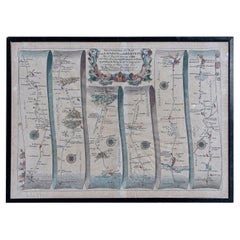
John Ogilby (British 1600-1676) cosmographer and geographick printer to Charles II. A road map from Britannia, 1675/6. No 5, The road from London to Barwick: London to Stilton In a grey painted and gilded frame. In a remarkable life John Ogilby pursued, several careers, each ending in misfortune, and yet he always emerged undeterred, to carry on. His modern reputation is based on his final career, started in his sixty-sixth year, as a publisher of maps and geographical accounts. Ogilby was born outside Dundee, in 1600, the son of a Scottish gentleman. While he was still a child, the family moved to London. When the elder Ogilby was imprisoned for debt, the young John invested his savings in a lottery, won a minor prize, and settled his father's debts. Unfortunately, not enough money was left to secure John a good apprenticeship; instead, he was apprenticed to a dance master. Ogilby was soon dancing in masques at court but, one day, while executing a particularly ambitious leap, he landed badly. The accident left him with a permanent limp, and ended his dancing career. However, he had come to the attention of Thomas Wentworth, later Earl of Strafford, Charles I's most senior minister. Ever one to exploit his contacts, Ogilby became a dance instructor in Strafford's household. When Strafford was sent to Ireland, Ogilby accompanied him as Deputy-Master of the Kings Revels, and then Master of Revels. In Dublin, he built the New Theatre, in St. Werburgh Street, which prospered at first, but the Irish Rebellion, in 1641, cost Ogilby his fortune, which he estimated at £2,000, and almost his life. After brief service as a soldier, he returned to England, survived shipwreck on the way, and arrived back penniless. On his return, Ogilby turned his attention to the Latin classics, as a translator and publisher. His first faltering attempt, in 1649, was a translation of the works of Virgil, but after his marriage to a wealthy widow the same year, his publishing activities received a considerable boost. One means by which Ogilby financed these volumes was by subscription, securing advance payments from his patrons, in return for including their name and coats-of-arms on the plates of illustrations. Another approach was to secure a patron, preferably in the court circle. Ogilby's first patron was Strafford, who found out too late that all leading ministers are dispensable when Charles I assented to his execution in 1641. As he re-established himself, Ogilby sought a new patron, the King himself. In 1661, Ogilby was approached to write poetry for Charles II's coronation procession; he later published 'The Relation of His Majesties Entertainment Passing Through the City of London', and a much enlarged edition the following year, which included a Fine set of plates depicting the procession. Royal favour was bestowed in 1674 when John Ogilby received the title of 'His Majesty's Cosmographer and Geographick Printer' with a salary of £13.6s.8d per annum. In 1665, Ogilby left London to avoid the Plague then ravaging the capital. The following year, in the Great Fire of London, Ogilby claimed that he lost his entire stock of books valued at some £3,000, as well as his shop and house, leaving him worth just £5. As he sought to restore his fortunes, Ogilby was already looking in new directions. The initial opportunity he seized on was the reconstruction of London's burnt-out centre. He secured appointment as a "sworn viewer", whose duty was to establish the property boundaries as they existed before the Fire. Ogilby was assisted in the project by his step-grandson, William Morgan, and by a number of professional surveyors. The result was an outstanding plan of London, on a scale of 100 feet to an inch, on 20 sheets, although it was not printed until after Ogilby's death. Ogilby then turned his attention to publishing geographical descriptions of the wider-world. In 1667, he issued 'An Embassy from the East India Company of the United Provinces to the Grand Tartar Cham, Emperor of China.' Buoyed by the response to this volume, Ogilby conceived an ambitious project, a multi-volume description of the world. The volumes were joint collaborations, in conjunction with the Dutch publisher Jacob van Meurs. 'Africa', published in 1670, was the least original of the three, both in terms of the text, maps and illustrations. In a similar vein, he issued the 'Atlas Japannensis' (1670), the 'Atlas Chinensis' (1671), and 'Asia' (1673). In 1671, Ogilby published the 'America', translated from Arnold Montanus' Dutch text. The 'America' is certainly the most original, and most important, of Ogilby's various geographical volumes, and its influence and popularity was immediate. With its completion, Ogilby turned to a project nearer his heart, the description of Britain. Ogilby originally intended to devote one volume to Britain, but as the project evolved, he became more ambitious, as revealed in a prospectus issued in about 1672: "This having oblig'd our Author to take new Measures ... to compleat within the space of two Years a Work ... considering the Actual survey of the Kingdom, the Delineation and Dimensuration of the Roads, the Prospects and Ground plots of Cities, with other Ornamentals ... into six fair volumes. The Four first comprehending the historical and geographical description of England, with the County-Maps truly and actually survey'd. ... The fifth containing an Ichnographical and Historical Description of all the Principal Road-ways in England and Wales, in two hundred copper sculptures, after a new and exquisite method. The sixth containing a New and Accurate Description of the famous City of London, with the perfect Ichnography thereof ..." In the proposals, Ogilby emphasised the scale of the undertaking; no-one before him had attempted such a vast project. He estimated the total costs would be £20,000, a staggering amount. The cost of the complete set of six volumes was to be £34. At that time, Wenceslas Hollar...

Category

Late 17th Century British Charles II Antique John Ogilby Furniture
Materials

Paper

Map Road John Ogilby Britannia No 74 Ipswich to Norwich Cromer Framed

Map Road John Ogilby Britannia No 74 Ipswich to Norwich Cromer Framed

By John Ogilby

Located in BUNGAY, SUFFOLK

The Road from Ipswich com Suffolk to Norwich and thence to cromer on the sea coast com Norfolk. By John Ogilby, Esq, His Majesties Cosmographer. Containing...

Category

1670s English Baroque Antique John Ogilby Furniture

Materials

Paper

Road Map John Ogilby No 75 Kings Lyn Harwich, Britannia Framed Wallhanging

Road Map John Ogilby No 75 Kings Lyn Harwich, Britannia Framed Wallhanging

By John Ogilby

Located in BUNGAY, SUFFOLK

The Road from Kings Lyn Co Norfolk to Harwich Co Essex. By John Ogilby His Majesties Cosmographer. Containing 76 miles, 1 furlong. From Lyn to Swaffam, to Stanford, to Thetford, To Icksworth, to Stowmarket, to Ipswich and to Harwich including ye Ferry, No 75, inscribed in pencil 1698 Hand colored and floated in the original black and gold frame, c1961. Some creasing commensurate with age. The back of the frame inscribed May 1961. Provenance : Private Collection, acquired c1961, along with No 74 Ipswich to Norwich & No 54 London to Yarmouth. All in the original black and gold frames. Sheet width 45cm., 17 ¾”., height 34.5cm., 13 ½“ Frame width 50cm 19 ¾”., height 40cm., 15 ¾” Literature: In a remarkable life John Ogilby pursued, several careers, each ending in misfortune, and yet he always emerged undeterred, to carry on. His modern reputation is based on his final career, started in his sixty-sixth year, as a publisher of maps and geographical accounts. Ogilby was born outside Dundee, in 1600, the son of a Scottish gentleman. While he was still a child, the family moved to London. When the elder Ogilby was imprisoned for debt, the young John invested his savings in a lottery, won a minor prize, and settled his father's debts. Unfortunately, not enough money was left to secure John a good apprenticeship; instead, he was apprenticed to a dance master. Ogilby was soon dancing in masques at court but, one day, while executing a particularly ambitious leap, he landed badly. The accident left him with a permanent limp, and ended his dancing career. However, he had come to the attention of Thomas Wentworth, later Earl of Strafford, Charles I's most senior minister. Ever one to exploit his contacts, Ogilby became a dance instructor in Strafford's household. When Strafford was sent to Ireland, Ogilby accompanied him as Deputy-Master of the Kings Revels, and then Master of Revels. In Dublin, he built the New Theatre, in St. Werburgh Street, which prospered at first, but the Irish Rebellion, in 1641, cost Ogilby his fortune, which he estimated at £2,000, and almost his life. After brief service as a soldier, he returned to England, survived shipwreck on the way, and arrived back penniless. On his return, Ogilby turned his attention to the Latin classics, as a translator and publisher. His first faltering attempt, in 1649, was a translation of the works of Virgil, but after his marriage to a wealthy widow the same year, his publishing activities received a considerable boost. One means by which Ogilby financed these volumes was by subscription, securing advance payments from his patrons, in return for including their name and coats-of-arms on the plates of illustrations. Another approach was to secure a patron, preferably in the court circle. Ogilby's first patron was Strafford, who found out too late that all leading ministers are dispensable when Charles I assented to his execution in 1641. As he re-established himself, Ogilby sought a new patron, the King himself. In 1661, Ogilby was approached to write poetry for Charles II's coronation procession; he later published 'The Relation of His Majesties Entertainment Passing Through the City of London', and a much enlarged edition the following year, which included a Fine set of plates depicting the procession. Royal favour was bestowed in 1674 when John Ogilby received the title of 'His Majesty's Cosmographer and Geographick Printer' with a salary of £13.6s.8d per annum. In 1665, Ogilby left London to avoid the Plague then ravaging the capital. The following year, in the Great Fire of London, Ogilby claimed that he lost his entire stock of books valued at some £3,000, as well as his shop and house, leaving him worth just £5. As he sought to restore his fortunes, Ogilby was already looking in new directions. The initial opportunity he seized on was the reconstruction of London's burnt-out centre. He secured appointment as a 'sworn viewer', whose duty was to establish the property boundaries as they existed before the Fire. Ogilby was assisted in the project by his step-grandson, William Morgan...

Category

1670s European Baroque Antique John Ogilby Furniture

Materials

Paper

Related Items
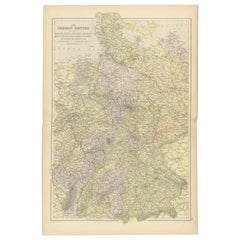
Antique Map of The German Empire (West Sheet), 1882

Antique Map of The German Empire (West Sheet), 1882

Located in Langweer, NL

Transport yourself to the heart of history with an original Antique Map of The German Empire (west sheet) from 'The Comprehensive Atlas and Geography of the World,' meticulously craf...

Category

1880s German Antique John Ogilby Furniture

Materials

Paper

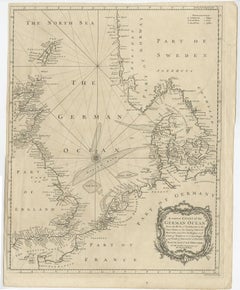
Antique Map of the North Sea From the English Channel to Norway & Sweden, 1746

Antique Map of the North Sea From the English Channel to Norway & Sweden, 1746

Located in Langweer, NL

Antique map titled 'A correct Chart of the German Ocean from the North of Scotland to the Start Point, on the Coast of Great Britain; and from So. Bygden on ye coast of Norway, to C....

Category

1740s Antique John Ogilby Furniture

Materials

Paper

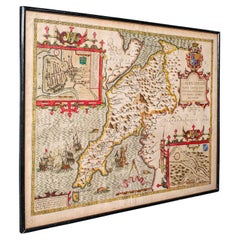
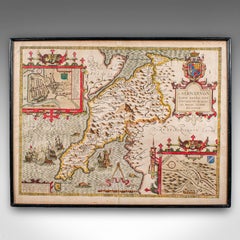
Antique Caernarvon Map, Framed Cartography, Welsh County, John Speed, Circa 1610

Antique Caernarvon Map, Framed Cartography, Welsh County, John Speed, Circa 1610

Located in Hele, Devon, GB

This is an antique Caernarvon map. An English, framed engraving of the historic Welsh county, dating to the 17th century and later, circa 1610. Superb cartography reproduction of C...

Category

17th Century British Jacobean Antique John Ogilby Furniture

Materials

Glass, Paper

Antique Chester County Map, English, Cheshire, Framed Cartography, Georgian

Antique Chester County Map, English, Cheshire, Framed Cartography, Georgian

Located in Hele, Devon, GB

This is an antique Palantine of Chester county map. An English, framed atlas engraving of Cheshire by Emanuel Bowen, dating to the 18th century and later, circa 1770. Superb cartog...

Category

1770s British Georgian Antique John Ogilby Furniture

Materials

Glass, Paper

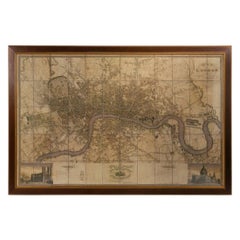
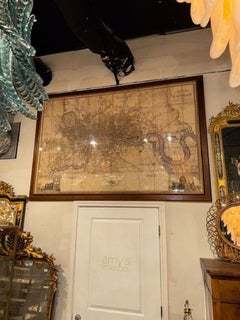
Large Scale Map of the London Metropolis

Large Scale Map of the London Metropolis

$5,800

H 56 in W 83 in D 2 in

Large Scale Map of the London Metropolis

Located in Dallas, TX

The product is a large scale map of the London Metropolis, specifically focusing on the city in intricate detail. It would be a valuable collectible for those interested in maps and ...

Category

Mid-20th Century English John Ogilby Furniture

Materials

Paper

Weighted Wood Chess Set by John Jaques of London in Wood Box 7cm Kings, ca 1950

Weighted Wood Chess Set by John Jaques of London in Wood Box 7cm Kings, ca 1950

By Jaques of London

Located in Lincoln, Lincolnshire

This is a good and complete English handmade wood "weighted" chess set game of 32 pieces, in its original box with a sliding lid, made by John Jaques of London and dating to the mid 20th century period. The chess pieces are made of turned and carved varnished wood. The bases of ALL pieces are weighted with metal pieces and the bases have a green felt/paper cover. Weighted sets like this one have a much nicer "feel" when playing. The pieces in the set are in the Staunton style. Sizes: Kings: 70mm ( ~ 2.75 inches); Pawns: ~45mm (~1.7 inches) The set comes complete with its original wood storage box, having a sliding lid and complete with a paper makers sticker to the lid. Overall a good "weighted" John Jaques chess...

Category

Early 20th Century British Mid-Century Modern John Ogilby Furniture

Materials

Wood

Antique Map of Asia from the Middle East to the Coast of Alaska, 1816

Antique Map of Asia from the Middle East to the Coast of Alaska, 1816

Located in Langweer, NL

Antique map titled ‘L’Asie‘. This is an original antique map of Asia, by Hérisson, taken from atlas ""Nouv. Abrége de Géographie"". An engraved map with coloring of Asia from the Mid...

Category

19th Century Antique John Ogilby Furniture

Materials

Paper

Antique Coach Road Map, East Devon, English, Framed, Cartography, Georgian, 1720

Antique Coach Road Map, East Devon, English, Framed, Cartography, Georgian, 1720

Located in Hele, Devon, GB

This is an antique coach road map of East Devon. An English, framed lithograph engraving of regional interest, dating to the early 18th century and later. Fascinating 18th century h...

Category

Early 18th Century British Georgian Antique John Ogilby Furniture

Materials

Wood

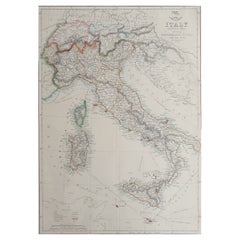
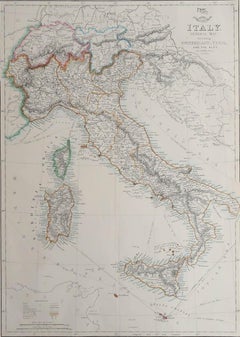
Large Original Antique Map of Italy. John Dower, 1861

Large Original Antique Map of Italy. John Dower, 1861

Located in St Annes, Lancashire

Great map of Italy Lithograph engraving by John Dower Original colour Published, 1861 Unframed Good condition / repair to top right corner seen in last image    

Category

1860s English Victorian Antique John Ogilby Furniture

Materials

Paper

Pair of Road Maps of England by John Ogilby

Pair of Road Maps of England by John Ogilby

$1,850 / set

H 23 in W 27.5 in D 1.25 in

Pair of Road Maps of England by John Ogilby

Located in Essex, MA

The first road maps of England. London to Holyhead and London to Carlisle. Nicely framed and matted. These are plates removed from a book. These are fir...

Category

1690s English Antique John Ogilby Furniture

Materials

Paper

Original Antique Print After H. Leutemann, Reynard the Fox- Road To Execution

Original Antique Print After H. Leutemann, Reynard the Fox- Road To Execution

Located in St Annes, Lancashire

Great image by Heinrich Leutemann From the Reynard The Fox series Fine steel engraving Published by A.H. Payne C.1850 Unframed.

Category

1850s English Black Forest Antique John Ogilby Furniture

Materials

Paper

Antique Coaching Road Map, South Devon, English, Framed, Cartography, Georgian

Antique Coaching Road Map, South Devon, English, Framed, Cartography, Georgian

Located in Hele, Devon, GB

This is an antique coach road map of South Devon. An English, framed lithograph engraving of regional interest, dating to the early 18th century and later. Delightful early 18th cen...

Category

Early 18th Century British Georgian Antique John Ogilby Furniture

Materials

Wood

Previously Available Items
Antique Print of Atahualpa by Ogilby, 1671

Antique Print of Atahualpa by Ogilby, 1671

Sold

H 15.75 in W 9.06 in D 0.02 in

Antique Print of Atahualpa by Ogilby, 1671

By John Ogilby

Located in Langweer, NL

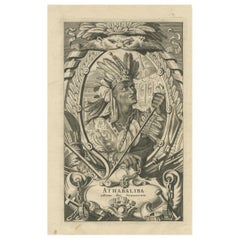
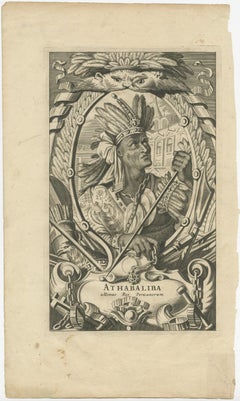
Antique print titled 'Athabaliba ultimus rex Peruanorum'. Portrait of Atahualpa. Atahualpa, Atawallpa (Quechua), also Atabalica, Atahuallpa, Atabalipa (in Hispanicized spellings) (ci...

Category

Mid-17th Century Antique John Ogilby Furniture

Materials

Paper

Road Map, from London to Kings Lynn, Royston to Downham, John Ogilby, Britannia

Road Map, from London to Kings Lynn, Royston to Downham, John Ogilby, Britannia

By John Ogilby

Located in BUNGAY, SUFFOLK

John Ogilby (British 1600-1676) Cosmographer and Geographick Printer to Charles II A road map from Britannia, 1675/6. The road from London to Kings Lynn, ...

Category

Late 17th Century British Charles II Antique John Ogilby Furniture
Materials

Paper

John Ogilby furniture for sale on 1stDibs.
John Ogilby furniture are available for sale on 1stDibs. These distinctive items are frequently made of paper and are designed with extraordinary care. There are many options to choose from in our collection of John Ogilby furniture, although brown editions of this piece are particularly popular. Many of the original furniture by John Ogilby were created in the Baroque style in europe during the 18th century and earlier. If you’re looking for additional options, many customers also consider furniture by and John Speed. Prices for John Ogilby furniture can differ depending upon size, time period and other attributes — on 1stDibs, these items begin at $2,568 and can go as high as $2,568, while a piece like these, on average, fetch $2,568.