Juan Tafoya More Art

1949-2006

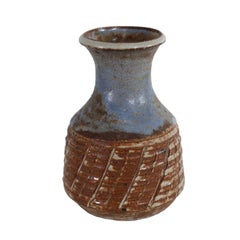
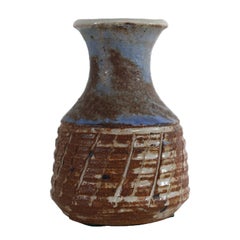
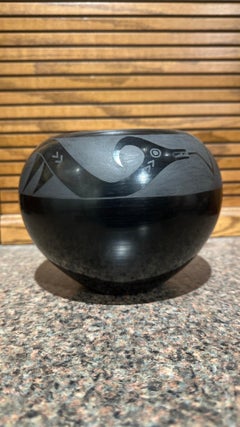
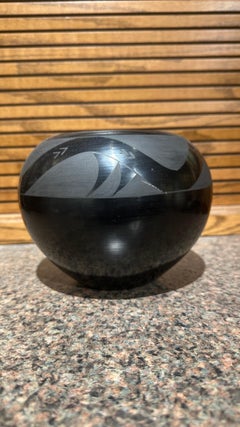
Juan Tafoya was a well-known San Ildefonso Pueblo potter who has been active since 1970. Early on in his career, Juan began experimenting with firing techniques to achieve a brown/black combination and experimented with using turquoise as a decorative element. He specialized in sgraffito designs where he would chip away at the polished slip to form a textured background. According to a letter previously provided by Tafoya, he was a lifelong resident of San Ildefonso Pueblo and was involved in pottery making since he was first able to gather the materials that go into making pottery. He was taught the art of pottery making by his mother, Donica Tafoya. Tafoya passed away prematurely at age 57 years.

1
Overall Width
to
Overall Height
to
1
1
1
1
1
1
1
266
223
122
116
1
Artist: Juan Tafoya
Juan Tafoya San Ildefonso Native American Pottery

Juan Tafoya San Ildefonso Native American Pottery

By Juan Tafoya

Located in Missouri, MO

Impeccable Provenance! See attached pictures of Juan Tafoya holding this particular piece, as well as his business card and his original letter all include...

Category

1980s American Modern Juan Tafoya More Art

Materials

Clay

Related Items
Generation Gap
Generation Gap

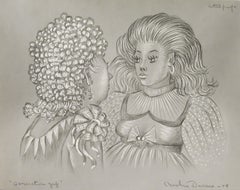
Caroline DurieuxGeneration Gap, 1978

$550

H 10.75 in W 13.65 in D 0.01 in

Generation Gap

By Caroline Durieux

Located in San Francisco, CA

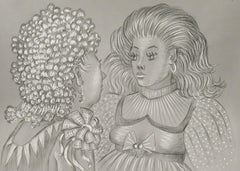
This artwork titled "Generation Gap" c1978 is an original Cliche Verre on paper by noted New Orleans artist Caroline Spellman Wogan Durieux, 1896-1989. It is hand signed, titled, dated and inscribed artist proof in pencil by the artist. The image size is 8.75 x 11.75 inches, sheet size is 10.75 x 13.65 inches. It is in excellent condition, two small pieces of hanging tape from previous framing remaining on the back. About the artist: As a Southern female satirist, Caroline Spellman Wogan Durieux was a rare phenomenon in the early twentieth century. Today, she is highly regarded for her stinging lithographs that touch on human foibles as well as some of the important issues of her day. Born to a family of Creole descent in New Orleans, young Caroline was precocious; she began drawing at age four and completed a portfolio of watercolors depicting her city by the time she was twelve. She took lessons from Mary Butler, a member of the art faculty at Sophie Newcomb College, and, beginning in 1912, matriculated at the school full-time, where her instructors included Ellsworth Woodward, chair of the art department. She graduated with a bachelor’s degree in design in 1916 and one in education in 1917. Awarded a scholarship by the New Orleans Art Association, Durieux pursued further coursework at the Pennsylvania Academy of the Fine Arts from 1918 to 1920. Years later, she was encouraged to try lithography by Carl Zigrosser, an expert curator of prints at the Philadelphia Museum of Art, who became her mentor. With her husband Pierre Durieux—an importer of Latin American goods and later the chief representative of General Motors for South America—Caroline Durieux spent time in Cuba during the early 1920s. The couple moved in 1926 to Mexico City, where she met the great muralist Diego Rivera and became involved in the local art community. Following a short interval in New York City, Durieux went back to Mexico in 1931 and enrolled at the Academy of San Carlos (now the National University of Mexico) to study lithography. She returned to New Orleans seven years later and was hired to teach at her alma mater, Newcomb College, from 1938 to 1943. Starting in 1939, Durieux served as the director of Louisiana’s Works Progress Administration program, and her division was the only one in the state not to practice racial discrimination. This was a matter she felt strongly about, stating: “I had a feeling that an artist is an artist and it doesn’t make any difference what color he or she is.” From 1943 until her retirement in 1964, Durieux was a member of the faculty at Louisiana State University in Baton Rouge. Durieux’s forte was lithography, a technique popular in the mid-nineteenth century and long associated with social commentary, and her prints proved no exception. Her work in the 1930s and 1940s coincided with a rise in art that dealt with poverty, racism, and totalitarianism. She often presented stereotyped social climbers...

Category

Late 20th Century American Modern Juan Tafoya More Art
Materials

Other Medium

Milwaukee Handicraft Project WPA

Milwaukee Handicraft Project WPA

Located in Los Angeles, CA

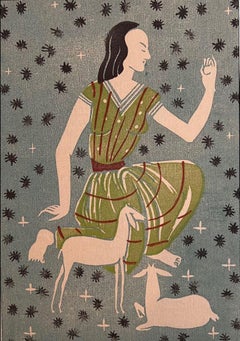
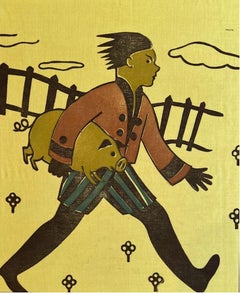
Milwaukee Handicraft Project, Applied Design Blockprinted Textiles Volume VI Supplement, c. 1935 - 1942, twelve block printed designs on linen, images are various sizes, each is mounted in its original folder which measures 24 x 19 inches, all bear the Milwaukee Handicraft Project label, various designers, including Barbara Warren (1915 - 2005) ("Checkered Flower" and perhaps others), includes original portfolio binder The Milwaukee Handicraft Project (MHP) was the most prolific and successful of the decorative arts projects of the Works Progress Administration (WPA). It served as a model for many other similar projects across the United States and attracted the attention of thought leaders as diverse as Frank Lloyd Wright and First Lady Eleanor Roosevelt. Designed with the dual goals of providing work for underprivileged women and the creation of well-designed household objects, the MHP began in 1935 under the direction of Elsa Ulbricht...

Category

1930s American Modern Juan Tafoya More Art

Materials

Textile, Linen, Linocut, Woodcut

The Fisherman
The Fisherman

Kenneth B WalshThe Fisherman

$2,100

H 36.5 in W 27.5 in D 1 in

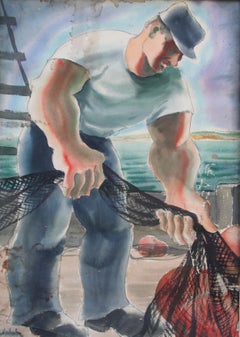
The Fisherman

By Kenneth B Walsh

Located in East Hampton, NY

Fisherman Watercolor Comes Framed (see photo) About the Artist: Kenneth B Walsh (1922-1980) In the 1950s, Kenneth Bonar Walsh came to Montauk fr...

Category

1970s American Modern Juan Tafoya More Art

Materials

Watercolor

Portrait (Untitled)

Portrait (Untitled)

Located in Los Angeles, CA

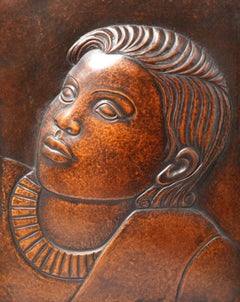
Portrait (Untitled), c. mid 1930s, hammered copper, 11 1/2 x 8 1/2 inches Beryl McCarthy Wynnyk was a California-based painter, sculptor, and craftsperson. She studied at the Califo...

Category

1930s American Modern Juan Tafoya More Art

Materials

Copper

John Glick Plum Street Pottery Reduction Fired Shino Glaze Cup Published in Book

John Glick Plum Street Pottery Reduction Fired Shino Glaze Cup Published in Book

By John Glick 1

Located in Detroit, MI

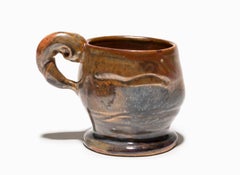
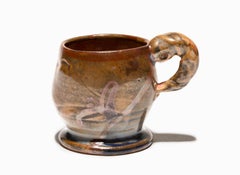
“Untitled” ceramic, is an example of the kind of work by which John Glick became so famous. He was seduced by the effects of the reduction kiln, which decreased the levels of oxygen during firing, inducing the flame to pull oxygen out of the clay and glazes changing the colors of the glazes depending on their iron and copper content. In this way he achieved the rich gradients of ochre and umber and variations in stippling and opacity. This piece is signed on the bottom and can be found on page 92, plate #125 in “John Glick: A Legacy in Clay.” John was an American Abstract Expressionist ceramicist born in Detroit, MI. Though open to artistic experimentation, Glick was most influenced by the styles and aesthetics of Asian pottery—an inspiration that shows in his use of decorative patterns and glaze choices. He has said that he is attracted to simplicity, as well as complexity: my work continually reflects my re-examination that these two poles can coexist… or not, in a given series. Glick also took influences from master potters of Japan, notably Shoji Hamada and Kanjrio Kawai, blending their gestural embellishments of simple forms with attitudes of Abstract Expressionism. He was particularly drown to the work of Helen Frankenthaler whose soak-stain style resonated with Glick’s multi-layered glaze surfaces, which juxtaposed veils of atmospheric color with gestural marks and pattern. He spent countless hours developing and making his own tools in order to achieve previously unseen results in his work with clay and glaze. Glick’s “Plum Tree Pottery...

Category

1990s American Modern Juan Tafoya More Art

Materials

Stoneware, Glaze

Aldo Londi Vase Abstract "Glass Fused Ceramic Vase"

Aldo Londi Vase Abstract "Glass Fused Ceramic Vase"

Located in Detroit, MI

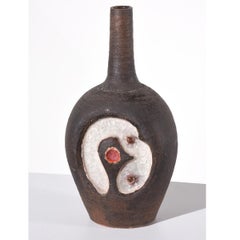
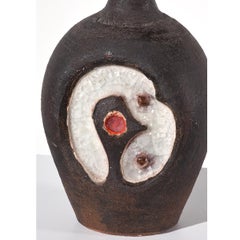
"Glass Fused Ceramic Vase" is vintage Mid-Century Modern. This handsome vase has an elongated neck with a white glass-fused inlay portion on the front body...

Category

Mid-20th Century American Modern Juan Tafoya More Art
Materials

Ceramic, Glass

Nude in Lavender
Nude in Lavender

Kenneth B WalshNude in Lavender

$2,850

H 36 in W 24 in D 1 in

Nude in Lavender

By Kenneth B Walsh

Located in East Hampton, NY

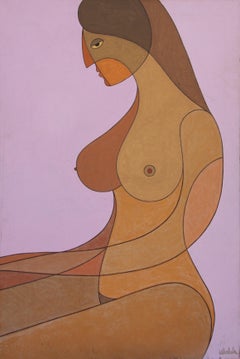
Nude In Lavender NOT framed Neo Cubism About the Artist: Kenneth B Walsh (1922-1980) In the 1950s, Kenneth Bonar Walsh came to Montauk from New York City to paint seascapes, catch ...

Category

1970s American Modern Juan Tafoya More Art
Materials

Canvas, Acrylic

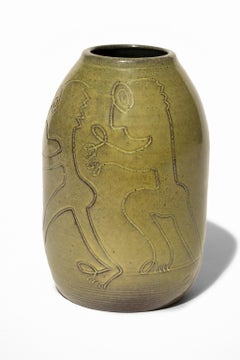
"Untitled" Ceramic Vase with Etched Figures, Green Glaze, Signed on Bottom

"Untitled" Ceramic Vase with Etched Figures, Green Glaze, Signed on Bottom

Located in Detroit, MI

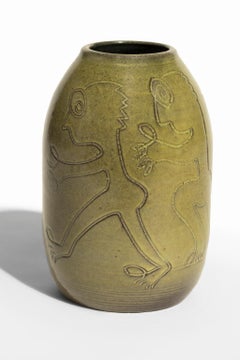
SALE ONE WEEK ONLY Douglas’s etched ceramic vase in a rich earthy green glaze expresses the Mid-Century Modern style of simplicity of lines, forms and color. Despite its formal shap...

Category

Mid-20th Century American Modern Juan Tafoya More Art
Materials

Ceramic, Glaze

American studio pottery by Pond Farm artist Marguerite Wildenhain

American studio pottery by Pond Farm artist Marguerite Wildenhain

By Marguerite Wildenhain 1

Located in Colfax, CA

A highly decorated Bauhaus inspired vase by California woman artist Marguerite Wildenhain. This vase was created while Wildenhain was teaching at Pond Farm, in Guerneville, CA. Wild...

Category

1960s American Modern Juan Tafoya More Art
Materials

Earthenware

Two Volkswagons

Two Volkswagons

By Gerard Giliberti

Located in East Hampton, NY

Black & White Photo of two rusted Volkswagon's sitting in a desert Comes unframed Also available in 20"x30" About the Artist: My intent is to create a mythic dreamscape that explo...

Category

1960s American Modern Juan Tafoya More Art
Materials

Archival Pigment

Who Am I
Who Am I

Kenneth B WalshWho Am I

$3,300

H 38 in W 30 in D 1 in

Who Am I

By Kenneth B Walsh

Located in East Hampton, NY

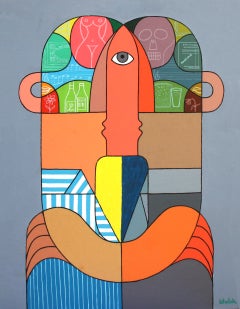
Cubism Style Post Modern American Modern Acrylic on Canvas Comes UNFRAMED About the Artist: Kenneth B Walsh (1922-1980) In the 1950s, Kenneth Bonar Walsh came to Montauk from New Y...

Category

1970s American Modern Juan Tafoya More Art
Materials

Cotton Canvas, Acrylic

Herb Babcock "Glass Vase" Blown Glass White & Blue Background Red Splashes

Herb Babcock "Glass Vase" Blown Glass White & Blue Background Red Splashes

Located in Detroit, MI

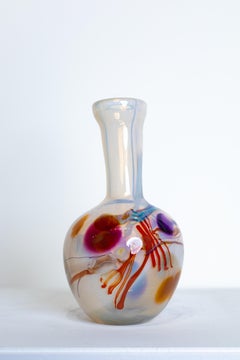
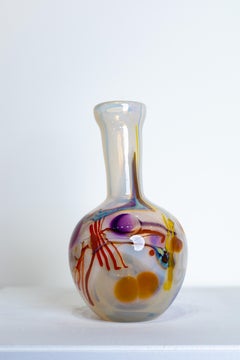
"Blown Glass" vase is a light beautiful wisp of blown glass infused with a milky white and blue fog of color and bold splashes of red. The vase has a long elegant neck and round body. Herb Babcock known as a Michigan Glass Artist began as a metal sculptor. He studied glass blowing in 1969 and created a series of Glass Image Vessels in 1974. Eventually he began to combine metal and glass in sculpture. The Pillared Series, which includes glass, steel and stone, began in 1989. Herb received both his BFA and his MFA in Sculpture: his bachelor’s degree from the Cleveland Institute of Art and his master’s from the Cranbrook Academy of Art Bloomfield Hills, Michigan. Cranbrook was designed by architect and faculty member, Eliel Saarinen who collaborated with Charles and Ray Eames on chair and furniture design. Numerous creative artists who are alumni of Cranbrook include: Harry Bertoia, Florence Knoll, Jack Lenor Larsen, Donald Lipski, Duane Hanson, Nick Cave, Hani Rashid, George Nelson, Urban Jupena (Nationally recognized fiber artist), Artis Lane (the first African-American artist to have her sculpture, "Sojourner Truth," commissioned for the Emancipation Hall in the Capital Visitor Center in Washington DC), Cory Puhlman (televised Pastry Chef extraordinaire), Thom O’Connor (Lithographs), Paul Evans (Brutalist-inspired sculpted metal furnishings), Eugene Caples (small bronze images/abstract), and Morris Brose...

Category

1970s American Modern Juan Tafoya More Art
Materials

Glass

Juan Tafoya more art for sale on 1stDibs.

Find a wide variety of authentic Juan Tafoya more art available for sale on 1stDibs. You can also browse by medium to find art by Juan Tafoya in ceramic, clay and more. Not every interior allows for large Juan Tafoya more art, so small editions measuring 7 inches across are available. Customers who are interested in this artist might also find the work of Maria Asuncion Raventos, Louise Bourgeois, and Joan Brossa.