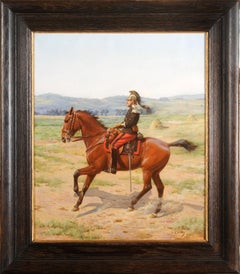
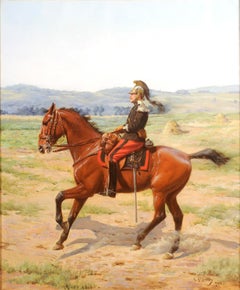
Paul Louis Narcisse GROLLERON
(Seignelay 1848 – Paris 1901)
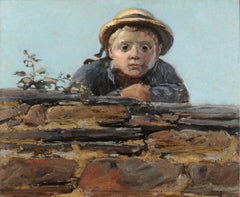
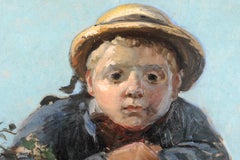
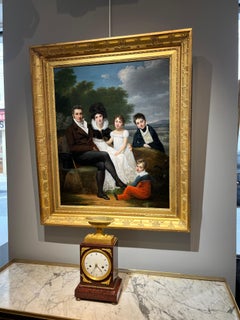
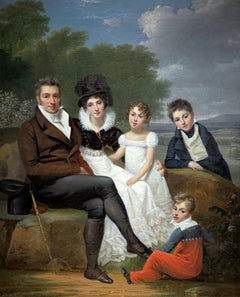
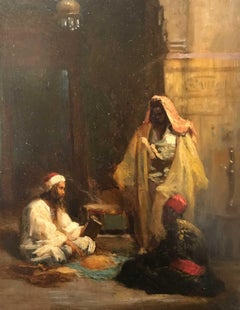
Child atop a wall
Oil on canvas
H. 60 cm ; W. 73 cm
Signed and dated lower right – 1884
Paul Grolleron belongs to the generation of French painters who, during the second half of the 19th century, revitalized military painting through a keen and sensitive observation of soldiers' lives. Born in 1848 in Seignelay (Yonne), he trained in Paris under Léon Bonnat, receiving instruction grounded in rigorous draftsmanship and powerful structural composition.
Exhibiting at the Salon from 1873 onwards, Grolleron developed a body of work dedicated to military painting, history painting, and genre scenes. He drew his primary inspiration from 19th-century conflicts, particularly the Franco-Prussian War of 1870–1871.
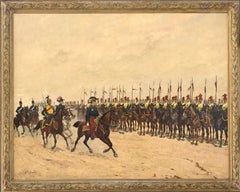
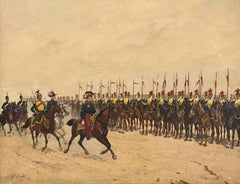
Far from portraying war in an exclusively heroic light, the artist focused on lived experiences: marches, halts, bivouacs, reconnaissance missions, and combat scenes. The precision with which he rendered uniforms, equipment, and postures lends his compositions both a narrative and a documentary quality.
His art is distinguished by solid draftsmanship, accuracy of detail, and remarkable compositional mastery. Notable works exhibited at the Salon include *Épisode de 1870* (Episode of 1870), *Combat en 1870 sous les murs de Paris* (Combat in 1870 beneath the walls of Paris), *Sur le qui-vive, à Buzenval* (On the Alert at Buzenval), and *Épisode de la bataille de Loigny* (Episode from the Battle of Loigny).
An award-winning Salon artist whose work is held in both public and private collections, Grolleron remains a significant figure in French military painting...
Category
1880s French School Ludwig Deutsch Paintings