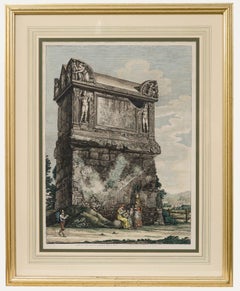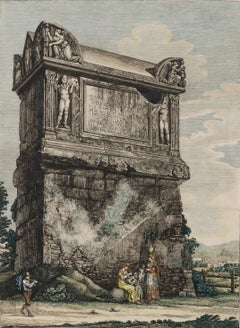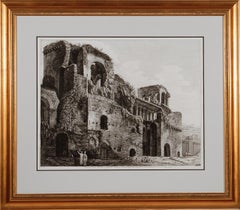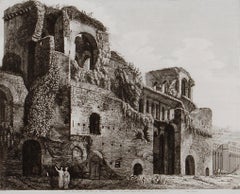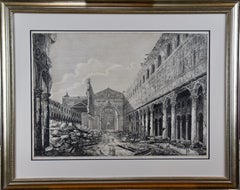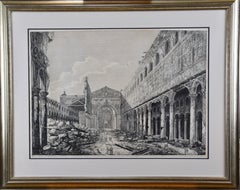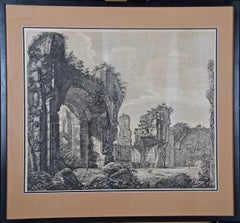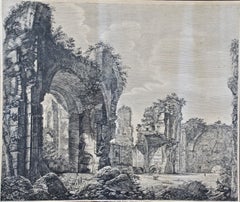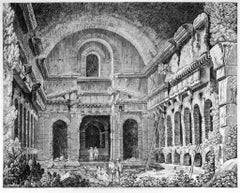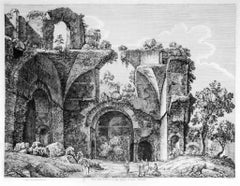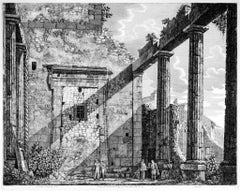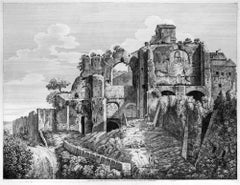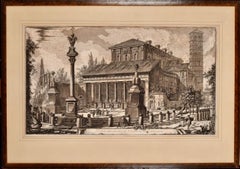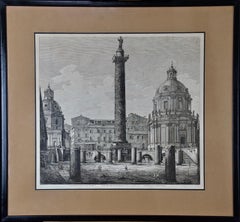
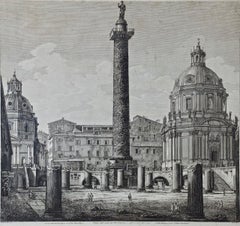
Luigi RossiniColumn of Trajan in Rome: A Framed Original 19th C. Etching by Luigi Rossini, 1823
$3,175
Column of Trajan in Rome: A Framed Original 19th C. Etching by Luigi Rossini
By Luigi Rossini
Located in Alamo, CA
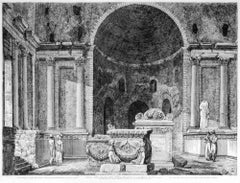
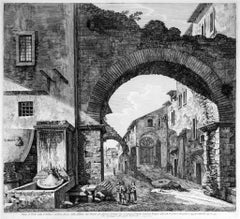
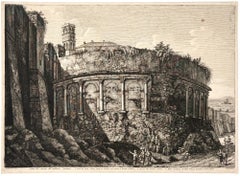
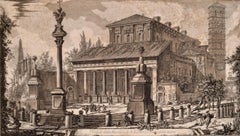
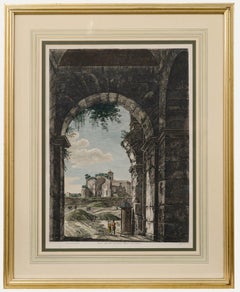
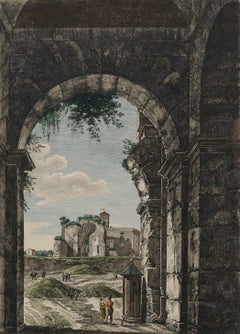
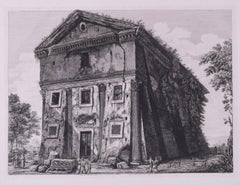
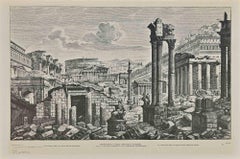
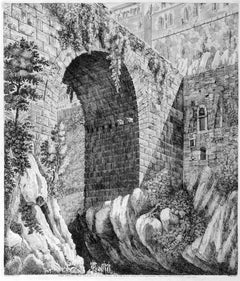
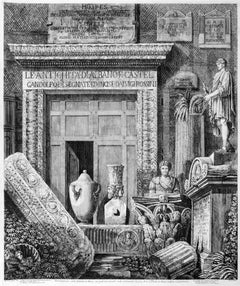
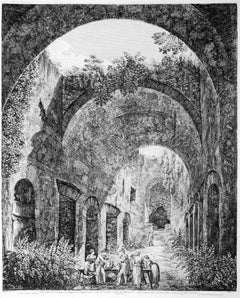
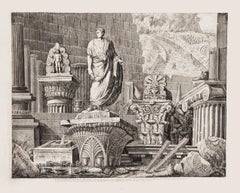
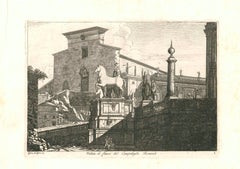
This early 19th century etching entitled "Veduta dello scavo del Foro Trajano" was created by Luigi Rossini and included in his publication "Le Antichita Romane" (The Rome of Antiquity), published in Rome in 1823. It depicts the historical victory column of Trajan standing amidst the rubble of broken columns that remain around it. The etching is presented in a black wood frame with a light brown outer mat and a dark brown inner mat. There are several frame abrasions. The print and mats are in very good condition. The frame measures 27" high, 29.07" wide and 0.5" deep. The print is framed and matted in the identical style as the another etching of an ancient Roman landmark, the Piazza Navona, which is also listed on 1stdibs, see item # LU117326144172. The pair would make an attractive display grouping of Roman architecture. A discount is available for purchase of the pair of prints. Luigi Rossini (1790-1857) like his predecessors, Giovanni Piranesi (1720–1778) and Giuseppi Vasi (1710-1782), was an architect and artist. Like Piranesi and Vasi, he wanted to glorify the architecture of ancient Rome, which he felt was deteriorating and needed to be documented. Several of the ruins he illustrated have, in fact, since disappeared leaving only his images as a record of their appearance. His images of the grand edifices of the city dramatically depict the power and glory...
1820s Old Masters Luigi Rossini Art
Etching