Mathieu Matégot Art

French, Hungarian, b. 1910

With their curvaceous metal surfaces and shapes often resembling sheets of folded paper, Mathieu Matégot's inspiring furniture and lighting designs are easily recognizable and highly sought after by collectors. By working with perforated sheet metal and metal tubing, the Hungarian-born French architect, artist and designer — who is known by aficionados for his “rigitulle” technique — created tables, chairs and decorative objects that are celebrated works of French modernism and make a statement in any interior.

Matégot attended the Budapest School of Fine Arts and Architecture. He graduated in 1929 and traveled before settling in Paris in 1931, where he worked as a window dresser for department stores and as a set designer for cabaret halls.

In 1939, Matégot joined the French army in resistance to invading Nazi forces. He was soon captured and sent to work in a German factory. It was at this factory where Matégot became familiar with the materials and techniques that would inform and inspire his trademark rigitulle method.

After the war ended, Matégot opened a workshop in Paris and began to create handcrafted furniture that didn't conform to established styles of the time. Matégot explored merging traditional and non-traditional materials — he worked with formica, glass and natural materials such as rattan — and engaged in other forward-looking experiments. Matégot soon patented his career-defining rigitulle technique and material, which saw the designer working with metal tubing and perforated metal sheets and producing thin, airy folds into the metal as if he were manipulating fabric or paper.

Many of Matégot’s designs for table lamps, pendants, tables and more are reflective of the rigitulle technique, but the best-known work that exemplifies this process is his elegant three-legged Nagasaki chair, which he exhibited in 1954 at the Salon des Artistes Décorateurs. The original Nagasaki chair gave way to a collection that included a stool and an armchair. Matégot’s Nagasaki dining chair has been reissued by Gubi and is part of the permanent collection at the Vitra Design Museum, which is home to one of the world’s most important furniture collections.

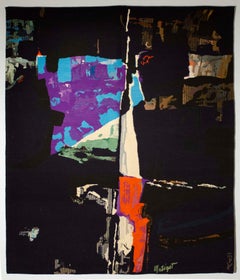
Matégot created a range of smaller items for the home — serveware, side tables and magazine racks, each distinctive in their fluid and organic forms — but halted his career in design and moved to Angers in the early 1960s in order to turn to creating art. Today he is known for his abstract tapestries as well as his furnishings.

Find vintage Mathieu Matégot furniture on 1stDibs.

4
Overall Width
to
Overall Height
to
4
4
4
3
1
4
4
165
10,119
2,805
2,503
1,396
4
Artist: Mathieu Matégot
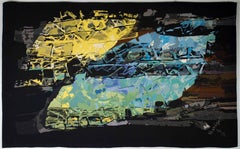
Mathieu Matégot - Sans titre, tapestry, french, modern, abstract, wool, design

Mathieu Matégot - Sans titre, tapestry, french, modern, abstract, wool, design

By Mathieu Matégot

Located in London, GB

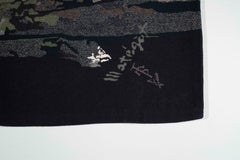
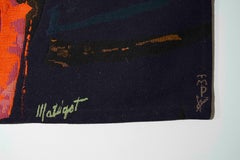
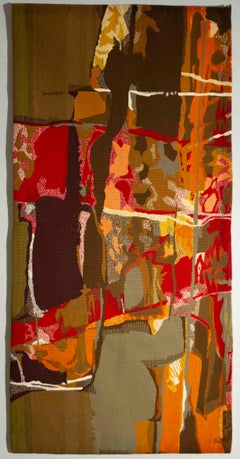
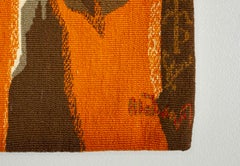
Mathieu Matégot (1910-2001) Sans titre c.1950s wool tapestry, Manufactura de Tapeçarias de Portalegre 150 x 70 cm signed ‘Matégot’ and with the Manufactura de Tapeçarias de Portalegre monogram (lower right) Price: $11,000 USD Provenance: Barry Friedman Ltd, New York (stock no. BF21324) Notes: Mathieu Matégot was a Hungarian-born French designer, architect and artist. After studying at Budapest's School of Fine Arts in 1929, Matégot travelled across Italy and the USA until settling in Paris in 1931 where he worked as a set designer, window dresser and tapestry maker. Matégot volunteered for the French resistance at the start of the Second World War, only to be captured by the Nazis. A dreadful fate for most, however, it was during his time as a prisoner of war that the artist discovered metalworking techniques (such as Rigitulle) which he later patented and became renowned for. Upon his release, Matégot was awarded French citizenship. After the war, the artist's interest in tapestry was renewed after being introduced to contemporary tapestry revivalist, Jean Lurçat. However, in order to make ends meet, Matégot pursued furniture design; he established a workshop in Paris and dedicated his time to translating the groundbreaking metal techniques into popular handcrafted objects. In 1959, Matégot abandoned furniture design and focused exclusively on his passion for abstract tapestries. He continued his work as a pioneer of French Modern tapestry...

Category

1950s Abstract Mathieu Matégot Art

Materials

Tapestry
Mathieu Matégot - Oberon, tapestry, french, modern, abstract, wool, design

Mathieu Matégot - Oberon, tapestry, french, modern, abstract, wool, design

By Mathieu Matégot

Located in London, GB

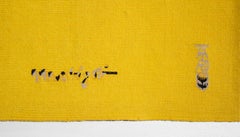
Mathieu Matégot (1910-2001) Oberon c.1950s wool tapestry, Manufactura de Tapeçarias de Portalegre; (possibly) no. 2 125 x 202 cm signed ‘Matégot’ and with the Manufactura de Tapeçarias de Portalegre monogram (lower right); titled, inscribed, numbered and signed (workshop label on the verso) Price: $18,000 USD Provenance: Barry Friedman Ltd, New York (stock no. BF19387) Notes: Mathieu Matégot was a Hungarian-born French designer, architect and artist. After studying at Budapest's School of Fine Arts in 1929, Matégot travelled across Italy and the USA until settling in Paris in 1931 where he worked as a set designer, window dresser and tapestry maker. Matégot volunteered for the French resistance at the start of the Second World War, only to be captured by the Nazis. A dreadful fate for most, however, it was during his time as a prisoner of war that the artist discovered metalworking techniques (such as Rigitulle) which he later patented and became renowned for. Upon his release, Matégot was awarded French citizenship. After the war, the artist's interest in tapestry was renewed after being introduced to contemporary tapestry revivalist, Jean Lurçat. However, in order to make ends meet, Matégot pursued furniture design; he established a workshop in Paris and dedicated his time to translating the groundbreaking metal techniques into popular handcrafted objects. In 1959, Matégot abandoned furniture design and focused exclusively on his passion for abstract tapestries. He continued his work as a pioneer of French Modern tapestry...

Category

1950s Abstract Mathieu Matégot Art

Materials

Tapestry

Mathieu Matégot - Castille, tapestry, french, modern, abstract, aubusson, design

Mathieu Matégot - Castille, tapestry, french, modern, abstract, aubusson, design

By Mathieu Matégot

Located in London, GB

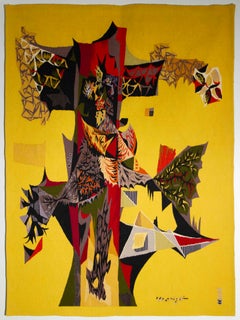
Mathieu Matégot (1910-2001) Castille c.1950s Aubusson tapestry, Pinton Frères; (probably) unique 156 x 120 cm signed ‘Matégot’ and with the Pinton Frères monogram (lower right); titled, inscribed, numbered and signed (workshop label on the verso) Price: $14,000 USD Provenance: Barry Friedman Ltd, New York (stock no. BF11410) Notes: Mathieu Matégot was a Hungarian-born French designer, architect and artist. After studying at Budapest's School of Fine Arts in 1929, Matégot travelled across Italy and the USA until settling in Paris in 1931 where he worked as a set designer, window dresser and tapestry maker. Matégot volunteered for the French resistance at the start of the Second World War, only to be captured by the Nazis. A dreadful fate for most, however, it was during his time as a prisoner of war that the artist discovered metalworking techniques (such as Rigitulle) which he later patented and became renowned for. Upon his release, Matégot was awarded French citizenship. After the war, the artist's interest in tapestry was renewed after being introduced to contemporary tapestry revivalist, Jean Lurçat. However, in order to make ends meet, Matégot pursued furniture design; he established a workshop in Paris and dedicated his time to translating the groundbreaking metal techniques into popular handcrafted objects. In 1959, Matégot abandoned furniture design and focused exclusively on his passion for abstract tapestries. He continued his work as a pioneer of French Modern tapestry...

Category

1950s Abstract Mathieu Matégot Art

Materials

Tapestry

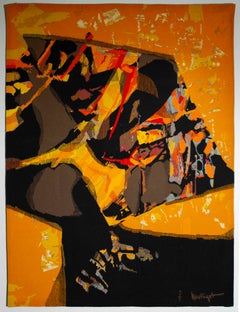
Mathieu Matégot - Apollo, tapestry, french, modern, abstract, aubusson, design

Mathieu Matégot - Apollo, tapestry, french, modern, abstract, aubusson, design

By Mathieu Matégot

Located in London, GB

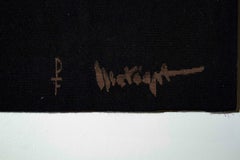
Mathieu Matégot (1910-2001) Apollo c.1950s Aubusson tapestry, Manufactura de Tapeçarias de Portalegre; edition 3 of 6 142 x 118 cm signed ‘Matégot’ with the Manufactura de Tapeçarias de Portalegre monogram (lower right); titled, inscribed, numbered and signed (workshop label on the verso) Price: $13,000 USD Provenance: Barry Friedman Ltd, New York (stock no. BF19383.3) Notes: Mathieu Matégot was a Hungarian-born French designer, architect and artist. After studying at Budapest's School of Fine Arts in 1929, Matégot travelled across Italy and the USA until settling in Paris in 1931 where he worked as a set designer, window dresser and tapestry maker. Matégot volunteered for the French resistance at the start of the Second World War, only to be captured by the Nazis. A dreadful fate for most, however, it was during his time as a prisoner of war that the artist discovered metalworking techniques (such as Rigitulle) which he later patented and became renowned for. Upon his release, Matégot was awarded French citizenship. After the war, the artist's interest in tapestry was renewed after being introduced to contemporary tapestry revivalist, Jean Lurçat. However, in order to make ends meet, Matégot pursued furniture design; he established a workshop in Paris and dedicated his time to translating the groundbreaking metal techniques into popular handcrafted objects. In 1959, Matégot abandoned furniture design and focused exclusively on his passion for abstract tapestries. He continued his work as a pioneer of French Modern...

Category

1950s Abstract Mathieu Matégot Art

Materials

Tapestry

Related Items
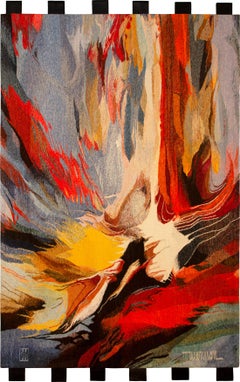
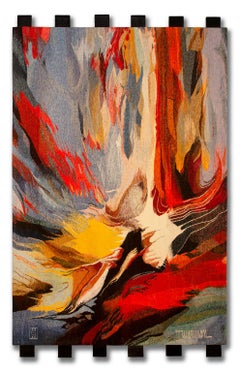
Leonardo Nierman 84"x56" Large-Scale Signed Wool Tapestry, Circa 1970

Leonardo Nierman 84"x56" Large-Scale Signed Wool Tapestry, Circa 1970

By Leonardo Nierman

Located in Miami, FL

LEONARDO NIERMAN – UNTITLED TAPESTRY ⚜ Wool tapestry ⚜ Signed in the weaving lower right ⚜ Weaver: Gobelinos Riedl ⚜ Features original hanging loops ABSTRACT EXPRESSIONIST TAPESTRY ...

Category

1970s Abstract Expressionist Mathieu Matégot Art

Materials

Tapestry, Wool

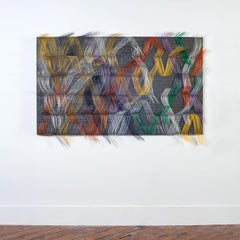
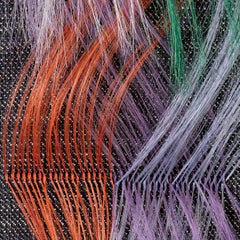
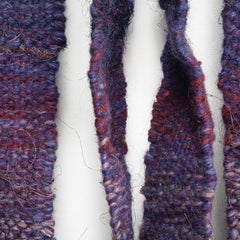
"Vibrant Conversation", Contemporary Abstract Textile Wall Sculpture

"Vibrant Conversation", Contemporary Abstract Textile Wall Sculpture

By Marianne Kemp

Located in Wilton, CT

Vibrant Conversation, horsehair, cotton, linen, 49” x 70” x 6", 2018. This vibrant contemporary abstract textile wall sculpture was done by textile artist, Marianne Kemp (b. 1976, W...

Category

2010s Contemporary Mathieu Matégot Art

Materials

Fabric, Textile, Cotton, Tapestry, Linen

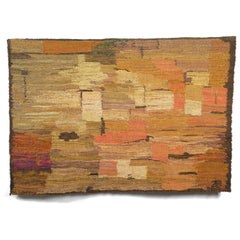
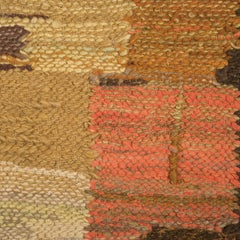
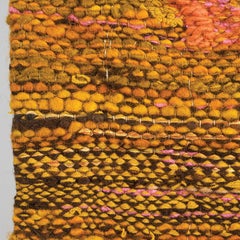
Mid-century Abstract Orange and Yellow Tapestry by Arcemont

Mid-century Abstract Orange and Yellow Tapestry by Arcemont

Located in Pasadena, CA

This textile work, signed by Arcemont, presents a delicate and intimate approach to mixed media, where each element is imbued with a poetic intention. Rather than simply gluing piece...

Category

Mid-20th Century Abstract Geometric Mathieu Matégot Art

Materials

Tapestry

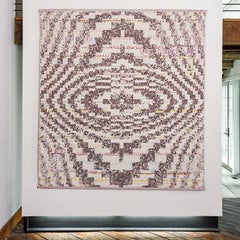
State of Mind, Contemporary Woven Tapestry, Geometric Abstract Textile Sculpture

State of Mind, Contemporary Woven Tapestry, Geometric Abstract Textile Sculpture

By Ane Henriksen

Located in Wilton, CT

State of Mind, Contemporary Woven Tapestry, Abstract Textile Wall Sculpture, Viscosed silk, cotton cloth, jersey dots, 102” x 95”, 2016 by textile artist, Ane Henriksen...

Category

2010s Abstract Geometric Mathieu Matégot Art

Materials

Fabric, Textile, Tapestry, Cotton, Silk

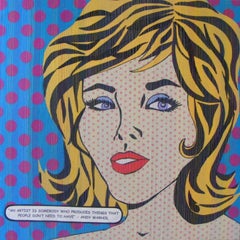
Cover Girl 1
Cover Girl 1

Bethan AshCover Girl 1

$995

H 24 in W 24 in

Cover Girl 1

By Bethan Ash

Located in Brecon, Powys

Technique: Fused collage, machine stitched and quilted. Materials: 100 % cotton panel on wooden stretcher Size: 60cm x 60cm (24 x 24inches) each panel

Category

2010s Contemporary Mathieu Matégot Art

Materials

Tapestry

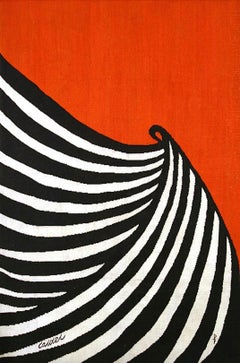
Femme Arabe Tapestry, Abstract Geometric Wool, Late 20th Century

Femme Arabe Tapestry, Abstract Geometric Wool, Late 20th Century

By Alexander Calder

Located in New York, NY

In 1963, Calder settled into a new workshop, overlooking the valley of the Lower Chevrière to Saché in Indre-et-Loire (France). It wasn’t long before tapestry became a new way for Al...

Category

Late 20th Century Abstract Geometric Mathieu Matégot Art

Materials

Tapestry, Wool

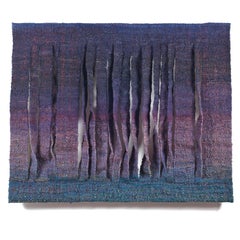
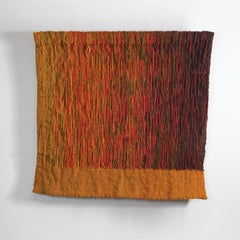
Summer and Winter, Mid-Century Tapestry, Woven Hanging, Textile Wall Sculpture

Summer and Winter, Mid-Century Tapestry, Woven Hanging, Textile Wall Sculpture

By Adela Akers

Located in Wilton, CT

Adela Akers (b. 1933, Santiago de Compostela, Spain) is a Spanish-born textile and fiber artist. She is Professor Emeritus (1972 to 1995) at the Tyler Scho...

Category

1970s Abstract Mathieu Matégot Art

Materials

Textile, Linen, Thread, Yarn, Fabric, Tapestry

Previously Available Items
Mathieu Matégot - Partage difficile, tapestry, french, modern, abstract, aubusson

Mathieu Matégot - Partage difficile, tapestry, french, modern, abstract, aubusson

By Mathieu Matégot

Located in London, GB

Mathieu Matégot (1910-2001) Partage difficile c.1950s Aubusson tapestry, Tabard Frères & Sœurs; no. 2 155 x 115 cm signed ‘Matégot’ and with the Tabard Frères & Sœurs monogram (lower right); titled, inscribed and numbered (workshop label on the verso) Price: $14,000 USD Provenance: Barry Friedman Ltd, New York (stock no. BF7606) Notes: Mathieu Matégot was a Hungarian-born French designer, architect and artist. After studying at Budapest's School of Fine Arts in 1929, Matégot travelled across Italy and the USA until settling in Paris in 1931 where he worked as a set designer, window dresser and tapestry maker. Matégot volunteered for the French resistance at the start of the Second World War, only to be captured by the Nazis. A dreadful fate for most, however, it was during his time as a prisoner of war that the artist discovered metalworking techniques (such as Rigitulle) which he later patented and became renowned for. Upon his release, Matégot was awarded French citizenship. After the war, the artist's interest in tapestry was renewed after being introduced to contemporary tapestry revivalist, Jean Lurçat. However, in order to make ends meet, Matégot pursued furniture design; he established a workshop in Paris and dedicated his time to translating the groundbreaking metal techniques into popular handcrafted objects. In 1959, Matégot abandoned furniture design and focused exclusively on his passion for abstract tapestries. He continued his work as a pioneer of French Modern tapestry...

Category

1950s Abstract Mathieu Matégot Art

Materials

Tapestry

Mathieu Matégot art for sale on 1stDibs.

Find a wide variety of authentic Mathieu Matégot art available for sale on 1stDibs. You can also browse by medium to find art by Mathieu Matégot in fabric, tapestry and more. Much of the original work by this artist or collective was created during the 1950s and is mostly associated with the abstract style. Not every interior allows for large Mathieu Matégot art, so small editions measuring 28 inches across are available. Customers who are interested in this artist might also find the work of Ned Evans, Caro Woods, and Rene Couturier.