Max Ernst Haefeli Tables

to
Height
to
Width
to
Depth
to
1
1
1
1
1
1
1
1
1
1
1
1
1
829
773
667
487
Creator: Max Ernst Haefeli
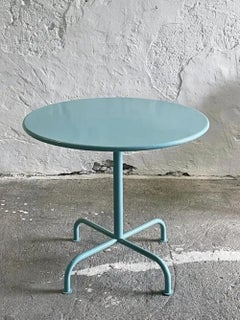
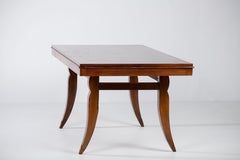
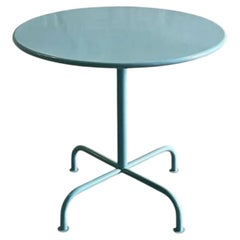
Max Ernst Haefeli – Bauhaus Garden Table for Embru, Switzerland, 1940s

Max Ernst Haefeli – Bauhaus Garden Table for Embru, Switzerland, 1940s

By Max Ernst Haefeli, Embru

Located in Debrecen, HU

his elegant and rare garden table, designed by Swiss architect and designer Max Ernst Haefeli and produced by Embru Werke AG, is a refined example of Bauhaus-influenced Swiss moderni...

Category

1940s Swiss Bauhaus Vintage Max Ernst Haefeli Tables

Materials

Metal, Steel

Related Items
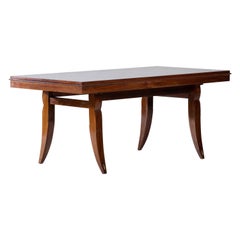
Elegant French Art Deco Table, Macassar, 1940s

Elegant French Art Deco Table, Macassar, 1940s

$5,605

H 29.93 in W 66.93 in D 39.38 in

Elegant French Art Deco Table, Macassar, 1940s

By Jules Leleu, Émile-Jacques Ruhlmann

Located in Split, Splitsko-dalmatinska županija

Dining table, Macassar, France, 1940s. Majestic centre table in Macassar. This Art Deco table shows great craftsmanship. The base and legs are beautifully detailed. This table has...

Category

Early 20th Century French Art Deco Max Ernst Haefeli Tables

Materials

Brass

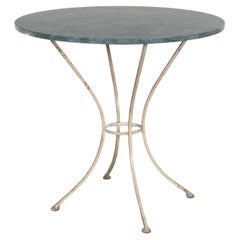
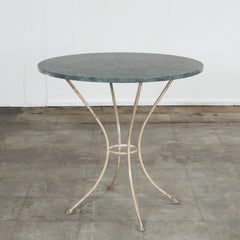
Green Marble Outdoor Table, 1940s

Green Marble Outdoor Table, 1940s

$1,800

H 30 in W 32 in D 32 in

Green Marble Outdoor Table, 1940s

Located in Los Angeles, CA

Round outdoor table with a solid green marble top and delicate white iron legs, Italy, 1940s

Category

1940s Italian Modern Vintage Max Ernst Haefeli Tables

Materials

Marble

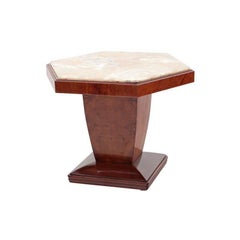
Salon Table, Art Deco, Italy, 1940s

Salon Table, Art Deco, Italy, 1940s

$1,958Sale Price|20% Off

H 26.78 in Dm 34.65 in

Salon Table, Art Deco, Italy, 1940s

Located in Greding, DE

An hexagonal salon table made from walnut with a marble top which stands on a slightly curved tulip base.

Category

1940s Italian Art Deco Vintage Max Ernst Haefeli Tables

Materials

Marble

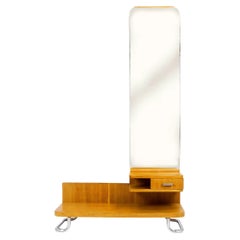
Restored Dressing Table with Mirror by Jindrich Halabala for Up Zavody, 1940s

Restored Dressing Table with Mirror by Jindrich Halabala for Up Zavody, 1940s

By Jindřich Halabala, Up Závody

Located in Żory, PL

Designed by Jindřich Halabala and made in 1940 by UP Závody in Czechoslovakia, this dressing table with mirror has a restored wooden frame with a satin varnish finish. The original m...

Category

Mid-20th Century Art Deco Max Ernst Haefeli Tables

Materials

Glass, Mirror, Wood

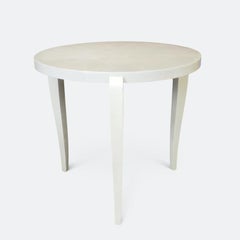
French 1940s Cream Lacquered Side Table

French 1940s Cream Lacquered Side Table

$1,940

H 25.2 in Dm 25.6 in

French 1940s Cream Lacquered Side Table

Located in CA, CA

A French 1940s cream lacquered side table of elegant form with three tapering curved legs.  

Category

1940s French Art Deco Vintage Max Ernst Haefeli Tables

Materials

Wood, Lacquer

French 1940s Art Deco Table

French 1940s Art Deco Table

$3,269

H 29.53 in W 53.15 in D 28.35 in

French 1940s Art Deco Table

Located in Isle Sur La Sorgue, Vaucluse

French Art Deco table of chunky proportions with a thick top, raised on a curule base, joined by a stretcher. Varnished finish.

Category

Mid-20th Century French Art Deco Max Ernst Haefeli Tables

Materials

Beech

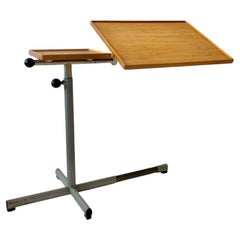
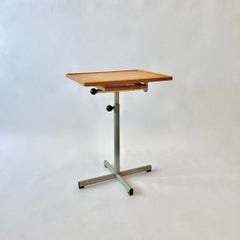
Swiss Utility Table by Embru ca. 1940s

Swiss Utility Table by Embru ca. 1940s

$1,515

H 26.78 in W 20.48 in D 16.54 in

Swiss Utility Table by Embru ca. 1940s

By Embru

Located in Geneva, CH

Swiss medical or office utility table with multiple position made by the Swiss manufacture Embru ca. 1940s Swiveling, adjustable in height and reclinable. Good condition. Manufacture...

Category

1940s Swiss Vintage Max Ernst Haefeli Tables

Materials

Steel

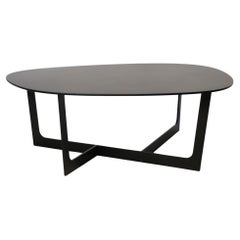
Coffee Cocktail Table by Ernst & Jensen for Erik Jorgensen

Coffee Cocktail Table by Ernst & Jensen for Erik Jorgensen

By Erik Jørgensen

Located in Oklahoma City, OK

The Insula Cocktail or End Table designed by Ernst & Jensen for Erik Jorgensen is a stunning piece that seamlessly blends form and function. Crafted with meticulous attention to detail, this table embodies the essence of Scandinavian design. Its clean lines and minimalist aesthetic create a sense of understated elegance that effortlessly complements any interior space. The table features a sleek tabletop, expertly constructed with high-quality painted aluminum, exuding a sense of sophistication and refinement. The choice of material allows for versatility, enabling the table to seamlessly integrate into various design styles, from contemporary to classic. The table's base is a work of art in itself, showcasing a harmonious balance between strength and delicacy. Also aluminum, the base provides stability and durability, while their graceful curves or geometric angles add visual interest and sculptural appeal. Whether used as a cocktail table for entertaining guests or as an end table for displaying treasured items, this piece offers both practicality and style. Its thoughtfully designed proportions ensure functionality without sacrificing aesthetic appeal, making it a versatile and timeless addition to any living room, lounge, or office space. The Ernst & Jensen for Erik Jorgensen Cocktail or End Table is a testament to exceptional craftsmanship, where Danish design sensibilities meet functional elegance, resulting in a furniture piece that elevates the ambiance of any room it graces. Photographed with Herman Miller Eames chair, Macbook Pro...

Category

2010s Danish Scandinavian Modern Max Ernst Haefeli Tables
Materials

Aluminum

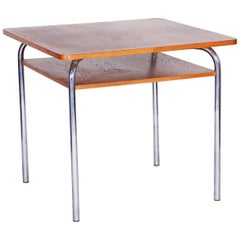
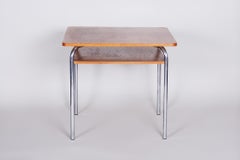
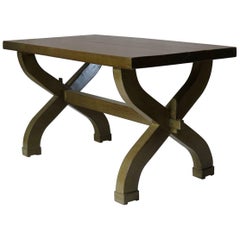
20th Century Restored Czech Oak Bauhaus Table by Vichr a Spol, Chrome, 1940s

20th Century Restored Czech Oak Bauhaus Table by Vichr a Spol, Chrome, 1940s

By Vichr & Spol

Located in Brandys nad Labem, Středočeský kraj

Table Style: Bauhaus. Period: 1940-1949. Material: Oak and chrome Source: Czechia.   

Category

1940s Czech Bauhaus Vintage Max Ernst Haefeli Tables
Materials

Chrome

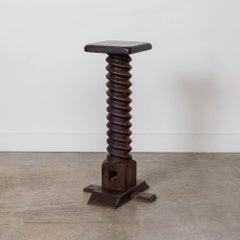
1940s French Twisted Wood Pedestal Table

1940s French Twisted Wood Pedestal Table

$1,800

H 29.25 in W 9.5 in D 9.75 in

1940s French Twisted Wood Pedestal Table

Located in Los Angeles, CA

Beautiful wood pedestal table from France, 1940s. Square top with twisted column on a square base. Original dark wood finish shows natural grain, age and patina. Perfect for display.

Category

Mid-20th Century French Max Ernst Haefeli Tables
Materials

Oak

Rare Bauhaus Chrome Table by Robert Slezak, 1930s

Rare Bauhaus Chrome Table by Robert Slezak, 1930s

$1,389Sale Price|20% Off

H 28.35 in W 25.99 in D 17.72 in

Rare Bauhaus Chrome Table by Robert Slezak, 1930s

By Slezak Company

Located in Praha, CZ

- 1930s - Czechoslovakia - Maker: Robert Slezák - Publicated in catalogues and books - Renovated desk with new veneer - Marked by a stamp.

Category

1930s Czech Bauhaus Vintage Max Ernst Haefeli Tables
Materials

Chrome

Max Ernst Haefeli tables for sale on 1stDibs.

Max Ernst Haefeli tables are available for sale on 1stDibs. These distinctive items are frequently made of steel and are designed with extraordinary care. There are many options to choose from in our collection of Max Ernst Haefeli tables, although blue editions of this piece are particularly popular. Prices for Max Ernst Haefeli tables can differ depending upon size, time period and other attributes — on 1stDibs, these items begin at $1,764 and can go as high as $1,764, while a piece like these, on average, fetch $1,764.
Questions About Max Ernst Haefeli Tables
  • 1stDibs ExpertApril 26, 2024
    Max Ernst lived in several places during his life. He was born in Brühl, Germany, in 1881 and later moved to Bonn to attend the university located there. Then he settled in Cologne, not far from his birthplace. In 1922, Ernst moved to France, where he soon became affiliated with Surrealism, the avant-garde art movement taking shape in Paris. Alongside Man Ray, Joan Miró and others, Ernst was among the first visual artists to experiment with imagery and techniques associated with Surrealism. When Germany occupied France during World War II, Ernst escaped to America with the help of patron and collector Peggy Guggenheim, whom he married in 1941. While living in New York, Ernst's work and techniques proved instrumental in inspiring the early development of Abstract Expressionism. He later moved to Sedona, Arizona, where he lived with his fourth wife, Dorothea Tanning, a fellow Surrealist and prolific visual artist and poet. While Ernst and Tanning are largely responsible for Sedona's reputation as an artist colony, they relocated to France in the 1950s and remained there until Ernst's death in Paris in 1976. On 1stDibs, shop a collection of Max Ernst art.
  • 1stDibs ExpertMarch 13, 2024
    You can see Max Ernst paintings in many places around the world. The Max Ernst Museum Brühl des LVR in Brühl, Germany, is home to one of the largest exhibitions of his work. Other museums that have Max Ernst paintings in their permanent collections include the Museum of Modern Art in New York, New York; the San Francisco Museum of Modern Art in San Francisco, California; the Art Institute of Chicago in Chicago, Illinois and the Detroit Institute of Arts in Detroit, Michigan. Explore a range of Max Ernst art on 1stDibs.
  • 1stDibs ExpertOctober 15, 2024
    Max Ernst used Surrealism to process the traumas he experienced during World War I. His early works consisted largely of collages, which allowed him to represent the shards, rubble and explosions from his wartime experience. In 1922, Ernst moved to France, where he soon became affiliated with Surrealism, the avant-garde art movement taking shape in Paris. Alongside Man Ray, Joan Miró and others, Ernst was among the first visual artists to experiment with the imagery and techniques that became associated with Surrealist art. Ernst’s greatest contribution to the Surrealist movement is often considered his invention of frottage, wherein an artist rubs a pencil or crayon over a paper atop a textured surface, and later grattage, where a similar technique is applied with paint. Both methods showcase Ernst’s fascination with the unconscious and serendipitous elements of artistic creation, a theme that connected the Dadaists and the Surrealists. Explore a range of Max Ernst art on 1stDibs.
  • 1stDibs ExpertNovember 20, 2024
    Max Ernst contributed to Surrealism by pushing the boundaries of the movement with his unconventional methods of printmaking, drawing and collage. He invented frottage (French for “rubbing”), wherein an artist rubs a pencil or crayon over a paper atop a textured surface, and later grattage (French for “scraping”), where a similar technique is applied with paint. Both methods showcase Ernst’s fascination with the unconscious and serendipitous elements of artistic creation, a theme that resonated with the Dadaists and the Surrealists. Ernst had deep knowledge of psychoanalysis and Sigmund Freud’s dream theories, which were big influences on Surrealists. He was among the first Surrealists to use Freud’s work to examine his own creative impulses. He also published a series of books of his collages, all of which were deeply symbolic and often philosophical. Explore a selection of Max Ernst art on 1stDibs.
  • 1stDibs ExpertOctober 30, 2024
    How much Max Ernst paintings are worth depends on their size, history, condition and other factors. In 2023, his oil-on-panel piece Taya's Sun sold for more than $304,000 at auction. Ernst was a pioneer in the Dada and Surrealist movements, pushing their boundaries with his unconventional methods of printmaking, drawing and collage. If you own an Ernst, consider having a certified appraiser or experienced art dealer evaluate it. Explore a selection of Max Ernst art on 1stDibs.