By Max Weber
Located in Myrtle Beach, SC
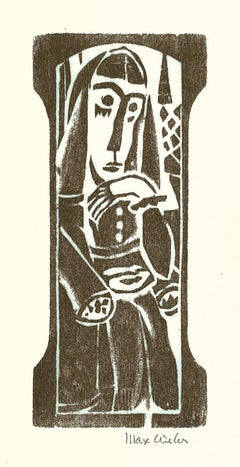
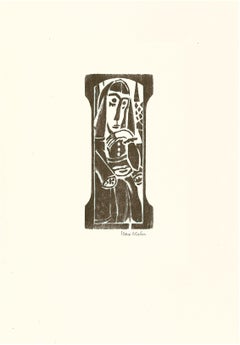
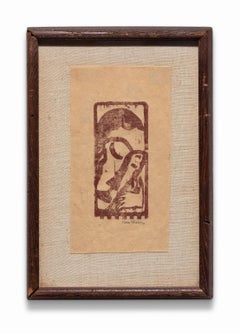
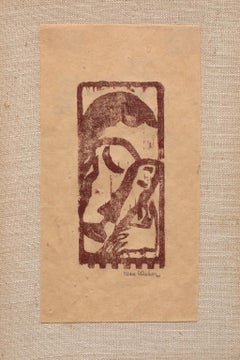
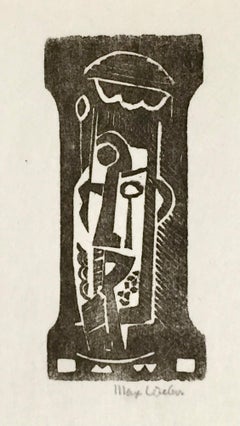
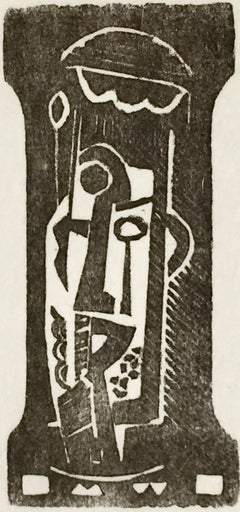
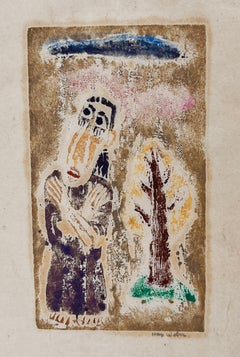
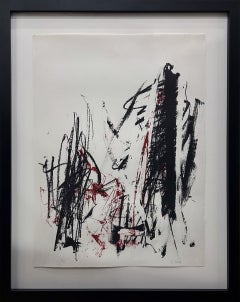
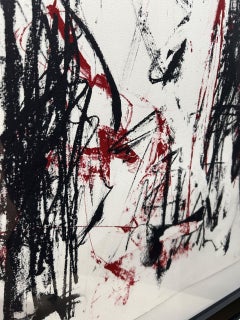
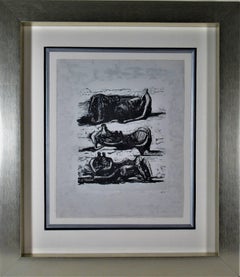
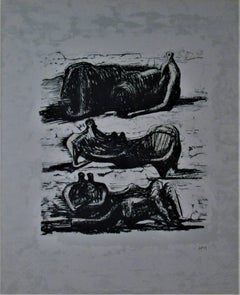
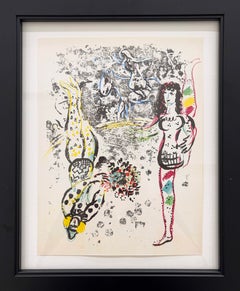
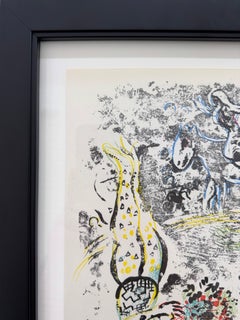
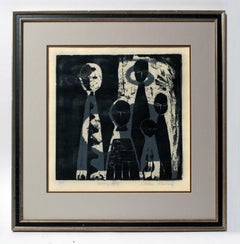
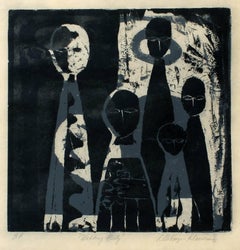
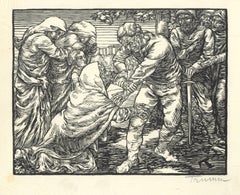
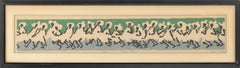
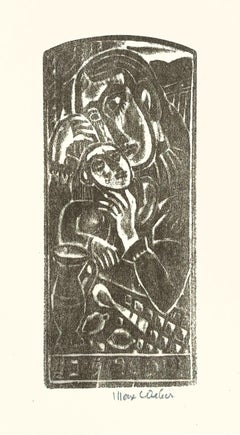
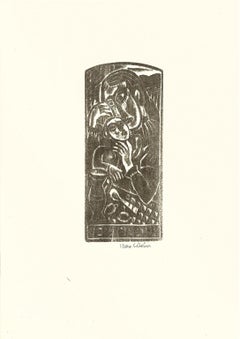
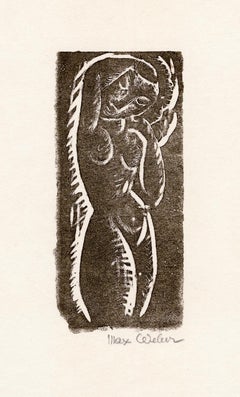
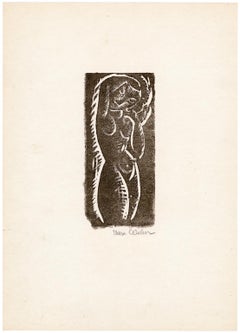
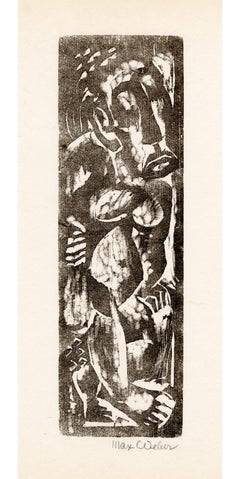
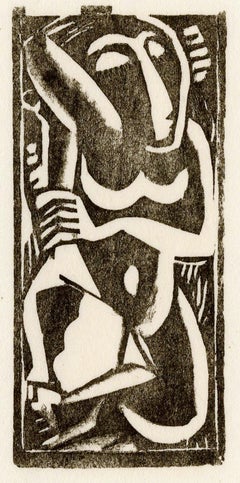
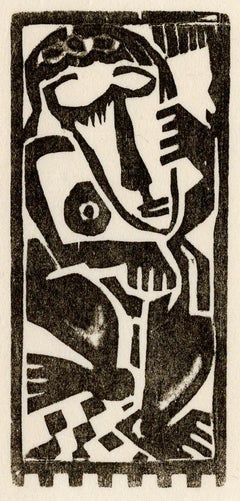
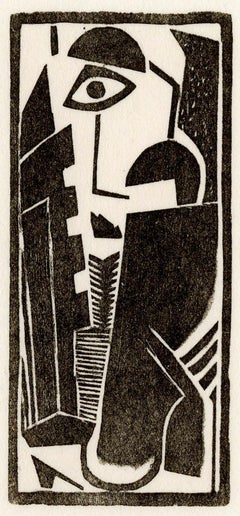
Max Weber, Untitled 'Primitive Figure', woodcut, 1921-25, edition proofs—this impression from the edition of 25 printed in 1956, Rubenstein 40. Signed in pencil. A fine impression, on cream Japan paper; the full sheet with wide margins (1 1/8 to 3 inches), in excellent condition. This work features prominently in the artist's woodcut oeuvre in its relatively large scale: image size 9 15/16 x 3 1/16 inches (252 x 78 mm); sheet size 12 1/2 x 9 inches (318 x 229 mm). Scarce. Matted to museum standards, unframed.
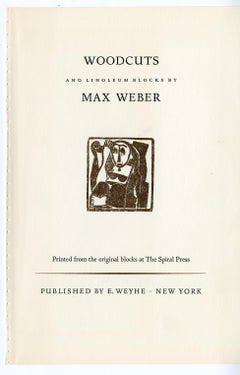
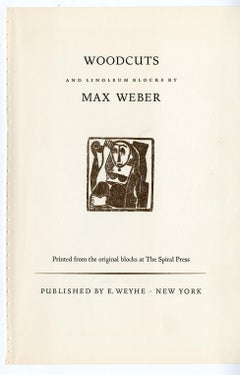
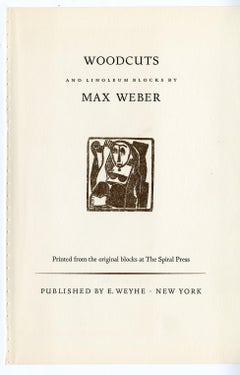
Printed, at the artist’s request, by Joseph Blumenthal, The Spiral Press, New York. Included in the suite 'FIVE PRINTS BY MAX WEBER' published by Erhard Weyhe, director, Weyhe Gallery Inc., the renowned New York gallery established in 1919 to specialize in fine prints.
Collections: Art Institute of Chicago, Detroit Institute of Arts, National Gallery of Art, Museum of Modern Art, Philadelphia Museum of Art, Los Angeles County Museum of Art, Whitney Museum of American Art.
ABOUT MAX WEBER'S RELIEF PRINTS
"In summary, Weber’s relief prints cannot be called just primitives or cubist forms. No single stylistic term is a satisfactory label. Collectively they suggest some common denominators: independence from academic traditions, interest in the element of design rather optical realism, simplicity and unpretentiousness in execution, craftlike tradition underlying their formulation and the desire to eschew the exactitude and dryness of wood engraving for the imprecision and painterly of hand-blocked work. The work was not a conscious effort at naiveté or lack of sophistication; on the contrary it was an attempt to approach the origins of art.
"In an age which has seen the machine take the feeling of material from the hands of man, these relief prints describe a spirit of craftsmanship and an originality of abstract design that is unique to Max Weber’s artistic oeuvre, to American art, and to the tradition of relief printing."
— Daryl R. Rubenstein, 'Max Weber, A Catalogue Raisonné of His Graphic Work', The University of Chicago Press, 1980.
ABOUT THE ARTIST
"To fill eternity with the ripest and the sanest expression of our consciousness is the essence as well as the purpose of life.” —Max Weber
Max Weber (1881-1961) was born in Bialystok, western Russia. When he was ten, his family came to America, settling in Brooklyn. While enrolled at nearby Pratt Institute from 1898 to 1900, he was a student of the modernist artist and influential teacher Arthur Wesley Dow who advocated for art as a means of self-expression rather than traditional ornament.
Weber became an art teacher, first in the public schools in Lynchburg, Virginia, and beginning in 1903 at the Minnesota Normal School in Duluth. Inspired by Dow’s experience, Weber longed to continue his studies in Europe, and after years of prudent saving, he traveled to Paris in 1905.
He became a devoted disciple of Paul Cézanne, met Guillaume Apollinaire, Robert Delaunay, Pablo Picasso, and Leo and Gertrude Stein, and became close friends with Henri Rousseau, later organizing the first exhibition of Rousseau’s work in the United States. A pupil of Matisse...
Category
1920s Expressionist Max Weber Art