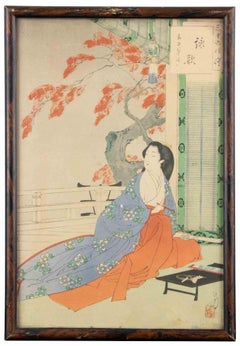
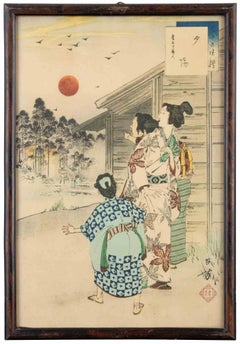
By Jacob Steinhardt
Located in Surfside, FL
Jacob Steinhardt, 1887-1968
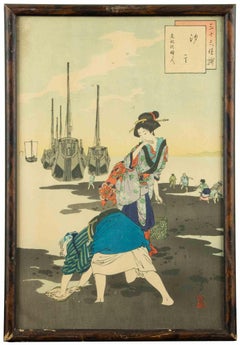
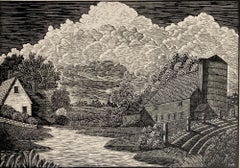
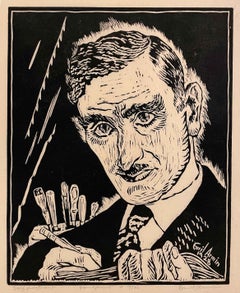
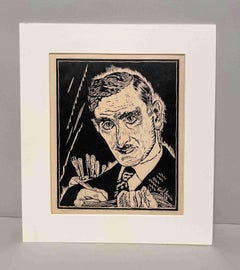
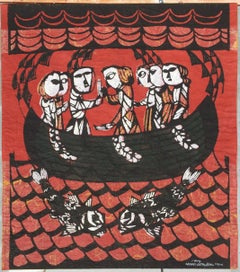
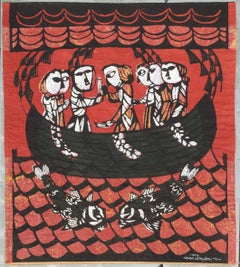
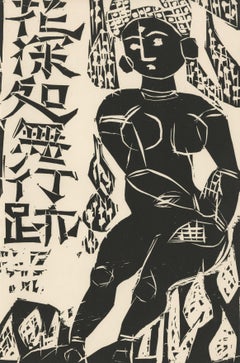
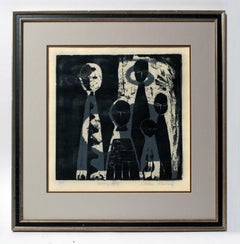
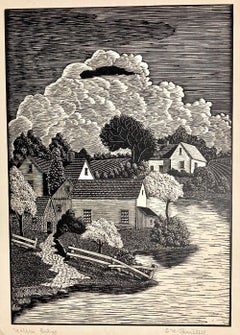
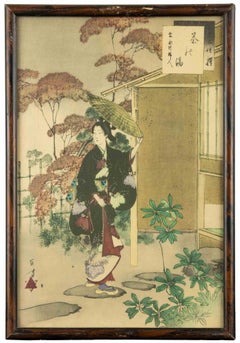
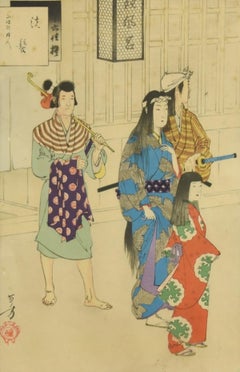
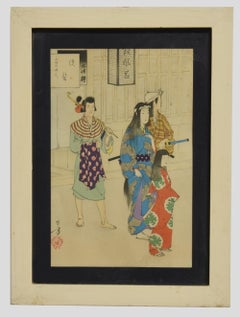
Hand signed in pencil, woodblock print woodcut.
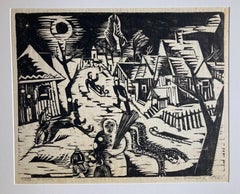
Frame: 22.5" x 18"
Image: 16.75" X 12.5"
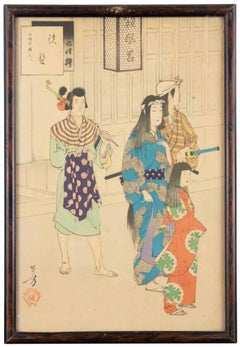
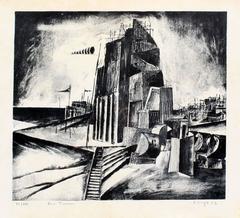
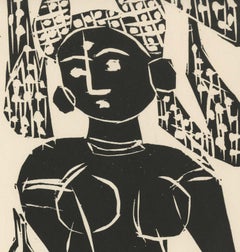
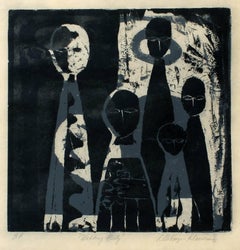
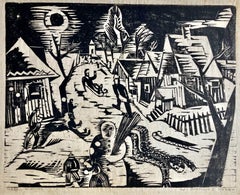
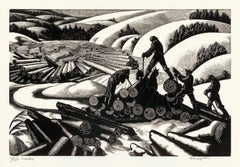
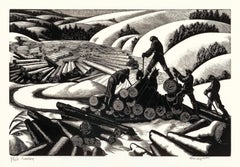
"Psalm"
12/30
Jakob Steinhardt, Painter and Woodcut Artist. b. 1887, Yaacov Steinhardt was born in the then remote, largely Polish town of Zerkow in the Posen District of Germany. (poland/german) Immigrated 1933. Studies: 1906 School of Art, 1906 Studied in Berlin Arts and Crafts School. Berlin; 1907 painting with Lovis Corinth and engraving and etching with Hermann Struck; advanced studies, 1908-10 Paris, with Henri Matisse and Steinlen; 1911 Italy. Teaching: Bezalel, Jerusalem, 1953-57 Director. 1910 Participated in the “New Sezession”, Berlin. 1912 together with Ludwig Meidner and Janthur he founded the "Pathetiker" group very early in the German expressionist movement. Running afoul of the Nazis, he fled to Tel-Aviv and then Jerusalem in the early 30s, showing in “Der Sturm” Gallery. 1914 Exhibited with ludwig Meidner at first Expressionist Exhibition in Berlin. Worked mainly in woodcuts depicting biblical and other Jewish subjects. 1955-58 International awards for his woodcuts. receives graphic commissions from Fritz Gurlitt. 1922 Marries Minni Gumpert. Active in organizing Secession exhibits. 1925 Trips to Mark Brandenburg and Holy Land. Turns primarily to painting; stops work on etchings and lithographs. 1933 Emigrates to the Palestine. 1934 Moves to Jerusalem and opens an art school; attempts some etchings. 1948 Closes the art school and becomes Chairman of Graphics Department, Bezalel School for Arts and Crafts. 1954-57 Director of Bezalel School for Arts and Crafts. Taken up by J. B. Neumann who became the agent for his etchings. Exhibited Sturm Gallery, Herbst-salon. 1914 Outbreak of World War I; Steinhardt enlists in German army. 1916-18 First on Eastern Front in Poland and Lithuania, then after short training period in Berlin, sent to Macedonia. 1917 Exhibition of Lithuanian drawings at Berlin Secession in Spring. Elected member of the Secession.
He often used wood-cutting techniques that were popular amongst German Expressionists. Steinhardt was driven to express ideas clearly and decisively through art.
Amongst the themes found in his work the prophets of the Bible, such as Jonah, are noticeable. Steinhardt identified deeply with Jonah due to his attempt to run from God's call to duty.
Additionally, the image of beggars was often found in Steinhardt's works and in his artistic presentation of the less fortunate, the artist's love for his fellow man becomes evident.
Moreover, the grotesque was a theme noticeable in Steinhardt's earliest pieces. These were fantastical images; it was unclear whether or not they were human or demon. In the 1950's, Steinhardt returned to these images upon learning of the Holocaust of Europe's Jews. At that time he resided in New York and there, in the shadow of the skyscrapers, Steinhardt's reaction to WWII was expressed through his art.
A Collection of Works by Artists of the Land of IsraelThe Bezalel National Museum, Jerusalem 1940 Artists: Shemi, Menahem Rubin...
Category
20th Century Expressionist Mizuno Toshikata Art