Nathaniel Dance-Holland Art
to
1
Overall Width
to
Overall Height
to
1
1
1
1
1
1
1
1
1
1
1
10,587
2,791
2,503
1,387
1
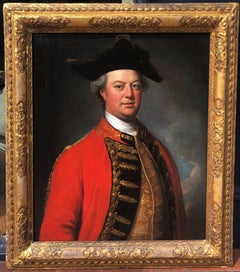
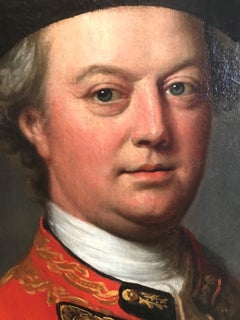
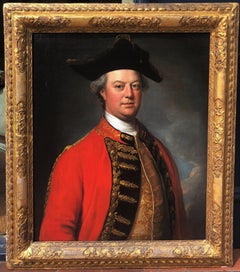
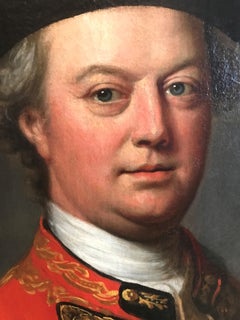
Artist: Nathaniel Dance-Holland
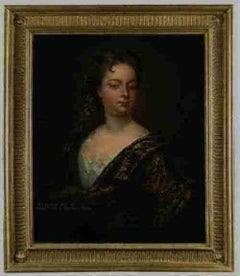
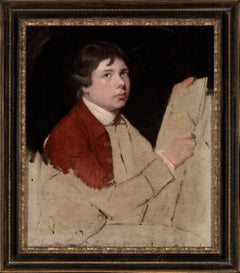
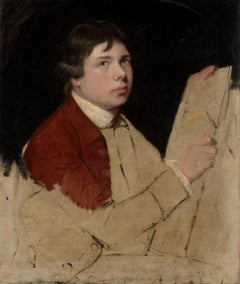
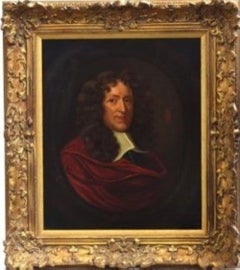
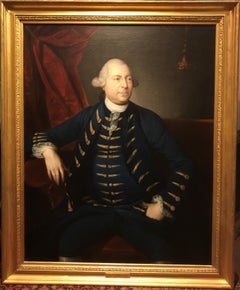
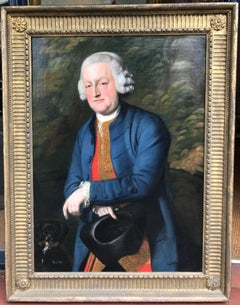
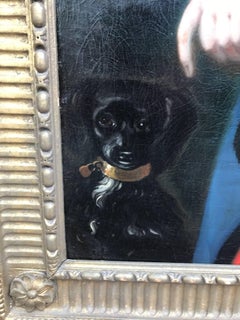
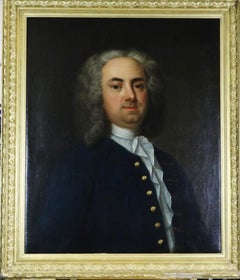
18th Century Oil Painting Portrait of Phillip, 6th Viscount Wenman.
By Nathaniel Dance-Holland
Located in London, GB
Sir Nathaniel Dance-Holland (1750-1811) was an English portrait painter and one of the founding members of the Royal Academy in 1768. Justly celebrated in his lifetime he won several...
Category
Late 18th Century Old Masters Nathaniel Dance-Holland Art
Materials
Oil
Related Items
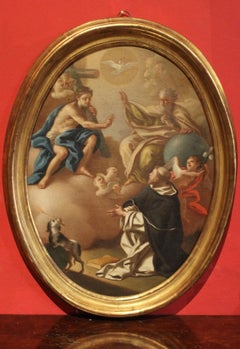
Saint Michael Archangel Tuscany school 16th Century Paint Oil on canvas Italy
Located in Riva del Garda, IT
Saint Michael the Archangel victorious over the Devil
Tuscany - 16th century
Oil on canvas
68 x 52 cm. - In frame 97 x 78 cm.
Of great character is this interesting St. Michael the...
Category
16th Century Old Masters Nathaniel Dance-Holland Art
Materials
Oil
$9,430 Sale Price
20% Off
H 38.19 in W 30.71 in
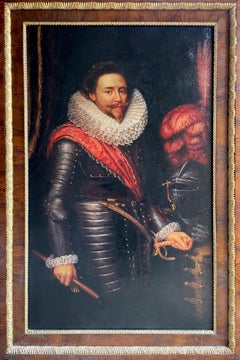
Dutch Old Master Portrait of Maurits, Prince of Orange-Nassau, Oil on Panel
Located in London, GB
In 1607, the Delft city council decided to commission a portrait of Stadholder Maurits of Nassau for the town hall, with Michiel van Mierevelt as the chosen artist due to the passing...
Category
17th Century Old Masters Nathaniel Dance-Holland Art
Materials
Oil, Wood Panel
$10,823
H 37.8 in W 33.47 in D 2.37 in
Antique French Old Master Oil Painting Christ Healing the Sick in Jersusalem
Located in Cirencester, Gloucestershire
Christ Healing the Sick
French School, 19th century
oil on canvas, unframed
canvas: 15 x 20.5 inches
Provenance: private collection, Europe
Condition: some craquelure throughout, mo...
Category
19th Century Old Masters Nathaniel Dance-Holland Art
Materials
Oil
$1,759 Sale Price
30% Off
H 15 in W 20.5 in
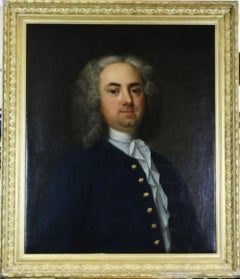
Portrait of a Young Lady in White Dress, probably British c. 1730–1740, painting
Located in London, GB
Portrait of a Young Lady, probably British c.1730–1740
Attributed to Jeremiah Davison (c. 1695–1745)
What makes this portrait immediately compelling is its directness: the sitter’s ...
Category
18th Century Old Masters Nathaniel Dance-Holland Art
Materials
Oil, Canvas
$6,773
H 37.41 in W 32.68 in D 2.76 in
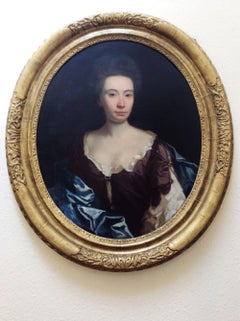
Portrait of Lady in red Dress - British Old Master art female oil painting
By Michael Dahl
Located in Hagley, England
This superb British Old Master portrait oil painting is attributed to circle of noted artist Michael Dahl. Although born in Sweden, Dahl lived and worked most of his life in England ...
Category
1690s Old Masters Nathaniel Dance-Holland Art
Materials
Oil
$11,172
H 37 in W 32 in D 1 in
Portrait Man Pourbus 16/17th Century Paint Oil on canvas Old master Flemish
Located in Riva del Garda, IT
Frans Pourbus (Bruges, 1545 - Antwerp, 1581) circle
Portrait of a gentleman in Renaissance dress with a black doublet and ruff
Late 16th century
Oil on canvas
46 x 32 cm. - 65 x 53...
Category
16th Century Old Masters Nathaniel Dance-Holland Art
Materials
Oil
$6,161 Sale Price
20% Off
H 25.6 in W 20.87 in
Fine 17th Century Dutch Old Master Oil Painting Interior Scene Many Figures
Located in Cirencester, Gloucestershire
Alms for the Poor
by Richard Brakenburg (Flemish 1650-1702)
oil on canvas, unframed
Canvas: 25 x 30 inches
Provenance: private collection, France, extensively inscribed verso
Conditi...
Category
17th Century Old Masters Nathaniel Dance-Holland Art
Materials
Oil, Canvas
$5,530 Sale Price
20% Off
H 25 in W 30 in
French school late 18th Century, Portrait of a young man, oil on metal
Located in Paris, FR
French school late 18th Century
Portrait of a young man
oil on metal
10.2 x 7.7 cm
Framed under glass : 24.4 x 21.8 cm
This small portrait painting, quite original in its technique...
Category
Late 18th Century Old Masters Nathaniel Dance-Holland Art
Materials
Oil
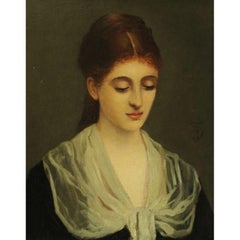
GIRL WITH KITTEN- In the Manner of F.Ballavoine's - Italy Oil on canvas paint
By Giulio Di Sotto
Located in Napoli, IT
Girl with kitten - Giulio Di Sotto Italia 2008 - Oil on canvas cm. 80x70
This painting is Giulio Di Sotto’s personal reinterpretation of the 19th century French painter Jules Frédéric Ballavoine...
Category
Early 2000s Old Masters Nathaniel Dance-Holland Art
Materials
Canvas, Oil
$2,369
H 23.63 in W 19.69 in
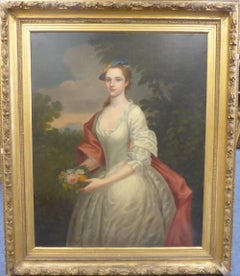
Portrait of a senior naval officer, c. 1740s
By Thomas Hudson
Located in Henley-on-Thames, England
Thomas Hudson (Devon 1701 - London 1779)
Portrait of a senior naval officer, c. late 1740s
Probably a captain or admiral; half-length, holding a telescope, with a warship beyond
Oil on canvas
91.3 x 71.1 cm.; (within frame) 114.3 x 93.8 cm.
(Unsigned)
Provenance:
Christie’s, London, 22 November 1985, lot 105 (as Thomas Hudson);
Private collection, United Kingdom;
Haynes Fine Art, Broadway, Worcestershire;
Where acquired, private collection, United States, 16 August 1988;
Neal Auction, New Orleans, 14 September 2025, lot 302 (as Attributed to Thomas Hudson);
Where acquired by Haveron Fine Art.
Literature:
Bridgeman Art Library, The Bridgeman Art Library (London: The Library, 1995), p. 89
Christie’s, London, Important English Pictures (London: Christie’s, 22 November 1985)
Archival:
Witt Library, Courtauld Institute of Art (no. 061487);
Heinz Archive and Library, National Portrait Gallery, 1725-50, Thomas Hudson: Men Authentic (1) (Box)
This attractive and quintessential half-length is exemplary of Hudson’s leading portrait practice, produced in the years immediately preceding his decade-long dominance over the London market, beginning in 1749. The work is stylistically typical of Hudson's prime 1750s output, displaying a deliberate refinement of his technique: namely the emphasis of directional brushstrokes, which sensitively follow the contours of the facial features. However, since the sitter wears civilian dress and not a naval uniform (introduced officially in April 1748), a late 1740s date of creation is most likely. Displaying the merits of Hudson's evolving handling, a distinctive feathery quality is combined here with a striking chiaroscuro effect, which Hudson borrowed directly from Rembrandt. Amalgamating the rich colouring of the Rococo with a mannered Baroque posing, Hudson renders the senior naval officer with a characteristic presence.
Resting one hand assuredly at his hip, the finely worked telescope illustrates the officer’s seniority; the warship sailing on the horizon beyond provides further indication of his commanding rank. The telescope is held by a hand modelled with sculptural poise, and the typically Van Dyck manner (seen elsewhere, e.g. Princess Amelia Sophia Eleonore of Great Britain, YCBA B2001.2.246) further illustrates Hudson's studied grounding. The sitter wears civilian clothes, and not the naval uniform first introduced in 1748 (which officers afterwards invariably chose to be shown in). His red waistcoat is of a type popular amongst British officers before 1748, perhaps inspired by French naval uniforms. The officer has previously been suggested as Edward Henry Sartorius, of the prominent naval Sartorius family; however, this identification is improbable on biographical and documentary grounds.
Hudson was regularly commissioned by leading naval officers, and produced highly satisfactory portraits praised for their great likeness and genteel swagger. He charged 24 guineas for a standard 50 x 40 inch half-length in the 1750s period, and the present work (somewhat smaller in size) would have cost not much less. Comparable works include those of Admirals of the Fleet George Anson, 1st Baron Anson, and Sir John Norris; Admiral Sir George Pocock; Admiral Sir Peter Warren; Vice-Admiral The Honourable John Byng; and Rear-Admiral Richard Tyrrell. The present portrait is particularly similar in composition to Hudson’s Portrait of a Flag Officer of The White Squadron, which similarly employs the narrative device of a telescope held at a dynamic angle across the composition, with a warship to the left side of the officer’s retracted arm.
Thomas Hudson (Devon 1701 - London 1799)
Thomas Hudson rose to become the leading British portraitist of the mid-18th century, albeit in close competition with his Scottish counterpart Allan Ramsay. Born in Devon, Hudson studied alongside George Knapton under Jonathan Richardson the Elder (marrying his daughter in 1725, expressly against Richardson’s wishes), and inherited a dignified formality jointly derived from Van Loo. His work is first recorded in 1728, and between 1730-40 he practised in Bath and the West Country, where in addition to portrait commissions, he was employed to retouch and reline old pictures. He returned permanently to London thereafter, and devised a series of stock poses to which he would return with variation throughout his career. Beginning in 1745 with the death of Richardson and the departure of Van Loo, Hudson became the city’s most successful portraitist, and embarked on ambitious defining works such as his Portrait of Theodore Jacobsen ‒ not drastically unlike the continental heights of Pompeo Batoni in conception. Profiting from his success, he relocated from Lincoln’s Inn Fields to a house in Great Queen Street previously inhabited by Van Loo, and one door down from Kneller’s old rooms. An exceptionally productive period began in 1749 which lasted until the late 1750s. Among this output were highly praised portraits of the Prince and Princess of Wales, commissions for most of the preeminent aristocrats, and superlative group portraits including Benn’s Club of Aldermen, and those of the Thistlethwayte, Marlborough and Radcliffe families.
Hudson relocated to King Street, Covent Garden, operating a prolific studio operation which resulted in some four hundred paintings ‒ of which at least eighty were engraved. A prodigious assembly of young pupils included Sir Joshua Reynolds (1740-3), Joseph Wright of Derby (1751-3, 1756), Richard Cosway, John Hamilton Mortimer, and the drapery painters Joseph and Alexander van Aken (also employed by Ramsay). As one later reviewer expressed: ‘Hudson, his art may well display to sight / Who gave Mankind a Reynolds and a Wright’ (Miles, ‘Introduction’). The ambitious young Reynolds made many drawings from classical statuary under Hudson’s instruction, and wrote home that, ‘While doing this I am the happiest creature Alive (sic.)’ (Sweetser, p.12). However, he was later dismissed from his pupilage some two years prematurely for refusing to carry a painting to Van Aken’s studio in the rain. It was at this point that Reynolds returned to Plymouth (Devonport), and produced some thirty portraits of the local gentry (including one example presently owned by Haveron Fine Art).
Hudson was one of a number of artists who congregated in Old Slaughter’s Coffee House, alongside Hogarth, Ramsay, Hayman, and Rysbrack. Together they supported Thomas Coram’s Foundling Hospital, of which they each belonged to the 600 governors (in whom Hudson met many of his future clients), and promoted the building as London’s first public space of artistic exhibition. He visited the Netherlands and France for five weeks in 1748 accompanied by St Martin’s Lane colleagues, and was arrested with Hogarth for making drawings of the Bastille fortifications. He afterwards stayed in Rome and Naples in 1752 with Roubiliac, meeting Reynolds twice on the return journey. He returned to England and bought a house at Cross Deep, Twickenham (upstream from Pope’s villa), and made an effective museum of the space. He lived there with his second wife, a wealthy widow named Mrs Fynes. Having been involved with early attempts to establish a royal academy of the arts, Hudson exhibited at the Society of Arts in 1761 and 1766, although he had effectively retired from painting by the latter date. His last painting was in 1767, and he died at Twickenham in January 1779 aged seventy-eight.
Hudson was also exceptional for the extensive collection of artworks which he amassed during his lifetime. The collection was thoroughly impressive in extent, and included outstanding Old Masters: Breughel, Canaletto, van Dyck, Hals, Holbein, Kneller, Lely, Michelangelo, Parmigianino, Poussin, Raphael, Rembrandt, Rubens, Tintoretto, Titian, Vasari, and Velázquez. His earliest recorded purchase was in 1741, and he spent heavily at the sale of his father-in-law, even buying works jointly with Van Aken. Likewise, at the posthumous 1750 sale of Van Aken, Hudson spent £215 on the second day (nearly half that day’s sale total). As a pupil, Reynolds had been sent to bid for Hudson in Lord Oxford’s sale of 1742, and proudly recalled having been greeted with a handshake by Hudson’s friend Pope at another picture sale. Hudson also collected extensively from within his own generation, acquiring works by contemporaries including Gainsborough, Reynolds, Richardson, Rysbrack, Vanderbank, and his predecessor Van Loo. Following his death, the works were dispersed in two sales at Messrs. Langford, with the finer works sold at Christie’s in 1785 after the death of his second wife. However, his connoisseurship was not without flaw ‒ having outbid Benjamin Wilson for a Rembrandt drawing, Wilson etched and printed a new ‘Rembrandt’ plate...
Category
1750s Old Masters Nathaniel Dance-Holland Art
Materials
Oil
Portrait of lady, Mary Hammond in Rich Attire, Jewels, Lace c.1618-22 Historical
By Cornelius Johnson
Located in London, GB
Portrait of Mary Hammond in Sumptuous Attire, Jewels and Lace c.1618-22
Circle of Cornelius Johnson (1593-1661)
This portrait of a lady, presented by Titan Fine Art, is an exquisite example of early seventeenth-century portraiture, remarkable both for the lavishness of its subject’s attire and for the distinguished provenance that has accompanied it across four centuries that adds a rich layer of historical significance. It was once part of the notable collection of Sir William Temple, 1st Baronet (1628–1699) at Moor Park, a stately mansion in Hertfordshire. Temple was a diplomat, essayist, philosopher, and the patron of Jonathan Swift. He was a key participate at an important period in English history, helping not only to negotiate the Triple Alliance, but also the marriage between William of Orange and Princess Mary. His collection at Moor Park was well known in its day, reflecting both his cultivated taste in art and literature and his international connections.
Its fabulous attire, rendered with almost microscopic attention, is not merely decorative but emblematic of a world in which visual display was a language of power. Its provenance, stretching from the English country house and Enlightenment scholarship to modernist circles, forms a microcosm of cultural exchange across four centuries. Thus, the portrait of Mary Hammond stands as both a masterpiece of early seventeenth-century craftsmanship and a witness to the grand narrative of collecting and connoisseurship—a testament to the enduring fascination of beauty, status, and history intertwined.
By tradition the portrait depicts Mary Hammond (born c.1602), who was Sir William Temple’s mother, and the daughter of the royal physician who served James I, Dr John Hammond (c.1555–1617) and whose family owned Chertsey Abbey in Surrey. The woman appears between 18 and 25 years old, and Mary would be about 18–20 when the portrait was painted circa 1620, therefore this matches the apparent age of the sitter and the fashion perfectly.
Mary stood at the intersection of learned/courtly and gentry worlds. On 22 June 1627 she married her first cousin (a common practice for consolidating family wealth and influence during that era.) Sir John Temple (1600-1677) at St Michael, Cornhill in the City of London. The couple resided nearby, at Blackfriars. Her marriage to Sir Temple placed her at the heart of the social and political circles that shaped British history.
The couple had at least five children, and they became highly significant historical figures:
The eldest son, Sir William Temple, 1st Baronet, became a distinguished diplomat, statesman, and essayist, famous for his role in the Triple Alliance and as a patron and mentor to the writer Jonathan Swift – our portrait was in his collection. Their daughter, Martha Temple, later Lady Giffard, was a notable figure in her own right. She became her brother William's first biographer and a respected letter-writer, providing a rare female perspective on the events and high society of the time. Another son, also named Sir John Temple, became Attorney General for Ireland and was involved in the turbulent politics surrounding the English Civil War and the Act of Settlement in Ireland.
Mary died in November 1638 after giving birth to twins and was buried at Penshurst, Kent. The family's connection to Penshurst Place is a major point of interest as this historic manor was the seat of the Sidney family, a major aristocratic and literary dynasty.
The portrait was in the collection of the Mary’s son, Sir William Temple. From there it descended to his daughter, and then to her nephew, the Reverend Nicholas Bacon of Spixworth Park, Norfolk (his mother was Dorothy Temple who died in 1758). Indeed, by this time, many Temple relics were in the collection at Spixworth including the engagement ring of the illustrious Dorothy Osborne, Lady Temple, wife of Sir William Temple. The portrait thus linked two prominent English families—the Temples and the Bacons—for generations. It is listed in a Spixworth Park inventory of 27 October 1910 by the local collector and art historian, Prince Duleep Singh. He described it with characteristic precision as: “No. 69. Lady Half Length, body and face turned towards the sinister, hazel eyes upwards to the dexter, red hair dressed low and over the ears, a jewelled coronet behind, pearl ear-rings tied with black strings. Dress: black, bodice cut low and square, with lace all round the opening and over shoulders, sleeves with double slashes showing red lining and lace under, falling thin pleated lace collar, black strings tied behind it, a jewel suspended on a black string round the neck, and a double row of agate and silver beads all round to the shoulders. M. In brown veined stone frame. Age 30. Date c.1620. It is called ‘Dutch portrait from Moor Park, mentioned by Nicholas Bacon of Coddenham and Shrubland as a very valuable painting.’
A few years later, when Robert Bacon Longe’s executors sold the contents of Spixworth Park (19–22 May 1912), the portrait appeared as lot 262, described as: “A very valuable half-length portrait on panel, ‘Dutch Lady, with deep lace collar and pearl and amethyst necklace, pendant, and ear-rings, and auburn hair, with coronet’ Early Dutch School 1620.” Following this sale the painting entered the collection of David and Constance Garnett, prominent literary figures of the early twentieth century, before being gifted to Andre Vladimervitch Tchernavin by 1949, and subsequently passed by him to the present owners in 1994.
The two great houses associated with the painting, Moor Park and Spixworth Park, further underscore its pedigree. Moor Park, in Hertfordshire, was among the grandest country estates of seventeenth-century England—its gardens famously redesigned by Sir William Temple himself and later influencing landscape design across Europe. Sir William's Temple's secretary was Jonathan Swift, who lived at Moor Park between 1689 and 1699. Swift began to write "A Tale of the Tub" and "The Battle of the Books" at Moor Park.
Spixworth Park, near Norwich, was an Elizabethan country house in Spixworth, Norfolk, located just north of the city of Norwich. It was home to successive generations of the Bacon family, one of Norfolk’s most distinguished dynasties (later, the Bacon Longe family), who were considerable land owners (owning Reymerston Hall, Norfolk, Hingham Hall, Norfolk, Dunston Hall, Norfolk, Abbot's Hall, Stowmarket, and Yelverton Hall, Norfolk). Spixworth Hall and the surrounding parkland remained in the Longe family for 257 years until 1952, when it was demolished.
Rendered with meticulous precision and sumptuous detail, the painting depicts an elegantly dressed woman—her poise, costume, and jewels all communicating a message of wealth, refinement, and social rank. Every brushstroke conveys an artist deeply attuned to the textures of luxury and the nuances of feminine dignity.
The sitter’s attire is nothing short of magnificent. Her bodice and sleeves are fashioned from the finest black silk or satin, the fabric absorbing and reflecting light in equal measure, suggesting both depth and lustre. Around her shoulders lies an opulent lace ruff—a deep, radiating lace collar worked in such intricate detail that it testifies to both the artist’s technical skill and the sitter’s extravagant taste. Lace of this quality, especially Venetian or Flemish bobbin lace, was one of the costliest materials available in early seventeenth-century Europe, its weight worth more than gold, and was a marker of prestige that rivalled jewels in value. The painter has taken great care to delineate every loop and scallop of the lace, achieving an almost tactile realism. Pale skin was also a desired beauty standard, sometimes accentuated with contrasting black ribbons or strings.
Her jewels amplify this display of affluence. Matching earrings and a delicate coronet or jewelled hair ornament with a feather adorn her hair, which is styled in the modest yet fashionable manner of the time. These details are far from decorative excess—they serve as visual emblems of social standing, refinement, and lineage. Portraits of this kind were statements of both identity and aspiration, intended to project a family’s prosperity and moral virtue to posterity.
The portrait was most likely painted in London around 1618-1622. The low-cut, décolletage-revealing neckline was fashionable in the courts of England and France during the late Elizabethan and Jacobean eras (c. 1590s-1610s), this style did not prevail in the public fashion of the Low Countries at this time. This style of lace ruff — delicate needle lace with geometric openwork — was fashionable from c.1615 to 1622, and the jewelled caul (hair net) and lace edging over a stiffened coif are consistent with high-status English women’s portraiture between 1610–1620. The puffed sleeve slash and the use of pink satin beneath black velvet belong squarely to the late Jacobean...
Category
17th Century Old Masters Nathaniel Dance-Holland Art
Materials
Oil, Panel
$20,040
H 33.47 in W 27.17 in D 2.37 in
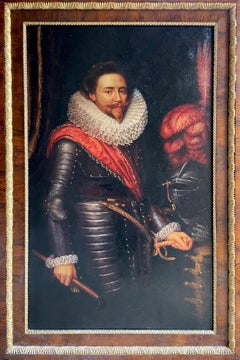
Allegory Poetry Trémolières Paint 18th Century OIl on canvas Old master France
Located in Riva del Garda, IT
Pierre Charles Trémolières (Cholet, 1703 - Paris, 1739)
Allegory of Poetry (the Muse Calliope)
Oil on canvas (86 x 112 cm - In original lacquered frames 122 x 95 cm.)
Work ac...
Category
18th Century Old Masters Nathaniel Dance-Holland Art
Materials
Oil
$10,688 Sale Price
20% Off
H 37.41 in W 48.04 in
Previously Available Items
Magnificent 18th Century Oil Painting Portrait of Scotsman Sir Lawrence Dundas
By Nathaniel Dance-Holland
Located in London, GB
Sir Nathaniel Dance-Holland R.A. (1735-1811)
Portrait of Sir Lawrence Dundas
Oil on canvas
50 x 40 inches (127 x 101 cm)
wood carved and gilded 18th C frame
Provenance:
Christie's South Kensington: Tuesday, April 29, 2014 [Lot 00143]
Old Masters & British Paintings
The Dundas family of Perthshire, Scotland owed their return prosperity to Thomas Dundas...
Category
18th Century Old Masters Nathaniel Dance-Holland Art
Materials
Oil
18th Century Oil Painting Portrait of a Military Officer
By Nathaniel Dance-Holland
Located in London, GB
Sir Nathaniel DANCE-HOLLAND, 1st Baronet RA (1735-1811)
Portrait of an Officer of the 4th Irish Horse
c. 1755-58
Oil on Canvas
36 ½ x 32 inches framed
This majestic portrait was painted by Nathaniel Dance-Holland, one of King George III’s favourite artists. The sitter would have been an officer of significant rank in 4th Irish Horse (many thanks to Andrew Cormack, PhD, FSA, FRHistS for identifying the sitter). The colour and luminosity of his striking uniform and is highlighted by the contrasting grey skies beyond.
Sir Dance-Holland was the third son of the 18th Century London architect George Dance...
Category
1750s Old Masters Nathaniel Dance-Holland Art
Materials
Oil
18th Century Oil Painting Portrait of a Military Officer
By Nathaniel Dance-Holland
Located in London, GB
Sir Nathaniel DANCE-HOLLAND, 1st Baronet RA (1735-1811)
Portrait of an Officer of the 4th Irish Horse
c. 1755-58
Oil on Canvas
36 ½ x 32 inches framed
This majestic portrait was painted by Nathaniel Dance-Holland, one of King George III’s favourite artists. The sitter would have been an officer of significant rank in 4th Irish Horse (many thanks to Andrew Cormack, PhD, FSA, FRHistS for identifying the sitter). The colour and luminosity of his striking uniform and is highlighted by the contrasting grey skies beyond.
Sir Dance-Holland was the third son of the 18th Century London architect George Dance...
Category
1750s Old Masters Nathaniel Dance-Holland Art
Materials
Oil
Nathaniel Dance-holland art for sale on 1stDibs.
Find a wide variety of authentic Nathaniel Dance-Holland art available for sale on 1stDibs. You can also browse by medium to find art by Nathaniel Dance-Holland in oil paint, paint and more. Much of the original work by this artist or collective was created during the 18th century and is mostly associated with the Old Masters style. Not every interior allows for large Nathaniel Dance-Holland art, so small editions measuring 37 inches across are available. Customers who are interested in this artist might also find the work of George Romney, George Morland, and Sir Godfrey Kneller. Nathaniel Dance-Holland art prices can differ depending upon medium, time period and other attributes. On 1stDibs, the price for these items starts at $19,182 and tops out at $19,182, while the average work can sell for $19,182.