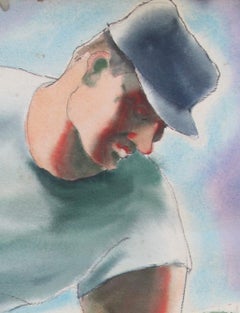
Norman Rockwell More Art

American, 1894-1978

Norman Rockwell is among the most revered painters of the 20th century. His figurative and portrait paintings reflect an innocent and idyllic America described by the artist as "life as I would like it to be." For nearly 50 years, he illustrated the covers of The Saturday Evening Post in a rich and emotive style that gave distinctive personalities to his imagined characters. In total, Norman Rockwell created more than 4,000 works of art over the course of his life.

Rockwell was born in 1894 in New York City. His artistic aspirations took shape early on, and when he was 14 years old, he took classes at the New York School of the Art, which is now the Parsons School of Design. Later, he attended the Art Students League of New York, where he studied under influential painters Thomas Fogarty and George Bridgman. While still a teen, Rockwell became art director of the Boy Scouts of America publication Boys' Life.

At 21, Rockwell moved to New Rochelle, New York, and opened a studio with fellow illustrator Victor Clyde Forsythe. He created illustrations for magazines like Literary Digest and Life before his first cover for The Saturday Evening Post was published when he was 22. In 1939, after moving to Arlington, Vermont, Rockwell pivoted to making the nostalgic paintings of small-town and iconic America for which he is best known — scenes of Christmas dinner, children playing in the street and national treasures like Ruby Bridges and Rosie the Riveter.

In 1943, a speech previously given by President Franklin Roosevelt inspired Rockwell to create his most famous series, “The Four Freedoms,” which was exhibited all over the United States. The series included four pieces entitled Freedom of Speech, Freedom to Worship, Freedom from Want and Freedom from Fear.

Rockwell moved with his family to Stockbridge, Massachusetts, in 1953, where he spent the rest of his life. My Adventures as an Illustrator — the autobiography Rockwell wrote with the help of his son, Thomas — was published in 1960. In 1963, Rockwell ceased working with The Saturday Evening Post and started drawing illustrations for Look magazine.

The world’s largest collection of original Rockwell art can be found at the Norman Rockwell Museum in Stockbridge. The artist was awarded the Presidential Medal of Freedom in 1977, and he passed away peacefully in his home the following year.

On 1stDibs, find a collection of original Norman Rockwell paintings, prints, drawings and other works.

to
2
Overall Width
to
Overall Height
to
2
1
1
1
2

Use search to find more

121
263
225
117
116

Use search to find more

Artist: Norman Rockwell
Signed Norman Rockwell and Mollie Rockwell Correspondence

Signed Norman Rockwell and Mollie Rockwell Correspondence

By Norman Rockwell

Located in New York, NY

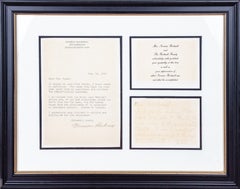
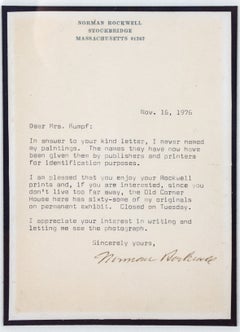
Signed Norman Rockwell Correspondence to Mrs. Kumph, 1976 Letter with Norman Rockwell signature Framed dimensions: 12 x 15 1/8 x 1 in. This letter shows a response from Norman Rockw...

Category

1970s American Modern Norman Rockwell More Art

Materials

Paper, Ink, Pencil

Norman Rockwell - Handwritten signed letter with stamped postmarked envelope '65

Norman Rockwell - Handwritten signed letter with stamped postmarked envelope '65

By Norman Rockwell

Located in New York, NY

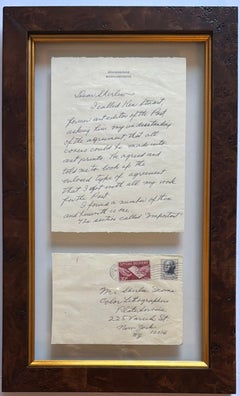
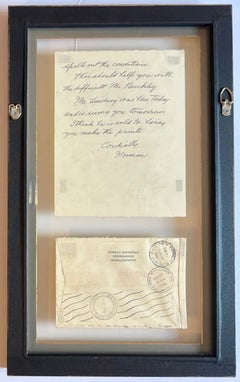
Norman Rockwell - Hand written letter with stamped postmarked envelope Hand written and hand signed letter on artist's personalized stationery with the accompanying stamped and postmarked envelope. Unique. Vintage handwritten, hand signed double-sided letter by Norman Rockwell to his printer at Color Lithographers discussing various matters concerning his prints and editions. This letter was written on the artist's personalized stationery with the accompanying postmarked envelope. True collectors' item. Historic. This letter has been elegantly floated with pocket corners to reveal all four corners, in a museum quality wood frame under double-sided UV plexiglass to reveal both the fronts, as well as the backs of the letter and the original envelope.  Measurements: Frame:  17 inches (vertical) by 10.5 inches (horizontal) by 1 inch  Letter: 8 inches (vertical) by 6 inches (horizontal)  Envelope: 4.25 inches (vertical) by 6 inches (horizontal)  This letter was addressed to Shirlee Scoma (Shirlee Neinskin Scoma - 1917-2007)) whose husband ran Color Lithographers at 225  Varick Street, now known as Hudson Square, Lower Manhattan, which was the famous printing district of the 1960s. It reads as follows: Dear Shirlee, I called Ken Stuart, former art editor of the Post, asking him my understanding of the agreement, that all covers could be made into art prints. He agreed and told me to look up the right type of agreement that I got for all my work with the Post. I found a number of them, and herewith is one.  The section called “Important” spells out the conditions.  This should help you with the difficult Mr. Buckley.  Mr. Lindsay was here today and is seeing you tomorrow. I think he is sold to have you make the prints.  Sincerely,  Norman THE CHARACTERS MENTIONED IN THE LETTER “The difficult Mr. Buckley” was Jim Buckley, the production and technical manager overseeing the lithographic plates at Color Lithographers. In commercial lithography during the 1960s, transferring an original oil painting into multi-color lithographic plates was an incredibly grueling process. Pressmen had to balance ink densities, dot gain, and color separations by hand to get a true match. Norman Rockwell also wanted to assure the printing company before they embarked on this arduous process, that, per his agreement with the Saturday Evening Post, all of their covers could be made into fine art prints - under the conditions described in more detail below.  The "Mr. Lindsay" mentioned in the letter was Donald P. "Don" Lindsay, a prominent bank executive, arts patron, and civic leader from Spokane, Washington In 1963, Don Lindsay—then the CEO of Lincoln First Federal Savings and Loan—wrote directly to Norman Rockwell asking him to create a signature, life-sized painting of a young Abraham Lincoln for the lobby of the bank's brand-new downtown headquarters. Rockwell, who loved painting Lincoln, agreed to the $4,000 commission. Rockwell completed the monumental painting, titled Lincoln the Railsplitter (also known as Young Lincoln), in 1965. Standing over seven feet tall, it became the largest canvas Rockwell ever painted Because the bank wanted to use the image heavily for promotional calendars, prints, logos, and advertisements, high-quality color reproduction was mandatory. When Rockwell notes that "Mr. Lindsay was here today... I think he is sold to have you make the prints," it means Lindsay had traveled out east to visit Rockwell at his home and studio in Stockbridge, Massachusetts. During that visit, they reviewed the final artwork, and Lindsay gave his enthusiastic approval to hire the team at Color Lithographers to handle the critical, high-end print run.  Today, the original oil painting Lindsay commissioned is a famous multi-million dollar piece housed at the Butler Institute of American Art ADDITIONAL CONTEXT/BACKGROUND At the time Norman Rockwell wrote this letter on May 22, 1965,he did not own the copyrights or reproduction rights to his Saturday Evening Post covers. Those rights belonged strictly to the Curtis Publishing Company, the publisher of the magazine, so he was not printing these lithographs independently.  Curtis Publishing fiercely protected its intellectual property. Any fine-art lithographs or prints produced during this time had to be authorized, commissioned, or legally cleared by Curtis Publishing. The project Rockwell was collaborating on with Color Lithographers was a Curtis-sanctioned reproduction print run. Rockwell was brought into the process purely to supervise the artistic quality and sign off on the color proofs, ensuring the prints matched his original oil paintings The widespread market for the hand-signed, limited-edition Norman Rockwell lithographs...

Category

1960s American Realist Norman Rockwell More Art

Materials

Paper, Ink

Related Items
"Letter from James Monroe" James Monroe, American Founding Father, President

"Letter from James Monroe" James Monroe, American Founding Father, President

Located in New York, NY

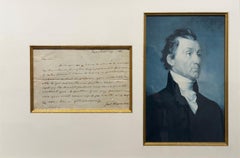
James Monroe Letter from James Monroe, 1796 Signed lower right, dated upper right Ink on paper 5 x 8 inches Provenance Edward Bomsey Autographs, 1993 Considered the last “Founding...

Category

1790s American Realist Norman Rockwell More Art

Materials

Paper, Ink

Forward Pass
Forward Pass

Thomas Hart BentonForward Pass, 1972

$8,000

H 12.75 in W 19.75 in

Forward Pass

By Thomas Hart Benton

Located in New York, NY

Lithograph on wove paper, 1972. Signed by the artist in pencil, lower right. Inscribed "Ed. 250" in pencil, lower left. Published by Associated American Artists, New York. Catalog...

Category

1970s American Realist Norman Rockwell More Art

Materials

Lithograph

Rare 1950s Vintage Syndicated Ink Drawing Cartoon Strip Susie Q Smith Comic Art

Rare 1950s Vintage Syndicated Ink Drawing Cartoon Strip Susie Q Smith Comic Art

By Jerry Walter & Linda Walter

Located in Surfside, FL

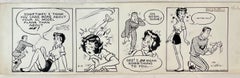
SUSIE Q. SMITH Medium: Newspaper comics Distributed by: King Features Syndicate First Appeared: 1945 Creators: Linda and Jerry Walter 5.5 X 19.5 Dated August 13, 1954 in top right corner. Like her contemporaries, Aggie Mack, Candy and Patsy Walker (before her conversion to a superhero), Susie Q. Smith was a female Archie-type — not exactly an imitator, because Archie, who had started only four years earlier, hadn't yet become popular enough to spawn imitators, but part of his genre. She attended high school, where her teachers often seemed unreasonable to her, interacted with the opposite gender in a typically adolescent way, and her parents didn't completely understand her. And she was cute and perky as only a teenage girl can be. Susie was the star of a comic strip distributed by King Features, the biggest of the comic strip syndicates, whose other offerings have ranged from Jackys Diary to Prince Valiant. King launched the strip in both daily and Sunday form in 1945. Daily, she was only in a panel at first, but it expanded into a full, multi-panel strip on February 7, 1953. In a very odd turn of events, in 1953 the Walters chose to leave King Features behind and hitch their wagon at the McNaught Syndicate. The creators were Harold "Jerry" Walter and his wife, Linda. Jerry was also responsible for Jellybean Jones, who has nothing to do with Jughead Jones's young sister, a modern-day addition to the Archie cast of characters. Together, they did The Lively Ones during the 1960s. Though each was capable of doing both major jobs in comic strip production, their usual working method was for Jerry to dream up the ideas and write the dialog, while Linda did the artwork. The Walters also collaborated on a series of Susie Q. Smith comic books for Dell Comics. Instead of reprinting newspaper strips, these ran new stories by the Walters. Between 1951 and '54, four issues were published as part of the Four Color Comics series, where many minor comic strips, including Dotty Dripple, Timmy and Rusty Riley had found a home. It had no other media spin-offs. Susie Q. Smith had a respectable run in the newspapers, but it ended in 1959. Jerry Walter (1915 - 2007) was an abstract expressionist artist whose output of energetic and colorful paintings were the products of the rich artistic milieu of post-war New York City. He was born Harold Frank Walter in Mount Pleasant, Iowa on November 25, 1915. After graduating from Colgate University in 1937, Walter moved to New York City, where he studied drawing and painting at the New School and the Art Students’ League. Before concentrating seriously on his art, he spent several years as a successful copywriter and idea man for the advertising agencies of J. Walter Thompson, McCann Ericson, and BBDO. During this time, he also worked as a syndicated cartoonist. Collaborating with his wife, Linda, his best-known series was Susie Q. Smith, which first appeared in 1945 and described as a “female Archie type.” Very popular, the cartoon was later the subject of a series of comic books published from 1951 to 1954. After serving in the United States Army for three years during World War II, Walter began to paint seriously. He ascribed his earliest artistic influence to Joan Miró, whose Dog Barking at the Moon (1926) he viewed when he was twelve, the year he published his first cartoon. Walter later wrote that jazz, “the first native expression of so-called modernism” was a strong influence on his work. During the later 1940s, Walters spent time at the Research Studio in Maitland, Florida. Founded in 1937 by artist and architect J. André Smith and supported by the philanthropist Mary Curtis Bok, the Research Studio was a lively colony that hosted prominent artists, including Milton Avery, Ralston Crawford, and Doris Lee. While at the Studio, Walter’s work was purchased by Frank Crowninshield. A founding trustee of the Museum of Modern Art and editor of Vanity Fair, Crowinshield was a noted collector; his collection included important works by Pablo Picasso, Marc Chagall, Henri Matisse, Edgar Degas, George Bellows, and Pierre Bonnard. Returning to New York after his time at the Studio, Walter became an active member of the New York school of the abstract expressionist movement, and in the summer of 1956, Walter exhibited 13 paintings and a selection of drawings at New York’s Chase Gallery. The adroit manipulation of both color and composition evident in his work shows the influence of Abstract Expressionism, particularly Willem de Kooning, Arshile Gorky, and Hans Hofmann. illustrator and female cartoonist Linda Walter was the talented female mind behind the beloved "Susie Q. Smith" comic strip. She played an instrumental role in shaping the cultural landscape through her vibrant illustrations. Known for the timeless charm of the "Susie Q. Smith" comic strip, Linda's artistry brought joy and laughter to countless readers during the 1950s and continues to resonate with fans across generations. She was part of the Woodstock artists community. from Women in Comics: Linda Walter was the artist of newspaper strip Susie Q. Smith, which was written by her husband, Jerry. It was syndicated by King Features Syndicate and ran from 1945 to 1959. The Walters also contributed original Susie Q. Smith stories to Dell's Four Color comic books from 1951 to 1954. From 1964-1965, they created a singled panel comic called The Lively Ones. Vintage Golden Age of Comics era. The Golden Age of Comic Books describes an era in the history of American comic books from 1938 to 1956. During this time, modern comic books were first published and rapidly increased in popularity. The superhero archetype was created. Between 1939 and 1941 Detective Comics (DC) and its sister company, All-American Publications, introduced popular superheroes such as Batman and Robin, Wonder Woman, the Flash, Green Lantern, Doctor Fate, the Atom, Hawkman, Green Arrow and Aquaman. Timely Comics, the 1940s predecessor of Marvel Comics, had million-selling titles featuring the Human Torch, the Sub-Mariner, and Captain America. Another notable series was The Spirit by Will Eisner. Dell Comics' non-superhero characters (particularly the licensed Walt Disney animated-character comics) outsold the superhero comics of the day. The publisher featured licensed movie and literary characters such as Mickey Mouse, Donald Duck, Roy Rogers and Tarzan. Additionally, MLJ's introduction of Archie Andrews in Pep Comics #22 (December 1941) gave rise to teen humor comics, with the Archie Comics...

Category

1950s American Modern Norman Rockwell More Art
Materials

Paper, Ink

Rare 1950s Original Syndicated Ink Drawing Cartoon Strip Susie Q Smith Comic Art

Rare 1950s Original Syndicated Ink Drawing Cartoon Strip Susie Q Smith Comic Art

By Jerry Walter & Linda Walter

Located in Surfside, FL

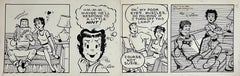
SUSIE Q. SMITH Medium: Newspaper comics Distributed by: King Features Syndicate First Appeared: 1945 Creators: Linda and Jerry Walter 6 X 18.25 Like her contemporaries, Aggie Mack,...

Category

1950s American Modern Norman Rockwell More Art

Materials

Paper, Ink

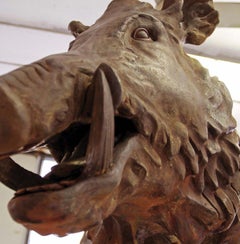
"Wild Boar" contemporary realist bronze cinghiale sculpture, life-size, Fenske

"Wild Boar" contemporary realist bronze cinghiale sculpture, life-size, Fenske

By Ben Fenske

Located in Sag Harbor, NY

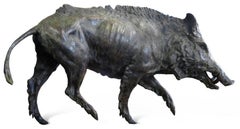
‘Wild Boar’, the striking new bronze sculpture by Ben Fenske and Richard Zinon, vibrantly illustrates the ‘new’ Renaissance currently under way. Ferocio...

Category

21st Century and Contemporary American Realist Norman Rockwell More Art

Materials

Bronze

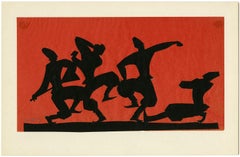
Cossack Dancers
Cossack Dancers

Cossack Dancers

By Wilhelm Hunt Diederich

Located in Myrtle Beach, SC

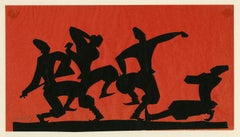
Wilhelm Hunt Diederich, 'Cossack Dancers', cut paper silhouette, c. 1920. Signed 'WHD' in pencil, lower left image. Black, wove, cut paper, laid on ...

Category

1920s American Modern Norman Rockwell More Art

Materials

Laid Paper

Evening over Palisades Park, Oil Painting

Evening over Palisades Park, Oil Painting

By Jesse Aldana

Located in San Francisco, CA

Artist Comments
"The shadow of evening flows over a sandy beach and pauses before scaling the cliffs to meet the moon over Santa Monica's waterfront," shares artist Jesse Ald...

Category

21st Century and Contemporary American Realist Norman Rockwell More Art

Materials

Oil

Vintage Golden Age Syndicated Ink Drawing Cartoon Strip Susie Q Smith Comic Art

Vintage Golden Age Syndicated Ink Drawing Cartoon Strip Susie Q Smith Comic Art

By Jerry Walter & Linda Walter

Located in Surfside, FL

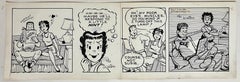
SUSIE Q. SMITH Medium: Newspaper comics Distributed by: King Features Syndicate First Appeared: 1945 Creators: Linda and Jerry Walter 6.5 X 19.5 Like her contemporaries, Aggie Mack, Candy and Patsy Walker (before her conversion to a superhero), Susie Q. Smith was a female Archie-type — not exactly an imitator, because Archie, who had started only four years earlier, hadn't yet become popular enough to spawn imitators, but part of his genre. She attended high school, where her teachers often seemed unreasonable to her, interacted with the opposite gender in a typically adolescent way, and her parents didn't completely understand her. And she was cute and perky as only a teenage girl can be. Susie was the star of a comic strip distributed by King Features, the biggest of the comic strip syndicates, whose other offerings have ranged from Jackys Diary to Prince Valiant. King launched the strip in both daily and Sunday form in 1945. Daily, she was only in a panel at first, but it expanded into a full, multi-panel strip on February 7, 1953. In a very odd turn of events, in 1953 the Walters chose to leave King Features behind and hitch their wagon at the McNaught Syndicate. The creators were Harold "Jerry" Walter and his wife, Linda. Jerry was also responsible for Jellybean Jones, who has nothing to do with Jughead Jones's young sister, a modern-day addition to the Archie cast of characters. Together, they did The Lively Ones during the 1960s. Though each was capable of doing both major jobs in comic strip production, their usual working method was for Jerry to dream up the ideas and write the dialog, while Linda did the artwork. The Walters also collaborated on a series of Susie Q. Smith comic books for Dell Comics. Instead of reprinting newspaper strips, these ran new stories by the Walters. Between 1951 and '54, four issues were published as part of the Four Color Comics series, where many minor comic strips, including Dotty Dripple, Timmy and Rusty Riley had found a home. It had no other media spin-offs. Susie Q. Smith had a respectable run in the newspapers, but it ended in 1959. Jerry Walter (1915 - 2007) was an abstract expressionist artist whose output of energetic and colorful paintings were the products of the rich artistic milieu of post-war New York City. He was born Harold Frank Walter in Mount Pleasant, Iowa on November 25, 1915. After graduating from Colgate University in 1937, Walter moved to New York City, where he studied drawing and painting at the New School and the Art Students’ League. Before concentrating seriously on his art, he spent several years as a successful copywriter and idea man for the advertising agencies of J. Walter Thompson, McCann Ericson, and BBDO. During this time, he also worked as a syndicated cartoonist. Collaborating with his wife, Linda, his best-known series was Susie Q. Smith, which first appeared in 1945 and described as a “female Archie type.” Very popular, the cartoon was later the subject of a series of comic books published from 1951 to 1954. After serving in the United States Army for three years during World War II, Walter began to paint seriously. He ascribed his earliest artistic influence to Joan Miró, whose Dog Barking at the Moon (1926) he viewed when he was twelve, the year he published his first cartoon. Walter later wrote that jazz, “the first native expression of so-called modernism” was a strong influence on his work. During the later 1940s, Walters spent time at the Research Studio in Maitland, Florida. Founded in 1937 by artist and architect J. André Smith and supported by the philanthropist Mary Curtis Bok, the Research Studio was a lively colony that hosted prominent artists, including Milton Avery, Ralston Crawford, and Doris Lee. While at the Studio, Walter’s work was purchased by Frank Crowninshield. A founding trustee of the Museum of Modern Art and editor of Vanity Fair, Crowinshield was a noted collector; his collection included important works by Pablo Picasso, Marc Chagall, Henri Matisse, Edgar Degas, George Bellows, and Pierre Bonnard. Returning to New York after his time at the Studio, Walter became an active member of the New York school of the abstract expressionist movement, and in the summer of 1956, Walter exhibited 13 paintings and a selection of drawings at New York’s Chase Gallery. The adroit manipulation of both color and composition evident in his work shows the influence of Abstract Expressionism, particularly Willem de Kooning, Arshile Gorky, and Hans Hofmann. illustrator and female cartoonist Linda Walter was the talented female mind behind the beloved "Susie Q. Smith" comic strip. She played an instrumental role in shaping the cultural landscape through her vibrant illustrations. Known for the timeless charm of the "Susie Q. Smith" comic strip, Linda's artistry brought joy and laughter to countless readers during the 1950s and continues to resonate with fans across generations. She was part of the Woodstock artists community. from Women in Comics: Linda Walter was the artist of newspaper strip Susie Q. Smith, which was written by her husband, Jerry. It was syndicated by King Features Syndicate and ran from 1945 to 1959. The Walters also contributed original Susie Q. Smith stories to Dell's Four Color comic books from 1951 to 1954. From 1964-1965, they created a singled panel comic called The Lively Ones. Vintage Golden Age of Comics era. The Golden Age of Comic Books describes an era in the history of American comic books from 1938 to 1956. During this time, modern comic books were first published and rapidly increased in popularity. The superhero archetype was created. Between 1939 and 1941 Detective Comics (DC) and its sister company, All-American Publications, introduced popular superheroes such as Batman and Robin, Wonder Woman, the Flash, Green Lantern, Doctor Fate, the Atom, Hawkman, Green Arrow and Aquaman. Timely Comics, the 1940s predecessor of Marvel Comics, had million-selling titles featuring the Human Torch, the Sub-Mariner, and Captain America. Another notable series was The Spirit by Will Eisner. Dell Comics' non-superhero characters (particularly the licensed Walt Disney animated-character comics) outsold the superhero comics of the day. The publisher featured licensed movie and literary characters such as Mickey Mouse, Donald Duck, Roy Rogers and Tarzan. Additionally, MLJ's introduction of Archie Andrews in Pep Comics #22 (December 1941) gave rise to teen humor comics, with the Archie Comics...

Category

1950s American Modern Norman Rockwell More Art
Materials

Paper, Ink

Milwaukee Handicraft Project WPA

Milwaukee Handicraft Project WPA

Located in Los Angeles, CA

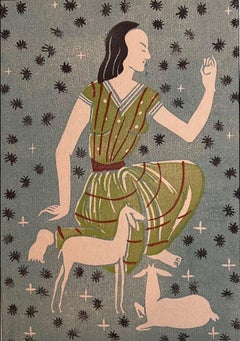
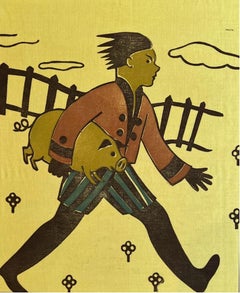
Milwaukee Handicraft Project, Applied Design Blockprinted Textiles Volume VI Supplement, c. 1935 - 1942, twelve block printed designs on linen, images are various sizes, each is mounted in its original folder which measures 24 x 19 inches, all bear the Milwaukee Handicraft Project label, various designers, including Barbara Warren (1915 - 2005) ("Checkered Flower" and perhaps others), includes original portfolio binder The Milwaukee Handicraft Project (MHP) was the most prolific and successful of the decorative arts projects of the Works Progress Administration (WPA). It served as a model for many other similar projects across the United States and attracted the attention of thought leaders as diverse as Frank Lloyd Wright and First Lady Eleanor Roosevelt. Designed with the dual goals of providing work for underprivileged women and the creation of well-designed household objects, the MHP began in 1935 under the direction of Elsa Ulbricht...

Category

1930s American Modern Norman Rockwell More Art
Materials

Textile, Linen, Linocut, Woodcut

Last Wave, Oil Painting

Last Wave, Oil Painting

By Jesse Aldana

Located in San Francisco, CA

Artist Comments
Artist Jesse Aldana paints a dramatic shoreline view of the Santa Monica Bay. A surfer lines up a final ride as evening deepens under heavy blanket clouds. In...

Category

21st Century and Contemporary American Realist Norman Rockwell More Art

Materials

Oil

Beauty Within, Oil Painting

Jo GalangBeauty Within, Oil Painting, 2022

$900

H 20 in W 16 in D 0.62 in

Beauty Within, Oil Painting

By Jo Galang

Located in San Francisco, CA

Artist Comments
Artist Jo Galang paints bright yellow flowers growing in the forest. Abundant green ferns fill the natural surroundings. She demonstrates beauty and splendor ...

Category

21st Century and Contemporary American Realist Norman Rockwell More Art

Materials

Oil

At the Clinton Station Diner, Oil Painting

At the Clinton Station Diner, Oil Painting

By Onelio Marrero

Located in San Francisco, CA

Artist Comments
The Clinton Station Diner is one of New Jersey's landmark diners. I was seated in this particular room that is actually a salvaged train dining car. I could n...

Category

21st Century and Contemporary American Realist Norman Rockwell More Art

Materials

Oil

Weeds through the Cracks, Oil Painting

Weeds through the Cracks, Oil Painting

By Jay Jensen

Located in San Francisco, CA

Artist Comments
This is another view of Campobello Island. I was inspired by the long shadows created in the late afternoon light and by the fact that it looks untouched by h...

Category

21st Century and Contemporary American Realist Norman Rockwell More Art

Materials

Oil

Portrait (Untitled)

Portrait (Untitled)

Located in Los Angeles, CA

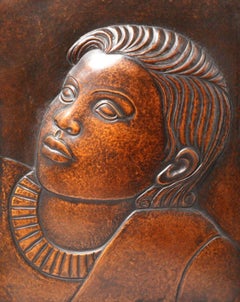
Portrait (Untitled), c. mid 1930s, hammered copper, 11 1/2 x 8 1/2 inches Beryl McCarthy Wynnyk was a California-based painter, sculptor, and craftsperson. She studied at the Califo...

Category

1930s American Modern Norman Rockwell More Art
Materials

Copper

The Fisherman
The Fisherman

Kenneth B WalshThe Fisherman

$2,100

H 36.5 in W 27.5 in D 1 in

The Fisherman

By Kenneth B Walsh

Located in East Hampton, NY

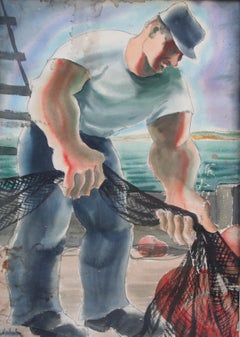
Fisherman Watercolor Comes Framed (see photo) About the Artist: Kenneth B Walsh (1922-1980) In the 1950s, Kenneth Bonar Walsh came to Montauk fr...

Category

1970s American Modern Norman Rockwell More Art
Materials

Watercolor

Norman Rockwell more art for sale on 1stDibs.

Find a wide variety of authentic Norman Rockwell more art available for sale on 1stDibs. You can also browse by medium to find art by Norman Rockwell in ink, lithograph, newsprint and more. Not every interior allows for large Norman Rockwell more art, so small editions measuring 13 inches across are available. Customers who are interested in this artist might also find the work of Dwight Smith, Nick Savides, and Mandy Main. Norman Rockwell more art prices can differ depending upon medium, time period and other attributes. On 1stDibs, the price for these items starts at $4,000 and tops out at $4,000, while the average work can sell for $4,000.

Questions About Norman Rockwell More Art
  • 1stDibs ExpertMay 30, 2024
    Norman Rockwell is famous for his work as an artist. In fact, he is among the most revered painters of the 20th century. His figurative and portrait paintings reflect an innocent and idyllic America described by the artist as "life as I would like it to be." For nearly 50 years, he illustrated the covers of The Saturday Evening Post in a rich and emotive style that gave distinctive personalities to his imagined characters. In total, Norman Rockwell created more than 4,000 works of art over the course of his life. On 1stDibs, explore a collection of Norman Rockwell art.
  • 1stDibs ExpertNovember 4, 2024
    What Norman Rockwell paintings are worth depends on their size, condition and historical significance, as well as other factors. In 2013, his 1951 painting Saying Grace fetched $46 million at a New York City auction. Rockwell was among the most revered painters of the 20th century. His figurative and portrait paintings reflect an innocent and idyllic America, described by the artist as "life as I would like it to be." For nearly 50 years, he illustrated the covers of The Saturday Evening Post in a rich and emotive style that gave distinctive personalities to his imagined characters. In total, Rockwell created more than 4,000 works of art over the course of his life. If you own a Rockwell painting, seek the opinion of a certified appraiser or experienced art dealer to get an idea of how much it may be worth. Find a selection of Norman Rockwell art on 1stDibs.
  • 1stDibs ExpertNovember 4, 2024
    Yes, some Norman Rockwell prints are worth something. Signed limited edition prints by the American artist that are in pristine condition may sell for thousands of dollars in some cases. Generally, the historical significance, image quality, medium, availability and condition determine the selling price of Rockwell prints. If you own one, consider having a certified appraiser or knowledgeable art dealer help you with the valuation process. Explore a selection of Norman Rockwell art on 1stDibs.
  • 1stDibs ExpertApril 5, 2022
    Norman Rockwell was renowned for painting covers for the Saturday Evening Post magazine. He painted 321 covers total in a collaboration spanning almost five decades. Shop an array of authentic Norman Rockwell works from top sellers around the world on 1stiDibs.
  • 1stDibs ExpertSeptember 16, 2024
    How much a Norman Rockwell artist's proof is worth depends on its condition, size, history and other factors. Generally, Rockwell's artist's proofs are worth more than standard limited edition prints of the same subject and quality because fewer were made, and selling prices for them are often in the thousands of dollars. Rockwell is among the most revered painters of the 20th century. His figurative and portrait paintings reflect an innocent and idyllic America described by the artist as "life as I would like it to be." For nearly 50 years, he illustrated the covers of The Saturday Evening Post in a rich and emotive style that gave distinctive personalities to his imagined characters. In total, Rockwell created more than 4,000 works of art throughout his life. To get a valuation performed on your artist's proof, use the services of a certified appraiser or experienced art dealer. On 1stDibs, shop a wide variety of Norman Rockwell art.
  • 1stDibs ExpertApril 5, 2022
    Norman Rockwell painted his first cover for The Saturday Evening Post in 1916. Over the next 46 years, he would go on to paint 300 covers for the magazine. You’ll find a variety of Norman Rockwell art pieces from some of the world’s top sellers on 1stDibs.