By Novella Parigini
Located in Roma, IT
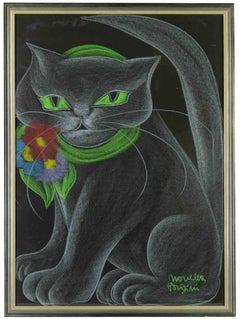
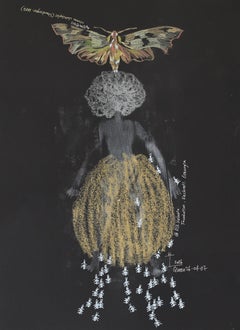
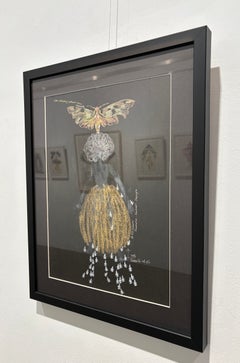
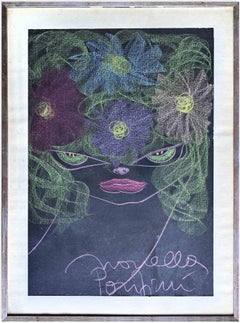
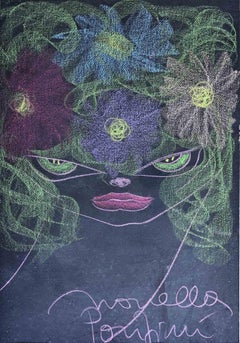
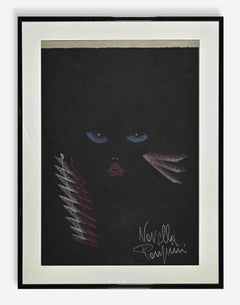
Portrait is an artwork realized by Novella Parigini in 1950s.
Chalk and Oil Pastel on cardboard.
82 x 62 cm; with frame.
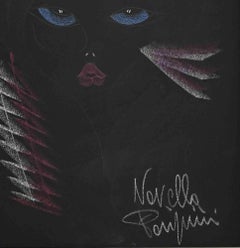
Hads igned lower left part.
Good conditions!
Novella Parigini (Chiusi, 29 April 1921 – Rome, 30 September 1993) was an Italian painter.
She established herself in the world of Parisian existentialism; characterizing aspects of his art are the cat's eyes in male and female figures, pronounced cheekbones, turgid and fleshy lips, large breasts, the prototype of today's woman and the repetition of
subjects which anticipated those processes of massification which only a few years later artists such as Andy Warhol have revived. Educated in the cult of beauty and hedonism inherited from her aristocratic Sienese family, her experience mixes with French
existentialism, feminism and surrealism, and then flows into a pioneering and intellectual form of Pop art. Snobbish and aristocratic, inserted in the Parisian intellectual circles, in the immediate post-war period, she appears walking unscrupulously through the
Parisian streets with "heretical" clothing, becoming the protagonist of social life.
However, her existentialism differs from that of her friend Jean-Paul Sartre when this takes on political connotations; for Novella Parigini being an existentialist also meant being free from any political as well as sentimental tendency or bond, hers was a freedom
that moved only towards the emancipation of man from the authority of conceptual forms given as absolute which dominate thought by amputating it of its infinite possibilities and only from this awareness, he says, can that total freedom arise which then takes
the form of choice and responsibility. Her transgressions, her excesses, were a way to experiment with the new possibilities offered by free thought and not a subversive or revolutionary attitude. When asked what she meant by Art, she replied: «An explication
of thought, not of feeling, ... of thought». As regards surrealism in Novella Parigini, this takes on different characteristics from those theorized by André Breton, it had nothing to do with the unconscious and the dreamlike, it was just an expressive form to
express thought freely, a choice however influenced by his friendship with Salvador Dalí, who was also his teacher.
You have exhibited in many cities around the world, including in China; the French post office issued...
Category
1950s Contemporary Novella Parigini Art
MaterialsChalk, Oil Pastel, Cardboard