Paul Gavarni Folk Art

French, 1804-1899

Paul Gavarni was the nom de plume of Sulpice Guillaume Chevalier, a French illustrator who was born in Paris. The story is told that he took his name from Gavarnie in Luz-Saint-Sauveur, where he had taken a journey into the Pyrenees. His first published drawings were for the magazine Le Journal des Dames et des Modes. At the time, Gavarni was barely 30-years old. His sharp and witty drawings gave these generally commonplace and unartistic figures a life-likeness and an expression which soon won him a name in fashionable circles. He gradually gave greater attention to this more congenial work, and ultimately stopped working as an engineer to become the director of Journal Des Gens du Monde. Gavarni followed his interests and began a series of lithographed sketches in which he portrayed the most striking characteristics, foibles and vices of the various classes of French society. The letterpress explanations attached to his drawings were short, but were forcible and humorous, if sometimes trivial, and were adapted to the particular subjects. At first, he confined himself to the study of Parisian manners, more especially those of the Parisian youth. Most of his best work appeared in Le Charivari. Some of his most scathing and most earnest pictures, the fruit of a visit to London, appeared in L'Illustration. He also illustrated Honoré de Balzac's novels and Eugène Sue's Wandering Jew. Among his illustrated works were Les Lorettes, Les Actrices, Les Coulisses, Les Fasizionables, Les Gentilshommes bourgeois, Les Artistes, Les Débardeurs, Clichy, Les Étudiants de Paris, Les Baliverneries Parisiennes, Les Plaisirs champêtres, Les Bals masqués, Le Carnaval, Les Souvenirs du Carnaval, Les Souvenirs du bal Chicard, La Vie des Jeunes Hommes and Les Patois de Paris. He had now ceased to be the director of Des Gens du monde but he was engaged as an ordinary caricaturist of Le Charivari and, while making the fortune of the paper, he made his own. His name was exceedingly popular and his illustrations for books were eagerly sought for by publishers. A single frontispiece or vignette was sometimes enough to secure the sale of a new book. Always desiring to enlarge the field of his observations, Gavarni soon abandoned his once-favorite topics. He no longer limited himself to such types as the Lorette and the Parisian student or to the description of the noisy and popular pleasures of the capital but turned his mirror to the grotesque sides of family life and of humanity at large. But while showing the same power of irony as his former works, enhanced by a deeper insight into human nature, they generally bear the stamp of a bitter and even sometimes gloomy philosophy. At one point Gavarni was imprisoned for debt in the debtors' prison of Clichy. After his release, he published his experiences in a work called L'Argent (Money). Gavarni visited England in 1849. On his return, his impressions were published in the book Londres et Les Anglais, illustrés par Gavarni (1862) by Émile de la Bédollière. Most of these last compositions appeared in the weekly paper L'Illustration. In 1857, he published in one volume the series entitled Masques et visages and in 1869, about two years after his death, his last artistic work, Les Douze Mois, was given to the world. Gavarni was much engaged, during the last period of his life, in scientific pursuits and this fact must perhaps be connected with the great change which then took place in his manner as an artist. He sent several communications to the Académie des Sciences, and until he died on 23 November 1866, he was eagerly interested in the question of aerial navigation. It is said that he made experiments on a large scale to find the means of directing balloons, but it seems that he was not so successful in this line as his fellow artist, the caricaturist and photographer, Nadar.
to
1
1
1
1
1
1
1
1
1
1
1
119
358
127
100
82
Creator: Paul Gavarni
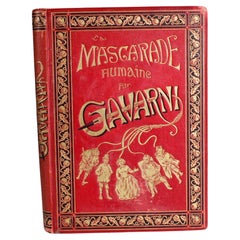
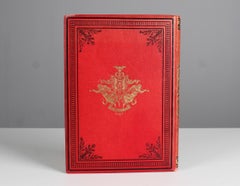
Antique Leather Book "La Mascarade Humaine", By Gavarni, 1881s, France

Antique Leather Book "La Mascarade Humaine", By Gavarni, 1881s, France

By Paul Gavarni

Located in Greven, DE

Wonderful rare antique leather book, original from 1881 by Paul Gavarni. Illustrated by Gavarni are: Histoire de politiquer ; Les propos de Thomas Vireloque ; Les Bohèmes ; Manières ...

Category

19th Century French Antique Paul Gavarni Folk Art

Materials

Leather, Paper

Related Items
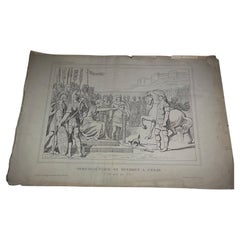
Antique French Engraving, "Vercingétorix Surrenders to Caesar"  - 2Y357

Antique French Engraving, "Vercingétorix Surrenders to Caesar" - 2Y357

$319Sale Price|70% Off

H 20.48 in W 15.36 in D 0.2 in

Antique French Engraving, "Vercingétorix Surrenders to Caesar" - 2Y357

Located in Bordeaux, FR

Capture a piece of French history with this antique engraving, "Vercingétorix Surrenders to Caesar," dating to the late 19th century. This striking piece is part of Histoire de Franc...

Category

Late 19th Century French Antique Paul Gavarni Folk Art

Materials

Paper

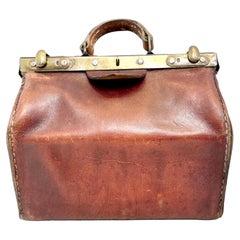
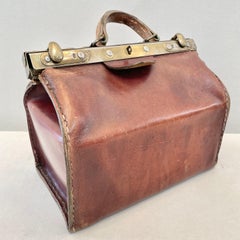
Leather Doctors Bag, 1940s France

Leather Doctors Bag, 1940s France

$1,200

H 10 in W 11 in D 7 in

Leather Doctors Bag, 1940s France

By Jacques Adnet

Located in Los Angeles, CA

Substantial cowhide bag with brass hardware and closure. Used a travel bag for physicians to play tools and prescriptions in. Perfect as a purse or for tra...

Category

1940s American Colonial Revival Vintage Paul Gavarni Folk Art

Materials

Brass

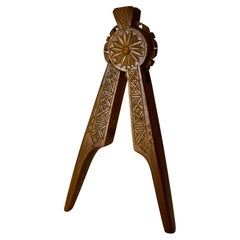
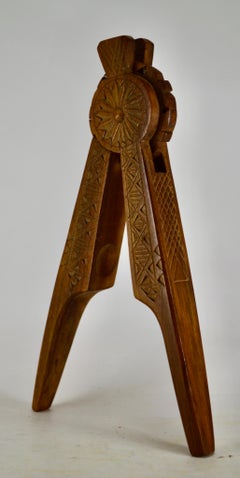
An antique wooden nutcracker - France early XXth

An antique wooden nutcracker - France early XXth

$355Sale Price|20% Off

H 7.88 in W 2.37 in D 0.79 in

An antique wooden nutcracker - France early XXth

Located in SOTTEVILLE-LÈS-ROUEN, FR

A magnificent antique wooden nutcracker, a true piece of folk art from the early 20th century. Crafted with exceptional artisanal skill, thi...

Category

Early 20th Century French Folk Art Paul Gavarni Folk Art

Materials

Wood

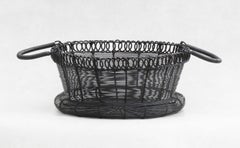
Antique French Woven Wire Basket, circa 1900

Antique French Woven Wire Basket, circa 1900

$263Sale Price|50% Off

H 5.52 in Dm 12.01 in

Antique French Woven Wire Basket, circa 1900

Located in Trensacq, FR

Charming handcrafted Provincial French woven wire work basket, circa 1900. A well-executed nicely shaped 'pannier' with moveable handles and decorative loop...

Category

Early 20th Century French French Provincial Paul Gavarni Folk Art

Materials

Wire

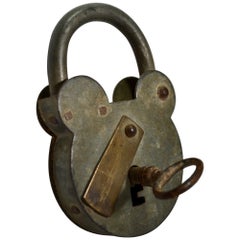
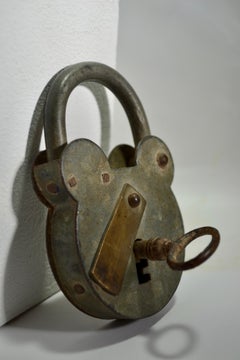
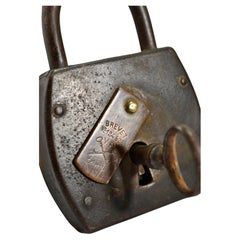
An antique large padlock & skeleton key - France - Early XXth century.

An antique large padlock & skeleton key - France - Early XXth century.

Located in SOTTEVILLE-LÈS-ROUEN, FR

Antique large padlock accompanied by its original functional skeleton key.

Category

Early 20th Century French Paul Gavarni Folk Art

Materials

Steel

An antique large padlock & skeleton key - France - Early XXth century.

An antique large padlock & skeleton key - France - Early XXth century.

Located in SOTTEVILLE-LÈS-ROUEN, FR

Antique large padlock accompanied by its original functional skeleton key.

Category

Early 20th Century French Paul Gavarni Folk Art

Materials

Steel

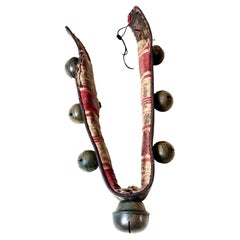
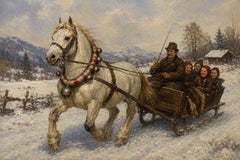
Antique Horse Sleigh Bells on Original Leather Collar, c. 1880–1900

Antique Horse Sleigh Bells on Original Leather Collar, c. 1880–1900

Located in Hannover, DE

An exceptionally rare and highly decorative antique horse bell collar dating to approximately 1880–1900. This authentic harness ornament features seven hand-crafted bells mounted on its original padded leather collar, retaining a remarkable level of originality and historic character. Unlike the utilitarian bell collars commonly found on working horses, the refined construction, carefully proportioned bells, and superior materials strongly suggest that this example was created for ceremonial use, festive processions, winter sleigh rides, or special occasions. The overall quality is notably above that of standard agricultural equipment from the period. The collar is fitted with six smaller side bells and one substantially larger central bell, creating a visually balanced and acoustically impressive arrangement. The bells display a beautiful aged surface with an untouched patina developed over more than a century. The original red and cream padded lining remains present, adding further authenticity and visual appeal. Particularly noteworthy is the outstanding craftsmanship throughout. The leather construction, bell mounting, proportions, and finishing details reflect the work of a skilled maker and demonstrate a level of quality rarely encountered today. Complete original examples of this caliber have become increasingly difficult to find. The collar remains in original condition and exhibits age-appropriate wear consistent with over a century of use and storage. Two bells show damage resulting from age and historical use. One of these bells has been professionally stabilized using an industrial-grade adhesive suitable for metal restoration, preserving the visual integrity of the piece while respecting its historic character. The repairs and condition details are clearly shown in the accompanying photographs. Today, this piece represents not only an important example of equestrian history but also a striking decorative object ideal for collectors of antique horse tack...

Category

1880s German Country Antique Paul Gavarni Folk Art

Materials

Brass, Bronze

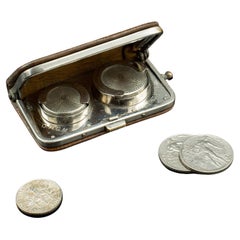
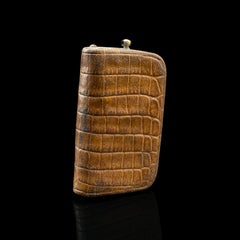
Antique Gentleman's Money Clip, German, Leather, Pocket Coin Holder, Edwardian

Antique Gentleman's Money Clip, German, Leather, Pocket Coin Holder, Edwardian

Located in Hele, Devon, GB

This is an antique gentleman’s money clip. A German, leather and silver plated pocket coin holder, dating to the Edwardian period, circa 1910.   Fascinating and tactile pocket item, ...

Category

Early 20th Century German Edwardian Paul Gavarni Folk Art

Materials

Silver Plate

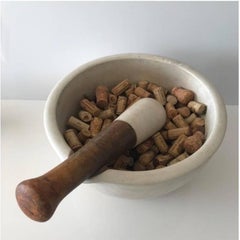
Antique French Limestone Medicine Bowl

Antique French Limestone Medicine Bowl

Located in Miami Beach, FL

Designed and produces, 18th century Limestone Measures: 8" height, 14.5" diameter Provenance: Flea Market Paris.  

Category

Early 18th Century French Neoclassical Antique Paul Gavarni Folk Art

Materials

Limestone

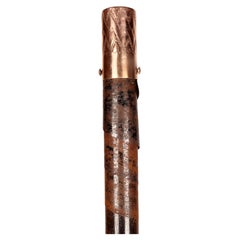
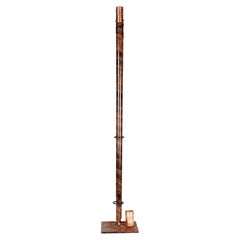
Antique Pocket Cane System Walking Stick, Knurled Steel, France, 1878

Antique Pocket Cane System Walking Stick, Knurled Steel, France, 1878

Located in Milan, IT

System walking stick: Pocket cane. In a small metal box, knurlel steel, tube shape, a stick is inserted. Based on the principle of the steel-spring coi...

Category

Late 19th Century French Other Antique Paul Gavarni Folk Art

Materials

Metal, Steel

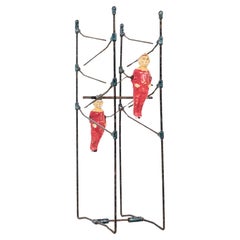
Antique French Folk Art Circus Tumbling Acrobat Toy Model, C.1920

Antique French Folk Art Circus Tumbling Acrobat Toy Model, C.1920

Located in London, GB

An incredibly charming tumbling acrobat toy made in France by M.P.F Paris. c.1920. A decorative and fully functional piece. The hand painted papier mâché circus acrobats perpetual...

Category

Early 20th Century French Industrial Paul Gavarni Folk Art

Materials

Metal

Paul Gavarni folk art for sale on 1stDibs.

Paul Gavarni folk art are available for sale on 1stDibs. These distinctive items are frequently made of paper and are designed with extraordinary care. If you’re looking for additional options, many customers also consider folk art by Dominique Pouchain, Louis Vuitton, and Albert Chubac. Prices for Paul Gavarni folk art can differ depending upon size, time period and other attributes — on 1stDibs, these items begin at $437 and can go as high as $437, while a piece like these, on average, fetch $437.