Paul Hermann Wagner Art

to
2
Overall Width
to
Overall Height
to
2
2
1
1
2
2
2
2
1
1
2
2
11,047
2,850
2,494
1,431
2
Artist: Paul Hermann Wagner
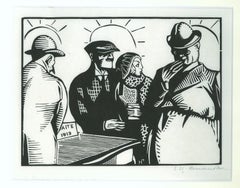
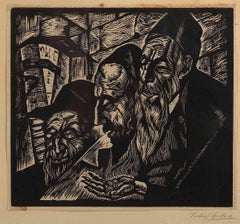
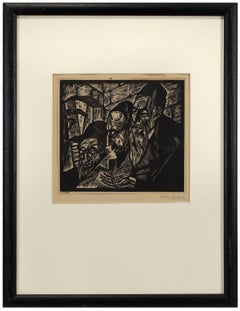
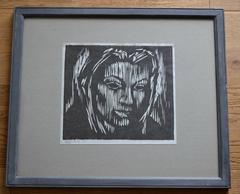
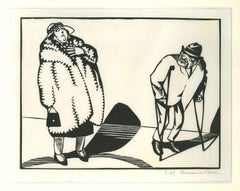
Contrasts - Original Woodcut by Paul Hermann - 1929

Contrasts - Original Woodcut by Paul Hermann - 1929

By Paul Hermann Wagner

Located in Roma, IT

Constasts is an original modern artwork realized in 1929 in France by Paul Hermann (1879 - 1969). Original woodcut print on paper. Dated and Hand-signed by the artist in pencil on...

Category

1920s Art Deco Paul Hermann Wagner Art

Materials

Woodcut

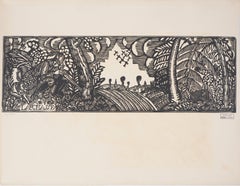
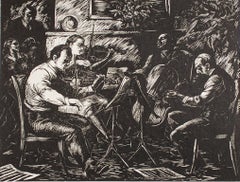
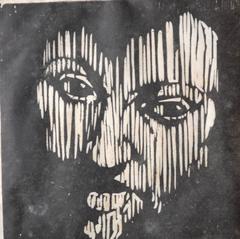
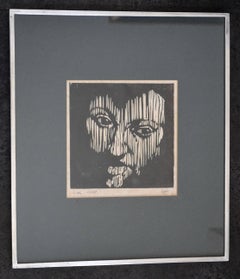
Figures - Original Woodcut by Paul Hermann - 1929

Figures - Original Woodcut by Paul Hermann - 1929

By Paul Hermann Wagner

Located in Roma, IT

Figures is an original modern artwork realized in 1929 in France by Paul Hermann (1879 - 1969). Original woodcut print on paper. Dated and Hand-signed by the artist in pencil on t...

Category

1920s Modern Paul Hermann Wagner Art

Materials

Woodcut

Related Items
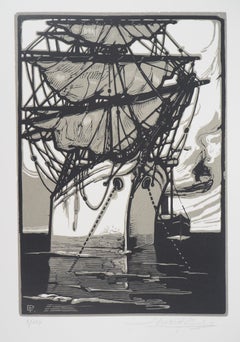
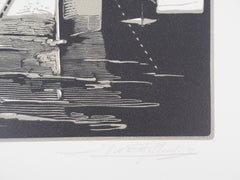
The Sailboat - Original woodcut, Handsigned

The Sailboat - Original woodcut, Handsigned

Located in Paris, IDF

Edward PELLENS The Sailboat, 1922 Original woodcut Handsigned in pencil Numbered /154 On vellum 32.5 x 25.5 cm (c. 13 x 10 in) Bears the blind stamp of t...

Category

1920s Art Deco Paul Hermann Wagner Art

Materials

Woodcut

'Dancers' — 1930s American Modernism

'Dancers' — 1930s American Modernism

By Charles Turzak

Located in Myrtle Beach, SC

Charles Turzak, 'Dancers', 1939, wood engraving, edition 100. Signed, titled, and numbered 72/100 in pencil. A fine, richly-inked impression, on off-white Japan paper, with full marg...

Category

Mid-20th Century Art Deco Paul Hermann Wagner Art

Materials

Woodcut

Father Stefan Fridolin, "Schatzbehalter" (Treasury of the True Riches

Father Stefan Fridolin, "Schatzbehalter" (Treasury of the True Riches

Located in Fairlawn, OH

Father Stefan Fridolin, "Schatzbehalter" (Treasury of the True Riches of Salvation): The 30th Figure - Astrological Diagram with Scene of the Nativity Woodcut, 1491 Unsigned, as issued Published by Anton Koberger Diagram has Zodiac signs on outer ring, planets in the lower registers, and Nativity in the center. Condition: Very good for a 15h century woodcut, with the usual slight age stains Sheet size: 11 1/2 x 8 1/4 inches Wogelmut was the teacher of Albrecht Durer and employed young Durer in many project of the last decade of the 15th century. Michel Wolgemut Biography Wolgemut trained with his father Valentin Wolgemut (who died in 1469 or 1470) and is thought to have been an assistant to Hans Pleydenwurff in Nuremberg. He worked with Gabriel Malesskircher in Munich early in 1471, leaving the city after unsuccessfully suing Malesskircher's daughter for breach of contract, claiming she had broken off their engagement. He then returned to his late father's workshop in Nuremberg, which his mother had maintained since Valentin's death. In 1472 he married Pleydenwurff's widow and took over his workshop;[3] her son Wilhelm Pleydenwurff worked as an assistant, and from 1491 a partner, to Wolgemut. Some consider Wilhelm a finer artist than Wolgemut, however he died in January 1494, when he was probably still in his thirties. Wilhelm's oeuvre remains unclear, though works in various media have been attributed to him. Woodcuts Michael Wolgemut, Danse Macabre, 1493 Two large and copiously illustrated books have woodcuts supplied by Wolgemut and his stepson Wilhelm Pleydenwurff; both were printed and published by Germany's largest publisher, the Nuremberger Anton Koberger, who was also Dürer's godfather. The first is the Schatzbehalter der wahren Reichthumer des Heils (1491); the other is the Historia mundi, by Schedel (1493), usually known as the Nuremberg Chronicle...

Category

15th Century and Earlier Old Masters Paul Hermann Wagner Art

Materials

Woodcut

Shunga: Twelve Signs of the Zodiac - Goat

Shunga: Twelve Signs of the Zodiac - Goat

Located in Fairlawn, OH

Shunga: Twelve Signs of the Zodiac - Goat Color woodcut with gauffrage (embossing) Unsigned (as usual) Format: Shikishiban Publisher: Privately produced Unusually well preserved with the fugitive blue still intact Image size: 5-1/8 x 5-3/4" Sheet size: 5 3/8 x 6 1/4" From Wikipedia, the free encyclopedia In this Japanese name, the surname is Isoda. Isoda Koryūsai (礒田 湖龍斎, 1735–1790) was a Japanese ukiyo-e print designer and painter active from 1769 to 1790. Life and career Koryūsai was born in 1735 and worked as a samurai in the service of the Tsuchiya clan. He became a masterless rōnin after the death of the head of the clan and moved to Edo (modern Tokyo) where he settled near Ryōgoku Bridge in the Yagenbori area. He became a print designer there under the art name Haruhiro in 1769, at first making samurai-themed designs. The ukiyo-e print master Harunobu died in 1770, and about that time Koryūsai began making prints in a similar style of life in the pleasure districts. Koryūsai was a prolific designer of individual prints and print series,[1] most of which appeared between 1769 and 1881. In 1782, Koryūsai applied for and received the Buddhist honour hokkyō ("Bridge of the Law") from the imperial court and thereafter used the title as part of his signature. His output slowed from this time, though he continued to design prints until his death in 1790. Works Koryūsai created a total of 2,500 known designs, or an average of four a week. According to art historian Allen Hockley, "Koryūsai may ... have been the most productive artist of the eighteenth century". The series Models for Fashion: New Designs as Fresh Young Leaves (Hinagata wakana no hatsumoyō, 1776–1781) ran for 140 prints, the longest known ukiyo-e print series of beauties. He designed at least 350 hashira-e pillar prints, numerous kachō-e bird-and-flower prints, a great number of shunga erotic prints, and others. Ninety of his nikuhitsu-ga paintings are known, making him one of the most productive painters of the period. Legacy Despite Koryūsai's productivity and popularity—both in his time and amongst later collectors—his work has attracted little scholarship. The first ukiyo-e histories written in the West in the 19th century elevated certain artists as exemplars; Koryūsai's work came to be seen as too indebted to Harunobu, who died in 1770, and inferior to that of Kiyonaga, whose peak period came in the 1880s. An example is Woldemar von Seidlitz's Geschichte des japanischen Farbenholzschnittes ("History of Japanese colour prints", 1897), the most popular of the early ukiyo-e histories, which paints Koryūsai as a successor to Harunobu and a rival of Kiyonaga in the 1770s who slipped into mediocrity and imitation of his rival by the end of the decade.[5] Interest lay mainly in the details of Koryūsai's life—a samurai who received court honours was unusual in the proletarian world of ukiyo-e. In 2021, contemporary woodblock printmaker David Bull...

Category

1770s Other Art Style Paul Hermann Wagner Art

Materials

Woodcut

Tamaya Nishi, Hana-murasaki (Purple Flower)

Tamaya Nishi, Hana-murasaki (Purple Flower)

By Keisai Eisen

Located in Fairlawn, OH

Signed: Keisai Eisen ga; Seal: Kiwame Series: Contemporary Scenes in the Pleasure Quarters Publisher: Wakasaya Yoichi Note: This is a famous ...

Category

Early 19th Century Paul Hermann Wagner Art

Materials

Woodcut

Modern American Industrial Landscape

Modern American Industrial Landscape

Located in Buffalo, NY

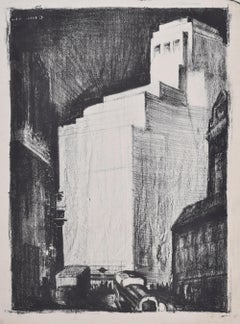
An original woodblock print dated 1965, titled "Our Town" but signed illegibly.

Category

1960s American Modern Paul Hermann Wagner Art

Materials

Paper, Woodcut

Rockwell Kent, Four Bookplates (on one sheet)

Rockwell Kent, Four Bookplates (on one sheet)

By Rockwell Kent

Located in New York, NY

Proof sheet with four wood engraved book plates by Rockwell Kent. Possibly for a book on this subject published in 1937. There are pencil numbers under each image that probably indic...

Category

Early 20th Century Art Deco Paul Hermann Wagner Art

Materials

Woodcut

Les Amateurs d'Estampes

Les Amateurs d'Estampes

By Félix Vallotton

Located in Fairlawn, OH

Les Amateurs d'Estampes Woodcut, 1892 Initialed in the plate lower left Titled below image: "Gravure originale sur bois par F. Vallotton" Reference: Valloton and Goerg 107c, with the...

Category

1890s Post-Impressionist Paul Hermann Wagner Art

Materials

Woodcut

No Footprints Show, Where the Flowers Grow Deep

No Footprints Show, Where the Flowers Grow Deep

By Shiko Munakata

Located in Fairlawn, OH

No Footprints Show, Where the Flowers Grow Deep Woodcut, 1961 Unsigned (as isssued) From: The "Way" of the Woodcut, three woodcuts, 1961 Publisher: Pratt Adlib Press, Brooklyn, New Y...

Category

1960s Modern Paul Hermann Wagner Art

Materials

Woodcut

Foreign Soldiers from Five Countries at the Port of Yokohama

Foreign Soldiers from Five Countries at the Port of Yokohama

By Utagawa Yoshitora

Located in Fairlawn, OH

Foreign Soldiers from Five Countries at the Port of Yokohama Color woodcut triptych, c. 1860's Signed in the block lower left corner Signed: "Ichimosai Yoshitora ga" Condition: Mounted to a rose colored silk backing (stable) Staining (visible) in the joining of the right and center sheets Colors very slightly faded Image size: 15 3/8 x 31 3/8 inches (triptysch sheets joined to make one print) The 1854 Treaty of Kanagawa opened Japan to the West. Curiosity about the never-before-seen foreigners spurred a market in Yokohama-e (Yokohama prints), named for the area to which foreign dignitaries and merchants were confined. Yoshitora became one of the best known and most active artists of the Yokohama-e school. Utagawa Yoshitora (歌川 芳虎) was a designer of ukiyo-e Japanese woodblock prints and an illustrator of books and newspapers who was active from about 1850 to about 1880. He was born in Edo (modern Tokyo), but neither his date of birth nor date of death is known. However, he was the oldest pupil of Utagawa Kuniyoshi who excelled in prints of warriors, kabuki actors, beautiful women, and foreigners (Yokohama-e). He may not have seen any of the foreign scenes he depicted. Yoshitora was prolific: he produced over 60 print series and illustrated over 100 books. In 1849 he produced an irreverent print called Dōke musha: Miyo no wakamochi ("Funny Warriors—Our Ruler's New Year's Rice Cakes"), which depicts Oda Nobunaga, Akechi Mitsuhide, and Toyotomi Hideyoshi...

Category

Mid-19th Century Paul Hermann Wagner Art

Materials

Woodcut

Elwood W. Bartlett, Water's Edge (Wisconsin), about 1945, mid-century wood eng.

Elwood W. Bartlett, Water's Edge (Wisconsin), about 1945, mid-century wood eng.

By Elwood Warren Bartlett

Located in New York, NY

Elwood Warren Bartlett is a Wisconsin native who also worked in Indiana. Largely self taught as a printmaker, Bartlett worked in a style that once identified as his, immediately t...

Category

1940s American Modern Paul Hermann Wagner Art

Materials

Woodcut

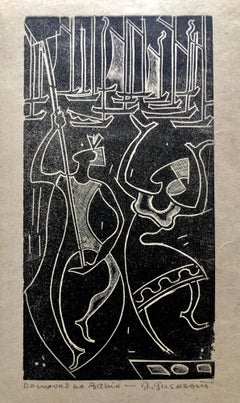
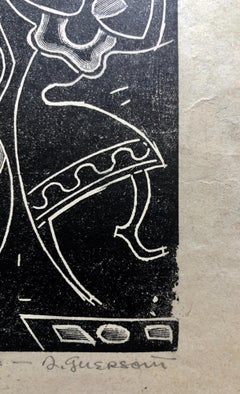
1945 Brazilian Master, Art Deco Nudes Serigraph Woodcut Carnaval Bahia

1945 Brazilian Master, Art Deco Nudes Serigraph Woodcut Carnaval Bahia

By Odetto Guersoni

Located in Surfside, FL

Genre: Brazilian Art Deco, African Diaspora Bahian Carnival Subject: Abstract Medium: Print Surface: Paper Country: Brazil Dimensions of overall paper are listed. This is from a series of work he did in the 1940's, we sold one called Ritmo Negro, they are about Afro-Brazilian jazz, dance and music. Odetto Guersoni was born in the city of Jaboticabal, State of São Paulo, in 1924. From 1936 to 1941 he attended the Liceu de Artes de Ofícios in São Paulo, beginning his artistic career in 1945, when he exhibited paintings in the Hall of the Plastic Artists Union . Two years later he was part of the collective group of 19, alongside Aldemir, Charoux, Otavio Araújo, Grassmann, Maria Leontina and several other artists that time would make famous. He then practiced a figurative painting of accentuated Expressionist lauds, characterized by deformation and coloring, raw and Satirical- as, moreover, so many of his fellow exhibitors at the time. As a French government scholar, Odette Guerzoni went to Paris in 1947 and the following year took part in the Peintres et Graveurs Etrangers and Art Libre exhibitions. Student of engraving by Renê Cottet, gradually transformed this expressive medium into his favorite, to the detriment of painting, which he practically abandoned soon after. In 1947, he participated in the 19 Painters exhibition at the Prestes Maia Gallery together with Lothar Charoux, Maria Leontina,Grassmann, Aldemir Martins, Luiz Sacilotto and hiró. Guersoni was awarded a scholarship by the French government, and traveled to Paris, where he began work in engraving. Back in Brazil, in 1951, he founded the Art Workshop, in São Paulo. In 1954, he returned to Europe for a year, financed by the International Labor Organization (ILO). In Geneva, he studied engraving with René Cottet (1902 - 1992) and worked in Stanley william Hayter's studio, Atelier 17, in Paris (1901 - 1988). From 1956 to 1957, he became director of the Union of Plastic Artists of São Paulo. From 1960, he attended, as a trainee, some art schools in the United States and Japan such as The New York School of Printing and Osaka University. In 1971, also in Japan, he attended the workshop of I. Jokuriti. Two years later, he was voted Best Recorder of the Year by the Paulista Association of Art Critics - APCA. He took part in a special room at the Ibero-American Biennial in Montevideo in 1983. The Pinacoteca do Estado de São Paulo - Pesp presents a retrospective of his work in 1994. Odetto Guersoni explores the wide spectrum of possibilities of the engraving. In addition to using techniques such as metal etching, lithograph, serigraph, linocut and, especially, woodcut he developed, in the 1950s, the philigraphy, in which the forms he developed gained points of embroidery made by Bonadei (1906 - 1974) . And, in the 1960s, the plastigraphy, in which he makes engravings on pasty surfaces, obtained from gypsum or other soft material. In the 1970s, technical investigations were associated with pictographic, ideographic, archaic symbol searches, Brazilian cave paintings and plant forms. The drawings are reduced to stylized, geometric shapes and transformed into abstract graphic elements. The artist works with few matrices, which, organized in rectangles, squares or circles, become modules to be combined. Guersoni juxtaposes them, adds, changes colors, and thereby composes colorful mandalas and structural geometries. Based on concise compositions, it produces color vibrations through optical illusions. In many of his woodcut works of the 1980s he uses smooth wood, knives, saws, gouges, punches, avoiding the natural textures of wood. In printing, it leaves the vibrant color and employs dosed inks with colorless masses, obtaining transparencies by superpositions. New journeys of study and specialization in engraving techniques took him in 1954 to Switzerland, 1960 to the United States, and in 1966 to Germany and Austria. Today, after having performed more than 40 individuals including 16 abroad and having participated in more than 50 collectives in several countries, Guersoni is considered one of the most notable Brazilian engravers. Conquered awards in several shows. CHRONOLOGY Individual exhibitions 1946 - Sao Paulo SP - 10th Salon of the Artists' Union, at the Prestes Maia Gallery 1947 - São Paulo SP - 19 Painters, at the Prestes Maia Gallery 1948 - Paris France - Peintres et Graveurs Etrangers at the École des Beaux-Arts 1949 - São Paulo SP - 13th Salon of the Artists' Union, at the Prestes Maia Gallery 1951 - São Paulo SP - 1st Paulista Salon of Modern Art, at Prestes Maia Gallery - silver medal 1953 - São Paulo SP - 2nd International Biennial of São Paulo, at MAM / SP 1954 - São Paulo SP - 3rd Paulista Salon of Modern Art, in the Prestes Maia Gallery 1955 - Rio de Janeiro RJ - 4th National Salon of Modern Art 1955 - Salvador BA - 5th Baiano Salon of Fine Arts, in Belvedere da Sé - honorable mention 1962 - São Paulo SP - Leirner Prize for Contemporary Art at the Folha Art Gallery - 1st printing award 1963 - Curitiba PR - 20th Salão Paranaense de Belas Artes, at the Public Library of Paraná 1963 - Rio de Janeiro RJ - Individual, no MAM / RJ 1968 - Bradford England - First International Print Biennale 1970 - São Paulo SP - Antonio Henrique Amaral, Odetto Guersoni, Tomie Ohtake, Pedro Tort and Gerda Brentani, in the Alberto Bonfiglioli Gallery 1971 - São Paulo SP - 11th International Biennial of São Paulo, at the Biennial Foundation - acquisition award 1973 - Punta del Este Uruguay - 1st Engraving Meeting of the Prata Basin Countries - International Prize 1977 - São Paulo SP - The Groups: the 40's, at the Lasar Segall Museum 1982 - São Paulo SP - Ismenia Coaracy, Odetto Guersoni and Alice Brill...

Category

1940s Art Deco Paul Hermann Wagner Art
Materials

Woodcut

Previously Available Items
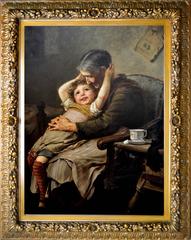
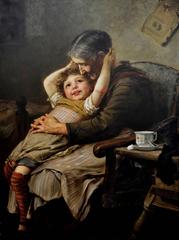
A Grandmother's Love, 1888 by Paul Wagner

A Grandmother's Love, 1888 by Paul Wagner

By Paul Hermann Wagner

Located in Soquel, CA

Charming late 19th Century figurative of older woman and grand daughter by Paul Hermann Wagner (Munich School) (German, 1852-1937). Signed "Paul Wagner" and dated "1886" on lower rig...

Category

1880s Realist Paul Hermann Wagner Art
Materials

Canvas, Oil

Paul Hermann Wagner art for sale on 1stDibs.

Find a wide variety of authentic Paul Hermann Wagner art available for sale on 1stDibs. You can also browse by medium to find art by Paul Hermann Wagner in canvas, fabric, oil paint and more. Much of the original work by this artist or collective was created during the 1920s and is mostly associated with the modern style. Not every interior allows for large Paul Hermann Wagner art, so small editions measuring 20 inches across are available. Customers who are interested in this artist might also find the work of Otto Kuhler, Charles Turzak, and Jupp Wiertz. Paul Hermann Wagner art prices can differ depending upon medium, time period and other attributes. On 1stDibs, the price for these items starts at $446 and tops out at $10,165, while the average work can sell for $2,118.