Paul Vera Prints and Multiples

to
4
1
Overall Width
to
Overall Height
to
2
1
7
1,563
1,074
931
659
5
4
1
4
1
5
3
3
3
3
2
2
2
1
1
1
1
1
4
1
5
Artist: Paul Vera
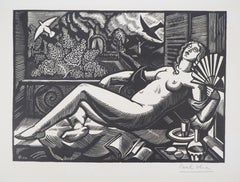
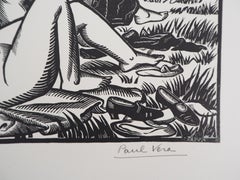
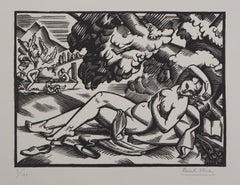
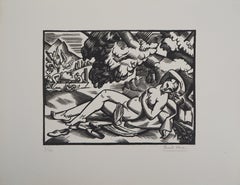
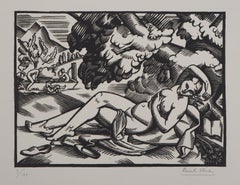
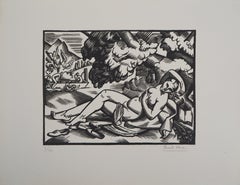
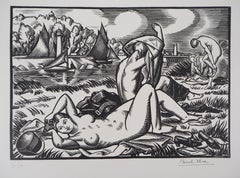
Summer - Original Wooodcut, Handsigned

Summer - Original Wooodcut, Handsigned

By Paul Vera

Located in Paris, IDF

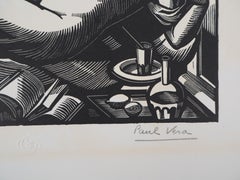
Paul Vera Summer, 1924 Original woodcut Handsigned in pencil Numbered /160 On vellum 25 x 33 cm (c. 9,8 x 12,9 in) Edited for the 'Imagier de la Gravure sur Bois...

Category

1920s Modern Paul Vera Prints and Multiples

Materials

Woodcut

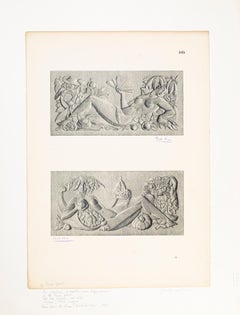
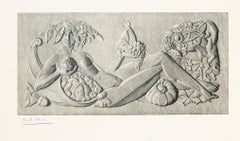
Les Saisons - Original Woodcut by Paul Vera - 1920s

Les Saisons - Original Woodcut by Paul Vera - 1920s

By Paul Vera

Located in Roma, IT

Image dimensions: 13 x 27 cm. Les Saisons is a beautiful original xylograph on tissue paper, realized by the French artist Paul Vera (Paris, 1882 - Saint-Ge...

Category

1920s Paul Vera Prints and Multiples

Materials

Woodcut

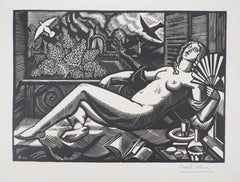
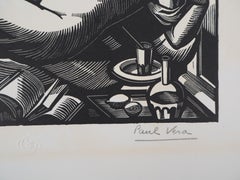
Summer : Nude with a Fan - Original woodcut, Handsigned

Summer : Nude with a Fan - Original woodcut, Handsigned

By Paul Vera

Located in Paris, IDF

Paul VERA Summer : Nude with a Fan, 1922 Original woodcut Handsigned in pencil Numbered /154 On vellum 32.5 x 25.5 cm (c. 13 x 10 in) Bears the blind stamp ...

Category

1920s Art Deco Paul Vera Prints and Multiples

Materials

Woodcut

Laure, Model with Tall Eyes - Stone lithograph, 1930

Laure, Model with Tall Eyes - Stone lithograph, 1930

By Paul Vera

Located in Paris, IDF

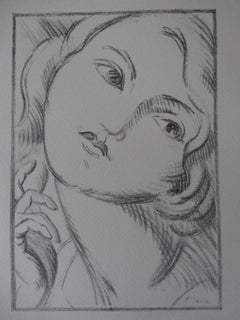
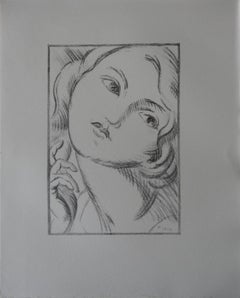
Paul VERA Laure : Model with Tall Eyes, 1930 Original stone lithograph Printed signature in the plate On Arches vellum 28 x 22 cm (c. 11 x 9 inch) Excellen...

Category

1930s Art Nouveau Paul Vera Prints and Multiples

Materials

Lithograph

Related Items
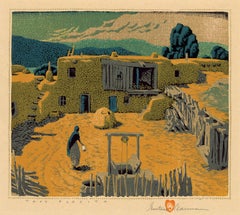
Gustave Baumann Color Woodblock - Rancho de Taos

Gustave Baumann Color Woodblock - Rancho de Taos

By Gustave Baumann

Located in Phoenix, AZ

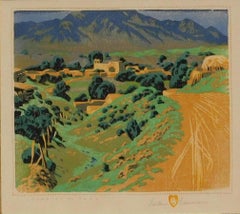
“Rancho de Taos” by well-known woodblock artist Gustave Baumann (1881-1971). The medium is color woodblock. It's a beautiful print in excellent condition. Baumann's personal Hand and...

Category

Mid-20th Century Paul Vera Prints and Multiples

Materials

Woodcut

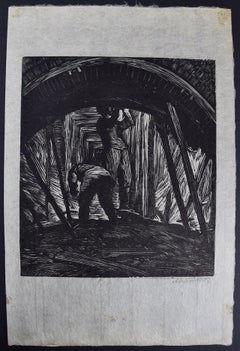
"Mine Shaft", Soviet Union: An Early 20th C. Woodcut Engraving by Abramovitz

"Mine Shaft", Soviet Union: An Early 20th C. Woodcut Engraving by Abramovitz

By Albert Abramovitz

Located in Alamo, CA

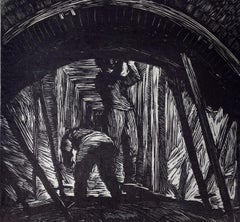
This is a signed woodcut engraving entitled "Mine Shaft" created by Albert Abramovitz in 1935, after a trip to the Soviet Union. It depicts two Russian workers constructing a mine sh...

Category

1930s Paul Vera Prints and Multiples

Materials

Woodcut

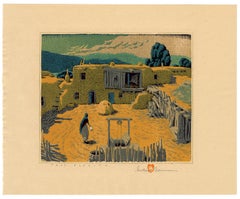
'Taos Placita' — American Southwest Masterwork, Signed Color Woodcut

'Taos Placita' — American Southwest Masterwork, Signed Color Woodcut

By Gustave Baumann

Located in Myrtle Beach, SC

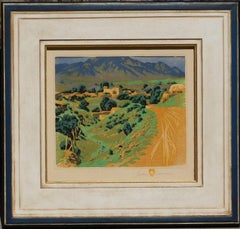
Gustave Baumann, 'Taos Placita', color woodcut, 1947, edition 125. Baumann 132. Signed, titled, and numbered '20-125' in pencil; with the artist’s Hand-in-Heart chop. A superb, richly-inked impression, with fresh colors, on fibrous oatmeal wove paper; the full sheet with margins (2 to 3 1/8 inches); slight rippling at the left sheet edge, in excellent condition. Matted to museum standards, unframed. Image size 9 5/8 x 11 1/4 inches (244 x 286 mm); sheet size 13 1/4 x 17 inches (337 x 432 mm). Collections: Harwood Museum of Art, New Mexico Museum of Art, Phoenix Art Museum, Scottsdale Art Museum, Wichita Art Museum. ABOUT THE ARTIST Gustave Baumann (1881-1971) was a renowned printmaker and a leading figure of the American color woodcut revival whose exquisite craftsmanship and vibrant imagery captured the essence of the Southwest. "A brilliant printmaker, Baumann brought to the medium a full mastery of the craft of woodworking that he acquired from his father, a German cabinetmaker. This craftsmanship was coupled with a strong artistic training that resulted in the handsome objects we see in the exhibition today. After discovering New Mexico in 1918, Baumann began to explore in his woodblock prints of this period the light. color, and architectural forms of that landscape. His prints of this period are among the most beautiful and poetic images of the American West." —Lewis I. Sharp, Director, Denver Art Museum Baumann, the son of a craftsman, immigrated to the United States from Germany with his family when he was ten, settling in Chicago. From 1897 to 1904, he studied in the evenings at the Art Institute of Chicago, working in a commercial printmaking shop during the day. In 1905, he returned to Germany to attend the Kunstwerbe Schule in Munich, where he decided on a career in printmaking. He returned to Chicago in 1906 and worked for a few years as a graphic designer of labels. Baumann made his first prints in 1909 and exhibited them at the Art Institute of Chicago the following year. In 1910, he moved to the artists’ colony in Nashville, Indiana, where he explored the creative and commercial possibilities of a career as a printmaker. In 1915, he exhibited his color woodcuts at the Panama-Pacific International Exposition in San Francisco, winning the gold medal. Among Baumann’s ongoing commercial activities was his work for the Packard Motor Car Company from 1914 to 1920 where he produced designs, illustrations, and color woodcuts until 1923. In 1919, Baumann’s printmaking work dominated the important exhibition of American color woodcuts at the Detroit Institute of Arts. Twenty-six of his prints were included, far more than the works of any other artist. A set of his blocks, a preparatory drawing, and seven progressive proofs complemented the exhibition. That same year, Baumann worked in New York and, over the summer, in Provincetown, Massachusetts. His airy images of Cape Cod employed soft, pastel colors and occasionally showed the influence of the white-line woodcut technique. Many of his Chicago artist friends had traveled to the southwest, and Baumann became intrigued by their paintings, souvenirs, and stories of an exotic place named Taos, New Mexico. In the summer of 1918, he spent the summer in Taos sketching and painting before visiting Santa Fe. Paul Walter, the director of the Museum of New Mexico, offered him a studio in the museum's basement. Inspired by the rugged beauty of the Southwest—the vibrant colors and dramatic landscapes of the region became a central theme in his work, influencing his artistic style and subject matter for the remainder of his career. Later in the decade, he traveled to the West Coast and made prints of California landscape. Baumann's prints became synonymous with the Southwest, capturing the spirit of its place in America's identity with a unique sense of authenticity and reverence. His iconic images of desert vistas, pueblo villages, and indigenous cultures served as visual tributes to the region's rich cultural heritage, earning him a dedicated following among collectors and curators alike. A true craftsman and artist, Baumann completed every step of the printmaking process himself, cutting each block, mixing the inks, and printing every impression on the handmade paper he selected. His dedication to true craftsmanship and his commitment to preserving the integrity of his artistic vision earned him widespread acclaim and recognition within the art world. About the vibrant colors he produced, Baumann stated, “A knowledge of color needs to be acquired since they don’t all behave the same way when ground or mixed...careful chemistry goes into the making of colors, with meticulous testing for permanence. While complicated formulae evolve new colors, those derived from Earth and metal bases are still the most reliable.” In the 1930s, Baumann became interested in puppet theater. He designed and carved his own marionettes and established a little traveling company. From 1943 to 1945, the artist carved an altarpiece for the Episcopal Church of the Holy Faith in Santa Fe. In 1952, a retrospective exhibition of his prints was mounted at the New Mexico Museum of Fine Arts. Throughout his prolific career, Baumann executed nearly four hundred color woodcuts. Baumann’s woodcuts...

Category

1940s American Modern Paul Vera Prints and Multiples
Materials

Woodcut

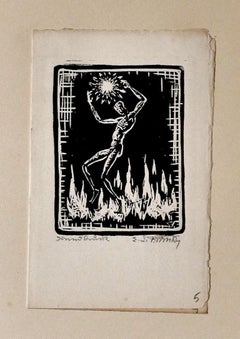
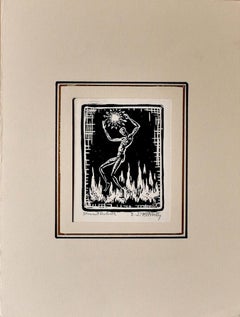
Fire - Woodcut on Paper by Erika Lawson Frimke - 1937

Fire - Woodcut on Paper by Erika Lawson Frimke - 1937

By Erikma Lawson Frimke

Located in Roma, IT

Fire is an original woodcut artwork on paper realized in 1937 ca. by Russian artist Erika Lawson Frimke( 1878-1956), Hand-signed on the lower right in pencil. The state of preservat...

Category

1930s Modern Paul Vera Prints and Multiples
Materials

Woodcut

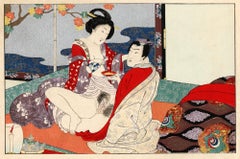
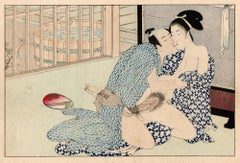
Seishi Ai-oi Genji – Set of 12 Shunga works together w/astrological commentary

Seishi Ai-oi Genji – Set of 12 Shunga works together w/astrological commentary

By Utagawa Kunisada (Toyokuni III)

Located in Middletown, NY

Set of 12 woodblock prints in colors on handmade, laid mulberry paper, 6 3/4 x 10 1/4 inches (170 x 258 mm), printed in Ka-ei 4 (1851). Each print with minor handling wear, otherwise in excellent condition with bright and fresh color, and with details printed in silver ink. The images themselves contain several illusive characters indicating the publisher which are obfuscated by figures, as intended. Presented loose, as issued. A fine set. The astrological commentary print has a large and meandering blind stamp with a bird and palm frond motif. This print lists various phrases concerning the Twelve Zodiac Animals as historically counted in Japan, and appears to include erotic commentary on the traits of people born under each of the twelve signs. These Shunga images were issued in books that paralleled (in an erotic fashion...

Category

Mid-19th Century Edo Paul Vera Prints and Multiples

Materials

Ink, Handmade Paper, Woodcut

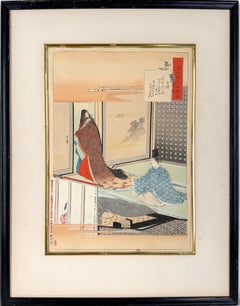
Wood Cut on Rice Paper "The Cicada Shell (Utsusemi)" by Gekko Ogata

Wood Cut on Rice Paper "The Cicada Shell (Utsusemi)" by Gekko Ogata

Located in Soquel, CA

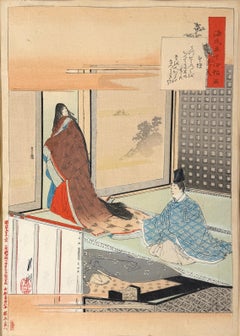
Wood Cut on Rice Paper "The Cicada Shell (Utsusemi)" by Gekko Ogata Woodcut is a striking 1892 woodblock print by Meiji-era master Ogata Gekko (Japanese, 1859–1920). It references T...

Category

Late 19th Century Impressionist Paul Vera Prints and Multiples

Materials

Printer's Ink, Rice Paper, Woodcut

'The Beach at Kaiganji in Sanuki Province'  — Lifetime Impression

'The Beach at Kaiganji in Sanuki Province' — Lifetime Impression

By Kawase Hasui

Located in Myrtle Beach, SC

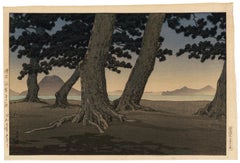
Kawase Hasui, 'The Beach at Kaiganji in Sanuki Province (Sanuki Kaiganji no hama),' from the series Collected Views of Japan II, Kansai Edition (Nihon fûkei shû II Kansai hen), woodblock print, 1934. A very fine, atmospheric impression, with fresh colors; the full sheet, in excellent condition. Signed 'Hasui' with the artist’s seal 'Kawase', lower left. Published by Watanabe Shozaburo with the Watanabe ‘D’ seal indicating an early impression printed between 1931 - 1941. Stamped faintly 'Made in Japan' in the bottom center margin, verso. Horizontal ôban; image size 9 3/8 x 14 1/4 inches (238 x 362 mm); sheet size approximately 10 5/16 x 15 1/2 inches ( 262 x 394 mm). Collections: Art Institute of Chicago; Austrian Museum of Applied Arts (Vienna); Honolulu Museum of Art; Museum of Fine Arts, Boston; National Museum in Warsaw; University of Wisconsin-Madison. ABOUT THE ARTIST “I do not paint subjective impressions. My work is based on reality...I can not falsify...(but) I can simplify…I make mental impressions of the light and color at the time of sketching. While coloring the sketch, I am already imagining the effects in a woodblock print.” — Kawase Hasui Hasui Kawase...

Category

1930s Showa Paul Vera Prints and Multiples

Materials

Woodcut

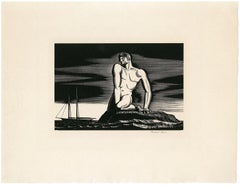
'The Bather' — 1930s American Modernist Signed Wood Engraving

'The Bather' — 1930s American Modernist Signed Wood Engraving

By Rockwell Kent

Located in Myrtle Beach, SC

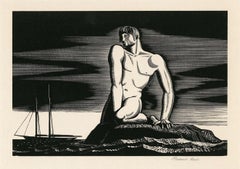
Rockwell Kent, 'The Bather', wood engraving, 1931, edition 120, Burne Jones 63. Signed in pencil. A brilliant, black impression, on cream, wove Japan paper; the full sheet with margins (2 1/2 to 3 1/4 inches); slight skinning at the top sheet edge, verso, otherwise in excellent condition. Archivally matted to museum standards, unframed. Image size 5 3/8 x 7 7/8 inches (137 x 200 mm); sheet size 11 1/8 x 14 1/2 inches (283 x 368 mm). Impressions of this work are held in the following public collections: Burne Jones Collection (Illinois), Chazen Museum of Art, Chegodaev Collection (Moscow), Kent Collection (New York), National Gallery of Art, Philadelphia Museum of Art; SUNY Plattsburg Art Museum, Princeton University Library, Pushkin Museum (Moscow), Smithsonian American Art Museum, Spector Collection (New York), University of Illinois. ABOUT THE ARTIST Rockwell Kent (1882-1971), though best known as a painter, graphic artist, and illustrator, pursued many careers throughout his life, including architect, carpenter, explorer, writer, dairy farmer, and political activist. Born in Tarrytown, New York, Kent was interested in art from a young age. These ambitions were encouraged by his aunt Jo Holgate, an accomplished ceramicist. Jo came to live with the family after Kent’s father passed away in 1887 and took him to Europe as a teenager, undoubtedly kindling his interest in exploring the world. Kent attended the Horace Mann School in New York City, where he excelled at mechanical drawing. His family’s financial circumstances prevented him from pursuing a career in the fine arts; however, after graduating from Horace Mann in 1900, Kent decided to study architecture at Columbia University. Before matriculating at Columbia, Kent spent the first of three consecutive summers studying painting at William Merritt Chase’s art school in Shinnecock Hills, Long Island. There he found a community of mentors and fellow students who encouraged him to pursue his interest in art. At the end of Kent’s third summer at Shinnecock, Chase offered him a full scholarship to the New York School of Art, where he was a teacher. Kent began taking night classes at the art school in addition to his architecture studies but soon left Columbia to study painting full-time. In addition to Chase, Kent took classes with Robert Henri and Kenneth Hayes Miller, where his classmates included the artists George Bellows and Edward Hopper. Kent spent the summer of 1903 assisting the eccentric painter Abbott Handerson Thayer at his studio in Dublin, New Hampshire—a position he secured through the recommendation of his Aunt Jo. Thayer’s naturalist lifestyle and almost mystical appreciation for natural phenomena greatly influenced Kent; he returned to Dublin for many years to visit Thayer and his family. Thayer gave the young artist time to pursue his work, and that summer Kent painted several views of the New Hampshire landscape, including Mount Monadnock...

Category

1930s American Modern Paul Vera Prints and Multiples
Materials

Woodcut

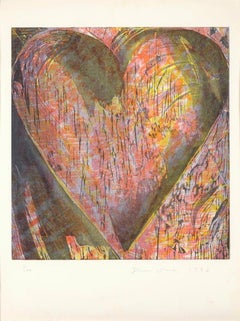
Untitled, Jim Dine
Untitled, Jim Dine

Jim DineUntitled, Jim Dine, 1996

$4,000

H 26.125 in W 19.5 in

Untitled, Jim Dine

By Jim Dine

Located in New York, NY

A familiar and iconic motif by the artist, this color woodcut was created by Jim Dine in 1996, is hand-signed in pencil and numbered. Measuring 26 1/8 x 19 ½ inches (66.4 x 49.5 cm...

Category

20th Century Contemporary Paul Vera Prints and Multiples

Materials

Woodcut

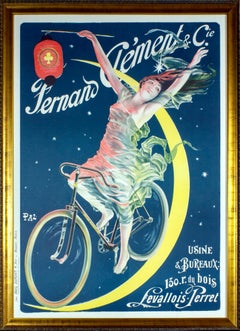
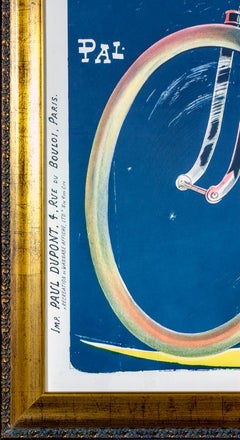
"Fernand Clement & Cie" lithograph print poster by Pal (Jean de Paléologue)

"Fernand Clement & Cie" lithograph print poster by Pal (Jean de Paléologue)

By Pal (Jean de Paléologue)

Located in Boca Raton, FL

"Fernand Clément & Cie" framed lithograph poster by Pal (Jean de Paléologue.) Inscription on side reads Imp. Paul Dupont, 4 Rue du Bouloi, Paris. Recreation 84 Wannabe Affiche, Ltd. ...

Category

1890s Art Nouveau Paul Vera Prints and Multiples

Materials

Lithograph

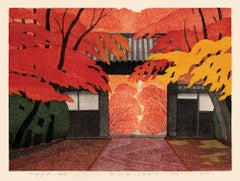
'Komyō-ji Temple at Autumn in Kyoto' — Sōsaku-hanga Woodblock Masterwork

'Komyō-ji Temple at Autumn in Kyoto' — Sōsaku-hanga Woodblock Masterwork

Located in Myrtle Beach, SC

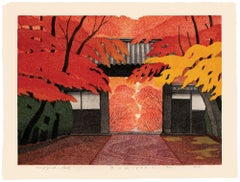
Ohtsu Kazuyuki, 'Kyo no Aki - Komyō-ji' (Komyō-ji temple at Autumn in Kyoto), large-scale color woodblock print, ed. 100, 2012. Signed, titled in Japanese, numbered 78/100, and date...

Category

2010s Paul Vera Prints and Multiples

Materials

Woodcut

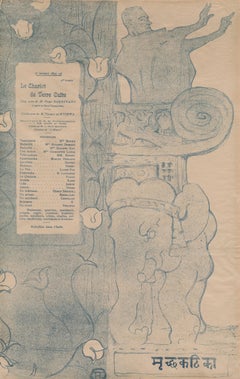
Programme poour Le Chariot de Terre Cutte

Programme poour Le Chariot de Terre Cutte

By Henri de Toulouse-Lautrec

Located in Fairlawn, OH

Programme poour Le Chariot de Terre Cutte Lithograph printed in blue on pink tint thin wove paper, 1895 Signed with the artist's "TL" monogram (see photo) lower center edge Published...

Category

1890s Art Nouveau Paul Vera Prints and Multiples

Materials

Lithograph

Previously Available Items
Summer - Original Wooodcut, Handsigned

Summer - Original Wooodcut, Handsigned

By Paul Vera

Located in Paris, IDF

Paul Vera Summer, 1924 Original woodcut Handsigned in pencil Numbered /160 On vellum 25 x 33 cm (c. 9,8 x 12,9 in) Edited for the 'Imagier de la Gravure sur Bois' (5th year) and be...

Category

1920s Modern Paul Vera Prints and Multiples
Materials

Woodcut

Summer : Nude with a Fan - Original woodcut, Handsigned

Summer : Nude with a Fan - Original woodcut, Handsigned

By Paul Vera

Located in Paris, IDF

Paul VERA Summer : Nude with a Fan, 1922 Original woodcut Handsigned in pencil Numbered /154 On vellum 32.5 x 25.5 cm (c. 13 x 10 in) Bears the blind stamp ...

Category

1920s Art Deco Paul Vera Prints and Multiples
Materials

Woodcut

Paul Vera prints and multiples for sale on 1stDibs.
Find a wide variety of authentic Paul Vera prints and multiples available for sale on 1stDibs. You can also browse by medium to find art by Paul Vera in woodcut print, lithograph and more. Much of the original work by this artist or collective was created during the 20th century and is mostly associated with the Art Deco style. Not every interior allows for large Paul Vera prints and multiples, so small editions measuring 9 inches across are available. Customers who are interested in this artist might also find the work of Rene Vincent, Maurice Dufrêne, and Edouard Benedictus. Paul Vera prints and multiples prices can differ depending upon medium, time period and other attributes. On 1stDibs, the price for these items starts at $216 and tops out at $333, while the average work can sell for $278.