Peter Alexander Art

American, 1939-2020

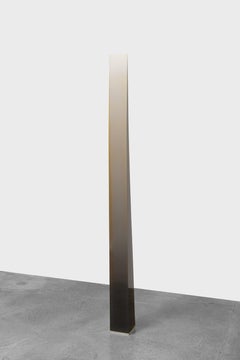
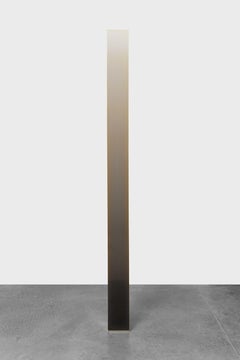
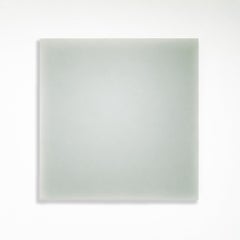
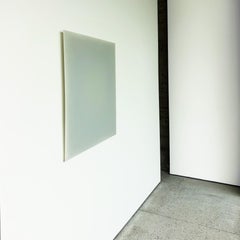
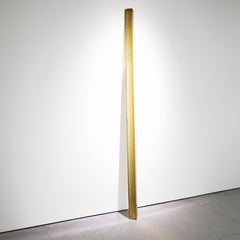
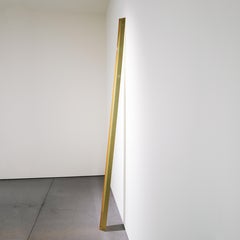
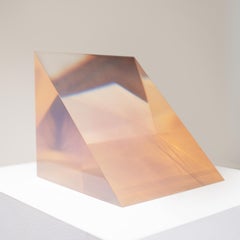
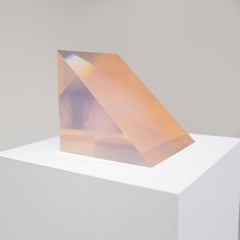
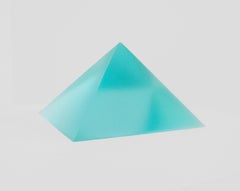
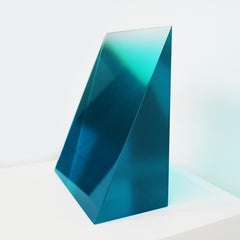
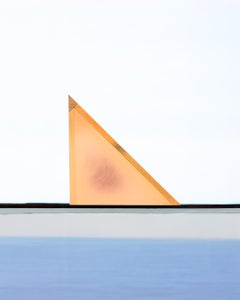
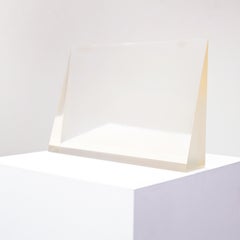
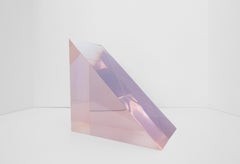
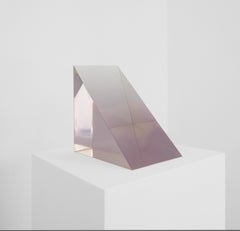
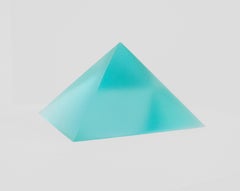
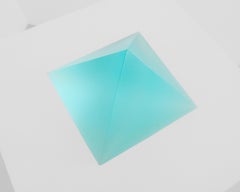
A bit of surfboard wax, a small Dixie cup and the sun sparked an epiphany for artist Peter Alexander and began his rise through the Light and Space movement of the 1960s. After seeing wax dry into a translucent block, Alexander chose resin as his signature medium and created sculptures that appear to be constructed out of light itself.

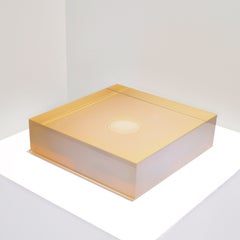
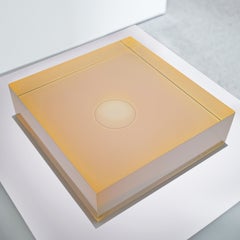
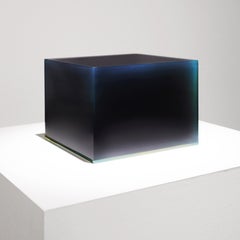
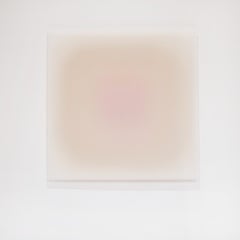
Alexander was born in 1939 in Los Angeles. By 1966, he had studied under Estonian-born American architect Louis Kahn at the University of Pennsylvania and transferred to several universities before graduating with a bachelor’s and master's degree in fine art from UCLA. He explored the possibilities of resin throughout the 1960s. Many of his resin sculptures are monolithic and contemplative, with a mysterious air, as seen in his Cloud Boxes, which seem to trap miniature clouds within blocks. 

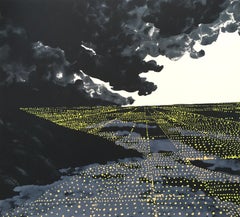
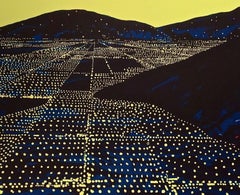
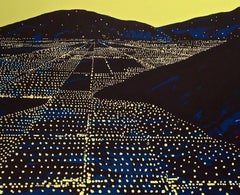
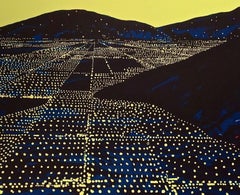
Like his Light and Space contemporaries James Turrell, Larry Bell, Mary Corse and DeWain Valentine, Alexander wished to capture light in the form of an artistic environment. After exhibiting at Nicholas Wilder Gallery in Los Angeles and the Robert Elkon Gallery in New York, Alexander turned to painting, drawing, lithography and polaroid photography as new ways to explore the effects of light. In his sculptures, the color changed in tone and intensity based on the light source and the position of the viewer. In his later work, Alexander’s curiosity about color informed much of his art, which combined light and hues to elicit various emotions.

He died in 2020 at the age of 81. Alexander’s art has appeared in films including Erin Brockovich, Terminator 3: Rise of the Machines and Shopgirl. The Museum of Modern Art and Metropolitan Museum of Art in New York, the San Diego Museum of Art, the J. Paul Getty Museum in Los Angeles, the San Francisco Museum of Modern Art and the Centre Pompidou in Paris have all exhibited his work. 

On 1stDibs, find a collection of Peter Alexander’s prints and multiples.

to
4
2
1
7
1
5
Overall Width
to
Overall Height
to
11
5
2
8
1
7
4
3
2
10
2
8
4
4
3
2
16
10,026
2,754
1,379
1,375
16
Artist: Peter Alexander
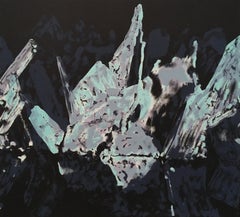
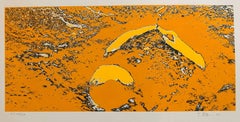
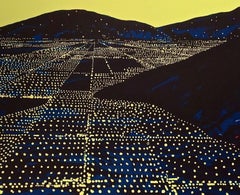
Hallelujah II, Peter Alexander
By Peter Alexander, 1939
Located in Fairfield, CT
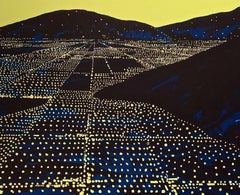
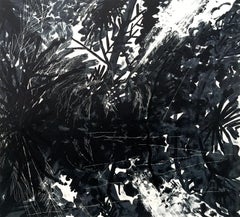
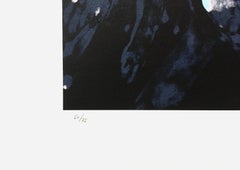
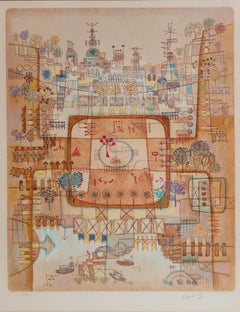
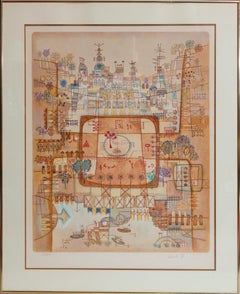
Artist: Peter Alexander (1939) Title: Hallelujah II Year: 1988 Edition: 50, plus proofs Medium: Lithograph on Guarro paper Size: 22 x 30 inches Condition: Excellent Inscription: Sign...
Category

1980s Pop Art Peter Alexander Art

Materials

Lithograph

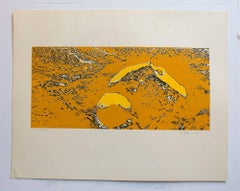
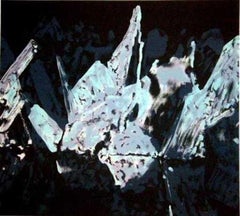
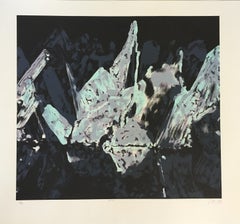
Sitka, Peter Alexander
By Peter Alexander, 1939
Located in Fairfield, CT
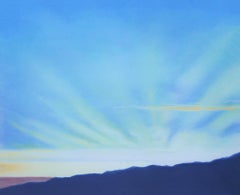
Artist: Peter Alexander (1939) Title: Sitka Year: 1988 Edition: 75, plus proofs Medium: Lithograph on Guarro paper Size: 22 x 30 inches Condition: Excellent Inscription: Signed and n...
Category

1980s Pop Art Peter Alexander Art

Materials

Lithograph

San Blas II, Peter Alexander
By Peter Alexander, 1939
Located in Fairfield, CT
Artist: Peter Alexander (1939) Title: San Blas II Year: 1988 Edition: 75, plus proofs Medium: Lithograph on Guarro paper Size: 22 x 30 inches Condition: Excellent Inscription: Signed...
Category

1980s Pop Art Peter Alexander Art

Materials

Lithograph

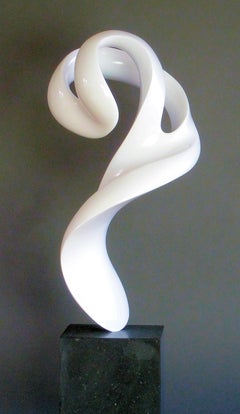
Green Leaner
By Peter Alexander, 1939
Located in Laguna Beach, CA
Among the pioneering California-based Light and Space artists, Peter Alexander has spent the course of his career focusing intensely on light and its manifold effects in his sculptur...
Category

2010s Contemporary Peter Alexander Art

Materials

Polyurethane

Tecate
By Peter Alexander, 1939
Located in Laguna Beach, CA
Among the pioneering California-based Light and Space artists, Peter Alexander has spent the course of his career focusing intensely on light and its manifold effects in his sculptur...
Category

2010s Contemporary Peter Alexander Art

Materials

Polyurethane

San Blas IV, Peter Alexander
By Peter Alexander, 1939
Located in Fairfield, CT
Artist: Peter Alexander (1939) Title: San Blas IV Year: 1988 Edition: 75, plus proofs Medium: Lithograph on Guarro paper Size: 22 x 30 inches Condition: Excellent Inscription: Signed...
Category

1980s Pop Art Peter Alexander Art

Materials

Lithograph

Untitled #45
By Peter Alexander, 1939
Located in Laguna Beach, CA
Among the pioneering California-based Light and Space artists, Peter Alexander has spent the course of his career focusing intensely on light and its manifold effects in his sculptur...
Category

2010s Abstract Peter Alexander Art

Materials

Paper, Gouache

Untitled #48
By Peter Alexander, 1939
Located in Laguna Beach, CA
Among the pioneering California-based Light and Space artists, Peter Alexander has spent the course of his career focusing intensely on light and its manifold effects in his sculptur...
Category

2010s Abstract Peter Alexander Art

Materials

Paper, Gouache

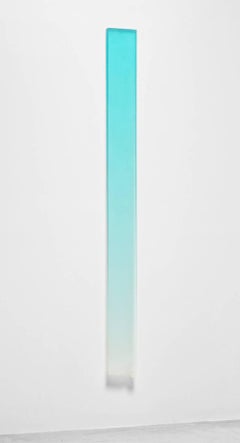
9/8/13 (Aqua Waterfall)
By Peter Alexander, 1939
Located in Laguna Beach, CA
Among the pioneering California-based Light and Space artists, Peter Alexander has spent the course of his career focusing intensely on light and its manifold effects in his sculptur...
Category

2010s Contemporary Peter Alexander Art

Materials

Polyurethane

San Blas II
By Peter Alexander, 1939
Located in Laguna Beach, CA
Among the pioneering California-based Light and Space artists, Peter Alexander has spent the course of his career focusing intensely on light and its manifold effects in his sculptur...
Category

1980s Minimalist Peter Alexander Art

Materials

Lithograph

Rosarito
By Peter Alexander, 1939
Located in Laguna Beach, CA
Among the pioneering California-based Light and Space artists, Peter Alexander has spent the course of his career focusing intensely on light and its manifold effects in his sculptur...
Category

1980s Minimalist Peter Alexander Art

Materials

Canvas, Oil, Acrylic

Punta Gringa
By Peter Alexander, 1939
Located in Laguna Beach, CA
Among the pioneering California-based Light and Space artists, Peter Alexander has spent the course of his career focusing intensely on light and its manifold effects in his sculptur...
Category

1980s Minimalist Peter Alexander Art

Materials

Canvas, Wax, Oil

Huh?
By Peter Alexander, 1939
Located in Laguna Beach, CA
Among the pioneering California-based Light and Space artists, Peter Alexander has spent the course of his career focusing intensely on light and its manifold effects in his sculptur...
Category

1970s Minimalist Peter Alexander Art

Materials

Lithograph

Cuervo
By Peter Alexander, 1939
Located in Laguna Beach, CA
Among the pioneering California-based Light and Space artists, Peter Alexander has spent the course of his career focusing intensely on light and its manifold effects in his sculptur...
Category

1970s Minimalist Peter Alexander Art

Materials

Lithograph

Brooks
By Peter Alexander, 1939
Located in Laguna Beach, CA
Among the pioneering California-based Light and Space artists, Peter Alexander has spent the course of his career focusing intensely on light and its manifold effects in his sculptur...
Category

1980s Minimalist Peter Alexander Art

Materials

Lithograph

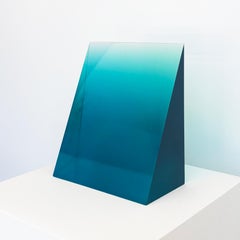
Blue Wedge
By Peter Alexander, 1939
Located in Laguna Beach, CA
Among the pioneering California-based Light and Space artists, Peter Alexander has spent the course of his career focusing intensely on light and its manifold effects in his sculptur...
Category

1990s Minimalist Peter Alexander Art

Materials

Polyester, Resin

Related Items
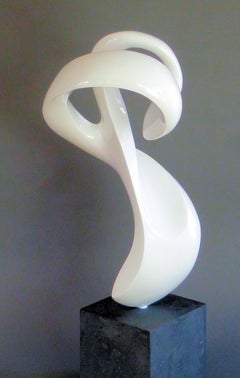
Surge
By Bill Thompson
Located in Westport, CT
This beautiful minimalist sculptural work explores the evocative power monochrome color. Originally working as a painter, Thompson focused on Minimalism. In his sculptural work, mono...
Category

2010s Minimalist Peter Alexander Art

Materials

Polyurethane

Surge
Surge
$19,000
H 29.5 in W 39.5 in D 7 in
Black and White (Minimalist Abstract 3D Wall Sculpture)
By Dai Ban
Located in Hudson, NY
18 x 24 x 8 inches styrofoam and venetian plaster Black and white three dimensional floating high contrast wall sculpture with clean lines Dai Ban presents new series of minimalis...
Category

2010s Minimalist Peter Alexander Art

Materials

Plaster, Polyurethane

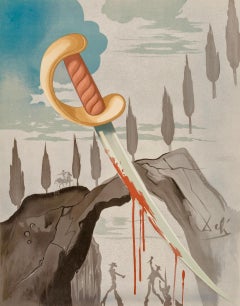
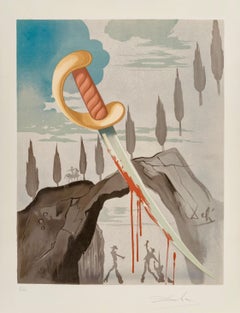
Salvador Dalí Whoever Takes Carmen (Salvador Dalí­ prints Salvador Dalí Carmen)
By Salvador Dalí­
Located in NEW YORK, NY
Salvador Dalí Whoever Takes Carmen Away Must Pay with His Life 1970 (from Carmen): Lithograph in colors on Arches paper. 25.5 x 19.8 inches (64.8 x 50.5 cm). Good overall vintage ...
Category

1970s Pop Art Peter Alexander Art

Materials

Paper, Lithograph

VIP Invitation to "The Drawings of Roy Lichtenstein" @ MoMA, Hand Signed, Framed
By Roy Lichtenstein
Located in New York, NY
Roy Lichtenstein VIP Invitation to Museum of Modern Art black tie preview of the exhibition "The Drawings of Roy Lichtenstein" (Hand Signed), 1987 Offset lithograph on Coronado Opaque SST Cover paper (hand signed by Roy Lichtenstein) Offset lithograph on Coronado Opaque SST Cover paper Boldly signed in black marker on the front The front of the invitation depicts Roy Lichtenstein's print The Sower, from the suite "Landscape Sketches." This print was published by the Museum of Modern Art as an invitation to an exclusive VIP preview of the exhibition "The Drawings of Roy Lichtenstein." The artist signed the card in person at the event. This work has been elegantly framed in a museum quality wood frame under UV Plexiglass with a die cut window to reveal the text from inside the MoMA fold-out invitation card. A true vintage collectors item when hand signed by Roy Lichtenstein, as the present work Measurements: Framed 12 inches vertical by 13.25 horizontal by 1.5 Artwork 5 inches by 6.25 inches Roy Lichtenstein Biography Roy Lichtenstein was one of the most influential and innovative artists of the second half of the twentieth century. He is preeminently identified with Pop Art, a movement he helped originate, and his first fully achieved paintings were based on imagery from comic strips and advertisements and rendered in a style mimicking the crude printing processes of newspaper reproduction. These paintings reinvigorated the American art scene and altered the history of modern art. Lichtenstein’s success was matched by his focus and energy, and after his initial triumph in the early 1960s, he went on to create an oeuvre of more than 5,000 paintings, prints, drawings, sculptures, murals and other objects celebrated for their wit and invention. Roy Fox Lichtenstein was born on October 27, 1923, in New York City, the first of two children born to Milton and Beatrice Werner Lichtenstein. Milton Lichtenstein (1893–1946) was a successful real estate broker, and Beatrice Lichtenstein (1896–1991), a homemaker, had trained as a pianist, and she exposed Roy and his sister Rénee to museums, concerts and other aspects of New York culture. Roy showed artistic and musical ability early on: he drew, painted and sculpted as a teenager, and spent many hours in the American Museum of Natural History and the Museum of Modern Art. He played piano and clarinet, and developed an enduring love of jazz, frequenting the nightspots in Midtown to hear it. Lichtenstein attended the Franklin School for Boys, a private junior high and high school, and was graduated in 1940. That summer he studied painting and drawing from the model at the Art Students League of New York with Reginald Marsh. In September he entered Ohio State University (OSU) in Columbus in the College of Education. His early artistic idols were Rembrandt, Daumier and Picasso, and he often said that Guernica (1937; Museo Reina Sofía, Madrid), then on long-term loan to the Museum of Modern Art, was his favorite painting. Even as an undergraduate, Lichtenstein objected to the notion that one set of lines (one person’s drawings) “was considered brilliant, and somebody’s else’s, that may have looked better to you, was considered nothing by almost everyone.”i Lichtenstein’s questioning of accepted canons of taste was encouraged by Hoyt L. Sherman, a teacher whom he maintained was the person who showed him how to see and whose perception-based approach to art shaped his own. In February 1943, Lichtenstein was drafted, and he was sent to Europe in 1945. As part of the infantry, he saw action in France, Belgium and Germany. He made sketches throughout his time in Europe and, after peace was declared there, he intended to study at the Sorbonne. Lichtenstein arrived in Paris in October 1945 and enrolled in classes in French language and civilization, but soon learned that his father was gravely ill. He returned to New York in January 1946, a few weeks before Milton Lichtenstein died. In the spring of that year, Lichtenstein went back to OSU to complete his BFA and in the fall he was invited to join the faculty as an instructor. In June 1949, he married Isabel Wilson Sarisky (1921–80), who worked in a cooperative art gallery in Cleveland where Lichtenstein had exhibited his work. While he was teaching, Lichtenstein worked on his master’s degree, which he received in 1949. During his second stint at OSU, Lichtenstein became closer to Sherman, and began teaching his method on how to organize and unify a composition. Lichtenstein remained appreciative of Sherman’s impact on him. He gave his first son the middle name of “Hoyt,” and in 1994 he donated funds to endow the Hoyt L. Sherman Studio Art Center at OSU. In the late 1940s and early 1950s, Lichtenstein began working in series and his iconography was drawn from printed images. His first sustained theme, intimate paintings and prints in the vein of Paul Klee that poked lyrical fun at medieval knights, castles and maidens, may well have been inspired by a book about the Bayeux Tapestry. Lichtenstein then took an ironic look at nineteenth-century American genre paintings he saw in history books, creating Cubist interpretations of cowboys and Indians spiked with a faux-primitive whimsy. As with his most celebrated Pop paintings of the 1960s, Lichtenstein gravitated toward what he would characterize as the “dumbest” or “worst” visual item he could find and then went on to alter or improve it. In the 1960s, commercial art was considered beneath contempt by the art world; in the early 1950s, with the rise of Abstract Expressionism, nineteenth-century American narrative and genre paintings were at the nadir of their reputation among critics and collectors. Paraphrasing, particularly the paraphrasing of despised images, became a paramount feature of Lichtenstein’s art. Well before finding his signature mode of expression in 1961, Lichtenstein called attention to the artifice of conventions and taste that permeated art and society. What others dismissed as trivial fascinated him as classic and idealized—in his words, “a purely American mythological subject matter.”ii Lichtenstein’s teaching contract at OSU was not renewed for the 1951–52 academic year, and in the autumn of 1951 he and Isabel moved to Cleveland. Isabel Lichtenstein became an interior decorator specializing in modern design, with a clientele drawn from wealthy Cleveland families. Whereas her career blossomed, Lichtenstein did not continue to teach at the university level. He had a series of part-time jobs, including industrial draftsman, furniture designer, window dresser and rendering mechanical dials for an electrical instrument company. In response to these experiences, he introduced quirkily rendered motors, valves and other mechanical elements into his paintings and prints. In 1954, the Lichtensteins’ first son, David, was born; two years later, their second child, Mitchell, followed. Despite the relative lack of interest in his work in Cleveland, Lichtenstein did place his work with New York dealers, which always mattered immensely to him. He had his first solo show at the Carlebach Gallery in New York in 1951, followed by representation with the John Heller Gallery from 1952 to 1957. To reclaim his academic career and get closer to New York, Lichtenstein accepted a position as an assistant professor at the State University of New York at Oswego, in the northern reaches of the state. He was hired to teach industrial design, beginning in September 1957. Oswego turned out to be more geographically and aesthetically isolated than Cleveland ever was, but the move was propitious, for both his art and his career. Lichtenstein broke away from representation to a fully abstract style, applying broad swaths of pigment to the canvas by dragging the paint across its surface with a rag wrapped around his arm. At the same time, Lichtenstein was embedding comic-book characters figures such as Mickey Mouse and Donald Duck in brushy, expressionistic backgrounds. None of the proto-cartoon paintings from this period survive, but several pencil and pastel studies from that time, which he kept, document his intentions. Finally, when he was in Oswego, Lichtenstein met Reginald Neal, the new head of the art department at Douglass College, the women’s college of Rutgers University, in New Brunswick, New Jersey. The school was strengthening and expanding its studio art program, and when Neal needed to add a faculty member to his department, Lichtenstein was invited to apply for the job. Lichtenstein was offered the position of assistant professor, and he began teaching at Douglass in September 1960. At Douglass, Lichtenstein was thrown into a maelstrom of artistic ferment. With New York museums and galleries an hour away, and colleagues Geoffrey Hendricks and Robert Watts at Douglass and Allan Kaprow and George Segal at Rutgers, the environment could not help but galvanize him. In June 1961, Lichtenstein returned to the idea he had fooled around with in Oswego, which was to combine cartoon characters from comic books with abstract backgrounds. But, as Lichtenstein said, “[I]t occurred to me to do it by mimicking the cartoon style without the paint texture, calligraphic line, modulation—all the things involved in expressionism.”iii Most famously, Lichtenstein appropriated the Benday dots, the minute mechanical patterning used in commercial engraving, to convey texture and gradations of color—a stylistic language synonymous with his subject matter. The dots became a trademark device forever identified with Lichtenstein and Pop Art. Lichtenstein may not have calibrated the depth of his breakthrough immediately but he did realize that the flat affect and deadpan presentation of the comic-strip panel blown up and reorganized in the Sherman-inflected way “was just so much more compelling”iv than the gestural abstraction he had been practicing. Among the first extant paintings in this new mode—based on comic strips and illustrations from advertisements—were Popeye and Look Mickey, which were swiftly followed by The Engagement Ring, Girl with Ball and Step-on Can with Leg. Kaprow recognized the energy and radicalism of these canvases and arranged for Lichtenstein to show them to Ivan Karp, director of the Leo Castelli Gallery. Castelli was New York’s leading dealer in contemporary art, and he had staged landmark exhibitions of Jasper Johns and Robert Rauschenberg in 1958 and Frank Stella in 1960. Karp was immediately attracted to Lichtenstein’s paintings, but Castelli was slower to make a decision, partly on account of the paintings’ plebeian roots in commercial art, but also because, unknown to Lichtenstein, two other artists had recently come to his attention—Andy Warhol and James Rosenquist—and Castelli was only ready for one of them. After some deliberation, Castelli chose to represent Lichtenstein, and the first exhibition of the comic-book paintings was held at the gallery from February 10 to March 3, 1962. The show sold out and made Lichtenstein notorious. By the time of Lichtenstein’s second solo exhibition at Castelli in September 1963, his work had been showcased in museums and galleries around the country. He was usually grouped with Johns, Rauschenberg, Warhol, Rosenquist, Segal, Jim Dine, Claes Oldenburg, Robert Indiana and Tom Wesselmann. Taken together, their work was viewed as a slap in the face to Abstract Expressionism and, indeed, the Pop artists shifted attention away from many members of the New York School. With the advent of critical and commercial success, Lichtenstein made significant changes in his life and continued to investigate new possibilities in his art. After separating from his wife, he moved from New Jersey to Manhattan in 1963; in 1964, he resigned from his teaching position at Douglass to concentrate exclusively on his work. The artist also ventured beyond comic book subjects, essaying paintings based on oils by Cézanne, Mondrian and Picasso, as well as still lifes and landscapes. Lichtenstein became a prolific printmaker and expanded into sculpture, which he had not attempted since the mid-1950s, and in both two- and three-dimensional pieces, he employed a host of industrial or “non-art” materials, and designed mass-produced editioned objects that were less expensive than traditional paintings and sculpture. Participating in one such project—the American Supermarket show in 1964 at the Paul Bianchini Gallery, for which he designed a shopping bag—Lichtenstein met Dorothy Herzka (b. 1939), a gallery employee, whom he married in 1968. The late 1960s also saw Lichtenstein’s first museum surveys: in 1967 the Pasadena Art Museum initiated a traveling retrospective, in 1968 the Stedelijk Musem in Amsterdam presented his first European retrospective, and in 1969 he had his first New York retrospective, at the Solomon R. Guggenheim Museum. Wanting to grow, Lichtenstein turned away from the comic book subjects that had brought him prominence. In the late 1960s his work became less narrative and more abstract, as he continued to meditate on the nature of the art enterprise itself. He began to explore and deconstruct the notion of brushstrokes—the building blocks of Western painting. Brushstrokes are conventionally conceived as vehicles of expression, but Lichtenstein made them into a subject. Modern artists have typically maintained that the subject of a painting is painting itself. Lichtenstein took this idea one imaginative step further: a compositional element could serve as the subject matter of a work and make that bromide ring true. The search for new forms and sources was even more emphatic after 1970, when Roy and Dorothy Lichtenstein bought property in Southampton, New York, and made it their primary residence. During the fertile decade of the 1970s, Lichtenstein probed an aspect of perception that had steadily preoccupied him: how easily the unreal is validated as the real because viewers have accepted so many visual conceptions that they don’t analyze what they see. In the Mirror series, he dealt with light and shadow upon glass, and in the Entablature series, he considered the same phenomena by abstracting such Beaux-Art architectural elements as cornices, dentils, capitals and columns. Similarly, Lichtenstein created pioneering painted bronze sculpture that subverted the medium’s conventional three-dimensionality and permanence. The bronze forms were as flat and thin as possible, more related to line than volume, and they portrayed the most fugitive sensations—curls of steam, rays of light and reflections on glass. The steam, the reflections and the shadow were signs for themselves that would immediately be recognized as such by any viewer. Another entire panoply of works produced during the 1970s were complex encounters with Cubism, Futurism, Purism, Surrealism and Expressionism. Lichtenstein expanded his palette beyond red, blue, yellow, black, white and green, and invented and combined forms. He was not merely isolating found images, but juxtaposing, overlapping, fragmenting and recomposing them. In the words of art historian Jack Cowart, Lichtenstein’s virtuosic compositions were “a rich dialogue of forms—all intuitively modified and released from their nominal sources.”v In the early 1980s, which coincided with re-establishing a studio in New York City, Lichtenstein was also at the apex of a busy mural career. In the 1960s and 1970s, he had completed four murals; between 1983 and 1990, he created five. He also completed major commissions for public sculptures in Miami Beach, Columbus, Minneapolis, Paris, Barcelona and Singapore. Lichtenstein created three major series in the 1990s, each emblematic of his ongoing interest in solving pictorial problems. The Interiors, mural-sized canvases inspired by a miniscule advertisement in an Italian telephone...
Category

1980s Pop Art Peter Alexander Art

Materials

Offset, Lithograph

Fagends Carved in Rock, De-Accessioned from the Denver Art Museum Signed/N
By Claes Oldenburg
Located in New York, NY
Claes Oldenburg Fagends Carved in Rock, De-Accessioned from the Denver Art Museum (137, Axsom and Platzker), 1975 Offset Lithograph. Hand signed and ...
Category

1970s Pop Art Peter Alexander Art

Materials

Graphite, Lithograph, Offset

The Golden Road, Los Angeles Music Center Opera print (Hand Signed & inscribed)
By David Hockney
Located in New York, NY
David Hockney Richard Strauss: Los Angeles Music Center Opera (Hand Signed and Inscribed), 1993 Offset Lithograph (hand signed and inscribed by David Hockney) 30 × 20 inches Signed a...
Category

1990s Pop Art Peter Alexander Art

Materials

Lithograph, Offset

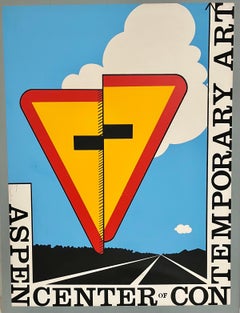
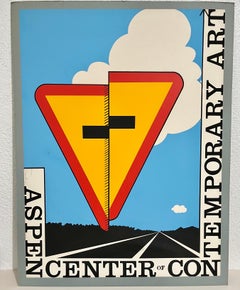
Pop Art Aspen Road Sign D'arcangelo Silkscreen Chiron Press Vintage Art Poster
Located in Surfside, FL
Allan D'Arcangelo (American/New York, 1930-1998), "Aspen Center of Contemporary Art", 1967 silkscreen, hand signed in pencil, dated, numbered "45/200" and blind stamped "Chiron Press, New York, NY" 32 in. x 24 in. Allan D'Arcangelo (1930-1998) was an American artist and printmaker, best known for his paintings of highways and road signs that border on pop art and minimalism, precisionism, Abstract illusionism and hard-edge painting, and also surrealism. His subject matter is distinctly American and evokes, at times, a cautious outlook on the future of this country. Allan D'Arcangelo was the son of Italian immigrants. He studied at the University of Buffalo from 1948–1953, where he got his bachelor's degree in history. After college, he moved to Manhattan and picked up his studies again at the New School of Social Research and the City University of New York, City College. At this time, he encountered Abstract Expressionist painters who were in vogue at the moment. After joining the army in the mid 1950s, he used the GI Bill to study painting at Mexico City College from 1957–59, driving there over 12 days in an old bakery truck retrofitted as a camper. However, he returned to New York in 1959, in search of the unique American experience. It was at this time that his painting took on a cool sensibility reminiscent of Roy Lichtenstein and Andy Warhol. His interests engaged with the environment, anti-Vietnam War protests, and the commodification and objectification of female sexuality. D'Arcangelo first achieved recognition in 1962, when he was invited to contribute an etching to The International Anthology of Contemporary Engraving: America Discovered; his first solo exhibition came the next year, at the Thiebaud Gallery in New York City. In 1965 he contributed three screenprints to Original Edition's 11 Pop Artists portfolio. By the 1970s, D'Arcangelo had received significant recognition in the art world. He was well known for his paintings of quintessentially American highways and infrastructure, and in 1971 was commissioned by the Department of the Interior to paint the Grand Coulee Dam in Washington state. However, his sense of morality always trumped his interest in art world fame. In 1975, he decided to quit the gallery that had been representing him for years, Marlborough Gallery, because of the way they handled Mark Rothko legacy. D'Arcangelo rejected Abstract Expressionism, though his early work has a painterly and somewhat expressive feel. He quickly turned to a style of art that seemed to border on Pop Art and Minimalism, Precisionism and Hard-Edge painting. Evidently, he didn't fit neatly in the category of Pop Art, though he shared subjects (women, signs, Superman) and techniques (stencil, assemblage) with these artists.He turned to expansive, if detached scenes of the American highway. These paintings are reminiscent of Giorgio de Chirico-though perhaps not as interested in isolation-and Salvador Dali-though there is a stronger interest in the present and disinterest in the past. These paintings also have a sharp quality that is reminiscent of the precisionist style, or more specifically, Charles Sheeler. 1950s, Before D'Arcangelo returned to New York, his style was roughly figurative and reminiscent of folk art. During the early 1960s, Allan D'Arcangelo was linked with Pop Art. "Marilyn" (1962) depicts an illustrative head and shoulders on which the facial features are marked by lettered slits to be "fitted" with the eyebrows, eyes, nose and mouth which appear off to the right in the composition. In "Madonna and Child," (1963) the featureless faces of Jackie Kennedy and Caroline are ringed with haloes, enough to make their status as contemporary icons perfectly clear. Select Exhibitions: Fischbach Gallery, New York, Ileana Sonnabend Gallery, Paris, Gallery Müller, Stuttgart, Germany Hans Neuendorf Gallery, Hamburg, Germany Dwan Gallery...
Category

1960s Pop Art Peter Alexander Art

Materials

Lithograph, Screen
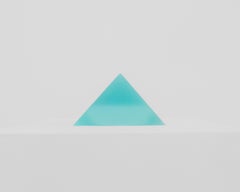
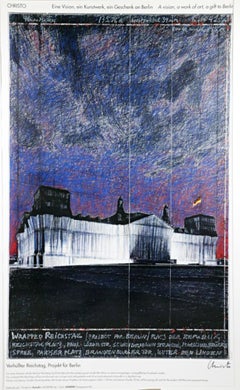
The Wrapped Reichstag at Night (Hand Signed by Christo)
By Christo
Located in New York, NY
Christo The Wrapped Reichstag at Night (Hand Signed), 1993 Offset Lithograph Hand signed by Christo on lower right front 40 × 25 1/2 inches Unframed and affixed to matting (as it ha...
Category

1990s Pop Art Peter Alexander Art

Materials

Lithograph, Offset

Pol Bury, Tribute to Mondrian, from Derriere le Miroir, 1982
By Pol Bury
Located in Southampton, NY
This exquisite lithograph by Pol Bury (1922–2005), titled Hommage a Mondrian (Tribute to Mondrian), originates from the historic 1982 folio Derriere le Miroir, No. 250, Hommage a Aim...
Category

1980s Pop Art Peter Alexander Art

Materials

Lithograph

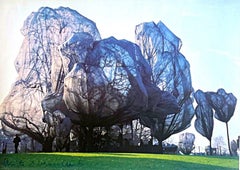
Wrapped Trees, Switzerland poster (Hand Signed by Christo and Jeanne-Claude)
By Christo and Jeanne-Claude
Located in New York, NY
Christo and Jeanne-Claude, Christo, Javacheff Christo Wrapped Trees, Switzerland (Hand Signed by Christo and Jeanne-Claude), 1998 Offset lithograph poster (Hand Signed) Signed Christ...
Category

1990s Pop Art Peter Alexander Art

Materials

Lithograph, Offset

BALBOA PARK Signed Lithograph, Tower San Diego California, Pop Art Landscape
By Peter Max
Located in Union City, NJ
BALBOA PARK is an original hand drawn lithograph by the renowned American Pop artist, Peter Max, printed in 1990 in an edition of 150, using traditional ha...
Category

1990s Pop Art Peter Alexander Art

Materials

Lithograph

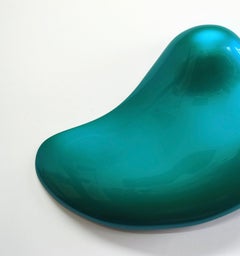
Israeli Modernist Silkscreen Print Kotel Wall Jerusalem Kadishman Lithograph
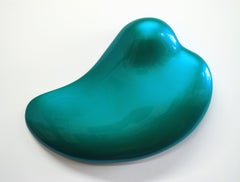
By Menashe Kadishman
Located in Surfside, FL
On BFK Rives French art paper. This is a Photograph silkscreen print of the Kotel, Western Wall in Jerusalem overlaid with Kadishman drawing. Menashe Kadishman was born in Tel-Aviv ...
Category

1970s Pop Art Peter Alexander Art

Materials

Lithograph

Previously Available Items
Hallelujah II, Peter Alexander
By Peter Alexander, 1939
Located in Fairfield, CT
Artist: Peter Alexander (1939) Title: Hallelujah II Year: 1988 Edition: 50, plus proofs Medium: Lithograph on Guarro paper Size: 22 x 30 inches Condition: Excellent Inscription: Sign...
Category

1980s Pop Art Peter Alexander Art

Materials

Lithograph

Untitled, Peter Alexander
By Peter Alexander, 1939
Located in Fairfield, CT
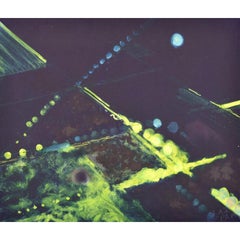
Artist: Peter Alexander (1939) Title: Untitled Year: 1989 Edition: 1/1 Medium: Monotype on Guarro paper Size: 30.25 x 33 inches Condition: Excellent Inscription: Signed and dated by ...
Category

1980s Pop Art Peter Alexander Art

Materials

Monotype

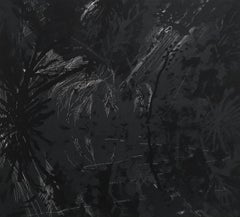
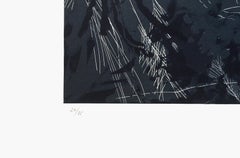
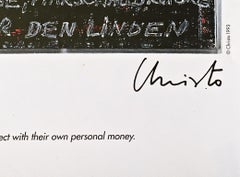
Los Angeles Modernist Light & Space Artist Peter Alexander Lithograph Locust
By Peter Alexander, 1939
Located in Surfside, FL
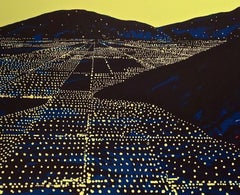
LOCUST, 1992 lithograph on heavy black paper, hand signed with initials of artist/numbered/dated in gold metallic ink recto 30 X 31 inches Limited edition of 100 Peter Alexander was born in Los Angeles, California in 1939 the fourth generation of a well-to-do Southern California family that ran oil fields. He grew up in Newport Beach, where the sun and the ocean were staples. (He was surfing by the age of 13.) One of the most lasting memories of his youth was watching a meteor shower over the beach. He studied architecture at the University of Pennsylvania under famed architect Louis Kahn (1957–60); During summers, he produced architectural drawings in the Los Angeles studio of the Modernist Richard Neutra. He continued his studies at the Architectural Association in London, England (1960–62); the University of California, Berkeley (1962–1963); the University of Southern California (1963–64); and the University of California, Los Angeles (1964–65) and (1965–66). After initially working as an architect, he rose to prominence in the 1960s with translucent resin sculptures. He has also produced paintings, including a series that depicts luminous aerial views of the city lights stretching across the Los Angeles basin. He also was commissioned to paint a large mural for the Walt Disney Concert Hall in Los Angeles. His art has appeared in the films Erin Brockovich, Terminator 3 and Shopgirl. Craig Krull Gallery exhibited a survey of Alexander's work, including paintings and sculptures from 1970 - 2009 in conjunction with Pacific Standard Time. Alexander will be exhibited in Pacific Standard Time museum shows as well, including “Civic Virtue: The Impact of the Los Angeles Municipal Art Gallery and the Watts Towers Arts Center” organized by the Los Angeles Department of Cultural Affairs, “Phenomenal: California Light and Space” at the Museum of Contemporary Art San Diego, and “Pacific Standard Time: Crosscurrents in L.A. Paintings and Sculpture 1945-1970” at the The J. Paul Getty Museum His work bears a relationship to the Light & Space Movement and Minimalism artists James Turrell, Larry Bell, Robert Irwin, Craig Kauffman, Billy Al Bengston, Joe Novak, Laddie John Dill, Lita Albuquerque. His experiments with industrial materials, begun when he was a student at UCLA, led to the creation of ethereal sculptures...
Category

1990s Post-Modern Peter Alexander Art

Materials

Lithograph

Gardena
By Peter Alexander, 1939
Located in Fairfield, CT
Artist: Peter Alexander (1939) Title: Gardena Year: 1988 Edition: 50, plus proofs Medium: Lithograph on Guarro paper Size: 22 x 30 inches Condition: Excellent Inscription: Signed and...
Category

1980s Pop Art Peter Alexander Art

Materials

Lithograph

Hallelujah II
By Peter Alexander, 1939
Located in Fairfield, CT
Artist: Peter Alexander (1939) Title: Hallelujah II Year: 1988 Edition: 50, plus proofs Medium: Lithograph on Guarro paper Size: 22 x 30 inches Condition: Excellent Inscription: Sign...
Category

1980s Pop Art Peter Alexander Art

Materials

Lithograph

Hallelujah II
By Peter Alexander, 1939
Located in Fairfield, CT
Artist: Peter Alexander (1939) Title: Hallelujah II Year: 1988 Edition: 50, plus proofs Medium: Lithograph on Arches paper Size: 35.5 x 23 inches Condition: Excellent Inscription: Si...
Category

1980s Pop Art Peter Alexander Art

Materials

Lithograph

Hallelujah II
By Peter Alexander, 1939
Located in Fairfield, CT
Artist: Peter Alexander (1939) Title: Hallelujah II Year: 1988 Edition: 50, plus proofs Medium: Lithograph on Arches paper Size: 35.5 x 23 inches Condition: Excellent Inscription: Si...
Category

1980s Pop Art Peter Alexander Art

Materials

Lithograph

Hallelujah II
By Peter Alexander, 1939
Located in Fairfield, CT
Artist: Peter Alexander (1939) Title: Hallelujah II Year: 1988 Edition: 50, plus proofs Medium: Lithograph on Arches paper Size: 35.5 x 23 inches Condition: Excellent Inscription: Si...
Category

1980s Pop Art Peter Alexander Art

Materials

Lithograph

Peter Alexander "Sitka" Signed Limited Edition Lithograph
By Peter Alexander, 1939
Located in San Rafael, CA
Peter Alexander (American, b. 1939) Sitka (from the Portfolio 'In Barcelona' 1988-89) Limited Edition Lithograph On Guarro paper and published by Poligrafa, Barcelona Spain Signed in...
Category

Late 20th Century Contemporary Peter Alexander Art

Materials

Lithograph

Untitled
By Peter Alexander, 1939
Located in Laguna Beach, CA
Among the pioneering California-based Light and Space artists, Peter Alexander has spent the course of his career focusing intensely on light and its manifold effects in his sculptur...
Category

1960s Minimalist Peter Alexander Art

Materials

Resin

Sunset (April 27, 73)
By Peter Alexander, 1939
Located in Laguna Beach, CA
Among the pioneering California-based Light and Space artists, Peter Alexander has spent the course of his career focusing intensely on light and its manifold effects in his sculptur...
Category

1970s Minimalist Peter Alexander Art

Materials

Paper, Pastel

Untitled
By Peter Alexander, 1939
Located in Laguna Beach, CA
Among the pioneering California-based Light and Space artists, Peter Alexander has spent the course of his career focusing intensely on light and its manifold effects in his sculptur...
Category

21st Century and Contemporary Contemporary Peter Alexander Art

Materials

Resin

Untitled
Untitled
H 3.5 in W 5.25 in D 5.25 in

Peter Alexander art for sale on 1stDibs.

Find a wide variety of authentic Peter Alexander art available for sale on 1stDibs. You can also browse by medium to find art by Peter Alexander in lithograph, archival paper, monoprint and more. Much of the original work by this artist or collective was created during the 20th century and is mostly associated with the Pop Art style. Not every interior allows for large Peter Alexander art, so small editions measuring 30 inches across are available. Customers who are interested in this artist might also find the work of Patrick Nagel, Tie Feng Jiang, and Joan Melnick. Peter Alexander art prices can differ depending upon medium, time period and other attributes. On 1stDibs, the price for these items starts at $2,000 and tops out at $8,400, while the average work can sell for $2,800.

Artists Similar to Peter Alexander

Still Thinking About These?

All Recently Viewed