Poggi Side Tables

to
2
Height
to
2
2
2
2
1
1
1
1
2
1
1
2
2
2
2
2
54
257
220
189
161
Creator: Poggi
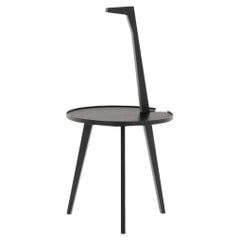
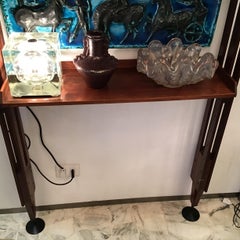
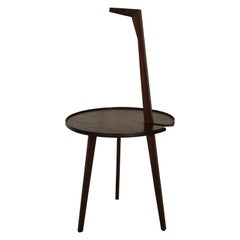
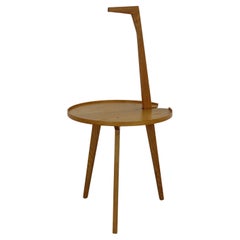
Franco Albini Cicognino Side Table in Wood by Poggi Pavia, 1970s Italy

Franco Albini Cicognino Side Table in Wood by Poggi Pavia, 1970s Italy

By Franco Albini, Poggi

Located in Brescia, Brescia

This exquisite Cicognino side table, designed by Franco Albini and produced by Poggi Pavia in the 1970s, is a timeless piece of Italian design. Crafted from high-quality wood, this t...

Category

1970s Italian Mid-Century Modern Vintage Poggi Side Tables

Materials

Wood, Teak

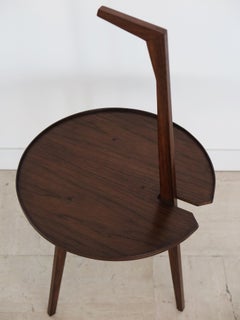
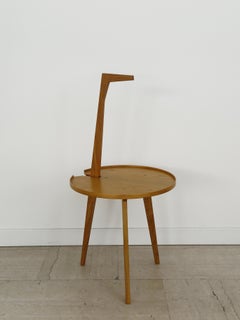
Franco Albini for Poggi Italian Cicognino Wood Side Table 1950s

Franco Albini for Poggi Italian Cicognino Wood Side Table 1950s

By Franco Albini, Poggi

Located in Reggio Emilia, IT

Italian midcentury wood side table model TN6 Cicognino designed by Franco Albini and produced by Poggi Pavia in 1953, production Italy 1960s Bibliography: Domus 312 (November 1955),...

Category

1950s Italian Mid-Century Modern Vintage Poggi Side Tables

Materials

Wood

Related Items
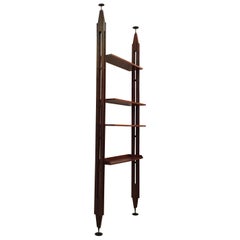
Franco Albini Rosewood Mid-Century Modern “LB7” Modular Bookcase for Poggi, 1957

Franco Albini Rosewood Mid-Century Modern “LB7” Modular Bookcase for Poggi, 1957

By Franco Albini, Poggi

Located in Vicenza, IT

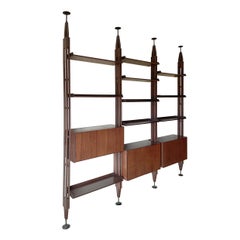
LB7 bookcase, designed by Franco Albini and manufactured by Poggi in 1957. Modular bookstore composed by upholds, containers with flying and doors, shelve. The industrial standard for every product component allows permanent and different solutions, from the bearing structures to the elements. The structure does not need anchorages to the wall and can be placed in the middle of the space. This set is composed of 3 modules, ten shelves, and three containers. It is made of Rosewood, iron, and brass. Excellent vintage condition. Franco Albini was born in Robbiate in 1905, and after his childhood and part of his youth, he moved to Milan. He graduated at Politecnico of Milan, Faculty of Architecture, in 1929, and He collaborated for three years in Giò Ponti and Emilio Lancia’s office. He probably had his international contacts here, at The International Exposition of 1929 in Barcelona and Paris, where he visited le Corbusier’s office, as Franca Helg used to tell. Throughout these first three years, his works were undoubtedly related to XIXth Century. His meeting with Edoardo Persico marks an evident turnover towards rationalism and writers for “Casabella” magazine. Persico’s thoughtful and ironical comments on some of Albini’s drawings for office furniture caused him deep upsetting. “I spent days of real anxiety – tells Albini – I had to answer all questions. I had a long fever”. The new phase that the meeting provoked begins with opening his own first office at Via Panizza with Renato Camus and Giancarlo Palanti. The group of Architects starts taking care of social housing, participating in the competition for the Baracca neighborhood in 1932, and then realizing the Ifacp neighborhood: Fabio Filzi (1936/38), Gabriele D’Annunzio, and Ettore Ponti (1939). During those years, He also worked for his first private villa (Pestarini). It is mainly in the context of exhibitions that the Italian architect experiments the compromise between rigor and poetic fantasy that Pagano was talking about; He conceived all the elements that would become recurrent in all types of his work – Architecture, Interiors, Design. The 1933 opening of the new Triennale of Milano, in Palazzo dell’Arte, becomes an occasion to express the highly innovative character of rationalist thinking. In this place, to experiment with new materials and solutions, but most of all a “method”. Young rationalist architects cultivated the art of exhibiting as a communication lab, an open field to space solutions. Albini, with Giancarlo Palanti, sets the steel structure house (with R. Camus, G. Mazzoleni, G. Minoletti and coordination by G. Pagano) designing also its furniture. For the next Triennale in 1936, marked by Persico’s early death, Franco Albini, together with a group of young architects around Pagano, takes care of the exhibition of Dwelling, where he presented 3 types of lodgings. In the same year, Albini and Romano design the exhibition for Ancient Italian jewelry: vertical uprights, simple linear poles design space. This element is recurring in other works, like the Scipione exhibition (1941), Vanzetti stand (1942), and Olivetti shop in Paris (1956). The architectural space is readable through a grid, introducing a third dimension, the vertical one, with a sense of lightness and transparency. Upright is also used in design objects, such as the Veliero bookcase...

Category

1950s Italian Mid-Century Modern Vintage Poggi Side Tables
Materials

Brass, Iron

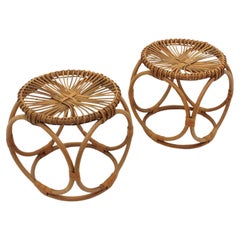
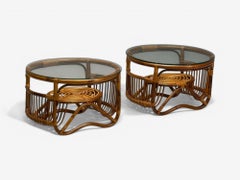
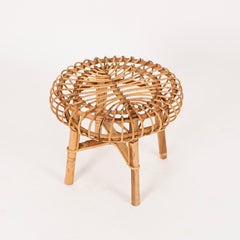
Franco Albini Style, Italian Mid-Century Modern, Side Tables, Bamboo, Rattan

Franco Albini Style, Italian Mid-Century Modern, Side Tables, Bamboo, Rattan

By Franco Albini

Located in Stamford, CT

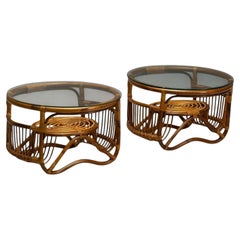
Franco Albini Style, Italian Mid-Century Modern, Side or End Tables, Bamboo, Rattan, Italy, 1960s Pair of organic modern side or end tables in bamboo and rattan likely designed by F...

Category

1960s Italian Mid-Century Modern Vintage Poggi Side Tables
Materials

Bamboo, Rattan

Franco Albini Cicognino Wood Side Table for Cassina, Italy, new

Franco Albini Cicognino Wood Side Table for Cassina, Italy, new

$1,441 / item

H 31.5 in W 15.75 in D 16.15 in

Franco Albini Cicognino Wood Side Table for Cassina, Italy, new

By Franco Albini, Cassina

Located in Berlin, DE

Prices vary dependent on the material of the table. Available in Canaletto Walnut, Natural Ash, Black Stained Ash or Amaranth stained ash. Side table designed by Franco Albini in 1...

Category

21st Century and Contemporary Italian Mid-Century Modern Poggi Side Tables

Materials

Wood

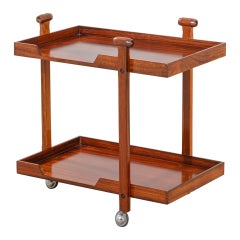
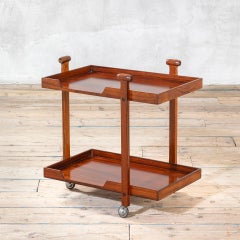
20th Century, Franco Albini for Poggi Wooden Cart mod. CR-20

20th Century, Franco Albini for Poggi Wooden Cart mod. CR-20

By Franco Albini, Poggi

Located in Turin, Turin

Franco Albini (1905-1977) lived in Milan where he stuied Architecture at the Politecnico. He started his career at Gio Ponti's studio, with whom he collaborated before getting in tou...

Category

1950s Italian Mid-Century Modern Vintage Poggi Side Tables
Materials

Wood

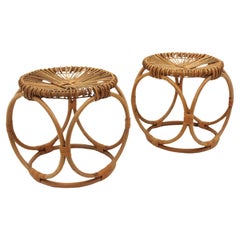
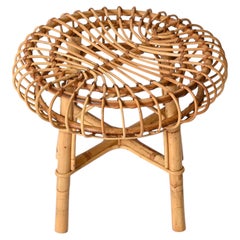
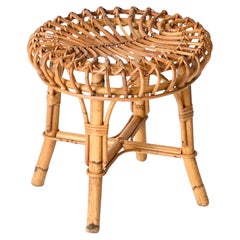
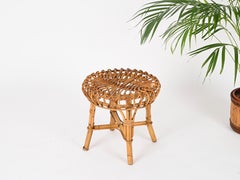
Franco Albini Pouf Stool or Side Table in Rattan and Bamboo, Italy, 1960s

Franco Albini Pouf Stool or Side Table in Rattan and Bamboo, Italy, 1960s

By Franco Albini

Located in Roma, IT

Wonderful Mid-Century round stool or side table in bamboo, curved rattan and hand-woven wicker. This delightful organic piece was designed by Franco Albini and produced in Italy duri...

Category

Mid-20th Century Italian Mid-Century Modern Poggi Side Tables

Materials

Bamboo, Wicker, Rattan

Franco Albini Cicognino Wood Side Table by Cassina

Franco Albini Cicognino Wood Side Table by Cassina

$1,897 / item

H 31.5 in W 15.75 in D 16.15 in

Franco Albini Cicognino Wood Side Table by Cassina

By Cassina, Franco Albini

Located in Barcelona, Barcelona

Side table designed by Franco Albini in 1953. Relaunched in 2008. Manufactured by Cassina in Italy. Dubbed Cicognino, or “little stork”, this iconic design, is clean-cut and refi...

Category

2010s Italian Mid-Century Modern Poggi Side Tables

Materials

Wood

Cavalletto Dining or Working Table by Franco Albini for Poggi

Cavalletto Dining or Working Table by Franco Albini for Poggi

By Poggi, Franco Albini

Located in Barcelona, ES

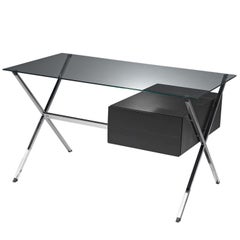
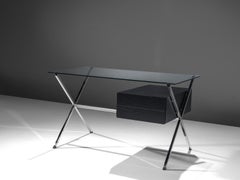
Cavalletto or TL2 dining or working table designed in 1950 by italian architect Franco Albini, old Poggi edition. Wood construction with beveled edges tabletop and crossed legs with ...

Category

1950s Italian Mid-Century Modern Vintage Poggi Side Tables
Materials

Metal

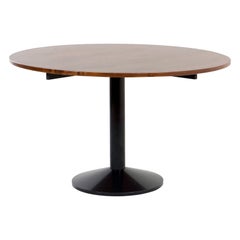
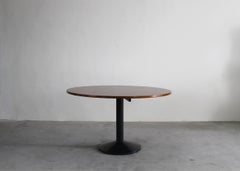
Franco Albini and Franca Helg for Poggi 'TL30' Round Table in Walnut and Steel

Franco Albini and Franca Helg for Poggi 'TL30' Round Table in Walnut and Steel

By Franco Albini, Franca Helg, Poggi

Located in Waalwijk, NL

Franco Albini and Franca Helg for Poggi, pedestal table, model 'TL30', walnut, lacquered steel, Italy, 1961 The TL30 pedestal table, designed by Franco Albini and Franca Helg for Po...

Category

1960s Italian Mid-Century Modern Vintage Poggi Side Tables
Materials

Steel

Oak Side Table by Franco Albini

Oak Side Table by Franco Albini

$11,000

H 31.5 in Dm 15.75 in

Oak Side Table by Franco Albini

By Franco Albini

Located in East Hampton, NY

Franco Albini, side table Model TN6 "Cicognino", Italy, 1952 Measures" Overall height: 31.5" Height to the tabletop: 16".

Category

Mid-20th Century Italian Poggi Side Tables

Materials

Wool

Franco Albini TL30 Round Table in Metal and Wood by Poggi 1950s

Franco Albini TL30 Round Table in Metal and Wood by Poggi 1950s

By Franco Albini, Poggi

Located in Cascina, Pisa

TL30 table with a round top in wood and a base in black lacquered metal, designed by Franco Albini and produced by Poggi in the 1950s. After spending his childhood and part of his youth in Robbiate in Brianza, where he was born in 1905, Franco Albini moved with his family to Milan. Here he enrolled in the Faculty of Architecture of the Polytechnic and graduated in 1929. He starts his professional activity in the studio of Gio Ponti and Emilio Lancia, with whom he collaborates for three years. He probably had his first international contacts here In those three years, the works carried out are admittedly of a twentieth-century imprint. It was the meeting with Edoardo Persico that marked a clear turning point towards rationalism and the rapprochement with the group of editors of “Casabella”. The new phase that that meeting provoked starts with the opening of the first professional studio in via Panizza with Renato Camus and Giancarlo Palanti. The group of architects began to deal with public housing by participating in the competition for the Baracca neighborhood in San Siro in 1932 and then creating the Ifacp neighborhoods: Fabio Filzi (1936/38), Gabriele D’Annunzio and Ettore Ponti (1939). Also in those years Albini worked on his first villa Pestarini. But it is above all in the context of the exhibitions that the Milanese master experiments his compromise between that “rigor and poetic fantasy” coining the elements that will be a recurring theme in all the declinations of his work – architecture, interiors, design pieces . The opening in 1933 of the new headquarters of the Triennale in Milan, in the Palazzo dell’Arte, becomes an important opportunity to express the strong innovative character of rationalist thought, a gym in which to freely experiment with new materials and new solutions, but above all a “method”. Together with Giancarlo Palanti, Albini on the occasion of the V Triennale di Milano sets up the steel structure house, for which he also designs the ‘furniture. At the subsequent Triennale of 1936, marked by the untimely death of Persico, together with a group of young designers gathered by Pagano in the previous edition of 1933, Franco Albini takes care of the preparation of the exhibition of the house, in which the furniture of three types of accommodation. The staging of Stanza per un uomo, at that same Triennale, allows us to understand the acute and ironic approach that is part of Albini, as a man and as a designer: the theme addressed is that of the existenzminimum and the reference of the project is to the fascist myth of the athletic and sporty man, but it is also a way to reflect on low-cost housing, the reduction of surfaces to a minimum and respect for the way of living. In that same year Albini and Romano designed the Ancient Italian Goldsmith’s Exhibition: vertical uprights, simple linear rods, design the space. A theme, that of the “flagpole”, which seems to be the center of the evolution of his production and creative process. The concept is reworked over time, with the technique of decomposition and recomposition typical of Albinian planning: in the setting up of the Scipio Exhibition and of contemporary drawings (1941) the tapered flagpoles, on which the paintings and display cases are hung, are supported by a grid of steel cables; in the Vanzetti stand (1942) they take on the V shape; in the Olivetti store in Paris (1956) the uprights in polished mahogany support the shelves for displaying typewriters and calculators. The reflection on this theme arises from the desire to interpret the architectural space, to read it through the use of a grid, to introduce the third dimension, the vertical one, while maintaining a sense of lightness and transparency. The flagpole is found, however, also in areas other than the exhibition ones. In the apartments he designed, it is used as a pivot on which the paintings can be suspended and rotated to allow different points of view, but at the same time as an element capable of dividing spaces. The Veliero bookcase...

Category

1950s Italian Mid-Century Modern Vintage Poggi Side Tables
Materials

Metal

Previously Available Items
Franco Albini for Poggi Italian Cicognino Dark Wood Side Table 1950s

Franco Albini for Poggi Italian Cicognino Dark Wood Side Table 1950s

By Poggi, Franco Albini

Located in Reggio Emilia, IT

Vintage modern antique coffee table model TN6 Cicognino designed by Franco Albini and manufactured by Poggi Pavia in 1953, production Italy 1950s. Letteratura: Domus 312 (November 1...

Category

1950s Italian Mid-Century Modern Vintage Poggi Side Tables

Materials

Wood

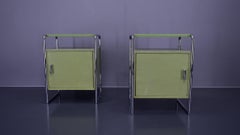
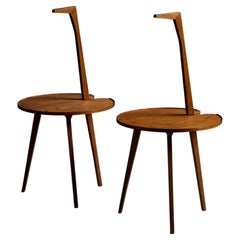
Pair of Franco Albini TN6 Cicognino Side Tables, Italy, 1950s

Pair of Franco Albini TN6 Cicognino Side Tables, Italy, 1950s

By Poggi, Franco Albini

Located in Berlin, DE

Beautiful pair of Franco Albini TN6 Cicognino Side Tables for Poggi. The height given applies to the height of the table top. Albinis iconic design reduces t...

Category

1950s Italian Mid-Century Modern Vintage Poggi Side Tables
Materials

Wood, Oak

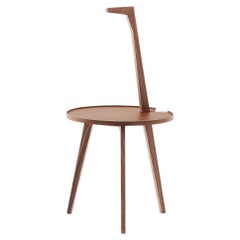
Prized "Cicognino" Side Table by Franco Albini for Poggi, 1952

Prized "Cicognino" Side Table by Franco Albini for Poggi, 1952

By Poggi, Franco Albini

Located in Milan, IT

Prized "Cicognino" side table by Franco Albini for Poggi, 1952. Part of the original production, conserved in the best of conditions.

Category

1950s Italian Mid-Century Modern Vintage Poggi Side Tables
Materials

Wood

Poggi side tables for sale on 1stDibs.
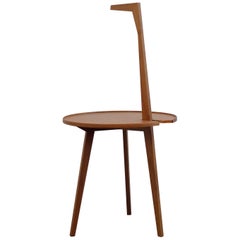
Poggi side tables are available for sale on 1stDibs. These distinctive items are frequently made of wood and are designed with extraordinary care. There are many options to choose from in our collection of Poggi side tables, although brown editions of this piece are particularly popular. Many of the original side tables by Poggi were created in the mid-century modern style in italy during the mid-20th century. If you’re looking for additional options, many customers also consider side tables by Ettore Sottsass, Osvaldo Borsani, and Charlotte Perriand. Prices for Poggi side tables can differ depending upon size, time period and other attributes — on 1stDibs, these items begin at $4,220 and can go as high as $8,563, while a piece like these, on average, fetch $6,391.