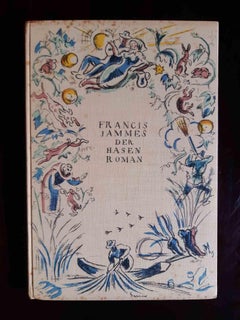
Richard Seewald Art

1889-1976
Richard Seewald (1889–1976) was born in Arnswalde, Germany and began studying architecture in Munich in 1909 at his father's request. However, he quickly turned to painting as a self-taught artist. Early drawings published in Die Jugend led to illustration work for other magazines. His first oil painting was created in 1913 on the island of Rab. That same year, he joined the Münchener Neue Secession and later the Deutscher Künstlerbund. Seewald became a sought-after illustrator for authors such as Daniel Defoe and Heinrich von Kleist. His own illustrated books and frequent travels around the Mediterranean influenced his evolving artistic style. In 1924, he was appointed professor at the Cologne Art School. After converting to Catholicism in 1929, he completed commissions for church murals. Disillusioned by the political climate, Seewald relocated permanently to Switzerland in 1931. The Nazis labeled his work "degenerate" in 1937, and many of his pieces were confiscated or destroyed. After WWII, Seewald cautiously re-entered the German art scene, eventually accepting a professorship in Munich in 1954. Following personal losses, he destroyed a significant portion of his work. His sketchbooks were donated to the Germanic National Museum, and his remaining estate was entrusted to a foundation in Ascona, where he is buried.
to
6
5
3
2
1
1
6

Use search to find more

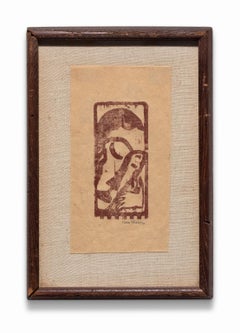
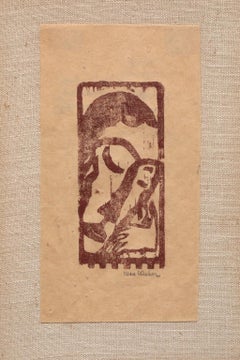
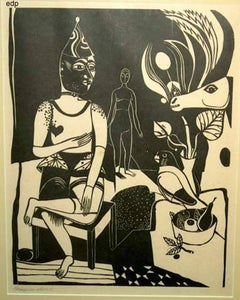
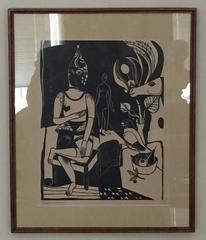
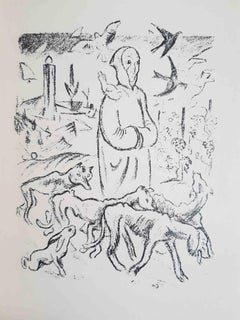
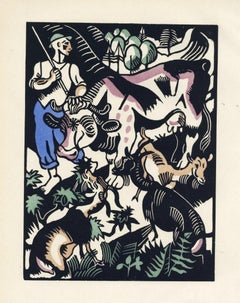
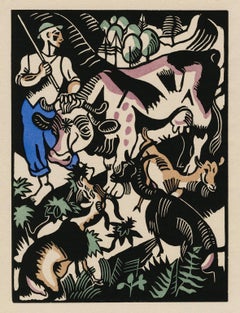
"Der Hirte" original woodcut

"Der Hirte" original woodcut

By Richard Seewald

Located in Henderson, NV

Medium: original color woodcut. Catalogue reference JH 771. Published in 1919 for Genius. Image size: 9 1/2 x 7 inches (240 x 178mm), on wove paper with full margins. This print is f...

Category

1920s Expressionist Richard Seewald Art

Materials

Woodcut

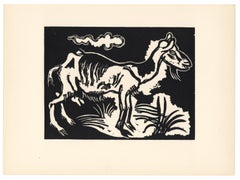
"The Goat" original woodcut

"The Goat" original woodcut

By Richard Seewald

Located in Henderson, NV

Medium: original woodcut. Printed in 1920 for the Deutsche Graphiker der Gegenwart portfolio, and published in Leipzig by Klinkhardt & Biermann in an edition of 500. Image size: 6 1/...

Category

1920s Expressionist Richard Seewald Art

Materials

Woodcut

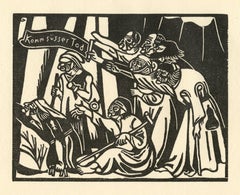
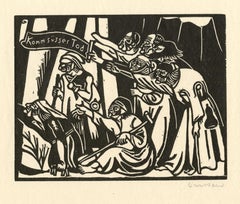
"Aus dem Composanto" original woodcut

"Aus dem Composanto" original woodcut

By Richard Seewald

Located in Henderson, NV

Medium: original woodcut. The inscription on the banner translates to "Come Sweet Death". Printed in Germany in 1922 for the rare Ganymed portfolio of "Das vierte Jahrbuch der Marees...

Category

1920s Expressionist Richard Seewald Art

Materials

Woodcut

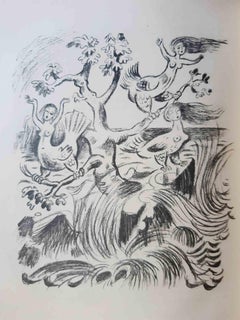
"Lago Maggiore" original lithograph

"Lago Maggiore" original lithograph

By Richard Seewald

Located in Henderson, NV

Medium: original lithograph. Catalogue reference: Jentsch 91. This impression on wove paper was printed in 1919 for Das Kestnerbuch, an important collection of original prints publis...

Category

1910s Expressionist Richard Seewald Art

Materials

Lithograph

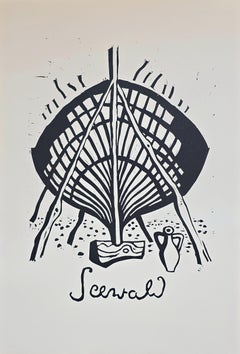
Boatyard on Corfu (Greek Island, Mediterranean)

Boatyard on Corfu (Greek Island, Mediterranean)

By Richard Seewald

Located in Kansas City, MO

Richard Seewald Boatyard on Corfu Lithograph 1974 Size: 32.28 x 22.04 inches (82 × 56 cm) Signed in stone COA provided *will shipped rolled in a double boxed tube, unless other arrangements are made before placing the order. Richard Seewald (1889–1976) was born in Arnswalde, Germany and began studying architecture in Munich in 1909 at his father's request. However, he quickly turned to painting as a self-taught artist. Early drawings published in Die Jugend led to illustration work for other magazines. His first oil painting was created in 1913 on the island of Rab. That same year, he joined the Münchener Neue Secession and later the Deutscher Künstlerbund. Seewald became a sought-after illustrator for authors such as Daniel Defoe and Heinrich von Kleist. His own illustrated books and frequent travels around the Mediterranean influenced his evolving artistic style. In 1924, he was appointed professor at the Cologne Art School. After converting to Catholicism in 1929, he completed commissions for church murals. Disillusioned by the political climate, Seewald relocated permanently to Switzerland in 1931. The Nazis labeled his work "degenerate" in 1937, and many of his pieces were confiscated or destroyed. After WWII, Seewald cautiously re-entered the German art scene, eventually accepting a professorship in Munich in 1954. Following personal losses, he destroyed a significant portion of his work. His sketchbooks were donated to the Germanic National Museum, and his remaining estate was entrusted to a foundation in Ascona, where he is buried. Richard Seewald, German artist, illustrator, modern art, Munich Secession, degenerate art, art professor, Mediterranean influence, Catholic convert, Nazi art...

Category

1970s Modern Richard Seewald Art

Materials

Lithograph

Related Items
Max Weber Woodcut Print from "Primitives" Poetry Book Signed

Max Weber Woodcut Print from "Primitives" Poetry Book Signed

By Max Weber

Located in Detroit, MI

ONE WEEK ONLY SALE This woodcut print is an expressionist print on one of the poems from Max Weber's poetry collection "Primitives: Poems and Woodcuts". This work is signed in penci...

Category

1920s Expressionist Richard Seewald Art

Materials

Woodcut

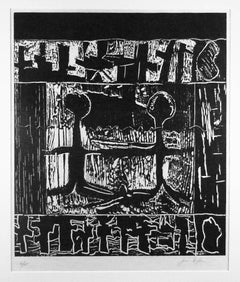
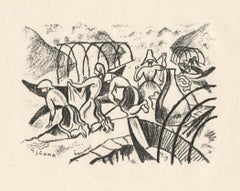
Dancing in the Dark

Dancing in the Dark

By Joan Snyder

Located in New York, NY

Joan Snyder has been called an autobiographical, even confessional artist, who draws from her experiences and surroundings to create her paintings. While her subjects vary widely, Sn...

Category

1980s Expressionist Richard Seewald Art

Materials

Woodcut

SITZENDER HARLEKIN
SITZENDER HARLEKIN

SITZENDER HARLEKIN

By Heinrich Campendonk

Located in Portland, ME

Campendonk, Heinrich. SITZENDER HARLEKIN. Engels/Sohn 59. Woodcut, 1922. 15 x 11 3/8 inches; 380 x 290 mm. Signed in pencil. In Excellent condition. Framed.

Category

20th Century Expressionist Richard Seewald Art

Materials

Woodcut

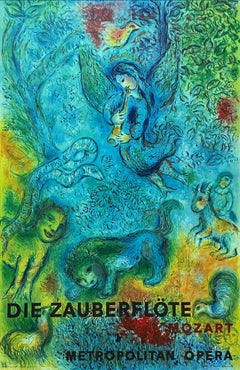
Chagall, Die Zauberflöte (Mourlot CS. 38), The Metropolitan Opera (after)

Chagall, Die Zauberflöte (Mourlot CS. 38), The Metropolitan Opera (after)

By Marc Chagall

Located in Fairfield, CT

Title: Die Zauberflöte (Mourlot CS. 38), The Metropolitan Opera Year: 1973 Medium: Lithograph on wove paper Size: 39.5 x 25.75 inches Notes: From the opening of Mozart's 'The Magic F...

Category

1970s Expressionist Richard Seewald Art

Materials

Lithograph

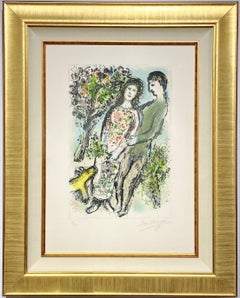
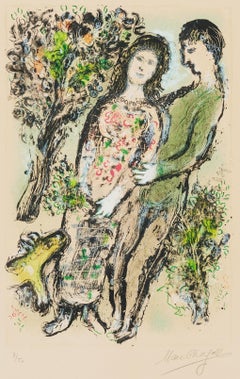
Marc Chagall ”L’Oranger”

Marc Chagall ”L’Oranger”

By Marc Chagall

Located in Los Angeles, CA

Marc Chagall (Russia/France 1887‑1985). ”L’Oranger”. Year 1975 Signed and numbered Marc Chagall 8/50. Colour lithograph printed on Arches. Framed 35.5H x 28W x 2D Inches Illustr...

Category

1970s Modern Richard Seewald Art

Materials

Lithograph

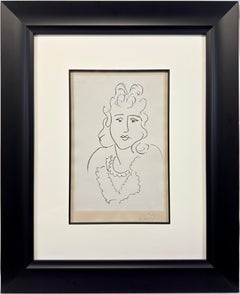
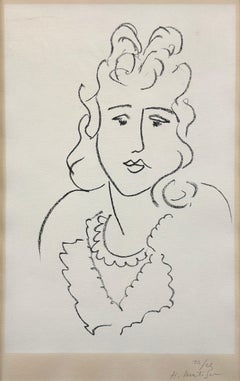
"Buste de Femme" 1942-43 by Henri Matisse Signed Lithograph /25 French Modernist

"Buste de Femme" 1942-43 by Henri Matisse Signed Lithograph /25 French Modernist

By Henri Matisse

Located in Yardley, PA

About this work: Created in 1942-43, this work belongs to one of the most fertile periods of Matisse’s career as a printmaker and draftsman. By this time, Matisse had long since mast...

Category

1940s Modern Richard Seewald Art

Materials

Lithograph, Chine Colle

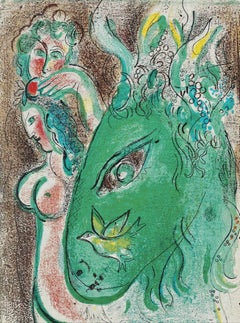
Marc Chagall, Paradise II, from Drawings for the Bible, 1960

Marc Chagall, Paradise II, from Drawings for the Bible, 1960

By Marc Chagall

Located in Fairfield, CT

Artist: Marc Chagall (1887–1985) Title: Paradise II (Paradise II) Year: July 29, 1960 Medium: Lithograph on velin du Marais paper Paper Size: 14 x 10.5 inches (35.56 x 26.67 cm) Cond...

Category

1960s Expressionist Richard Seewald Art

Materials

Lithograph

Marc Chagall, Eve Cursed by God, from Drawings for the Bible, 1960

Marc Chagall, Eve Cursed by God, from Drawings for the Bible, 1960

By Marc Chagall

Located in Fairfield, CT

Artist: Marc Chagall (1887–1985) Title: Eve Cursed by God (Eve maudite par Dieu) Year: July 29, 1960 Medium: Lithograph on velin du Marais paper Paper Size: 14 x 10.5 inches (35.56 x 26.67 cm) Condition: Well preserved, consistent with age and medium Inscription: Unsigned and unnumbered, as issued Publisher: Editions de la revue Verve, Paris, under the direction of Teriade, Editeur, Paris Printer: Mourlot Freres, Paris Catalogue Raisonne Reference: Chagall, Marc, et al. Chagall Lithographe. Andre Sauret, 1960-1986, illustration 230-276. Cramer, Patrick, and Meret Meyer. Marc Chagall: Catalogue Raisonne des Livres Illustres. P. Cramer ed., 1995, illustration 42 Notes: Excerpted from the folio (translated from French), This double issue of Verve includes the drawings that Marc Chagall executed in 1958 and 1959 on biblical themes that he had not generally dealt with in his illustration for the Bible, engraved with etching and which were included in issue 33/34 of Verve. This album has 96 renderings in black and 24 color litbographies as well as the cover that were specially made for this album. It was completed printing on July 29, 1960 by Draeger Freres for black gravures and by Mourlot Freres for color lithography. Additional notes: This exquisite lithograph by Marc Chagall (1887–1985), titled Eve maudite par Dieu (Eve Cursed by God), from Marc Chagall, Dessins Pour La Bible (Drawings for the Bible), Verve: Revue Artistique et Litteraire, Vol. X, No. 37-38, originates from the July 29, 1960 issue published by Editions de la revue Verve, Paris, under the direction of Teriade, Editeur, Paris, and printed by Mourlot Freres, Paris, 1960. This visionary composition reflects Chagall’s poetic interpretation of the biblical moment of divine judgment following the Fall, evoking themes of transgression, consequence, and spiritual awakening through his luminous color and dreamlike symbolism. The flowing forms and expressive imagery convey a sense of tension and emotional gravity, capturing Eve’s moment of reckoning and its enduring resonance within Chagall’s distinctive visual language. Infused with movement and lyricism, the work transforms sacred narrative into a meditative vision of loss, accountability, and the origins of human suffering. The piece forms part of Chagall’s celebrated series of lithographs and drawings created for Dessins Pour La Bible, a monumental project uniting art, scripture, and mysticism in one of the artist’s most important achievements. Marc Chagall, Dessins Pour La Bible (Drawings for the Bible), published as Verve Vol. X, No. 37-38 on July 29, 1960, represents a significant continuation and expansion of Chagall’s profound engagement with biblical imagery and spiritual narrative. Conceived and directed by the visionary publisher Teriade, the publication builds upon the earlier Verve issue devoted to Chagall’s Bible illustrations by presenting a new body of work executed in 1958 and 1959, exploring themes and episodes that had not been fully addressed in the initial series. Printed in Paris by Draeger Freres for black gravures and Mourlot Freres for color lithography, the edition demonstrates an exceptional level of technical refinement and artistic collaboration. The publication includes an extensive suite of ninety six black reproductions and twenty four color lithographs, as well as specially created cover imagery, reflecting Chagall’s continued innovation in translating sacred themes into graphic form. As part of the broader tradition of Verve, one of the most important artistic and literary publications of the twentieth century, this issue exemplifies the fusion of text, image, and craftsmanship at the highest level. Today, Verve Vol. X, No. 37-38 stands as a major achievement within Chagall’s graphic oeuvre, reaffirming his role as one of the foremost interpreters of biblical narrative in modern art. MARC CHAGALL (1887–1985) was a Belarus-born French painter, printmaker, and designer whose visionary imagination, radiant color, and deeply poetic symbolism made him one of the most beloved and influential artists of the 20th century. Rooted in the imagery of his Jewish heritage and the memories of his childhood in Vitebsk, Chagall’s art wove together themes of faith, love, folklore, and fantasy with a dreamlike modern sensibility. His unique style merging elements of Cubism, Fauvism, Expressionism, and Surrealism defied categorization, transforming ordinary scenes into lyrical meditations on memory and emotion. Influenced by Russian icon painting, medieval religious art, and the modern innovations of artists such as Pablo Picasso, Henri Matisse, and Georges Braque, Chagall developed a profoundly personal visual language filled with floating figures, vibrant animals, musicians, and lovers that symbolized the transcendent power of imagination and love. During his early years in Paris, he became an integral part of the Ecole de Paris circle, forming friendships with Amedeo Modigliani, Fernand Leger, and Sonia Delaunay, and his creative spirit resonated with that of his peers and successors Alexander Calder, Alberto Giacometti, Salvador Dali, Joan Miro, Wassily Kandinsky, Marcel Duchamp, and Man Ray, artists who sought to push the boundaries of perception, emotion, and form. Over a prolific career that spanned painting, printmaking, stained glass, ceramics, and stage design, Chagall brought an unparalleled poetic sensibility to modern art, infusing even the most abstract subjects with human warmth and spiritual depth. His works are held in the most prestigious museums around the world, including the Museum of Modern Art, the Centre Pompidou, the Tate, and the Guggenheim, where they continue to inspire generations of artists and collectors. The highest price ever paid for a Marc Chagall artwork is approximately 28.5 million USD, achieved in 2017 at Sotheby’s New York for Les Amoureux (1928). Marc Chagall Eve...

Category

1960s Expressionist Richard Seewald Art
Materials

Lithograph

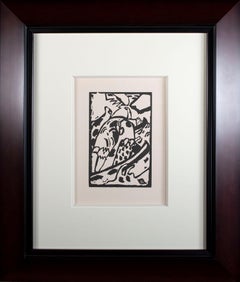
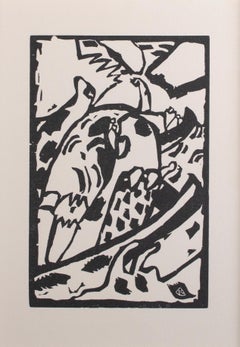
'Improvisation 7' second ed. woodcut from 'Klänge' by Wassily Kandinsky

'Improvisation 7' second ed. woodcut from 'Klänge' by Wassily Kandinsky

By Wassily Kandinsky

Located in Milwaukee, WI

'Improvisation 7' second ed. woodcut from 'Klänge' is a woodcut print created by Wassily Kandinsky. The present woodcut print comes from the second edition of 'Klänge (Sounds),' a book of original graphics and poetry by Wassily Kandinsky. The title of the album and of this print, 'Improvisation,' demonstrated Kandinsky's interest in music and how abstract musical forms could be translated into images on a two-dimensional surface. This particular composition is difficult to read, but through the abstraction, one can make out various figures and a landscape beyond. Originally carved and printed in 1911, this second edition print was done ca. 1938. It is a woodcut in black ink on woven paper. Signed with encircled 'K' in the block, lower right (from the book, signed in ink, ed. 118/300) Wassily Kandinsky Woodcut in black on Dutch laid paper Cut from the folio Klänge, conceived 1911-1912, published in 1913 Published by R. Piper, Munich Book is signed and edition to the justification page: "Wassily K" and "118/300" Each page is unsigned and unnumbered, as issued, sold as a single page. A copy of the justification page will be provided at sale. Image Size: 7 1/2" x 5 inches Frame Size: 22 1/4" x 18 3/4" Ref. Roethel 124 Artist Bio: The Museum of Modern Art described 'Klänge (Sounds)' as follows: Vasily Kandinsky's self-described "musical album," Klänge (Sounds), consists of thirty-eight prose-poems he wrote between 1909 and 1911 and fifty-six woodcuts he began in 1907. In the woodcuts Kandinsky veiled his subject matter, creating increasingly indecipherable images (though the horse and rider, his symbol for overcoming objective representation, runs through as a leitmotif). This process proved crucial for the development of abstraction in his art. Kandinsky said his choice of media sprang from an "inner necessity" for expression: the woodcuts were not merely illustrative, nor were the poems purely verbal descriptions. Kandinsky sought a synthesis of the arts, in which meaning was created through the interaction of, and space between, text and image, sound and meaning, mark and blank space. The experimental typography shows his interest in the physical aspects of the book. Klänge is one of three major publications by Kandinsky that appeared shortly before World War I, alongside Über die Geistige in der Kunst (Concerning the Spiritual in Art) and the Blaue Reiter almanac...

Category

1910s Blue Rider Richard Seewald Art

Materials

Woodcut, Laid Paper

Marc Chagall, David with the Harp, from Drawings for the Bible, 1960

Marc Chagall, David with the Harp, from Drawings for the Bible, 1960

By Marc Chagall

Located in Fairfield, CT

Artist: Marc Chagall (1887–1985) Title: David with the Harp (David a la harpe) Year: July 29, 1960 Medium: Lithograph on velin du Marais paper Paper Size: 14 x 10.5 inches (35.56 x 2...

Category

1960s Expressionist Richard Seewald Art
Materials

Lithograph

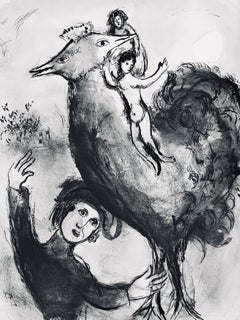
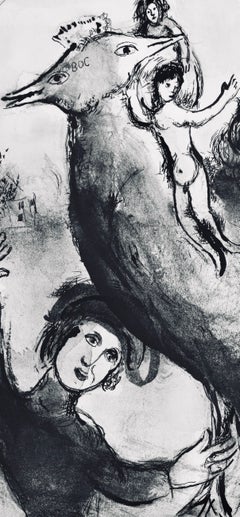
Marc Chagall, The Rooster, from Tales of Boccaccio, 1950 (after)

Marc Chagall, The Rooster, from Tales of Boccaccio, 1950 (after)

By Marc Chagall

Located in Fairfield, CT

Artist: Marc Chagall (1887–1985) (after) Title: The Rooster (Le Coq) Year: April 20, 1950 Medium: Lithograph on velin paper Paper Size: 14 x 10.5 inches (35.56 x 26.67 cm) Condition: Well preserved, consistent with age and medium Inscription: Unsigned and unnumbered, as issued Publisher: Editions de la revue Verve, Paris, under the direction of Teriade, Editeur, Paris Printer: Draeger Freres, Maitres-Imprimeurs, Paris Notes: Excerpted from the album (translated from French), This Verve issue contains the lavis that Marc Chagall composed to illustrate Tales of Boccaccio's Decameron and the paintings on the same theme of the Manuscript of the Dukes of Burgundy preserved in the Arsenal Library. Marc Chagall executed the cover of this work which was completed printing on April 20, 1950 on the presses of Maitres-Imprimeurs, the Draeger Freres. Additional notes: This exquisite lithograph after Marc Chagall (1887–1985), titled Le Coq (The Rooster), from Contes de Boccace, peintures du manuscrit des ducs de Bourgogne, Bibliotheque de l'Arsenal (Ms. no. 5193) (Tales of Boccaccio, Paintings from the Manuscript of the Dukes of Burgundy, Library of the Arsenal), Lavis de Marc Chagall, from Verve, Revue Artistique et Litteraire, Vol. VI, No. 24, originates from the 1950 issue published by Editions de la revue Verve, Paris, under the direction of Teriade, Editeur, Paris, and printed by Draeger Freres, Maitres-Imprimeurs, Paris, 1950. This beautifully expressive composition exemplifies Chagall’s poetic synthesis of color, movement, and imagination. Le Coq captures the artist’s timeless fascination with rural symbolism, metamorphosis, and the joyful interplay between the earthly and the divine. This 1950 issue of Verve, Revue Artistique et Litteraire, titled Contes de Boccace (Tales of Boccaccio), was devoted to the great Italian humanist Giovanni Boccaccio and illuminated manuscripts from the 15th century, interpreted and revived through the eyes of modern artists. Under the artistic direction of Teriade, Marc Chagall contributed a series of lyrical paintings and lavis that reimagined these Renaissance themes with his signature dreamlike color, tenderness, and spiritual symbolism. The issue juxtaposed Chagall’s contemporary vision with the rich heritage of medieval illumination, bridging centuries of artistic imagination. Printed by the master craftsmen of Draeger Freres, the publication stands as a testament to Verve’s tradition of uniting art, literature, and history in one luxurious volume that celebrates the continuity of human creativity from the Middle Ages to modernity. MARC CHAGALL (1887–1985) was a Belarus-born French painter, printmaker, and designer whose visionary imagination, radiant color, and deeply poetic symbolism made him one of the most beloved and influential artists of the 20th century. Rooted in the imagery of his Jewish heritage and the memories of his childhood in Vitebsk, Chagall’s art wove together themes of faith, love, folklore, and fantasy with a dreamlike modern sensibility. His unique style merging elements of Cubism, Fauvism, Expressionism, and Surrealism defied categorization, transforming ordinary scenes into lyrical meditations on memory and emotion. Influenced by Russian icon painting, medieval religious art, and the modern innovations of artists such as Pablo Picasso, Henri Matisse, and Georges Braque, Chagall developed a profoundly personal visual language filled with floating figures, vibrant animals, musicians, and lovers that symbolized the transcendent power of imagination and love. During his early years in Paris, he became an integral part of the Ecole de Paris circle, forming friendships with Amedeo Modigliani, Fernand Leger, and Sonia Delaunay, and his creative spirit resonated with that of his peers and successors Alexander Calder, Alberto Giacometti, Salvador Dali, Joan Miro, Wassily Kandinsky, Marcel Duchamp, and Man Ray, artists who sought to push the boundaries of perception, emotion, and form. Over a prolific career that spanned painting, printmaking, stained glass, ceramics, and stage design, Chagall brought an unparalleled poetic sensibility to modern art, infusing even the most abstract subjects with human warmth and spiritual depth. His works are held in the most prestigious museums around the world, including the Museum of Modern Art, the Centre Pompidou, the Tate, and the Guggenheim, where they continue to inspire generations of artists and collectors. The highest price ever paid for a Marc Chagall artwork is approximately 28.5 million USD, achieved in 2017 at Sotheby’s New York for Les Amoureux (1928). Marc Chagall Le Coq...

Category

1950s Expressionist Richard Seewald Art
Materials

Lithograph

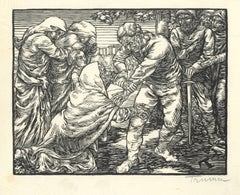
"Coriolan und seine Mutter" signed original woodcut

"Coriolan und seine Mutter" signed original woodcut

Located in Henderson, NV

Medium: original woodcut. Signed in pencil by Peter Trumm and printed in Germany in 1922 for the very rare "Die zweite Ganymed-Mappe" portfolio of "Das vierte Jahrbuch der Marees Ges...

Category

1920s Expressionist Richard Seewald Art
Materials

Woodcut

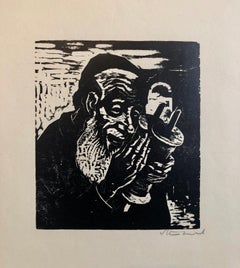
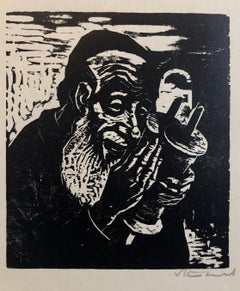
Jewish Rabbi with Torah German Expressionist Woodcut Israeli Early Bezalel

Jewish Rabbi with Torah German Expressionist Woodcut Israeli Early Bezalel

By Jacob Steinhardt

Located in Surfside, FL

Hand signed in pencil, woodblock print woodcut. Jacob Steinhardt 1887-1968 Steinhardt, Jakob, Painter and Woodcut Artist. b. 1887, Yaacov Steinhardt was born in the then remote,...

Category

20th Century Expressionist Richard Seewald Art
Materials

Woodcut

Descente aux enfers

Georges BraqueDescente aux enfers, 1961

$4,327

H 12.6 in Dm 9.85 in

Descente aux enfers

By Georges Braque

Located in Paris, FR

Lithograph on Japan Paper, 1961 handsigned by the artist in pencil 23 x 19 cm (image) - 32 x 25 cm (sheet) very good condition LCD2804

Category

1960s Modern Richard Seewald Art

Materials

Lithograph

Previously Available Items
"Aus dem Composanto" signed original woodcut

"Aus dem Composanto" signed original woodcut

By Richard Seewald

Located in Henderson, NV

Medium: original woodcut. The inscription on the banner translates to "Come Sweet Death". Signed in pencil by Richard Seewald and printed in Germany in 1922 for the very rare "Die zw...

Category

1920s Expressionist Richard Seewald Art
Materials

Woodcut

Richard Seewald art for sale on 1stDibs.
Find a wide variety of authentic Richard Seewald art available for sale on 1stDibs. You can also browse by medium to find art by Richard Seewald in woodcut print, lithograph and more. Much of the original work by this artist or collective was created during the 20th century and is mostly associated with the Expressionist style. Not every interior allows for large Richard Seewald art, so small editions measuring 7 inches across are available. Customers who are interested in this artist might also find the work of Alfred Kubin, Otto Mueller, William Strang, R.A., and R.E.. Richard Seewald art prices can differ depending upon medium, time period and other attributes. On 1stDibs, the price for these items starts at $150 and tops out at $600, while the average work can sell for $325.
Artists Similar to Richard Seewald