Richard Seewald Art

1889-1976
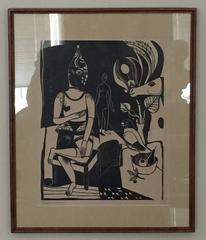
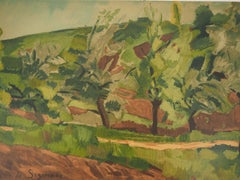
Richard Seewald (1889–1976) was born in Arnswalde, Germany and began studying architecture in Munich in 1909 at his father's request. However, he quickly turned to painting as a self-taught artist. Early drawings published in Die Jugend led to illustration work for other magazines. His first oil painting was created in 1913 on the island of Rab. That same year, he joined the Münchener Neue Secession and later the Deutscher Künstlerbund. Seewald became a sought-after illustrator for authors such as Daniel Defoe and Heinrich von Kleist. His own illustrated books and frequent travels around the Mediterranean influenced his evolving artistic style. In 1924, he was appointed professor at the Cologne Art School. After converting to Catholicism in 1929, he completed commissions for church murals. Disillusioned by the political climate, Seewald relocated permanently to Switzerland in 1931. The Nazis labeled his work "degenerate" in 1937, and many of his pieces were confiscated or destroyed. After WWII, Seewald cautiously re-entered the German art scene, eventually accepting a professorship in Munich in 1954. Following personal losses, he destroyed a significant portion of his work. His sketchbooks were donated to the Germanic National Museum, and his remaining estate was entrusted to a foundation in Ascona, where he is buried.
to
5
1
Overall Width
to
Overall Height
to
6
2
3
1
5
1
3
3
1
1
1
1
1
1
4
2
6
11,226
2,855
2,494
1,437
6
Artist: Richard Seewald
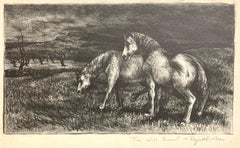
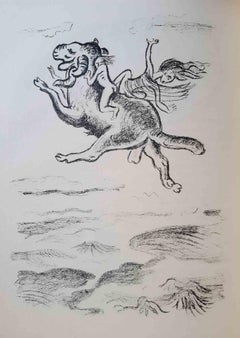
"Lago Maggiore" original lithograph

"Lago Maggiore" original lithograph

By Richard Seewald

Located in Henderson, NV

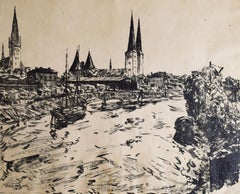
Medium: original lithograph. Catalogue reference: Jentsch 91. This impression on wove paper was printed in 1919 for Das Kestnerbuch, an important collection of original prints publis...

Category

1910s Expressionist Richard Seewald Art

Materials

Lithograph

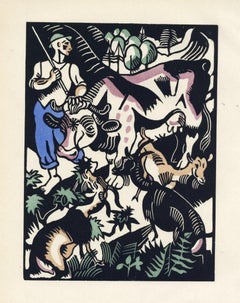
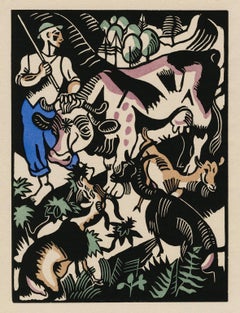
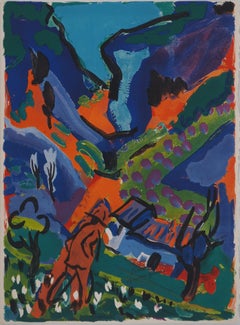
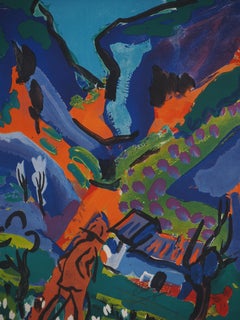
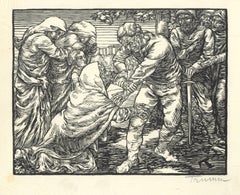
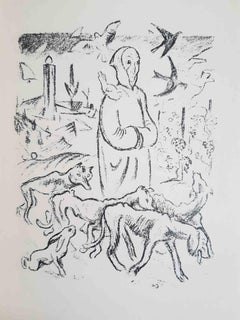
"Der Hirte" original woodcut

"Der Hirte" original woodcut

By Richard Seewald

Located in Henderson, NV

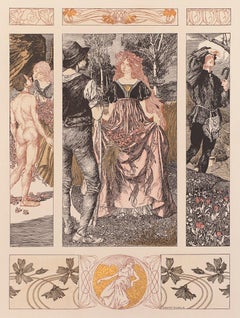
Medium: original color woodcut. Catalogue reference JH 771. Published in 1919 for Genius. Image size: 9 1/2 x 7 inches (240 x 178mm), on wove paper with full margins. This print is f...

Category

1920s Expressionist Richard Seewald Art

Materials

Woodcut

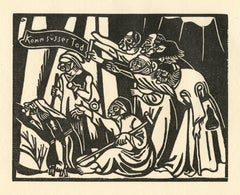
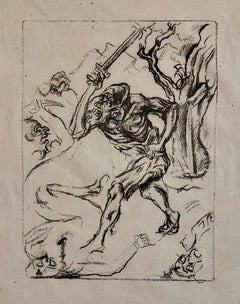
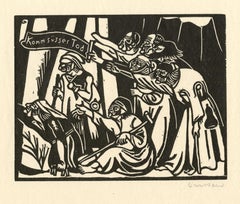
"Aus dem Composanto" original woodcut

"Aus dem Composanto" original woodcut

By Richard Seewald

Located in Henderson, NV

Medium: original woodcut. The inscription on the banner translates to "Come Sweet Death". Printed in Germany in 1922 for the rare Ganymed portfolio of "Das vierte Jahrbuch der Marees...

Category

1920s Expressionist Richard Seewald Art

Materials

Woodcut

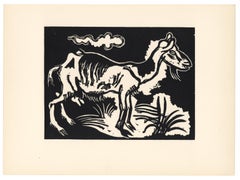
"The Goat" original woodcut

"The Goat" original woodcut

By Richard Seewald

Located in Henderson, NV

Medium: original woodcut. Printed in 1920 for the Deutsche Graphiker der Gegenwart portfolio, and published in Leipzig by Klinkhardt & Biermann in an edition of 500. Image size: 6 1/...

Category

1920s Expressionist Richard Seewald Art

Materials

Woodcut

Boatyard on Corfu (Greek Island, Mediterranean)

Boatyard on Corfu (Greek Island, Mediterranean)

By Richard Seewald

Located in Kansas City, MO

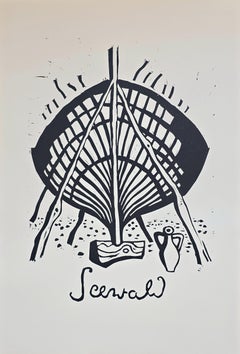
Richard Seewald Boatyard on Corfu Lithograph 1974 Size: 32.28 x 22.04 inches (82 × 56 cm) Signed in stone COA provided *will shipped rolled in a double boxed tube, unless other arrangements are made before placing the order. Richard Seewald (1889–1976) was born in Arnswalde, Germany and began studying architecture in Munich in 1909 at his father's request. However, he quickly turned to painting as a self-taught artist. Early drawings published in Die Jugend led to illustration work for other magazines. His first oil painting was created in 1913 on the island of Rab. That same year, he joined the Münchener Neue Secession and later the Deutscher Künstlerbund. Seewald became a sought-after illustrator for authors such as Daniel Defoe and Heinrich von Kleist. His own illustrated books and frequent travels around the Mediterranean influenced his evolving artistic style. In 1924, he was appointed professor at the Cologne Art School. After converting to Catholicism in 1929, he completed commissions for church murals. Disillusioned by the political climate, Seewald relocated permanently to Switzerland in 1931. The Nazis labeled his work "degenerate" in 1937, and many of his pieces were confiscated or destroyed. After WWII, Seewald cautiously re-entered the German art scene, eventually accepting a professorship in Munich in 1954. Following personal losses, he destroyed a significant portion of his work. His sketchbooks were donated to the Germanic National Museum, and his remaining estate was entrusted to a foundation in Ascona, where he is buried. Richard Seewald, German artist, illustrator, modern art, Munich Secession, degenerate art, art professor, Mediterranean influence, Catholic convert, Nazi art...

Category

1970s Modern Richard Seewald Art

Materials

Lithograph

Related Items
Dancing in the Dark

Dancing in the Dark

By Joan Snyder

Located in New York, NY

Joan Snyder has been called an autobiographical, even confessional artist, who draws from her experiences and surroundings to create her paintings. While her subjects vary widely, Sn...

Category

1980s Expressionist Richard Seewald Art

Materials

Woodcut

SITZENDER HARLEKIN
SITZENDER HARLEKIN

SITZENDER HARLEKIN

By Heinrich Campendonk

Located in Portland, ME

Campendonk, Heinrich. SITZENDER HARLEKIN. Engels/Sohn 59. Woodcut, 1922. 15 x 11 3/8 inches; 380 x 290 mm. Signed in pencil. In Excellent condition. Framed.

Category

20th Century Expressionist Richard Seewald Art
Materials

Woodcut

'Eyes for the Night' — Mid-century American Surrealism

'Eyes for the Night' — Mid-century American Surrealism

By Benton Murdoch Spruance

Located in Myrtle Beach, SC

Benton Spruance, 'Eyes for the Night', lithograph, 1947, edition 35, Fine and Looney 260. Signed, dated, titled, and annotated 'Ed 35' in pencil. A fine impression, on heavy, cream ...

Category

1940s American Modern Richard Seewald Art

Materials

Lithograph

Marc Chagall, Excursion Boat with Bouquet, from Views of Paris, 1963

Marc Chagall, Excursion Boat with Bouquet, from Views of Paris, 1963

By Marc Chagall

Located in Southampton, NY

This exquisite lithograph by Marc Chagall (1887–1985), titled Bateau-Mouche au Bouquet (Excursion Boat with Bouquet), from Regards Sur Paris (Views of Paris), originates from the Jan...

Category

1960s Expressionist Richard Seewald Art
Materials

Lithograph

Le Vieux Roi Lithograph by Picasso, Modern Style, Signed, 1959 Edition

Le Vieux Roi Lithograph by Picasso, Modern Style, Signed, 1959 Edition

By Pablo Picasso

Located in OPOLE, PL

Pablo Picasso (1881-1973) - Le vieux Roi (Old King) Lithograph from 1959. The edition of 35/200 on Arches paper, signed in blue crayon. Dimensions of work: 64.5 x 49.5 cm. Hand s...

Category

1950s Modern Richard Seewald Art

Materials

Lithograph

'Financial District', New York City — American Modernism

'Financial District', New York City — American Modernism

By Howard Norton Cook

Located in Myrtle Beach, SC

Howard Cook, 'Financial District', lithograph, 1931, edition 75, Duffy 155. A fine, richly-inked impression, on cream wove paper, the full sheet with wide margins (2 3/4 to 5 5/8 inches), in excellent condition. Image size 13 5/16 x 10 3/8 inches (338 x 264 mm); sheet size 23 x 16 inches (584 x 406 mm). Matted to museum standards, unframed. Literature: 'American Master Prints from the Betty and Douglas Duffy Collection', the Trust for Museum Exhibitions, Washington, D.C., 1987. Collections: Crystal Bridges Museum of American Art, Library of Congress, Metropolitan Museum of Art, Philadelphia Museum of Art, Smithsonian American Art Museum. ABOUT THE ARTIST Howard Norton Cook (1901-1980) was one of the best-known of the second generation of artists who moved to Taos. A native of Massachusetts, he studied at the Art Students League in New York City and at the Woodstock Art Colony. Beginning his association with Taos in 1926, he became a resident of the community in the 1930s. During his career, he received two Guggenheim Fellowships and was elected an Academician in the National Academy of Design. He earned a national reputation as a painter, muralist, and printmaker. Cook’s work in the print mediums received acclaim early in his career with one-person exhibitions at the Denver Art Museum (1927) and the Museum of New Mexico (1928). He received numerous honors and awards over the years, including selection in best-of-the-year exhibitions sponsored by the American Institute of Graphics Arts, the Brooklyn Museum, the Society of American Etchers, and the Philadelphia Print Club. His first Guggenheim Fellowship took him to Taxco, Mexico in 1932 and 1933; his second in the following year enabled him to travel through the American South and Southwest. Cook painted murals for the Public Works of Art Project in 1933 and the Treasury Departments Art Program in 1935. The latter project, completed in Pittsburgh, received a Gold Medal from the Architectural League of New York. One of his most acclaimed commissions was a mural in the San Antonio Post Office in 1937. He and Barbara Latham settled in Talpa, south of Taos, in 1938 and remained there for over three decades. Cook volunteered in World War II as an Artist War Correspondent for the US Navy, where he was deployed in the Pacific. In 1943 he was appointed Leader of a War Art Unit...

Category

1930s American Modern Richard Seewald Art

Materials

Lithograph

'Venus'  — German Expressionism

'Venus' — German Expressionism

By Karl Michel

Located in Myrtle Beach, SC

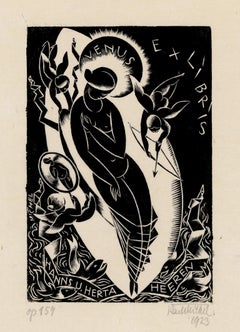
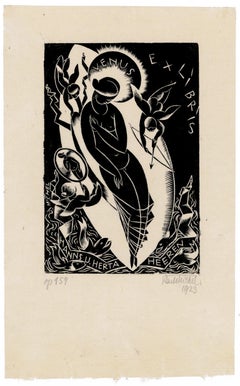
Karl Michel, 'Venus, Ex Libris - Hanns U. Herta Heeren', woodcut, 1923, edition not stated but small. Signed, dated, and numbered 'op.154' in pencil. Signed in the block, lower left. A fine impression, on cream Japan paper, with full margins (15/16 to 2 11/16 inches), in good condition. Printed by the artist. Matted to museum standards (unframed). . Translation: Venus Ex Libris for Hanns and Herta Heeren. Image size 5 15/16 x 4 inches (156 x 102 mm); sheet size 9 5/8 x 6 inches (245 x 152 mm). ABOUT THE ARTIST Karl Michel (1889-1984) was a noted graphic designer and expressionist printmaker during Germany's pre-Nazi Weimar Republic (1919-1933). Michel’s work was the subject of a feature article in the influential German graphic design magazine Das Plakat (The Poster) in 1920. An anti-war advocate, Michel created a suite of 12 wood engravings depicting his impressions of the humanitarian toll of WWII entitled ‘Humanitas’ (Humanity). The German publishing house Greifenverlag published the series in a reduced folio of unsigned prints. Michel’s graphic work is held in the permanent collections of the Auckland War Memorial Museum (New Zealand), Frederikshavn Kunstmuseum & Exlibrissamling (Denmark), Museum of Applied Arts (Budapest), The Robert Gore Rifkind Center for German Expressionist Studies at the Los Angeles County Museum of Art, and the German Expressionism...

Category

1920s Expressionist Richard Seewald Art
Materials

Woodcut

'I'll Be What I Choose'  — Mid-century American Surrealism

'I'll Be What I Choose' — Mid-century American Surrealism

By Benton Murdoch Spruance

Located in Myrtle Beach, SC

'I'll Be What I Choose: Vanity of Ambition', color lithograph, 1949, edition 40, Fine and Looney 281. Signed, titled, and numbered '23/40' in pencil. Initialed in the stone, lower ri...

Category

1940s American Modern Richard Seewald Art

Materials

Lithograph

Violet Torso on Orange Stripes

Violet Torso on Orange Stripes

By Henry Moore

Located in London, GB

Lithograph in four colours on Japon nacré paper 31 x 31 cm - framed Edition of 75 Hand-signed and numbered by the artist Henry Moore’s prints are a vital aspect of his artistic lega...

Category

1960s Modern Richard Seewald Art

Materials

Lithograph

Zwei Frauen (Two Women) /// German Expressionism Karl Schmidt-Rottluff Woodcut

Zwei Frauen (Two Women) /// German Expressionism Karl Schmidt-Rottluff Woodcut

By Karl Schmidt-Rottluff

Located in Saint Augustine, FL

Artist: Karl Schmidt-Rottluff (German, 1884-1976) Title: "Zwei Frauen (Two Women)" Portfolio: Das Spiel Christa vom Schmerz der Schönheit des Weibes (The Play Christa from the Pain of the Beauty of the Woman) *Issued unsigned Year: 1918 Medium: Original Woodcut on cream wove paper Limited edition: Unknown Printer: Fritz Voigt, Berlin, Germany Publisher: Verlag Die Aktion, Berlin, Germany Overall size with attached page: 8.5" x 10.63" Sheet size: 8.5" x 5.38" Image size: 6.5" x 3.63" Reference: Schapire No. 222, page 45; Jentsch No. 35. Rifkind No. 2563; Lang No. 300; Reed No. 118 Condition: Toning to sheet (as normal). A few tiny pinholes in right margin. In very good condition Very rare Notes: Provenance: private collection - Oxnard, CA. Comes from a complete originally bound 48 page folio with 9 original woodcuts by Schmidt-Rottluff. Text by Alfred Brust. Presently attached to its accompanying page. The cover and title pages in pictures are not included, only for reference/provenance. There is an example of this work in the permanent collection of the Brücke Museum, Berlin, Germany. Biography: Karl Schmidt-Rottluff (born December 1, 1884, Rottluff, near Chemnitz, Germany—died August 9, 1976, West Berlin [now Berlin]), German painter and printmaker who was noted for his Expressionist landscapes and nudes. In 1905 Schmidt-Rottluff began to study architecture in Dresden, Germany, where he and his friend Erich Heckel met Ernst Ludwig Kirchner and Fritz Bleyl...

Category

1910s Expressionist Richard Seewald Art

Materials

Woodcut

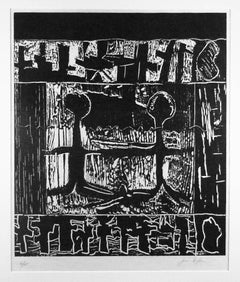
Kathe Kollwitz, Self-Portrait, from Ten Lithographs, 1941 (after)

Kathe Kollwitz, Self-Portrait, from Ten Lithographs, 1941 (after)

By Käthe Kollwitz

Located in Southampton, NY

This exquisite lithograph after Kathe Kollwitz (1867–1945), titled Selbstbildnis (Self-Portrait), from the folio Kathe Kollwitz, Ten Lithographs, originates from the 1941 edition published by Henry C. Kleemann, New York, and Curt Valentin, New York; printed by Duenewald Printing Corporation, New York. The composition reflects Kollwitz’s profound engagement with themes of identity, introspection, and human vulnerability, rendered with stark emotional intensity and a powerful graphic economy that underscores her enduring social message. Executed as a lithograph on velin paper, this work measures 19 x 16 inches (48.26 x 40.64 cm), overall; 10.5 x 9 inches (26.67 x 22.86 cm), image. Unsigned and unnumbered as issued. Artwork Details: Artist: After Kathe Kollwitz (1867–1945) Title: Selbstbildnis (Self-Portrait), from Kathe Kollwitz, Ten Lithographs Medium: Lithograph on velin paper Dimensions: 19 x 16 inches (48.26 x 40.64 cm), overall; 10.5 x 9 inches (26.67 x 22.86 cm), image Inscription: Unsigned and unnumbered as issued Date: 1941 Publisher: Henry C. Kleemann, New York, and Curt Valentin, New York Printer: Duenewald Printing Corporation, New York Condition: Well preserved, consistent with age and medium Provenance: From the folio Kathe Kollwitz, Ten Lithographs, 1941 About the Publication: Kathe Kollwitz, Ten Lithographs, published in New York in 1941 by Henry C. Kleemann in collaboration with Curt Valentin, represents an important early American presentation of Kollwitz’s graphic work at a time when her reputation was expanding internationally. Issued during the turbulence of the Second World War and following the suppression of her work in Germany under the Nazi regime, the folio played a crucial role in introducing her imagery to a broader audience outside Europe. The publication gathers a selection of her most powerful lithographic compositions, emphasizing her mastery of tonal contrast, expressive line, and psychological depth. Produced with careful attention to print quality by Duenewald Printing Corporation, the edition reflects the continued transmission of European modernist printmaking traditions into the American context, serving both as a document of artistic excellence and as a vehicle for the preservation and dissemination of Kollwitz’s humanistic vision. About the Artist: Kathe Kollwitz (1867–1945) was a German draughtsman, printmaker, and sculptor whose profoundly moving imagery, exceptional technical mastery, and unwavering social conscience established her as one of the most important and influential artists of the twentieth century, widely recognized as a master of modern printmaking and one of the most powerful visual chroniclers of human suffering, war, and social injustice. Born in Konigsberg, East Prussia, into a progressive and intellectually engaged family, Kollwitz was encouraged from an early age to pursue art and developed a deep awareness of social inequality that would shape her entire career, studying in Berlin and Munich at a time when women were largely excluded from formal academies while mastering drawing and graphic techniques with extraordinary discipline. Her breakthrough came with the monumental graphic cycle A Weavers’ Revolt (1893–1897), followed by The Peasants’ War (1901–1908), works that combined complex narrative structure with extraordinary technical command in etching, aquatint, and lithography, establishing her reputation as one of Europe’s leading graphic artists. Throughout her career, Kollwitz remained committed to portraying the lives of workers, mothers, and victims of poverty and conflict with unflinching honesty, creating compositions defined by bold, sculptural line, dense shadow, and unparalleled psychological depth that conveyed grief, resilience, and dignity. Working during a period transformed by the radical innovations of Pablo Picasso, Alexander Calder, Alberto Giacometti, Salvador Dali, Joan Miro, Wassily Kandinsky, Marcel Duchamp, and Man Ray, Kollwitz maintained a resolutely figurative and human-centered approach, aligning more closely with German Expressionism and artists such as Ernst Barlach, Max Liebermann, and Edvard Munch, whose emotional intensity and symbolic treatment of the human figure profoundly shaped her artistic language. Her later work, particularly the woodcut cycle War (1922–1923), stands among the most powerful anti-war statements in the history of art, reflecting both personal tragedy, including the death of her son in World War I, and a universal condemnation of violence and loss. In addition to her prints, Kollwitz created deeply moving sculptures that extended her exploration of grief and maternal protection into three dimensions, reinforcing her status as a multidisciplinary artist of exceptional range. She achieved significant recognition during her lifetime, becoming the first woman elected to the Prussian Academy of Arts, though her work was later condemned by the Nazi regime as degenerate, leading to her forced resignation and the removal of her works from public collections, yet her reputation expanded internationally after World War II and she is now regarded as a central figure in modern art. Her influence has been profound and far-reaching, shaping later artists including Francis Bacon, Anselm Kiefer, Leon Golub, Kiki Smith, and numerous contemporary figurative and socially engaged artists who continue to explore themes of trauma, memory, and human vulnerability. Today her works are held in major museum collections worldwide, including the Kathe Kollwitz Museum in Berlin, the Museum of Modern Art in New York, the British Museum in London, and the Art Institute of Chicago, and remain highly sought after by collectors for their emotional intensity and historical significance. The highest auction record for a work by Kathe Kollwitz is held by her sculpture Mutter mit totem Sohn (Mother with Dead Son), which achieved approximately 1.2 million EUR at auction, confirming her enduring importance. Kathe Kollwitz Selbstbildnis 1941 lithograph German Expressionism social realism print.

Category

1940s Expressionist Richard Seewald Art
Materials

Lithograph

The Search
The Search

Alberto GiacomettiThe Search, ca 1960

$1,293

H 20.08 in W 15.95 in

The Search

By Alberto Giacometti

Located in London, GB

Alberto Giacometti The Search , ca. 1968 Restrike Etching unsigned comes with COA from publishers 25.4 × 20.3 cm 51 x 40.5 cm (framed)

Category

1960s Modern Richard Seewald Art

Materials

Lithograph

Previously Available Items
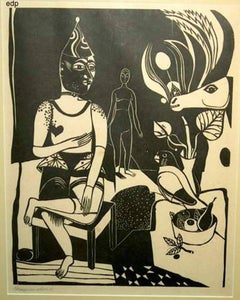
"Aus dem Composanto" signed original woodcut

"Aus dem Composanto" signed original woodcut

By Richard Seewald

Located in Henderson, NV

Medium: original woodcut. The inscription on the banner translates to "Come Sweet Death". Signed in pencil by Richard Seewald and printed in Germany in 1922 for the very rare "Die zw...

Category

1920s Expressionist Richard Seewald Art
Materials

Woodcut

Richard Seewald art for sale on 1stDibs.

Find a wide variety of authentic Richard Seewald art available for sale on 1stDibs. You can also browse by medium to find art by Richard Seewald in woodcut print, lithograph and more. Much of the original work by this artist or collective was created during the 20th century and is mostly associated with the Expressionist style. Not every interior allows for large Richard Seewald art, so small editions measuring 7 inches across are available. Customers who are interested in this artist might also find the work of Alfred Kubin, Otto Mueller, William Strang, R.A., and R.E.. Richard Seewald art prices can differ depending upon medium, time period and other attributes. On 1stDibs, the price for these items starts at $150 and tops out at $600, while the average work can sell for $325.

Artists Similar to Richard Seewald